10 Best Led Grow Lights for Pot: Product Practical Practical
Choosing the best led grow lights for pot can be surprisingly difficult because a small windowsill plant needs a very different setup from a shelf, tent, or collection of herbs. The right choice depends on coverage, mounting style, timer controls, brightness, heat, and how much space you need to illuminate.
My first choice is WeeLeeGoo 3 Pack Pot Clip LED Growing Lamps from WeeLeeGoo because it combines three compact clip-on lights with flexible positioning, dimming, and a useful automatic timer. Each 5W lamp uses 29 LED beads, includes a 360-degree gooseneck, and can run from USB or the included AC power plug.
My second choice is the yadoker Height-Adjustable Full-Spectrum Plant Grow Light because its telescoping stake is simple to place directly in a pot. Its warm natural-looking light, three timer cycles, and low-voltage operation make it a practical choice for small indoor plants and decorative planters.
My third choice is the VIVOSUN Lumalight 100W Full-Spectrum LED Grow Light because it offers substantially more intensity and coverage than compact pot lights. Full-spectrum white, blue, red, and far-red LEDs, four-level dimming, and IP65 protection make it better suited to serious indoor growing.
This guide compares ten options across clip-on, stake, bulb, strip, floor, and higher-output formats. You will learn which lights fit small pots, which cover multiple plants, what the timer and mounting systems change in daily use, and which limitations deserve attention before buying.
.amz-product-card:hover{transform:translateY(-3px)!important;box-shadow:0 10px 26px rgba(20,70,110,.12)!important;border-color:#bdd7ea!important;}
Best Led Grow Lights for Pot
I selected these products for their direct relevance to potted-plant lighting, the usefulness of their supplied specifications, and the amount of customer-feedback evidence available for each listing. The selection also balances several brands and form factors, since a compact desk plant, a wide shelf, and a grow tent call for different kinds of illumination.
| # | Image | Product | Price on Amazon |
|---|---|---|---|
| 1 |  |
WeeLeeGoo 3 Pack Pot Clip LED Growing Lamps | Check Price |
| 2 |  |
yadoker Height-Adjustable Full-Spectrum Plant Grow Light | Check Price |
| 3 | 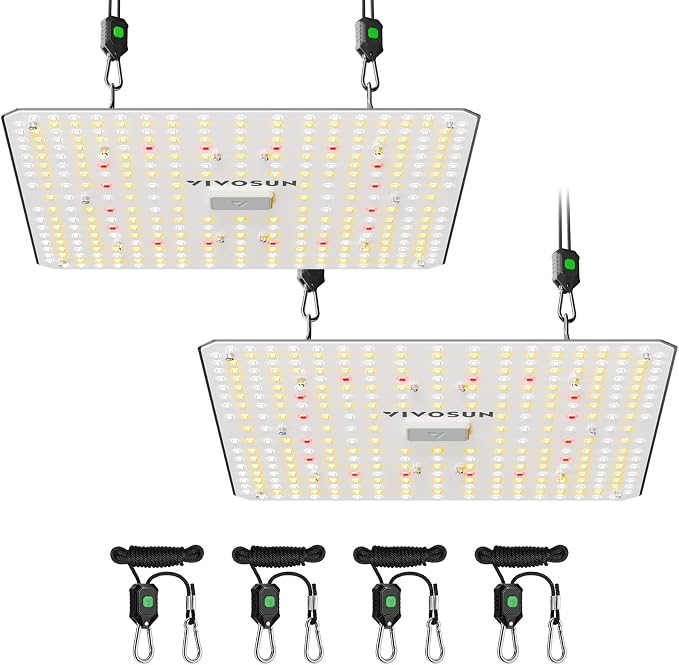 |
VIVOSUN Lumalight 100W Full-Spectrum LED Grow Light | Check Price |
| 4 |  |
SANSI Three-Pack Pot Clip-on Grow Lights | Check Price |
| 5 |  |
Barrina T8 1FT 5000K Full-Spectrum LED Grow Light Strips | Check Price |
| 6 |  |
SANSI 40W Clip-on Gooseneck LED Plant Light | Check Price |
| 7 |  |
Sonamindary Single-Head Clip-on LED Grow Light | Check Price |
| 8 |  |
GLOWRIUM 48W Smart Full-Spectrum LED Plant Light | Check Price |
| 9 |  |
Briignite A19 Full-Spectrum LED Grow Light Bulb | Check Price |
| 10 |  |
GYTF Halo 6000K Adjustable Plant Grow Light | Check Price |
WeeLeeGoo 3 Pack Pot Clip LED Growing Lamps
The WeeLeeGoo three-pack is a strong fit for anyone lighting several small pots or one plant from multiple angles. Each lamp uses 5W and a compact 29-LED arrangement with seven red and 22 white beads. The 6000K white light is more natural-looking than a strongly purple lamp, while the red-and-white combination provides supplemental illumination for common indoor plants.
Its biggest practical advantage is flexibility. Every lamp has a clamp and a 360-degree gooseneck, so you can attach it to a pot rim, shelf, or nearby surface and aim the light toward the leaves instead of leaving the plant to grow toward one fixed point. Because the lamps clamp above the container rather than requiring a stake in the soil, they avoid disturbing roots and work well with shallow or crowded planters.
A built-in timer offers 4-, 8-, 12-, or 18-hour cycles, and five brightness levels range from 20% to full output. USB power adds flexibility for desks and power banks, while the included AC plug is more convenient for a permanent location. The supplied information describes low heat and estimated operating cost, but the compact 5W output is still best treated as supplemental lighting rather than a replacement for a powerful tent fixture.
Pros
- Three independently positionable clip-on lamps can serve several small pots.
- 360-degree goosenecks, five brightness levels, and four timer settings offer useful control.
- USB or AC operation suits desks, shelves, and small plant stations.
Cons
- At 5W per lamp, coverage and intensity are limited for large or light-hungry plants.
- Clip placement requires a secure rim or nearby surface.
- The compact heads may need frequent repositioning as plants grow.
My Opinion
This is my best all-around small-pot choice because the three-light format solves uneven coverage without taking much room. Choose it when convenience and flexible placement matter more than tent-level output.
yadoker Height-Adjustable Full-Spectrum Plant Grow Light
yadoker takes a simpler approach than a clip lamp: the light sits on an adjustable pole that goes directly into the soil or potting medium. That makes it particularly convenient for a single planter, floor pot, trellis, or arrangement where there is no shelf edge available for a clamp. The pole telescopes up and down, allowing the light to rise with a plant or sit closer to a small seedling.
The lamp produces warm natural-looking light across the stated 380nm-to-780nm range. This appearance is useful in living spaces and offices because it does not create the harsh purple cast that some grow lights produce. It can also shine across more than one nearby plant when fully extended, although the amount of useful light each plant receives will depend on distance and arrangement.
The built-in timer cycles through 8, 12, or 16 hours on, followed by the corresponding off period. Once connected to power, the schedule can repeat without daily unplugging. Its 5V low-voltage design is convenient around desks and indoor planters, and the aluminum shell helps with heat dissipation. Remember that the pot and plant are not included, and a soil stake is less suitable for hydroponic containers, very shallow pots, or plants whose roots you do not want to disturb.
Pros
- Stake design works where a clip cannot attach.
- Height adjustment follows changing plant size.
- Natural-looking light and three automatic timing cycles suit living spaces.
Cons
- Placing the pole in soil can disturb roots or be unstable in loose potting mix.
- It is less adaptable to shelves without accessible soil.
- Output details are less extensive than those provided for higher-power fixtures.
My Opinion
yadoker is a sensible second choice for a beginner with one or a few small planters. Its straightforward stake installation removes much of the setup hassle, but buyers needing strong, measured coverage should consider a more powerful fixture.
VIVOSUN Lumalight 100W Full-Spectrum LED Grow Light
The VIVOSUN LumaLight is in a different category from the compact pot lamps above. This 100W fixture is intended for indoor plants, seedlings, vegetables, and blooming plants across larger areas, with the supplied listing identifying compatibility with 2×2 and 2×4 grow tents. It is sold as a two-pack in the source title, making it a potential choice for a dedicated growing space rather than a single decorative pot.
Its spectrum combines white, blue, red, and far-red LEDs, including 3000K, 5000K, 660nm, and 730nm elements. That broader mix is intended to support different growth stages, so the light can remain useful from seedlings through flowering instead of being limited to one phase. The strategic diode layout is also intended to provide more even PPFD from the center toward the edges, an important consideration when several plants share the same footprint.
A four-level dimming knob lets you reduce output to 25%, 50%, 75%, or 100% according to plant stage and distance. Compatibility with the Vivosun GrowHub and mobile app adds remote scheduling and monitoring, but that smart controller is sold separately. Advanced thermal management, a stated Q90 flux maintenance rate of up to 36,000 hours, and IP65 dustproof and waterproof protection add durability for humid growing environments. This fixture is powerful and may be excessive for one small pot, so plan its mounting height and ventilation carefully.
Pros
- 100W output and broad spectrum suit larger indoor growing areas.
- Four-level dimming supports seedlings and mature plants.
- IP65 protection and thermal management fit humid grow spaces.
- Optional GrowHub compatibility allows remote control.
Cons
- More equipment than most single-pot growers need.
- The smart controller costs extra and is not included.
- Requires more deliberate hanging and distance planning than a clip lamp.
My Opinion
VIVOSUN earns third place because it offers the strongest serious-growing platform in this group, not because it is the easiest small-pot lamp. It is the better direction for multiple plants, a tent, or anyone who expects to expand beyond a windowsill setup.
SANSI Three-Pack Pot Clip-on Grow Lights
SANSI’s three-pack uses compact 5W clip-on lights with a 4000K natural-light appearance. The neutral color is easier to live with in a room than colored grow lighting, and the three-lamp arrangement gives a buyer more options for distributing light across separate pots or aiming several heads at one fuller plant. The listing reports 35.78 μmol/s/㎡ at six inches, which gives useful context for positioning: these lamps should stay reasonably close to the foliage for meaningful supplemental light.
Each head attaches with a clamp and pivots on a 360-degree gooseneck. That setup avoids putting extra hardware into the soil and makes it possible to direct the beam toward a canopy, a side branch, or a plant tucked into a corner. Four brightness settings—25%, 50%, 75%, and 100%—allow gentler illumination for low-light foliage and stronger settings for plants that need more help.
The timer cycles for 3, 6, or 12 hours, followed by the matching off period. The shorter options can be useful when natural daylight already contributes part of the daily light, while the 12-hour setting offers a longer routine. Its 5V input can run from a power bank, laptop, or computer, and the product is ETL listed according to the supplied information. SANSI also states a two-year service period. The 5W heads remain better for small pots than for a broad shelf or demanding fruiting crop.
Pros
- Three clip-on heads provide flexible coverage for multiple small plants.
- Neutral 4000K light looks comfortable in a home.
- Low-voltage power and a two-year service period add convenience.
- Close-range output information helps with placement expectations.
Cons
- Only three timer durations are available.
- Small 5W heads are not intended for large-area coverage.
- USB-style power may require thoughtful cable routing around shelves.
My Opinion
This is a refined alternative to the WeeLeeGoo set for buyers who prefer a more neutral 4000K appearance and value the stated ETL listing. It makes the most sense for several nearby small pots where low-voltage operation is useful.
Barrina T8 1FT 5000K Full-Spectrum LED Grow Light Strips
The Barrina T8 set is built for shelves, racks, propagation areas, and other long or rectangular growing spaces rather than for clipping a lamp onto one pot. The package contains six one-foot light strips, three power cords with on/off switches, five 20-inch connecting cords, small connectors, mounting clips, double-sided tape, and cable ties. That collection of hardware makes it possible to create a more organized shelf installation instead of placing individual lamps around each container.
Each strip uses a 5000K daylight full-spectrum output, which provides a relatively natural white appearance while supporting seedlings, vegetative growth, and blooming stages according to the supplied product information. The V-shaped reflector is said to increase efficiency by 17% to 20%, while the aluminum housing helps dissipate heat from the LED chips. Together, those features are especially useful when a strip is mounted beneath a shelf and must direct as much light as possible downward.
The set uses 288 LEDs across a stated 90W total consumption and can link up to ten lights in series. That scalability is valuable for a growing rack, but installation requires more planning than a plug-in stake or clamp. Pay close attention to the generation of the components: the listing notes that the newer lights are compatible with Barrina GM Series cords and that new and old products may require the newer male-female connector cables. This is a strong shelf solution, not the quickest option for one isolated planter.
Pros
- Six strips can distribute light evenly across shelves and racks.
- Reflector, aluminum housing, and 5000K full-spectrum output support efficient shelf lighting.
- Included clips, tape, ties, connectors, and cords simplify installation.
- Series linking allows the system to expand.
Cons
- Installation and cable planning take more effort than a single lamp.
- Connector compatibility matters when mixing product generations.
- Not a convenient standalone choice for one pot without a shelf or mounting surface.
My Opinion
Barrina is the best format here for a dedicated plant shelf. The kit is more involved, but its distributed strips can illuminate rows of pots more evenly than a single pointed lamp.
SANSI 40W Clip-on Gooseneck LED Plant Light
This SANSI model is a higher-output clip-on light for buyers who want one fixture with more power than the small 5W heads. It uses 40W and provides a stated PPFD of 804 μmol/s/㎡ at one foot. That specification suggests a much more intense source at close range, making the light more appropriate for a fuller plant, several small pots grouped together, or a grower who wants stronger supplemental illumination without moving to a hanging tent fixture.
The 360-degree gooseneck helps aim the head around a canopy, and the full-spectrum range is listed as 400nm to 780nm. That broad visible range is intended to remain useful through the plant’s life cycle. SANSI also uses a secondary optical design to distribute light through a lens, potentially improving how much light reaches the plant instead of scattering around the room.
A notable ownership advantage is the replaceable bulb. If the bulb fails, the whole clip assembly does not necessarily need to be discarded, and the supplied information states that the bulb carries a whole-life warranty. The fixture is ETL listed, and the bulb is rated for 25,000 hours. However, the stated maximum safety wattage is 10W for each head, so buyers should confirm how that limit applies to their intended configuration and avoid overloading a socket or accessory. Stronger output also means placement and plant response deserve more attention than with a gentle desk lamp.
Pros
- 40W output and stated close-range PPFD suit stronger supplemental lighting.
- 360-degree gooseneck helps cover a broad or irregular canopy.
- Replaceable bulb can reduce waste and simplify long-term ownership.
- ETL listing and stated 25,000-hour bulb life add useful assurance.
Cons
- May be excessive for a single low-light houseplant.
- The maximum 10W-per-head safety note requires careful compatibility checks.
- Clip mounting can be less stable under a heavier, more powerful lamp.
My Opinion
This is the stronger clip-on choice for a buyer who wants more intensity without installing a full panel. It deserves extra attention to distance, clamp security, and the stated wattage limitation.
Sonamindary Single-Head Clip-on LED Grow Light
Sonamindary’s single-head lamp is a compact solution for one plant or a small cluster of pots. Its 60 LEDs combine 48 white, eight red, and four blue beads, with a 5700K full-spectrum appearance. That combination provides a daylight-style look while adding red and blue elements intended to support seedlings, succulents, herbs, foliage plants, and flowering plants at different stages.
The metal arm is wrapped in a silicone sleeve, which is intended to improve support and reduce unwanted movement as the lamp is aimed. This matters with a single-head design because the whole light depends on keeping one beam pointed at the canopy. The clamp can attach to a desk, shelf, table, or plant stand without occupying extra floor space, making it a useful choice for a crowded office or apartment plant corner.
Five brightness levels range from 20% to 100%, giving more adjustment than a basic on/off lamp. The automatic timer can run for four, eight, or 12 hours and repeat the same cycle every 24 hours. A stated CRI of 85 or higher means the light should show plant colors relatively clearly to the eye, though color quality is not the same thing as intensity. With just one focused head, coverage is naturally limited; a wide, bushy plant may need repositioning or a second lamp.
Pros
- Compact clamp saves surface space.
- Five brightness settings and three timer durations suit varied routines.
- Silicone-covered metal arm is intended to hold its angle more steadily.
- 5700K light and CRI 85+ are comfortable for visible plant care.
Cons
- One head may leave the sides of a wide plant shaded.
- It is less suitable for several separated pots.
- There is no stated multi-head expansion system.
My Opinion
Sonamindary is a good minimalist pick for one small plant near a desk or shelf. It offers more control than a bare bulb, but its focused coverage means buyers should not expect it to light an entire plant collection.
GLOWRIUM 48W Smart Full-Spectrum LED Plant Light
GLOWRIUM is aimed at plant owners who want a floor-style light with digital convenience. Its adjustable pole extends to 70.87 inches, so it can serve plants at different heights without requiring a shelf or ceiling mount. The enlarged lamp head and 360-degree flexible gooseneck help spread light over a broader area and direct it toward the plant canopy.
Brightness is continuously adjustable rather than limited to a few fixed steps. That stepless control is helpful when moving from a young plant to a larger one or when the lamp is close enough that full output would be unnecessarily intense. The 48W full-spectrum source is positioned as suitable for seedling, vegetative, and flowering stages, giving it more reach than the tiny clip lamps while remaining easier to place in a living room than a tent panel.
Its smart features distinguish it from most products in this group. The app includes light measurement, watering and fertilizer reminders, growth records, and care recommendations. Two separate daily schedules or sunrise-and-sunset synchronization can make the routine more natural and less dependent on manual adjustments. The lamp uses a 24V low-voltage system, a frosted diffuser, LEDs rated for more than 50,000 hours, and a stated two-year warranty service. App-dependent features may be unnecessary for a buyer who only wants a basic timer, and the tall floor design needs a stable location.
Pros
- Floor stand and long height range work with taller plants.
- 48W output, enlarged head, and flexible neck provide broader coverage.
- Stepless dimming and two programmable schedules offer fine control.
- App tools support reminders and plant-care records.
Cons
- More expensive-feeling complexity than a basic stake or clamp design.
- Requires floor space and a stable placement area.
- App features may be unnecessary for simple supplemental lighting.
My Opinion
GLOWRIUM is the most feature-rich room-friendly option in this lineup. It suits someone managing several plants at different heights, especially if reminders and schedule automation are genuinely useful rather than distractions.
Briignite A19 Full-Spectrum LED Grow Light Bulb
The Briignite A19 is the simplest way to add plant lighting when a standard lamp or pendant fixture is already available. Its E26 base fits standard E26 sockets, so there is no dedicated clamp, stake, pole, or shelf mounting system to assemble. That makes it especially practical for a plant beside a floor lamp, desk lamp, or ordinary light fixture with enough clearance around the bulb.
The bulb produces a 4000K appearance that is more natural in a home than red or purple grow bulbs, while its stated spectrum includes red and blue light for tomatoes, cucumbers, peppers, leafy greens, and herbs through different growth stages. It provides 1000 lumens across a 180-degree beam and consumes 11W, with the listing comparing it to a traditional 100W bulb. The stated PPF is 25 micromoles per second, which gives a useful indication that it is a supplemental bulb rather than a high-output replacement for a tent panel.
Plastic and aluminum construction is intended to help with heat dissipation, and the listed lifespan reaches up to 25,000 hours. The bulb’s main limitation is that all coverage depends on the fixture and reflector around it. A bare bulb may illuminate the upper leaves while leaving lower or side foliage darker, and an ordinary lamp may not tolerate moisture. Keep the socket dry, make sure the fixture’s wattage rating is appropriate, and position the bulb close enough to help without touching leaves.
Pros
- Standard E26 base fits many existing household fixtures.
- Natural 4000K appearance works well in living spaces.
- 11W consumption, 1000 lumens, and 25 μmol/s PPF suit supplemental use.
- Simple installation requires no special mounting hardware.
Cons
- Coverage depends heavily on the lamp or fixture used.
- A single bulb may not reach the sides or lower leaves of a broad plant.
- Ordinary household fixtures may not provide moisture protection.
My Opinion
Briignite is the most convenient choice when an E26 socket is already in the right place. It is economical in setup effort, but buyers should not mistake an easy screw-in installation for broad, high-intensity coverage.
GYTF Halo 6000K Adjustable Plant Grow Light
The GYTF Halo is a small freestanding stake lamp intended for succulents, bonsai, seedlings, herbs, orchids, and other indoor plants in soil. Its circular head uses six red, six blue, and 36 white LED beads, creating a 6000K white full-spectrum appearance. The halo shape spreads light around a central area rather than concentrating everything through one narrow point, which can help a compact plant receive more even illumination from above.
The aluminum pole adjusts from seven to 18 inches, and the lamp head rotates through 180 degrees. That range is useful for a young plant that starts low and grows upward, although the stake must remain stable in the pot as the pole is extended. Installation is deliberately simple: place the pole in the soil, set the height, and aim the head around the plant. It is therefore better suited to ordinary soil planters than containers where inserting a stake is impractical.
Four timer options—4, 8, 12, and 18 hours—allow the light to repeat a daily schedule while plugged in. Brightness is adjustable, which helps avoid using maximum output for every plant. The compact design should fit a shelf, desk, or small indoor garden, but the product’s modest size means it is not a substitute for a broad shelf system or high-output panel. Consider the pot’s width and weight before extending the pole, since a light container can tip or allow the stake to wobble.
Pros
- Halo head, adjustable pole, and rotating angle suit small potted plants.
- 6000K white light has a bright daylight appearance.
- Four timer settings and dimming support flexible routines.
- Fast soil-stake installation requires little equipment.
Cons
- Stake mounting can disturb roots or become unstable in light potting mix.
- Height range and compact head limit coverage for large plants.
- It requires a soil-filled pot rather than a bare shelf mounting point.
My Opinion
GYTF is a useful decorative-pot solution for buyers who want an uncomplicated halo light and a bright white appearance. Its best use is a small, stable planter rather than a broad collection or demanding crop.
How I Selected These Best LED Grow Lights for Pot
The ranking prioritizes practical fit before raw power. A clip-on three-pack scores well for small pots because it can distribute light without disturbing roots, while a 100W panel ranks highly for readers who need substantially greater coverage. I also considered whether each product provides meaningful control through dimming, timers, height adjustment, angle adjustment, or app scheduling.
Customer-feedback volume and stated scores were useful supporting signals, but they were not treated as proof that every plant will perform identically. A product with thousands of customer responses may have stronger market evidence than one with a small number, yet plant results still depend on distance, daily lighting duration, species, ambient daylight, and watering. The supplied technical information was therefore weighed alongside intended use and likely limitations.
For a single small pot, mounting convenience and correct distance usually matter more than buying the highest-wattage fixture. For several pots or a growing shelf, coverage and even distribution become more important than a compact footprint.
Brand diversity also shaped the list. WeeLeeGoo, yadoker, VIVOSUN, SANSI, Barrina, Sonamindary, GLOWRIUM, Briignite, and GYTF cover several common buying situations rather than offering ten nearly identical clip lamps. This makes the comparison more useful for beginners who may not yet know whether they need a bulb, stake, strip, floor stand, or panel.
Do not compare wattage alone. A lamp’s distance, beam spread, mounting height, reflector, and number of plants determine how much usable light reaches the leaves.
How to Choose the Best LED Grow Lights for Pot
Start by matching the light to the size and layout of the plant area. A single small pot can use a stake, bulb, or focused clip lamp, while multiple pots usually benefit from several heads, linked strips, or a broader floor fixture. The most useful choice is the one that gives adequate coverage without creating an awkward installation or a schedule you will not maintain.
- Choose the mounting style first: stakes suit soil pots, clips suit shelves and rims, bulbs suit existing E26 fixtures, and strips suit racks.
- Match output to plant area: compact 5W lamps are for supplemental light and small plants, while 40W to 100W systems cover larger spaces.
- Look for adjustable control: dimming and height adjustment make it easier to accommodate seedlings and mature foliage.
- Use timers consistently: automatic schedules reduce missed lighting periods and make daily care more predictable.
- Check the power and environment: confirm voltage, connector compatibility, fixture wattage, moisture exposure, and available outlets.
Coverage and plant size
Small heads are easiest to place but usually illuminate a limited area. If a plant has a narrow upright canopy, one focused light may be enough. A wide, bushy plant can develop shaded sides under a single head, so several small lights or a larger fixture may provide more balanced coverage. For a shelf of separate pots, strips mounted above each level generally make better use of space than aiming one desk lamp across the whole rack.
Distance and intensity
Light intensity falls as the source moves away from the foliage. A compact lamp may work well close to a plant but become ineffective when placed across a room. Conversely, a powerful 40W or 100W light can be unnecessarily intense when positioned inches from delicate foliage. Begin with the manufacturer’s stated placement information where available, use a lower brightness setting when the lamp is close, and watch the plant for signs of stress rather than assuming maximum output is always best.
Color appearance and plant visibility
White 4000K, 5000K, 5700K, and 6000K lights are generally easier to live with in a bedroom, office, or living room than strongly purple lamps. They also make it easier to see leaf color and spot pests or watering problems. A natural-looking color does not automatically mean the light is more intense, so treat appearance and plant performance as separate buying factors.
Timers, dimming, and schedules
A timer is valuable because plant lighting works best as a routine rather than an occasional boost. Compare the available cycle lengths with your natural daylight. If the plant receives several hours of bright window light, a shorter supplemental schedule may be practical. Dimming is helpful when the same light will serve seedlings and mature plants, or when the fixture must remain close to a small canopy.
Power, safety, and compatibility
Low-voltage USB or 24V systems can be convenient around desks and shelves, but check the included power arrangement and cable length before installing. Strip systems require special attention to connectors and product generations. Bulbs require an appropriately rated E26 fixture, and ordinary household fixtures may not be protected against water or nutrient spray. Higher-output fixtures should have stable mounting, clear airflow, and enough distance from leaves and nearby materials.
How to Set Up a Pot Grow Light
Place the light so it reaches the top and sides of the plant without being blocked by the pot rim, nearby leaves, or shelf above. A clip should grip a firm surface, a stake should be stable in the soil, and a floor stand should sit where pets, cords, and foot traffic will not knock it over. Before turning on a timer, decide what natural daylight the plant already receives.
For a single small pot
- Position the lamp above or slightly to the side of the canopy.
- Keep the head close enough to provide useful light, but avoid touching leaves.
- Start at a moderate brightness setting if the plant has been living in low light.
- Set a repeatable timer schedule and observe the plant over the next several days.
For several pots
Arrange plants with similar light needs together. Use multiple clip heads from different angles, or place strips parallel to the shelf so the light is distributed along the row. Rotate pots occasionally if one side receives noticeably more light. A broader fixture can simplify the arrangement, but a group of smaller lamps may offer more precise control over individual plants.
For a higher-output fixture
Secure the light before connecting power, verify that the mounting hardware is appropriate, and leave room for airflow around the fixture. Start with dimming rather than immediately using full power at close range. The VIVOSUN unit is intended for larger spaces, so it should be treated as a dedicated growing fixture rather than casually placed beside a small decorative pot.
How to Use a Grow Light Effectively
Consistency matters more than constantly changing the setting. Plants need a dependable light-and-dark cycle, and most indoor gardeners benefit from letting the timer handle the routine. Keep the light focused on foliage, but do not assume every species wants the same intensity or duration.
Watch the plant’s shape and new growth. Excessive stretching can indicate that the light is too far away or too weak, while bleached, curled, or unusually stressed leaves can mean the source is too close or too intense. These signs are not a substitute for species-specific care, but they are useful prompts to adjust distance or brightness gradually.
Clean dust from the lamp head and reflector with power disconnected and the fixture cool. Dust can reduce light output and restrict heat dissipation. Do not spray water, fertilizer, or cleaner directly onto a light unless its supplied protection and installation instructions support that use. IP65 protection on the VIVOSUN model is a specific feature, not a general assumption that every indoor grow lamp is waterproof.
Compatibility and Ownership Tips
Check the support surface
Clip lamps need a solid edge that can support the clamp without slipping. A thin flexible shelf, a rounded pot rim, or a crowded plant stand may not hold the lamp securely. If the clamp is attached to a table, keep the gooseneck from pulling the base sideways.
Protect cables and connectors
Keep power cords away from standing water and route them so they do not hang into a watering area. With linked Barrina strips, verify that the male-female cables match the product generation before mounting everything permanently. Loose connectors are easier to address before the lights are fixed under a shelf.
Use the correct household fixture for bulbs
An E26 grow bulb only works as conveniently as the fixture holding it. Confirm the fixture accepts the bulb’s size and electrical rating, and leave adequate space for heat to escape. A decorative shade that blocks much of the bulb’s output may reduce the benefit, while a damp location can be unsuitable for a standard lamp.
Allow plants to adjust
A plant moved from a dim room directly under a bright lamp may need a gentler beginning. Use lower brightness or a greater distance at first, then make changes slowly. This is especially relevant when moving from a 5W clip lamp to a 40W or 100W fixture.
Common Mistakes to Avoid
Most disappointing results come from a mismatch between the lamp and the growing area rather than from one missing feature. Avoid choosing by appearance alone, placing the light too far away, or assuming a timer can compensate for inadequate coverage.
- Using one tiny head for a broad canopy: add another angle or choose a wider fixture.
- Placing the light across the room: move it closer according to the product’s intended use.
- Running maximum brightness immediately: begin conservatively and watch the plant.
- Ignoring darkness: maintain a dependable off period instead of leaving the lamp on continuously.
- Putting a stake into unstable soil: use a heavier pot or a clip/floor design when the pole wobbles.
- Mixing incompatible strip connectors: confirm whether the product is a newer or older generation.
- Exposing ordinary fixtures to water: keep bulbs and cords dry unless the product specifically supports the environment.
More power is not automatically better. The useful goal is enough light across the actual leaves, delivered at a manageable distance and on a repeatable schedule.
Best LED Grow Lights for Pot FAQ
What type of grow light is easiest for one small pot?
A compact clip-on or soil-stake lamp is usually the simplest. Clip lights avoid disturbing roots and can attach to a shelf or pot edge, while stake lights are convenient when the pot is stable and filled with soil. A standard E26 bulb is also easy if a suitable lamp is already positioned beside the plant.
Are clip-on grow lights suitable for several pots?
They can be, especially when using a three-pack or several adjustable heads. Position each head so the plants are not all relying on one narrow beam. For a long shelf with many containers, linked strips are generally easier to distribute evenly.
Is a 100W grow light too powerful for a pot?
It can be excessive for one small decorative plant, depending on distance and dimming. A 100W fixture makes more sense for multiple plants, a larger canopy, or a grow tent. If used near a small pot, dimming and careful positioning become important.
Should a grow light be white or purple?
White lights in the 4000K-to-6000K range are easier to use in living spaces and make plant condition easier to see. Red and blue elements can still be included in a white full-spectrum lamp. The color appearance alone does not determine whether the fixture provides enough useful intensity.
Do pot grow lights need a timer?
A timer is not absolutely required, but it makes a consistent daily schedule much easier. The products in this list use different timing choices, so select a cycle that complements the natural daylight the plant already receives.
Can a USB grow light run from a power bank?
Some can. The WeeLeeGoo and SANSI compact models are described as USB-compatible, and the SANSI 5W lights are specifically identified as workable with a power bank, laptop, or computer. Confirm the power requirements and cable arrangement before relying on a portable source.
Final Thoughts
The best led grow lights for pot depend on whether you need compact convenience, broader coverage, or serious indoor-growing output. My top three are the WeeLeeGoo 3 Pack Pot Clip LED Growing Lamps for flexible small-pot coverage, the yadoker Height-Adjustable Full-Spectrum Plant Grow Light for simple stake installation, and the VIVOSUN LumaLight 100W Full-Spectrum LED Grow Light for larger areas and higher intensity. Match the mounting style, coverage, timer, and output to your actual plants rather than choosing by wattage alone.

I’m Maya L. Greenwood, a lifelong plant lover who believes anyone can grow something beautiful with the right guidance. After years of testing soil mixes, pruning methods, irrigation tricks, and pest-safe solutions, I started EasyGardenTips.com to turn hard-won lessons into step-by-step advice. From seed starting and container gardens to composting and seasonal checklists, my goal is to make gardening simple, sustainable, and fun.