3 Best LED Grow Lights for Cactus for Strong Compact Growth
Cacti are adapted to bright environments, so a weak decorative plant lamp may keep one alive without providing enough light for compact, healthy-looking growth. The best LED grow lights for cactus should provide strong usable intensity, appropriate coverage, convenient positioning, and a spectrum that works well for long daily indoor illumination.
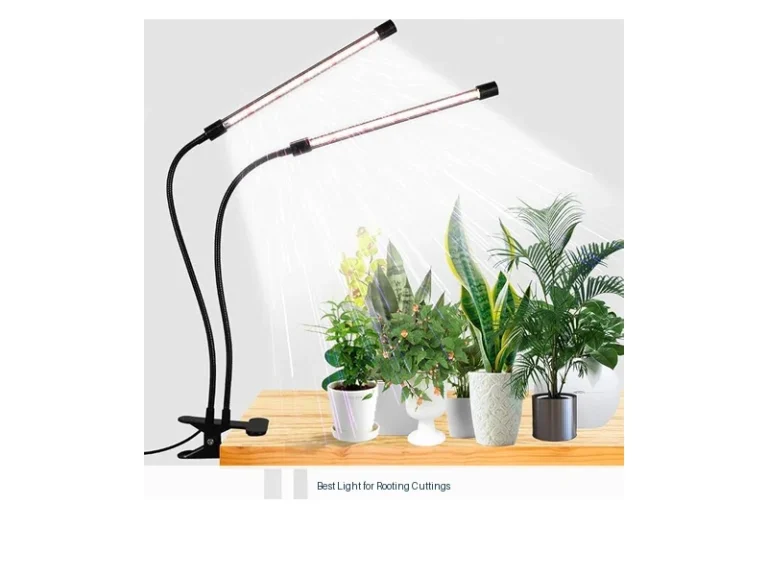
My primary recommendation is the GooingTop 6000K Full Spectrum LED Grow Light for one or a few small cacti. It combines approximately 10W actual LED consumption, 6000K white light with supplemental red LEDs, five brightness levels, a flexible clamp/gooseneck design, and a repeating 4/8/12-hour timer. Its current Amazon listing shows 21,990 customer ratings.
I would choose the Barrina T5 4FT Grow Lights 8-Pack for a cactus or succulent shelf containing many pots. The package uses eight 4-foot, 20W fixtures for 160W total, and Amazon specifically markets the system for seedlings, greenhouses, and succulents.
For a single light-hungry cactus where I want stronger directional illumination, I would choose the GE PAR38 Balanced Spectrum LED Grow Bulb. This 32W PAR38 bulb produces 50 µmol/s PPF, uses a standard E26 base, and provides a balanced white full spectrum in a directional floodlight format.
3 Best LED Grow Lights for Cactus Reviewed
| Image | Product Name | Check Price |
|---|---|---|
Best Choice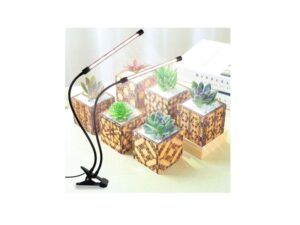 | GooingTop 6000K Full Spectrum LED Grow Light | Check Price |
Second Best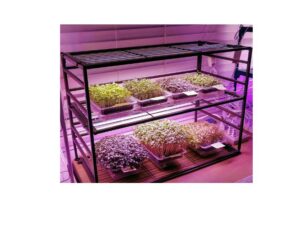 | Barrina T5 4FT Grow Lights 8-Pack | Check Price |
Third Choice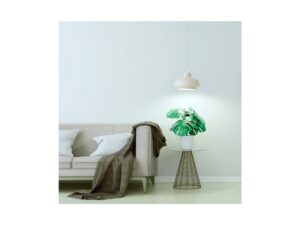 | GE PAR38 Balanced Spectrum LED Grow Bulb | Check Price |
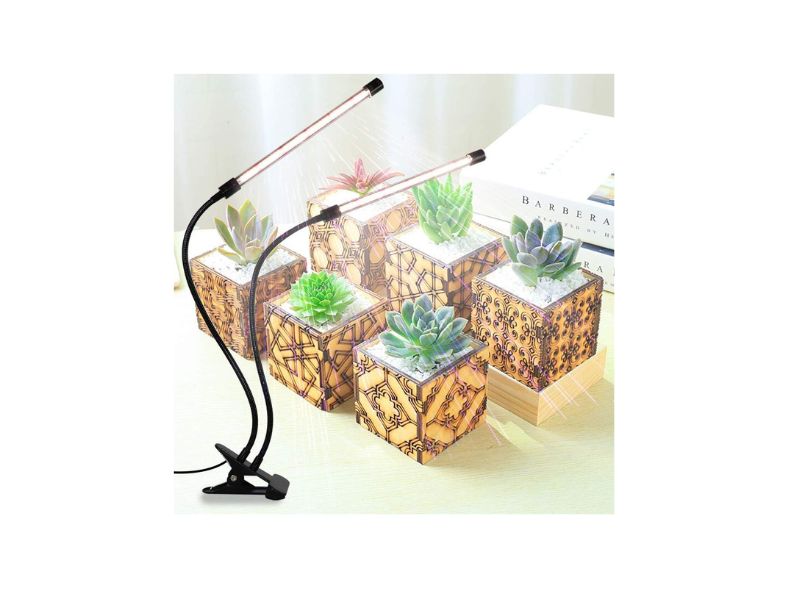
1. GooingTop 6000K Full Spectrum LED Grow Light
Key Features
- Approximately 10W actual power consumption
- 6000K white light
- 74 white + 10 red LEDs
- Five brightness levels
- 4/8/12-hour repeating timer
- Flexible gooseneck
- Strong clamp mounting
- 360-degree positioning
- Compact format for a few cactus pots
The GooingTop is my primary recommendation for a small cactus setup because positioning is one of the most important problems to solve when using a modest grow light.
Its current Amazon listing identifies it as a 6000K full-spectrum clip lamp with five-level dimming and automatic 4-, 8-, and 12-hour timing. The fixture uses white and red LEDs rather than the intensely purple appearance of older horticultural lamps.
One specification deserves clarification.
Some Amazon variant displays can make the product appear to be a much higher-wattage lamp, but the detailed product information for this model indicates roughly 10W actual electrical consumption.
That makes it a compact lamp rather than a high-power grow panel.
For cactus growing, this means placement matters.
I would consider it for:
- Small Mammillaria
- Gymnocalycium
- Rebutia
- Small barrel cacti
- Young Opuntia
- Cactus seedlings
- A few compact succulents
The flexible gooseneck lets you keep the light relatively close to the plant instead of wasting output across a large room.
That is especially useful during winter.
A cactus sitting several feet from a bright window can receive dramatically less usable light than one placed directly beside the glass. A small artificial fixture can compensate for some of that loss when it is positioned correctly.
The 6000K white output is also practical for vegetative appearance.
It creates a daylight-like visual environment and makes it easier to check the cactus for:
- Pale new growth
- Pests
- Scarring
- Rot
- Discoloration
- Stretching
than strongly colored purple lighting.
The five brightness levels give you additional adjustment.
I would not automatically start a cactus at maximum intensity if it has been living in weak indoor light.
Plants acclimated to dim conditions can experience light stress when abruptly exposed to much stronger illumination.
Increase exposure gradually.
The built-in timer is convenient, but the 12-hour maximum cycle is worth noting.
That can work well when the GooingTop is supplementing window sunlight.
If it is the cactus’s only meaningful light source, the total daily light it delivers may still be limited because the fixture itself is modest in power.
That is the central limitation of this model.
It is excellent for:
one or a few pots
but not a large cactus collection.
Trying to illuminate an entire four-foot shelf with one GooingTop would create poor edge coverage and encourage plants outside the central light zone to stretch.
What I Like
- Extremely easy to position
- Five brightness levels
- Built-in automatic timer
- Natural-looking white light
- Minimal space requirement
- Good for one to several small cacti
- Strong current Amazon rating history
What I Do Not Like
- Only about 10W actual power
- Limited canopy coverage
- 12-hour maximum built-in timer
- Not ideal for a large cactus shelf
The GooingTop is the model I would choose for a small cactus collection near a window or in a compact apartment setup. Its main strength is not raw power—it is the ability to place a modest amount of light exactly where a few small plants need it.
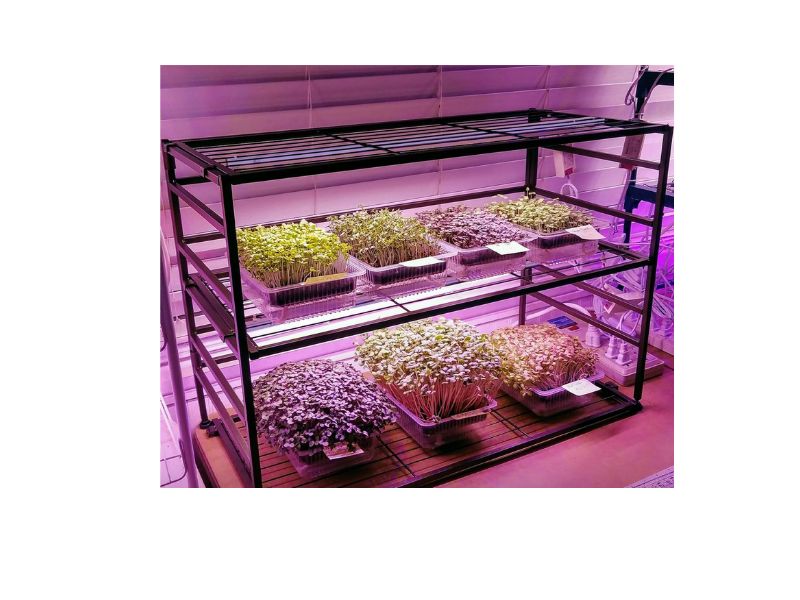
2. Barrina T5 4FT Grow Lights 8-Pack
Key Features
- Eight 4-foot LED fixtures
- 20W per light
- 160W total package power
- Full-spectrum output
- Separate on/off controls
- Plug-and-play installation
- Flexible mounting
- Specifically listed for succulents
- Excellent for shelves and collections
The Barrina T5 system is the product I would choose when cactus growing expands beyond one or two pots.
Amazon currently lists this package as eight 4-foot grow-light strips totaling 160W, with each individual fixture using approximately 20 watts. The listing specifically includes succulents among its intended applications.
That is a much more appropriate geometry for a collection.
Imagine a four-foot shelf containing:
- Ten small cacti
- Several succulents
- Propagation pots
- Young offsets
A single clip lamp creates a cone of light around one central area.
Plants toward the ends of the shelf receive much less.
A four-foot linear fixture follows the shape of the shelf.
Several bars can then be mounted parallel to one another to increase intensity and improve front-to-back coverage.
That modularity is one of Barrina’s strongest advantages.
You do not necessarily need to use all eight bars over one shelf.
For example, you might install:
Two bars per shelf across four levels
or
Four bars above two high-light cactus shelves.
That makes it easier to scale intensity according to what the plants actually require.
Each fixture also has separate switching, so unused sections do not need to remain illuminated.
This matters if your cactus collection changes seasonally.
During active indoor growing periods, you may operate several shelves.
At other times, only one section may need supplemental illumination.
The broader coverage is particularly useful for preventing etiolation.
Etiolation in cactus growth typically appears as abnormally thin, elongated, pale, or tapered new growth when light is inadequate.
Once a cactus produces distorted stretched growth, simply adding more light later does not restore that section to its original compact shape.
Prevention is therefore much better.
An evenly illuminated shelf helps keep all plants exposed to a more consistent light environment.
The Barrina system also avoids one common problem with large centralized fixtures: excessive intensity directly in the middle.
With several linear bars, you can distribute light physically instead of concentrating it under one hotspot.
This does require more installation work.
You need to consider:
- Number of bars
- Spacing
- Mounting height
- Cable management
- Shelf ventilation
I would also use an appropriately rated external timer rather than manually switching several bars every morning and evening.
For cactus growing, the lack of a built-in timer is not a serious disadvantage because one timer can control the entire shelf system.
What I Like
- Excellent cactus-shelf geometry
- Eight separately usable fixtures
- 160W total available power
- Specifically marketed for succulents
- Broad, even coverage
- Easy to expand across multiple shelves
- Separate switching
What I Do Not Like
- Requires installation
- More cables than a single fixture
- External timer is preferable
- Excessive for one small cactus
The Barrina T5 system is my preferred option when I want to illuminate an actual cactus collection rather than one plant. Its long linear bars fit shelving much better than small clip lamps, and the eight-fixture package lets you build a relatively even lighting layout.
3. GE PAR38 Balanced Spectrum LED Grow Bulb
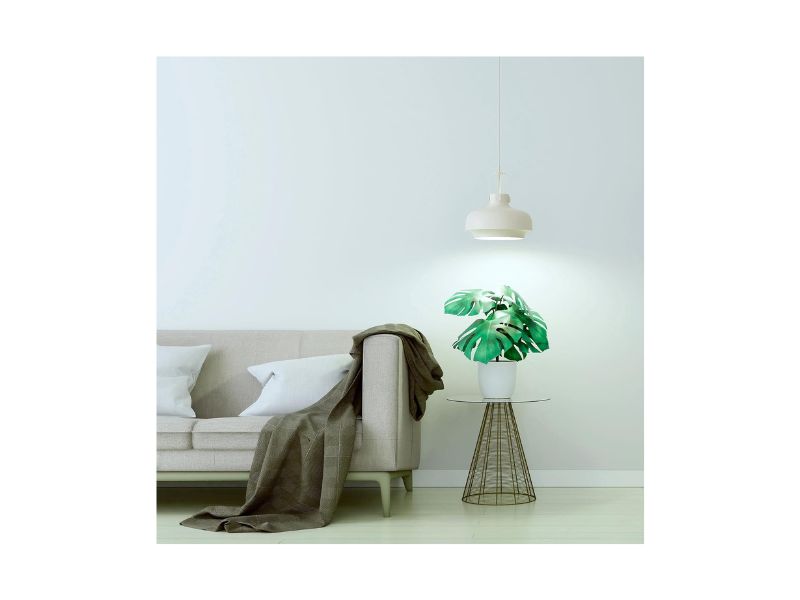
Key Features
- 32W actual power
- 50 µmol/s PPF
- PAR38 directional floodlight
- Balanced full spectrum
- White-looking output
- Standard E26 medium base
- Up to 25,000-hour rated life
- Ideal for concentrated single-plant illumination
The GE PAR38 is the model I would choose when one cactus needs substantially more focused light than a small clip fixture provides.
Amazon currently lists the bulb at 50 µmol/s PPF, while GE’s own current specifications list 32W electrical consumption, 2,000 lumens, a standard E26 base, and a 25,000-hour rated life.
The 50 µmol/s PPF number is particularly useful.
PPF measures the total amount of photosynthetically active photons emitted each second.
It is more meaningful for plant lighting than an isolated lumen specification because lumens are weighted around human visual sensitivity.
The PAR38 shape provides another advantage.
Rather than illuminating a long shelf, it projects light into a more concentrated directional area.
That makes it a good candidate for:
- One large barrel cactus
- A tall columnar cactus
- A compact group of high-light succulents
- A cactus displayed away from a sunny window
- A focused tabletop plant area
The standard E26 base also makes installation straightforward.
You do not need a dedicated horticultural fixture.
A suitable lamp socket can hold the bulb.
However, GE specifically notes that the relatively large PAR38 bulb is not ideal for lightweight gooseneck lamps.
Use a sturdy fixture rated appropriately for the bulb.
GE’s current guidance for this balanced-spectrum PAR38 places it approximately 24–30 inches from plants for the company’s recommended application.
I would treat that as the manufacturer’s starting guidance rather than a universal cactus rule.
Cactus species, acclimation, nearby sunlight, reflective surfaces, and daily operating time can all change the appropriate setup.
A cactus already receiving several hours of strong window sun may need much less supplemental exposure than one growing in a dark room.
The bulb is also non-dimmable according to GE’s specifications.
That means intensity is primarily adjusted through:
- Distance
- Operating duration
- Fixture angle
This is less convenient than GooingTop’s electronic dimming.
On the other hand, the GE bulb provides considerably more dedicated output than a small 10W clip light.
For a light-demanding cactus, that can be a worthwhile tradeoff.
Its white appearance is also suitable for living areas.
You can maintain a cactus display without turning the room purple.
What I Like
- Useful 50 µmol/s PPF specification
- 32W actual power
- Strong directional output
- Standard E26 base
- White full-spectrum appearance
- Good choice for a high-light single plant
- Long rated service life
What I Do Not Like
- Non-dimmable
- Requires a sturdy separate fixture
- Directional coverage is limited
- Not as convenient for long shelves
The GE PAR38 is the model I would choose for one particularly light-demanding cactus or a small concentrated group. Its 32W input and published 50 µmol/s PPF give it considerably more focused photon output than a small decorative clip lamp.
LED Grow Lights for Cactus Comparison
| Product | Format | Actual Power | Intensity Control | Timer | Coverage | Best Use |
| GooingTop 6000K | Clip/gooseneck | ~10W | 5 levels | 4/8/12 hr | Small | One to a few cacti |
| Barrina T5 8-Pack | Eight 4-ft bars | 160W total | By bar arrangement | External recommended | Large | Cactus shelves/collections |
| GE PAR38 | Directional bulb | 32W | Distance-based | External | Focused | One high-light cactus |
The GooingTop is easiest for a compact setup, Barrina provides the strongest collection-wide coverage, and GE PAR38 provides the most concentrated single-bulb output.
How to Choose the Best LED Grow Lights for Cactus
Cacti Usually Need More Light Than Typical Houseplants
Many cacti naturally grow in exposed environments where sunlight is intense.
That does not mean every species requires identical conditions, but it does mean that a decorative low-output lamp that works for a pothos may be disappointing for a cactus.
Pay attention to usable intensity, not simply whether the lamp appears bright to you.
Watch for Etiolation
One of the clearest signs that a cactus needs more light is abnormal stretched growth.
Depending on species, you may notice:
- Narrow new growth
- Tapering
- Excessive height
- Pale green tissue
- Weak leaning
- Wider spacing between features
Once distorted growth forms, improving the light will help future growth but will not reshape the already stretched portion.
Increase Light Gradually
More light is not always better immediately.
A cactus kept in a dark room for months should not necessarily be placed instantly beneath the strongest setting of a new grow light.
Gradually increase:
- Intensity
- Exposure duration
- Proximity
so the plant has time to acclimate.
Best LED Grow Light for One Cactus
For a small cactus, I would begin with GooingTop because it is simple to aim, dim, and schedule.
For a larger or especially light-demanding cactus, the GE PAR38 provides greater focused output.
Best Grow Light for a Cactus Collection
Barrina is the clear choice of these three.
A collection requires area coverage rather than one narrow spotlight.
Its four-foot fixtures follow the geometry of a shelf and can be installed in parallel to increase intensity.
Best Grow Light for Cactus Seedlings
Cactus seedlings can require a different environment from mature desert plants.
Very young seedlings should not automatically receive the maximum intensity you would use for an established sun-adapted cactus.
GooingTop’s five-level dimmer can therefore be particularly useful during early propagation.
Best Grow Light for a Cactus Shelf
For a shelf, choose linear lighting.
Barrina’s 4-foot bars distribute light along the entire length instead of making plants at the ends lean toward one central lamp.
Multiple bars can be installed from front to back when more intensity is required.
Full Spectrum vs Red and Blue Grow Lights
I prefer broad white full-spectrum LEDs for home cactus growing.
They provide plant-usable wavelengths while allowing you to inspect the cactus under relatively natural-looking light.
That makes it easier to recognize:
- Chlorosis
- Burn
- Rot
- Pest damage
- Abnormal growth
The GooingTop, Barrina, and GE options all provide broad-spectrum horticultural lighting rather than relying exclusively on an intense purple appearance.
Is 6000K Good for Cactus?
6000K is a practical cool-white spectrum for cactus vegetative growth.
Color temperature by itself does not determine whether the light is powerful enough.
The GooingTop’s main limitation is its modest total output, not its 6000K color temperature.
Is 4000K or 5000K Better?
There is no single magic color temperature.
Modern white LEDs across a reasonable daylight/neutral range can support plant growth.
For cactus, I would prioritize:
- Intensity
- Coverage
- Daily exposure
- Distance
- Spectrum details
in roughly that order.
PPF and PPFD Matter More Than Lumens
PPF measures total photosynthetic photons produced by the fixture.
GE publishes 50 µmol/s PPF for its PAR38 bulb.
PPFD describes how densely those photons reach a particular area.
PPFD changes dramatically with distance.
A light can therefore have decent total output but still provide weak cactus illumination when mounted too far away.
How Far Should a Grow Light Be From Cactus?
There is no universal distance.
Use the manufacturer’s instructions as the starting point.
Then monitor the plant.
A small 10W clip light often needs to be closer than a 32W directional PAR38 bulb.
Barrina bar spacing depends on how many bars you use and the size of the shelf.
How Long Should LED Grow Lights Run for Cactus?
The ideal duration depends on:
- Fixture intensity
- Natural window light
- Species
- Season
- Distance from the fixture
A cactus receiving weak artificial light may require a relatively long daily photoperiod.
A cactus receiving strong window sunlight plus supplemental LEDs may require less artificial time.
The total daily light matters more than copying one universal timer setting.
Do Cacti Need Darkness?
Yes.
Normal cactus growing should include a regular dark period.
Do not leave grow lights on continuously simply because the plant appears to need more light.
If the cactus is stretching, increase useful intensity or improve positioning rather than defaulting to 24-hour lighting.
Can LED Grow Lights Burn Cactus?
Yes, particularly if a plant has not been acclimated.
Potential signs of excessive light stress include:
- Bleached patches
- Yellowing on the exposed side
- Corky or scarred areas after severe stress
- Discoloration concentrated near the light
Move gradually when increasing intensity.
Grow Lights and Winter Dormancy
Not every cactus should be encouraged into active winter growth.
Some growers intentionally maintain cooler, drier winter conditions for species that benefit from seasonal rest.
If a cactus is actively growing indoors in warm conditions, adequate light becomes particularly important because warm temperatures combined with weak light can encourage stretched growth.
Best Lighting for South-Facing Window Cactus
A strong sunny window may already provide much of the plant’s needs.
In that situation, a GooingTop-style lamp can function as supplemental morning or evening light.
You may not need an entire high-output shelf system.
Best Lighting for a Windowless Room
A windowless location depends much more heavily on artificial illumination.
For several cacti, I would favor Barrina.
For one plant, I would favor the GE PAR38 over a very low-output decorative lamp because the cactus cannot rely on natural daylight.
Reflective Surfaces Can Improve Useful Light
White walls or reflective shelving can redirect some otherwise wasted photons toward the plants.
However, reflectivity cannot compensate for an undersized grow light.
Start with adequate output first.
Ventilation Still Matters
Cacti generally benefit from good air movement.
A dense shelf under several grow-light bars can become warmer than expected.
Maintain airflow around:
- Pots
- Plant bodies
- Light fixtures
and avoid trapping heat in enclosed shelving.
Do Grow Lights Change Watering Needs?
Potentially.
Stronger light can increase plant activity and water use under warm growing conditions.
Do not compensate by watering on a rigid calendar.
Check the growing medium and understand the needs of the cactus species.
High light does not make permanently wet cactus soil safe.
Common Cactus Grow-Light Mistakes
Using a Tiny Light Over a Large Collection
Coverage matters.
Hanging the Light Too Far Away
Intensity drops rapidly with distance.
Giving a Dark-Acclimated Cactus Full Power Immediately
Increase exposure gradually.
Assuming Longer Runtime Fixes Weak Intensity
Duration and intensity both matter.
Leaving the Light On 24 Hours
Maintain a dark period.
Ignoring Plants at Shelf Edges
Watch for leaning and stretched edge growth.
Choosing by Lumens Alone
Human-visible brightness does not directly measure plant photon delivery.
Expecting Stretched Growth to Reverse
Improved lighting benefits future growth, not already elongated tissue.
Frequently Asked Questions
What are the best LED grow lights for cactus?
GooingTop, Barrina T5, and GE PAR38 are my three selections for different cactus setups.
GooingTop works well for a few pots, Barrina suits collections, and GE provides stronger focused output for an individual light-demanding cactus.
What is the best LED grow light for one cactus?
GooingTop is my primary recommendation for a small single-cactus or few-pot setup.
Its flexible positioning, five brightness levels, and built-in timer make intensity relatively easy to manage.
What is the best grow light for a cactus shelf?
Barrina T5 is my preferred choice because its four-foot bars match shelf geometry.
The eight-pack provides 160W total available power and can be divided across multiple shelves.
What grow light is best for a high-light cactus?
GE PAR38 is the strongest focused single-bulb option among these three choices.
It uses 32W actual power and publishes 50 µmol/s PPF.
Is GooingTop powerful enough for cactus?
It can be for one or a few small plants when positioned appropriately.
Its actual draw is only around 10W, so I would not use one unit to illuminate a large cactus collection.
Are Barrina T5 lights good for cactus?
Yes, particularly for collections where broad, even shelf coverage matters.
Amazon specifically lists the selected Barrina T5 system for succulents and indoor plant growing.
Is GE PAR38 good for cactus?
Yes, its directional 50 µmol/s PPF output suits focused high-light plant illumination.
It is especially useful when one cactus needs considerably more artificial light than a small clip lamp provides.
How many watts does a cactus grow light need?
There is no universal wattage because coverage, efficiency, distance, and plant number all matter.
A 10W fixture can work over one small cactus, while an entire shelf may justify 100W or more distributed across several fixtures.
Is 10W enough for a cactus?
It can be enough for one small cactus when positioned close and used appropriately.
The effective intensity at the plant matters more than the wattage number by itself.
Is 32W enough for one cactus?
Yes, a directional 32W horticultural bulb can provide substantial light to one compact area.
The GE PAR38 publishes 50 µmol/s total photon output, making it considerably stronger than many decorative clip lamps.
Is 6000K LED light good for cactus?
Yes, 6000K cool-white lighting works well as part of a cactus grow-light setup.
Intensity and daily photon exposure remain more important than color temperature alone.
Do cactus plants need full-spectrum grow lights?
Full-spectrum LEDs are practical and make plant inspection easier, but intensity remains crucial.
A weak full-spectrum lamp can still produce poor cactus growth.
How long should grow lights stay on for cactus?
Daily duration depends on fixture intensity, natural daylight, species, and growing conditions.
Do not rely on one universal hour count without considering how much light actually reaches the cactus.
Can I leave a cactus grow light on overnight?
A regular dark period is preferable to continuous 24-hour illumination.
Use a timer to maintain a consistent day-and-night schedule.
Why is my cactus getting skinny under a grow light?
Thin or tapered new growth often indicates inadequate usable light.
Move the fixture closer when appropriate, increase intensity gradually, or improve overall coverage.
Can too much LED light damage cactus?
Yes, especially when a cactus is moved abruptly from low light to high intensity.
Increase exposure gradually and monitor for bleaching or discoloration.
Should cactus grow lights be directly overhead?
Overhead positioning usually encourages more symmetrical growth than strong lighting from one side.
Side lighting can cause the cactus to lean toward the source.
Do cactus seedlings need as much light as mature cactus?
No, very young seedlings generally should not receive the same intense exposure as mature sun-acclimated plants.
A dimmable fixture is useful while seedlings establish.
What is PPF in a cactus grow light?
PPF measures the total photosynthetically active photons a fixture emits each second.
GE publishes 50 µmol/s PPF for the selected PAR38 grow bulb.
Is PPFD important for cactus?
Yes, PPFD describes how much photosynthetically useful light actually reaches the cactus surface.
It is affected strongly by distance, beam spread, fixture design, and dimming.
Can I use a normal LED bulb instead of a cactus grow light?
A sufficiently bright suitable LED can support plants, but horticultural output and coverage are easier to evaluate with grow-specific products.
For demanding indoor cactus growth, I prefer fixtures that publish meaningful plant-light specifications.
Conclusion
The best LED grow lights for cactus need to provide enough usable intensity to maintain compact growth without forcing every cactus owner into a large commercial grow setup. The right choice depends primarily on how many plants you have, how much natural sunlight they receive, and whether you need focused or shelf-wide coverage.
The GooingTop 6000K is my primary recommendation for one or a few small cacti. Its compact clamp design, flexible gooseneck, five brightness levels, daylight-style spectrum, and built-in timer make it particularly easy to add supplemental light near a window or on a small plant stand.
For a larger cactus collection, Barrina T5 is the stronger solution. Its eight four-foot bars provide 160W total available output and let you spread light much more evenly across shelves, reducing the weak edge zones that can contribute to stretched growth.
The GE PAR38 is my preferred focused option. Its 32W electrical input and 50 µmol/s PPF give one high-light cactus considerably more concentrated artificial illumination than a small decorative lamp.
For a few pots, I would choose GooingTop. For a full cactus or succulent shelf, I would choose Barrina T5. For one especially light-demanding plant, I would choose the GE PAR38 Balanced Spectrum Grow Bulb.

I’m Maya L. Greenwood, a lifelong plant lover who believes anyone can grow something beautiful with the right guidance. After years of testing soil mixes, pruning methods, irrigation tricks, and pest-safe solutions, I started EasyGardenTips.com to turn hard-won lessons into step-by-step advice. From seed starting and container gardens to composting and seasonal checklists, my goal is to make gardening simple, sustainable, and fun.