3 Best LED Grow Light Under $500 for Serious Indoor Growing
A $500 ceiling is generous enough to move well beyond small seedling lamps and into powerful fixtures capable of supporting a serious indoor canopy. The best LED grow light under $500 should deliver strong photon efficiency, useful PPFD distribution, dimming, dependable thermal management, and enough coverage to remain useful as plants mature.
For this budget, I would focus less on buying the highest wattage possible and more on getting the right combination of actual power, PPE, canopy shape, dimming, full-spectrum output, and control features. All three selections below qualified below the stated ceiling in the current U.S. Amazon snapshot used for this guide.
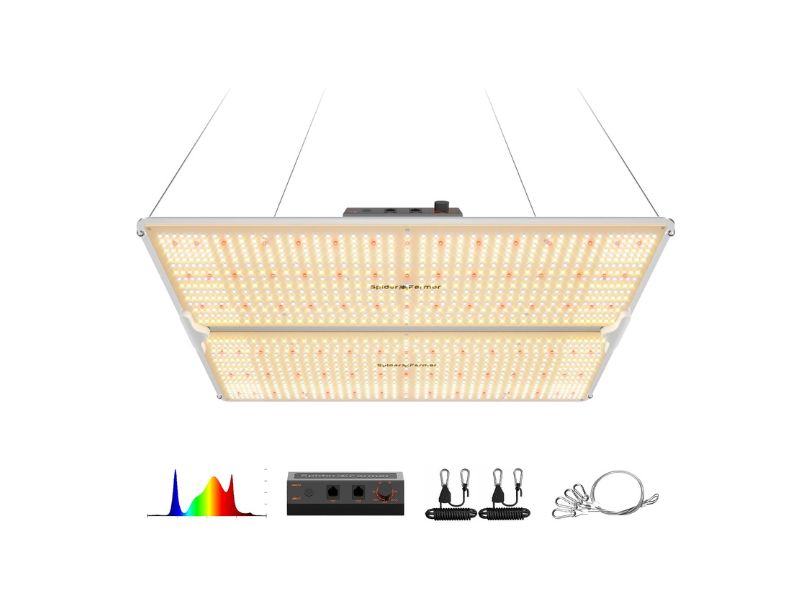
My primary recommendation is the Spider Farmer SF4000 450W LED Grow Light. I would choose it for most buyers because its current 2026 listing combines 450W actual power, 2.7 µmol/J system PPE, dimming, full-spectrum output, an updated diode layout, and 4×4-oriented coverage in a relatively straightforward panel-style fixture.
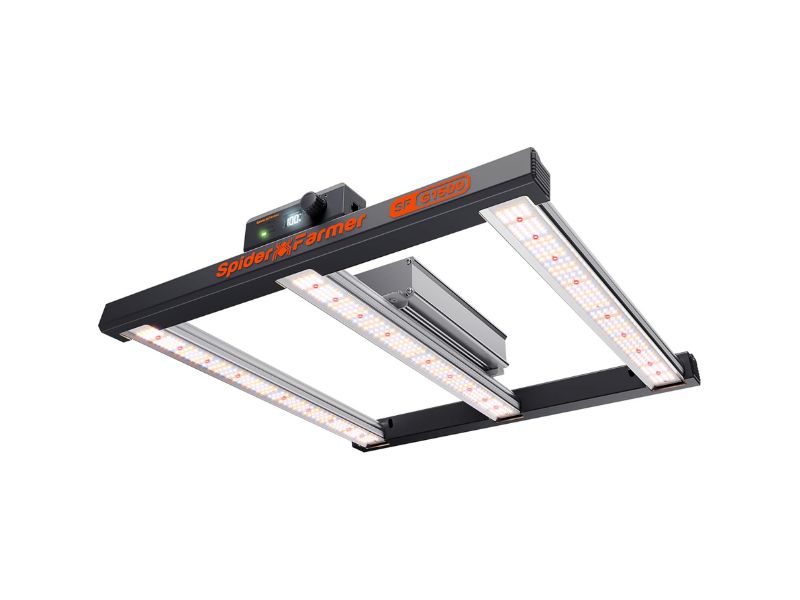
I would choose the Spider Farmer G5000 480W LED Grow Light when bar-style light distribution and a broader rectangular canopy are priorities. The current listing identifies it as a 480W dimmable bar-style system with approximately 2.8 µmol/J PPE and app-enabled remote-control functionality.
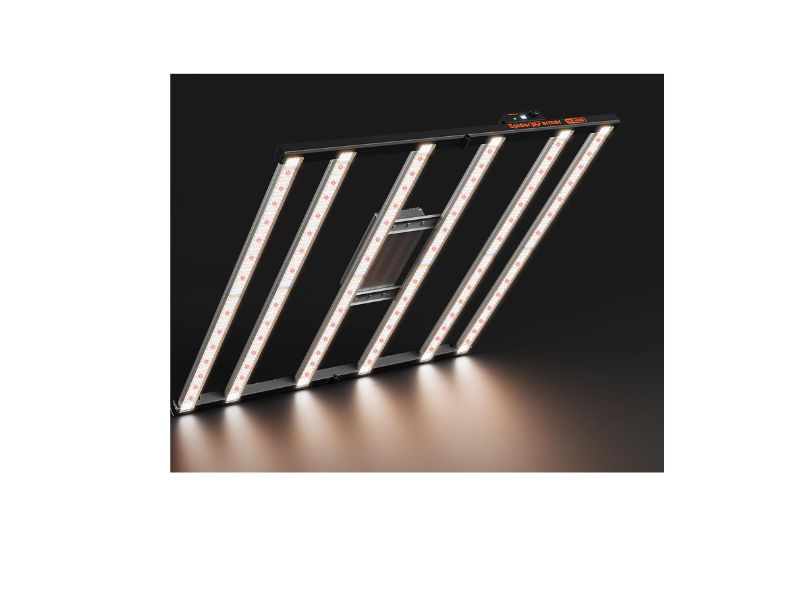
For growers who want a more performance-focused 4×4 bar fixture, I would choose the Spider Farmer SE5000 480W LED Grow Light. Its current listing specifies 480W power and approximately 2.9 µmol/J PPE, together with bar-style construction, full-spectrum output, smart remote control, and a 4×4 coverage configuration.
3 Best LED Grow Lights Under $500 Reviewed
| Image | Product Name | Check Price |
|---|---|---|
Best Choice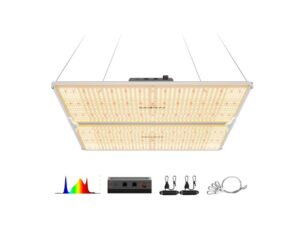 | pider Farmer SF4000 450W LED Grow Light | Check Price |
Second Best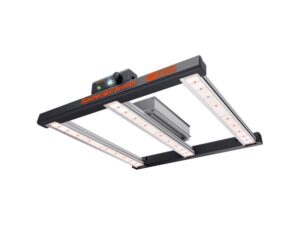 | Spider Farmer G5000 480W LED Grow Light | Check Price |
Third Choice | Spider Farmer SE5000 480W LED Grow Light | Check Price |
1. Spider Farmer SF4000 450W LED Grow Light
Key Features
- 450W actual power
- 2.7 µmol/J system PPE
- Full-spectrum output
- 2026 updated diode arrangement
- Dimmable intensity
- Controller compatibility
- Fanless cooling
- Designed around 4×4 grow spaces
- Five-year listed after-service support
The Spider Farmer SF4000 is my primary recommendation because it provides a lot of usable grow-light capacity without requiring a large commercial bar frame.
The current 2026 Amazon listing identifies it as a 450W dimmable full-spectrum fixture with 2.7 µmol/J system PPE. Spider Farmer also states that the newer diode arrangement concentrates more emitters toward the edges to improve PPFD uniformity.
That is important in a 4×4 grow area.
A 4×4 footprint covers 16 square feet. With a powerful grow light, it is easy to produce excellent intensity directly beneath the center while leaving perimeter plants significantly weaker.
Better diode distribution can help reduce that imbalance.
I would consider the SF4000 for:
- Tomato seedlings that will become large plants
- Peppers
- Eggplants
- Herbs
- Leafy greens
- Larger houseplants
- Mature indoor vegetables
- A dedicated 4×4 tent
Its dimmer is one of the most useful features.
Four hundred fifty watts is far more output than freshly emerged seedlings need at close range.
Instead of buying one light for propagation and another for later growth, you can begin at lower output and increase intensity as the canopy expands.
This makes the SF4000 much more versatile than a fixed-output fixture.
For example, seedlings may initially occupy only a fraction of a 4×4 space.
As tomato or pepper plants mature, their leaves can eventually fill much of the available footprint.
The same light can adapt to both situations.
Spider Farmer’s current spectrum description includes broad white output along with red and infrared components, including 3000K, 5000K, 660nm, and IR.
I would not choose it just because it includes several wavelength labels.
For practical indoor growing, I would place greater emphasis on:
- PPFD at the canopy
- Coverage
- Photoperiod
- Hanging distance
- Environmental conditions
The fanless design is another practical advantage.
There is no small fixture fan generating noise or adding another moving component.
That does not mean the light is heat-free.
A 450W LED still adds substantial heat to a small room or tent, so proper ventilation remains important.
The fixture also supports controller-based scheduling and unified control according to the current product description.
That gives you room to automate your setup later without making smart control mandatory on day one.
One tradeoff is physical light distribution.
Although Spider Farmer has improved the diode layout, the SF4000 remains more concentrated than a large multi-bar fixture.
If edge-to-edge uniformity is my absolute priority, I would move toward the G5000 or SE5000.
But for a buyer who wants strong 4×4 performance in a straightforward fixture, the SF4000 is difficult to ignore.
What I Like
- Strong 450W growth headroom
- Published 2.7 µmol/J system PPE
- Dimmable
- Updated edge-focused diode layout
- Full-spectrum output
- Simple one-piece installation
- Excellent marketplace history
What I Do Not Like
- Less physically distributed than a bar fixture
- Far too powerful for a tiny seedling setup
- Requires good ventilation at high output
The SF4000 is my primary choice because it combines serious 4×4 output, dimming, good system efficiency, and simple installation while staying comfortably within the target budget in the current Amazon snapshot.
2. Spider Farmer G5000 480W LED Grow Light
Key Features
- 480W actual power
- Approximately 2.8 µmol/J PPE
- Bar-style construction
- Full-spectrum output
- Dimmable
- App remote control
- Strong rectangular-canopy fit
- Passive thermal design
The Spider Farmer G5000 is the model I would choose when canopy distribution matters more than having one compact panel.
The current Amazon product data identifies it as a 480W system, while Spider Farmer’s comparison information lists approximately 2.8 µmol/J PPE.
The advantage of the G5000 is its physical architecture.
With a bar fixture, the LEDs are distributed over a wider area rather than being concentrated around one central board.
That can improve:
- Edge coverage
- Corner illumination
- Airflow through the fixture
- Heat distribution
- PPFD consistency
This becomes particularly useful with several plants sharing a canopy.
Imagine four large pepper plants.
If one plant sits directly beneath a powerful center hotspot and the others sit toward weaker edges, development may become uneven.
A distributed bar system helps address that problem.
The G5000 is particularly attractive for:
- Multiple tomato plants
- Pepper plants
- Herbs
- Lettuce
- Dense vegetable seedlings
- Rectangular grow areas
- 4×4-class indoor gardens
The 480W power draw provides substantial mature-growth headroom.
For seedlings, I would run the fixture well below maximum intensity.
As plants develop larger leaves, the dimmer allows output to increase gradually.
That versatility is one of the main reasons to buy a larger light within a $500 budget rather than purchasing several weaker lamps.
The published 2.8 µmol/J PPE is also meaningful.
PPE describes how efficiently electrical power becomes photosynthetically active photon output.
It is more useful for comparing horticultural fixtures than relying on vague “equivalent wattage” claims.
The G5000 also brings smart control into the picture.
Its current Amazon presentation identifies the updated configuration as supporting app remote control.
That can be useful when a fixture is mounted high above a canopy.
Instead of reaching through plants every time you want to alter intensity or scheduling, supported adjustments can be handled remotely.
Smart control is convenient rather than biologically necessary.
Plants respond to the actual light cycle and intensity, not whether those settings came from an app.
A normal external timer remains entirely workable if you prefer a simpler system.
The main drawback compared with the SF4000 is physical size.
Bar fixtures naturally occupy more horizontal space.
That is an advantage in a dedicated tent, but it is less convenient if you need a compact fixture for a shelf or open room.
What I Like
- 480W actual power
- Strong 2.8 µmol/J published PPE
- Broad bar-style distribution
- Dimming
- Smart remote-control capability
- Good fit for multiple plants
- Better physical uniformity than a compact board
What I Do Not Like
- Larger physical footprint
- More fixture than a small propagation area needs
- Smart controls may be unnecessary for basic setups
The G5000 is the model I would choose when I want bar-style uniformity and 480W of growth headroom without exceeding the target spending ceiling.
3. Spider Farmer SE5000 480W LED Grow Light
Key Features
- 480W actual power
- Approximately 2.9 µmol/J PPE
- Distributed bar-style construction
- Full-spectrum output
- Dimmable
- Smart remote app control
- 4×4 coverage configuration
- Large-canopy design
The Spider Farmer SE5000 is the technically strongest efficiency-focused option of these three.
Its current Amazon listing identifies the selected variant as 4×4 coverage with a 480W power draw. Spider Farmer’s comparison specifications list approximately 2.9 µmol/J PPE for the active model.
That puts it ahead of the SF4000’s published 2.7 µmol/J figure and slightly ahead of the G5000’s listed 2.8 µmol/J.
Efficiency matters more at higher power.
A grow light can run many hours every day, so converting more of its electrical input into photosynthetically useful photons is valuable.
The SE5000 uses a distributed bar architecture.
This makes it particularly suitable for a 4×4 canopy where several plants need comparable intensity.
It is a strong fit for:
- Mature tomatoes
- Multiple peppers
- Eggplants
- Large herb canopies
- Leafy greens
- Several nursery trays
- Dedicated 4×4 grow tents
I particularly like a wide bar fixture for flat or nearly flat canopies.
Lettuce, herbs, and tightly managed vegetable plants benefit when the entire growing area receives relatively consistent photon density.
The SE5000 also provides considerably more headroom than a small 100W or 200W panel.
That means a grower can begin with seedlings and continue using the same fixture as the plants mature.
Again, dimming is essential.
There is no reason to expose tiny seedlings to full 480W output at close distance.
Start conservatively and increase intensity in response to plant growth and manufacturer guidance.
Signs of inadequate usable light can include:
- Stretching
- Long internodes
- Weak stems
- Strong leaning
Signs that light intensity may be excessive include:
- Bleaching
- Pale top growth
- Upward curling
- Localized stress
The SE5000 also supports smart remote app control in its current configuration.
That becomes useful for growers who change intensity through several stages.
You can use automation to make the daily routine more repeatable rather than manually adjusting controls each time.
One reason the SE5000 ranks third rather than first is the ranking method used for this guide: the exact Amazon listing currently has fewer customer ratings than SF4000 and G5000. The rating count itself is not a technical performance measure, but it is useful marketplace context.
What I Like
- Strong 2.9 µmol/J published PPE
- 480W output
- Excellent bar-style distribution
- Dimmable
- Smart control
- 4×4-oriented design
- Strong mature-canopy potential
What I Do Not Like
- Large fixture requires dedicated space
- Excessive for a small seedling shelf
- App control adds complexity if you only need a fixed schedule
The SE5000 is the model I would choose when system efficiency and distributed 4×4 illumination matter more than marketplace rating volume.
LED Grow Lights Under $500 Comparison
| Product | Actual Power | Fixture Style | Published PPE | Dimming | Smart Control | Best Fit |
| Spider Farmer SF4000 | 450W | Board-style | 2.7 µmol/J | Yes | Controller compatible | Simple 4×4 setup |
| Spider Farmer G5000 | 480W | Bar style | ~2.8 µmol/J | Yes | App control | Broad, even canopy |
| Spider Farmer SE5000 | 480W | Bar style | ~2.9 µmol/J | Yes | App control | Efficiency-focused 4×4 |
The SF4000 is the easiest all-around choice, G5000 gives you broader physical light distribution, and SE5000 offers the strongest published PPE of these three current configurations.
How to Choose the Best LED Grow Light Under $500
Do Not Spend the Entire Budget Just Because You Can
A $500 ceiling does not mean you need a fixture near the ceiling.
The correct purchase depends on:
- Grow-space size
- Plant type
- Growth stage
- Target intensity
- Fixture efficiency
A 450W light in a well-matched 4×4 space can make much more sense than buying a larger fixture and operating it permanently at low power.
Start With Grow-Space Size
Your active canopy matters more than the dimensions printed on the tent box.
A mostly empty 4×4 tent does not automatically need a full 450–480W fixture.
Conversely, several mature plants filling the entire footprint can make that level of output highly useful.
Measure the area actually occupied by leaves.
Is 450W Enough for a 4×4 Tent?
For many indoor growing applications, yes.
The SF4000 is currently sold as a 450W fixture for a 4×4 growing configuration.
Crop demand still matters.
Herbs and leafy greens can require considerably less intensity than a dense canopy of mature high-light plants.
Is 480W Good for a 4×4 Tent?
Yes, this is a particularly useful power class for an efficient modern 4×4 fixture.
Both G5000 and SE5000 use roughly 480W actual input, with the SE5000 selected variant specifically identified around 4×4 coverage.
Dimming gives you room to reduce output whenever full intensity is unnecessary.
450W vs 480W Grow Lights
The difference is only 30 watts.
That is approximately a 6.7% increase from 450W to 480W.
In practice, I would care more about:
- PPE
- PPF
- PPFD map
- Fixture geometry
- Dimmer quality
than the small difference in wall draw.
Panel vs Bar Grow Lights
The SF4000 is more compact.
The G5000 and SE5000 use more physically distributed layouts.
Panel-Style Advantages
- Compact
- Simple installation
- Fewer structural pieces
- Easy for one central canopy
Bar-Style Advantages
- Better edge potential
- Wider diode spacing
- Better airflow through the light
- Reduced center hotspot tendency
For a full 4×4 canopy, I usually favor bars when space permits.
Understand PPE
PPE means Photosynthetic Photon Efficacy.
It measures how many photosynthetically active photons a fixture produces for each joule of electrical energy.
In the current configurations:
- SF4000: 2.7 µmol/J
- G5000: approximately 2.8 µmol/J
- SE5000: approximately 2.9 µmol/J
When comparing numbers, make sure they refer to complete-system efficiency rather than individual diode specifications.
PPFD Is What Plants Actually Receive
PPFD measures the density of photosynthetically useful photons reaching a particular area of canopy.
It changes depending on:
- Hanging height
- Dimmer setting
- Position beneath the light
- Fixture geometry
- Reflective surfaces
This is why one impressive maximum PPFD number does not tell the whole story.
Look at the complete map when the manufacturer publishes one.
Edge Uniformity Matters
Imagine 16 plants distributed evenly through a large tray.
If the center receives excellent light but edge plants receive far less, the canopy develops unevenly.
A good grow light should make a large percentage of the growing area genuinely useful.
This is one reason bar fixtures can justify their larger physical size.
Best LED Grow Light Under $500 for a 4×4 Tent
For straightforward installation, I would choose SF4000.
For distributed bar coverage, I would move to G5000.
For stronger published PPE within the bar format, I would choose SE5000.
The choice depends on whether compactness or distribution matters more.
Best Option for Seedlings
Any of these fixtures can support seedlings when dimmed appropriately, but all three are excessive if your only goal is one small nursery tray.
They make sense when you plan to keep the same plants under the fixture after propagation.
That can eliminate the need to upgrade lighting later.
Best Option for Tomato Plants
Tomatoes can become large, high-light plants.
For a full 4×4 tomato canopy, I prefer one of the bar fixtures because multiple plants benefit from broad diode distribution.
The G5000 and SE5000 both provide 480W-class headroom.
Best Option for Pepper Plants
Peppers can remain indoors for a long period before transplanting and may continue growing indoors to maturity.
Dimming is particularly useful because their lighting requirement increases significantly between seedling and mature stages.
All three fixtures offer the necessary adjustability.
Best Option for Lettuce and Herbs
A full 450–480W output is generally unnecessary for a modest herb or lettuce setup.
For a large broad canopy, however, bar-style distribution is useful.
I would use dimming to create moderate even light rather than maximizing center intensity.
Full Spectrum Is the Practical Choice
All three selected fixtures use broad full-spectrum horticultural output.
This allows one fixture to support several plant stages.
It also makes visual inspection easier than strongly purple red/blue-only lighting.
You can more easily see:
- Yellow leaves
- Pest damage
- Bleaching
- Brown margins
- General plant condition
Smart Control Is Convenient, Not Essential
G5000 and SE5000 offer smart-control functionality in the current product family.
That is convenient for:
- Scheduling
- Remote adjustments
- Stage-based intensity changes
But smart control does not replace correct horticultural settings.
A basic external timer and manual dimmer can still produce excellent results.
Electricity Use Matters
A 450W fixture at maximum output uses:
0.45 kW × 12 hours = 5.4 kWh per day
A 480W fixture uses:
0.48 kW × 12 hours = 5.76 kWh per day
Over 30 days, that becomes approximately:
162 kWh for 450W
and
172.8 kWh for 480W
before accounting for dimming.
Multiply by your local electricity rate to estimate operating cost.
Heat Management Still Matters
High-efficiency LEDs reduce wasted energy compared with less efficient lighting technologies, but 450–480W is still a significant thermal load.
Inside a grow tent, consider:
- Exhaust fan
- Fresh-air intake
- Canopy circulation
- Temperature monitoring
Do not treat fanless lighting as heatless lighting.
Check Electrical Load
Your grow light may not be the only device on the circuit.
A typical indoor setup can also contain:
- Exhaust fan
- Circulation fans
- Humidifier
- Dehumidifier
- Heater
- Pumps
Calculate electrical demand using actual input wattage rather than model names or equivalent-watt claims.
Common Under-$500 Grow-Light Buying Mistakes
Spending the Maximum Budget Automatically
Buy for your canopy, not the budget ceiling.
Choosing Only by Wattage
Efficiency and distribution matter too.
Ignoring PPE
Two fixtures with similar wattage can produce different photon output.
Looking Only at Center PPFD
Check edge and corner performance.
Buying a 480W Fixture for One Tray
Match power to scale.
Running Full Output Over Seedlings
Use dimming.
Ignoring Heat
A 450–480W fixture needs environmental planning.
Ignoring Current Price Changes
A product that qualifies today can move above the target ceiling later.
Frequently Asked Questions
What is the best LED grow light under $500?
The Spider Farmer SF4000 is my primary recommendation for most buyers under this ceiling.
It combines 450W actual power, 2.7 µmol/J system PPE, dimming, full-spectrum output, and a 4×4-oriented design.
Can I get a powerful LED grow light for under $500?
Yes, the budget can cover serious 450–480W-class fixtures for a 4×4 garden.
All three products selected here qualified below the ceiling in the current U.S. Amazon snapshot used for this guide.
Is the Spider Farmer SF4000 good for a 4×4?
Yes, its current configuration is specifically positioned as a 450W 4×4 grow light.
It also provides dimming and 2.7 µmol/J system PPE.
Is 450 watts enough for a 4×4 tent?
Yes for many crops when fixture efficiency and canopy distribution are appropriate.
Plant requirements and target PPFD ultimately determine whether full output is necessary.
Is 480 watts enough for a 4×4?
Yes, 480W is a strong modern LED power class for many 4×4 applications.
Both G5000 and SE5000 use approximately 480W input.
Which of these lights is most efficient?
SE5000 has the strongest published PPE here at approximately 2.9 µmol/J.
G5000 follows at about 2.8 µmol/J, while SF4000 lists 2.7 µmol/J.
Which is best for even canopy coverage?
I would favor G5000 or SE5000 because their bar architecture spreads LEDs broadly.
The best choice ultimately depends on the exact canopy shape and hanging height.
Which grow light is simplest to install?
The SF4000 is the most straightforward option because of its compact one-piece format.
It provides strong 4×4-class output without requiring the footprint of a large distributed bar frame.
Which models offer smart control?
The current G5000 and SE5000 configurations provide smart-control functionality.
That can simplify remote intensity changes and automated schedules.
Is a bar-style grow light better?
Bars often improve edge distribution and airflow but take up more physical space.
A compact panel remains attractive when mounting simplicity is more important.
What does 2.9 µmol/J mean?
It measures photosynthetic photon output produced per joule of electrical energy.
Spider Farmer’s current SE5000 comparison data lists approximately 2.9 µmol/J PPE.
Is higher PPE always better?
Higher comparable system PPE generally indicates better photon efficiency, but distribution still matters.
A very efficient fixture can still perform poorly if it does not match the shape of the canopy.
Are these lights good for seedlings?
Yes when dimmed, but their full output is unnecessary for small seedlings.
They make the most sense if the same fixture will continue supporting plants after propagation.
Which is best for tomato plants?
I would favor G5000 or SE5000 for several mature tomatoes because of the bar layout.
Their 480W input also provides significant mature-canopy headroom.
Which is best for peppers?
Any of the three can support peppers through several stages when intensity is adjusted properly.
Use lower output for seedlings and raise intensity gradually as the canopy develops.
Can I grow herbs with these lights?
Yes, though full output may be unnecessary for many herb-growing setups.
Dimming allows a large fixture to provide broad moderate light over a wider herb canopy.
Do I need a timer?
A consistent automated photoperiod is much easier to maintain with a timer or controller.
Smart-equipped models can provide scheduling, while conventional setups can use a suitably rated external timer.
How much electricity does a 480W grow light use?
At full power for 12 hours, a 480W fixture consumes about 5.76 kWh daily.
Actual usage decreases when the dimmer reduces wall draw.
Do 450W grow lights produce much heat?
Yes, a 450W fixture adds a meaningful thermal load to an enclosed grow space.
Plan appropriate ventilation and air circulation rather than relying on passive fixture cooling alone.
Will these lights always remain under $500?
No, retailer pricing can change at any time.
The models qualified under the target ceiling in the current snapshot, so the exact Amazon listing should be checked before ordering.
Conclusion
The best LED grow light under $500 does not need to consume the entire budget. What matters is getting enough photon output for your canopy while preserving efficiency, PPFD uniformity, dimming, full-spectrum versatility, sensible heat management, and reliable controls.
The Spider Farmer SF4000 remains my primary recommendation. Its 450W actual draw, 2.7 µmol/J system PPE, updated diode arrangement, dimming, and 4×4-oriented design make it an unusually straightforward way to build a serious indoor garden without moving into oversized commercial hardware.
The Spider Farmer G5000 is the alternative I would choose when broad bar-style distribution matters more. Its 480W power class and approximately 2.8 µmol/J PPE provide strong headroom while spreading the LEDs across a larger physical footprint.
The Spider Farmer SE5000 is the efficiency-focused option. Its current 480W configuration and approximately 2.9 µmol/J PPE make it particularly attractive for a serious 4×4 canopy where efficient photon production and broad bar-style coverage are priorities.
For most buyers, I would choose Spider Farmer SF4000. For broader distributed coverage, I would choose G5000. If published photon efficiency is the deciding factor, I would choose SE5000.

I’m Maya L. Greenwood, a lifelong plant lover who believes anyone can grow something beautiful with the right guidance. After years of testing soil mixes, pruning methods, irrigation tricks, and pest-safe solutions, I started EasyGardenTips.com to turn hard-won lessons into step-by-step advice. From seed starting and container gardens to composting and seasonal checklists, my goal is to make gardening simple, sustainable, and fun.