3 Best LED Grow Lights With UV: Spectrum and Safety Guide
Ultraviolet output is often mentioned in grow-light advertising without enough detail to determine whether it will be useful. Some fixtures include only a few near-UV diodes within the main array. Others place UVA on a supplemental channel that can be turned on separately. Those designs provide very different levels of control.
The best led grow lights with uv should first function as competent full-spectrum plant lights. UV should be treated as a controlled supplement—not as a substitute for adequate photosynthetic output, even canopy coverage, correct temperature, airflow, watering, and nutrition.
My primary recommendation is the SAYHON SH2000 Dimmable LED Grow Light With Supplemental UVA and IR. Its approximately 208-watt draw, published 2.7 µmol/J efficacy, 390nm UVA diodes, and switchable supplemental spectrum provide the most useful overall balance. The ability to control the UVA/IR/blue supplement separately is more practical than leaving UV permanently tied to the primary white-and-red array.
I would choose the AGLEX K2000 Full Spectrum LED Grow Light With UV and IR for a buyer who wants an integrated, dimmable board-style fixture with 405nm near-UV and 730nm infrared. It is straightforward and compact, although the UV channel does not offer the same degree of independent scheduling described for the SAYHON supplemental bar.
The FECiDA 260W Dimmable LED Grow Light With UV and IR is the more relevant alternative when high power from a compact housing is needed and a cooling fan is acceptable. Its integrated UV/IR spectrum and active cooling distinguish it from the fanless fixtures, but the fan introduces noise and another component that requires maintenance.
These products are intended for controlled indoor growing areas rather than ordinary living-room illumination. People and pets should not remain beneath active UV emitters, and users should follow the exact fixture instructions instead of copying a UV schedule from an unrelated model.
The Three UV Approaches Compared
| Product | UV design | UV wavelength | Main power draw | Dimming | Cooling | Intended growing area |
| SAYHON SH2000 | Switchable supplemental UV/IR/blue bar | 390nm UVA | About 208W | 5–100% main output | Passive, fanless | About 3×3 ft flowering or 4×4 ft vegetative |
| AGLEX K2000 | UV and IR integrated into main array | 405nm near-UV | Approximately 180–200W by version | Yes | Passive | Compact tent or indoor garden |
| FECiDA 260W | UV and IR integrated into main spectrum | Manufacturer-listed UV/IR | 260W rated draw | Yes | Built-in fan | Approximately 3×3 or 2×4 ft use |
The SAYHON offers the most meaningful UV control because its supplemental channel can be switched separately. AGLEX and FECiDA offer simpler integrated-spectrum operation, but users have less freedom to schedule UV independently from the main photosynthetic light.
Coverage claims should be treated as starting points. The useful flowering area is normally smaller than the vegetative footprint because flowering crops generally require greater intensity.
Best LED Grow Lights With UV Reviewed
| Image | Product Name | Check Price |
|---|---|---|
Best Choice | SAYHON SH2000 Dimmable LED Grow Light With Supplemental UVA and IR | Check Price |
Second Best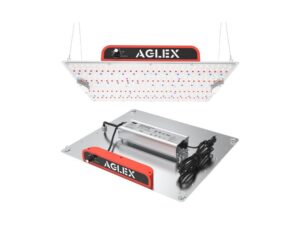 | AGLEX K2000 Full Spectrum LED Grow Light With UV and IR | Check Price |
Third Choice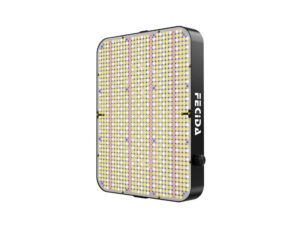 | FECiDA 260W Dimmable LED Grow Light With UV and IR | Check Price |
1. SAYHON SH2000 Dimmable LED Grow Light With Supplemental UVA and IR
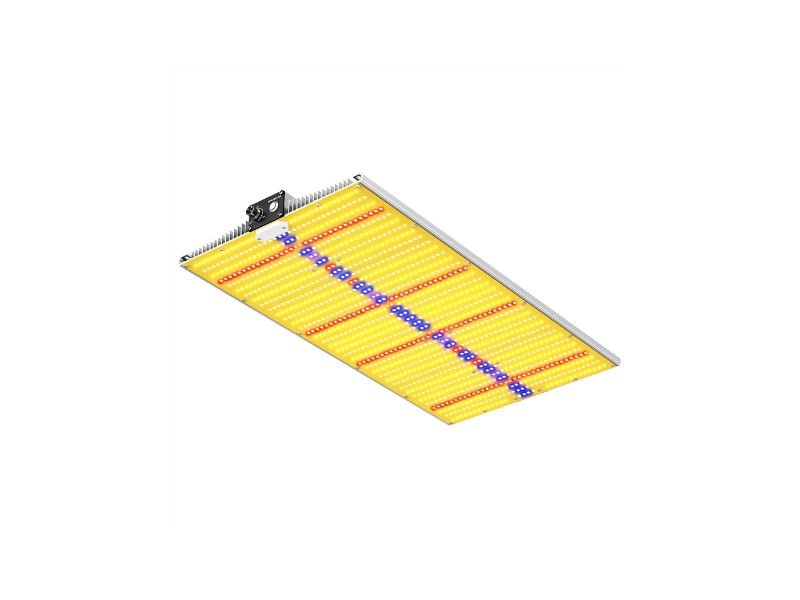
Key Features
- Approximately 208W actual power draw
- Published efficacy of about 2.7 µmol/J
- 592 total diodes
- Four 390nm UVA diodes
- Eight 730nm infrared diodes
- 20 supplemental 460nm blue diodes
- 660nm deep-red, 2700K, and 5000K main spectrum
- Switchable supplemental spectrum bar
- Main output adjustable from approximately 5–100%
- Passive fanless cooling
The SAYHON SH2000 ranks first because it separates the supplemental UVA, infrared, and blue diodes from the primary white-and-red array. That arrangement gives the grower more control over when the non-primary wavelengths operate.
Its main spectrum includes 2700K warm white, 5000K cool white, and 660nm deep red. This combination supplies most of the usable photons needed throughout seedling, vegetative, and flowering stages. UVA should be viewed as a small addition to that foundation.
The fixture uses four 390nm UVA diodes. A 390nm wavelength sits within the UVA band, close to visible violet light. It is not the same as UVB, and the fixture should not be expected to reproduce outdoor sunlight’s complete ultraviolet profile.
At approximately 208 watts, the light is powerful enough to damage or bleach plants if placed too close at full output. The main dimmer provides a useful way to begin at lower intensity during seedling or acclimation stages.
The supplemental switch is the product’s most important practical advantage. It allows the primary spectrum to run on a normal plant-light schedule while the UV-containing channel follows a shorter, controlled period when appropriate.
The passive aluminum structure operates without a fan, eliminating fan noise and routine fan cleaning. The driver and heat sink can still become hot, so adequate ventilation and safe clearance remain necessary.
My verdict: The SH2000 provides the strongest UV management in this comparison. I recommend it for growers who want integrated UVA but also want the ability to limit that channel without switching off the main plant light.
2. AGLEX K2000 Full Spectrum LED Grow Light With UV and IR
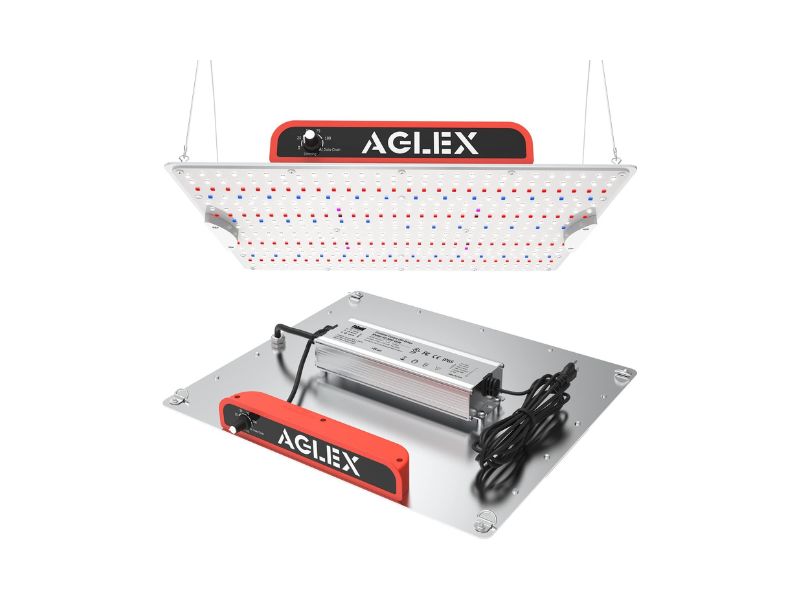
Key Features
- Approximately 180–200W power class, depending on current version
- 528 LEDs
- 3000K warm-white diodes
- 5000K white diodes
- 460nm blue
- 660nm deep red
- 405nm near-UV
- 730nm infrared
- Dimmable output
- Daisy-chain control capability
- Fanless board-style construction
The AGLEX K2000 is a compact integrated-spectrum alternative. Its diode mixture includes white, blue, deep red, infrared, and 405nm near-UV output in one board.
At 405nm, its UV-labeled output lies at the boundary between UVA and visible violet light. It may contribute near-UV photons, but buyers should not interpret it as a powerful UVB fixture or assume that it produces a large biological UV dose.
The main array is dimmable, making the fixture adaptable to seedlings and mature plants. However, dimming the entire array changes multiple wavelengths together. It does not offer the same independent UV scheduling flexibility as SAYHON’s supplemental bar.
Daisy-chain capability can simplify control of several fixtures in a larger growing area. The connected load and manufacturer’s fixture limit must be respected, and the timer or controller must be rated for the total power.
Its fanless construction avoids active-cooling noise. Heat is dispersed through the board and heat sink, so air circulation around the fixture remains important.
The advertised coverage should not be interpreted as an area that receives identical intensity from edge to edge. A PPFD map at the intended hanging height provides more useful guidance than the largest stated footprint.
My verdict: AGLEX K2000 is a practical choice for buyers who want a simple dimmable full-spectrum board with a modest near-UV component. It ranks behind SAYHON because its integrated UV is less independently controllable.
3. FECiDA 260W Dimmable LED Grow Light With UV and IR
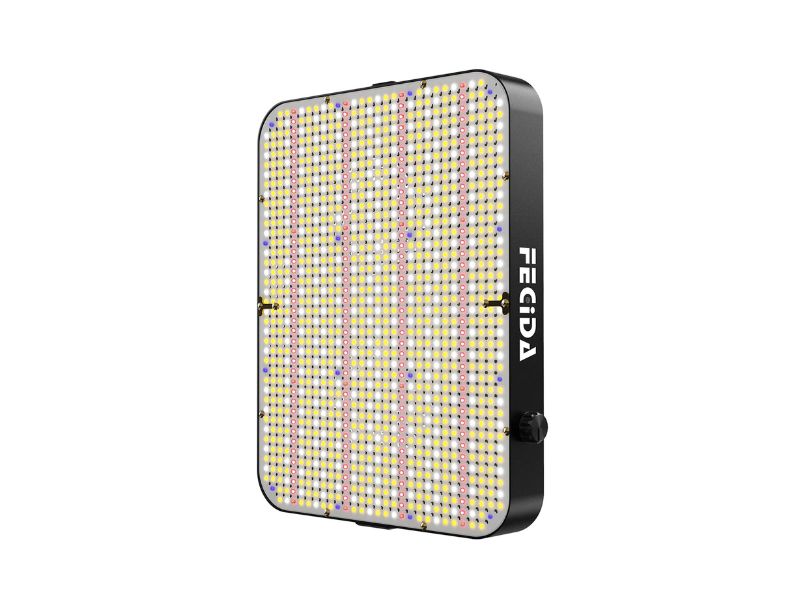
Key Features
- 260W rated actual power
- Full spectrum with UV and infrared diodes
- Dimmable output
- Approximately 24,000-lumen published output
- Compact board-style housing
- Built-in cooling fan
- Daisy-chain capability
- Suitable for concentrated indoor growing areas
- Hanging hardware included
- UV spectrum integrated with the fixture
The FECiDA 260W is included for growers who prioritize higher power from a compact fixture. Its spectrum includes UV and IR alongside white and red plant-light wavelengths.
Unlike the fanless SAYHON and AGLEX fixtures, FECiDA uses active cooling. A fan can move heat away from a compact board more effectively, but it adds audible noise, collects dust, and can eventually wear.
The 260-watt draw is significant in a small tent. Heat management should be planned using room temperature, exhaust capacity, plant height, and driver temperature rather than assuming LEDs produce no heat.
The integrated dimmer is valuable because full power may be inappropriate for seedlings, fresh cuttings, or plants being introduced from weak lighting. Start conservatively and increase intensity gradually.
The UV component is integrated rather than presented as a separately scheduled channel. Consequently, reducing the dimmer also changes the primary photosynthetic output. Growers seeking precise UV timing should prefer the SAYHON or use a dedicated supplemental UVA system with a separate timer.
My verdict: FECiDA suits a compact growing space where high output and active cooling are acceptable. It is less attractive for noise-sensitive rooms or users who want independent UV control.
Detailed Comparison
| Product | Spectrum control | UVA/near-UV detail | Power | Published efficacy | Fan | Daisy chain | Primary advantage | Important limitation |
| SAYHON SH2000 | Main dimmer plus supplemental switch | 390nm UVA, four diodes | About 208W | About 2.7 µmol/J | No | Model-dependent | Best control over supplemental UV | Supplemental channel combines UV, IR, and blue |
| AGLEX K2000 | Whole-array dimming | 405nm near-UV | About 180–200W | Version-dependent | No | Yes | Simple integrated spectrum | UV cannot be managed as precisely |
| FECiDA 260W | Whole-array dimming | Integrated UV claim | 260W | Not clearly separated by UV channel | Yes | Yes | High compact output | Fan noise and integrated UV control |
SAYHON provides the clearest disclosed UV wavelength and diode count, along with the most useful switching arrangement. AGLEX identifies a 405nm near-UV component but mixes it into the primary array. FECiDA emphasizes total output and active cooling more than exact UV management.
What “UV” Means in a Grow Light
Ultraviolet radiation sits beyond the violet end of the visible spectrum. It is commonly divided into three bands.
UVA
UVA generally covers approximately 315–400nm. It penetrates more deeply into skin than shorter ultraviolet wavelengths and can contribute to long-term eye and skin damage.
Most consumer LED grow lights that advertise UV use a small number of UVA or near-UV diodes. SAYHON’s 390nm diodes fall within UVA.
UVB
UVB generally covers approximately 280–315nm. It has greater potential to cause sunburn and biological damage. Conventional LED grow panels rarely include meaningful UVB because suitable emitters are more specialized, less efficient, and require stricter safety measures.
A fixture labeled “UV” should not be assumed to contain UVB. Check the published wavelength.
UVC
UVC generally covers approximately 100–280nm. It is used for germicidal applications and should not be included in an ordinary occupied plant-growing fixture.
Do not purchase a germicidal UVC lamp as a grow-light supplement. UVC can damage eyes, skin, plants, plastics, and other materials.
Near-UV or Violet
Wavelengths around 400–405nm sit at the UVA/visible-violet boundary. Products may call 405nm “UV,” although much of that output may be visibly violet.
This does not necessarily make the diode useless, but it is different from a 365nm UVA emitter or a UVB source.
Does UV Improve Plant Growth?
UV is not part of the standard 400–700nm photosynthetically active radiation range used for most PPFD measurements. Plants can still respond biologically to ultraviolet exposure, but UV is not a replacement for adequate PAR.
Potential plant responses may include:
- Changes in pigmentation
- Production of protective compounds
- More compact morphology in some conditions
- Stress-response activation
- Changes in leaf thickness
- Species-specific secondary-metabolite responses
These outcomes are not guaranteed. Plant genetics, developmental stage, UV wavelength, dose, duration, temperature, nutrition, and baseline light intensity all influence the response.
Too much UV can:
- Damage leaf tissue
- Bleach exposed surfaces
- Reduce photosynthetic capacity
- Slow growth
- Increase water stress
- Damage beneficial organisms
- Degrade plastics and tent materials
The correct goal is controlled exposure, not maximum UV.
Integrated UV Versus Supplemental UV Bars
Integrated UV
An integrated fixture places UV or near-UV diodes among the white, red, and blue LEDs.
Advantages include:
- One fixture
- Simple installation
- Fewer cords
- Compact design
- UV distributed with the main array
Limitations include:
- UV may run whenever the main light runs
- Dimming changes all wavelengths together
- UV diode count may be very small
- Replacement requires servicing the complete fixture
- Exact UV dose may be difficult to determine
AGLEX and FECiDA follow this general approach.
Switchable Supplemental UV
A switchable design places the UV-containing diodes on a secondary circuit or bar.
Advantages include:
- Shorter independent UV sessions
- Main light can operate without UV
- Easier plant acclimation
- Lower unnecessary human exposure
- More flexible flowering or finishing schedules
The SAYHON supplemental circuit offers this benefit, although its secondary bar combines UVA with infrared and blue. The three components cannot necessarily be scheduled independently from one another.
Separate Standalone UV Bars
A dedicated UV bar provides the greatest control because it can use its own timer and mounting distance. However, it requires extra wiring, mounting hardware, safety planning, and compatibility checks.
A UV-only bar is not a complete grow light. Plants still require a primary full-spectrum fixture.
The Importance of the Primary Spectrum
White Light
White LEDs supply a broad mixture of visible wavelengths and make plant inspection easier. Warm and cool white diodes can be combined to balance blue and red output.
Blue Light
Blue light around 450–470nm contributes to vegetative form, leaf development, and compact growth. SAYHON specifies a supplemental 460nm component.
Deep Red
Deep red around 660nm is efficiently used in photosynthesis. All three products include red output as part of their full-spectrum design.
Far Red or Infrared
Grow-light listings frequently call 730nm output “IR,” although 730nm is also discussed as far red. It can influence plant morphology and photoperiod responses.
Far red should not be confused with the thermal infrared emitted by a heat lamp.
Spectrum Cannot Correct Poor Intensity
A fixture containing UV, infrared, red, and blue can still be unsuitable if it does not deliver enough photons to the canopy. Conversely, a high-output fixture can damage plants if mounted too close.
Prioritize:
- Appropriate PPFD
- Even coverage
- Adequate DLI
- Reliable cooling
- Correct photoperiod
- Then supplemental UV strategy
Understanding Output Measurements
PPFD
Photosynthetic photon flux density measures PAR photons arriving at a square meter each second. Its unit is µmol/m²/s.
PPFD changes with height and canopy position. A maximum center value does not represent corner intensity.
PPF
Photosynthetic photon flux measures the total PAR photons emitted each second in µmol/s.
It describes total output but not how evenly that output reaches plants.
PPE
Photosynthetic photon efficacy measures PAR output per joule of electricity in µmol/J.
SAYHON publishes approximately 2.7 µmol/J for the SH2000. This is a measure of primary grow-light efficiency, not UV intensity.
UV May Be Missing From PPFD Readings
Many PAR meters measure primarily within 400–700nm. UVA below 400nm may not be captured accurately or at all.
A strong PPFD measurement therefore does not prove that a fixture emits a meaningful UV dose. A spectrometer or wavelength-specific radiometer is required for more precise UV measurement.
How Much UV Should Plants Receive?
There is no universal UV duration suitable for every fixture and plant. Four 390nm diodes in one panel do not produce the same exposure as a dedicated 30-watt UVA bar.
A cautious approach includes:
- Establish healthy growth under the main spectrum first.
- Keep UV off during germination and early establishment unless a proven protocol says otherwise.
- Introduce UVA in short sessions.
- Maintain the manufacturer’s recommended distance.
- Observe the uppermost leaves.
- Increase exposure gradually, if needed.
- Stop or reduce UV at the first sign of bleaching or tissue damage.
- Keep people and pets out of the growing area during exposure.
A short daily period may be more controllable than running UVA throughout the full 12–18-hour main-light cycle. Follow the product manual because diode count and irradiance differ.
Choosing the Correct Coverage
Vegetative Coverage
Manufacturers often publish a larger vegetative area because young or vegetative plants can be maintained at lower average PPFD than fruiting or flowering crops.
SAYHON describes approximately 4×4-foot vegetative coverage for the SH2000 under its stated conditions.
Flowering Coverage
Flowering or fruiting plants usually require higher intensity, reducing the practical footprint. SAYHON describes a smaller approximately 3×3-foot flowering area.
Do not hang the fixture high enough to cover a large space if doing so leaves every plant underlit.
Edge Uniformity
Check PPFD at:
- Center
- Four corners
- Midpoint of each edge
- Canopy height rather than floor level
A slightly lower center intensity with stronger corners is often more useful than an extreme center hot spot and weak boundaries.
Dimming and Hanging Height
Dimming and height affect the plants differently.
Dimming
Reducing power lowers output and heat while generally preserving the basic coverage pattern. It is useful for seedlings, acclimation, and heat control.
Raising the Fixture
Raising the light expands the footprint and improves blending, but it lowers canopy intensity. It can also increase light spill outside the growing area.
Lowering the Fixture
Lowering increases intensity but may create a small hot spot and less uniform edges.
A practical setup balances height and dimming rather than using either adjustment alone.
Cooling and Environmental Control
Fanless Fixtures
SAYHON and AGLEX use passive heat dissipation. Advantages include:
- No fan noise
- No moving cooling parts
- Less dust pulled through the fixture
- Simpler maintenance
They still release nearly all consumed electrical energy as heat into the room eventually.
Actively Cooled Fixtures
FECiDA uses a fan to move heat away from the compact housing.
Advantages include:
- Better localized component cooling
- High power in a compact shape
Limitations include:
- Audible noise
- Dust accumulation
- Fan wear
- Possible vibration
- Maintenance requirements
Room Heat Load
A 200-watt LED and a 200-watt heater distribute energy differently, but both add substantial heat to an enclosed room over time.
Ventilation, ambient temperature, humidity, and airflow across the canopy must be planned.
UV Eye and Skin Safety
Never Look Directly at UV LEDs
Near-UV may appear dimmer than white light even when it presents an exposure risk. Human visual brightness is not a reliable UV safety indicator.
Keep the Growing Space Unoccupied
Schedule the UV channel when people and pets will not enter the area. A closed grow tent or dedicated room is more appropriate than an open bedroom.
Switch UV Off Before Maintenance
Turn off and unplug UV equipment before:
- Watering
- Pruning
- Inspecting leaves
- Adjusting hangers
- Cleaning the fixture
- Photographing plants
- Entering the tent for extended work
Use Suitable Protection When Exposure Cannot Be Avoided
Ordinary sunglasses are not automatically suitable protective equipment. Use eyewear and clothing rated for the relevant UV wavelength and exposure conditions.
The safest strategy is to eliminate exposure by switching the UV source off.
Protect Children and Pets
Timers and switches should be inaccessible to children. Pets should not be allowed to sleep or remain under an operating UV grow light.
Consider Reflections
Reflective tent walls can redirect UV. Opening a tent does not immediately guarantee that exposure is harmless if the lights remain active.
Turn UV off before opening the enclosure.
Electrical and Installation Safety
Use Secure Hangers
High-output fixtures must be supported by hardware rated for their weight. Attach hangers to a stable structure rather than lightweight decorative shelving.
Use secondary safety cables where a falling fixture could injure someone or start a fire.
Keep Drivers Ventilated
Do not cover the driver or heat sink. If the design permits remote mounting, follow the supplied instructions and use only approved cables.
Separate Electricity and Irrigation
Maintain drip loops in cords and keep plugs, dimmers, timers, and daisy-chain connectors away from drainage and misting systems.
Verify Timer Capacity
High-output LED drivers can draw a brief inrush current when switched on. Use a timer or controller rated for the connected fixture load and appropriate equipment type.
Respect Daisy-Chain Limits
Do not connect additional fixtures merely because the plugs physically fit. Follow the manufacturer’s maximum fixture and electrical-load limits.
Calculating Energy Consumption
Monthly consumption can be estimated using:
Monthly kWh = actual watts ÷ 1,000 × hours per day × 30
For the SAYHON SH2000 at 208 watts for 14 hours daily:
0.208 × 14 × 30 = 87.36 kWh per month
For an approximately 180-watt AGLEX operating 14 hours:
0.180 × 14 × 30 = 75.6 kWh per month
For the 260-watt FECiDA operating 14 hours:
0.260 × 14 × 30 = 109.2 kWh per month
The actual value changes with dimmer setting and operating schedule. Fan power is included when the published product draw measures the complete fixture.
Signs of Excessive UV or Light
Possible warning signs include:
- Bleached upper leaves
- Bronze or reddish stress coloration
- Dry patches facing the fixture
- Curled leaf margins
- Slowed new growth
- Brittle tissue
- Damage limited to exposed leaf surfaces
- Healthy shaded leaves but damaged top leaves
These symptoms can also result from excessive PAR, heat, nutrient problems, or water stress. Turn off the UV channel first, verify canopy temperature and PPFD, and observe new growth.
Damaged tissue will not return to normal. Evaluate whether the next leaves emerge healthy.
Signs of Insufficient Main Light
Adding UV will not correct these symptoms:
- Long internodes
- Weak stems
- Plants leaning toward another source
- Small pale leaves
- Poor canopy density
- Slow growth
- Low-light leaf drop
- Extended time between watering because the root zone dries slowly
Increase usable PAR, improve coverage, or adjust the photoperiod before experimenting with UV.
Maintenance
Clean the Fixture Safely
Unplug the light and allow it to cool. Wipe the diode cover, heat sink, and housing according to the manual.
Never spray liquid directly onto a powered fixture.
Clean Fans and Vents
For the FECiDA, inspect the fan and intake areas for dust. Restricted airflow can raise component temperature and noise.
Test Controls
Periodically confirm that:
- The main dimmer operates smoothly
- The UV supplement switches correctly
- Timers follow the intended schedule
- Daisy-chained fixtures turn on consistently
- No connector becomes unusually warm
Track the UV Schedule
Record the wavelength, distance, daily duration, plant stage, and visible response. This prevents accidental schedule increases and makes plant damage easier to diagnose.
Common Buying and Usage Mistakes
- Assuming every UV grow light contains UVB
- Treating 405nm as identical to 365nm UVA
- Choosing by UV labeling rather than main-light performance
- Running integrated UV throughout an unnecessarily long day
- Looking directly at active UV diodes
- Entering a reflective tent while UV remains on
- Exposing pets to the fixture
- Applying an online UV schedule to a different light
- Starting seedlings immediately under full UV
- Using UV to compensate for insufficient PPFD
- Ignoring canopy temperature
- Trusting the largest coverage claim
- Confusing infrared diodes with heat lamps
- Overloading a timer or daisy chain
- Blocking a passive heat sink
- Ignoring fan dust and noise
- Making large UV and intensity changes simultaneously
- Assuming more UV always produces a better crop
Frequently Asked Questions
What are the best LED grow lights with UV?
SAYHON SH2000 provides the most useful UV control among these three products. Its main spectrum is dimmable, while the supplemental UVA, infrared, and blue channel can be switched separately. AGLEX and FECiDA provide simpler integrated UV alternatives.
Do plants need UV light to grow?
No, plants can complete normal growth without supplemental ultraviolet light. Adequate visible-spectrum PAR, correct photoperiod, temperature, water, nutrition, and airflow are more important. UV is an optional environmental input that can influence certain plant responses.
Is UVA safe around people?
UVA can damage eyes and skin, especially with repeated or intense exposure. Do not stare at UV diodes or remain beneath them. Schedule UV when the growing area is unoccupied and switch it off before maintenance.
Does a UV grow light contain UVB?
Usually not; most consumer LED grow lights use UVA or near-UV diodes. SAYHON specifies 390nm UVA, while AGLEX lists 405nm near-UV. Verify wavelength data instead of relying on the word “UV.”
Is 405nm really ultraviolet?
It sits near the boundary between UVA and visible violet light. Some product listings classify it as UV, but its biological and safety characteristics differ from shorter UVA and UVB. Exact wavelength disclosure is important.
How long should UV grow lights run?
Use a short, product-specific schedule rather than the full main-light period by default. Appropriate duration depends on wavelength, irradiance, distance, crop, and growth stage. Start conservatively and follow the fixture instructions.
Can UV burn plant leaves?
Yes, excessive UV exposure can damage and bleach plant tissue. Strong PAR, heat, and water stress can produce similar symptoms. Reduce or disable UV first and assess new growth.
Should seedlings receive UV light?
Young seedlings generally do not need supplemental UV during establishment. Focus on even visible-spectrum light and correct temperature. Introduce UV only gradually when a crop-specific protocol and suitable fixture justify it.
Is independent UV control important?
Yes, separate control makes exposure easier to limit and schedule safely. It allows the primary grow light to operate normally while UV runs for a shorter period. This is a major advantage of the SAYHON design.
Can I add separate UV bars to another LED grow light?
Yes, dedicated UVA bars can supplement a compatible primary fixture. They require independent mounting, timing, electrical capacity, coverage planning, and safety controls. A UV-only bar cannot replace a full-spectrum grow light.
Does UV increase yield?
UV does not guarantee greater yield and can reduce growth when overapplied. Results depend on crop genetics, wavelength, dose, environment, nutrition, and baseline lighting. Treat guaranteed yield claims cautiously.
What does infrared do in a grow light?
Most listed “IR” diodes near 730nm provide far-red rather than strong radiant heat. Far red can influence plant form and photoperiod responses. It should not be confused with an infrared heater.
Are fanless grow lights better?
Fanless fixtures are quieter and eliminate a moving cooling component. They still require adequate airflow and heat-sink clearance. Actively cooled fixtures can pack more power into a smaller housing but add noise and maintenance.
Can these lights be used for houseplants?
Yes, but their intensity and UV output may be excessive in occupied living spaces. Use them in a controlled shelf, room, or tent. Ordinary houseplants rarely need supplemental UV, and people should not share the exposure area.
Do UV LEDs look bright?
Not necessarily, because human vision is less sensitive near and beyond violet wavelengths. A diode that appears dim can still create UV exposure. Never judge safety by visible brightness.
Can I measure UV with a PAR meter?
Most PAR meters do not measure sub-400nm UVA accurately. They are designed primarily for 400–700nm photosynthetic photons. A suitable UV radiometer or spectrometer is required for wavelength-specific assessment.
Should UV run during the dark period?
No, UV is generally used during the plant’s light period when required. Running it during darkness can interfere with the intended photoperiod and creates unnecessary exposure risk. Follow the crop and product protocol.
Can grow-tent walls reflect UV?
Yes, reflective surfaces can redirect UVA and increase exposure from unexpected angles. Turn the UV channel off before opening or entering the tent. Direct viewing is not the only possible exposure route.
Conclusion
The best led grow lights with uv must be evaluated first as full-spectrum grow lights and second as UV delivery systems. White, blue, and red photon output determines the primary growing environment; UV is a smaller supplemental component that requires careful scheduling.
SAYHON SH2000 remains my primary recommendation. Its approximately 208-watt draw, published 2.7 µmol/J efficacy, dimmable main spectrum, and switchable 390nm UVA/IR/blue supplemental bar provide the strongest balance of output and control. Independent switching makes it easier to keep UV sessions shorter than the main photoperiod.
AGLEX K2000 is the simpler fanless alternative. Its integrated 405nm near-UV, deep-red, white, blue, and far-red output suits growers who prefer one dimmable array, although it provides less precise UV management.
FECiDA 260W is more appropriate when high output from a compact fixture matters and fan noise is acceptable. Its active cooling helps manage the denser design, but the integrated UV channel and moving fan add practical limitations.
Whichever product you choose, establish healthy growth under the primary spectrum before introducing UV. Keep people and pets outside the exposure area, switch UV off before entering the tent, and increase plant exposure only in small steps.
For the clearest combination of usable plant output and controlled UVA supplementation, I would choose SAYHON SH2000.

I’m Maya L. Greenwood, a lifelong plant lover who believes anyone can grow something beautiful with the right guidance. After years of testing soil mixes, pruning methods, irrigation tricks, and pest-safe solutions, I started EasyGardenTips.com to turn hard-won lessons into step-by-step advice. From seed starting and container gardens to composting and seasonal checklists, my goal is to make gardening simple, sustainable, and fun.