5 Best Hand Tool for Weeding: Picks for Cleaner Garden Beds
Finding the best hand tool for weeding depends heavily on what type of weeds you are removing. A tool that excels at loosening chickweed around vegetable seedlings is not necessarily the best choice for a deep dandelion taproot, compacted clay soil, or weeds growing between concrete pavers.
For most gardeners, my best overall choice is the CobraHead Original Weeder & Cultivator Garden Hand Tool 001. Its narrow tempered-steel curved blade gets underneath weed crowns without disturbing nearby plants, while the same tool can cultivate soil, dig planting holes, make seed furrows, and work around tightly spaced vegetables. CobraHead lists the tool at 13 inches long and 9 ounces, and manufactures it in Wisconsin.
For dandelions and other weeds with concentrated roots, the Fiskars Ergo Garden Hand Weeder Tool 384200-1001 is the simpler and less expensive choice. Its forked head is designed to get beneath roots so you can pry them out rather than repeatedly snapping off the foliage. The model has also developed a substantial Amazon ownership history.
If I wanted one hand tool that could weed, dig, divide plants, cut roots, and help with planting, I would choose the Nisaku NJP650 Hori Hori Weeding & Digging Knife. The Japanese-made tool uses a 7.25-inch stainless-steel blade with straight and serrated edges, making it considerably more versatile than a basic weed fork.
For patios and driveways, the GREBSTK Crack Weeder Crevice Weeding Tool is purpose-built for weeds growing in narrow joints. Its L-shaped stainless-steel blade reaches into paver gaps and sidewalk cracks where wider garden tools simply cannot work effectively.
And when extra reach matters, the Corona GT3040 Extendable Handle Weeder lets you extend the handle from approximately 18 to 32 inches while retaining a narrow heat-treated weeding head. It is particularly useful when you want more leverage or prefer not to work directly on your knees.
5 Best Hand Tools for Weeding
| Image | Product Name | Check Price |
|---|---|---|
Best Choice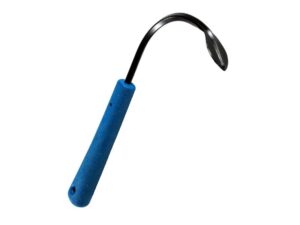 | CobraHead Original Weeder & Cultivator Garden Hand Tool 001 | Check Price |
Second Best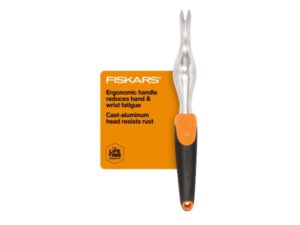 | Fiskars Ergo Garden Hand Weeder Tool 384200-1001 | Check Price |
Third Choice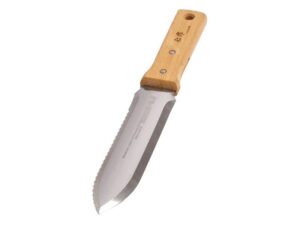 | Nisaku NJP650 Hori Hori Weeding & Digging Knife | Check Price |
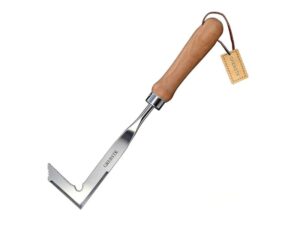 | GREBSTK Crack Weeder Crevice Weeding Tool | Check Price |
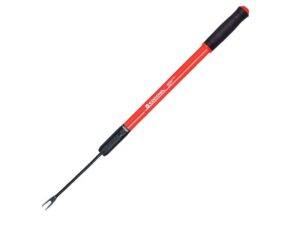 | Corona GT3040 Extendable Handle Weeder | Check Price |
1. CobraHead Original Weeder & Cultivator Garden Hand Tool 001- Best Overall
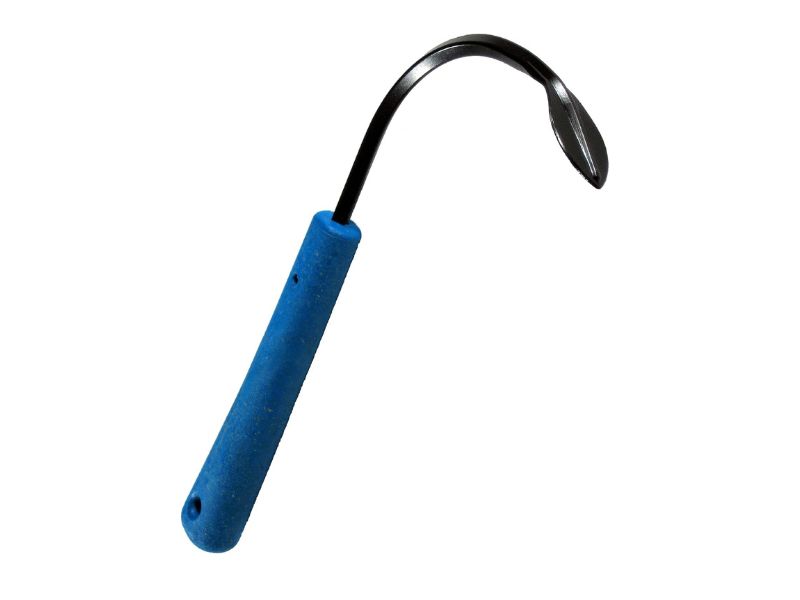
| Specification | CobraHead Original |
| Model | 001 |
| Overall Length | About 13 in. |
| Weight | About 9 oz. |
| Blade | Tempered steel |
| Handle | Recycled composite |
| Primary Uses | Weeding, cultivating, digging, planting |
| Best Area | Beds and borders |
| Country of Manufacture | USA |
The CobraHead Original Weeder & Cultivator is the hand weeder I would keep closest to the garden because it can remove weeds without limiting you to one specific type of root.
Instead of using a wide hoe-like blade, CobraHead uses a narrow curved piece of tempered steel that the company describes as a steel fingernail. The geometry lets you pull the blade through soil, hook beneath weed crowns, loosen roots, and cultivate compacted areas around established plants.
This is especially useful in raised garden beds, vegetable rows, flower borders, and around perennials where precision matters.
Suppose you have a weed growing two inches away from a lettuce seedling.
A traditional garden hoe may remove both plants.
With the CobraHead, you can insert the narrow blade beside the weed, work underneath its root crown, and pull it toward you with much more control.
I also like it in moderately compacted soil. The curved blade concentrates force over a relatively narrow working surface, helping it penetrate soil without requiring a large tool.
CobraHead says the tool can weed, cultivate, dig, furrow, edge, transplant, and perform several other garden jobs.
That versatility matters because the best manual garden tool is often the one you actually carry around.
Instead of putting down a cultivator, finding a trowel, then grabbing a separate weeder, I can perform several light garden-maintenance tasks with the same tool.
It weighs only about nine ounces, so wrist fatigue is relatively low compared with heavy cast hand tools.
The limitation is deep taproots.
For an established dandelion with a long vertical root, a dedicated forked weeder can provide better leverage.
For general garden-bed weeds, however, the CobraHead is the strongest all-around choice here.
Best for: Raised beds, flower beds, vegetable gardens, shallow-to-medium roots, cultivating, and precision weeding.
Main limitation: Dedicated taproot tools can penetrate more directly alongside mature dandelion roots.
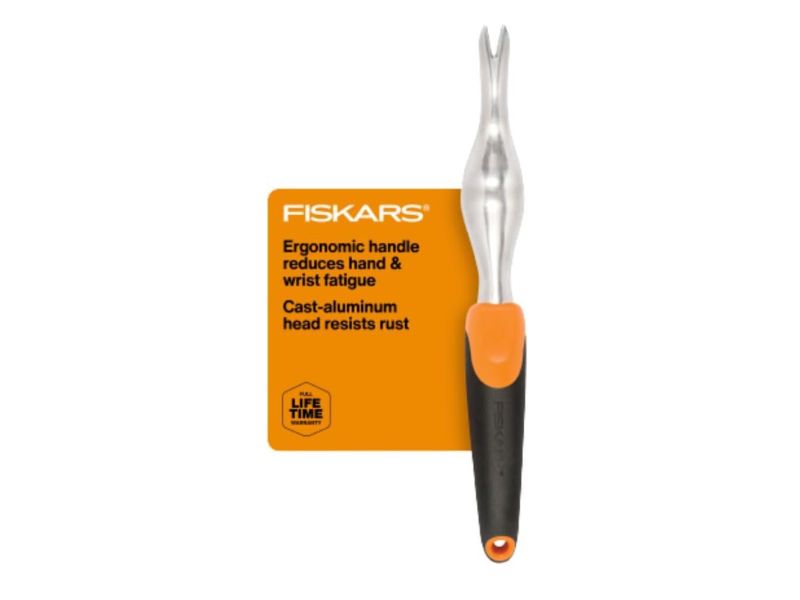
2. Fiskars Ergo Garden Hand Weeder Tool 384200-1001- Best for Dandelions
| Specification | Fiskars Ergo Weeder |
| Model | 384200-1001 |
| Tool Type | Forked hand weeder |
| Overall Length | About 12.5 in. |
| Handle | Ergonomic grip |
| Best Weed Type | Taproot weeds |
| Best Area | Lawns and garden beds |
| Storage | Hanging hole |
The Fiskars Ergo Weeder is much simpler than the CobraHead, but simplicity is exactly what makes it useful.
Its job is to get alongside a weed root and provide enough leverage to pull or pry the plant from the soil.
This is the classic tool style I reach for when dealing with dandelions, thistles, plantain, and similar lawn or garden weeds that produce a concentrated root system.
The model number is 384200-1001, and the tool uses a forked working end combined with an ergonomic handle and palm support. Amazon-related listing data has shown thousands of customer ratings for this inexpensive hand tool.
The correct technique is important.
Do not simply insert the tool underneath the leaves and pull.
Push the fork into the soil alongside the taproot, aiming to reach beneath as much of the root as possible.
Then use the curved section and soil surface as leverage while gently lifting the weed.
Moist soil helps tremendously.
Trying to remove a mature dandelion from hard, bone-dry clay often breaks the root regardless of which hand tool you use.
Water the area or weed after rainfall when the soil is damp but not saturated.
The Fiskars also works well in lawns because its narrow profile minimizes turf disturbance.
A shovel can certainly remove a dandelion, but it may leave a noticeable hole.
A narrow weeder lets you target the root while preserving more surrounding turfgrass.
It is less versatile than the CobraHead or Nisaku.
You would not choose it primarily for cultivating an entire vegetable bed or digging planting holes.
But if your main problem is taproot weeds, specialization is an advantage.
Best for: Dandelions, thistles, lawn weeds, taproots, and gardeners wanting a simple inexpensive hand weeder.
Main limitation: Limited versatility beyond root extraction.
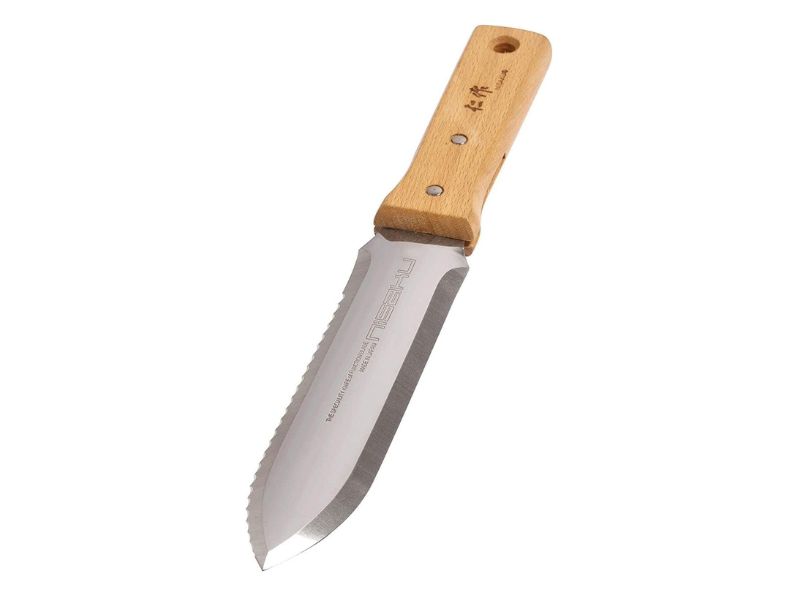
3. Nisaku NJP650 Hori Hori Weeding & Digging Knife- Best Multi-Purpose Weeding Tool
| Specification | Nisaku NJP650 |
| Blade Length | 7.25 in. |
| Blade Material | Stainless steel |
| Blade Style | Straight + serrated edges |
| Handle | Wood |
| Blade Markings | Yes |
| Best Uses | Weeding, digging, root cutting, planting |
| Origin | Japan |
The Nisaku NJP650 Hori Hori is the most versatile traditional garden tool in this lineup.
A hori hori sits somewhere between a garden knife, narrow trowel, root cutter, and weeder.
The NJP650 uses a 7.25-inch stainless-steel blade, with both straight and serrated working edges. It is manufactured in Japan and includes depth markings that are useful when planting bulbs and transplants.
For stubborn weeds growing in compacted garden soil, the longer blade is particularly useful.
You can push it beside the root, loosen the surrounding soil, and work underneath the plant rather than relying entirely on upward pulling force.
That approach is helpful for burdock seedlings, dandelions, dock, thistles, and established volunteer plants.
The serrated edge also gives you a way to cut through fibrous roots.
That makes the Nisaku considerably more useful when cleaning neglected flower beds where weeds have intertwined with old root systems.
It also doubles as a bulb-planting and transplanting tool.
The measurement markings help control planting depth, while the curved blade can scoop soil more effectively than a flat garden knife.
The drawback is that this is a serious edged garden tool.
It deserves more careful handling and storage than a conventional weed fork.
Use appropriate gardening gloves, keep the blade controlled when working around your other hand, and store it securely.
For a gardener who wants one multi-purpose hand tool rather than several specialized tools, however, the Nisaku is difficult to beat.
Best for: Deep roots, compacted soil, root cutting, bulb planting, transplanting, and multi-purpose garden work.
Main limitation: More blade than necessary for simple surface weeds, and it requires careful handling.
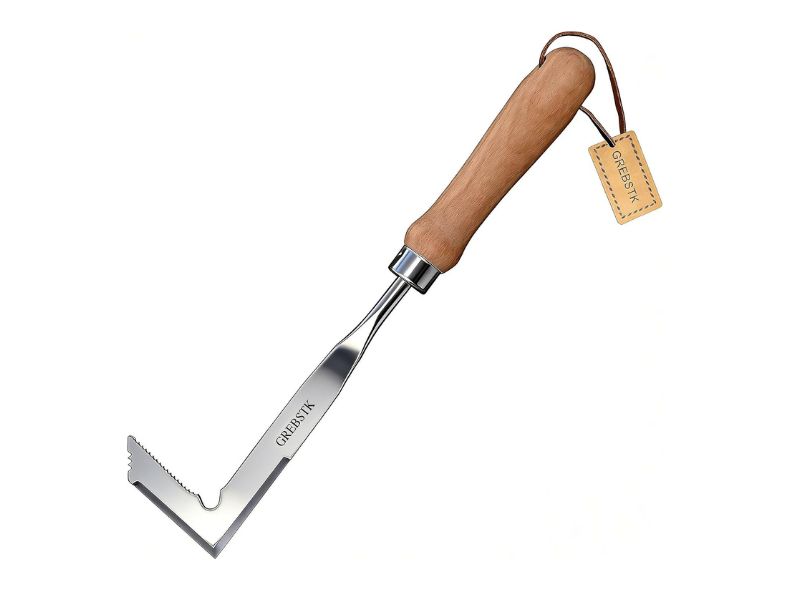
4. GREBSTK Crack Weeder Crevice Weeding Tool- Best for Patio and Driveway Cracks
| Specification | GREBSTK Crack Weeder |
| ASIN | B087C7X4Z1 |
| Overall Length | About 13 in. |
| Weight | About 7 oz. |
| Blade | Hardened stainless steel |
| Blade Shape | L-shaped |
| Handle | Beech wood |
| Best Area | Pavers, sidewalks, driveways |
Most conventional weeders are poorly shaped for weeds growing between hard surfaces.
The GREBSTK Crack Weeder solves that problem with a narrow L-shaped stainless-steel blade that can scrape and cut inside joints between pavers, sidewalk slabs, curbs, and driveway edges.
The tool is approximately 13 inches long and weighs around seven ounces. Its current Amazon-market data shows it among the best-selling manual weeders, with thousands of ratings and strong monthly sales.
This tool makes the most sense when the weed is growing somewhere you cannot surround with loose soil.
In a garden bed, you can usually dig around the plant.
Between two concrete pavers, you may have a gap less than half an inch wide.
A wide fork or trowel cannot get underneath the root.
The GREBSTK’s narrow blade reaches down into the gap and cuts through weed roots, moss, packed soil, and other organic debris.
The blade can also be drawn along edges where lawn grass creeps over concrete.
This gives it some value as a small manual edging tool.
I would not select it as my only weeding tool for a vegetable garden.
Its geometry is too specialized.
But for homeowners with brick patios, stone walkways, concrete joints, paver driveways, or garden paths, it solves a problem the other four products do not handle nearly as well.
Best for: Paver joints, driveway cracks, sidewalks, patio gaps, moss, and tight edging work.
Main limitation: Too specialized to be the best general-purpose garden-bed weeder.
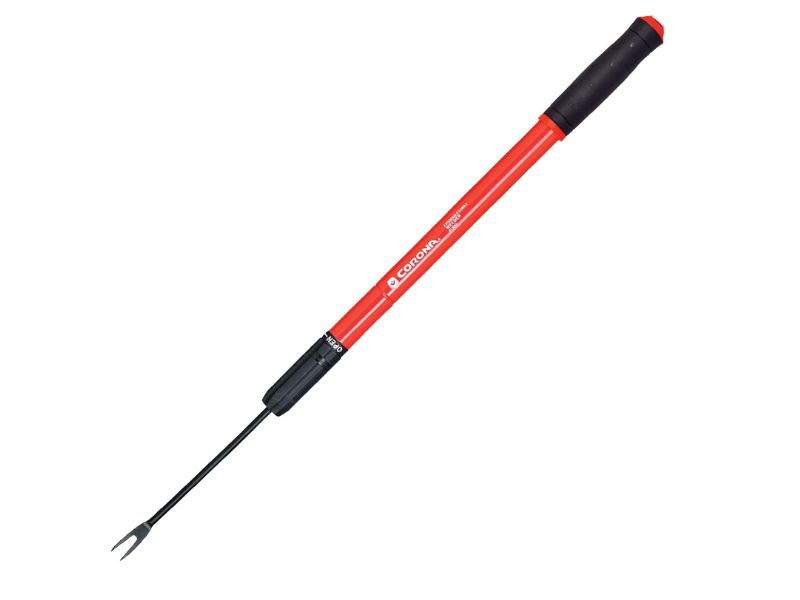
5. Corona GT3040 Extendable Handle Weeder- Best Long-Reach Weeding Tool
| Specification | Corona GT3040 |
| Model | GT3040 |
| Handle | Extendable steel |
| Handle Range | Approx. 18–32 in. |
| Head | Heat-treated steel |
| Grip | Soft textured |
| Best Use | Extended-reach weeding |
| Warranty | 10-year limited listed |
The Corona GT3040 is the odd one out because it provides substantially more reach than a normal handheld weeder.
Its steel handle adjusts from approximately 18 to 32 inches, while the heat-treated weeding head remains narrow enough for targeted root work. Corona also uses a soft textured grip and a protective coating intended to resist rust and chipping.
The extra reach reduces how far you need to bend into wide planting beds.
It is useful when weeds grow underneath shrubs or toward the back of a border where stepping into the bed could compact soil or damage plants.
Extending the handle also provides additional leverage.
That can help when working a stubborn weed loose from heavier soil.
For detailed work immediately beside seedlings, however, I would shorten the handle or choose the CobraHead.
A longer tool naturally provides less fine control than a hand tool positioned close to your fingers.
Corona uses a fully heat-treated head and lists a long-lasting protective finish for corrosion resistance.
This is therefore the most appropriate option here for gardeners who want to reduce kneeling without moving all the way to a large stand-up four-claw weed puller.
Best for: Wide flower beds, under shrubs, extra leverage, and gardeners wanting less bending.
Main limitation: Less precise than a conventional short-handled weeder.
Hand Weeding Tool Comparison
| Product | Tool Style | Best For | Main Material | Key Advantage |
| CobraHead Original | Curved cultivator/weeder | Garden beds | Tempered steel | Best overall versatility |
| Fiskars Ergo Weeder | Forked root weeder | Dandelions | Metal working head | Simple taproot removal |
| Nisaku NJP650 | Hori hori | Deep roots/multi-use | Stainless steel | Digs, cuts, weeds |
| GREBSTK Crack Weeder | L-shaped crevice tool | Pavers/cracks | Stainless steel | Reaches narrow gaps |
| Corona GT3040 | Extendable weeder | Extra reach | Heat-treated steel | Less bending |
What Is the Best Type of Hand Tool for Weeding?
There is no single weeding-tool design that dominates every situation.
The correct tool depends on root structure, soil type, weed location, and how much surrounding plant material you need to protect.
For mixed weeds inside cultivated garden soil, a curved weeder such as the CobraHead provides excellent versatility.
For taproot weeds, a forked hand weeder is usually more efficient.
For compacted soil and roots requiring cutting, a hori hori provides more penetration.
For paver joints, use a crack weeder.
And when reaching toward the rear of deep garden beds, an extended handle can reduce unnecessary bending.
Why Removing the Root Matters
Pulling the leaves off a weed can make a garden look clean temporarily without solving the underlying problem.
Many perennial weeds can regenerate from their root crown, taproot, rhizome, or underground storage tissue.
Dandelions are an obvious example.
If the stem breaks at soil level while much of the taproot remains, the plant may regenerate.
That is why specialized weed-removal tools are designed to penetrate into the soil rather than simply cutting foliage.
The goal should generally be to loosen the soil around the root first and then lift as much of the root structure as practical.
Weed When the Soil Is Moist
Timing can make a bigger difference than buying a more expensive tool.
Weeding immediately after rainfall—or after lightly watering the area—usually makes root removal significantly easier.
Moist soil releases roots more readily than hard dry ground.
However, avoid working heavy clay soil when it is completely saturated.
Wet clay can compact and smear when repeatedly stepped on or worked aggressively.
Aim for moist, workable soil rather than mud.
How to Use a Hand Weeder Correctly
Position the working end close to the base of the weed.
Insert it alongside or slightly underneath the root rather than attacking the leaves.
Loosen soil before applying strong upward force.
For a dandelion, work parallel to the taproot.
For fibrous weeds, loosen several sides of the root mass.
For creeping weeds with rhizomes or stolons, follow the underground stems where practical rather than removing only the visible plant.
Once the root system is loose, lift the weed and remove loose root pieces from the soil.
This method requires slightly more patience but reduces regrowth.
Best Hand Tool for Dandelion Weeding
For a lawn containing scattered dandelions, I prefer a forked hand weeder such as the Fiskars Ergo.
The narrow fork can penetrate the turf with relatively little disturbance.
Insert the fork vertically beside the taproot.
Push as deeply as practical.
Then use the curved section as a lever and gently lift.
Trying to yank the plant directly by its leaves usually snaps the root.
On extremely mature dandelions, you may not remove every inch of root, but extracting the upper root and crown dramatically improves control.
Best Hand Tool for Weeding Raised Beds
The CobraHead is my favorite design for raised beds.
Raised beds frequently contain closely spaced vegetables, flowers, or herbs.
A large hoe can damage desirable plants.
The CobraHead’s narrow curved blade allows you to work between rows, disturb emerging weeds, and cultivate small patches of soil.
It is particularly useful around:
tomatoes, peppers, lettuce, carrots, beans, herbs, strawberries, and annual flowers.
The same tool can also make shallow seed furrows.
Best Hand Tool for Weeds in Cracks
A conventional weeding fork is usually frustrating between pavers because there is nowhere to insert the tool.
Use a crevice or crack weeder instead.
The GREBSTK’s thin L-shaped blade can fit into narrow openings and scrape against hard edges.
Pull out as much root and packed soil as possible.
Leaving a joint full of organic material gives new weed seeds an ideal place to germinate.
After cleaning the gap, sweeping away loose debris can help keep the area cleaner.
Best Hand Tool for Deep-Rooted Weeds
A long-bladed tool such as the Nisaku hori hori provides an advantage when the weed’s root system extends several inches into the ground.
Rather than prying aggressively at the soil surface, insert the blade vertically next to the root.
Work around the plant to loosen the soil.
Then lever the root upward gradually.
The serrated section can also help with fibrous or woody roots that refuse to pull free.
Hand Weeder vs. Garden Hoe
A garden hoe is faster for eliminating hundreds of tiny annual weeds over a large open surface.
A hand weeder provides better precision and root removal.
I use a hoe when weeds are young and widely distributed between vegetable rows.
I use a hand tool when weeds grow:
close to desirable plants,
inside established borders,
in lawns,
around roots,
or wherever complete removal matters.
The two tools complement each other rather than competing directly.
Hand Weeder vs. Stand-Up Weed Puller
Stand-up weed pullers such as four-claw models are excellent for people who cannot comfortably kneel.
They are particularly useful for dandelions distributed across a lawn.
However, they are larger and less precise.
A handheld weeder provides more feedback through your hand and allows you to work very close to desirable plants.
For garden beds, I usually prefer the hand tool.
For a lawn with hundreds of isolated dandelions, a stand-up tool can be faster and much easier on the back.
Stainless Steel vs. Carbon Steel Weeding Tools
Both materials can make excellent garden tools.
Stainless steel provides strong corrosion resistance and is easy to maintain.
Carbon or tempered steel can achieve excellent strength and edge performance, but protective coatings and basic maintenance become more important.
Do not assume stainless steel automatically makes a tool stronger.
Tool geometry, steel formulation, heat treatment, thickness, and construction quality all matter.
After use, remove wet soil before storage regardless of steel type.
Ergonomic Handles Matter
Weeding involves repetitive wrist movement.
A poorly shaped handle becomes uncomfortable surprisingly quickly.
Look for a grip that lets your wrist remain relatively neutral while providing enough diameter to hold securely.
The CobraHead uses a contoured recycled-composite handle, while the Fiskars Ergo series emphasizes palm support.
Wood handles such as those on the Nisaku and GREBSTK offer a traditional feel and can be comfortable when shaped correctly.
Garden gloves can further reduce pressure and improve grip.
Do Hand Weeding Tools Work in Clay Soil?
Yes, but technique becomes more important.
Hard dry clay can resist narrow weeding tools and cause roots to snap.
Moisten the soil first.
Insert the tool gradually rather than applying extreme sideways leverage.
The CobraHead’s concentrated curved blade is particularly good at breaking up compacted garden soil, while the Nisaku gives you more depth when working around stubborn roots.
Avoid using any lightweight hand tool as a pry bar against rocks.
How to Keep Weeding Tools Sharp
Most gardeners do not need razor-sharp weeding tools.
They do benefit from a clean working edge.
After removing soil, inspect the blade for rolled or damaged edges.
Depending on the manufacturer and blade type, an appropriate file or sharpening stone can restore the working edge.
Be especially careful with the Nisaku because it already uses cutting edges.
Follow the manufacturer’s recommendations rather than changing the original blade geometry unnecessarily.
Prevent Rust After Weeding
Never put a soil-covered tool directly into a damp shed.
Remove dirt after use.
Dry the metal.
If the tool uses non-stainless carbon steel, applying a very light protective oil before long-term storage can reduce corrosion.
Store garden tools somewhere dry whenever possible.
This simple routine can add years to a quality hand tool.
Frequently Asked Questions
What is the best hand tool for weeding?
The CobraHead Original Weeder & Cultivator is my best overall choice for general garden weeding.
Its narrow curved tempered-steel blade can loosen roots, cultivate soil, and remove weeds close to desirable plants. The tool is also lightweight and can perform several common planting and cultivation tasks.
What is the best hand weeder for dandelions?
A forked weeder such as the Fiskars Ergo Weeder works particularly well on dandelion taproots.
Push the fork alongside the root while the soil is moist, then gently lever the root upward.
Avoid pulling only on the foliage because the taproot can easily snap below ground.
Which hand tool removes weeds by the roots?
Forked weeders, curved weeders, and hori hori tools can all remove roots when used correctly.
The right design depends on root shape.
Use the Fiskars for concentrated taproots, CobraHead for mixed garden weeds, and Nisaku when deeper digging is necessary.
What is the best weeding tool for flower beds?
The CobraHead is particularly good around established flowers because its blade is narrow and precise.
It can work close to desirable roots without disturbing as much surrounding soil as a large hoe or cultivator.
What is the best tool for weeds between pavers?
A narrow crack weeder such as the GREBSTK is the best design for paver and driveway joints.
Its L-shaped stainless-steel blade can scrape inside small gaps and remove weeds, moss, roots, and accumulated soil.
What is a hori hori used for?
A hori hori is a multi-purpose garden knife used for weeding, digging, cutting roots, planting, and dividing plants.
The Nisaku NJP650 uses a 7.25-inch stainless-steel blade with both straight and serrated edges.
Is it better to pull or cut weeds?
Removing the root is usually preferable for perennial weeds capable of regrowing from underground structures.
Young annual weeds can often be cut at the soil surface effectively, especially during hot dry weather.
Taproot and perennial weeds typically require more complete root removal.
Is weeding easier after rain?
Yes, slightly moist soil usually releases roots much more easily than dry compacted soil.
Avoid excessively muddy conditions, particularly in clay beds, because working saturated soil can damage soil structure.
How do I remove weeds without chemicals?
Manual weeding, cultivation, mulching, and preventing seed production can control many garden weeds without herbicides.
Remove established weeds by the root and add an appropriate mulch layer to reduce sunlight reaching new seedlings.
Which tool is easiest on the hands?
A lightweight ergonomic weeder with a comfortable grip is generally easiest during long sessions.
The best design depends on your wrist mobility and grip strength.
For people who struggle with kneeling or bending, a longer-handled tool such as the Corona GT3040 may be more appropriate.
Which Hand Weeding Tool Should You Buy?
Choose the CobraHead Original Weeder & Cultivator if you want one tool for everyday garden-bed maintenance. It offers the strongest combination of weed removal, cultivating, digging, planting, and precision.
Choose the Fiskars Ergo Weeder if your main enemies are dandelions and other concentrated taproots. Its simple forked design is inexpensive and efficient.
Choose the Nisaku NJP650 Hori Hori if you want a serious multipurpose garden tool capable of digging deeply and cutting roots as well as removing weeds.
Choose the GREBSTK Crack Weeder if your weed problem is concentrated in driveways, sidewalks, paver patios, and narrow joints.
Choose the Corona GT3040 when extra reach and leverage are priorities or when reaching the rear of a flower bed with a short hand tool is uncomfortable.
Final Verdict
For most gardeners searching for the best hand tool for weeding, the CobraHead Original Weeder & Cultivator is the most versatile choice. Its curved tempered-steel blade provides enough precision to work between established plants while also handling cultivation, planting, shallow digging, and general garden maintenance.
The Fiskars Ergo Weeder is the better specialist for dandelion taproots, while the Nisaku NJP650 Hori Hori gives experienced gardeners considerably more digging and root-cutting capability.
For hardscape weeds, the GREBSTK Crack Weeder is much more effective than trying to force an ordinary garden fork into narrow paver gaps. And when reach is the priority, the Corona GT3040 provides a useful middle ground between a handheld weeder and a full-length stand-up tool.
The biggest lesson is that successful manual weed control depends on matching tool geometry to root type and growing location. Combine the right hand weeder with moist soil, careful root removal, good mulching, and regular garden maintenance, and you can remove weeds more completely while disturbing less soil around the plants you actually want to keep.

I’m Maya L. Greenwood, a lifelong plant lover who believes anyone can grow something beautiful with the right guidance. After years of testing soil mixes, pruning methods, irrigation tricks, and pest-safe solutions, I started EasyGardenTips.com to turn hard-won lessons into step-by-step advice. From seed starting and container gardens to composting and seasonal checklists, my goal is to make gardening simple, sustainable, and fun.