5 Best Weed Barrier for Mulch Bed Picks for Lasting Control
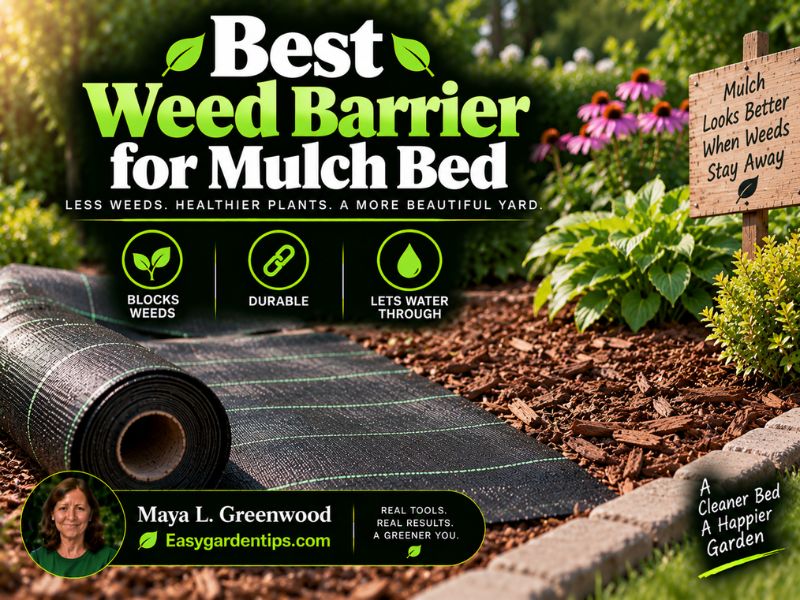
The best weed barrier for mulch bed should suppress existing and germinating weeds without turning the soil underneath into an impermeable zone. For planted flower beds, shrub borders, and ornamental landscapes, I prefer porous landscape fabric that blocks light while still allowing water, oxygen, and nutrients to move toward the root zone.
My best overall choice is the DeWitt Pro-5 Weed Barrier Fabric 5 oz 3 x 250 Feet. Its professional-grade 5-ounce woven polypropylene, needle-punched construction, strong UV resistance, and 12-inch planting lines make it particularly well suited to long-term mulch beds where durability matters. Independent testing found it exceptionally durable while still allowing water and air through.
For a smaller residential flower or shrub bed, the ECOgardener Premium 5oz Pro Garden Weed Barrier 3 x 50 Feet is easier to work with. Its dual-layer, needle-punched construction provides strong weed suppression while remaining permeable, and testing found that weeds did not penetrate it during the test period. Because it is not intended for prolonged uncovered UV exposure, I would install it and cover it with mulch promptly.
If you have a large mulched landscape and want more coverage per roll, the VEVOR 4FT x 300FT 3.2oz Heavy Duty Weed Barrier Landscape Fabric provides 1,200 square feet of woven polypropylene coverage. Its large roll size, printed guide lines, tear-resistant construction, and competitive cost per square foot make it particularly appealing for large shrub beds and perimeter landscaping.
One expert caveat is important before installing any of these products: landscape fabric does not create a permanently weed-free mulch bed. Oregon State University Extension notes that fabric is effective against weeds emerging from below, but new weeds can eventually germinate in decomposing mulch sitting on top of the fabric. Proper site preparation and ongoing mulch maintenance still matter.
5 Best Weed Barriers for Mulch Beds
| Image | Product Name | Check Price |
|---|---|---|
Best Choice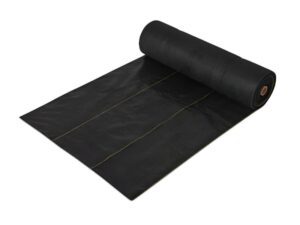 | DeWitt Pro-5 Weed Barrier Fabric 5 oz 3 x 250 Feet | Check Price |
Second Best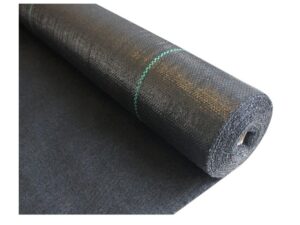 | ECOgardener Premium 5oz Pro Garden Weed Barrier | Check Price |
Third Choice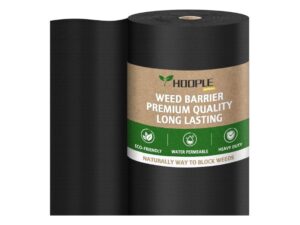 | HOOPLE Premium Pro Garden Weed Barrier | Check Price |
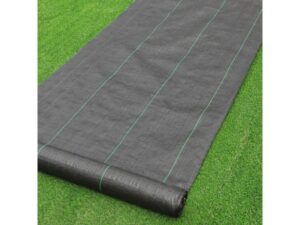 | Petgrow Heavy Duty Weed Barrier Landscape Fabric | Check Price |
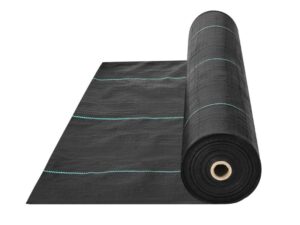 | VEVOR 4FT x 300FT 3.2oz Heavy Duty Weed Barrier | Check Price |
DeWitt Pro-5 Weed Barrier Fabric 5 oz 3 x 250 Feet- Best Overall
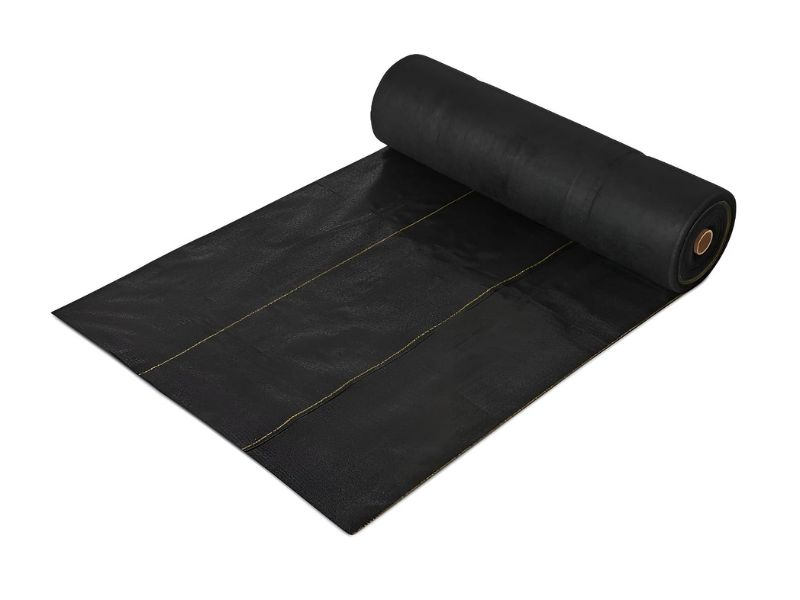
| Specification | DeWitt Pro-5 |
| Material | Woven polypropylene |
| Fabric Weight | 5 oz. |
| Roll Size | 3 ft × 250 ft |
| Total Coverage | 750 sq. ft. |
| Construction | Woven + needle-punched |
| Guide Lines | Every 12 in. |
| Water Permeable | Yes |
| UV Resistance | High |
| Best Use | Permanent mulch beds |
The DeWitt Pro-5 is the product I would choose when installing a mulch bed that I expect to remain in place for years rather than one season.
This is a professional-grade 5-ounce woven polypropylene landscape fabric with needle punching that allows moisture and air to pass while reducing the light available to weeds underneath.
DeWitt also prints lines every 12 inches across the fabric. That sounds like a minor feature until you begin laying out shrubs or cutting openings for ornamental plants. The guides make straight installation, spacing, and overlapping sections considerably easier.
The main reason I rank it first is durability.
Bob Vila’s hands-on testing found the Pro-5 noticeably thicker and more durable than the other tested landscape fabrics. It allowed heavy rainfall to penetrate while preventing weeds from emerging during testing, and the cut edges resisted fraying.
Those characteristics matter underneath bark mulch, wood chips, pine bark, decorative stone, or mixed ornamental beds.
I particularly like it around established shrubs, roses, hydrangeas, boxwood, ornamental grasses, and other plants that will not require the bed to be dug up every season.
The 250-foot roll is probably excessive for a tiny front-door flower bed. For a large landscape renovation, however, buying a professional roll makes more sense than joining several short pieces.
Keep the fabric completely covered after installation. Mulch both improves appearance and limits unnecessary UV exposure.
Best for: Long-term shrub beds, large ornamental beds, slopes, professional landscaping, and homeowners prioritizing durability.
Main limitation: More expensive and more material than a small residential bed may require.
ECOgardener Premium 5oz Pro Garden Weed Barrier 3 x 50 Feet- Best for Flower Beds
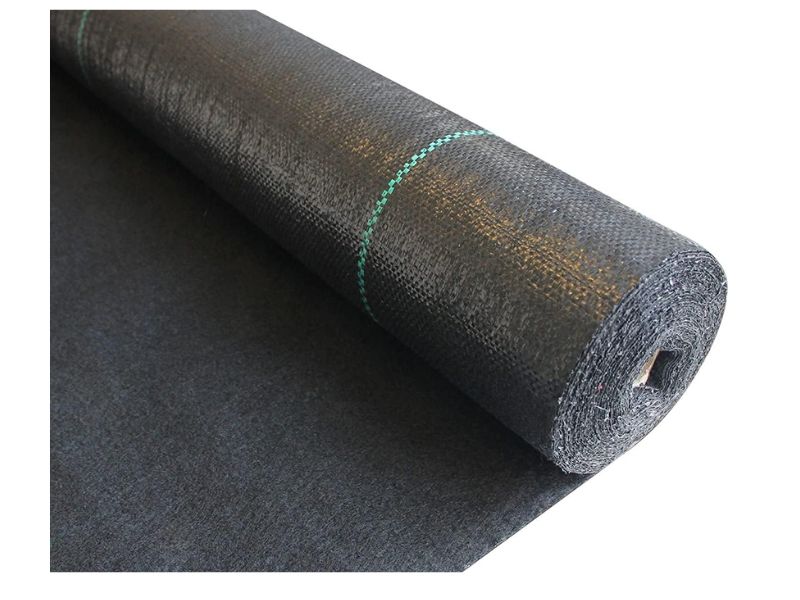
| Specification | ECOgardener Premium |
| Fabric Weight | 5 oz. |
| Roll Size | 3 ft × 50 ft |
| Coverage | 150 sq. ft. |
| Construction | Dual-layer |
| Type | Woven/nonwoven combination |
| Needle-Punched | Yes |
| Water & Air Flow | Yes |
| Best Use | Flower and shrub beds |
The ECOgardener Premium 5oz barrier is my favorite choice for a typical homeowner installing fabric beneath a manageable flower or shrub bed.
Its 3-by-50-foot roll provides 150 square feet, so it is much easier to handle than a 250- or 300-foot commercial roll.
More importantly, ECOgardener uses a 5-ounce dual-layer construction with needle punching to maintain permeability.
Bob Vila’s testing found the material easy to install and effective at stopping weeds during the test period while still allowing water to pass.
I like the weight for mulch beds because thin bargain fabric can move, wrinkle, or tear while you spread mulch across it.
A heavier fabric tends to remain easier to manage after it has been pinned correctly.
The trade-off is UV exposure.
The tested ECOgardener material was not intended to stay exposed indefinitely, so installation technique matters. Once you finish cutting your planting openings and securing the seams, cover the fabric with mulch rather than leaving it exposed for weeks.
One other issue is cutting.
Testing found that edges could fray after being cut with a utility knife. For permanent planting holes, making clean cuts—or carefully heat-sealing appropriate woven edges when recommended—is preferable to aggressively tearing openings.
For an established residential bed covered with 2–3 inches of bark or wood-chip mulch, it offers an excellent combination of weed suppression, manageable roll size, permeability, and price.
Best for: Residential flower beds, perennial borders, shrubs, small landscaping projects, and DIY installation.
Main limitation: Cut edges can fray, and it should not be left uncovered in sunlight.
HOOPLE Premium Pro Garden Weed Barrier 4 x 180 Feet- Best Thick Weed Barrier
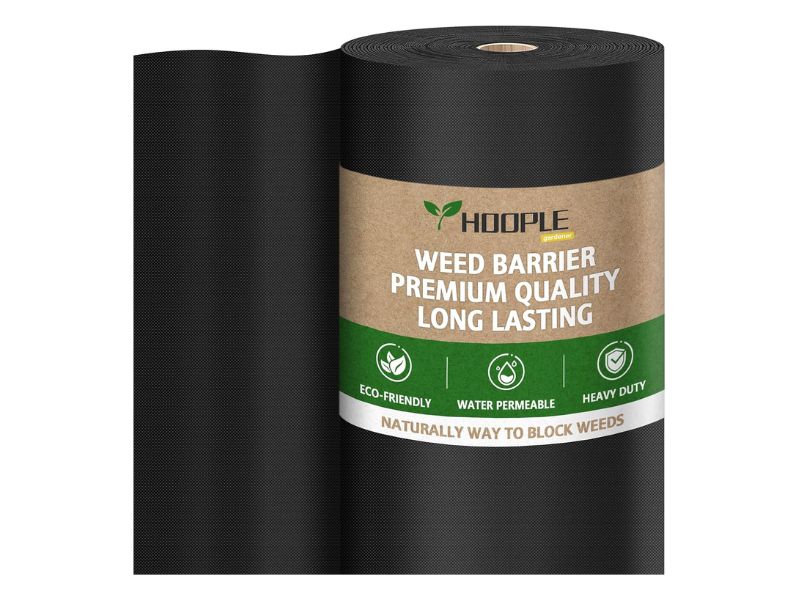
The HOOPLE Premium Pro is for homeowners who want a substantial barrier beneath mulch and need considerably more coverage than a typical 50-foot roll.
This version measures approximately 4 feet by 180 feet, making it useful for broad beds where reducing seams is a priority. Its Amazon ASIN is associated with HOOPLE’s Premium Pro ultra-thick landscape-fabric line.
| Specification | HOOPLE Premium Pro |
| Roll Width | 4 ft |
| Roll Length | 180 ft |
| Coverage | About 720 sq. ft. |
| Material | Polypropylene |
| Construction | Heavy-duty barrier |
| Best Use | Wide mulch beds |
| Chemical Weed Killer Required | No |
A wider roll can make installation noticeably cleaner.
Every seam creates another potential path for persistent weeds to reach the surface. When I install landscape fabric, I would rather use fewer broad pieces with adequate overlap than create a patchwork of narrow scraps.
HOOPLE is also thick enough to work beneath bark mulch, wood chips, garden paths, edging, and similar landscape applications.
The biggest consideration is permeability.
Some thicker nonwoven barriers drain more slowly than highly permeable woven, needle-punched products. This Old House specifically notes that HOOPLE’s construction can restrict water and airflow more than some alternatives.
That does not make it unusable.
It means I would test water penetration before covering a large planted bed.
Lay down a sample, water it, and make sure moisture moves through quickly enough for your irrigation method.
This is especially important if you use drip irrigation above the fabric.
For large ornamental beds where weed blocking and physical durability are the primary goals, HOOPLE remains a strong option.
Best for: Wide mulch beds, landscaping around shrubs, long borders, pathways, and gardeners prioritizing a thicker physical barrier.
Main limitation: Water and air movement can be slower than with high-permeability professional woven fabrics.
Petgrow Heavy Duty Weed Barrier Landscape Fabric 3 x 100 Feet- Best Budget Pick
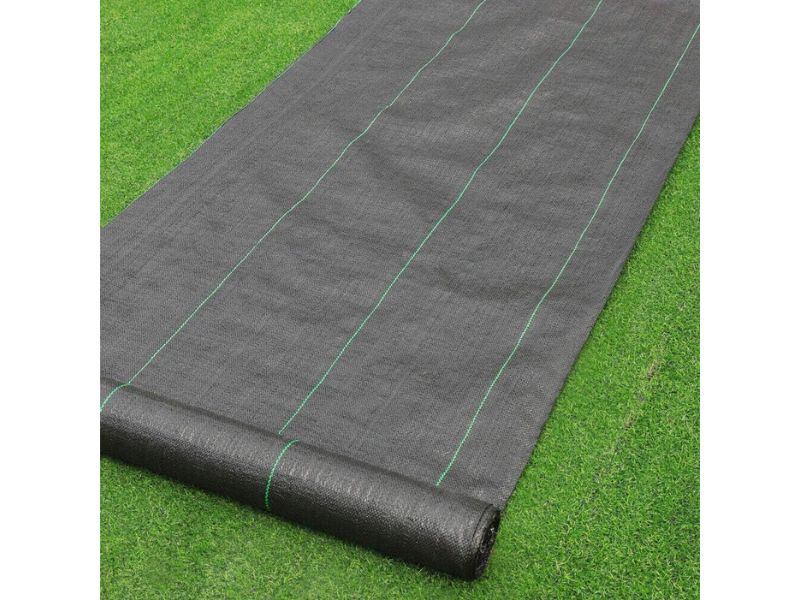
The Petgrow Heavy Duty Weed Barrier is the product I would consider when covering a normal-size mulch bed on a tighter budget.
The 3-by-100-foot roll covers approximately 300 square feet, providing enough material for many front-yard foundation beds without requiring a contractor-size roll.
It uses polypropylene and a needle-punched construction intended to allow irrigation through while suppressing light and weed growth.
| Specification | Petgrow Heavy Duty |
| Material | Polypropylene |
| Roll Size | 3 ft × 100 ft |
| Coverage | 300 sq. ft. |
| Construction | Nonwoven |
| Needle-Punched | Yes |
| UV Stabilized | Yes |
| Best Use | Budget residential beds |
Petgrow performed well in recent comparative testing.
Bob Vila rated it highly for value, noting that it successfully suppressed weeds, provided useful water and air permeability, and included stripes that make installation and plant spacing easier.
The Amazon-associated product also has a relatively mature ownership history, with the referenced listing recording more than two thousand customer reviews.
That combination makes it more appealing to me than an unknown generic weed fabric that happens to cost a few dollars less.
The compromise is construction.
Nonwoven material is convenient and easy to shape around curves, but organic debris can gradually accumulate above any landscape fabric. Once bark breaks down into fine organic matter, new weed seeds can germinate on top of the barrier.
This is not unique to Petgrow. It is a fundamental limitation of landscape fabric under organic mulch.
If you rake and refresh your mulch periodically rather than allowing several years of decomposed material to build up, the barrier remains much easier to manage.
Best for: Budget-conscious homeowners, medium-size flower beds, foundation beds, and straightforward DIY landscaping.
Main limitation: Not as heavy-duty as the DeWitt Pro-5 for demanding permanent installations.
VEVOR 4FT x 300FT 3.2oz Heavy Duty Weed Barrier Landscape Fabric- Best for Large Mulch Beds
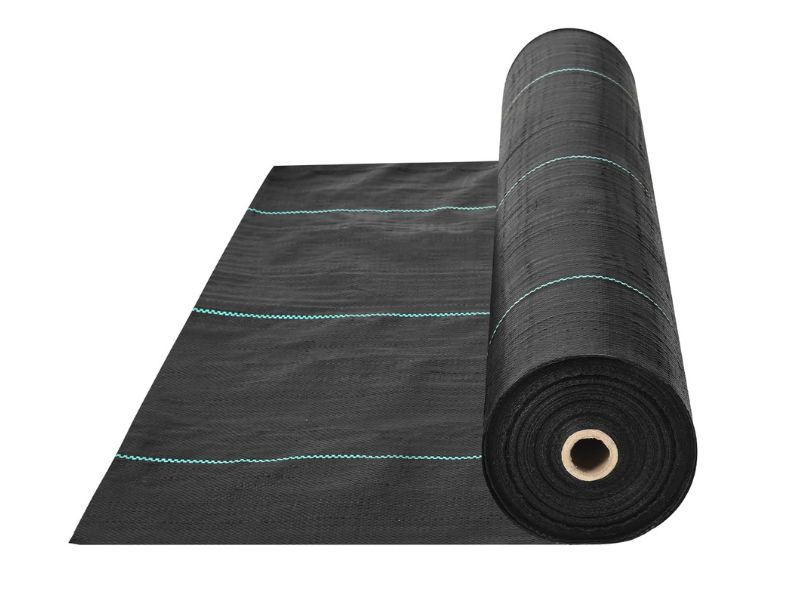
The VEVOR 4-by-300-foot weed barrier is the value choice when square footage becomes the main problem.
One roll covers approximately 1,200 square feet.
That makes it a much more practical purchase for a large perimeter bed, extensive shrub landscaping, long fence line, or property where several individual landscape beds need fabric.
VEVOR uses 3.2-ounce high-density woven polypropylene with guide lines and precision-cut edges. The manufacturer emphasizes tear resistance, corrosion resistance, and permeability.
| Specification | VEVOR Weed Barrier |
| Material | Woven polypropylene |
| Fabric Weight | 3.2 oz. |
| Roll Size | 4 ft × 300 ft |
| Coverage | 1,200 sq. ft. |
| Guide Lines | Yes |
| Water Permeability | Yes |
| Best Use | Large landscape areas |
This is lighter per square yard than the 5-ounce DeWitt and ECOgardener products, so I do not view it as their direct equivalent.
Its advantage is efficiency.
The four-foot width covers broad planting beds faster, while the long roll minimizes the number of end seams.
Current listing data also shows a substantial ownership history for this exact size, with roughly 1,900 reviews recorded on the referenced Amazon-associated listing.
For large areas covered with several inches of mulch, the fabric does not necessarily need to be the thickest product available. The mulch itself blocks considerable sunlight, while the woven fabric creates the second layer of weed suppression underneath.
I would still use a heavier fabric in particularly rough installations involving sharp stone, significant foot traffic, or places where future digging is likely.
For covering hundreds or thousands of square feet of ordinary landscape beds economically, VEVOR makes much more sense.
Best for: Large mulch beds, perimeter landscaping, large shrub borders, long runs, and homeowners wanting low cost per square foot.
Main limitation: At 3.2 ounces, it is lighter than premium 5-ounce landscape fabrics.
Best Weed Barrier for Mulch Bed Comparison
| Product | Material / Type | Size | Weight | Best For |
| DeWitt Pro-5 | Woven, needle-punched polypropylene | 3 × 250 ft | 5 oz. | Best overall / permanent beds |
| ECOgardener Premium | Dual-layer, needle-punched | 3 × 50 ft | 5 oz. | Flower and shrub beds |
| HOOPLE Premium Pro | Heavy-duty polypropylene | 4 × 180 ft | Heavy-duty | Thick barrier |
| Petgrow Heavy Duty | Nonwoven polypropylene | 3 × 100 ft | — | Budget residential beds |
| VEVOR Heavy Duty | Woven polypropylene | 4 × 300 ft | 3.2 oz. | Large mulch beds |
Is Landscape Fabric Good Under Mulch?
Yes, but only when it is used in the right landscape.
Landscape fabric can reduce weeds emerging from the soil underneath the mulch while still allowing water and gas exchange when you use a porous product.
Oregon State University Extension notes that landscape fabrics can be used beneath organic mulch to inhibit weed growth while allowing air and water through.
Where homeowners get disappointed is expecting the fabric to eliminate all future weeding.
It cannot.
Bark, wood chips, and other organic mulch gradually decompose.
Dust, leaves, grass clippings, pollen, and other organic debris also settle onto the bed.
Eventually, a thin layer of soil-like material develops above the landscape fabric.
Airborne weed seeds can germinate in that layer.
OSU documents exactly this problem: weeds can establish in bark mulch sitting on top of landscape cloth even when the fabric is still blocking weeds underneath.
Think of landscape fabric as weed suppression, not permanent weed elimination.
When I Would Use Weed Barrier Under Mulch
Landscape fabric makes the most sense in relatively stable ornamental beds.
Good candidates include areas containing:
established shrubs, foundation plantings, roses, ornamental grasses, evergreen borders, and trees where planting positions are unlikely to change frequently.
These beds benefit from long-term suppression because you do not need to dig through the fabric every spring.
I also like fabric beneath decorative mulch on slopes, where the texture can help retain mulch compared with slick plastic. Penn State notes that landscape fabric can be useful where surface mulch needs to remain stable on sloped ground.
When I Would Skip Landscape Fabric
I generally would not install permanent landscape fabric beneath a bed that I expect to redesign frequently.
That includes many:
annual flower beds, intensive perennial gardens, vegetable gardens, and areas where plants are routinely divided, moved, or added.
Every new planting requires another cut.
Over time, the fabric becomes a collection of openings and overlapping patches.
Plant roots can also become intertwined with older fabric.
Penn State Extension has highlighted the long-term maintenance problems created when mulch decomposes over landscape cloth and roots become integrated with it.
For frequently cultivated beds, a deep layer of organic mulch without synthetic fabric can sometimes be easier to maintain.
Woven vs. Nonwoven Weed Barrier
This is one of the most useful distinctions to understand before buying.
Woven Landscape Fabric
Woven polypropylene consists of strands arranged into a strong fabric structure.
Advantages typically include:
high tensile strength,
good tear resistance,
excellent long-term durability,
and good performance beneath mulch or rock.
Products such as DeWitt Pro-5 and VEVOR use woven construction.
Needle punching or other permeability treatments allow water through the otherwise tight structure.
For a long-term shrub bed, woven fabric is generally my preference.
Nonwoven Landscape Fabric
Nonwoven fabric uses bonded or pressed fibers rather than a traditional woven grid.
It can conform nicely to irregular beds and usually cuts easily.
Permeability depends heavily on material density and manufacturing method.
The downside is that some thick nonwoven fabrics can drain more slowly.
For ordinary residential landscaping, either can work.
The important issue is selecting a product that is genuinely permeable rather than using solid plastic sheeting beneath living plants.
Why Permeability Matters Under Mulch
Your landscape plants still need water and oxygen at the root zone.
Rain or irrigation should not simply run sideways across the fabric.
Oregon State recommends a high-quality landscape fabric that is strong, breathable, and allows water to flow through.
This is why I prefer products designed specifically as landscape fabric rather than cheap plastic tarps.
Before installing hundreds of square feet, perform a simple test.
Place a sample over soil.
Apply water.
Observe whether it penetrates in a reasonable amount of time.
This is particularly useful with drip irrigation systems.
How Thick Should Weed Barrier Be Under Mulch?
For permanent beds, I prefer roughly 3–5 oz. landscape fabric, depending on the construction.
A 5-ounce professional product such as DeWitt Pro-5 gives you substantial puncture and tear resistance.
A well-made 3.2-ounce woven fabric can still perform well when it is immediately covered with mulch and subjected to limited foot traffic.
Thicker is not automatically better.
An extremely dense fabric that prevents efficient irrigation is undesirable around landscape plants.
The goal is to balance:
opacity + durability + permeability.
How Much Mulch Should Go Over Weed Barrier?
For most ornamental mulch beds, approximately 2–3 inches of coarse organic mulch is a useful target.
Penn State recommends organic mulches around 2–4 inches deep in landscape plantings, warning that excessively thick layers can create their own problems.
Oregon State notes that a 3-inch woody mulch layer can strongly suppress many small weed seedlings even without fabric.
I generally avoid creating huge mulch mounds merely because fabric is underneath.
More is not always better.
And never pile mulch against tree trunks or woody plant stems.
Should You Remove Weeds Before Installing Landscape Fabric?
Absolutely.
Do not lay premium fabric over a bed full of mature weeds and assume the problem is solved.
Remove as much existing vegetation and root material as practical.
This is particularly important for aggressive perennial weeds with rhizomes, stolons, or deep storage roots.
Quackgrass and other aggressive grasses can exploit cuts, seams, or planting openings.
Prepare the bed first.
Then install the barrier.
How to Install Weed Barrier Under Mulch
Start by removing weeds, rocks, sticks, and other sharp debris.
Rake the soil relatively smooth.
Unroll the fabric across the prepared bed.
Where two pieces meet, overlap them rather than creating a perfect edge-to-edge seam. I prefer a generous overlap in areas with aggressive weeds.
Secure the material with landscape staples so it remains flat while you work.
For existing shrubs, cut the smallest opening that allows the fabric to fit around the plant without rubbing against the trunk or crown.
Do not wrap fabric tightly around woody stems.
After the fabric is secured, add your mulch evenly across the surface.
Do not drive wheelbarrows or drag sharp tools directly across exposed fabric if you can avoid it.
Which Side of Landscape Fabric Goes Up?
Follow the specific manufacturer’s instructions.
There is no universal rule that applies to every fabric.
Some products have an obvious fuzzy and smooth side.
Others are woven similarly on both sides.
Some are treated or printed.
If the manufacturer specifies an installation orientation, use it.
Do not rely on generic internet advice when the roll itself includes instructions.
Can Water Get Through Weed Barrier?
It should if you buy a permeable landscape fabric.
Good barriers are designed to suppress light while allowing moisture to reach the soil.
DeWitt Pro-5, for example, uses needle punching specifically to maintain permeability in its woven polypropylene structure.
However, surface debris can reduce infiltration over time.
Fine decomposed mulch and sediment may partially clog a fabric surface.
That is another reason mulch beds still require maintenance even after fabric installation.
Can Weeds Grow Through Landscape Fabric?
Yes.
Different mechanisms are involved.
Some aggressive perennial weeds may exploit seams or planting holes.
Rhizomatous grasses can sometimes penetrate weaker fabrics.
But far more commonly, the weeds you see years later did not grow upward through the original soil.
They germinated in the decomposed mulch above the fabric.
This distinction matters because replacing the landscape fabric will not solve the second problem.
Maintaining the mulch layer will.
Landscape Fabric vs. Plastic Under Mulch
For planted beds, I prefer porous landscape fabric.
Solid plastic prevents normal air and moisture movement unless irrigation and drainage are carefully engineered.
Oregon State specifically distinguishes landscape fabric from plastic, noting that porous fabric allows air and water to reach the soil.
Plastic can have specialized landscape uses, but I would not substitute a cheap tarp for breathable landscape fabric around shrubs and trees.
Landscape Fabric vs. Cardboard Under Mulch
Cardboard is useful when you want a biodegradable suppression layer.
It can smother turf and many shallow weeds, then break down over time.
Landscape fabric is the more durable choice when long-term physical separation is the goal.
For a new shrub border that will remain relatively unchanged for years, fabric can make sense.
For converting a patch of lawn into a planting bed while improving soil over time, cardboard plus coarse wood chips can sometimes be a more flexible strategy.
The right answer depends on whether you want a temporary biodegradable barrier or a long-term synthetic layer.
Is Weed Barrier Safe Around Trees and Shrubs?
Porous fabric can be used around woody plants, but installation matters.
Do not wrap fabric tightly around trunks.
Leave adequate space for stem and trunk expansion.
Likewise, do not create a mulch volcano over the root flare.
Oregon State recommends keeping mulch away from direct contact with tree trunks and notes that porous landscape fabric can be used beneath wood or bark chips.
Remember that a young shrub may be dramatically wider at the crown five years after installation.
Plan for growth.
Does Landscape Fabric Stop Bermuda Grass?
It can significantly suppress it, but I would not trust ordinary fabric as the sole strategy against an established aggressive grass.
Bermuda grass spreads by both stolons and rhizomes.
Any planting opening, seam, edge, or damaged section gives persistent underground growth a route back into the bed.
Remove as much existing Bermuda as possible before installation and maintain a clear bed edge afterward.
Heavy-duty woven fabric is preferable to a lightweight sheet in this situation.
Does Landscape Fabric Stop Nutsedge?
Not reliably enough for me to install fabric over a severe existing nutsedge infestation and consider the issue solved.
Nutsedge grows from underground tubers and can be extremely persistent.
Prepare and control difficult perennial weeds before covering the bed.
A weed barrier works best as prevention and suppression—not as a substitute for correcting an established infestation.
Frequently Asked Questions
What is the best weed barrier for mulch bed use?
DeWitt Pro-5 is my best overall weed barrier for a permanent mulch bed.
Its 5-ounce woven, needle-punched polypropylene construction provides excellent durability while allowing air and water through. Independent testing also rated it highly for weed suppression, installation, durability, and overall effectiveness.
Should you put weed barrier under mulch?
Yes, in stable ornamental beds where long-term weed suppression is useful.
Landscape fabric is particularly suitable around shrubs and other permanent plantings.
For beds that are constantly replanted or divided, fabric can eventually make gardening more difficult.
Is woven or nonwoven weed barrier better under mulch?
Woven fabric is usually my preference for long-term durability under mulch.
A quality needle-punched woven polypropylene combines physical strength with permeability.
Nonwoven fabric can still work very well, especially in smaller or irregular residential beds.
What weight landscape fabric is best?
Approximately 3–5 oz. is a useful range for many mulch-bed applications.
Five-ounce professional fabric provides greater puncture and tear resistance, while a good 3.2-ounce woven barrier can be economical for large areas.
Construction quality matters as much as weight.
Can you put mulch directly on landscape fabric?
Yes. Landscape fabric is normally intended to be covered with mulch or another landscape material.
Covering it improves appearance and protects many products from unnecessary sunlight exposure.
Keep mulch away from plant crowns and tree trunks.
How deep should mulch be over landscape fabric?
About 2–3 inches works well for many ornamental beds.
Avoid excessive mulch depth.
Penn State recommends approximately 2–4 inches for organic mulch around landscape plants.
Will weeds still grow on top of landscape fabric?
Yes. Weed seeds can eventually germinate in decomposing mulch above the fabric.
Oregon State Extension identifies this as a common long-term issue with landscape cloth beneath bark and other organic mulches.
Does weed barrier let water through?
Quality landscape fabric should allow water to penetrate to the root zone.
Look for permeable, woven, needle-punched, or otherwise breathable construction rather than solid plastic.
Test penetration before installing a very large area.
How long does landscape fabric last under mulch?
Lifespan varies dramatically with fabric quality, UV exposure, installation, soil movement, and maintenance.
Heavy woven professional fabrics can last many seasons.
Lightweight bargain products may tear or degrade much sooner.
Keeping the barrier fully covered generally helps protect it.
Should I use weed barrier in a flower bed?
It works best in flower beds containing relatively permanent plants.
If you plant new annuals every season or regularly divide perennials, cutting through fabric repeatedly becomes inconvenient.
For stable roses, shrubs, and long-lived ornamentals, it is much more practical.
Should landscape fabric go above or below mulch?
Landscape fabric goes directly over the prepared soil and beneath the mulch.
Remove weeds first, smooth the surface, install and secure the fabric, cut planting openings, and then cover it with mulch.
Do I need landscape staples?
Yes, staples make installation considerably easier and prevent the fabric from shifting before mulch is applied.
They are particularly important along overlaps, bed edges, curves, and slopes.
Do not depend on mulch alone to hold a loose sheet in place during installation.
Can I put new landscape fabric over old fabric?
I normally would not.
If the old barrier is failing, remove it when practical and correct the underlying weed or soil problem.
Multiple buried layers make future planting and maintenance unnecessarily difficult.
Can landscape fabric damage plants?
Poorly selected or poorly installed fabric can cause problems over time.
Potential issues include restricted water movement, roots becoming intertwined with the material, and weeds rooting through decomposed mulch into the fabric.
Using a breathable product and maintaining the bed reduces those risks.
Which Weed Barrier Should You Buy for a Mulch Bed?
Choose the DeWitt Pro-5 if you are building a permanent shrub or ornamental bed and want the strongest overall combination of durability, permeability, weed suppression, and professional-grade construction.
Choose ECOgardener Premium 5oz if your project is smaller and you want a heavy barrier that is easier for a homeowner to measure, cut, and install.
Choose HOOPLE Premium Pro if you want a thick barrier with a wider roll for long landscape beds.
Choose Petgrow Heavy Duty if affordability matters and you still want a tested, permeable polypropylene barrier from an established product line.
Choose VEVOR 3.2oz Woven Landscape Fabric if you need to cover hundreds or more than a thousand square feet while keeping the cost per square foot reasonable.
Final Verdict
For most long-term landscaping projects, DeWitt Pro-5 is the best weed barrier for mulch bed installation. Its 5-ounce woven polypropylene, needle-punched permeability, strong UV resistance, professional durability, and convenient alignment markings make it particularly well suited to established flower, shrub, and foundation beds.
ECOgardener Premium 5oz is my preferred alternative for smaller residential beds because its shorter roll is easier to handle while still providing substantial weed suppression.
HOOPLE Premium Pro is useful where a thick physical barrier and broad coverage are priorities, while Petgrow Heavy Duty provides excellent value for ordinary DIY landscaping.
For very large mulch installations, VEVOR’s 4-by-300-foot woven fabric offers the most practical coverage of these five selections.
Whichever product you use, do not think of weed barrier as a permanent substitute for garden maintenance. Prepare the soil first, remove established perennial weeds and rhizomes, overlap and secure the fabric correctly, maintain roughly 2–3 inches of mulch, and remove new weeds before their roots become established in decomposed material above the barrier.
Used that way, quality landscape fabric + organic mulch can significantly reduce routine weeding while preserving the water and air movement needed by established landscape plants.

I’m Maya L. Greenwood, a lifelong plant lover who believes anyone can grow something beautiful with the right guidance. After years of testing soil mixes, pruning methods, irrigation tricks, and pest-safe solutions, I started EasyGardenTips.com to turn hard-won lessons into step-by-step advice. From seed starting and container gardens to composting and seasonal checklists, my goal is to make gardening simple, sustainable, and fun.