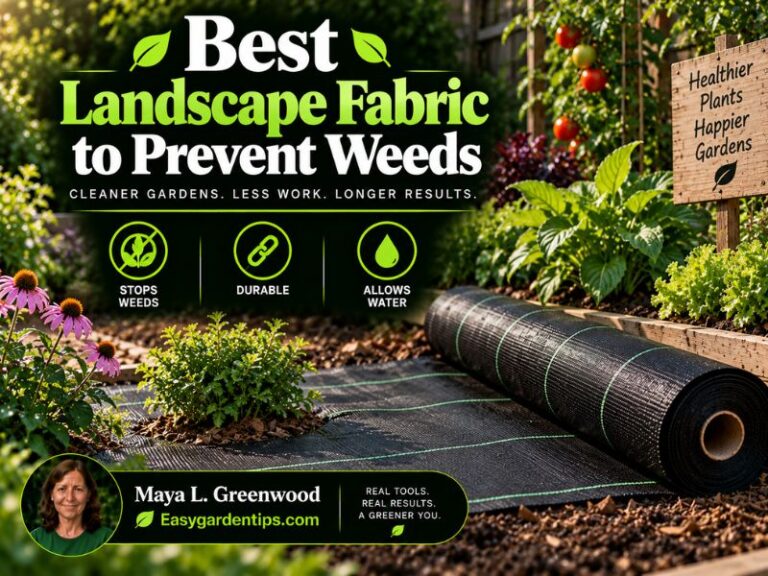
5 Best Landscape Fabric for Weeds: Heavy-Duty Weed Barriers
Are you looking for the best landscape fabric for weeds because pulling the same unwanted plants from your flower beds, gravel paths, or garden borders every few weeks has become frustrating? Choosing the wrong weed barrier can create its own problems: thin material may tear or let weeds penetrate, while poorly permeable fabric can interfere with water, air, and nutrient movement around the soil.
A good landscape fabric should suppress sunlight-driven weed germination while remaining strong enough for mulch, decorative stone, garden beds, and normal outdoor exposure.
I researched current landscape fabrics, professional recommendations, material weight, woven vs. nonwoven construction, permeability, UV resistance, durability, installation, and buyer feedback, then narrowed the options to these five products for different landscaping needs. Recent independent testing also found that properly selected landscape fabric can suppress weeds effectively while still permitting water movement through the barrier.
For long-term professional-style weed control, my first recommendation is the DeWitt Professional Max Pro-5 Weed Barrier Landscape Fabric. Its heavy woven polypropylene construction, needle-punched permeability, strong puncture resistance, and planting guides make it particularly useful beneath mulch, ornamental beds, and landscaping where durability matters more than finding the cheapest roll.
For flower beds and home gardens, the ECOgardener Premium 5oz Landscape Fabric 3ft x 50ft is easier to handle. Its two-layer, needle-punched construction balances weed suppression with water and air movement, and independent testing found that weeds did not penetrate it during the test period.
For homeowners covering a lot of ground, the VEVOR 4FT x 300FT 3.2oz Heavy Duty Weed Barrier Landscape Fabric provides an enormous roll at a competitive cost per square foot. The woven geotextile material is especially practical beneath gravel, pathways, large landscape beds, and other extensive projects. Current product information lists a 4-foot-by-300-foot roll and 3.2-ounce construction.
If value and simple DIY installation are your priorities, the HOOPLE 4FT x 180FT Premium Pro Garden Weed Barrier is another strong alternative. Its large roll and thick construction work well around flower beds, mulch, edging, pavers, and garden paths without moving into professional-roll pricing.
Finally, the Winisok 3FT x 100FT 3.2oz Weed Barrier Landscape Fabric is my budget pick. It combines a manageable 3-by-100-foot roll, 3.2-ounce woven construction, alignment markings, and good permeability for small-to-medium residential landscape projects. Current marketplace data shows hundreds of customer reviews for this configuration.
Best Landscape Fabric for Weeds
| Image | Product Name | Check Price |
|---|---|---|
Best Choice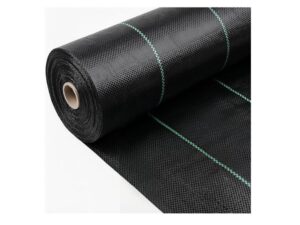 | DeWitt Professional Max Pro-5 Weed Barrier Landscape Fabric | Check Price |
Second Best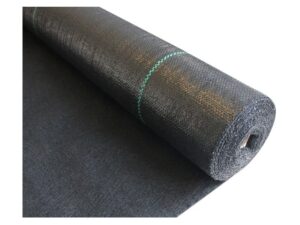 | ECOgardener Premium 5oz Landscape Fabric 3ft x 50ft | Check Price |
Third Choice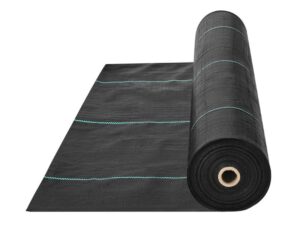 | VEVOR 4FT x 300FT 3.2oz Heavy Duty Weed Barrier Landscape Fabric | Check Price |
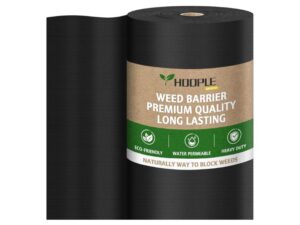 | HOOPLE 4FT x 180FT Premium Pro Garden Weed Barrier | Check Price |
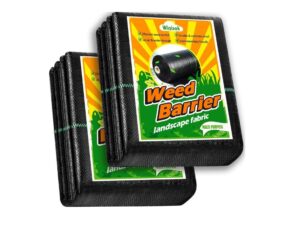 | Winisok 3FT x 100FT 3.2oz Weed Barrier Landscape Fabric | Check Price |
DeWitt Professional Max Pro-5 Weed Barrier Landscape Fabric- Best Overall
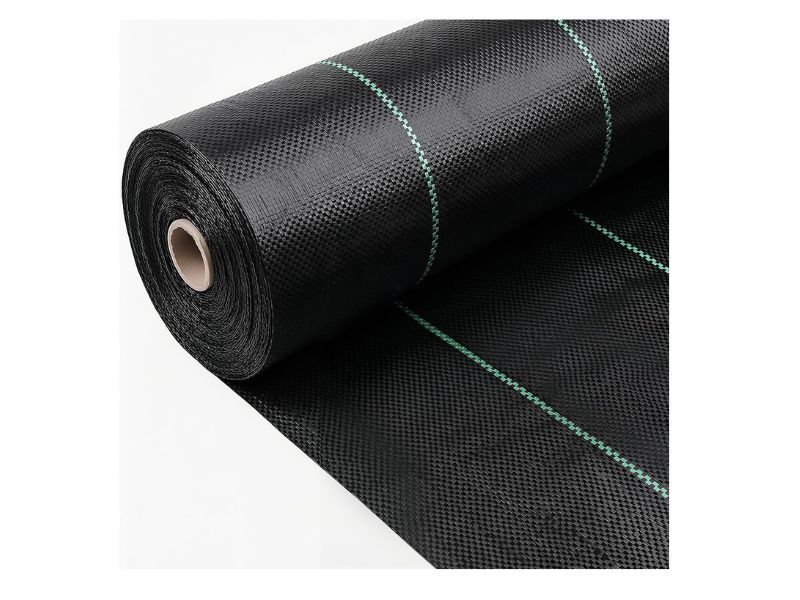
DeWitt is the product I would choose when installing landscape fabric in an area I do not want to redo after only a couple of seasons.
The Professional Max/Pro-5 family uses heavy woven polypropylene with needle-punched construction. This combination is important because landscape fabric needs to perform two seemingly contradictory jobs: block enough light to suppress weed growth while remaining permeable enough for water and nutrients to reach the soil.
Independent landscape-fabric testing ranked DeWitt Pro-5 at the top, praising its durability, permeability, clean cutting, and ability to prevent weeds during testing.
Professional Max material is also designed with substantial tensile and puncture resistance. Industry specifications describe reinforced woven polypropylene intended for commercial landscaping, garden beds, hardscapes, soil stabilization, and erosion control.
The printed planting lines are especially useful when installing shrubs or rows of ornamental plants. Instead of repeatedly measuring spacing, the lines provide an easy visual reference.
This fabric is thicker and more expensive than entry-level rolls. Cutting and fitting heavy fabric around complicated existing plantings also takes more effort.
For long-term beds covered with bark, river rock, or gravel, though, I would rather install better material once than replace deteriorated bargain fabric repeatedly.
Best for: Permanent landscaping, shrub beds, slopes, decorative stone, high-traffic landscape areas, and long-term weed suppression.
Key features: Heavy woven polypropylene, needle-punched permeability, strong puncture resistance, UV-resistant construction, planting guides.
Verdict: DeWitt is the strongest overall option when durability and reliable weed suppression matter more than minimizing upfront cost.
ECOgardener Premium 5oz Landscape Fabric 3ft x 50ft- Best for Garden Beds
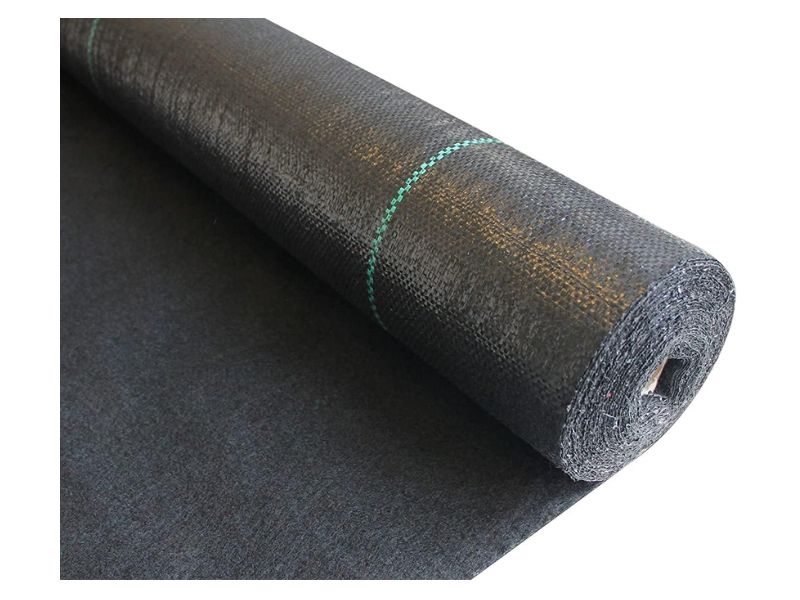
ECOgardener is better suited to the typical homeowner working on flower beds, shrubs, or a relatively small landscaping project.
The 3-by-50-foot roll provides 150 square feet of coverage, making it easier to handle than large commercial rolls.
Its biggest advantage is the construction. The fabric combines woven and nonwoven layers and is needle-punched so rainwater, irrigation, oxygen, and nutrients can move through to the soil.
Bob Vila’s independent testing found no weeds breaking through the ECOgardener fabric during the test period, even while weeds grew substantially in the uncovered control area. Testers also found it lightweight and easy to install.
This Old House also selected ECOgardener as its overall favorite in its recent landscape-fabric comparison, specifically highlighting its breathable construction and usefulness in raised beds and in-ground gardens.
There is one important installation consideration: the material is better protected when covered with mulch or another ground cover rather than left exposed to constant direct sunlight. Independent testing noted that cut edges can also fray.
Those are manageable disadvantages for normal landscape installation.
Lay it on properly prepared soil, overlap adjoining sections, secure the edges with landscape staples, cut only where plants need to emerge, and cover the fabric.
Best for: Flower beds, foundation plantings, raised beds, shrubs, mulch-covered gardens, and normal residential landscaping.
Key features: 5oz construction, two-layer design, needle-punched permeability, easy-to-handle 3 x 50-foot roll.
Verdict: ECOgardener is my favorite choice for homeowners who want strong weed control without wrestling with an enormous commercial roll.
VEVOR 4FT x 300FT 3.2oz Heavy Duty Weed Barrier Landscape Fabric- Best for Large Areas
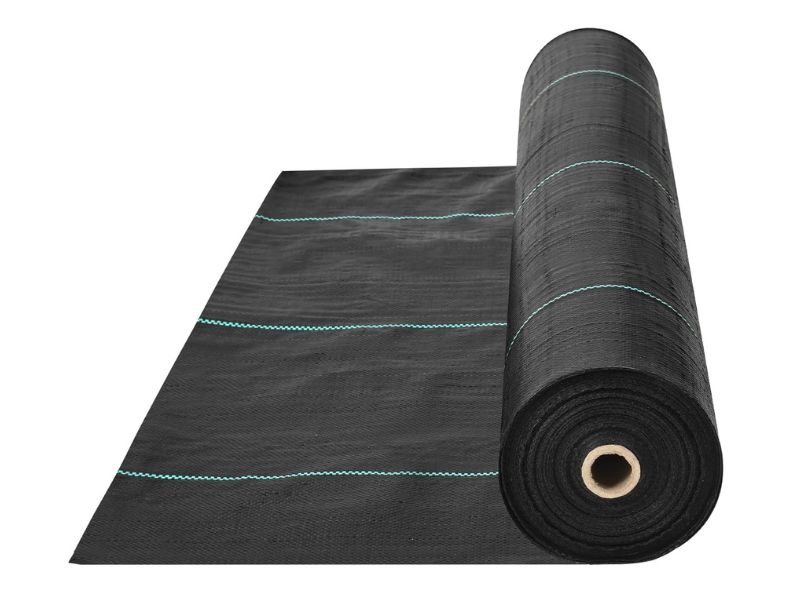
VEVOR makes the most sense when the landscaping project is measured in hundreds rather than dozens of square feet.
This roll measures 4 feet wide by 300 feet long, providing approximately 1,200 square feet of material. That makes it dramatically more practical for a long pathway, orchard row, gravel section, extensive flower bed, or large property than repeatedly purchasing 50-foot rolls.
The material is a 3.2-ounce woven geotextile fabric intended to suppress weeds while retaining permeability. Current marketplace specifications list the roll at 4 x 300 feet and show strong buyer feedback for weed control, stone installations, and backyard projects.
VEVOR also markets the fabric for several uses beyond ordinary mulch beds, including under gravel, driveways, landscaping, garden cloth, and ground-cover applications.
The lighter 3.2-ounce construction makes the enormous roll easier to work with than an equivalent amount of 5-ounce commercial fabric. It is also easier to cut when creating plant openings.
The tradeoff is that 3.2-ounce material is not as substantial as DeWitt’s professional-grade fabric.
For areas exposed to sharp rocks, heavy equipment, or frequent foot traffic before being covered, take extra care during installation.
For a large residential landscape, though, the combination of coverage and value is hard to ignore.
Best for: Large beds, long pathways, gravel areas, orchards, landscaping projects, and homeowners needing hundreds of feet of weed barrier.
Key features: 4 x 300 feet, 1,200-square-foot coverage, 3.2oz woven geotextile polypropylene, high permeability.
Verdict: VEVOR provides the most practical large-project option when buying many smaller rolls would become expensive and inconvenient.
HOOPLE 4FT x 180FT Premium Pro Garden Weed Barrier- Best Value
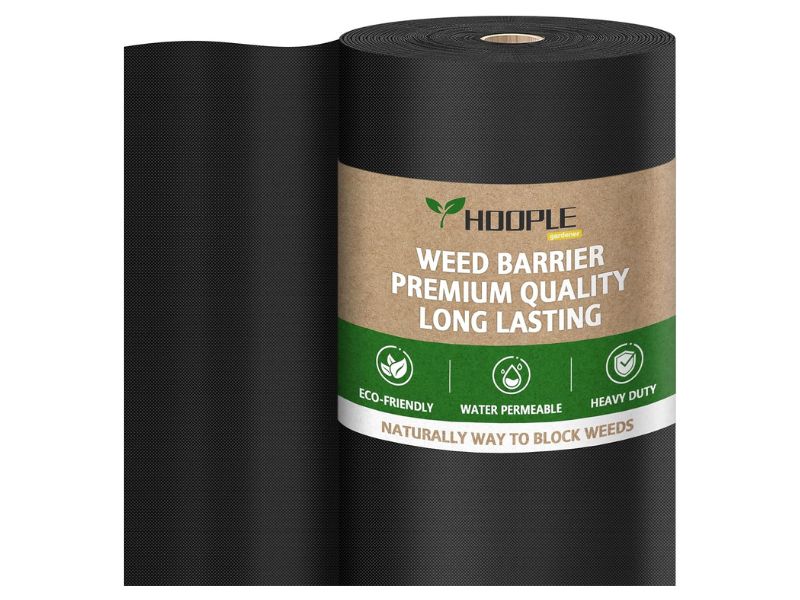
HOOPLE occupies a useful middle position between compact homeowner rolls and huge commercial-style products.
The 4-foot-by-180-foot version gives you approximately 720 square feet of coverage, which is enough for substantial flower beds and pathways without leaving you with an enormous 300-foot roll.
Marketplace research has consistently placed HOOPLE among popular weed-barrier products, with the 4-by-180-foot version historically ranking strongly within Amazon’s weed-barrier category.
HOOPLE markets this fabric as an ultra-thick weed-control barrier suitable for flower beds, mulch, pavers, edging, landscaping stakes, and other heavy-duty outdoor projects.
Its larger 4-foot width is particularly useful.
Narrower rolls require more seams. Every seam is another potential location where the fabric can separate or weeds can eventually find light.
Using fewer, wider strips speeds installation and reduces overlap.
The downside is that HOOPLE can feel excessive for tiny planting beds. If you only need to cover a 3-by-20-foot strip beside the house, ECOgardener’s smaller roll is easier to manage.
For a typical landscaping renovation where several beds need fabric simultaneously, HOOPLE offers a useful combination of coverage, thickness, and price.
Best for: Medium-to-large residential projects, mulch beds, pavers, garden borders, and homeowners seeking good coverage for the money.
Key features: 4 x 180-foot roll, heavy-duty weed-barrier construction, approximately 720 square feet of coverage, broad landscaping versatility.
Verdict: HOOPLE offers some of the best value when you need substantially more material than a small garden roll but do not need a 300-foot commercial-style product.
Winisok 3FT x 100FT 3.2oz Weed Barrier Landscape Fabric- Best Budget Pick
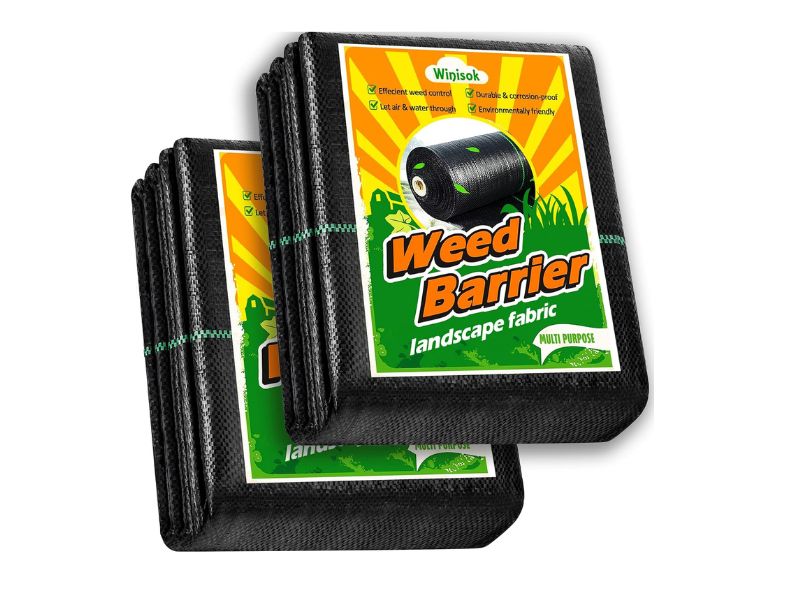
Winisok is the least complicated recommendation on this list.
You get a 3-foot-by-100-foot roll of 3.2-ounce woven landscape fabric intended for ordinary garden, mulch, backyard, farming, and landscaping applications.
Current Amazon marketplace tracking lists hundreds of reviews and approximately a mid-4-star average for this configuration.
The material is designed to allow water and air through while reducing the sunlight available to weeds beneath the barrier.
Printed guide lines also make cutting straight sections and aligning garden rows easier.
At three feet wide, the roll is particularly convenient around narrow foundation beds and walkways. One person can usually position a narrow roll more easily than a large commercial sheet.
There is naturally a durability tradeoff.
At 3.2 ounces, Winisok is lighter than the 5-ounce fabrics I prefer for long-term commercial-style installation.
That does not make it ineffective. It simply means the fabric should be matched to the job.
I would use it under mulch around ordinary residential beds before choosing it beneath rough stone where puncture resistance is the top priority.
Best for: Budget landscaping, narrow flower beds, small garden projects, mulch installations, and first-time DIY users.
Key features: 3 x 100 feet, 3.2oz woven material, alignment markings, breathable and water-permeable construction.
Verdict: Winisok is a sensible budget option when you need a lot more coverage than a small roll but do not need professional-grade fabric.
Best Landscape Fabric for Weeds Comparison
| Product | Material / Weight | Roll Size | Best Use |
| DeWitt Professional Max Pro-5 | Heavy woven polypropylene | Multiple sizes | Best overall / long-term landscaping |
| ECOgardener Premium | 5oz, two-layer | 3 x 50 ft | Flower beds and gardens |
| VEVOR Heavy Duty | 3.2oz woven geotextile | 4 x 300 ft | Large areas and gravel |
| HOOPLE Premium Pro | Heavy-duty woven fabric | 4 x 180 ft | Best value / medium-large projects |
| Winisok Heavy Duty | 3.2oz woven fabric | 3 x 100 ft | Budget residential use |
What Is Landscape Fabric?
Landscape fabric, also called weed barrier fabric, weed cloth, landscape cloth, or weed-control fabric, is a permeable material installed over prepared soil and normally covered with mulch, gravel, or decorative stone.
Its main job is to block sunlight from reaching the soil surface.
Many weed seeds require suitable light, moisture, and temperature conditions to germinate. A dense barrier reduces the amount of light available while physically separating the soil from the material above it.
Unlike impermeable plastic sheeting, quality landscape fabric is designed to permit some movement of water and air.
That distinction matters around permanent plants.
Shrubs, trees, perennials, and ornamentals still need soil moisture and oxygen around their root systems.
Does Landscape Fabric Actually Stop Weeds?
It significantly reduces weeds, but it cannot guarantee a permanently weed-free landscape.
Independent testing of multiple fabrics found effective weed suppression during the testing period.
However, weeds can appear in two different ways.
The first is from existing roots or seeds beneath the fabric.
Proper site preparation greatly reduces this problem.
The second occurs above the fabric.
Over time, organic debris, decomposed mulch, dust, and soil can accumulate on top of the barrier. Weed seeds can germinate in that new layer even if the original soil underneath remains completely covered.
This is why landscape fabric should be considered a weed-reduction system, not a magical permanent solution.
Woven vs. Nonwoven Landscape Fabric
This distinction causes a lot of confusion.
Woven Landscape Fabric
Woven fabric uses strands of polypropylene woven together into a strong sheet.
Its advantages include:
High tensile strength, good weed suppression, durability, and suitability under gravel or pathways.
DeWitt, VEVOR, HOOPLE, and Winisok primarily fit this general category.
Woven material is my preference when physical strength matters.
Nonwoven Landscape Fabric
Nonwoven material is bonded rather than traditionally woven.
It is often used where drainage and soil separation are important.
Some products combine both construction methods.
ECOgardener, for example, uses a two-layer approach with needle punching to maintain permeability.
The correct choice depends on whether weed suppression, drainage, or structural strength is most important.
What Fabric Weight Is Best for Weed Control?
Landscape fabric is frequently rated by ounces per square yard.
Generally, heavier fabric provides:
Greater puncture resistance.
Better opacity.
Stronger weed suppression.
More durability beneath stone.
But heavier is not always better.
A thick commercial fabric can be unnecessarily difficult to cut around dozens of existing plants.
For ordinary residential landscaping, 3.2oz to 5oz fabric covers many common applications.
Use the heavier end of that range when long-term weed control and durability are priorities.
Use a lighter woven product when cost, flexibility, and easy installation matter more.
Can Water Pass Through Landscape Fabric?
Yes, quality permeable landscape fabric is designed to allow water through.
But permeability varies significantly between products.
Needle-punched fabrics create small openings that improve water and air passage.
This is why simply buying the thickest black material available is not always a good idea.
Before completing installation, I recommend a simple test.
Lay out a small section and pour water over it.
You should see the moisture passing through rather than remaining pooled indefinitely on top.
Is Landscape Fabric Better Than Plastic?
For planting beds, usually yes.
Solid plastic can block weeds extremely effectively because almost no light passes through.
Unfortunately, it can also interfere with normal water, oxygen, and soil-gas movement.
That makes plastic more appropriate for certain hardscape or specialized applications than for normal perennial planting beds.
Permeable weed fabric offers a more balanced approach.
Where Should Landscape Fabric Be Used?
Landscape fabric works particularly well in relatively permanent landscaping.
Good locations include:
Shrub beds, foundation beds, ornamental landscaping, gravel walkways, rock gardens, pathways, around trees, under decorative stone, and beneath certain hardscape installations.
The key word is permanent.
Landscape fabric becomes less convenient in beds you dig and replant constantly.
Should You Use Landscape Fabric in a Vegetable Garden?
It depends on how you garden.
For permanent pathways between rows, landscape fabric can work extremely well.
It can also suppress weeds around widely spaced crops when holes are cut for each plant.
But if you regularly till the soil, add compost, divide plants, or completely redesign the bed every season, permanent landscape fabric can become inconvenient.
In highly dynamic vegetable beds, organic mulch such as straw, shredded leaves, or compost may be easier to manage.
Landscape Fabric Under Mulch
Mulch is one of the most common uses.
Install the fabric over prepared soil, secure it, cut openings for plants, and add mulch over the top.
The mulch serves several purposes.
It hides the black fabric.
It helps protect the material from sunlight.
It adds weight so wind cannot lift exposed areas.
And it gives the finished bed a more natural appearance.
Do not pile excessive mulch directly against tree trunks or shrub stems.
Landscape Fabric Under Gravel
Fabric can be particularly valuable beneath pea gravel, river rock, decorative stone, and pathways.
Without separation fabric, gravel gradually mixes with the underlying soil.
A strong woven geotextile provides both weed suppression and separation between the soil and stone layers.
For these installations, I prefer heavier material with good puncture resistance.
DeWitt or a large VEVOR roll makes more sense than a lightweight garden cloth if sharp stone will be placed above it.
How to Install Landscape Fabric Correctly
Good fabric installed badly will still produce disappointing results.
Begin by removing existing weeds, roots, rocks, and debris.
Do not simply lay fabric on top of a mature weed patch and expect every perennial root system underneath to disappear immediately.
Level the soil.
Unroll the landscape fabric with adjacent sheets overlapping by several inches.
Secure the edges and overlaps with landscape staples or garden pins.
Cut X-shaped or circular openings only where plants need to emerge.
Avoid oversized holes because exposed soil around each plant becomes an easy location for weeds to grow.
Finish by covering the fabric with the appropriate mulch, gravel, or decorative material.
How Much Should Landscape Fabric Overlap?
A few inches is the minimum I would normally use, but 4–6 inches of overlap provides a safer starting point for many residential installations.
Increase the overlap when the site is uneven or when persistent weeds are a major concern.
Remember that weeds do not need much exposed soil.
A narrow gap between two rolls can become a convenient growing strip.
Secure overlapping sections with staples so they cannot separate during installation.
Which Side of Landscape Fabric Goes Up?
Follow the instructions for the specific fabric.
Some fabrics have clearly different surfaces and are intended to be installed in one orientation.
Others are effectively reversible.
Do not assume every roll works the same way.
If one surface is fuzzy and the other smooth, or if the manufacturer specifies a particular orientation, follow that guidance.
How Long Does Landscape Fabric Last?
Lifespan varies enormously.
Material thickness, polypropylene quality, UV stabilization, sunlight exposure, installation, mulch coverage, traffic, and sharp stone all affect durability.
Heavy professional fabrics can last many years when installed correctly.
DeWitt Professional Max products are specifically designed as long-term commercial-grade barriers, while lighter residential fabric may need replacement sooner.
Covering fabric usually extends useful life compared with leaving it exposed continuously.
Can Weeds Grow Through Landscape Fabric?
Yes.
Aggressive perennial weeds can sometimes exploit seams, planting holes, damaged sections, or weak fabric.
Others grow on top rather than through it.
Landscape fabric works best as part of a complete weed-management strategy:
Remove existing weeds.
Use adequate overlap.
Secure the fabric.
Cover it properly.
Maintain the mulch or gravel layer.
Pull occasional weeds before they establish deep roots.
Landscape Fabric vs. Cardboard
Cardboard has become popular as a temporary weed-smothering layer.
It has some real advantages.
It is inexpensive, biodegradable, and useful when creating new beds over existing grass.
However, cardboard eventually decomposes.
Landscape fabric lasts much longer.
For a permanent gravel path, I would choose landscape fabric.
For creating a new organic garden bed that will be regularly amended and replanted, cardboard may actually fit the gardening system better.
Landscape Fabric vs. Mulch Alone
Mulch alone can suppress many annual weeds when applied at adequate depth.
It also improves appearance and may add organic matter as it decomposes.
But mulch gradually breaks down.
As the layer thins, sunlight reaches the soil and weeds return.
Fabric underneath creates an additional physical and light barrier.
The tradeoff is reduced flexibility when changing the bed later.
For permanent ornamental beds, fabric plus mulch is often worth considering.
For heavily cultivated beds, mulch alone may be easier.
Frequently Asked Questions
What is the best landscape fabric for weeds?
DeWitt Professional Max Pro-5 is my top choice for long-term weed control.
Its heavy woven polypropylene construction provides excellent durability and weed suppression while needle punching allows water and air movement. Independent testing also ranked DeWitt Pro-5 highly for durability, permeability, and weed-blocking performance.
What thickness of landscape fabric is best for weeds?
Around 3.2oz to 5oz works well for many residential landscaping projects.
Use heavier 4- to 5-ounce material where durability and puncture resistance are priorities. Lighter woven fabric can be sufficient under mulch in lower-traffic flower beds.
Will weeds eventually grow through landscape fabric?
Some weeds can eventually appear through holes, seams, damaged areas, or soil accumulated above the fabric.
Proper preparation, adequate overlap, good-quality fabric, and regular maintenance substantially reduce these problems.
Should landscape fabric go under mulch?
Yes, landscape fabric is commonly installed underneath mulch in permanent ornamental beds.
The mulch hides and protects the fabric while providing a finished appearance. Keep mulch away from direct contact with tree trunks and plant crowns.
Is woven or nonwoven landscape fabric better for weeds?
Woven fabric generally offers excellent strength and weed suppression, while nonwoven fabric can provide excellent drainage.
For heavy gravel and long-term landscaping, I normally favor strong woven polypropylene. For planting beds, a permeable needle-punched or layered fabric can be particularly useful.
Is 5oz landscape fabric good?
Yes, 5oz fabric is an excellent heavy-duty choice for many landscaping projects.
It tends to offer better opacity and physical durability than lightweight barriers. ECOgardener’s 5-ounce product is a good example of a heavier residential weed barrier.
Can I put landscape fabric directly over weeds?
Removing existing weeds first produces much better results.
Mature perennial weeds can retain significant stored energy in roots and rhizomes. Clearing vegetation and preparing the soil reduces the chance of aggressive plants pushing toward seams and planting holes.
Does landscape fabric let rain through?
Permeable landscape fabric should allow rain and irrigation water to reach the soil.
Water movement varies between products, so needle-punched construction and manufacturer permeability information are useful things to check before buying.
Is landscape fabric good under gravel?
Yes, heavy woven landscape fabric is particularly useful beneath gravel and decorative stone.
Besides reducing weeds, it separates stone from the underlying soil and can help prevent the gravel layer from gradually sinking into soft ground.
How many years does landscape fabric last?
Depending on quality and installation, landscape fabric can last from several years to well over a decade.
Heavy professional material normally lasts longer than lightweight residential cloth. Covering the fabric with mulch or gravel and protecting it from damage can significantly extend its useful service life.
Final Verdict
The best landscape fabric for weeds depends mainly on where you plan to install it and how long you expect the barrier to remain in place.
DeWitt Professional Max Pro-5 Weed Barrier Landscape Fabric is my top overall choice. Its heavy woven construction, permeability, puncture resistance, and professional landscaping credentials make it the option I would trust most under permanent mulch, ornamental landscaping, and decorative stone.
ECOgardener Premium 5oz Landscape Fabric is the better fit for normal residential flower beds and garden spaces because its smaller roll is easier to handle and its two-layer needle-punched design balances weed suppression with water and air permeability.
For large installations, VEVOR 4FT x 300FT Heavy Duty Weed Barrier provides much more coverage in a single roll and is particularly attractive for long gravel sections, landscaping areas, and pathways.
HOOPLE Premium Pro Garden Weed Barrier gives you a useful middle ground with substantial coverage and strong value, while Winisok 3FT x 100FT Weed Barrier is the budget choice for smaller DIY jobs.
If I were installing a permanent landscape bed and wanted to minimize the chance of doing the job again soon, I would choose DeWitt. For an ordinary home garden where easier cutting and installation matter more, ECOgardener would be my next choice.
Whichever fabric you buy, remember that site preparation, overlapping seams, secure landscape staples, correct plant openings, and proper mulch or gravel coverage are just as important as the material itself. A quality weed barrier installed carefully can dramatically reduce routine weeding, but even the best fabric cannot compensate for poor installation.

I’m Maya L. Greenwood, a lifelong plant lover who believes anyone can grow something beautiful with the right guidance. After years of testing soil mixes, pruning methods, irrigation tricks, and pest-safe solutions, I started EasyGardenTips.com to turn hard-won lessons into step-by-step advice. From seed starting and container gardens to composting and seasonal checklists, my goal is to make gardening simple, sustainable, and fun.