5 Best Weed Popper Tool: Stand-Up Weed Pullers Compared
The best weed popper tool should remove as much of the root as possible while reducing bending, kneeling, and unnecessary damage to the surrounding lawn. For dandelions, thistles, plantain, crabgrass clumps, and other rooted lawn weeds, I prefer a stand-up weed puller with strong tines, a stable foot platform, and enough leverage to extract the root rather than simply snapping the foliage off.
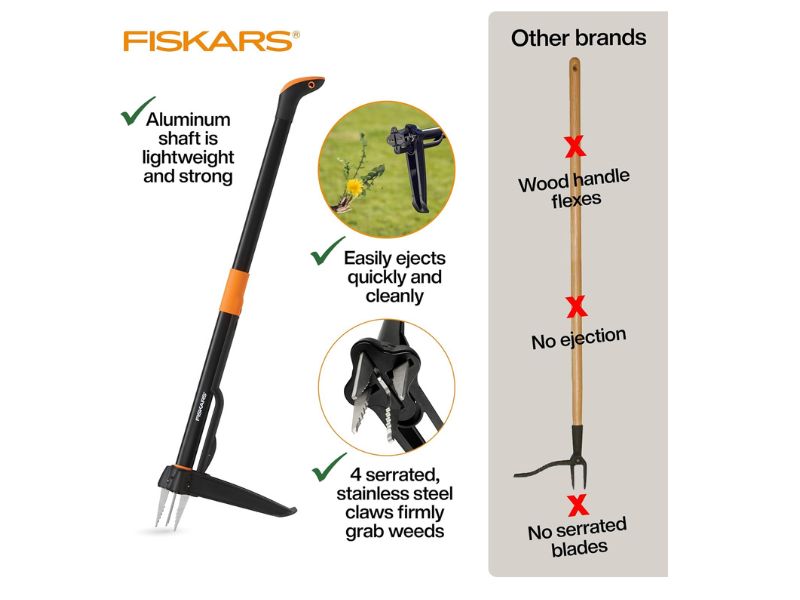
My primary recommendation is the Fiskars 4-Claw 39-Inch Stand-Up Weed Puller Tool. Its four serrated stainless-steel claws, reinforced foot platform, long handle, and easy-eject mechanism make it particularly effective for routine lawn weed removal. It also has one of the strongest established buyer histories in this category.
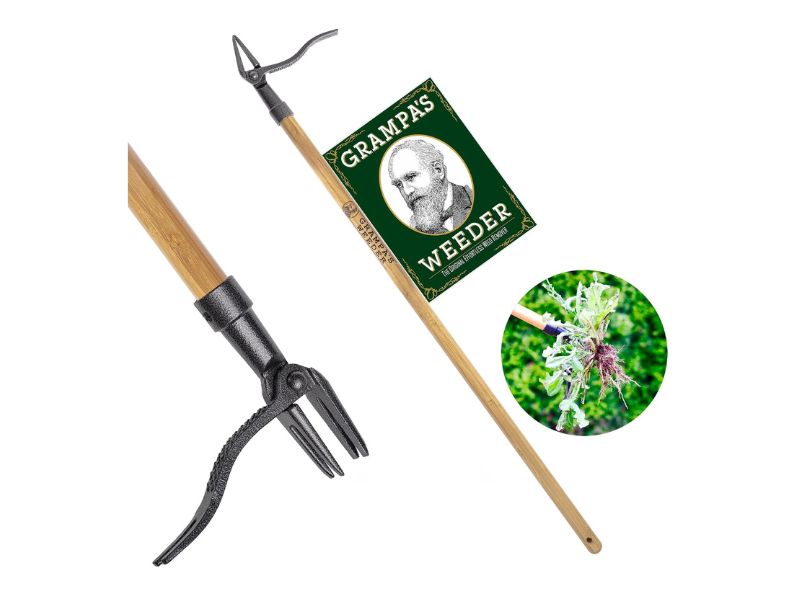
For gardeners who prefer a mechanically simple design, I recommend the Grampa’s Weeder Original Stand Up Weed Puller. Its bamboo handle, steel four-claw head, foot lever, and pull-back extraction method eliminate complicated moving mechanisms while still allowing weeds to be removed from a standing position.
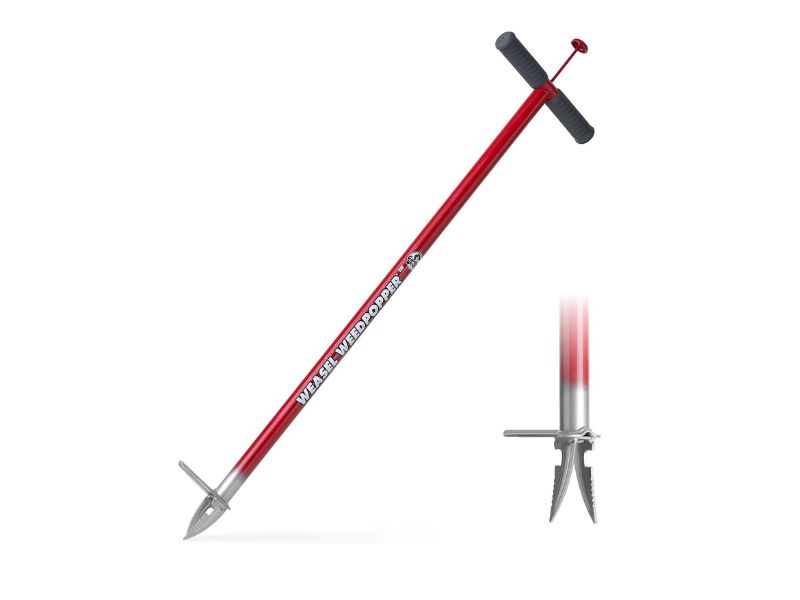
The Garden Weasel 95204 WeedPopper Step & Twist is especially convenient when you need to remove many weeds quickly because its spring-loaded ejector releases the extracted weed without requiring you to pull roots from the claws by hand.
Best Weed Popper Tool
| Image | Product Name | Check Price |
|---|---|---|
Best Choice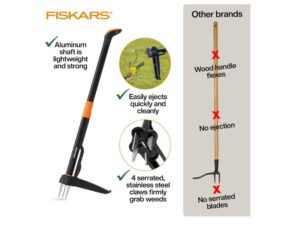 | Fiskars 4-Claw 39-Inch Stand-Up Weed Puller Tool- Best Overall | Check Price |
Second Best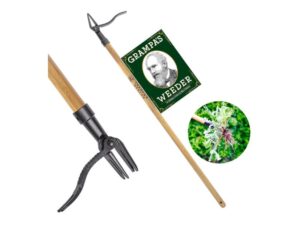 | Grampa’s Weeder Original Stand Up Weed Puller | Check Price |
Third Choice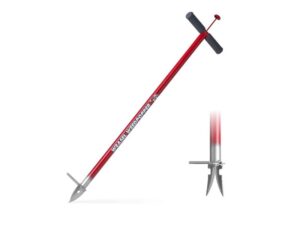 | Garden Weasel 95204 WeedPopper Step & Twist | Check Price |
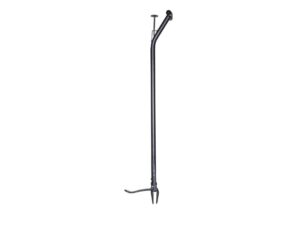 | Yard Butler RKT-1000 Rocket Weeder | Check Price |
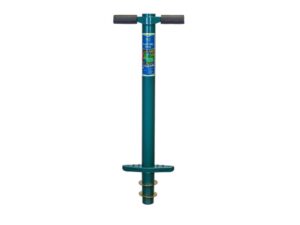 | ProPlugger 5-in-1 Planting Tool P246XL | Check Price |
1. Fiskars 4-Claw 39-Inch Stand-Up Weed Puller Tool- Best Overall
Key Features
- Four serrated stainless-steel claws
- Approximately 39-inch stand-up handle
- Reinforced foot platform
- Root-gripping extraction mechanism
- Easy-eject handle
- Designed for dandelions and other taproot weeds
- Lightweight ergonomic construction
- Chemical-free weed removal
- Suitable for lawns and garden areas
The Fiskars 4-Claw Stand-Up Weeder is my first choice because it combines almost every feature I want in a dedicated weed popper without making operation overly complicated.
The basic process is straightforward.
Center the tool over the weed, push the claws into the soil using the reinforced foot platform, engage the root, and pull the weed from the ground. The handle mechanism then helps eject the removed weed from the claws.
That means the gardener can perform most of the job while standing upright.
For someone removing dozens of dandelions from a lawn, that ergonomic benefit becomes far more important than it sounds.
Repeatedly kneeling, digging around a taproot with a hand tool, standing back up, walking to the next weed, and kneeling again is slow and physically demanding.
A long-handled weed puller turns the process into a repetitive standing operation.
Independent testing has continued to rank the Fiskars 4-Claw highly among stand-up weeders, particularly for its combination of root removal and ease of use.
Four Serrated Claws
The business end of the Fiskars uses four serrated stainless-steel claws.
A good weed popper needs to do more than penetrate the ground.
It needs to grip enough of the weed’s root system that upward force does not simply strip the leaves and crown away.
Dandelions are a perfect example.
The plant uses a taproot, and if that root breaks too high in the soil, enough living tissue may remain for regrowth.
The four-claw design surrounds the central root rather than approaching it from only one side.
The serrated edges improve grip as the claws close into the soil.
This makes the Fiskars especially useful for:
- Dandelions
- Thistles
- Plantain
- Taproot weeds
- Small rooted lawn weeds
- Some young crabgrass clumps
No puller can guarantee that every root comes out intact.
Soil moisture, root depth, rocks, and your positioning all matter.
But capturing the crown and a long section of the root greatly improves results compared with simply pulling leaves by hand.
Reinforced Foot Platform
The foot platform is one of the most important structural parts of a stand-up weeder.
You need enough downward force to push the claws beside the root.
Trying to do that only with arm strength would be awkward.
By stepping on the platform, your body weight drives the claws into the soil.
That makes penetration much easier in reasonably firm lawn soil.
Fiskars reinforces this area because it receives repeated stress during use.
Correct alignment still matters.
Place the claws directly around the crown of the weed before stepping.
If you enter the soil several inches to one side, the tool may miss the taproot completely.
Easy Weed Ejection
Once a weed has been extracted, it still needs to come out of the tool.
This is where cheaper claw-style weeders can become irritating.
Wet soil and fibrous roots often remain wedged between the tines.
Fiskars incorporates an easy-eject system, so you can release the captured material without repeatedly bending over and pulling roots from the claws.
For one weed this seems minor.
For 50 weeds across a lawn, it becomes a significant workflow improvement.
Best Soil Conditions
Like most stand-up weed pullers, the Fiskars performs best when soil is slightly moist rather than extremely dry or waterlogged.
Bone-dry clay can be difficult for narrow claws to penetrate.
Completely saturated ground can create a different problem: the surrounding soil may lift with the root, leaving unnecessarily large holes.
A day after moderate rain or irrigation is often a good time to use a weed popper.
The soil should release the root without turning into mud.
Lawn Damage
Any tool that removes an entire taproot will create a small hole.
That is unavoidable.
A weed popper is still far less disruptive than digging each dandelion out with a large garden shovel.
After removing a large taproot, press displaced turf back into place.
For unusually large holes, adding a little topsoil and grass seed can help repair the lawn.
The Fiskars’ relatively concentrated claw arrangement limits the disturbance compared with wide digging tools.
What I Like
- Four serrated claws grip taproots effectively
- Foot platform provides strong downward leverage
- Long handle reduces bending and kneeling
- Easy-eject mechanism speeds repetitive work
- Stainless-steel claws resist corrosion
- Excellent for dandelions and similar lawn weeds
- Creates less disturbance than digging with a shovel
- Strong established reputation in the category
What I Do Not Like
- Moving ejector mechanism adds more components than simple lever weeders
- Very rocky soil can prevent full claw penetration
- Large mature roots can still break
- Wet soil may remain between the claws
The Fiskars is my Best Overall choice because it offers the most complete weed-pulling workflow: penetrate, grip, extract, and eject. For a lawn containing dozens of dandelions or similar taproot weeds, it is the tool I would start with.
2. Grampa’s Weeder Original Stand Up Weed Puller- Best Simple Design
Key Features
- Traditional design dating to 1913
- Long bamboo handle
- Heavy-duty steel claw head
- Four-claw root-gripping design
- Built-in foot lever
- Approximately 44-inch overall tool length
- Lightweight stand-up operation
- No complicated ejector mechanism
- Chemical-free weed control
Grampa’s Weeder takes almost the opposite approach from the Fiskars.
Instead of building multiple moving controls into the handle, it relies on a simple mechanical principle: leverage.
Center the claws over the weed.
Push the tool into the ground using the footpad.
Then remove your foot and lean the handle toward the footpad.
As the handle moves, the claw geometry closes around the root and pulls the weed from the soil.
The manufacturer specifically emphasizes removing your foot from the lever before leaning the handle, because that movement is what allows the mechanism to pinch around the weed.
That simple design has been associated with the product for more than a century. Grampa’s Gardenware traces the original tool back to 1913.
Why Simplicity Matters
Garden tools live hard lives.
They are exposed to:
- Soil
- Moisture
- Grit
- Fertilizer
- Outdoor storage
- Repeated impact
Every additional moving part creates another place where dirt can collect or wear can occur.
Grampa’s Weeder avoids a complicated sliding ejector system.
The steel head and bamboo handle create a relatively straightforward tool that can be understood almost immediately once the correct rocking motion is learned.
That simplicity is a major reason I like it for gardeners who value durability over extra features.
Bamboo Handle
The original version uses a long renewable bamboo handle attached to a powder-coated steel head.
The company lists the tool at approximately 44 inches long and roughly 2 pounds in its current product information.
Bamboo keeps the tool relatively light.
It also gives the weeder a more traditional feel than aluminum or plastic-heavy stand-up pullers.
The compromise is that wood or bamboo should not be treated like an indestructible steel pry bar.
The leverage should be applied through the intended mechanism rather than twisting aggressively against buried stones or large woody roots.
Four-Claw Extraction
The claw head works well on common weeds such as:
- Dandelion
- Thistle
- Taproot weeds
- Some crabgrass clumps
- Young rooted lawn weeds
Grampa’s own description notes that the design performs best where the claws can penetrate far enough into the soil to surround the root.
That means soil condition again matters.
If the ground is dry and rock-hard, irrigating lightly beforehand can make extraction substantially easier.
Minimal Bending
The long handle is one of the strongest reasons to choose the tool.
A short hand weeder may offer more precision around ornamental plants, but it requires kneeling or bending.
For a lawn with weeds distributed across a wide area, that becomes exhausting.
Stand-up operation allows you to move quickly from one weed to the next.
This is particularly useful for gardeners who want to minimize repeated kneeling.
The Main Limitation
The design does not use the same type of spring-loaded ejector found on some weed poppers.
After extraction, you may occasionally need to shake or manually clear material from the claw head.
That is the cost of mechanical simplicity.
The extraction technique also has a small learning curve.
Trying to yank the handle straight upward rather than leaning it correctly reduces the advantage of the lever mechanism.
What I Like
- Exceptionally simple mechanical design
- Four-claw steel head
- Lightweight bamboo handle
- Long handle reduces bending
- Foot lever provides useful mechanical advantage
- Excellent for common taproot lawn weeds
- Few complicated moving components
- Chemical-free approach
What I Do Not Like
- No dedicated spring-loaded weed ejector
- Technique takes a few attempts to learn
- Works better in softer or moderately moist soil
- Bamboo handle should not be abused like a steel pry bar
Grampa’s Weeder is my choice for gardeners who value simplicity, leverage, and low mechanical complexity. It is particularly satisfying on dandelions when the soil has enough moisture for the claws to penetrate properly.
3. Garden Weasel 95204 WeedPopper Step & Twist- Best Easy Eject
Key Features
- 38.5-inch tool length
- 4-inch serrated tines
- Step-and-twist operation
- Spring-loaded weed ejector
- Rust-resistant carbon-steel tines
- Ergonomic rubber grip
- Approximately 2.19-pound weight
- Designed for chemical-free root removal
- Lifetime warranty
Garden Weasel’s WeedPopper is the product that most literally matches the phrase weed popper tool.
Its operation is built around three movements:
Step. Twist. Pop.
Position the tines around the weed, step down to penetrate the soil, twist the tool to engage the roots, and use the spring-loaded mechanism to eject the extracted weed.
Garden Weasel specifies 4-inch serrated tines, rust-resistant carbon steel, a 38.5-inch length, and approximately 2.19-pound weight.
Spring-Loaded Ejector
This is the defining feature.
When you are clearing a heavily infested lawn, weed removal can become repetitive:
Extract the weed.
Clean the tool.
Move.
Extract another.
Clean again.
The WeedPopper’s spring-loaded ejector helps shorten that cycle.
After pulling the weed from the ground, activate the ejector and send the root mass into a bucket, wheelbarrow, or waste pile.
Your hands stay cleaner, and you spend less time manually stripping roots from the tool.
Serrated Tines
Garden Weasel uses 4-inch serrated tines designed to penetrate and grip around the root.
Four inches provides enough depth for the crown and upper root portion of many common lawn weeds.
Deep taproots can extend considerably farther.
The goal is to extract enough intact root that the plant cannot easily regenerate.
When dealing with an especially mature dandelion, work carefully.
If you twist violently in very dry soil, the taproot may break rather than releasing.
Moistening hard soil first often improves the chance of a clean pull.
Twist Action
The twisting method differentiates this design from rocking-lever weeders.
Twisting helps the tines surround and loosen the root zone before upward removal.
This can work very well in normal loamy lawn soil.
It can be less pleasant in heavily compacted rocky soil where the tines cannot rotate freely.
Do not force the tool aggressively against a buried stone.
Reposition and try again.
Ergonomic Grip
The top handle uses an ergonomic rubber grip.
This matters because the WeedPopper relies more on rotational hand movement than a basic lever weeder.
A secure grip makes repeated twisting easier.
The approximately 2.19-pound weight also keeps the tool reasonably manageable during a long session.
What I Like
- Spring-loaded ejector is excellent for repetitive weeding
- Simple step-twist-pop workflow
- 4-inch serrated tines
- Carbon-steel construction
- Comfortable handle
- Lightweight for a long-handled tool
- Minimal bending required
- Particularly good for dandelion-heavy lawns
What I Do Not Like
- Twisting can be difficult in rocky soil
- Deep mature taproots can still break
- Ejector mechanism adds moving parts
- Repeated twisting may be less comfortable than leverage-style extraction for some users
The Garden Weasel WeedPopper is my choice when speed and clean weed ejection matter most. If you have a lawn covered with small-to-medium dandelions and want to move quickly from one weed to another, the spring-loaded popper design is extremely convenient.
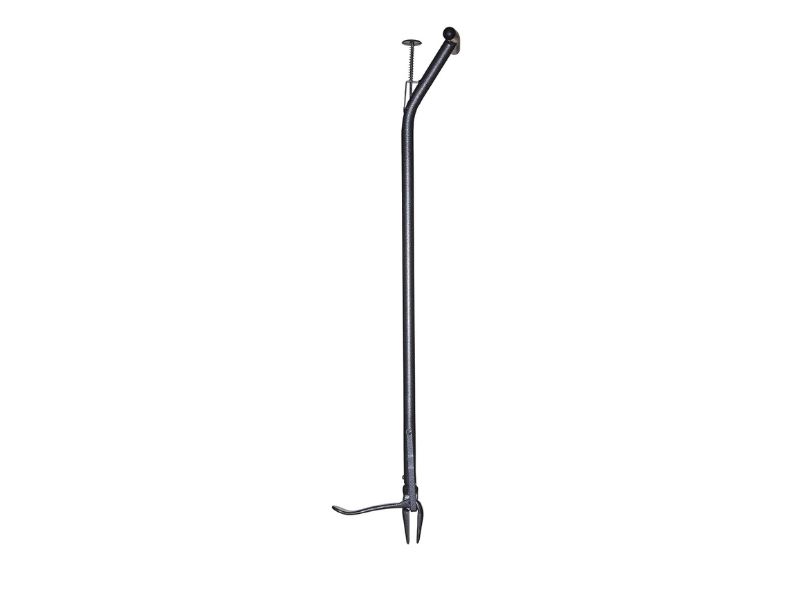
4. Yard Butler RKT-1000 Rocket Weeder- Best Heavy-Duty
Key Features
- Powder-coated steel construction
- Approximately 37-inch height
- Serrated extractor claws
- Foot pedal
- Long ergonomic handle
- Hand-operated weed ejector
- Approximately 4-pound weight
- Designed for dandelions, thistles, and rooted weeds
- Lifetime guarantee against material/workmanship defects
The Yard Butler Rocket Weeder is the heaviest-duty conventional weed popper in this group.
Instead of minimizing weight with extensive plastic or lightweight materials, Yard Butler builds the tool around powder-coated steel construction.
The company lists the Rocket Weeder at approximately 37 inches tall and 4 pounds, with a foot pedal, extractor forks, ergonomic handle, and weed ejector.
Steel Construction
Four pounds is noticeably heavier than a two-pound weeder.
That extra mass can be an advantage when the goal is penetration and leverage.
A substantial steel tool feels more planted when stepping into firm soil.
The powder coating protects the structure from routine corrosion, although the tool should still be cleaned and stored reasonably dry after use.
I would choose the Rocket Weeder for a yard containing:
- Established dandelions
- Thistles
- Deep-rooted lawn weeds
- Firmer soil
- Areas where a lightweight tool feels too flexible
Foot-Pedal Leverage
The foot pedal lets you use your body weight to push the extractor around the root.
Once engaged, the long handle provides leverage to rock the root from the soil.
Yard Butler specifically designs the tool to extract weeds while limiting the need to bend or kneel.
The technique is particularly effective after rainfall when the soil is moist enough to release the taproot.
Serrated Root Grip
The steel claws incorporate serrated edges intended to hold roots as the tool is rocked.
This is useful on larger dandelions where smooth tines may slide along the root surface.
As always, positioning is critical.
Center the tool carefully over the weed’s crown.
The strongest tool in the world cannot remove a taproot cleanly if its claws miss the root.
Weed Ejector
A built-in ejector allows you to release the removed weed after extraction.
That keeps the overall workflow similar to the Fiskars and Garden Weasel.
For clay soil, some material may still stick to the claws and require occasional cleaning.
A small stiff brush stored near your gardening tools can help clean dried soil from any weed puller.
Weight Tradeoff
The Rocket Weeder’s steel construction is its main advantage and main disadvantage.
If maximum lightness is the goal, choose Fiskars, Grampa’s Weeder, or Garden Weasel.
If you prefer a more substantial all-steel feel, the Yard Butler makes more sense.
What I Like
- Robust powder-coated steel construction
- Strong foot-pedal leverage
- Serrated root-gripping claws
- Ejector reduces hand contact with weeds
- Long handle reduces kneeling
- Effective for established dandelions and thistles
- Lifetime guarantee from the manufacturer
What I Do Not Like
- Heavier than several competing weed pullers
- Can remove a larger soil plug in soft ground
- Very wet clay can stick to the claw assembly
- Less agile for precision weeding between closely spaced plants
The Rocket Weeder is my heavy-duty recommendation. I would choose it when tool strength and steel construction matter more than having the absolute lightest stand-up weed puller.
5. ProPlugger 5-in-1 Planting Tool P246XL- Best Multi-Purpose
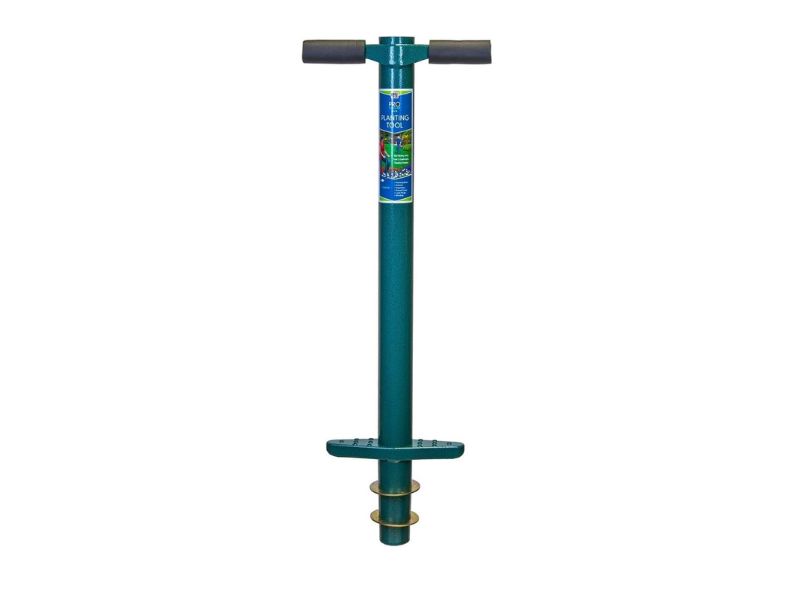
Key Features
- 5-in-1 lawn and garden tool
- All-welded carbon-steel construction
- Approximately 34 inches long
- Comfortable standing operation
- Removes cores approximately 2-1/8 inches wide
- 2-, 4-, and 6-inch working-depth options
- Useful for deep taproot weeds
- Also functions as a bulb planter
- Lawn/sod plugger
- Soil sampling tool
- Made in the USA
The ProPlugger is different from the other four products.
It is not primarily a claw-style weed popper.
Instead, it removes a cylindrical soil plug around the root.
That makes it particularly useful when a weed’s deep root repeatedly breaks with claw-style tools.
ProPlugger specifically describes its 5-in-1 tool as useful for eliminating deep taproot weeds such as dandelions, thistles, and wild onions, while also functioning as a planting tool, sod plugger, and soil sampler.
How the Plugging Method Works
Place the tube over the weed.
Step down.
Twist.
Pull upward.
Rather than trying to clamp only the root, the tool takes a narrow soil core containing the root.
The hole is approximately 2-1/8 inches in diameter, and depth rings allow controlled depths around 2 or 4 inches; removing the ring allows deeper operation around 6 inches.
This approach removes more soil than a four-claw weed puller.
But it can also be more reliable when the weed root is difficult to grip.
Best for Taproots
Think of the ProPlugger as a precision coring tool.
It can be especially useful for:
- Dandelions
- Wild onions
- Thistles
- Small isolated deep-root weeds
It is not the tool I would select for hundreds of tiny weeds scattered across a lawn.
For that job, the faster Fiskars or Garden Weasel mechanism is more efficient.
The ProPlugger becomes attractive when you need to remove the root zone more deliberately.
Multi-Purpose Value
The other reason it deserves a place in this list is versatility.
Once weed season slows down, the tool can still be used for:
- Planting bulbs
- Planting annuals
- Ground-cover planting
- Taking soil samples
- Lawn plugging
- Fertilizer placement
A dedicated weed popper spends most of its life doing one job.
The ProPlugger can remain useful throughout multiple gardening seasons.
Carbon-Steel Construction
The tool is built from all-welded carbon steel with a powder-coated finish.
That makes it substantially stronger than inexpensive thin-wall bulb planters.
Its design is intended to withstand repeated stepping and twisting.
Still, ProPlugger advises using the tool in moist soil free of large rocks and major tree or shrub roots.
That advice is important.
Trying to force a hollow coring tube through hard rock is a quick way to damage a garden tool.
Lawn Repair
Because the ProPlugger removes a soil core, it leaves a more obvious hole than a claw weeder.
For lawn weed removal, keep some soil or topdressing available.
After removing the weed root, refill the hole and press the surrounding turf back into place.
This creates more work than using a claw tool, which is why the ProPlugger ranks fifth despite its excellent versatility.
What I Like
- Removes a core around difficult taproots
- Strong welded carbon-steel construction
- 2-, 4-, and 6-inch depth options
- Useful for weeds that escape claw pullers
- Works from a standing position
- Also serves as a bulb planter and sod plugger
- Useful for soil sampling
- High overall garden-tool versatility
What I Do Not Like
- Removes more soil than a claw-style weed popper
- Slower for large numbers of scattered weeds
- Holes may require filling afterward
- Not intended for rocky or extremely dry ground
The ProPlugger is the best choice when you want one garden tool to handle weed removal plus planting and lawn work. It is less convenient as a dedicated dandelion popper but more useful during the rest of the gardening year.
Weed Popper Tool Comparison
| Product | Removal System | Handle Style | Ejector | Construction | Best Weed Type | Best Use |
| Fiskars 4-Claw Stand-Up Weeder | Four serrated claws | Long ergonomic | Yes | Stainless-steel claws / lightweight shaft | Dandelions, taproots | Best overall lawn weeding |
| Grampa’s Weeder | Four-claw leverage | Bamboo long handle | Manual release | Steel head / bamboo | Dandelions, thistles | Simple mechanical extraction |
| Garden Weasel WeedPopper | Serrated step-and-twist tines | Ergonomic long handle | Spring-loaded | Carbon steel | Dandelions, small rooted weeds | Fast repetitive weed removal |
| Yard Butler Rocket Weeder | Serrated extractor claws | Steel long handle | Yes | Powder-coated steel | Tough dandelions, thistles | Heavy-duty use |
| ProPlugger 5-in-1 | Soil-core extraction | Dual standing grips | Core emptied manually | Welded carbon steel | Deep taproots, wild onions | Weeding plus planting |
The Fiskars 4-Claw provides the best overall blend of penetration, root grip, stand-up ergonomics, and fast ejection.
Grampa’s Weeder is mechanically simpler. Garden Weasel offers the most satisfying ejector design. Yard Butler provides the most substantial steel construction, while ProPlugger uses an entirely different coring approach for gardeners who want a multi-purpose tool.
How to Choose the Best Weed Popper Tool
Choose Claw Style for Lawn Weeds
A claw-style weed puller is usually the best option when weeds are scattered through turf.
The narrow claws penetrate around the root without excavating a large section of lawn.
This is ideal for:
- Dandelion
- Thistle
- Broadleaf plantain
- Individual taproot weeds
The Fiskars, Grampa’s Weeder, and Yard Butler all use variations of this principle.
Choose Step-and-Twist for Speed
A step-and-twist tool such as the Garden Weasel works well when weeds are numerous and relatively uniform.
The workflow becomes repetitive:
Position.
Step.
Twist.
Pull.
Pop.
That can make clearing a dandelion-heavy lawn surprisingly quick.
Choose a Plugger for Difficult Roots
When claws repeatedly break a root or fail to grip it, soil-core extraction can be more dependable.
The ProPlugger removes the root together with surrounding soil.
The disadvantage is increased lawn disturbance.
Why Removing the Root Matters
Cutting a dandelion’s leaves does not necessarily kill the plant.
The root stores energy.
If enough healthy root remains below ground, new leaves may emerge.
That is why a weed popper aims to remove:
the crown + as much of the taproot as practical
You do not always need every microscopic root fragment.
But extracting a substantial intact taproot greatly reduces the plant’s ability to recover.
Best Time to Use a Weed Popper
The easiest time is when the soil is moist but not saturated.
A day after rainfall can be ideal.
Slight moisture lets the claws penetrate and allows the root to slide from the soil.
Soil Too Dry
Possible problems:
- Claws struggle to penetrate
- Taproots break
- More foot pressure is required
Soil Too Wet
Possible problems:
- Large chunks of soil come out
- Mud sticks to the tines
- Lawn holes become larger
Aim for a middle ground.
Weed Popper for Dandelions
A stand-up puller is particularly well suited to dandelion taproots.
Positioning is critical.
Find the center of the leaf rosette.
Place the claws directly over that point.
If you attack from the side, the tines may miss the main root.
After extraction, inspect the root.
A long intact section indicates a better removal than a crown with only half an inch of root attached.
Weed Popper for Crabgrass
Crabgrass has a different growth habit from a classic taproot weed.
Young or isolated clumps can sometimes be removed with a claw tool.
Large spreading plants may require more disturbance because their root system is distributed across several nodes.
For big crabgrass clumps, a hand cultivator or digging weeder can sometimes be more efficient than repeatedly repositioning a four-claw popper.
Weed Popper for Thistles
Thistles can develop strong roots.
Use a heavy tool with good penetration and leverage.
The Fiskars and Yard Butler are particularly suitable.
Wear gardening gloves around spiny foliage even if the tool allows stand-up operation.
Handle Length
Handle length affects posture.
A short stand-up weeder can still force a tall gardener to bend forward.
Look for a handle that lets you:
- Keep your back relatively upright
- Place your foot comfortably on the platform
- Apply leverage without crouching
Longer is not automatically better.
A very tall tool can feel cumbersome for shorter gardeners.
Foot Platform Strength
The foot platform transfers body weight into the soil.
Look for a design that feels stable rather than flexible.
The platform needs enough area to press comfortably through footwear.
Avoid jumping aggressively on a weed puller.
If normal pressure cannot penetrate the soil, water the area or reposition the tool instead of treating it like a demolition bar.
Claw Material
Common materials include:
- Stainless steel
- Carbon steel
- Powder-coated steel
Stainless steel offers good corrosion resistance.
Carbon steel can provide excellent strength but benefits from protective coatings and reasonable storage.
Clean soil from metal components before putting tools away for long periods.
Ejector Mechanism
An ejector is not essential.
Grampa’s Weeder demonstrates that a simple tool can work effectively without one.
But an ejector becomes valuable when clearing a large lawn.
It reduces:
- Bending
- Root handling
- Mud contact
- Time between weeds
The Garden Weasel and Fiskars particularly emphasize this convenience.
Chemical-Free Weed Control
Manual weed removal provides a straightforward way to target isolated lawn weeds without applying a broadcast herbicide.
This can be useful around:
- Vegetable beds
- Play areas
- Ornamental gardens
- Individual weeds in otherwise healthy turf
Manual tools are not necessarily practical for every infestation.
If hundreds of weeds cover most of a lawn, correcting the underlying turf problem may matter more than pulling every individual plant.
Why Weeds Keep Returning
Repeated weeds often indicate a lawn-management issue rather than a lack of weeding effort.
Possible causes include:
- Bare soil
- Thin turf
- Compacted soil
- Improper mowing height
- Poor fertility
- Excessive irrigation
- Insufficient irrigation
- Weed seeds already in the soil
A dense healthy lawn canopy is one of the best long-term defenses against many weeds.
Use the popper for existing plants, then improve the conditions that allowed them to establish.
How to Use a Weed Popper Correctly
First identify the center of the weed.
Position the tines around the crown.
Push the claws into the soil using steady foot pressure.
Engage the tool according to its design—pull, rock, or twist.
Lift the weed carefully.
Inspect the root.
Eject or remove the plant.
Then press displaced turf back into place.
For larger holes, add a small amount of soil and reseed if necessary.
Common Weed Popper Mistakes
Pulling in Bone-Dry Soil
Dry soil holds roots tightly.
Moisten the area first.
Missing the Weed Center
Poor alignment is one of the main reasons taproots break.
Using Excessive Force Against Rocks
If the claws hit a solid obstruction, reposition them.
Pulling Before the Claws Are Deep Enough
Shallow engagement often removes only foliage and crown.
Expecting Zero Lawn Damage
Root removal naturally creates a small hole.
Repair significant holes afterward.
Using a Weed Popper for Every Weed Type
Not every weed has a central taproot.
Match the tool to the plant.
Frequently Asked Questions
What is the best weed popper tool?
The Fiskars 4-Claw Stand-Up Weed Puller is my primary recommendation for most lawns.
Its four serrated claws, foot platform, long handle, and easy-eject mechanism create an efficient system for removing dandelions and similar taproot weeds while standing. Garden Weasel is particularly good when fast ejection matters, while Yard Butler provides a heavier steel alternative.
Do weed popper tools actually work?
Yes, they work particularly well on weeds with a central root system.
Dandelions are one of the best examples. Success depends on positioning the claws around the crown and using the tool when soil moisture allows the root to release without breaking.
Will a weed popper remove the whole dandelion root?
It can remove a substantial taproot, but no manual tool guarantees every root will come out intact.
Mature dandelions can develop long roots. Moist soil, correct alignment, and controlled extraction improve the chance of getting a longer intact section.
Should I wet the soil before using a weed puller?
Slightly moist soil is generally easier for weed extraction than bone-dry soil.
If the ground is hard, irrigate lightly and allow the water to penetrate. Avoid turning the area into mud because saturated soil can produce unnecessarily large holes.
Is a four-claw weeder better than three claws?
Four claws can provide excellent root enclosure, but claw geometry matters more than claw count alone.
A strong three-claw design can outperform a weak four-claw product. Consider tine length, material, leverage, foot platform, and how well the mechanism closes around the root.
What weeds can a weed popper remove?
Weed poppers are best for dandelions, thistles, plantain, and other individually rooted lawn weeds.
Performance is less predictable on sprawling weeds with multiple rooting points or large fibrous root systems.
Can a weed popper remove crabgrass?
It can remove small crabgrass clumps, but mature spreading crabgrass may require a different approach.
Crabgrass does not behave exactly like a single deep dandelion taproot. Large plants may require several placements or a hand cultivator.
Does pulling dandelions make them spread?
Removing the plant before it produces mature seed helps reduce additional seed entering the lawn.
The important part is getting enough root to prevent rapid regrowth. Simply snapping the leaves off can leave the plant alive underground.
Which weed puller is easiest to use without bending?
All five options reduce bending, but Fiskars and Garden Weasel provide particularly convenient extraction-and-ejection workflows.
Grampa’s Weeder is also excellent if you prefer a simple lever mechanism without a complicated release system.
Is a weed puller better than weed killer?
A manual puller is excellent for isolated weeds and avoids applying herbicide to the surrounding lawn.
Herbicide may be more practical for severe widespread infestations. Manual removal works particularly well when only scattered dandelions or taproot weeds need attention.
Do weed pullers leave holes in the lawn?
Yes, removing a substantial root naturally leaves a small opening in the soil.
Most claw-style tools create relatively narrow holes. Press surrounding turf back into place and fill larger holes with soil when necessary.
Can I use a weed popper in clay soil?
Yes, but hard dry clay can make tine penetration and intact root removal difficult.
Moisten the soil beforehand. The heavier Yard Butler may also feel more substantial where extra penetration force is useful.
Which weed popper is best for seniors?
A long-handled stand-up tool that requires minimal bending is generally the most convenient choice.
Tool weight and operating motion matter individually. Gardeners who dislike twisting may prefer Grampa’s lever action, while those wanting fast ejecting may prefer Fiskars or Garden Weasel.
How do I keep a weed popper from rusting?
Clean soil from the metal components and store the tool dry after use.
Stainless steel offers excellent corrosion resistance, while carbon and powder-coated steel benefit from keeping protective finishes intact.
Is Grampa’s Weeder better than Fiskars?
Fiskars offers a more feature-rich extraction system, while Grampa’s Weeder emphasizes mechanical simplicity.
I prefer Fiskars for repetitive lawn weed removal because of its claw and ejector system. Grampa’s Weeder is an excellent alternative when you want fewer moving components.
Conclusion
The best weed popper tool should do more than remove visible leaves. It needs to reach beneath the crown, grip or isolate the root, provide enough leverage for extraction, and let you move across the lawn without constantly bending and kneeling.
My primary recommendation is the Fiskars 4-Claw 39-Inch Stand-Up Weed Puller Tool. Its four serrated claws, reinforced foot platform, ergonomic stand-up design, and convenient ejector create the best overall combination for routine dandelion and taproot removal.
The Grampa’s Weeder Original Stand Up Weed Puller is my preferred mechanically simple alternative. Its bamboo handle and steel four-claw leverage system are especially appealing if you want a straightforward tool with fewer moving parts.
Choose the Garden Weasel 95204 WeedPopper when fast extraction and a spring-loaded ejector are priorities. The Yard Butler RKT-1000 Rocket Weeder is better when you prefer heavier steel construction, while the ProPlugger 5-in-1 Planting Tool adds far more versatility for bulb planting, lawn plugging, soil sampling, and difficult taproot extraction.
Whichever tool you choose, use it when the soil is slightly moist, position the head directly over the weed crown, and avoid forcing the tines against rocks.
For the broadest combination of root grip, leverage, ergonomics, and efficient weed ejection, I would start with the Fiskars 4-Claw.

I’m Maya L. Greenwood, a lifelong plant lover who believes anyone can grow something beautiful with the right guidance. After years of testing soil mixes, pruning methods, irrigation tricks, and pest-safe solutions, I started EasyGardenTips.com to turn hard-won lessons into step-by-step advice. From seed starting and container gardens to composting and seasonal checklists, my goal is to make gardening simple, sustainable, and fun.