5 Best Brush Cutter Head for String Trimmer: Heavy-Duty Picks
Are you looking for the best brush cutter head for string trimmer because ordinary trimmer line keeps snapping or struggling in tall weeds and dense vegetation?
Choosing the wrong replacement head can reduce cutting performance, overload the trimmer, create excessive vibration, or—more importantly—result in an unsafe combination if the head is not approved for your shaft type, rotation direction, arbor, and power unit.
Converting a string trimmer for tougher vegetation can work extremely well, but compatibility comes first. I researched current replacement heads, blade systems, vegetation ratings, installation requirements, durability, and trimmer compatibility and narrowed the category to five brush-cutting heads. Before installing any aftermarket head, verify that your exact trimmer model supports that type of attachment; a head described as “universal” is not literally compatible with every machine.
My first recommendation is the Weed Warrior Push-N-Load 3-Blade Trimmer Head 14867B. Its three serrated nylon blades are designed for heavy weeds and light brush, while the push-button blade system makes replacements considerably faster than dismantling a conventional head. The manufacturer describes it as fitting many gas and selected cordless trimmers through supplied adapter hardware.
For compatible gas trimmers tackling rougher vegetation, the Grass Gator 4680 Extra Heavy Duty Brush Cutter Head is the more aggressive option. It uses metal cutting blades rather than flexible nylon, so compatibility and proper guarding are especially important. Current product data shows a long buyer history and roughly 4.4-star feedback from more than 800 reviews.
If you want one head that can switch between routine trimming and tougher vegetation, the Rino-Tuff Pivotrim Hybrid String and Bladed Trimmer Head is my hybrid choice. It accepts 0.095-inch trimmer line for normal grass and replaceable blades for light brush, giving a compatible gas trimmer considerably more versatility without changing the entire head each time.
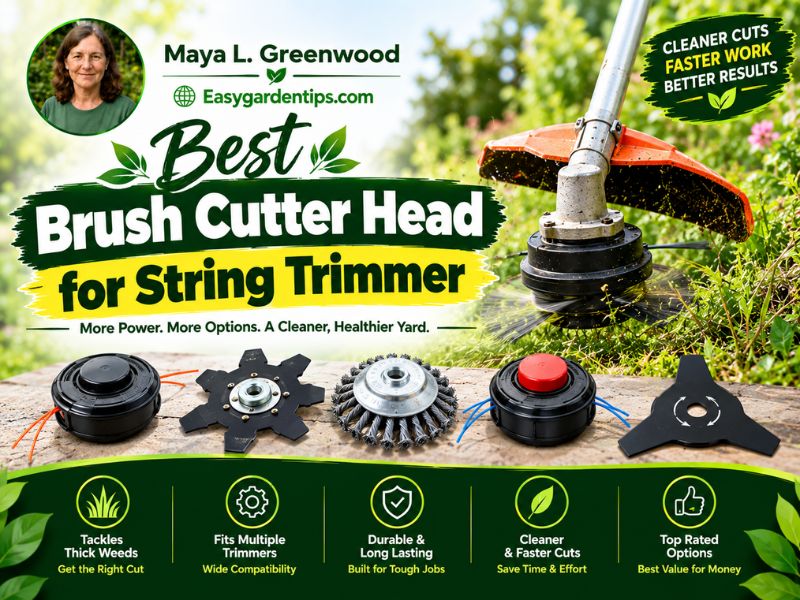
Best Brush Cutter Head for String Trimmer
| Image | Product Name | Check Price |
|---|---|---|
Best Choice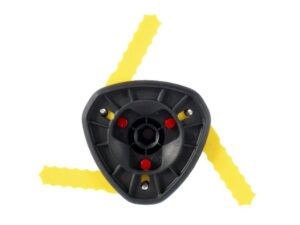 | Weed Warrior Push-N-Load 3-Blade Trimmer Head | Check Price |
Second Best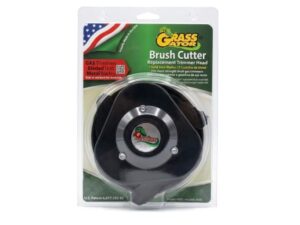 | Grass Gator 4680 Extra Heavy Duty Brush Cutter Head | Check Price |
Third Choice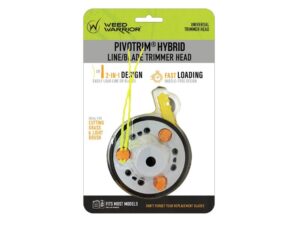 | Rino-Tuff Pivotrim Hybrid String and Bladed Trimmer Head | Check Price |
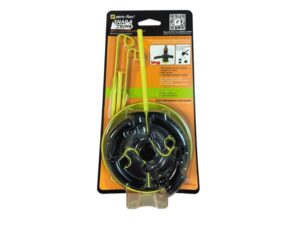 | Aero-Flex Snap & Trim Replacement Trimmer Head STRYB16 | Check Price |
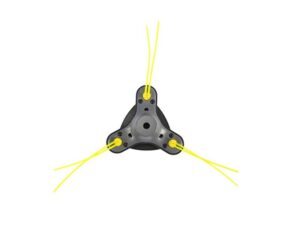 | Shakespeare Ugly Head Hybrid Trimmer Head | Check Price |
1. Weed Warrior Push-N-Load 3-Blade Trimmer Head 14867B- Best Overall
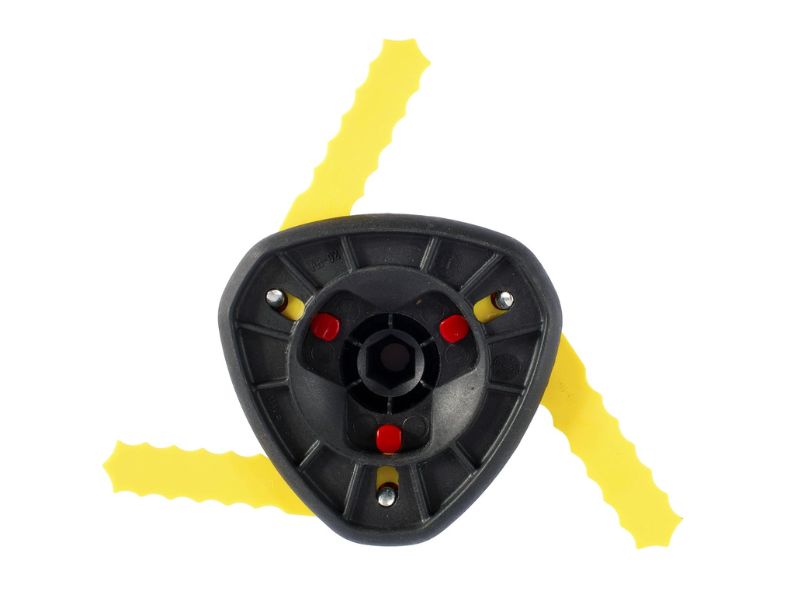
The Weed Warrior Push-N-Load is the safest starting point for many homeowners because it upgrades cutting performance without immediately moving to rigid metal blades.
Its three serrated nylon blades are intended for heavy weeds, thick grass, and light brush. Weed Warrior’s Push-N-Load mechanism also lets you press a release button and slide replacement blades into the head without opening the entire assembly.
Another advantage is compatibility. The head ships with adapters and is marketed for many popular gas and selected cordless string trimmers. Weed Warrior separately notes that compatibility differs by head and model, so checking the exact trimmer before ordering remains essential.
The nylon blades are less intimidating around mixed residential vegetation than a rigid steel brush blade, but they are still much tougher than conventional string. Hard contact with rocks, concrete, fencing, or other solid objects can damage blades and cause kickback.
Best for: Thick weeds, tall grass, light brush, and homeowners wanting an easy blade-change system.
Key features: Three serrated nylon blades, push-button blade replacement, adapter-based fit, gas and selected cordless compatibility.
Verdict: The strongest all-around choice for turning a compatible string trimmer into a more capable weed and light-brush cutter.
2. Grass Gator 4680 Extra Heavy Duty Brush Cutter Head- Best for Heavy Brush
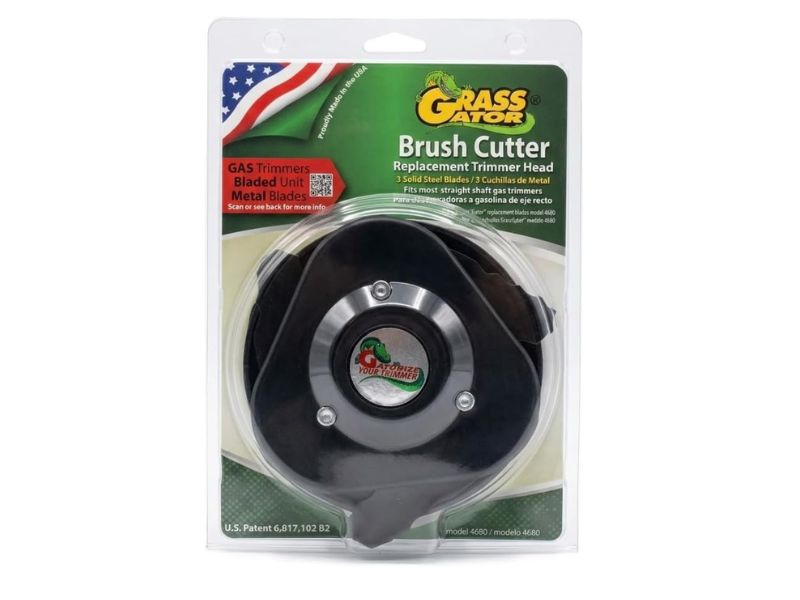
Grass Gator 4680 is the most aggressive product in this guide because it uses metal cutting blades.
That gives it significantly more bite in thick stalks and woody or semi-woody growth than flexible string or nylon blades. Current marketplace specifications identify it as a gasoline-powered replacement head and show more than 800 customer reviews.
The tradeoff is safety and compatibility. A metal head carries much more rotating mass and does not behave like flexible string when it strikes a hard obstacle. Use it only on a trimmer specifically capable of accepting this type of head, with the correct guard, arbor hardware, handle configuration, and protective equipment.
This is not the head I would use beside decorative edging, rocks, chain-link fencing, vehicles, or structures.
Best for: Dense weeds, rough vegetation, and heavier clearing with a compatible gas trimmer.
Key features: Metal blades, heavy-duty replacement head, aggressive brush-cutting capability.
Verdict: Choose Grass Gator when cutting strength matters most and your power unit is genuinely designed for a rigid bladed head.
3. Rino-Tuff Pivotrim Hybrid String and Bladed Trimmer Head- Best 2-in-1 Head
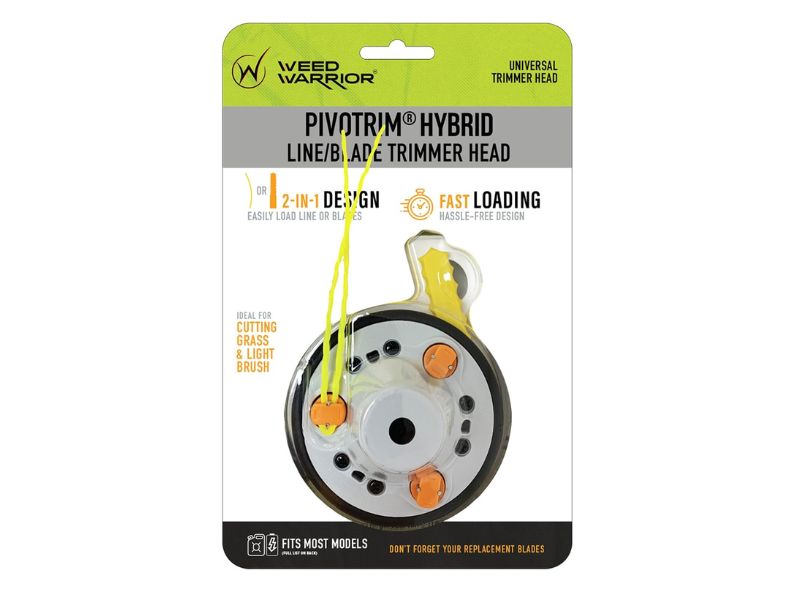
Rino-Tuff is the most versatile head here.
Its hybrid system lets you install 0.095-inch trimmer line for ordinary grass or switch to blades when vegetation becomes more demanding. That eliminates the need to dedicate the trimmer completely to brush cutting.
The pivoting line mounts also absorb some impact when trimming around fences or concrete, helping reduce the sharp bending point that frequently breaks fixed line.
Rino-Tuff specifies fitment for many popular gas-powered trimmers, with converter rings supplied for installation. This is an important distinction: do not assume that a battery trimmer accepts the head simply because the shaft looks similar.
The bladed mode is best considered a light-brush solution, not a substitute for a professional clearing saw.
Best for: Homeowners alternating between lawn trimming and thicker weeds.
Key features: Hybrid blade/string system, 0.095-inch line compatibility, pivoting line mounts, adapter rings.
Verdict: The best choice when you want one head to handle both routine trimming and occasional light brush.
4. Aero-Flex Snap & Trim Replacement Trimmer Head STRYB16- Best for Compatible Battery Trimmers
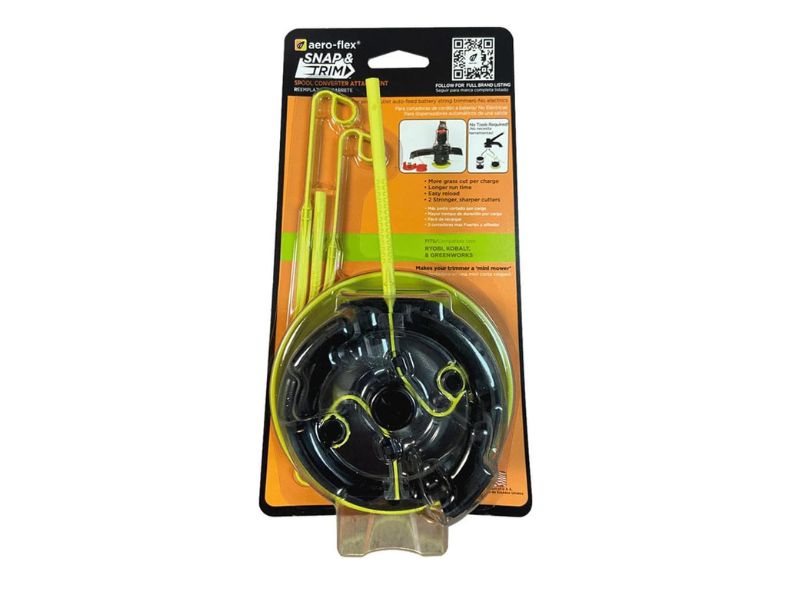
Aero-Flex is different from the gas-focused universal heads above.
The STRYB16 Snap & Trim is designed for specific Ryobi and HART auto-feed cordless trimmers, replacing traditional spool line with flexible aerodynamic cutting blades. It is explicitly not intended for incompatible bump-feed models.
The flexible blades snap into place quickly, avoiding spool winding and line-feed problems. Aero-Flex says its line-blade geometry is designed to operate efficiently at relatively low RPM, which makes the concept particularly useful for battery equipment.
Its main weakness is precisely what makes it useful: model-specific compatibility. This isn’t something to order without checking the manufacturer’s fit chart.
It is also closer to a heavy-duty trimming upgrade than a true steel-blade brush cutter. For thick woody brush, use purpose-built equipment.
Best for: Compatible Ryobi/HART auto-feed cordless trimmers, thick grass, weeds, and users tired of spool problems.
Key features: Flexible line blades, no traditional spool, cordless-oriented design, quick blade replacement.
Verdict: A strong battery-trimmer option when your exact model appears on the compatibility list.
5. Shakespeare Ugly Head Hybrid Trimmer Head 16952- Best Hybrid Alternative
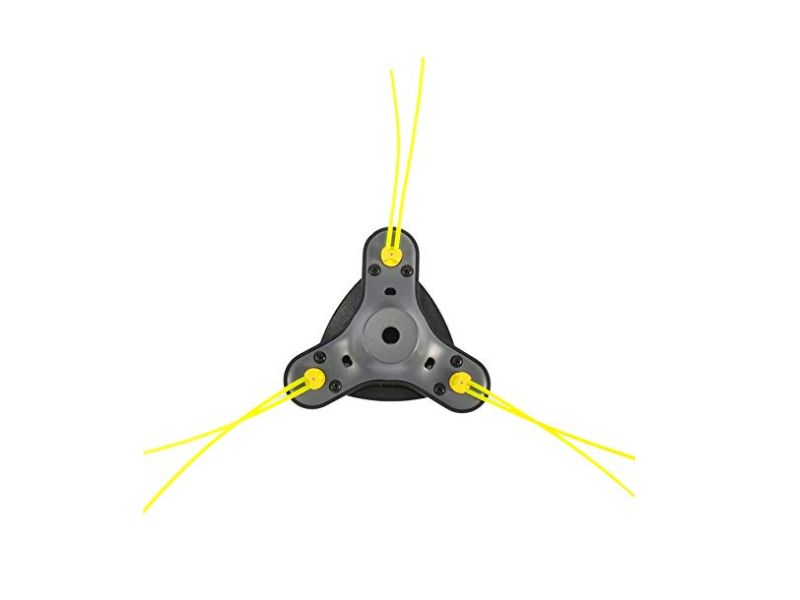
The Shakespeare Ugly Head gives you another 2-in-1 line-and-blade system.
Shakespeare describes its hybrid heads as suitable for grass, thick weeds, and light brush. The Ugly Head uses pivoting line technology for ordinary trimming and nylon blades when more cutting strength is required.
This makes it attractive for properties where vegetation varies continuously. You can trim around the lawn using line and then switch cutting media rather than wrestling with an entirely different trimmer.
The universal-fit claim still requires verification. Manufacturer guidance says these replacement systems work with many popular gas and cordless trimmers, but not every shaft or head design accepts them.
Because the blades are nylon rather than steel, this head is intended more for thick weeds and light brush than serious woody clearing.
Best for: Mixed lawns, tall weeds, light brush, and homeowners wanting line/blade flexibility.
Key features: 2-in-1 hybrid design, nylon blades, fixed/pivoting line capability, broad replacement-head compatibility.
Verdict: A practical alternative to Rino-Tuff when you want a versatile replacement head rather than a dedicated metal brush cutter.
Best Brush Cutter Head for String Trimmer Comparison
| Product | Cutting System | Best Use | Compatibility Focus | Main Advantage |
| Weed Warrior Push-N-Load | 3 serrated nylon blades | Heavy weeds / light brush | Many gas + selected cordless | Easy blade changes |
| Grass Gator 4680 | Metal blades | Heavier brush | Compatible gas trimmers | Most aggressive cutting |
| Rino-Tuff Pivotrim Hybrid | Line + blades | Grass to light brush | Most gas trimmers | 2-in-1 versatility |
| Aero-Flex Snap & Trim | Flexible blades | Thick grass / weeds | Selected cordless models | No spool winding |
| Shakespeare Ugly Head | Line + nylon blades | Mixed vegetation | Many gas + selected cordless | Hybrid convenience |
What Is a Brush Cutter Head for a String Trimmer?
A brush cutter head replaces the conventional string spool with a stronger cutting system.
Depending on the design, that may mean:
Flexible polymer blades, rigid nylon blades, heavy fixed line, or metal blades.
The purpose is to cut vegetation that ordinary trimmer line handles poorly.
A normal string trimmer is excellent for lawn grass and light weeds because flexible line spins quickly and safely gives way when it strikes many obstacles.
Thick fibrous weeds create a different problem. They can wrap around the head, shred lightweight line, or require several passes.
A bladed head gives the machine a stronger cutting edge.
Brush Cutter Head vs. Brush Cutter Blade
The terms are often mixed together, but they are not always identical.
A brush cutter head is the complete rotating attachment mounted to the trimmer gearbox or shaft.
A brush cutter blade may be only the cutting disc or blade mounted to a compatible arbor.
Replacement heads such as Weed Warrior and Rino-Tuff contain their own blade-retention systems.
A conventional metal brush blade generally requires the machine’s proper blade adapter, thrust washer, lock nut, guard, and often a bike-style or loop handle depending on the equipment manufacturer.
Never improvise those parts.
Can Any String Trimmer Use a Brush Cutter Head?
No.
This is the most important buying consideration.
Compatibility depends on:
Straight vs. curved shaft, shaft thread, arbor size, rotation direction, gearbox design, motor power, guard configuration, and manufacturer approval.
Some aftermarket nylon-blade heads fit a wide range of machines through adapters.
Rigid metal blades are much more restrictive.
Weed Warrior specifically states that its dedicated Brush Cutter head does not fit curved-shaft trimmers, illustrating why the word “universal” must always be treated carefully.
Check both the head manufacturer’s compatibility chart and your trimmer manual.
Nylon Blades vs. Metal Blades
For residential use, serrated nylon blades are often the easier upgrade.
They can cut vegetation that overwhelms ordinary string without introducing the same rigid-metal impact characteristics as a steel cutter.
They also tend to be lighter.
Metal blades are much stronger and can deal with tougher growth.
But they require appropriate power, guarding, hardware, and operating technique.
A metal head striking rock, fencing, concrete, or another rigid object can generate severe kickback and dangerous debris.
For ordinary tall weeds, I would usually start with a high-quality polymer blade system.
Move to metal only when the vegetation genuinely requires it and the equipment explicitly supports it.
Straight-Shaft vs. Curved-Shaft Compatibility
A straight-shaft string trimmer is generally the better candidate for brush-cutting conversions.
Straight shafts commonly use gearboxes designed for higher-torque professional applications and offer better reach under shrubs and into dense vegetation.
Curved-shaft models tend to be lighter and primarily designed around grass trimming.
That doesn’t mean no replacement blade head fits a curved shaft. Weed Warrior’s Push-N-Load system, for example, supports many different trimmers.
However, dedicated heavy brush-cutter heads can specifically exclude curved-shaft designs.
Check your exact model number instead of judging only by shaft appearance.
What Can a Nylon-Blade Trimmer Head Cut?
A good nylon-blade head is appropriate for:
Tall grass, fibrous weeds, dense lawn growth, nettles, soft stalks, and light brush.
It can often cut vegetation much faster than .065- or .080-inch trimmer line.
But terms such as “light brush” have limits.
A flexible nylon blade is not intended to cut mature hardwood saplings.
Trying to force it through vegetation beyond its capacity can break blades, slow the motor, damage the head, or cause severe vibration.
Match the tool to the vegetation.
When Do You Need a Metal Brush Cutter?
Consider a purpose-built metal cutting system when vegetation includes:
Thicker woody stems, dense brush, saplings within the tool manufacturer’s specified diameter, or heavy recurring overgrowth.
At that point, a dedicated brush cutter or clearing saw may be a smarter purchase than continually upgrading a light string trimmer.
Purpose-built brush cutters are engineered around the additional torque and kickback produced by metal cutting attachments.
Can You Put a Brush Cutter Head on a Battery Trimmer?
Sometimes.
Modern high-voltage cordless trimmers can produce substantial torque, and several aftermarket manufacturers list specific battery models as compatible.
Weed Warrior supports selected cordless trimmers, while Aero-Flex provides model-specific replacement systems for various battery platforms.
But cordless does not automatically equal compatible.
The battery voltage tells you almost nothing about the mounting interface.
Verify the exact model number.
What Is the Best Head for Thick Weeds?
For thick but non-woody weeds, I prefer the Weed Warrior Push-N-Load 3-Blade.
The serrated nylon blades provide a noticeable step up from standard string while remaining easy to replace.
For heavier brush on a compatible gas machine, Grass Gator’s metal-blade head provides much more cutting authority.
The key is not automatically choosing the strongest head.
Choose the least aggressive attachment that comfortably handles your vegetation.
That usually provides better control and less unnecessary risk.
Fixed Blades vs. Pivoting Blades
Fixed blades maintain a predictable cutting path and can provide strong cutting action.
Pivoting systems allow the cutting element to move when it encounters resistance.
Rino-Tuff and similar hybrid systems use pivoting technology partly to reduce line damage when contacting obstacles.
No system makes hard-object strikes safe, however.
Keep every brush-cutting head away from rocks, wire, fences, concrete, metal edging, vehicles, and people.
Is a Brush Cutter Head Better Than Heavy Trimmer Line?
For thick weeds, often yes.
Heavy .095- or .105-inch line is still excellent because it remains flexible and forgiving around many obstacles.
It also costs relatively little.
Blades become appealing when fibrous vegetation continuously strips, melts, or tangles conventional line.
A hybrid head gives you both choices.
That’s why Rino-Tuff and Shakespeare are useful for properties containing a combination of manicured grass and rough weed growth.
How to Check Compatibility Before Buying
Find the model number printed on your trimmer, not just the brand.
Then verify:
Shaft type.
Head mounting thread.
Rotation direction.
Whether the manufacturer permits blade attachments.
Required guard.
Required handle.
Maximum attachment diameter.
Compatible adapters.
For battery trimmers, confirm the exact voltage/platform model as well.
For example, Aero-Flex’s STRYB16 supports specific Ryobi and HART auto-feed models but explicitly excludes their incompatible bump-feed configurations.
Ten minutes spent checking compatibility is much easier than returning an incompatible replacement head.
Safety When Using a Brush Cutter Head
A bladed trimmer head deserves more respect than ordinary string.
Wear ANSI-rated eye protection, sturdy closed footwear, long pants, and hearing protection where appropriate.
Keep bystanders and pets well away.
Inspect the head and every blade before use.
Never operate with a cracked blade, missing blade, bent metal cutter, loose adapter, or noticeable head wobble.
All cutting elements must be installed symmetrically. An unbalanced high-speed head can generate severe vibration.
The Weed Warrior instructions specifically advise replacing damaged blades and ensuring the installed head does not wobble before operation.
Frequently Asked Questions
What is the best brush cutter head for string trimmer use?
Weed Warrior Push-N-Load 3-Blade is my best overall choice for heavy weeds and light brush.
Its serrated nylon blades provide more cutting authority than conventional line, while the push-button replacement mechanism keeps blade changes simple. It also supports many popular gas and selected cordless trimmers through adapter hardware.
Can I turn my string trimmer into a brush cutter?
Yes, but only when your exact trimmer supports the required replacement head or blade system.
Do not assume that any universal metal blade can safely mount to any weed eater. Shaft design, arbor size, rotation, gearbox, guards, handles, and motor capability all matter.
What is the best brush cutter head for thick weeds?
A serrated polymer blade head is usually an excellent first step for thick weeds.
Weed Warrior’s three-blade system is designed for heavy weeds and light brush. If vegetation becomes substantially woody, a purpose-built brush cutter may be more appropriate.
Are metal brush cutter heads better than plastic blades?
Metal is stronger, but it is not automatically better for normal residential trimming.
Rigid steel cutters require greater attention to compatibility, guarding, kickback, and hard-object strikes. Nylon blades are usually sufficient for tall grass and many heavy weeds.
Will a universal brush cutter head fit every string trimmer?
No. “Universal” normally means broad compatibility, not literally every model.
Some heads fit only gas trimmers, some support selected cordless models, and others exclude curved shafts or specific bump-feed systems. Always use the manufacturer’s fit chart.
Can I put a brush cutter head on a curved-shaft trimmer?
Only if that exact replacement head lists your curved-shaft model as compatible.
Some lighter aftermarket heads support curved shafts, while dedicated heavy brush cutter heads may specifically prohibit them. Weed Warrior’s dedicated Brush Cutter head, for example, is straight-shaft only.
Can a brush cutter head cut small trees?
Only some purpose-built metal brush-cutting systems are designed for limited sapling cutting.
Do not assume nylon blades or a hybrid trimmer head can safely cut woody stems. Follow the attachment manufacturer’s maximum cutting recommendations.
Is Rino-Tuff Pivotrim good for brush?
It is useful for light brush because it combines replaceable blades with conventional 0.095-inch line.
Its main strength is versatility rather than maximum cutting power. The head fits many gas trimmers through supplied adapter rings.
Are replacement nylon blades worth it?
Yes, especially when ordinary line repeatedly breaks in fibrous weeds and tall grass.
Nylon blades are easy to replace, do not require spool winding, and can provide considerably stronger cutting edges than lightweight trimmer string.
What should I check before installing a new trimmer head?
Verify the model number, mounting system, rotation, shaft type, guard requirements, and manufacturer compatibility.
After installation, make sure the head is secure and rotates without wobbling before operating the trimmer at working speed.
Final Verdict
The best brush cutter head for string trimmer use is the one that gives you enough cutting performance without exceeding what your power unit was designed to handle.
Weed Warrior Push-N-Load 3-Blade Trimmer Head is my top overall choice for homeowners dealing with heavy weeds, tall grass, and light brush. Its serrated nylon blades cut more aggressively than string while remaining simple to replace.
Grass Gator 4680 is the heavy-duty choice when you have a compatible gas trimmer and genuinely need metal-blade cutting performance.
Rino-Tuff Pivotrim Hybrid offers the best flexibility because it can move between 0.095-inch line and blades, making it well suited to properties containing both normal lawn grass and rough vegetation.
Aero-Flex makes more sense for selected cordless trimmers where spool-free flexible blades are the priority, while Shakespeare’s Ugly Head provides another useful hybrid approach.
Most importantly, do not select a brush cutter head by blade strength alone. Confirm compatibility first. The correct combination of trimmer, shaft, guard, adapter, cutting element, and vegetation type will produce better results—and a much safer setup—than simply mounting the most aggressive blade you can find.

I’m Maya L. Greenwood, a lifelong plant lover who believes anyone can grow something beautiful with the right guidance. After years of testing soil mixes, pruning methods, irrigation tricks, and pest-safe solutions, I started EasyGardenTips.com to turn hard-won lessons into step-by-step advice. From seed starting and container gardens to composting and seasonal checklists, my goal is to make gardening simple, sustainable, and fun.