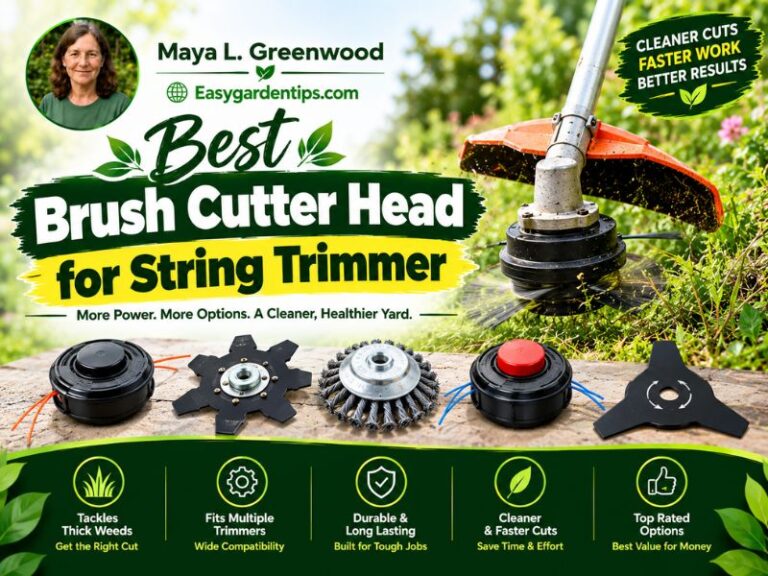
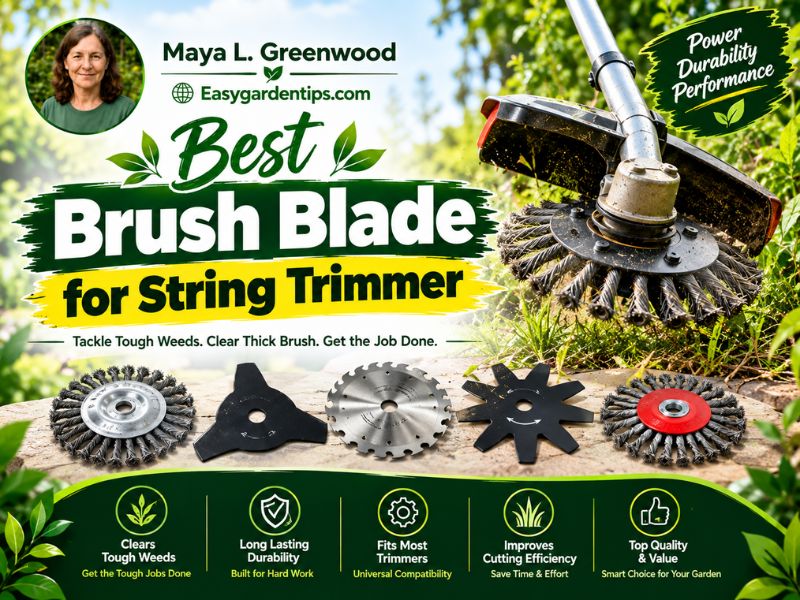
5 Best Brush Blade for String Trimmer: Top Heavy-Duty Picks
Choosing the best brush blade for string trimmer use can turn a compatible trimmer or brush cutter into a much more capable tool for thick weeds, brambles, woody stems, dense grass, and small saplings. The key is matching the blade type, diameter, arbor size, and RPM rating to a machine specifically approved for metal blades.
My top overall choice is the FORESTER 9-Inch 20-Tooth Chainsaw Brush Cutter Blade. Its aggressive chainsaw-style teeth, 9-inch diameter, 1-inch arbor with 20mm bushing, and strong track record make it especially effective for woody brush and small saplings.
For tall weeds, brambles, and dense vegetation rather than small trees, I prefer the Oregon 295505-0 Universal 2-Tooth Mulching Brush Cutter Blade. Its wide 300mm design and heavy 4mm hardened-steel blade are built for aggressive vegetation clearing and shredding.
If you use a compatible ECHO straight-shaft trimmer and prefer genuine equipment designed around the manufacturer’s blade system, the ECHO 69500120331 8-Inch 80-Tooth Brush Blade is an excellent choice. Its heavy-gauge 80-tooth design is intended for brush, reeds, bushes, and woody growth when installed on an approved setup.
Best Brush Blades for String Trimmers
| Image | Product Name | Check Price |
|---|---|---|
Best Choice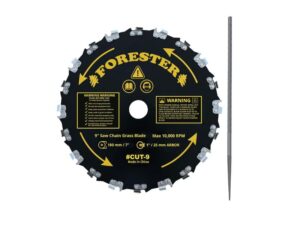 | FORESTER 9-Inch 20-Tooth Chainsaw Brush Cutter Blade | Check Price |
Second Best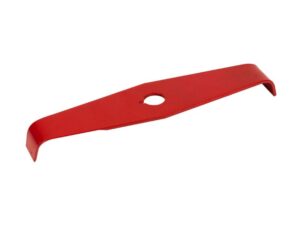 | Oregon Universal 2-Tooth Mulching Brush Cutter Blade | Check Price |
Third Choice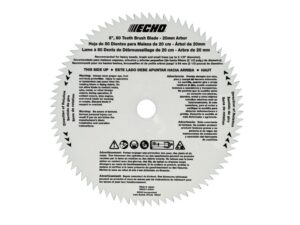 | ECHO 1 8-Inch 80-Tooth Brush Blade | Check Price |
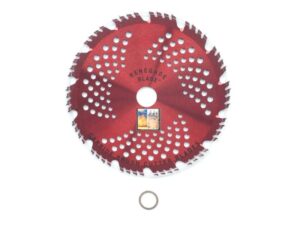 | RENEGADE BLADE 8-Inch 56-Tooth Razor Hybrid Brush Cutter Blades | Check Price |
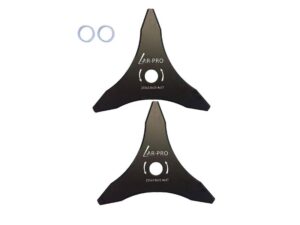 | AR-PRO 10-Inch 3-Tooth Carbon Steel Brush Cutter Blades 2-Pack | Check Price |
1. FORESTER 9-Inch 20-Tooth Chainsaw Brush Cutter Blade- Best Overall
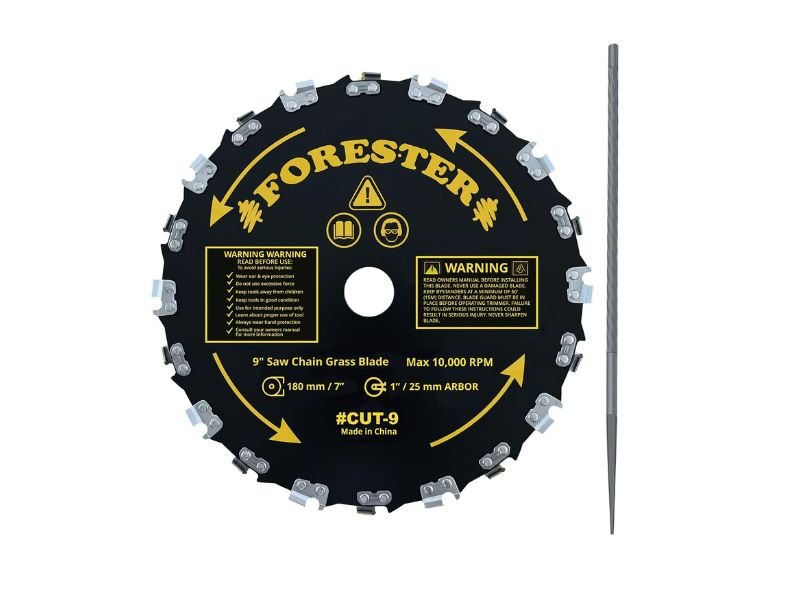
The FORESTER 9-inch blade is my first choice when the main problem is woody brush rather than ordinary lawn grass.
Its circular design uses 20 chainsaw-style cutting teeth around a 9-inch blade. The standard arbor is 1 inch, and the blade includes a 20mm bushing to fit compatible brush-cutter setups using that smaller spindle size. FORESTER lists a maximum blade speed of 10,000 RPM.
That tooth configuration gives it a completely different cutting action from a three-tooth grass blade.
A traditional brush knife tends to chop and slice vegetation.
The FORESTER behaves more like a small rotating saw, allowing the teeth to progressively cut through woody stems and saplings instead of relying entirely on impact.
Independent hands-on testing by Bob Vila rated this blade particularly highly for thick woody brush, noting strong cutting performance and durability during testing. The blade was less impressive in areas dominated primarily by soft weedy grass, which is an important distinction when choosing between blade styles.
Current product data also shows more than 7,500 customer ratings, giving this particular blade an unusually substantial ownership history for a brush-cutter accessory.
The included sharpening file is another advantage.
Chainsaw-style teeth eventually become dull, especially if the blade contacts dirt, stones, fencing, or other hard surfaces. Being able to maintain the cutting edges extends usable blade life instead of treating it as a disposable accessory.
Compatibility needs careful attention.
FORESTER specifies this blade for compatible straight-shaft trimmers and brush cutters, not ordinary curved-shaft machines. The blade itself is not a complete conversion system; a manufacturer-approved blade adapter, blade guard or deflector, and other hardware may be required.
That means you should not remove a nylon-line head from an arbitrary trimmer and simply bolt this blade in its place.
First verify that your exact trimmer model supports a metal brush blade.
When correctly matched to an appropriate machine, however, this is an outstanding choice for saplings, woody weeds, vines, neglected fence lines, and dense brush.
2. Oregon 295505-0 Universal 2-Tooth Mulching Brush Cutter Blade- Best for Brambles and Dense Vegetation
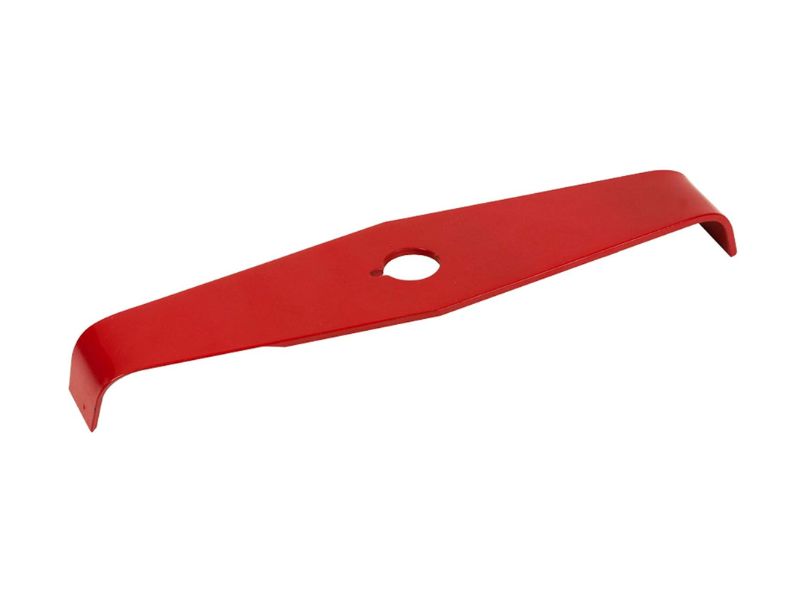
The Oregon 295505-0 takes second place because it is better suited to vegetation that needs to be cut and shredded rather than sawed.
This blade measures roughly 300mm, or about 12 inches, and uses two broad tapered cutting wings.
The specific 295505-0 model is listed as a 4mm-thick universal tapered blade, giving it substantially more mass than thin circular saw-style blades.
That makes it particularly effective on:
brambles, thick weeds, tall grass, nettles, dense undergrowth, and tangled vegetation.
Instead of having dozens of small teeth that can catch individual stems, the broad two-tooth design sweeps through vegetation with considerable momentum.
Current product information shows compatibility with common 20mm and 25.4mm/1-inch brush-cutter spindle systems when the correct reducer and mounting setup are used.
The steel hardness and thick construction also make this an attractive blade for demanding clearing work.
Current product data shows more than 2,200 ratings with a strong average score, which supports its long-standing popularity among users dealing with overgrown vegetation.
This is not my first choice for precision work around trees, fencing, raised beds, or valuable landscaping.
A 300mm blade needs room.
It is much better suited to an open overgrown section where you can maintain proper operating clearance and sweep the brush cutter through vegetation.
The bright red finish provides another small but useful benefit: the blade is easier to see among cut vegetation than bare dark steel.
Choose the Oregon if you routinely deal with dense grass, blackberry-like brambles, tall weeds, tangled stems, and heavy undergrowth rather than primarily woody saplings.
3. ECHO 69500120331 8-Inch 80-Tooth Brush Blade- Best OEM Blade
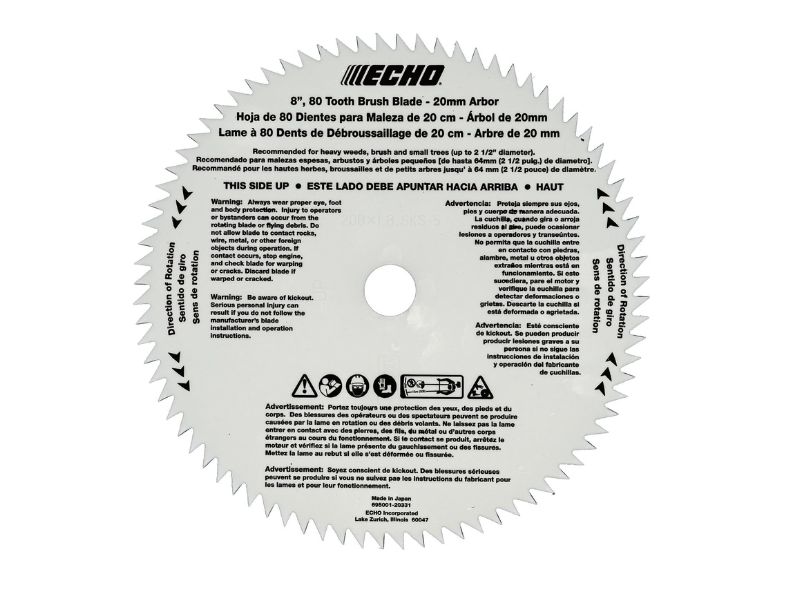
The ECHO 69500120331 is the option I prefer when compatibility and a genuine manufacturer-designed setup matter more than universal fit.
It uses an 8-inch diameter, 80-tooth heavy-gauge steel blade with a 20mm-class arbor intended for compatible ECHO straight-shaft SRM trimmers and brush cutters.
The large tooth count produces a smoother cutting action on woody material than a three-tooth blade.
ECHO positions the 80-tooth blade for heavy overgrown brush, bushes, reeds, woody growth, and small saplings.
An OEM blade has an important advantage.
When your machine is specifically listed for the blade and you use the correct ECHO blade conversion kit, guard, handle configuration, and harness, there is less uncertainty about whether several unrelated universal components will fit together properly.
ECHO documentation lists this blade alongside its approved brush-cutter accessories and conversion hardware for multiple SRM models.
That does not mean every ECHO string trimmer automatically accepts it.
The exact approved blade and conversion kit still depend on your specific model.
For example, ECHO documentation separately identifies blade conversion components, harness systems, and different cutting blades for compatible SRM platforms.
The main disadvantage is versatility across brands.
Unlike a universal 1-inch/20mm blade that includes reducer hardware, this blade makes the most sense for users who already own an appropriate ECHO powerhead.
If that describes you, however, OEM compatibility and heavy-gauge construction make it one of the safest product paths to investigate before experimenting with generic blades.
4. RENEGADE BLADE 8-Inch 56-Tooth Razor Hybrid Brush Cutter Blades- Best Carbide Hybrid
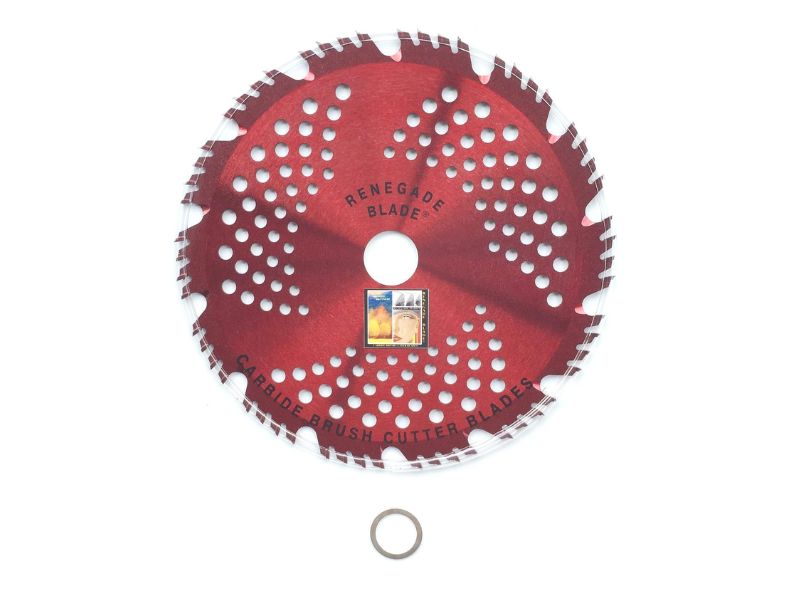
The RENEGADE BLADE 56-tooth Razor Hybrid is a good middle ground between a coarse chainsaw-style blade and a high-tooth-count OEM saw blade.
This package contains two 8-inch, 56-tooth blades designed for brush-cutting applications.
Product specifications show an 8-inch diameter and a 56-tooth configuration, while current product data reports roughly 850+ ratings and a strong average score.
RENEGADE designs its blade system around 1-inch/25.4mm arbors, with an included reducer washer allowing use on compatible 20mm brush-cutter setups.
However, the company is explicit that the actual blade mounting hardware is not supplied.
Your machine needs the appropriate lower plate, blade holder, upper plate, retaining nut, and other components specified for its blade system.
That warning is important.
A reducer washer makes the center opening the correct diameter; it does not magically convert every string trimmer into a safe brush cutter.
The 56-tooth design is particularly attractive for mixed properties.
It has enough cutting edges to handle woody stems efficiently while remaining more aggressive than extremely fine-toothed circular blades.
The manufacturer also designs these blades to tolerate the high rotational speeds produced by compatible brush cutters, including machines running above 10,000 RPM, although you should always stay within the limits of both your machine and the specific blade configuration.
I would choose the RENEGADE when you want a multi-purpose carbide-tooth blade for brush, stems, and mixed vegetation and prefer getting a two-blade package.
5. AR-PRO 10-Inch 3-Tooth Carbon Steel Brush Cutter Blades 2-Pack- Best Value
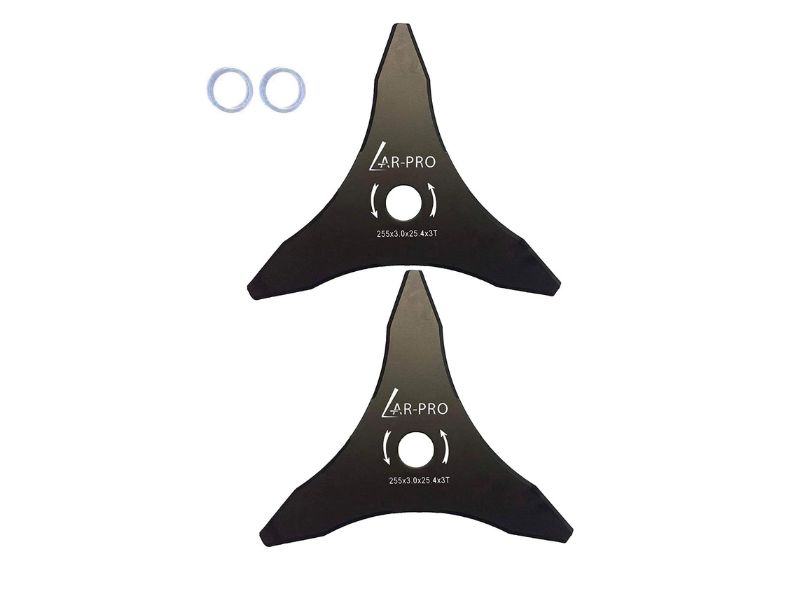
The AR-PRO two-pack is the simplest recommendation here.
Instead of dozens of saw-style teeth, each blade uses three large cutting arms.
That makes it particularly useful for thick weeds, grass, reeds, and non-woody vegetation where you want a durable chopping blade rather than a miniature circular saw.
Each blade is approximately 10 inches in diameter and made from carbon steel.
The package is designed around common 20mm and 25.4mm/1-inch arbor sizes, provided your brush cutter has the appropriate approved mounting system.
Current product data shows more than 1,200 ratings for the two-blade package, providing a meaningful history for an inexpensive replacement-blade set.
The three-tooth shape also has fewer individual cutting tips to damage than a 56- or 80-tooth saw blade.
If you occasionally contact coarse weeds or fibrous stalks, the large steel arms provide a relatively straightforward cutting edge that can be inspected and maintained.
Where the AR-PRO falls behind FORESTER and ECHO is woody growth.
Three broad teeth can chop through tough vegetation, but they are not as efficient at progressively sawing through saplings.
Think of it primarily as a heavy grass and weed blade, not a small-tree blade.
Because two blades are included, it offers excellent value for anyone who regularly clears rough vegetation and expects blades to experience wear.
Brush Blade Comparison Table
| Product | Diameter | Blade Style | Arbor Compatibility | Best For |
| FORESTER 20-Tooth | 9 in. | Chainsaw-style 20T | 1 in. / 20mm | Woody brush & saplings |
| Oregon 295505-0 | 300mm / ~12 in. | 2-tooth shredder | 25.4mm / 20mm | Brambles & dense vegetation |
| ECHO 69500120331 | 8 in. | 80-tooth saw blade | 20mm | Compatible ECHO machines |
| RENEGADE BLADE Razor Hybrid | 8 in. | 56-tooth carbide | 25.4mm / 20mm | Mixed brush |
| AR-PRO 3-Tooth | 10 in. | 3-tooth carbon steel | 25.4mm / 20mm | Grass & thick weeds |
What Is a Brush Blade for a String Trimmer?
A brush blade is a metal cutting attachment designed for appropriately configured brush cutters and certain straight-shaft string trimmers.
Normal trimmer line works by striking and slicing soft vegetation at very high speed.
It is excellent for:
lawn grass, edging, soft weeds, and routine trimming.
Once vegetation becomes woody or extremely dense, nylon line wears rapidly and loses effectiveness.
A metal blade provides a rigid cutting edge that can transfer substantially more cutting force into dense plants.
Different blades specialize in different vegetation.
That is why choosing the correct shape is more important than simply buying the blade with the most teeth.
Can You Put a Brush Blade on Any String Trimmer?
No.
This is the most important point in the entire buying guide.
A product being described as “universal” usually means that its arbor opening fits several common brush-cutter spindle sizes.
It does not mean every string trimmer is engineered to operate a metal blade.
Many curved-shaft and lightweight electric trimmers are designed only for flexible line heads.
Using an unapproved metal blade can create problems with:
gearbox strength, rotation direction, blade retention, guarding, handle configuration, shaft design, RPM, and kickback control.
FORESTER explicitly advises users to check with the trimmer manufacturer and obtain the correct blade adapter for a secure installation.
Check your owner’s manual before purchasing any blade.
Straight Shaft vs Curved Shaft for Brush Blades
Most serious brush blades are intended for straight-shaft trimmers or dedicated brush cutters.
A straight shaft usually transfers power through a solid or appropriately designed drive system to a gearbox at the cutting head.
That layout is commonly used on machines engineered for metal blades.
Curved-shaft trimmers are typically lighter machines optimized for nylon line.
The FORESTER blade, for example, is specifically listed for compatible straight-shaft trimmers and not for curved-shaft units.
Do not assume you can overcome this limitation with an aftermarket adapter.
The machine itself must be approved for blade operation.
3-Tooth vs 20-Tooth vs 80-Tooth Brush Blades
Tooth count changes the character of the blade dramatically.
3-Tooth Blade
A three-tooth blade is excellent for thick grass, weeds, reeds, and coarse non-woody vegetation.
Its large cutting arms provide strong chopping action.
It is generally easier to inspect and maintain than a blade containing dozens of individual teeth.
20-Tooth Chainsaw-Style Blade
Chainsaw-style blades specialize in woody brush and saplings.
The FORESTER’s 20 cutting teeth progressively saw through stems instead of simply knocking them over.
This design is one of the better choices for neglected properties where volunteer trees and woody shrubs have started taking over.
56- to 80-Tooth Blade
A higher tooth count can provide smoother cutting in woody vegetation.
The RENEGADE 56-tooth and ECHO 80-tooth blades fit this general category.
They are appropriate when the machine manufacturer permits saw-style brush blades and you need controlled cutting through stems, brush, and bushes.
What Blade Is Best for Thick Weeds?
For heavy weeds without substantial woody stems, I prefer a 3-tooth or 2-tooth brush knife.
The AR-PRO’s broad three-tooth shape works well for thick grass and coarse weeds.
The Oregon takes the concept further with two wide tapered wings designed to attack tall, tangled vegetation and brambles.
Saw-style blades can cut weeds, but their many small teeth can become wrapped in fibrous vines and long grass.
Use the simpler blade when vegetation is primarily soft and tangled.
What Blade Is Best for Small Saplings?
For saplings, the FORESTER is my first choice from this group.
Its chainsaw-style tooth pattern is designed specifically around cutting woody material.
The ECHO 80-tooth blade is another excellent option for compatible ECHO equipment.
ECHO describes its 80-tooth blade as suitable for heavy brush, bushes, small trees, and saplings.
Whatever blade you use, do not assume a brush cutter should replace a chainsaw for increasingly large trees.
Stay within the diameter and cutting recommendations given by the equipment manufacturer.
What Is Arbor Size?
The arbor is the center mounting hole in the blade.
Common brush-cutter sizes include:
20mm and 25.4mm, or 1 inch.
Some universal blades use a 1-inch opening and include a bushing that reduces the center diameter to 20mm.
The FORESTER uses this arrangement.
The Oregon is also designed around common 20mm and 25.4mm spindle systems.
Correct arbor diameter is necessary, but it is only one part of compatibility.
The machine also needs the correct blade holder, nut, guard, gearbox, handle, and harness configuration.
Why Blade Diameter Matters
A larger blade covers more area and produces higher tip speed at the same shaft RPM.
It also creates greater rotating mass and load.
That is why putting the largest blade you can physically mount onto a small trimmer is not a good strategy.
The FORESTER is 9 inches.
The ECHO blade is 8 inches.
The AR-PRO is 10 inches.
The Oregon is roughly 12 inches.
Always follow the maximum blade diameter approved for your machine.
Brush Blade RPM Rating
Metal cutting tools operate at extremely high rotational speeds.
The FORESTER blade is rated for up to 10,000 RPM.
RENEGADE also specifically addresses high-RPM brush-cutter use in its product guidance.
Never assume a generic circular blade designed for another machine is safe on a string trimmer.
Use only products designed and rated for brush-cutter operation.
A blade failure at several thousand RPM can cause serious injury.
Blade Guard and Deflector
A proper metal-blade guard or deflector is not optional just because the blade physically fits.
Blade-capable trimmers often require a different guard than the one installed for nylon line.
FORESTER’s ECHO conversion information, for example, specifically states that a blade deflector is required for correct installation on the referenced setups.
The guard helps reduce the operator’s exposure to thrown vegetation and debris.
Use the exact configuration specified in your owner’s manual.
Why a Harness Matters
Metal blades increase both cutting capability and potential kickback.
A shoulder or waist harness improves control and keeps the cutting assembly positioned away from your body.
ECHO documentation recommends a shoulder/waist harness for trimmer and brush-cutter blade use and explains that the restrictive harness helps reduce the possibility of blade contact with the operator.
A harness also reduces fatigue.
This becomes particularly noticeable with 30cc-plus gas brush cutters used for prolonged clearing.
Brush Blade vs String Trimmer Line
Use trimmer line when the job is primarily:
grass, lawn edges, soft weeds, landscaping borders, fences, or areas where contact with obstacles is likely.
Use a metal blade when the job is:
dense weeds, heavy reeds, brambles, woody brush, thick stems, or small saplings—and your equipment is approved for that blade.
Line is forgiving.
A metal blade is not.
If you are trimming beside chain-link fencing, masonry, rocks, vehicles, irrigation pipes, or trees you want to protect, nylon line often remains the better choice.
Brush Blade vs Plastic Blades
Plastic replacement blades sit between nylon line and steel brush blades.
They are more rigid than line and can work well on coarse grass.
However, they are not intended for heavy woody brush.
ECHO documentation specifically distinguishes plastic or nylon blades from its metal weed and brush blades and warns against using lighter blade types for applications beyond their intended vegetation.
For genuine woody growth, use the manufacturer-approved metal blade system.
How to Choose the Right Brush Blade
Start with your string trimmer model number, not with the blade.
Open the owner’s manual and determine:
whether metal blades are permitted, approved blade diameter, arbor size, required guard, required handle type, required harness, and maximum operating speed.
Only after confirming those specifications should you compare blade styles.
For thick grass and weeds, choose a 3-tooth knife.
For brambles and tangled vegetation, a shredder blade is useful.
For woody stems and saplings, use an approved saw-style blade.
This approach is far safer than trying to make a blade fit after purchase.
Frequently Asked Questions
What is the best brush blade for string trimmer use?
The FORESTER 9-inch 20-tooth blade is my best overall pick for compatible straight-shaft machines.
Its chainsaw-style cutting teeth make it particularly effective against woody brush and saplings, while the 1-inch arbor and included 20mm bushing cover two common brush-cutter spindle sizes.
Can I put a brush blade on my string trimmer?
Only if the manufacturer specifically approves your trimmer for metal-blade operation.
A correct arbor size alone does not make a blade safe. You may also need an approved adapter, guard, handle, harness, and blade-retaining hardware.
What brush blade is best for thick grass?
A three-tooth brush blade is usually excellent for thick grass and coarse weeds.
Broad cutting edges slice vegetation efficiently without relying on dozens of saw teeth that can become tangled in long fibrous material.
What blade is best for blackberry bushes and brambles?
A heavy shredder or mulching blade works particularly well on brambles.
The Oregon two-tooth design is specifically suited to high, dense vegetation, weeds, and bramble-type growth.
What blade is best for saplings?
A chainsaw-style or approved saw-tooth brush blade is generally better for saplings.
The FORESTER 20-tooth design and ECHO 80-tooth brush blade are both aimed at woody cutting rather than ordinary grass trimming.
Is a 3-tooth or 80-tooth brush blade better?
They are designed for different vegetation.
A 3-tooth blade is better for thick grass and weeds. An 80-tooth saw-style blade is better suited to woody stems, bushes, and saplings when the equipment manufacturer approves it.
What does 20mm arbor mean?
It refers to the diameter of the blade’s center mounting opening.
A blade and brush cutter need compatible spindle dimensions and approved mounting hardware to run correctly.
Can I put a 1-inch blade on a 20mm brush cutter?
Some blades include a purpose-designed reducer bushing for both sizes.
For example, the FORESTER has a 1-inch arbor with a 20mm bushing. You still need the correct manufacturer-approved mounting hardware.
Can I use a brush blade on a curved-shaft trimmer?
Generally no unless the manufacturer explicitly states otherwise.
Many metal brush blades are intended for compatible straight-shaft brush cutters. FORESTER specifically excludes curved-shaft machines for its 9-inch blade.
Do I need a special guard for a brush cutter blade?
Usually yes.
Metal-blade operation commonly requires a purpose-designed blade guard or deflector rather than the standard nylon-line shield.
Do I need a harness when using a brush blade?
A harness is strongly recommended and may be required by the equipment manufacturer.
It improves control, reduces fatigue, and helps maintain safer separation between the rotating blade and the operator.
Can a brush blade cut small trees?
Some approved saw-style blades can cut small woody stems and saplings.
Follow the blade and trimmer manufacturer’s diameter limits rather than treating a brush cutter as a replacement for a chainsaw.
Can you sharpen brush cutter blades?
Many steel brush blades can be sharpened, but the correct method depends on the blade design.
Chainsaw-style teeth require different maintenance from broad three-tooth knives. Maintain the original tooth geometry and follow the manufacturer’s sharpening guidance.
Is more teeth better on a brush cutter blade?
No. Tooth count should match the vegetation being cut.
More teeth can produce a smoother sawing action on woody material, while a simpler 2- or 3-tooth blade often works better in tall, fibrous weeds and grass.
Final Verdict
The best brush blade for string trimmer use depends primarily on what you are cutting and whether your trimmer is genuinely designed for a metal blade.
The FORESTER 9-Inch 20-Tooth Chainsaw Brush Cutter Blade is my best overall choice for compatible straight-shaft machines because its chainsaw-style teeth are highly effective against woody brush and small saplings.
The Oregon 295505-0 Universal 2-Tooth Mulching Blade is better for brambles, tall weeds, and dense tangled vegetation where a broad shredding action is more useful than saw teeth.
The ECHO 69500120331 80-Tooth Brush Blade is the strongest OEM choice for users with compatible ECHO equipment and the proper blade-conversion hardware.
The RENEGADE BLADE 56-Tooth Razor Hybrid provides an excellent carbide-tooth option for mixed brush, while the AR-PRO 10-Inch 3-Tooth 2-Pack delivers good value for heavy grass and thick weeds.
Before ordering any blade, check your exact trimmer manual for metal-blade approval, arbor diameter, maximum blade size, RPM limits, guard requirements, mounting hardware, handle configuration, and harness requirements. Compatibility is more important than tooth count, price, or cutting diameter when a metal blade is spinning at several thousand RPM.

I’m Maya L. Greenwood, a lifelong plant lover who believes anyone can grow something beautiful with the right guidance. After years of testing soil mixes, pruning methods, irrigation tricks, and pest-safe solutions, I started EasyGardenTips.com to turn hard-won lessons into step-by-step advice. From seed starting and container gardens to composting and seasonal checklists, my goal is to make gardening simple, sustainable, and fun.