5 Best String Trimmer for Heavy Weeds: Product Picks and Guide
Finding the best string trimmer for heavy weeds means looking beyond a wide cutting path or a high advertised RPM. Dense weeds, tall grass, brush, and neglected edges demand the right combination of cutting strength, control, runtime, line durability, and operator comfort.
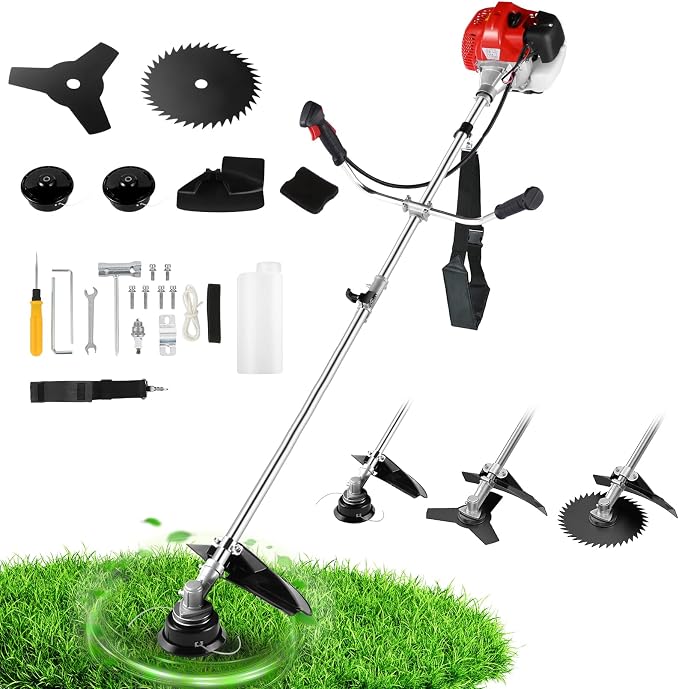
My first choice is PROYAMA 51.7cc Gas Powered Weed Eater Trimmer Heavy Duty Brush because its 51.7cc, 2HP two-cycle engine gives it the strongest heavy-growth focus in this group. It is built for thick grass, stubborn weeds, bushes, and larger properties, while its anti-vibration system and multiple cutting attachments make long clearing jobs more manageable.
My second choice is Seesii 13″ String Trimmer Electric Weed Wacker. It is the option I would compare next when a buyer has slightly different priorities from my first pick.
My third choice is ALSO GO 21V Electric Cordless Weed Wacker Battery Powered Weed, a lightweight option with a high-torque 9,500 RPM motor and automatic line feed. It is especially appealing for homeowners who value easy handling, quick trimming around gardens, and a simple switch between trimming and edging.
The guide below compares all five choices, then explains how engine power, battery capacity, cutting width, line systems, ergonomics, maintenance, and safety affect real ownership. I will also cover common mistakes so you can match the tool to the weeds, property size, and working habits you actually have.
.amz-product-card:hover{transform:translateY(-3px)!important;box-shadow:0 10px 26px rgba(20,70,110,.12)!important;border-color:#bdd7ea!important;}
Best String Trimmer for Heavy Weeds
I selected these products for their direct relevance to thick weeds and overgrown vegetation, while also considering practical details such as power delivery, cutting systems, runtime, handling, and starting convenience. The ranking combines the supplied product information with available customer-feedback evidence and includes both gas and cordless models so different yard sizes, noise preferences, and maintenance tolerances are represented.
| # | Image | Product | Price on Amazon |
|---|---|---|---|
| 1 |  |
PROYAMA 51.7cc Gas Powered Weed Eater Trimmer | Check Price |
| 2 |  |
Seesii 13″ String Trimmer Electric Weed Wacker | Check Price |
| 3 |  |
ALSO GO 21V Electric Cordless Weed Wacker Battery Powered Weed | Check Price |
| 4 |  |
Husqvarna 130L Gas String Trimmer | Check Price |
| 5 |  |
EGO Power+ 16″ Cordless Weed Trimmer | Check Price |
PROYAMA 51.7cc Gas Powered Weed Eater Trimmer
The PROYAMA stands out when the work has moved beyond ordinary grass trimming. Its 51.7cc two-cycle engine produces 2HP, giving this gas-powered brush cutter the kind of displacement that suits tall grass, dense weeds, bushes, and overgrown areas. That extra engine capacity is valuable when vegetation is thick enough to slow a lighter electric trimmer or when the job covers a farm, roadside edge, or large yard.
This is more than a basic string trimmer. The multi-function setup supports grass trimming, weed removal, and brush clearing with different cutting attachments, so a buyer can choose a cutting approach for the material in front of the tool. That versatility is useful for neglected corners and mixed vegetation, although it also means owners should learn which attachment is appropriate before starting a demanding job.
Gas power removes the need to stop for battery charging, making the PROYAMA a strong fit for extended clearing sessions. The trade-off is the extra ownership work associated with a two-cycle engine, including fuel preparation, starting procedure, and routine engine care. Its integrated shock absorption system helps reduce vibration transfer, but a tool this powerful still calls for deliberate handling and suitable protective equipment.
Pros
- 51.7cc, 2HP engine is suited to thick weeds and heavy vegetation.
- Multiple cutting attachments expand its use beyond ordinary lawn edging.
- Anti-vibration system can improve comfort during longer sessions.
- Gas operation supports large properties without battery-runtime limits.
Cons
- Two-cycle gas ownership requires more preparation and maintenance than cordless use.
- The larger engine may be more tool than a small, lightly maintained yard needs.
- Attachment changes require the owner to understand the proper setup for each task.
My Opinion
The PROYAMA is my top pick for demanding vegetation because its engine size and brush-cutter versatility provide the clearest margin for heavy work. I would choose it for large or neglected properties, while a smaller cordless model makes more sense for routine trimming around a modest home.
Seesii 13″ String Trimmer Electric Weed Wacker
SEESII offers a useful middle ground between lightweight lawn trimmers and gas equipment. Its 6,500 RPM brushless motor is intended to cut dandelions, crabgrass, tough perennial weeds, and dense overgrowth, while the 13-inch cutting diameter covers a practical amount of ground per pass. The included 2mm dual-line setup should be better suited to impacts and heavier stems than a very thin line.
Two 21V 4.0Ah batteries are included, with stated runtime of up to 40 minutes combined, or about 20 minutes per battery. That arrangement is convenient because one pack can be charging while the other is in use, but the total runtime still needs to be matched to the property. A homeowner with a compact or moderately sized yard may find it sufficient; someone clearing a large field will need planned charging breaks or additional compatible batteries if available.
Its strongest everyday advantage is adjustability. The telescoping shaft extends from 42 to 56 inches, the auxiliary handle has 11 positions, and the head pivots through seven positions. Guide wheels support transitions between trimming, edging, and mini-mowing, while the dual-line auto-feed reduces interruptions caused by manual bumping. These convenience features add weight and moving parts, but they can make detail work more comfortable for users of different heights.
Pros
- Two 4.0Ah batteries provide up to 40 minutes of stated combined runtime.
- Brushless 6,500 RPM motor and 2mm dual line suit tougher weeds.
- Guide wheels support trimming, edging, and mini-mowing tasks.
- Telescoping shaft and multiple handle positions improve fit and posture.
Cons
- Runtime is limited compared with refueling a gas tool for a long clearing job.
- It may require battery planning for large properties or dense, continuous growth.
- More adjustments and attachments can make setup less immediate than a basic trimmer.
My Opinion
SEESII is my second choice for buyers who want serious cordless convenience without giving up a wider path or thicker line. It is particularly attractive for homeowners who need one tool for weeds, edging, and light mowing, provided the stated runtime matches the size of the job.
ALSO GO 21V Electric Cordless Weed Wacker Battery Powered Weed
ALSO GO takes a simpler, lighter approach to difficult yard growth. Its 9500 RPM motor and 12-inch cutting swath give it useful cutting speed for dense grass and routine weeds, while the 5.27-pound weight makes it easier to carry around beds, fences, corners, and slopes. That low weight can matter more than maximum engine size for users who trim frequently or have difficulty managing a heavier gas brush cutter.
The tool includes two 2000mAh batteries and a fast charger, offering a way to keep working with a spare pack. Battery capacity is lower than SEESII’s, so this model is better viewed as a convenient homeowner trimmer than a continuous field-clearing machine. The high motor speed may help maintain momentum through ordinary dense growth, but exceptionally woody brush remains outside the sensible role of a lightweight cordless tool.
Rotating the head 90 degrees changes the tool from trimming to edging, and the head can adjust vertically from zero to 90 degrees for corners and slopes. Automatic line feed advances worn line without requiring repeated taps, and ten 1.4mm lines are included. The thinner line supports easy everyday use but may not tolerate the same hard impacts as a heavier dual-line system. A 180-degree auxiliary-handle adjustment also helps when working in tight spaces.
Pros
- Light 5.27-pound design is approachable for frequent yard care.
- High-torque 9,500 RPM motor and 12-inch swath suit dense grass and weeds.
- Two batteries and a fast charger support continued work with a spare pack.
- Rotating head and adjustable handle help with edging, slopes, and tight areas.
Cons
- Two 2000mAh batteries offer less capacity than the larger packs in this group.
- 1.4mm line is better suited to weeds and grass than very woody brush.
- Lightweight cordless construction is not the ideal choice for extensive field clearing.
My Opinion
ALSO GO is my third choice for a homeowner who wants low fatigue and straightforward cordless operation. It can handle demanding lawn weeds, but I would reserve the heaviest brush and longest clearing sessions for PROYAMA or another tool with greater capacity.
Husqvarna 130L Gas String Trimmer
The Husqvarna 130L brings a well-established gas-trimmer format to this comparison. Its 28cc engine and maximum power speed of 8,000 RPM provide a useful balance for homeowners who need more endurance and cutting authority than a small battery unit but do not necessarily need a large brush-cutter engine. The 18-inch cutting width is the largest listed here, allowing the user to cover more grass and weeds with each sweep.
Its straight shaft is helpful around hard-to-reach areas, including beneath shrubs and along edges where a shorter design can be awkward. The Rapid Replace trimmer head is intended to simplify line loading: align, load, and twist. That can reduce frustration during line changes, especially for an owner who does not want to spend time disassembling a complicated head.
Starting assistance is another important advantage. Digital ignition, Smart Start, and Air Purge are intended to help the engine start with less effort and to remove air from the carburetor and fuel system. LowVib technology adds vibration reduction for smoother handling. At the same time, this is still a 28cc gas tool, so fuel handling, engine maintenance, and appropriate storage remain part of ownership. The 130L is powerful and practical, but its engine is smaller than the PROYAMA’s and its stated feature set is more focused on trimming than brush-cutting attachments.
Pros
- 18-inch cutting width can reduce passes across open grassy areas.
- Straight shaft reaches difficult areas beneath shrubs and around obstacles.
- Rapid Replace head simplifies line reloading.
- Smart Start, Air Purge, digital ignition, and LowVib support easier ownership.
Cons
- 28cc engine has less displacement than the PROYAMA for extreme brush clearing.
- Gas fuel still brings maintenance and storage responsibilities.
- The wide cutting path may be less convenient in very tight planting beds.
My Opinion
The Husqvarna 130L is a strong traditional choice for a homeowner who wants gas endurance, a broad path, and easier starting features. It is better matched to regular yard maintenance and substantial weeds than to the thickest brush, where a larger engine and brush-cutter attachments offer more headroom.
EGO Power+ 16″ Cordless Weed Trimmer
EGO’s ST1623T focuses on reducing the interruptions that make cordless trimming feel inconvenient. Its LINE IQ technology monitors and feeds line automatically while maintaining a 16-inch cutting swath, so the user does not need to stop for ordinary line advancement or bump the head repeatedly. POWERLOAD technology adds another convenience: feed the line through the head, press a button, and let the tool wind it.
The included 4.0Ah battery provides up to 60 minutes of stated runtime, which is a substantial figure for routine property maintenance. The included charger is specified to recharge that battery in 55 minutes. Actual working time will vary with vegetation, speed selection, and cutting conditions, so buyers should treat the figure as a planning reference rather than a guarantee for every job.
A telescoping carbon-fiber shaft adjusts to the user’s height, and the digital variable-speed selector allows slower operation for delicate areas or higher speed for heavier growth. The brushless motor is intended to deliver low vibration, reliability, and a longer service life. EGO’s 16-inch path is efficient across open areas, but the automatic systems and larger swath may be unnecessary for a very small yard. Like other cordless tools, it is also dependent on battery charging for extended clearing.
Pros
- LINE IQ automatically advances line across a continuous 16-inch swath.
- POWERLOAD simplifies winding fresh line into the head.
- Included 4.0Ah battery offers up to 60 minutes of stated runtime.
- Telescoping carbon-fiber shaft and variable speed improve user control.
Cons
- Long clearing sessions still depend on the included battery’s recharge cycle.
- Advanced automatic systems may be more than a small property requires.
- A wide 16-inch path can be less nimble around delicate beds and tight corners.
My Opinion
EGO is a compelling cordless choice for buyers who prioritize quiet, low-vibration operation and minimal line-management hassle. It ranks fifth here because the comparison emphasizes especially heavy weeds, but its runtime and automatic systems make it a practical everyday option for substantial residential yards.
How I Selected These Options for Heavy Weed Trimming
The ranking starts with the demands of overgrown vegetation rather than with brand familiarity alone. I looked for evidence of useful cutting strength, suitable line or attachment support, enough runtime or fuel endurance, and handling features that can reduce fatigue. Gas models receive credit for sustained work and higher displacement, while cordless models are judged on motor output, battery capacity, line management, and adjustment options.
Customer-feedback volume also adds context, but it is not treated as a substitute for specifications. A product with thousands of customer responses offers a different level of ownership evidence from one with a smaller feedback base, yet the most important question remains whether the tool’s stated capabilities fit the buyer’s actual weeds and property.
Selection takeaway: Engine size and motor speed matter, but they do not tell the whole story. A trimmer with a durable line system, manageable balance, and enough runtime can be more useful than a stronger tool that the owner finds difficult to start or carry.
Brand diversity was intentional. PROYAMA and Husqvarna represent gas-powered approaches with different levels of engine capacity, while SEESII, ALSO GO, and EGO show how cordless models vary in battery size, automation, weight, and adjustment. This makes the list useful for more than one type of homeowner.
Practical ranking rule: Choose the PROYAMA when brush-clearing capacity is the priority, SEESII when adaptable cordless performance matters most, and ALSO GO when low weight and easy handling are more important than maximum endurance.
How to Choose a String Trimmer for Heavy Weeds
The right choice depends on how thick the vegetation is, how long each session lasts, and how much maintenance you are willing to accept. Before choosing the best string trimmer for heavy weeds, separate occasional lawn-edge cleanup from true brush clearing; those jobs can require very different tools.
- Match engine or motor strength to the thickness and height of the weeds.
- Check battery capacity and charging time against the size of the property.
- Prefer a durable, appropriately sized line for repeated contact with dense growth.
- Consider shaft length, handle adjustment, weight, and vibration before focusing on speed.
- Confirm whether the cutting head or attachments fit the work you actually plan to do.
Gas power versus cordless power
Gas trimmers remain useful when the work is spread across a large property or continues for long periods. Refueling is generally more immediate than waiting for a battery, and the PROYAMA’s 51.7cc engine shows why gas is attractive for thick brush. The compromise is fuel preparation, engine starting, exhaust, noise, and seasonal maintenance.
Cordless tools are easier to store and start, and they avoid fuel handling. Their limitations are runtime, recharge time, and dependence on battery availability. A model with two batteries, such as SEESII or ALSO GO, can reduce downtime, but the included capacity still needs to match the size of the job.
Cutting width and line thickness
A wider path covers more ground per sweep, which helps in open areas with tall grass. However, wide heads can feel less precise around flowers, shrubs, and fencing. Line thickness affects durability: thicker line is generally better for impact-heavy work, while thinner line can keep a lightweight tool responsive for ordinary weeds. Do not assume a high RPM motor automatically makes thin line suitable for woody stems.
Comfort and control
Heavy vegetation creates resistance, so balance and vibration become important after the first few minutes. Look for adjustable shafts and handles when more than one person may use the tool. Telescoping shafts on SEESII and EGO, along with ALSO GO’s adjustable auxiliary handle, can help maintain a more upright posture. Anti-vibration systems such as those on PROYAMA and Husqvarna may also reduce discomfort during longer sessions.
How to Prepare and Use the Trimmer
Start by walking the work area and removing rocks, wire, toys, and other objects that could become projectiles. Mark delicate plants, inspect fences, and decide whether the vegetation is suitable for a string trimmer or whether woody stems require a dedicated brush-cutting attachment. Wear eye protection, sturdy footwear, long pants, and hearing protection when appropriate.
First-use setup
- Read the supplied operating instructions before installing a line, blade, guard, battery, or attachment.
- For gas models, use the fuel mixture and starting procedure specified for that engine.
- For cordless models, charge each battery fully and confirm it locks into the tool.
- Adjust the shaft and auxiliary handle while the tool is off and disconnected from power.
- Check that the guard, head, line, and fasteners are secure before starting.
Efficient cutting technique
Hold the head just above the ground and work in a controlled side-to-side arc. Let the line do the cutting rather than forcing the head into dense growth. For tall weeds, take the upper portion first and then lower the head for the remaining stalks. Moving gradually prevents the motor or engine from bogging down and reduces the chance of wrapping long stems around the head.
Use the edge of the cutting path for delicate areas instead of swinging the full head into plants. When edging, guide the tool steadily and keep the line away from hard surfaces whenever possible. If the sound changes, vibration increases, or the head stops feeding line, stop and disconnect the power source before investigating.
Maintenance and Storage Tips
Maintenance is especially important when a trimmer regularly encounters wet grass, sap, and thick stems. Remove wrapped vegetation from the head after each session, clean debris from the guard and air openings, and inspect the line before storing the tool. A damaged or badly worn line can reduce performance and cause unnecessary strain.
Gas trimmer care
Follow the engine instructions for fuel mixture, air-filter care, spark-plug service, and seasonal storage. Keep fuel in an approved container and avoid leaving old fuel in the system longer than the instructions allow. Gas models should be stored in a dry, ventilated location away from ignition sources. If starting becomes difficult, do not keep pulling indefinitely; inspect the fuel, primer, filter, and starting procedure.
Cordless trimmer care
Let the battery cool after demanding work before placing it on the charger. Keep battery contacts clean and dry, and store packs according to the supplied charging guidance. Do not use a battery that is swollen, cracked, leaking, or unusually hot. Store the tool with the battery removed when the instructions call for it, especially during transport or long periods without use.
Common Mistakes to Avoid
Many disappointing purchases come from using a light lawn trimmer for brush-clearing work or expecting a battery tool to run continuously across a large field. Other problems begin when owners install the wrong line, ignore wrapped stems, or trim without checking the ground first.
- Do not use a thin line for woody brush simply because the motor spins quickly.
- Do not cut through hidden wire, rocks, or debris without clearing the area first.
- Do not judge battery suitability by voltage alone; capacity and runtime matter too.
- Do not force the head into dense growth until the motor stalls.
- Do not refuel, reload, or clear a jam while the tool is running or connected to power.
- Do not store a gas trimmer without following the recommended fuel procedure.
When the vegetation is too woody for the supplied line or attachment, stop rather than overpowering the tool. Using the correct cutting accessory protects the machine and gives the operator better control.
FAQ About Heavy-Weed String Trimmers
Is a gas trimmer better for thick weeds?
Often, yes, especially when the work covers a large area or includes dense, tall vegetation. The PROYAMA offers the largest engine in this group, while the Husqvarna provides a smaller gas option with starting and vibration-reduction features. Gas is not automatically better for every yard because it requires fuel handling and engine maintenance.
Can a cordless trimmer cut heavy weeds?
Yes, a cordless model can handle many dense lawn weeds when it has a suitable motor, adequate line, and a charged battery. SEESII and EGO offer stronger capacity and useful line-management systems, while ALSO GO is better suited to lighter, frequent homeowner work. Extremely woody brush may require a gas brush cutter or a different attachment.
What battery runtime is enough for a large yard?
That depends on how much of the yard actually needs trimming and how dense the growth is. SEESII states up to 40 minutes combined from two batteries, ALSO GO includes two 2000mAh batteries, and EGO states up to 60 minutes with its included 4.0Ah battery. Treat those figures as planning estimates because heavy cutting can reduce operating time.
Is a wider cutting path always better?
No. An 18-inch or 16-inch path can speed work across open grass, but a narrower head can be easier to control around flower beds, posts, and fences. Choose width based on the property layout, not just the largest number.
When should I use a brush-cutter attachment?
Use one when the material is beyond ordinary grass and flexible weeds, provided the attachment is approved for that trimmer. A brush-cutter attachment can be appropriate for tougher stems and brush, but it requires the correct guard, installation, operating technique, and protective equipment.
Final Thoughts
The best string trimmer for heavy weeds depends on whether you value maximum clearing power, cordless flexibility, or lightweight convenience. PROYAMA 51.7cc Gas Powered Weed Eater Trimmer is my top choice for demanding growth; SEESII 13″ String Trimmer Electric Weed Wacker is the best alternative for adaptable cordless use; and ALSO GO 21V Electric Cordless Weed Wacker is a practical third choice for easy, low-fatigue yard care.

I’m Maya L. Greenwood, a lifelong plant lover who believes anyone can grow something beautiful with the right guidance. After years of testing soil mixes, pruning methods, irrigation tricks, and pest-safe solutions, I started EasyGardenTips.com to turn hard-won lessons into step-by-step advice. From seed starting and container gardens to composting and seasonal checklists, my goal is to make gardening simple, sustainable, and fun.