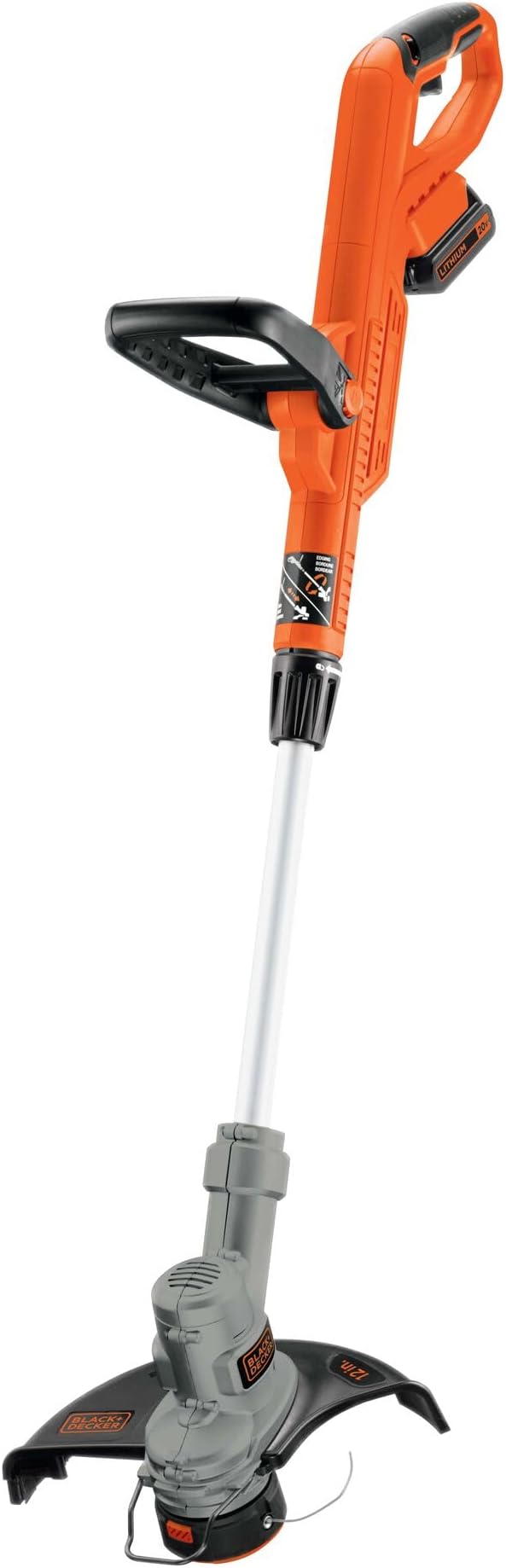
5 Best Corded String Trimmer: Best Picks and Key Buying Tips
If you are shopping for the best corded string trimmer, the BLACK+DECKER String Trimmer and Weed Wacker is the strongest overall starting point. Its 4-amp motor, 13-inch cutting swath, automatic feed, lightweight design, and included spool create a practical combination for routine residential trimming. The CRAFTSMAN String Trimmer/Edger is the clear alternative, especially if switching between trimming and edging quickly matters more than having the widest listed cutting path.
These tools are aimed at homeowners who want consistent power without mixing gas, charging batteries, or maintaining an engine. Corded models can be particularly useful around smaller and mid-sized yards, garden borders, sidewalks, driveways, and fences where an outdoor outlet and extension cord provide enough reach.
The rankings below compare cutting width, motor or operating system, line-feed design, handling features, edging convenience, warranty information, storage considerations, and the limitations visible from the supplied product details. One battery-powered model is included at number five because it serves as a useful cordless alternative, although it is not a corded trimmer.
Best Corded String Trimmer Picks at a Glance
| Product | Name | Price |
|---|---|---|
 |
BLACK+DECKER String Trimmer and Weed Wacker | Check Price |
 |
CRAFTSMAN String Trimmer/Edger | Check Price |
 |
Scotts ST00213S Corded Electric String Trimmer With | Check Price |
 |
WEN Compact String Trimmer | Check Price |
 |
Weed Wacker Eater Electric String Trimmer Battery | Check Price |
1. BLACK+DECKER String Trimmer and Weed Wacker
The BLACK+DECKER String Trimmer and Weed Wacker earns the top position because it offers the most balanced package for ordinary residential yard work. Its 4-amp motor is designed to power through routine grass and weed growth, while the 13-inch cutting swath covers a useful amount of ground without making the tool unnecessarily bulky. That combination should appeal to homeowners who want a straightforward corded trimmer for maintaining lawn edges, clearing growth near landscaping, and handling areas a mower cannot reach.
The automatic feed system is one of its most practical advantages. Instead of stopping frequently to bump the head and release more line, the trimmer is designed to extend line as needed. Automatic feed systems still require correct spool setup and sensible operation, but they can make repetitive trimming less interrupted. The built-in auxiliary handle also supports a more comfortable two-handed grip, which is helpful when guiding the cutting head along borders or working for an extended session.
This model includes one BEST935 trimmer and one AF-100 spool, so the buyer has a stated replacement-spool reference from the beginning. It also carries a two-year limited warranty, adding useful ownership support for a basic electric yard tool. The trade-off is that a corded design requires an outdoor power source and careful cord management. Its 13-inch path is efficient for typical home use, but a larger property may require more passes and more extension-cord planning.
Choose it when you want the best all-around balance of reach-free electric simplicity, cutting coverage, handling, and automatic feeding. Before buying replacement line, confirm compatibility with the AF-100 spool system and follow the operating instructions for extension-cord use. If fast edging conversion is your main priority, the CRAFTSMAN below may fit better.
2. CRAFTSMAN String Trimmer/Edger
The CRAFTSMAN String Trimmer/Edger is the clearest alternative to the top-ranked BLACK+DECKER because it places extra emphasis on switching between trimming and edging. Its turn-to-edge feature and wire edge guide are useful for homeowners who regularly maintain clean lines beside sidewalks, driveways, garden beds, or other hard boundaries. Rather than treating edging as an occasional afterthought, this design makes the change part of the tool’s intended function.
A 12-inch cutting swath gives it a slightly narrower working width than the first-place model, but that is not necessarily a disadvantage. A narrower path can be easier to control around delicate plantings, tight corners, and landscape borders. The tool uses 0.065-inch line and an automatic feed spool, so the user does not need to bump the head against the ground to release more line. That may make the trimming process feel more predictable for people who prefer uninterrupted operation.
Its integrated hook also makes the trimmer VERSATRACK compatible. The VERSATRACK Wall Organization System is sold separately, so this feature is most useful to owners who already use that storage system or plan to build around it. Hanging the tool can help keep it off the floor and make garage organization easier, but the compatibility does not mean the wall system is included.
The practical trade-off is the smaller cutting swath compared with the leading model and the lack of a supplied warranty detail in the available information. It remains a strong match for modest lawns and detail-oriented edging, but buyers with more open trimming space may prefer the extra inch of coverage from BLACK+DECKER. Confirm the correct 0.065-inch replacement line and leave enough slack in the extension-cord setup to move safely without pulling on the outlet.
3. Scotts ST00213S Corded Electric String Trimmer With
The Scotts ST00213S takes third place by combining a broad 13-inch cutting path with comfort adjustments that can make longer trimming sessions easier to manage. Its telescopic pole allows the user to adjust the tool to a preferred height, while the adjustable angle helps tailor the working position. Those features are especially relevant for households where more than one person uses the trimmer or for anyone who finds a fixed shaft uncomfortable.
Its auto-feed system is designed to keep the line available without the user repeatedly stopping to adjust or bump the head. The product information describes the motor as capable of cutting grass and weeds and presents the 13-inch path as a way to cover more ground in fewer passes. That makes it a sensible choice for routine lawn cleanup when the operator values coverage and adjustable ergonomics more than specialized storage or edging hardware.
Another advantage is the low-maintenance nature of corded electric operation. There is no oil or gasoline to mix, store, or replace, and the product is backed by a stated three-year warranty. The description also says it is designed to avoid accidental unplugging, an important convenience for corded equipment because a loose connection can interrupt work at the least convenient moment.
The available information does not specify the motor’s amp rating, line diameter, or a dedicated edging conversion. That makes the Scotts less precise to evaluate for buyers who want to match line size or compare motor output closely. It is best suited to homeowners who want adjustable comfort, a wide path, and a longer stated warranty. Set the pole and head angle before starting, use a suitable outdoor-rated extension cord, and inspect the cord and auto-feed area regularly for wear or debris.
4. WEN Compact String Trimmer
The WEN Compact String Trimmer is ranked fourth because it targets a more specific type of user: someone who values low weight, short overall length, and easy handling for smaller projects. At four pounds and 37.5 inches long, it is notably compact in the supplied specifications. That can be helpful for shorter users, lighter cleanup jobs, narrow storage areas, and homeowners who do not want to maneuver a larger trimmer around small planting beds.
A 3-amp motor spins the line at up to 10,500 RPM, and the 10-inch cutting diameter keeps the head relatively compact. The smaller cutting area means more passes across a broad lawn, but it can also make detail work less cumbersome. The automatic feed system is designed to maintain a consistent string length without requiring the operator to stop and bump the head. For occasional trimming around a small property, that combination may be more useful than maximum coverage.
WEN includes a spool of replacement string and states that the trimmer is compatible with the ET-400 string cartridge. It also carries a two-year warranty. Those details give the buyer a clear starting point for consumables and a defined cartridge reference for future maintenance. The tool runs from a cord and does not require gas, oil, or battery charging, though the user still has to plan around outlet access and extension-cord reach.
The main limitations are its narrower 10-inch path and lower listed motor rating compared with several alternatives in this group. It is not the first choice for extensive, dense growth or large open lawns. Select it when compact dimensions and a four-pound design are more important than speed. Before the first use, install the supplied line correctly, verify ET-400 cartridge availability, and keep expectations realistic: this is a small-project trimmer rather than a broad-coverage yard machine.
5. Weed Wacker Eater Electric String Trimmer Battery
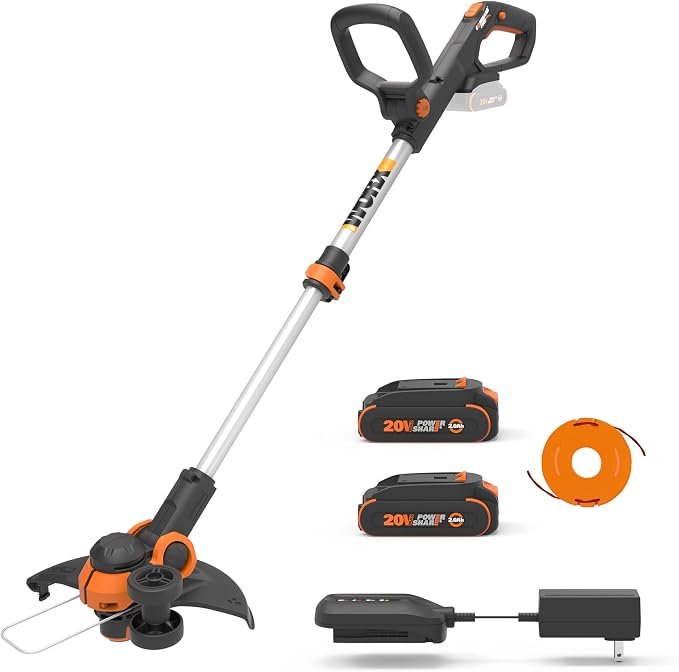
The Weed Wacker Eater Electric String Trimmer Battery is included as a cordless comparison rather than a direct corded match. Its placement reflects that distinction, but it may interest shoppers who like the operating simplicity of electric power and do not want to manage an extension cord. The tool has a 9000-RPM cutting head, a 12-inch cutting path, and a two-in-one design that converts between trimming and edging.
Two 4.0Ah lithium batteries and a fast charger are included. The supplied description gives an estimated 60 to 90 minutes of uninterrupted use, although actual runtime can vary with grass density, line use, edging, and operating conditions. Having two batteries can make it easier to continue working while one pack charges. The detachable shaft also supports more compact storage or transport, which is useful when garage or shed space is limited.
The line system offers automatic and manual feed modes. It is described as feeding approximately 0.4 to 0.5 inches automatically on each start, with a release button for additional manual feeding. The instructions say to pull the line out to six inches before initial use, so setup deserves attention. Its 5.95-pound weight and ergonomic design are intended to reduce fatigue, while the product description also emphasizes lower-noise operation.
The trade-offs are important for a corded-trimmer shopper. Battery runtime is finite, charging is required, and the available information does not identify a battery platform shared with other tools. The product also has a shorter review history in the supplied data than the leading corded choices. Consider it when freedom from an extension cord outweighs the convenience of continuous outlet power. Confirm the included battery and charger arrangement, follow the initial line-feed procedure, and store the detachable shaft and battery packs properly between uses.
How to Choose the Best Corded String Trimmer
The right corded string trimmer is not necessarily the one with the highest motor number or widest advertised path. It should match the size and shape of the areas you maintain, the density of the growth, your comfort with cord management, and how often you edge. A homeowner who trims a small garden border has different needs from someone clearing long fence lines around a larger suburban lot.
Start with the type of yard work you actually do
String trimmers are most useful for places a mower cannot reach. Common jobs include cutting grass around trees, posts, fences, foundations, raised beds, and landscape rocks. They also tidy the transition between turf and hard surfaces. Think about whether your work is mostly light touch-up, regular edging, or heavier weed clearing.
For small lawns and concentrated landscaping, a compact tool may be easier to control than a wider model. The WEN has a 10-inch cutting diameter and four-pound design, which are relevant advantages when maneuverability matters more than covering ground quickly. For open stretches of grass, a 12- or 13-inch cutting path can reduce the number of passes. BLACK+DECKER and Scotts both list 13-inch paths, while CRAFTSMAN and the cordless alternative list 12-inch paths.
Cutting width should be viewed alongside maneuverability. A wider path can improve productivity, but it may be less convenient close to flowers, shrubs, and hard borders. A smaller path can provide more control in tight spaces while taking longer over large areas. There is no universally ideal width; the better choice depends on the balance between coverage and precision.
Understand what corded power changes
A corded trimmer supplies power continuously as long as it remains connected to an appropriate outdoor outlet. That eliminates fuel mixing and avoids waiting for a battery to charge. It can be a strong fit for owners who trim close to the house or have a convenient outlet near the work area.
The compromise is mobility. An extension cord can catch on shrubs, wrap around objects, or become a trip hazard if it is not managed deliberately. Before starting, identify the full route and keep the cord behind your working position. Move it to a new safe position when changing areas instead of allowing it to lie across the cutting path. Do not rely on the trimmer’s cord-retention feature as a substitute for checking the entire cord route.
Use an extension cord intended for outdoor use and follow the tool manufacturer’s guidance for cord length, gauge, and electrical protection. Inspect the cord before every session for cuts, exposed conductors, crushed sections, or damaged plugs. Keep connections away from wet ground and never use a damaged cord. If the property does not have a practical outlet within reach, a cordless trimmer may be more convenient even if its operating cost and charging requirements differ.
Compare cutting swath without overvaluing it
The cutting swath describes how much area the head can cover in one pass. A 13-inch swath is only one inch wider than a 12-inch swath, so the difference may be noticeable over a large area but minor during detail work. A 10-inch design can require more passes, yet its smaller head may be easier to guide around obstacles.
Path width also does not tell you everything about cutting ability. The available data does not provide identical motor information for all five products, and it does not establish that one model will handle every type of dense growth better than another. Grass height, moisture, line condition, operator technique, and the number of passes all influence the result.
Use the width as a productivity clue rather than a promise of power. If you mostly trim narrow borders, control and comfort may be more valuable. If you maintain long fence lines or broad areas after mowing, the extra coverage from a 12- or 13-inch path may save time.
Pay attention to automatic line feed
Automatic feed systems are designed to extend line without the traditional bump of the head against the ground. That can simplify operation, particularly for beginners or anyone who dislikes stopping to release line manually. BLACK+DECKER, CRAFTSMAN, Scotts, and WEN all identify automatic feed features in the supplied information. The battery-powered model offers both automatic and manual feed modes.
Automatic feed is not completely maintenance-free. The spool still has to be installed correctly, and line can bind if it is wound improperly or if the head accumulates grass and dirt. Excessive line release can also increase the frequency of trimming or require the guard’s cutter to remove extra material. Follow the product’s spool instructions rather than substituting an unknown cartridge or winding line in an incompatible direction.
Before troubleshooting a head that will not feed, disconnect the cord or remove the battery where applicable. Check whether the spool is empty, the line is tangled, the cover is seated correctly, or debris is blocking movement. Never place fingers near the cutting head while the tool is connected to power.
Line diameter and replacement supplies matter
Line is a consumable, so replacement availability should be part of the buying decision. CRAFTSMAN specifies 0.065-inch line, while WEN identifies the ET-400 string cartridge as compatible. BLACK+DECKER includes an AF-100 spool. Those references are useful because they give buyers a starting point for future supplies.
Do not assume that every spool or line thickness fits every trimmer. A line that is too thick can overload the head or fail to feed, while an unsuitable spool may not seat properly. If the product uses a cartridge or branded spool, check the manufacturer’s compatibility information before ordering. Keep at least one replacement available if the trimmer is used regularly during the growing season.
Line wears faster when it repeatedly strikes concrete, brick, metal edging, rocks, or tree bark. Work parallel to hard surfaces when possible and let the line do the cutting rather than forcing the head into obstacles. This reduces unnecessary wear and may help preserve the guard and spool assembly.
Decide whether edging is a major requirement
Some users only need to trim grass around obstacles. Others want a crisp, visible line along sidewalks and driveways. If edging is a central task, look for a design that specifically supports it rather than assuming any trimmer will convert neatly.
CRAFTSMAN lists a turn-to-edge feature and wire edge guide. The battery-powered model also describes a two-in-one trim-and-edge design. These features may make the transition more convenient and can help the operator maintain a consistent position beside a hard surface. The available information does not identify a dedicated edging conversion for BLACK+DECKER, Scotts, or WEN, so buyers who prioritize edging should examine the manufacturer’s instructions and product design more closely.
Even with an edge guide, keep the head level and work at a controlled pace. Avoid cutting into soil, stone, or pavement. Edging too aggressively can remove more turf than intended and rapidly consume line. For established lawn borders, several light passes are usually easier to control than one forceful pass.
Choose a shaft and handle arrangement you can control
Comfort is more than total weight. Shaft length, auxiliary handles, telescoping adjustments, head angle, and balance all affect how naturally the tool sits in your hands. BLACK+DECKER identifies a built-in auxiliary handle, while Scotts provides a telescopic pole and adjustable angle. WEN’s 37.5-inch length and four-pound weight appeal to shorter users and smaller projects.
A trimmer that is too long can force the operator to raise the arms or twist the wrists. One that is too short can encourage bending. Set the handle and shaft before connecting power. Keep both hands on the intended grip points, hold the head at a consistent height, and take breaks when the tool begins to feel difficult to control.
Do not judge comfort solely from a listed weight. A tool’s balance changes as the line spool wears, as a cord pulls from one direction, or as the operator works at a different angle. If possible, consider where the motor and cutting head sit and whether the auxiliary handle can be adjusted to your preferred stance.
Match the model to storage and ownership habits
Storage features can be meaningful when the trimmer lives in a crowded garage or small shed. CRAFTSMAN has an integrated hook for the separately sold VERSATRACK Wall Organization System. The battery model has a detachable shaft for compact storage. WEN’s short overall length may be helpful without requiring a removable section.
Think about the entire ownership routine, not only the cutting session. A corded tool should be stored with the cord loosely coiled and protected from sharp bends. Do not wrap it tightly around the shaft if that places stress on the plug or connection. Keep spare spools dry and away from extreme heat. Remove grass buildup from the guard and head after the tool is disconnected from power.
For automatic-feed systems, inspect the spool area if feeding becomes inconsistent. For the battery model, store the removable battery according to its instructions and keep the charging equipment in a dry location. Warranty length can also influence ownership confidence: BLACK+DECKER and WEN state two-year warranties, Scotts states three years, and the supplied CRAFTSMAN information does not list a warranty period.
Use realistic expectations for dense growth
A string trimmer is not a brush cutter. It is intended primarily for grass, weeds, and lawn-edge maintenance. Dense, woody stems, thick vines, wet tangled vegetation, and heavy overgrowth may require slower passes or a different type of tool. The product descriptions use phrases such as cutting grass and weeds, but they do not establish a universal capacity for extreme brush.
Let the line reach operating speed before entering the grass, and sweep in a controlled arc. Avoid burying the head into a dense patch, since that can bog down the motor, use line quickly, and make the tool harder to control. For especially tall growth, approach the upper section first and then work lower, keeping debris directed away from people, windows, vehicles, and delicate plants.
Protective equipment remains important even for electric models. Wear eye protection, sturdy shoes, and clothing that covers exposed skin. Keep children and pets away from the work area, and inspect the area for stones, sticks, wire, and other objects before beginning.
Maintenance that applies to corded trimmers
Routine maintenance is relatively simple, but it should not be skipped. Disconnect the plug before cleaning, changing a spool, clearing a jam, inspecting the guard, or performing any adjustment. For battery models, remove the battery first. Wipe grass and dirt from the housing and guard with an appropriate dry or lightly damp cloth, following the manufacturer’s instructions.
Check the cutting guard for cracks or looseness. The guard helps control flying debris and should remain installed as designed. Inspect the line for uneven wear and replace the spool or cartridge when the line becomes too short, brittle, or difficult to feed. Do not modify the guard or use improvised parts around the cutting head.
If the motor stops unexpectedly, first disconnect power and check the cord, outlet, overload condition, spool, and head for obvious problems. If the tool smells hot, produces unusual sounds, or repeatedly shuts down, stop using it and consult the manual or manufacturer rather than continuing to force the motor. A warranty is most useful when the owner follows the specified setup and maintenance instructions.
When a cordless alternative makes more sense
Corded power is appealing because it does not run out during a trimming session, but the cord remains a physical limitation. A cordless trimmer may be the better fit for properties with distant corners, multiple separated lawn areas, or no convenient outdoor outlet. The included battery model offers two 4.0Ah batteries, a fast charger, a 12-inch path, and an estimated 60 to 90 minutes of use.
That convenience comes with charging and runtime considerations. Battery capacity declines as packs age, and actual working time changes with line release, vegetation, and technique. Buyers should also confirm whether replacement batteries are readily available and whether the batteries work with other tools they already own. Since the supplied data does not identify a broader battery platform, treat the included packs as part of this product’s ownership calculation.
If your yard is close to an outlet and you prefer uninterrupted operation, a corded model remains the more direct solution. If the cord would regularly cross paths, landscaping, or a long driveway, cordless mobility may be worth the trade-off.
FAQ About the Best Corded String Trimmer
What is the best corded string trimmer for most homeowners?
The BLACK+DECKER String Trimmer and Weed Wacker is the strongest general recommendation from this group. It combines a 4-amp motor, 13-inch cutting swath, automatic feed, auxiliary handle, included AF-100 spool, and a two-year limited warranty. It is a practical fit for routine residential trimming when an outdoor outlet and extension cord are available.
Is the CRAFTSMAN trimmer a good alternative to BLACK+DECKER?
Yes. The CRAFTSMAN String Trimmer/Edger is a particularly good alternative for shoppers who value a turn-to-edge feature and wire edge guide. Its 12-inch path is slightly narrower, but its automatic feed and VERSATRACK-compatible integrated hook add useful convenience. The wall organization system is sold separately.
Are corded string trimmers powerful enough for weeds?
They can handle routine grass and weed growth, which is the intended use described for the products in this roundup. Results depend on weed thickness, height, moisture, line condition, and technique. Very dense, woody, or brush-like growth may be beyond the practical scope of a household string trimmer.
Do corded string trimmers need an extension cord?
They often do unless the outlet is immediately beside the work area. Use an outdoor-rated extension cord that follows the manufacturer’s electrical guidance. Keep the cord behind you, away from the cutting head, and protected from moisture, vehicles, sharp edges, and foot traffic.
Is a wider cutting path always better?
No. A wider path can reduce passes across open grass, but a narrower head may offer better control around flowers, shrubs, posts, and tight borders. The leading BLACK+DECKER and Scotts models list 13-inch paths, while CRAFTSMAN and the cordless alternative list 12 inches and WEN lists 10 inches.
Which reviewed trimmer is easiest to use for edging?
CRAFTSMAN is the most clearly specified corded option for edging because it includes a turn-to-edge feature and wire edge guide. The battery-powered model also describes a two-in-one trim-and-edge design, but it is not a corded trimmer. For the other models, verify the manufacturer’s instructions before assuming a dedicated edging conversion.
How often should string trimmer line be replaced?
There is no single schedule. Replace or reload the line when it becomes too short, brittle, damaged, or difficult to feed. Line wears faster against concrete, brick, rocks, metal edging, and tree bark. Use the correct spool, cartridge, or line diameter for the trimmer rather than forcing a generic replacement.
Are corded trimmers lower maintenance than gas trimmers?
Generally, electric trimmers avoid gas, oil, fuel storage, and engine-related maintenance. They still require cord inspection, spool and guard checks, cleaning, and safe storage. Disconnect the tool before clearing debris or working near the cutting head, and follow the supplied manual for maintenance details.
Conclusion: The Best Corded String Trimmer Verdict
The BLACK+DECKER String Trimmer and Weed Wacker is the best overall choice here for balanced residential performance, automatic feeding, a 13-inch path, and easy ownership. Choose the CRAFTSMAN String Trimmer/Edger instead when edging control and VERSATRACK storage compatibility matter most. Scotts suits users who prioritize adjustable comfort and a three-year warranty, WEN fits compact small-project work, and the final model is a cordless alternative for shoppers willing to trade continuous corded power for mobility.

I’m Maya L. Greenwood, a lifelong plant lover who believes anyone can grow something beautiful with the right guidance. After years of testing soil mixes, pruning methods, irrigation tricks, and pest-safe solutions, I started EasyGardenTips.com to turn hard-won lessons into step-by-step advice. From seed starting and container gardens to composting and seasonal checklists, my goal is to make gardening simple, sustainable, and fun.