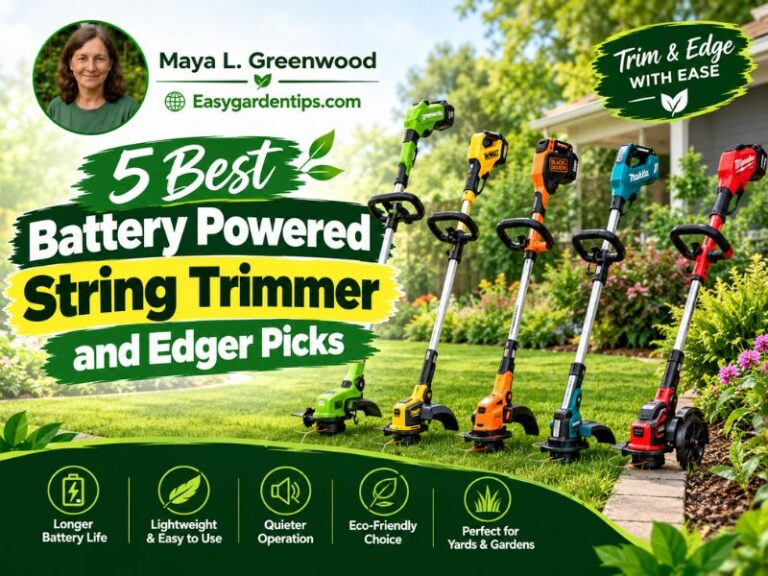
5 Best Cordless String Trimmer Under $100: Overview and Key Facts
Finding the best cordless string trimmer under $100 usually means balancing cutting width, battery coverage, line management, ergonomics, and the kind of vegetation you actually need to control. A compact trimmer can be a smart choice for lawn edges and routine grass cleanup, while a more versatile model may be worthwhile if your yard includes slopes, fence lines, or heavier weeds.
My primary recommendation is the WORX 20V 12″ 2-in-1 Cordless String Trimmer because it combines trimming and edging, includes two batteries, and offers useful control features such as a tilting head, guide wheels, and adjustable plant protection. The BLACK+DECKER 20V MAX String Trimmer and Edger is the clear alternative for shoppers who prefer automatic line feeding and a straightforward lightweight design.
The five options below were compared by looking at cutting width, battery and charger contents, adjustment features, line-feed systems, edging capability, handling, and the practical limitations suggested by each product’s specifications. The guide after the reviews explains how to choose the right tool for a small yard, routine lawn maintenance, or more demanding cleanup.
Best Cordless String Trimmer Under $100: Quick Comparison
| Product | Name | Price |
|---|---|---|
 |
WORX 20V 12″ 2-in-1 Cordless String Trimmer | Check Price |
 |
BLACK+DECKER 20V MAX String Trimmer and Edger | Check Price |
 |
20V Electric Cordless String Trimmer 2 X | Check Price |
 |
12″ 21V Weed Wacker Cordless | Check Price |
 |
13″ Electric Weed Wacker | Check Price |
1. WORX 20V 12″ 2-in-1 Cordless String Trimmer
The WORX 20V 12″ 2-in-1 Cordless String Trimmer earns the top position because it is a particularly complete package for ordinary residential lawn care. It functions as both a string trimmer and an edger, converting between modes in seconds rather than requiring a separate tool. That makes it useful for cutting grass around trees, beds, sidewalks, and driveways, then creating a cleaner boundary along the lawn.
Its 12-inch cutting diameter is a practical middle ground. It covers ground efficiently without being unusually bulky, and the 7,600 RPM no-load speed is appropriate for routine grass and lighter weed work. The head tilts 90 degrees, which helps when working on sloped terrain or reaching underneath and around obstacles. Rubberized support wheels are another meaningful advantage because they can guide the edging motion and help produce straighter lines.
WORX also includes an adjustable spacer guard. This helps keep the line away from plants, lawn ornaments, and landscape features, although it cannot replace careful control around delicate growth. The push-button command-feed spool advances line on demand, and the package includes free spools for life according to the supplied product information. That can make line management less frustrating than systems that depend on bumping the head.
Two 20V Power Share MaxLithium batteries, a charger, a spool, support wheels, and a safety guard are included. The batteries are compatible with other tools in the WORX Power Share family, which adds value for existing owners. At 5.5 pounds for the machine, it should be manageable for many users.
The main limitation is that its 0.065-inch line and compact 12-inch path are better suited to maintained residential growth than very dense brush. Choose it for balanced trimming and edging; select a heavier-duty option only if thick vegetation is your main task.
2. BLACK+DECKER 20V MAX String Trimmer and Edger
The BLACK+DECKER 20V MAX String Trimmer and Edger takes second place because it offers an uncomplicated, approachable design with strong everyday features. Like the top-ranked WORX, it converts from trimming to edging in seconds and uses a 12-inch cutting swath. That width is suitable for regular grass cleanup while keeping the tool relatively easy to guide around beds, posts, and walkways.
Its POWERDRIVE transmission is designed to deliver more power from the motor to the cutting string, and the motor reaches 6,200 RPM. Those figures do not automatically determine real-world results, but they indicate a tool aimed at routine residential work rather than professional brush clearing. The automatic feed spool, or AFS, advances line when needed without requiring the user to bump the head. For many homeowners, that is one of the most convenient aspects of this model.
The included 2.0Ah lithium-ion battery is described as providing 33% more runtime per pack than the company’s previous LBXR20 battery pack. The package also includes a wall-mountable charging base, which can help keep the charger organized in a garage or shed. Its adjustable handle and height positions support a more personalized stance, while the reduced-vibration design is intended to make longer trimming sessions more comfortable.
This model is a good fit for someone who wants a recognizable cordless platform, simple line feeding, and a trimmer that can also edge. The single included battery is the clearest practical trade-off compared with the WORX package, which includes two batteries. Runtime planning therefore matters more if the yard is large or trimming is done infrequently.
The BLACK+DECKER battery should also be viewed as part of the 20V MAX tool ecosystem. Existing owners may benefit from shared battery compatibility, while new buyers should confirm the included battery and charging-base arrangement meets their needs. It is a clear alternative to the WORX for routine grass, paths, and edges—not the strongest choice for sustained heavy brush.
3. 20V Electric Cordless String Trimmer 2 X
The 20V Electric Cordless String Trimmer 2 X ranks third because it offers an appealing combination of compact storage, flexible positioning, and two batteries. Its shaft folds 180 degrees in three ways, making it particularly interesting for apartment dwellers, homeowners with crowded garages, or anyone who dislikes storing long yard tools. The folding design also helps distinguish it from more conventional cordless trimmers.
This model has a 12-inch cutting swath and an upgraded motor listed at 9,500 RPM. The product description presents it as capable of handling thick meadow grass and overgrown weeds, but the same information cautions against excessively thick or dense vegetation. In practical terms, it is best viewed as a residential maintenance tool with extra power on paper, not a replacement for a dedicated brush cutter.
Its 90-degree adjustable head and 180-degree rotatable handle allow users to approach slopes, corners, and areas under benches from more useful angles. The automatic line-feed system dispenses cord as needed without manual bumping. If the cord breaks, the listed restart procedure involves releasing the trigger, then pressing and holding the safety lock and switch together. Knowing that detail before the first use can prevent confusion.
Two 2.0Ah batteries and a charger are supplied. The stated combined runtime is up to 30 minutes of continuous power, which may be enough for many small-yard jobs but is not an unlimited work window. The batteries may also benefit from cooling for a few minutes after use, as indicated in the product information. Alternating batteries can help keep the work moving, provided both are charged.
The tool’s main advantages are storage flexibility and maneuverability. Its main trade-off is that the advertised runtime and compact battery capacity may feel limiting for larger properties. It suits users who need occasional grass and weed maintenance in tight spaces and want a foldable tool. Before buying, confirm that the automatic-feed restart process and the folding shaft design match your preferred setup style.
4. 12″ 21V Weed Wacker Cordless
The 12″ 21V Weed Wacker Cordless earns fourth place as a feature-rich option with two batteries, dual-speed control, and a generous supply of replacement spools. It works as both a trimmer and an edger, with a pedal-assisted head rotation system for switching modes. The 12-inch cutting width is appropriate for general lawn maintenance, and the design is intended to cover narrow areas, corners, fences, and steps.
One of its most useful features is the two-speed selector. Low speed is intended for daily trimming and finer work, while high speed is designed for denser or thicker weeds. Variable speed can help users avoid using maximum power for every task, potentially making delicate work around landscape features more controlled. It also gives the tool a broader operating range than a single-speed model.
The head rotates 54 degrees, and the handle adjusts through 180 degrees. Together with the stable trimming wheel, these adjustments are intended to make edging lines more consistent and improve access around obstacles. The package includes two 2.0Ah lithium batteries and a fast charger, with a stated total cordless runtime of up to 45 minutes. Actual runtime will depend on speed selection, vegetation, and how continuously the tool is used.
Eight replacement spools are included, which reduces the need to purchase line immediately and makes the ownership package more convenient. A one-year warranty and 24-hour customer support are also listed. Those details may matter to buyers who prefer having replacement line and an explicit support channel available from the start.
There are still reasons it does not rank higher. Its review base in the supplied data is much smaller than the first two products, so there is less available ownership history to weigh. The 21V labeling also means buyers should rely on the supplied batteries and confirm replacement compatibility rather than assuming interchangeability with another brand’s 20V platform. It is best for users wanting speed control, extra spools, and two-battery flexibility for regular yard work.
5. 13″ Electric Weed Wacker
The 13″ Electric Weed Wacker stands apart from the other entries by offering a four-in-one design. It can operate as a string trimmer, lawn edger, mini lawn mower, and brush cutter. That broad function set gives it the fifth position for shoppers who want one tool to cover several light garden-maintenance tasks, although the extra attachments also mean there is more setup and cutting-system management to consider.
Three cutting options are included: trimmer line, metal blades, and saw blades. The ability to switch between them is intended to cover grass edges, weeds, small shrubs, and other routine yard cleanup. The 15,000 RPM brushless motor and steel gear set are presented as upgrades for power, smoother operation, and resistance to motor burnout. These specifications make the tool look more oriented toward demanding work than the compact 12-inch trimmers, but users should still match the blade to the material and follow the included installation instructions.
The 13-inch cutting width can improve coverage on open areas. A telescoping pole and adjustable cutting head help accommodate different user heights and reach corners, slopes, and difficult blind spots. Despite the larger cutting path and multiple functions, the listed machine weight is 5.2 pounds. The package includes two 21V 6.0Ah batteries, a charger, replacement blades, trimmer line, a storage bag, and installation tools.
Longer stated battery capacity is one of its strongest selling points: the product description says the two batteries are intended to reduce frequent charging during a complete garden-trimming task. The listed warranty is three years for the main machine and two years for the batteries, which is unusually useful ownership context for a budget-oriented tool.
The trade-off is complexity. Changing between line, metal blades, and saw blades takes more care than using a dedicated line trimmer. Buyers should use the correct guard, wear appropriate protective equipment, and inspect attachments before operation. Choose this model when versatility and included accessories matter more than the simplest possible trimming routine.
How to Choose the Best Cordless String Trimmer Under $100
A cordless trimmer in this category is usually purchased for finishing work: cutting grass where a mower cannot reach, cleaning around fences and trees, and sharpening the boundary between lawn and hardscape. The right choice depends less on a single headline specification than on how the tool fits your yard, storage space, maintenance habits, and battery expectations.
Start with the work you actually need to do
For ordinary grass around sidewalks, flower beds, and fence posts, a 12-inch cutting path is generally a sensible size. It offers enough coverage for routine work without making the tool unnecessarily difficult to control. Both the WORX and BLACK+DECKER use a 12-inch path, as do the third and fourth options.
A wider 13-inch path, such as the one on the Electric Weed Wacker, can cover more lawn per pass. That may be useful in open areas, but width alone does not make a trimmer better around delicate plants or narrow spaces. A wider head can also require more awareness near ornaments, edging stones, and tree trunks.
Consider the vegetation, too. Line trimmers are primarily for grass and weeds. The fifth-ranked model adds metal and saw blades for broader tasks, but that does not mean every user should choose a blade-equipped tool. If your normal job is simply maintaining a lawn edge, a simpler line-only design may be easier to operate and maintain.
Compare battery quantity, capacity, and platform compatibility
Battery contents can change the ownership experience substantially. The WORX includes two 20V batteries, the 20V Electric Cordless String Trimmer includes two 2.0Ah batteries, and the 21V Weed Wacker includes two 2.0Ah batteries. BLACK+DECKER includes one 2.0Ah battery. The fifth product lists two 21V 6.0Ah batteries.
Do not compare voltage or amp-hour numbers without context. Battery voltage labels are not always presented identically across brands, and runtime depends on cutting load, line length, speed, vegetation, and pauses. A higher capacity may provide a longer operating window, but it can also affect charging time and replacement cost. The most useful question is whether the supplied batteries can finish your typical job or whether you need to plan a recharge.
Shared battery systems can be valuable. WORX specifically states that its batteries work with other tools in the Power Share family. BLACK+DECKER positions its battery within the 20V MAX ecosystem. The other products should not be assumed to share batteries with either platform. If you already own compatible tools, verify the exact battery family before choosing a trimmer based on the bare tool or replacement-battery possibilities.
Understand line-feed systems
Line feed affects both convenience and troubleshooting. The WORX uses a push-button command-feed spool, allowing the operator to advance line on demand. BLACK+DECKER uses an automatic feed spool that advances line when needed without bumping. The third and fourth products also advertise automatic line-feed systems.
Automatic feeding reduces the need to stop and manually adjust the line, but it does not eliminate maintenance. Spools can empty, line can break, and an automatic mechanism may need to be restarted according to the manufacturer’s procedure. On the third model, the supplied instructions say to release the trigger and then press and hold the safety lock and switch together after a line break. Keep the product’s specific restart process available until it becomes familiar.
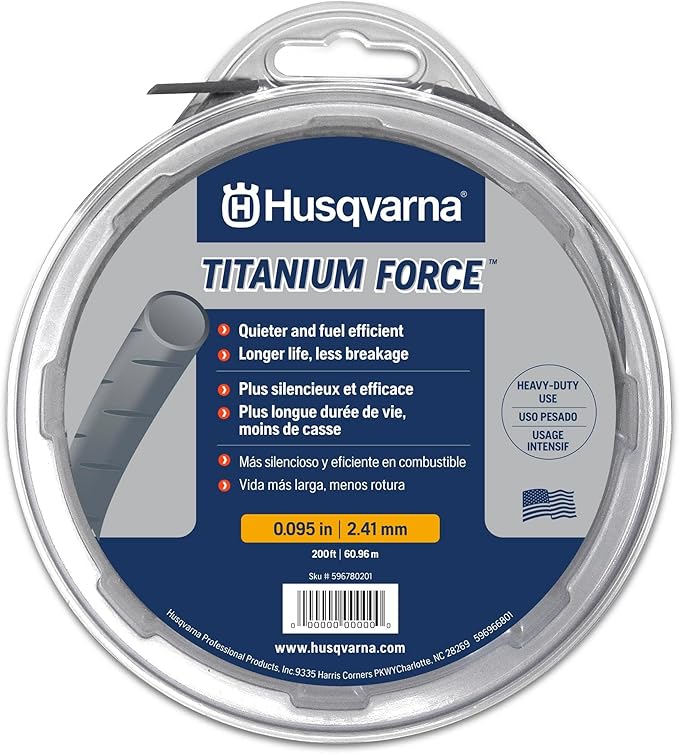
Line diameter is another consideration. The WORX lists 0.065-inch line. Thicker line can sometimes be appropriate for more demanding vegetation, but compatibility depends on the spool and trimmer design. Do not install a random replacement line simply because it appears to fit. Match the replacement spool or line to the manufacturer’s instructions, and avoid overfilling the head.
Decide whether edging features are important
A trimmer can cut grass vertically along a sidewalk, but dedicated edging support makes that task easier to repeat neatly. All five listed products offer some form of trimming and edging functionality, although their mechanisms differ.
The WORX combines a tilting head, support wheels, and an adjustable spacer guard. The wheels help guide the edger, while the spacer can help prevent accidental contact with plants and ornaments. BLACK+DECKER converts between modes quickly and emphasizes adjustable height and handle positions. The third model uses a pivoting head, while the fourth uses a pedal and 90-degree rotation. The fifth model includes edging as one of its broader functions.
If clean edges are a major reason for buying, look for physical guidance such as wheels or a stable edging position. These features cannot compensate for rushing, but they can make it easier to maintain a consistent line. Work slowly near hard surfaces because line can wear faster when it repeatedly contacts concrete, stone, or brick.
Prioritize adjustability for comfort
Comfort is not just about listed weight. Handle position, shaft length, head angle, balance, vibration, and the amount of time spent holding the tool all matter. BLACK+DECKER provides adjustable handle and height positions. The WORX head tilts 90 degrees. The third model combines a 90-degree head with a 180-degree rotatable handle. The fourth has a 180-degree adjustable handle and a 54-degree cutting-head rotation. The fifth includes a telescoping pole and adjustable head.
More adjustment can help different household members share one tool, but it can also add knobs, hinges, or locking points that need to be checked before use. Before operating, confirm that the shaft, handle, and head are securely locked in position. A loose adjustment can make edging less precise and increase fatigue.
Storage matters as well. The folding shaft on the third model is especially relevant for apartments, small garages, and crowded sheds. A conventional fixed or telescoping design may be preferable if setup simplicity is more important than compact storage.
Choose between a simple trimmer and a multifunction tool
A basic two-in-one trimmer and edger is often the easiest choice for homeowners who want predictable lawn maintenance. It has fewer cutting systems to inspect and usually requires less setup between tasks. The WORX and BLACK+DECKER are strong examples of this straightforward approach.
A multifunction model can make sense when storage space or tool count is a concern. The fifth product combines line, metal-blade, and saw-blade options and is described as a trimmer, edger, mini mower, and brush cutter. That flexibility may reduce the need for separate garden tools, but every attachment introduces another safety and maintenance responsibility.
Do not use a metal or saw blade merely because it is included. Select the attachment for the intended material, install the correct guard, inspect the fasteners, and follow the manufacturer’s operating instructions. If your yard only contains grass and light weeds, a line head may remain the most practical option.
Think realistically about runtime
Runtime claims should be treated as estimates rather than guarantees. The third product states up to 30 minutes of total continuous power from two 2.0Ah batteries. The fourth lists up to 45 minutes from two 2.0Ah batteries. The fifth emphasizes its two 6.0Ah batteries for extended use, while the first two products do not provide a specific runtime in the supplied information.
Actual work time changes with speed and resistance. Thick grass, dense weeds, long line, frequent starts, and edging against hard surfaces can consume energy faster than light trimming. A small yard may be completed easily with one battery, while a larger property may require alternating charged packs.
Keep batteries cool after strenuous use and charge them with the supplied or approved charger. The third product specifically recommends allowing the batteries to cool for a few minutes after use. Store batteries and tools in a dry location, and do not leave a battery installed during long-term storage unless the manufacturer says that is appropriate.
Use safety and maintenance habits that extend ownership
Inspect the work area before trimming. Remove loose stones, sticks, wire, and other objects that could be thrown by the line or blade. Wear eye protection, sturdy footwear, and clothing that does not hang near the cutting head. Keep bystanders and pets away from the active work area.
Disconnect the battery before clearing wrapped grass, changing a spool, adjusting the head, or installing a blade. Never rely only on releasing the trigger. Check the guard and line head for cracks, confirm that fasteners are secure, and stop if the tool begins vibrating unusually.
Line heads should be kept free of packed grass and debris. Use the correct replacement spool, and avoid striking hard surfaces unnecessarily. For blade-equipped equipment, inspect blades for damage and follow the supplied instructions for installation and storage. A storage bag, replacement spools, or extra blades can be convenient, but they do not replace routine inspection.
Match the purchase to the user
For a homeowner who wants the most balanced package, the WORX’s two batteries, edging guidance, tilting head, and Power Share compatibility make it a strong all-around fit. Someone who values automatic line feeding and already uses BLACK+DECKER 20V MAX tools may prefer the BLACK+DECKER alternative.
The foldable third model is better suited to tight storage and small-space maneuvering. The fourth model is attractive for buyers who want two speeds, two batteries, and included spare spools. The fifth model is aimed at shoppers who value multiple cutting functions and a larger battery package more than the simplicity of a conventional trimmer.
Finally, confirm the seller’s current package contents, warranty terms, and replacement-part availability before ordering. Product bundles can change, and replacement spools or batteries are central to long-term usefulness. A low initial purchase price is less helpful if the line system or battery is difficult to replace.
FAQ About Cordless String Trimmers Under $100
What is the best cordless string trimmer under $100 for most homeowners?
The WORX 20V 12″ 2-in-1 Cordless String Trimmer is the strongest overall choice in this lineup. It includes two batteries, converts between trimming and edging, has a 90-degree tilting head, support wheels, and an adjustable spacer guard. Its 12-inch cutting diameter suits common residential cleanup. The BLACK+DECKER is the clearest alternative if automatic line feeding and the 20V MAX battery ecosystem are higher priorities.
Is a cordless trimmer under $100 powerful enough for thick weeds?
These tools are primarily intended for grass and routine weed maintenance. Some, including the third model and the dual-speed fourth model, are described as handling thicker weeds, but the supplied information does not make them equivalent to a heavy-duty brush cutter. Dense woody growth, large brush, or extended clearing may require a different type of tool. Use the correct line or approved blade system and avoid forcing a compact trimmer beyond its intended work.
Should I choose a 12-inch or 13-inch cordless trimmer?
A 12-inch cutting path is a practical choice for edges, beds, fences, and areas requiring control. A 13-inch path can cover open lawn more quickly, as offered by the fifth-ranked model, but it may not provide a meaningful advantage in narrow spaces. Choose based on the layout of your yard rather than width alone.
Are two batteries important for an inexpensive cordless string trimmer?
Two batteries can be useful because one can charge while the other is in use, or because the combined capacity may cover a larger job. The WORX, third, fourth, and fifth products include two batteries, while BLACK+DECKER includes one 2.0Ah battery. Runtime still varies with vegetation and speed, so check the stated capacity and plan around your typical trimming session.
Which model is easiest for edging?
The WORX is especially well equipped for edging because it includes support wheels and an adjustable spacer guard in addition to its trimming-to-edging conversion. BLACK+DECKER also converts quickly and provides adjustable positioning. The other models offer edging through pivoting or rotating heads. Regardless of the model, slow movement and careful alignment near concrete will help produce a cleaner result.
Can I use batteries from another brand in these trimmers?
You should not assume cross-brand compatibility. The WORX batteries are stated to work with the WORX Power Share family, and BLACK+DECKER identifies its battery with the 20V MAX platform. The 21V and other included battery systems should be treated as their own platforms unless the manufacturer explicitly confirms compatibility. Use the intended battery and charger for the tool.
What maintenance does a cordless string trimmer need?
Remove the battery before cleaning, clearing wrapped vegetation, replacing line, or changing an attachment. Keep the guard and cutting head free of debris, inspect the shaft and handle locks, and check line or blades for damage. Charge and store batteries according to the manufacturer’s instructions. If a tool develops unusual vibration, stop using it until the head, spool, blade, and fasteners have been checked.
Final Verdict
The WORX 20V 12″ 2-in-1 Cordless String Trimmer is the best overall pick in this group for balanced trimming, edging control, included battery coverage, and useful adjustments. The BLACK+DECKER 20V MAX String Trimmer and Edger is the best alternative for automatic line feeding and straightforward 20V MAX ownership. The remaining models are worth considering when foldable storage, two-speed control, extra spools, or multi-function cutting matters more than a simple lawn-trimming setup.

I’m Maya L. Greenwood, a lifelong plant lover who believes anyone can grow something beautiful with the right guidance. After years of testing soil mixes, pruning methods, irrigation tricks, and pest-safe solutions, I started EasyGardenTips.com to turn hard-won lessons into step-by-step advice. From seed starting and container gardens to composting and seasonal checklists, my goal is to make gardening simple, sustainable, and fun.