5 Best Commercial String Trimmer: Best Choices and Practical Tips
Finding the best commercial string trimmer depends on more than engine size or cutting width. The right choice may be a bulk spool of professional-grade line for an existing trimmer, a gas-powered straight-shaft machine, a cordless platform, or a walk-behind unit for large, rough areas.
For most frequent trimming and replacement-line needs, my primary recommendation is the Anleolife .095″ Commercial Square String Trimmer Line. It offers a long 1,280-foot supply, a visible square profile, and broad compatibility when the trimmer head accepts .095-inch line. If you need a complete handheld machine instead, the clear alternative is the Husqvarna 130L Gas String Trimmer, which combines an 18-inch cutting width with gas power and several starting and comfort features.
The five selections below cover different types of commercial-style work. I compared their cutting approach, power source, capacity, handling features, attachment flexibility, and practical ownership requirements. Because these products are not identical categories, the rankings reflect usefulness for different demanding trimming jobs rather than a simple power contest.
Best Commercial String Trimmer at a Glance
| Product | Name | Price |
|---|---|---|
 |
Anleolife .095″ Commercial Square String Trimmer Line | Check Price |
 |
Husqvarna 130L Gas String Trimmer | Check Price |
 |
DEWALT 60V Cordless String Trimmer with Battery | Check Price |
 |
YARDMAX YL2250 22 In. 170cc Gas Walk | Check Price |
 |
WORKIT 25.4cc 2-Cycle Gas Weed Eater | Check Price |
1. Anleolife .095″ Commercial Square String Trimmer Line
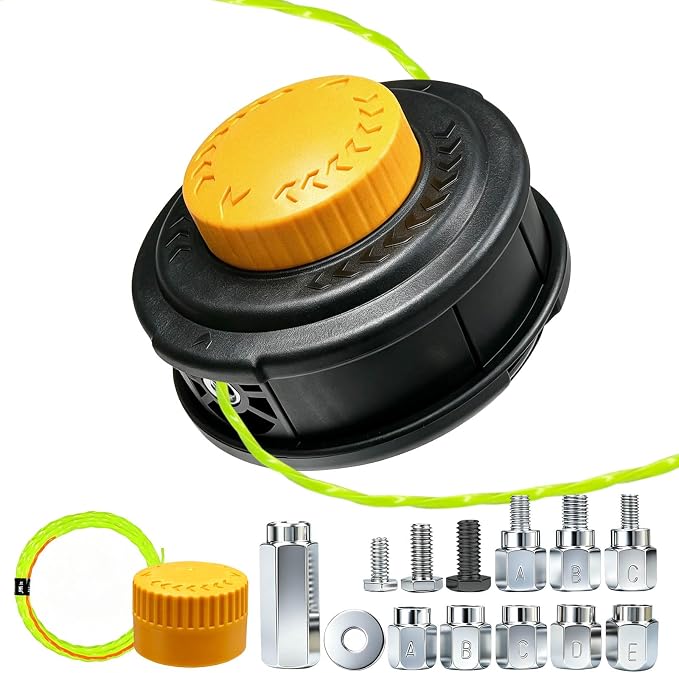
The Anleolife line earns the top position because it addresses one of the most recurring needs in professional and high-frequency yard care: having dependable replacement line ready when a spool runs out. Its 1,280-foot, 5-pound bulk spool is especially practical for landowners, lawn-care crews, and homeowners who regularly maintain large yards, fence lines, borders, and open grassy areas. Instead of repeatedly buying short refills, users can reload compatible heads from one substantial supply.
The .095-inch square profile is the main functional feature. Four defined edges are intended to provide crisp cutting contact with grass and weeds, while the bright orange color makes the line easier to see during loading and trimming. That visibility can be useful when measuring sections for a reload or checking how much line remains around a head. The nylon 66 copolymer construction is designed for everyday grass cleanup and fence-line work.
This is also the most economical type of commercial tool for someone who already owns a suitable gas or electric trimmer. The line is listed as compatible with supported models from Husqvarna, Echo, Stihl, Weed Eater, EGO, Oregon, Milwaukee, and DeWalt, among others. However, compatibility depends on the trimmer head and the manufacturer’s specifications, not simply the brand name.
The obvious limitation is that this is line, not a complete trimmer. It cannot improve an underpowered motor, repair a worn head, or substitute for a brush cutter when dealing with woody growth. Before loading, confirm that the head accepts .095-inch line and follow the model manual for length and winding direction. The built-in cutter helps with reloading, but proper installation still matters for smooth feeding.
2. Husqvarna 130L Gas String Trimmer
The Husqvarna 130L is the strongest complete handheld alternative in this group. It holds second place because it provides a conventional gas-powered setup with an 18-inch cutting width, a straight shaft, and a 28cc engine. That combination suits users who need a dedicated trimmer for recurring grass, weeds, fence lines, and hard-to-reach areas but do not need the bulk or footprint of a walk-behind machine.
Starting convenience is a notable part of the design. Digital ignition, Smart Start, and an air purge system are intended to reduce the effort involved in getting the engine running. The automatic stop switch resets to the “on” position, which helps avoid one common starting mistake after the machine has been shut down. These features do not eliminate the normal responsibilities of a gas tool, but they can make repeated use less frustrating.
The Rapid Replace trimmer head is designed around a simple align, load, and twist process. That can shorten reload interruptions compared with a head that requires extensive disassembly. LowVib Technology and the comfortable handle design also target fatigue reduction, an important consideration when trimming for long periods or working around multiple structures.
Its trade-offs are typical of a gas-powered handheld tool. Owners must manage fuel, mixing or fueling procedures, storage, air filtration, and engine maintenance. It is also less convenient than the DEWALT for users already invested in a compatible battery platform. Before purchase, consider whether an 18-inch handheld swath is sufficient for the property and verify that the included head and shaft arrangement suit your preferred line size. The 130L is a better fit than the Anleolife line when you need a complete engine-powered trimmer, but the line remains the more practical purchase if your current machine already works well.
3. DEWALT 60V Cordless String Trimmer with Battery
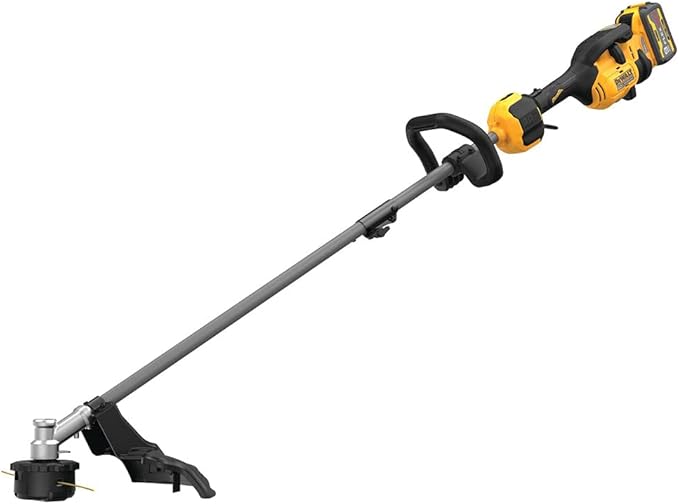
The DEWALT DCST972X1 earns third place by balancing strong cordless operation with useful flexibility. Its brushless motor, 60V battery system, and included battery and charger make it a complete option for users who want to avoid gasoline while retaining a substantial handheld tool. It is particularly appealing for property owners and crews who value quick starts, less routine engine care, and compatibility with other DEWALT equipment.
A major advantage is the adjustable cutting swath. The trimmer can operate at 15 or 17 inches, allowing the user to choose between a narrower path for control and a wider path for covering more grass per pass. It uses .080-inch dual line and can also work with DEWALT .095-inch line. That gives owners some flexibility in replacement supplies, although they should still follow the model’s manual for suitable line and loading instructions.
The quick-load spool is intended to simplify re-spooling, while the variable trigger and high/low speed control let the operator adjust output to the work. Lower settings may be useful around lighter grass or when conserving runtime, while higher output is available for more demanding trimming. Universal attachment capability adds another layer of usefulness by allowing compatible additional tool pieces.
The primary limitations are platform-related rather than design flaws. Battery runtime depends on operating conditions, speed selection, vegetation, and battery capacity, and cordless users need a charging plan for extended commercial work. A gas trimmer may be more practical where continuous operation and rapid refueling matter more than quiet, low-maintenance starts. The attachment capability also does not mean every accessory is automatically compatible; confirm the specific attachment requirements. This model is a strong middle ground for users who want handheld commercial-style capability without fuel mixing, but the Husqvarna remains the simpler choice for those who prefer gas.
4. YARDMAX YL2250 22 In. 170cc Gas Walk
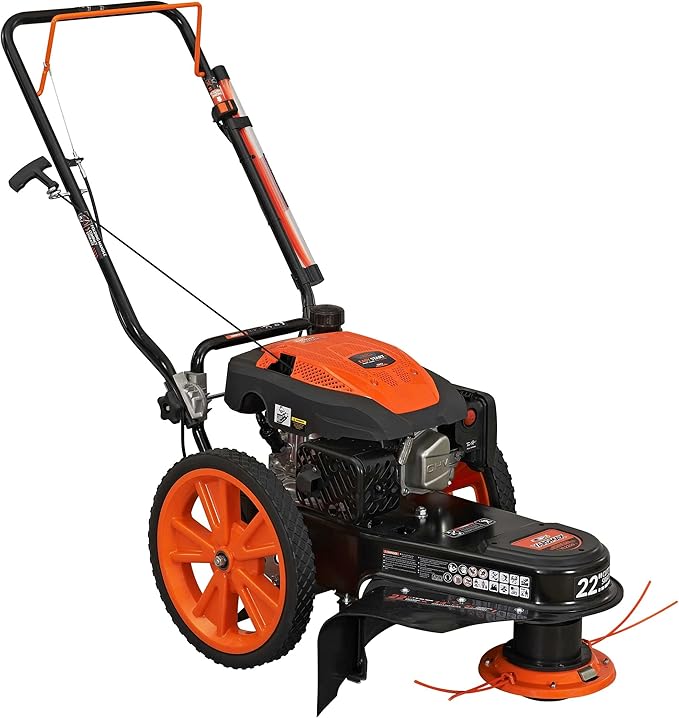
The YARDMAX YL2250 occupies fourth place because it serves a different job from the handheld trimmers above. This is a walk-behind string trimmer mower with a 22-inch cutting path and a 170cc gas engine, making it better suited to larger, rougher areas where carrying a handheld machine would be tiring or inefficient. Its design is aimed at getting substantial trimming work done quickly across open property.
The offset head is one of its most practical features. It allows the operator to trim along fence lines, barns, and landscaping without repeatedly moving in and out to reach the edge. That can make long straight runs more efficient. Fourteen-inch ball-bearing wheels are intended to travel across varied terrain, while the tool-free height adjustment offers five cutting heights from 1.5 to 3.5 inches. The height range gives users more control over how aggressively they approach different areas.
Onboard string storage, including a cord caddy, is another useful ownership detail. Keeping extra line with the machine can reduce trips back to a shed or vehicle during a large job. The walk-behind format also shifts much of the tool’s weight onto the wheels, which may be preferable for users managing extensive lots or dense, unmanaged growth.
Its limitations are equally important. A 22-inch walk-behind trimmer is less maneuverable in tight garden beds, narrow passages, and small residential spaces than a handheld straight-shaft model. It also needs room for storage and requires the normal fuel, starting, and maintenance routines associated with a gas engine. The large cutting path is not a reason to choose it for every task; it is most sensible when area coverage and reduced carrying fatigue matter. Check access paths, terrain, and storage space before buying. For precision around individual plants, the Husqvarna or DEWALT is likely a better fit.
5. WORKIT 25.4cc 2-Cycle Gas Weed Eater
The WORKIT 25.4cc 2-cycle gas weed eater ranks fifth because its appeal comes from versatility, while its available product information and limited review volume provide less confidence than the higher-ranked choices. It is a multi-function tool with a 17-inch trimmer, a 3T blade, and a 40T blade. That combination is designed to move beyond ordinary grass trimming and address thicker weeds, brush, and overgrown areas.
The commercial-style power unit uses a stated 50:1 fuel mix and is intended for quick starting and extended professional work. Its bump-feed design supports line changes during trimming, and the 17-inch cutting width can help cover ground efficiently. The shoulder strap is intended to reduce strain, especially when using the tool for longer sessions, while sturdy connectors support switching among the included functions.
The 3-in-1 arrangement is the chief reason to consider it. A user can trim, edge, or install a blade for heavier vegetation without buying separate machines for each task. For a large yard that includes grass, tall weeds, and occasional brush, that flexibility may be more valuable than the smoother, more specialized operation of a single-purpose trimmer.
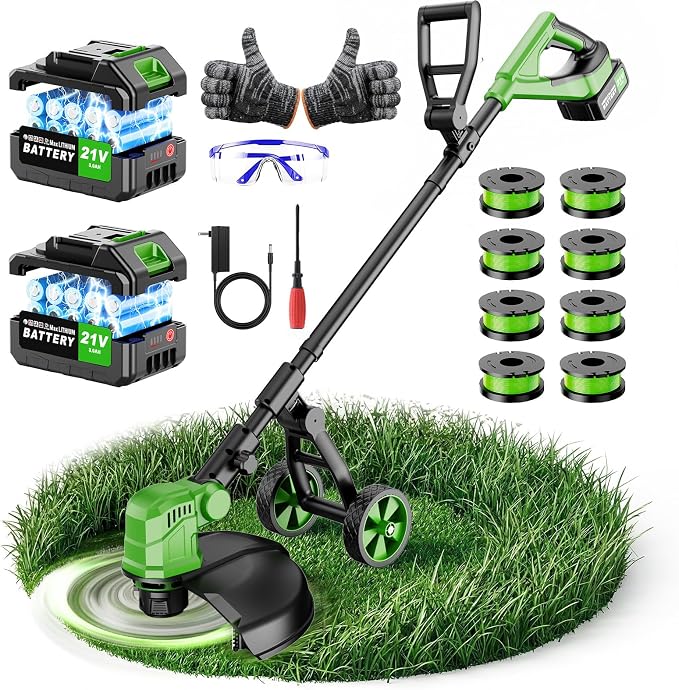
However, attachment switching adds setup responsibility, and blade use demands more careful operating technique than ordinary line trimming. Users must follow the assembly instructions, verify that connectors are fully secured, use the correct fuel mixture, and inspect cutting components before work. The listed rating is 3.3 from five reviews, so the available customer feedback is much thinner than for the Husqvarna or Anleolife product. Consider it when multi-function capability is the priority and you are comfortable with two-cycle maintenance. For routine grass trimming with fewer configuration decisions, the Husqvarna is the more straightforward gas choice; for reduced engine maintenance, the DEWALT is more convenient.
How to Choose the Best Commercial String Trimmer
A commercial string trimmer should be selected according to the work pattern, not just the word “commercial” in a product title. Professional-style use can mean several hours of fence-line trimming, maintaining a large rural property, clearing rough weeds, edging around buildings, or simply needing a tool that will be used frequently. Each situation places different demands on power, cutting width, fuel or battery management, and operator comfort.
Start with the type of tool you actually need
The first decision is whether you need replacement line or a complete machine. A bulk spool such as the Anleolife is the sensible answer when the existing trimmer runs properly and accepts .095-inch line. It can reduce reload interruptions and keep a regular maintenance supply on hand. Buying a new trimmer when the only problem is depleted line wastes money and may introduce compatibility issues.
A complete handheld trimmer is more appropriate when your current tool is unreliable, underpowered, uncomfortable, or unsuitable for the property. Gas models such as the Husqvarna offer refueling and familiar long-duration operation. Cordless models such as the DEWALT offer quick starts and avoid fuel mixing, but work sessions must be planned around battery capacity and charging.
A walk-behind unit changes the operating style entirely. It makes more sense for broad open areas, tall grass, and long stretches of rough growth than for detail work around small planting beds. Think about how much of the property can be covered in straight, open passes before choosing a larger machine.
Match the cutting width to the property
A wider swath covers more ground per pass, but it is not automatically better. The Husqvarna’s 18-inch width, the DEWALT’s adjustable 15- or 17-inch settings, and the WORKIT’s 17-inch width all suit handheld work while retaining reasonable maneuverability. A narrower setting can be helpful around obstacles, landscaping, and confined spaces.
The YARDMAX’s 22-inch path is aimed at productivity over larger areas. That width can reduce the number of passes, but it also requires more room to maneuver and may be awkward near delicate plants or narrow gates. Consider the shape of the property, not only its total acreage. A smaller lot with many obstacles may take longer with a large walk-behind machine than with a controlled handheld trimmer.
Understand line diameter and profile
Line size must match the trimmer head. The Anleolife line is .095 inch, while the DEWALT is listed for .080-inch dual line and also works with DEWALT .095-inch line. Do not assume that a thicker line is always an upgrade. If the head is not designed for that diameter, feeding can become difficult, the motor may be strained, or the line may not seat correctly.
Profile also affects how the line contacts vegetation. A square profile has defined edges and can be useful for routine grass, weeds, borders, and fence-line cleanup. Round or other profiles may be specified by a particular head, so the trimmer manual should take priority over general advice. When loading bulk line, measure the correct length, wind it evenly, and avoid crossing or pinching the line on the spool.
Inspect the head before blaming the line for poor feeding. A damaged eyelet, worn spool, clogged opening, or incorrectly wound line can create problems even when the diameter is correct. If the head is badly worn, a new spool of line will not restore reliable operation by itself.
Choose gas, cordless, or walk-behind power deliberately
Gas power remains useful for users who need repeated work without waiting for a battery to recharge. The Husqvarna and WORKIT both require owners to manage fuel and engine-related care. The WORKIT specifically lists a 50:1 fuel mix, so the correct mixture is essential. Incorrect fueling can affect starting and operation, and stored fuel requires attention during periods of infrequent use.
Cordless power is often easier for short, frequent jobs. The DEWALT starts with a trigger rather than a pull cord, and its variable trigger and high/low control let the operator adjust output. Runtime is still a practical constraint. Dense weeds, high speed, and continuous operation consume energy faster than light touch-up work. Commercial users may need extra compatible batteries or a defined charging routine, even though the included battery and charger provide a usable starting package.
A walk-behind gas trimmer is a productivity choice. It can reduce the physical burden of carrying a handheld unit, but it is not necessarily easier in every environment. Slopes, tight corners, gates, and uneven access can make a wheeled tool harder to position. Check the site before assuming that the largest cutting path will deliver the fastest overall result.
Prioritize handling and fatigue control
Commercial use magnifies small comfort problems. A handle that feels acceptable for ten minutes may become tiring after a full property pass. The Husqvarna includes a comfortable handle design and LowVib Technology intended to lessen vibration. The WORKIT includes a shoulder strap to help distribute handheld weight. These features are helpful, but correct adjustment remains important.
Set the handle or strap so the cutting head remains balanced without forcing the arms to carry the entire tool. Keep the shaft positioned so the line is working at a controlled angle rather than being dragged through vegetation. Take breaks during long sessions, particularly when clearing dense weeds or operating a blade attachment.
For the YARDMAX, wheel height and walking position affect control. Use its tool-free height adjustment to avoid cutting more aggressively than the area requires. A suitable height can help prevent unnecessary engine load and reduce the chance of catching hidden objects close to the ground.
Consider attachments and heavier vegetation carefully
Attachment capability can expand a trimmer’s usefulness, but it also adds compatibility and safety questions. The DEWALT accepts additional tool pieces through its universal attachment capability, while the WORKIT is supplied as a 3-in-1 tool with trimmer and blade options. Confirm that any accessory is specifically supported by the power unit and connector before installation.
Line is intended for grass and weeds, not every type of growth. Thick woody stems, saplings, and dense brush may require a suitable blade or a dedicated brush-cutting tool. The WORKIT’s 3T and 40T blades are included for heavier vegetation, but blade operation requires more attention to clearance, balance, and the surrounding area. Never treat a line trimmer as a substitute for a chainsaw or other tool designed for large woody material.
Attachment changes should be done with the power source shut down. For a gas tool, follow the manufacturer’s shutdown and handling directions; for a cordless tool, remove the battery before servicing or changing components. Inspect guards, connectors, fasteners, and cutting parts before restarting.
Plan maintenance before the first long job
Maintenance needs differ by power type, but every trimmer benefits from regular inspection. Check the line, spool, head, guard, shaft, handle, and fasteners before use. Remove wrapped grass and weeds rather than allowing buildup to remain around the head. A dirty or damaged head can affect balance and feeding.
Gas models need additional attention to fuel condition, starting components, air intake, and storage. Follow the owner’s manual for service intervals and fuel procedures. Do not improvise a fuel ratio; the WORKIT’s stated 50:1 mix must be treated as a specific requirement. The Husqvarna’s air purge and starting features assist operation, but they do not replace normal engine care.
Battery equipment should be stored with the battery handled according to the manufacturer’s instructions. Keep charging equipment dry and use only compatible components. Monitor the cutting head and line just as you would on a gas trimmer. Cordless operation reduces engine maintenance, not all maintenance.
Use the right safety routine
Wear eye protection, sturdy footwear, long pants, and hearing protection appropriate to the tool. Flying stones, line fragments, and vegetation can travel well beyond the cutting head. Before trimming, walk the area and remove loose objects that could be thrown. Keep people, pets, vehicles, windows, and fragile landscaping away from the work zone.
Maintain control around fences and buildings. The Anleolife square line is intended for fence lines and borders, but the line can still damage delicate surfaces or throw debris if the head is held too close. Use a controlled angle and avoid striking hard objects. With a walk-behind unit, watch for hidden holes and changes in terrain. With blades, increase the clearance around bystanders and obstacles.
Turn the tool off before clearing jams, changing line, adjusting the height, or inspecting the head. A bump-feed head should never be serviced while it can unexpectedly spin. These basic habits matter more than a small difference in advertised cutting width.
Best Commercial String Trimmer FAQ
Is the Anleolife line a complete commercial string trimmer?
No. The Anleolife product is a 1,280-foot spool of .095-inch square trimmer line, not a powered machine. It is intended for compatible gas and electric trimmer heads. Verify the required diameter and loading instructions in the owner’s manual before buying or installing it.
What line size should I use in a commercial string trimmer?
Use the diameter approved for your specific trimmer head. The Anleolife line is .095 inch. The DEWALT DCST972X1 is listed for .080-inch dual line and can also use DEWALT .095-inch line. A larger diameter should not be installed unless the manufacturer permits it.
Is gas or cordless power better for commercial trimming?
Gas is often preferable for long sessions where rapid refueling is important. Cordless power is attractive for quick starts, lower routine engine maintenance, and users already invested in a battery platform. The better choice depends on work duration, charging access, vegetation, and whether fuel mixing is acceptable.
When should I choose a walk-behind string trimmer?
A walk-behind model is most useful for broad, open areas, large lots, and heavy grass or weed growth where carrying a handheld machine would be tiring. It is less suitable for narrow paths, crowded landscaping, and detail work around delicate plants. Measure gates and access routes before purchasing one.
Can a string trimmer handle brush and thick weeds?
Line works well for grass and many weeds, but dense brush or woody growth may require a compatible blade or a different tool. The WORKIT includes 3T and 40T blades for heavier vegetation, but blade operation requires appropriate guarding, clearance, assembly, and technique. Always follow the tool’s instructions.
What should I check if the line will not feed?
Confirm that the line diameter is approved, the spool is wound in the correct direction, and the line is not crossed, pinched, or too long. Inspect the eyelets and head for damage or debris. If the head is worn, replacing only the line may not solve the feeding problem.
Final Verdict
The Anleolife .095″ Commercial Square String Trimmer Line is the best overall choice for owners who already have a compatible trimmer and need a durable, highly visible bulk supply. For a complete handheld machine, the Husqvarna 130L Gas String Trimmer is the clearest alternative. Choose the DEWALT for cordless convenience, the YARDMAX for broad walk-behind coverage, or the WORKIT when multi-function cutting is more important than simplicity.

I’m Maya L. Greenwood, a lifelong plant lover who believes anyone can grow something beautiful with the right guidance. After years of testing soil mixes, pruning methods, irrigation tricks, and pest-safe solutions, I started EasyGardenTips.com to turn hard-won lessons into step-by-step advice. From seed starting and container gardens to composting and seasonal checklists, my goal is to make gardening simple, sustainable, and fun.