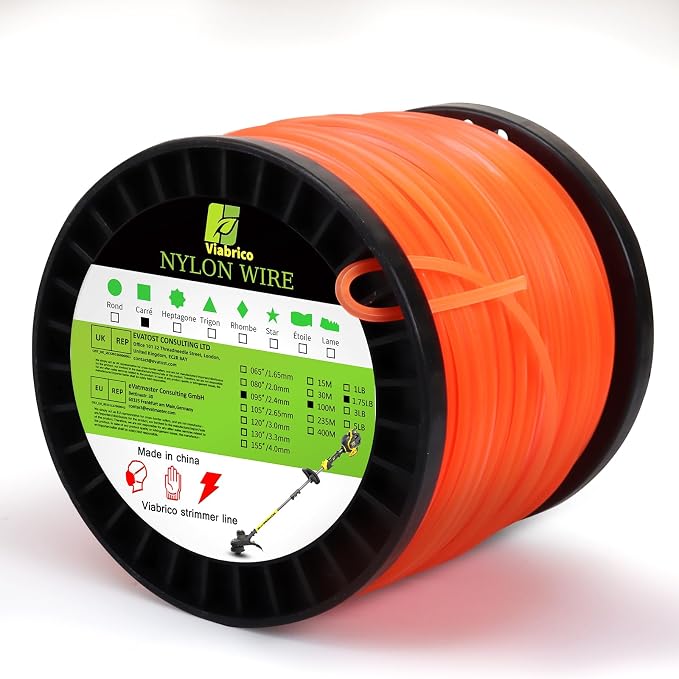
5 Best 155 String Trimmer Line: Best Choices and Practical Tips
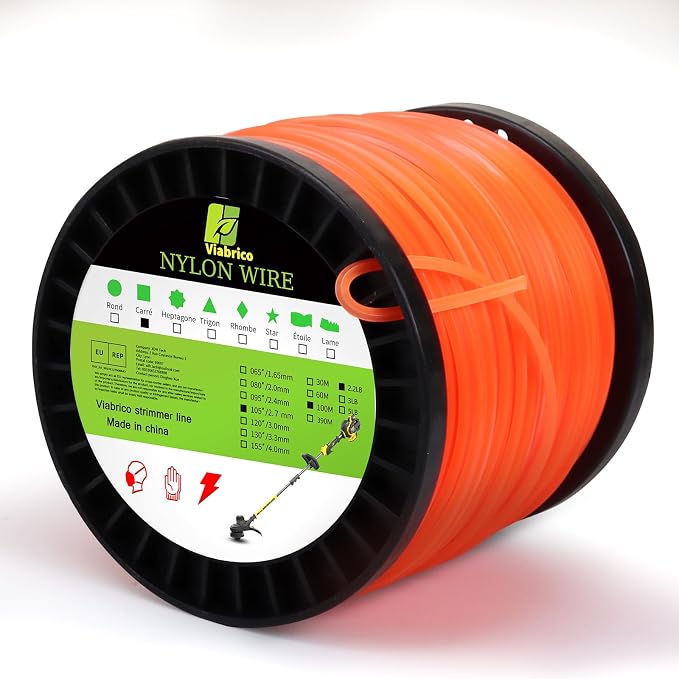
Finding the best 155 string trimmer line is mostly a matter of matching diameter, shape, length, and trimmer power to the work you actually do. A thick .155-inch line can handle demanding grass and weeds, but it also needs a compatible head and enough power to spin properly. The right choice for a commercial-style spool is not always the right choice for a walk-behind trimmer or a homeowner who wants quick, simple refills.
Among these five options, Arnold 490-030-0032 Maxi-Edge Commercial Grade String Trim is the primary recommendation because it combines a commercial-oriented profile, universal-fit positioning, multiple refills, and an included cutting tool. 155 Sawtooth Trimmer Line for Push String is the clear alternative for buyers who want a much larger five-pound spool for frequent heavy-duty work.
The products were compared by looking at cutting-line shape, stated durability, supplied length, refill convenience, machine compatibility, intended workload, and the practical limitations mentioned in the product information. Customer rating and review volume also provide useful context, but they do not replace checking your trimmer manual and measuring the line your head is designed to accept.
Best 155 String Trimmer Line at a Glance
| Product | Name | Price |
|---|---|---|
 |
Arnold 490-030-0032 Maxi-Edge Commercial Grade String Trim | Check Price |
 |
155 Sawtooth Trimmer Line for Push String | Check Price |
 |
Weed Eater String .155 Heavy Duty Square | Check Price |
 |
String Trimmer Line Commercial .155 Heavy Duty | Check Price |
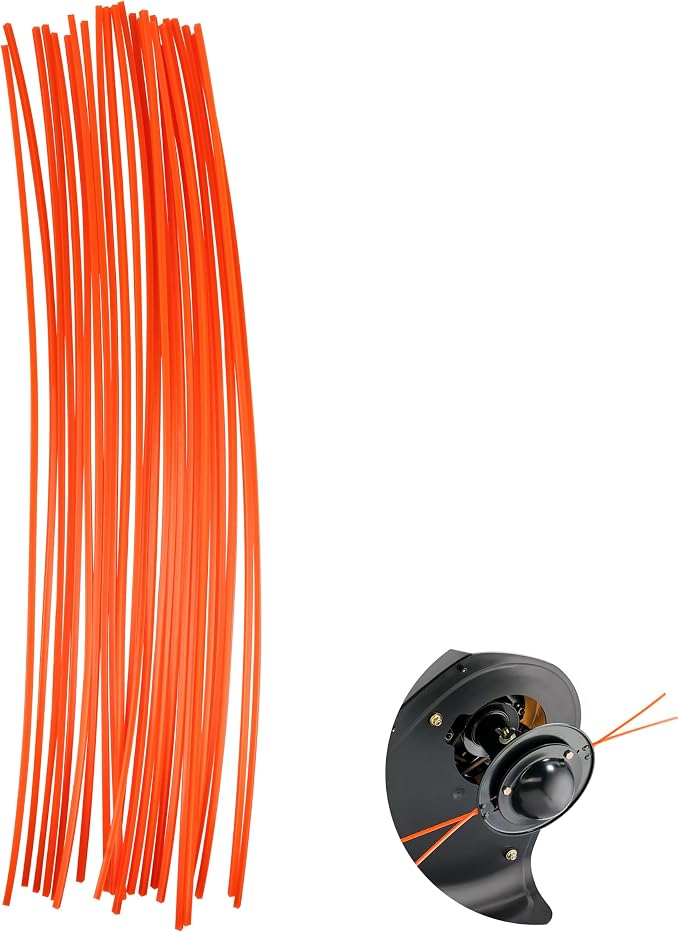 |
0.155″ X 20.7″ Pre-Cut Trimmer Line | Check Price |
1. Arnold 490-030-0032 Maxi-Edge Commercial Grade String Trim
Arnold’s Maxi-Edge line takes the top position because it offers a balanced package rather than simply the largest spool. It uses a six-point star profile intended to improve cutting performance, and its commercial-grade positioning makes it suitable for frequent trimming and larger jobs. The edged profile is designed to make contact with grass and weeds more aggressively than a basic round line, which can be useful when you regularly deal with dense growth or need to define lawn edges.
The package contains seven refills and a cutting tool, giving the buyer both replacement material and a convenient way to customize line length. That is a practical advantage for people who prefer to keep several refills available instead of repeatedly purchasing small packs. The blue color should also make the line easier to see during handling and installation. Its listed total length is 117 feet, so it is more of a ready-to-manage refill package than a bulk spool intended for uninterrupted commercial use.
Arnold describes the line as universal fit for a wide range of gas and electric trimmers. That broad compatibility is helpful, but “universal” should not be treated as a guarantee. Trimmer heads differ in maximum line diameter, winding method, eyelet design, and power requirements. The supplied listing also contains a diameter inconsistency: the title identifies the product as .155-inch line, while one feature calls it .115 inches. Because that difference is significant, verify the package labeling, product instructions, or manufacturer information before ordering.
This is an especially sensible choice for homeowners and frequent users who want durable edged line, manageable refills, and included cutting assistance. Choose a bulk spool instead if you maintain large properties and want to minimize line purchases. Before installation, confirm the diameter and keep the included cutter stored with the refills so future replacements remain quick and consistent.
2. 155 Sawtooth Trimmer Line for Push String
This sawtooth line earns second place by emphasizing quantity and heavy-duty use. It is described as a .155-inch commercial-grade line with a sawtooth or square-style cutting profile, and the package is presented as a five-pound spool. The stated length is inconsistent within the supplied information—one specification says 515 feet, while another says 488 feet—so buyers should rely on the actual package details when estimating how long the spool will last.
The primary advantage is scale. A large spool makes sense for commercial landscapers, property managers, grounds crews, and homeowners who trim frequently enough that small refill packs become inconvenient. The angular profile is intended to cut through thicker grass and heavier weeds efficiently, while the nylon construction is positioned as tougher than lighter economy line. An included cutting tool adds a small but useful convenience when preparing refills.
The listing identifies this line as compatible with gas and electric trimmers from many major brands, including Echo, Husqvarna, RedMax, Ryobi, Black & Decker, Cub Cadet, and Weed Eater. That is encouraging for broad application, but compatibility still depends on the individual trimmer head. A .155-inch line may be too large for some consumer bump heads, and a large spool can be awkward to handle without a suitable way to dispense or rewind it.
The sawtooth profile also involves a trade-off. More pronounced edges can provide strong initial cutting action, but aggressive profiles may create more resistance than round line on a lower-powered machine. If the motor struggles, the head overheats, or the line fails to feed smoothly, a thinner or less aggressive profile may be a better match.
This is the clear alternative to the Arnold package for users who prioritize a substantial supply over individually packaged refills. Confirm the head’s maximum diameter, check the actual spool length, and wind the line evenly. Storing the unused spool away from excessive moisture and direct sunlight can help preserve the nylon until it is needed.
3. Weed Eater String .155 Heavy Duty Square
The third-ranked option is a straightforward heavy-duty square line aimed at buyers who want a thick, sharp-edged profile without a multi-refill presentation. It is made from nylon and is described as having good toughness, wear resistance, and tensile strength. The .155-inch diameter is intended for lawn equipment and other high-power machines, while the square shape supplies corners that can help the line cut grass more assertively than a basic round profile.
The package weighs five pounds and contains approximately 429 feet according to the supplied specifications That makes it a substantial supply for repeated maintenance although the amount per pound and actual usable length can vary with line composition and manufacturing Compared with a compact pre-cut pack this format requires more preparation because the user must measure cut and wind each refill It is better suited to someone comfortable servicing a trimmer head than to a buyer seeking the fastest.
One of the most useful instructions is the warning to keep the same length of line at both ends of the head. Equal line lengths help maintain balance during operation. Uneven ends can contribute to vibration, inconsistent cutting, and unnecessary stress on the head, so careful measuring matters with a thick square line. The recommendation to store unused line away from light and humidity is also relevant for long-term ownership.
The supplied storage guidance goes a step further: before use, place the spool with a damp sponge in a sealed box for 24 to 48 hours. This is presented as a way to condition line that has been stored for a long time. Buyers should follow the product’s own instructions and avoid soaking or deforming the line. The goal is controlled storage preparation, not leaving the material wet during operation.
This line fits high-power equipment users who want a bulk square profile and do not mind cutting their own lengths. It ranks below the first two because it provides less convenience information and a smaller stated supply than the large sawtooth spool. Check the trimmer manual before installing .155-inch line, and stop if excessive vibration or feed problems appear.
4. String Trimmer Line Commercial .155 Heavy Duty
This product takes fourth place because its twisted profile focuses on a quieter, lower-drag operating experience while still targeting heavy-duty trimming. The listing describes a high-strength inner core, abrasion resistance, heat resistance, and toughness. A twisted design can be a practical compromise for users who want more durability than ordinary round line but do not necessarily want the most aggressive square or sawtooth profile.
The listed size is 3.9 millimeters, or approximately .154 inch, and the package contains 137 feet. That is considerably less line than the bulk five-pound options, but the shorter supply may be appropriate for routine residential maintenance or for buyers who prefer a manageable package. The product is positioned for both residential and commercial use and is described as compatible with many gas, electric, and walk-behind trimmers, including machines from Echo, Stihl, Husqvarna, DeWalt, Ryobi, and Troy-Bilt.
A notable claimed benefit is reduced drag and fewer decibels compared with other shapes, along with improved fuel efficiency. These are product claims rather than guarantees for every machine, since noise, fuel use, and cutting speed depend on the trimmer, head, engine condition, line length, and vegetation. Still, a twisted line can make sense when your priorities include smoother handling and less resistance around lawn edges, rocks, or ordinary overgrown areas.
The trade-off is cutting aggressiveness. A twisted line may not bite through very woody weeds as forcefully as a sharp-edged square or sawtooth line, particularly if the trimmer has limited power or the line is extended too far. The package is also less suitable for crews that consume hundreds of feet regularly.
This is a reasonable fit for residential users and professionals who value a balanced, potentially quieter profile. Confirm that the head accepts approximately .155-inch line, wind it evenly, and begin with the trimmer’s recommended line length. If the machine bogs down, shorten the exposed ends or select a less demanding diameter rather than forcing the head to carry excessive line.
5. 0.155″ X 20.7″ Pre-Cut Trimmer Line
The fifth option is different from the others because it removes measuring and spool winding from the refill process. Each piece is pre-cut to 20.7 inches, and the pack includes 25 ready-to-use strings. That convenience makes it particularly appealing to owners of compatible walk-behind trimmers who want to replace line quickly without handling a five-pound spool or calculating equal lengths.
The line uses a .155-inch diameter and a reinforced square profile. The product information describes high-strength nylon, wear resistance, break resistance, and balanced rotation at high operating speeds. A square profile is intended to provide effective contact with both ordinary lawn grass and thicker weeds. The pack is also identified as suitable for walk-behind string trimmers, walk-behind weed eaters, and certain Bilt Hard brush mower applications.
Compatibility is more specific here than with the broad universal-fit claims on some bulk lines. The listing names Cub Cadet, Troy-Bilt, Remington, Craftsman push string trimmers, Legend Force, and Yardman models. It also references replacement part numbers 743-0112, 731-10080, and 490-040-C035. Those details are useful, but the safest approach is still to compare your exact model number and the old line length before ordering. A pre-cut segment that is too long, too short, or too large for the head will not become compatible simply because the diameter matches.
The major limitation is supply volume. Twenty-five pieces are convenient for routine yard upkeep but may not last long for commercial work or large properties. The fixed length also reduces flexibility if your head requires a different segment size. This ranks fifth because it serves a narrower application, not because the convenience is unhelpful.
Choose this pack when fast, clean installation matters more than maximum line quantity. Keep the pieces organized and protected from prolonged light and humidity, and install matching lengths as directed by the trimmer manufacturer. For frequent heavy-duty use, a bulk spool offers better replenishment flexibility.
How to Choose the Right 155 String Trimmer Line
Choosing a .155-inch line involves more than selecting the product with the strongest wording on its package. Diameter, shape, machine power, cutting environment, refill method, and storage conditions all affect the result. A line that works smoothly in one trimmer can overload another, so the best buying process starts with the equipment rather than the marketing description.
Confirm the trimmer’s approved diameter
Start with the owner’s manual or the information printed on the trimmer head. Look for the maximum supported line diameter, not merely a statement that the head accepts replacement line. Some heavy-duty and walk-behind machines are designed for thick line, while smaller electric or battery-powered units may specify a thinner size. If the manual does not list .155 inch, do not assume that a physically similar line will operate safely or feed correctly.
A thicker line adds material for cutting, but it can also increase resistance as the head accelerates and rotates. That added load may reduce speed, make the motor sound strained, interfere with bump-feed operation, or increase heat. In extreme cases, the line can fail to feed or the head can suffer unnecessary wear. The Arnold listing also has conflicting diameter information, so its actual package labeling deserves particular attention before purchase.
Match the profile to the vegetation
Line shape changes how the cutting edge contacts vegetation and how much drag the line creates.
- Square and sawtooth profiles have distinct corners or teeth that are intended to cut aggressively. They are often attractive for thick grass, weeds, and demanding edging, provided the trimmer has enough power.
- Star-shaped profiles provide multiple edges and are marketed for larger jobs and frequent use. They can be a useful middle ground between a basic round line and a highly specialized cutting attachment.
- Twisted profiles are designed to reduce drag and noise compared with some other shapes. They may suit routine trimming, lawn edges, and users who prefer smoother operation.
- Round line, although not the focus of this group, is generally chosen for simple trimming and broad ease of use. It may not cut heavy growth as aggressively as an edged profile.
Shape is not an absolute performance ranking. A sharp profile on an underpowered trimmer may perform worse than a less aggressive line that the machine can spin efficiently. The vegetation should also influence your choice. Soft lawn grass, tall weeds, dense dry growth, and woody stems place different demands on both line and equipment.
Consider how much line you actually use
The five products represent several refill strategies. Arnold supplies seven refills totaling a listed 117 feet, which can simplify organization and make replacement predictable. The sawtooth and square five-pound products are better for users who consume line regularly and are comfortable measuring and winding it. The twisted option supplies 137 feet in a more compact format. The pre-cut product provides 25 segments and eliminates cutting work.
Bulk is not automatically better. A large spool costs less effort per foot only if you will use it before storage conditions degrade the material and if you have a convenient way to dispense it. It also requires a place to store the spool and a method for cutting consistent lengths. Pre-cut pieces cost convenience in exchange for less flexibility, but they can save time for occasional users who dislike servicing a head.
Estimate your normal usage by noting how often you replace line and how much you use during each session. Occasional homeowners may prefer a compact pack or pre-cut pieces. Property managers, landscapers, and owners of large lots will usually benefit from a bulk spool, assuming their equipment is designed for .155-inch line.
Understand universal-fit language
“Universal fit” usually means the line is intended to work across many brands and common head designs. It does not mean every trimmer accepts every thickness, line length, or profile. Compatibility can be limited by the head’s eyelets, retaining slots, winding direction, feed mechanism, or maximum line diameter.
Check the exact trimmer brand and model whenever possible. This is especially important for pre-cut segments, which must match both diameter and length. The fifth product lists several model families and replacement part numbers, giving buyers more reference points than a generic listing. Even so, compare those references with your equipment rather than relying only on a brand name.
For bulk line, verify how your head is loaded. Some heads require a measured piece threaded through the head, while others use a spool that must be wound in a specified direction. The line may physically fit but still feed poorly if installed incorrectly.
Choose the right refill format
Pre-cut line is the simplest format. It is ready to insert, produces consistent segment lengths, and avoids carrying a cutter. Its limitation is that the length cannot be adjusted easily. It is best when the trimmer manufacturer specifies that exact segment length or when the product is listed for the user’s model.
Individual refills provide a similar convenience while offering more pieces to organize. Arnold’s included cutting tool is useful because it supports customization, but the buyer still needs to cut carefully and install equal ends when the head requires them.
A bulk spool offers the greatest flexibility. You can cut pieces to the length recommended for your head and keep a large reserve available. The downside is preparation time. Uneven lengths, loose winding, incorrect direction, or overfilling can cause vibration and feeding problems. If you do not want that maintenance, pre-cut line may be the better ownership choice even when the per-package quantity is smaller.
Use correct measurements during installation
Follow the trimmer manual for the exact loading procedure. Before removing old line, turn off the engine or motor, disconnect the spark plug or battery where applicable, and wait for all moving parts to stop. Wear gloves when handling the head and use eye protection during operation.
When cutting bulk line, measure both ends consistently. The square-line product specifically warns that the same length should be reserved at both ends to prevent imbalance. Do not guess if your trimmer provides a measuring guide. If no guide is supplied, use the old line as a reference only after confirming that it was the correct length and diameter.
Do not overfill the head. Too much line can prevent smooth rotation and interfere with bump feeding. Too little line reduces the cutting swath and may cause you to strike obstacles with the head itself. Wind the line neatly, keep each turn beside the previous turn, and follow the arrow showing winding direction. Crossed or loose wraps are common causes of jams.
Pay attention to machine power
.155-inch line is substantial. Gas-powered and walk-behind equipment often has the output needed for heavier line, but power varies widely among models. Electric and battery trimmers can also accept thick line, yet the manufacturer’s instructions remain the deciding factor. If the head accelerates slowly or the motor bogs whenever the line contacts grass, the problem may be excessive diameter, too much exposed line, or vegetation beyond the machine’s capability.
Keep the line at the recommended cutting length rather than extending it to increase coverage. A longer exposed end creates more load and may reduce cutting speed. Short, controlled passes usually produce better results than forcing the trimmer through a dense patch in one sweep.
Think about noise, drag, and fuel use
The twisted .155-inch option is marketed as producing less drag and fewer decibels than other shapes, and it claims a potential efficiency advantage. Treat these statements as design intentions rather than universal outcomes. The actual sound and fuel demand depend on the trimmer, engine condition, line length, throttle setting, and material being cut.
Even when a line profile is quieter, hearing protection remains sensible. Trimmers can be loud, and line striking rocks, pavement, fencing, or dry debris creates sudden noise. Reduced drag does not make a trimmer safe to use without eye, leg, and foot protection.
Store unused nylon correctly
Line can become brittle or lose flexibility when stored poorly. Keep unused material away from direct sunlight, high heat, and excessive humidity. A sealed container can help protect an open spool, but avoid storing wet line in a way that encourages contamination or deformation. The square-line product specifically recommends away-from-light and away-from-humidity storage, then suggests conditioning a long-stored spool with a damp sponge in a sealed box for 24 to 48 hours before use.
Follow that product-specific guidance carefully rather than applying one storage method to every brand. Do not leave line exposed in a hot vehicle or beside a fuel container. Labeling an opened spool with the purchase date can also help you identify material that has been stored for an unusually long time.
Recognize signs of a poor match
Frequent breakage does not always mean the line is low quality. It may indicate that the line is striking concrete, metal, rocks, tree roots, or other hard objects. It can also result from incorrect installation, a worn eyelet, an overfilled head, or a line diameter that is too large for the machine.
Excessive vibration deserves immediate attention. Stop the trimmer and inspect for unequal line lengths, a damaged head, debris wrapped around the spindle, or a missing component. The product data for the square line specifically connects equal line lengths with balanced operation.
Failure to feed can come from crossed wraps, line fused by heat, a blocked eyelet, or an incompatible diameter. Remove the head cover only after the machine is safely disabled. If the line repeatedly jams despite correct installation, select a size and profile explicitly approved for the head instead of repeatedly forcing the same material.
Safety considerations for heavy-duty line
Thick line can throw more substantial pieces of vegetation and debris. Wear safety glasses or a face shield, long pants, sturdy closed-toe footwear, and hearing protection. Keep bystanders and pets away from the work area, particularly when trimming near gravel, walls, fences, or landscaping borders.
Inspect the line before each use. Discard pieces that are cracked, badly nicked, melted, or unusually stiff. Check the head for damage and make sure guards are installed as directed. Never remove a guard simply to increase the cutting width. A wider swath may reduce control and increase the amount of debris thrown toward people, vehicles, windows, or siding.
Which type of buyer benefits from each format?
- A frequent homeowner who wants a complete, organized refill package may appreciate the Arnold option, provided the diameter discrepancy is resolved and the machine accepts it.
- A landscaper or large-property owner who uses line constantly may prefer the five-pound sawtooth spool and its included cutter.
- A high-power machine owner who wants bulk square line and follows careful storage practices may choose the Weed Eater String option.
- A residential user who values a potentially smoother, lower-drag profile may prefer the twisted line.
- A compatible walk-behind trimmer owner who wants the fastest installation may find the 25-pack of pre-cut segments most convenient.
These categories are not rigid. The best decision depends on your trimmer’s approved size and your willingness to measure and wind line. Equipment compatibility should always override a preference for a certain shape or package size.
FAQ About 155 String Trimmer Line
Is .155-inch trimmer line suitable for every weed eater?
No. .155-inch line is relatively thick and is not automatically compatible with every weed eater. Check the owner’s manual or the trimmer head for the approved diameter. A line that is too thick can cause feeding problems, excess drag, slow acceleration, or overheating.
What shape is best for .155-inch trimmer line?
There is no single best shape for every job. Square, sawtooth, and star profiles are intended to provide aggressive cutting edges for heavier growth. Twisted line is intended to reduce drag and noise compared with some other shapes. Select the profile your machine can spin efficiently and that matches the vegetation you normally cut.
Is bulk .155-inch line better than pre-cut line?
Bulk line offers more flexibility and is usually the more practical format for frequent users who need a large supply. Pre-cut line is easier and faster to install, but its fixed length and limited quantity may not suit every head or workload. Choose based on how often you trim and whether you want to measure and wind line yourself.
How do I prevent .155-inch line from causing vibration?
Use equal line lengths on both sides of the head when the design requires two matching ends. Wind the line evenly and avoid overfilling. Also inspect the head for damage, debris, or worn parts. Stop immediately if strong vibration develops during operation.
How should unused trimmer line be stored?
Store it away from direct light, excessive heat, and humidity. Keep an opened spool protected in a suitable container. For long-stored line, follow the specific product instructions; the square-line listing recommends conditioning it with a damp sponge in a sealed box for 24 to 48 hours before use.
Why does thick trimmer line keep breaking?
Breakage can result from hard impacts with rocks, concrete, fencing, or roots, as well as incorrect installation or a worn head. The line may also be too large for the trimmer or too long for the recommended cutting swath. Inspect the work area and confirm the machine’s approved line size before blaming the material.
Can I use .155-inch line in a battery-powered trimmer?
Only if the battery trimmer’s manufacturer approves that diameter. Battery power alone does not establish compatibility. A thick line can create enough resistance to reduce runtime or strain the motor, so follow the model-specific recommendation and begin with the manufacturer’s stated line length.
Final Verdict
Arnold 490-030-0032 Maxi-Edge Commercial Grade String Trim is the strongest overall choice for buyers who want edged commercial-style line, multiple refills, and an included cutter, as long as the listed diameter is verified before purchase. 155 Sawtooth Trimmer Line for Push String is the better alternative for heavy users who need a large spool. The remaining options serve more specific needs: bulk square line, a potentially lower-drag twisted profile, or fast installation with pre-cut pieces. In every case, confirm compatibility first and let your trimmer’s power and head design determine the final choice.

I’m Maya L. Greenwood, a lifelong plant lover who believes anyone can grow something beautiful with the right guidance. After years of testing soil mixes, pruning methods, irrigation tricks, and pest-safe solutions, I started EasyGardenTips.com to turn hard-won lessons into step-by-step advice. From seed starting and container gardens to composting and seasonal checklists, my goal is to make gardening simple, sustainable, and fun.