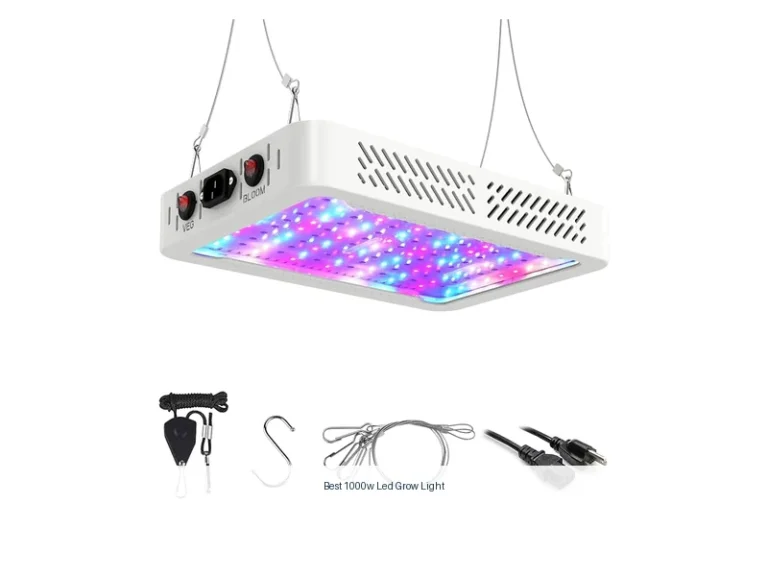
5 Best Grow Light for Bird of Paradise: Practical Buying Guide
Finding the best grow light for bird of paradise can be harder than choosing a bulb and pointing it at the leaves. This tropical houseplant needs strong, consistent illumination, but the light also has to fit a tall pot, avoid awkward glare, and provide a schedule that works with everyday life.
My first choice is yadoker Grow Lights. Its 72 LEDs, 13.7- to 61.1-inch telescoping pole, and 10 brightness settings make it easy to adjust as the plant grows.
My second choice is Aumtrly Floor Grow Light Full Spectrum. Its adjustable stand, flexible gooseneck, three light modes, and 16-hour timing option provide more positioning freedom around a tall bird of paradise.
My third choice is LBW 6.3″ Grow Light. LBW 6.3″ Grow Light 72 Leds Full Spectrum Grow Lights ranks third as a practical value-oriented option with a long 13-foot cord and straightforward controls. Its height range, four dimming levels, and 4/8/12-hour cycle make it especially convenient for a plant placed well away from an outlet.
This guide compares five suitable lights, explains where each one fits best, and outlines the details that matter after purchase. You will also find advice on placement, light schedules, height, cleaning, safety, and common mistakes that can leave a tropical plant underlit or stressed.
Best Grow Light for Bird of Paradise
I selected these products for their relevance to tall indoor tropical plants, adjustable placement, full-spectrum LED coverage, scheduling controls, and practical installation. The ranking also considers the amount of available customer-feedback evidence, the usefulness of each design in a home, and brand diversity where practical; it does not represent hands-on testing.
| # | Image | Product | Price on Amazon |
|---|---|---|---|
| 1 |  |
yadoker Grow Lights | Check Price |
| 2 |  |
Aumtrly Floor Grow Light Full Spectrum | Check Price |
| 3 |  |
LBW 6.3″ Grow Light | Check Price |
| 4 |  |
Little Joke 10-Inch Full-Spectrum Grow Light | Check Price |
| 5 |  |
Yiyehu Full-Spectrum Adjustable Grow Light | Check Price |
yadoker Grow Lights
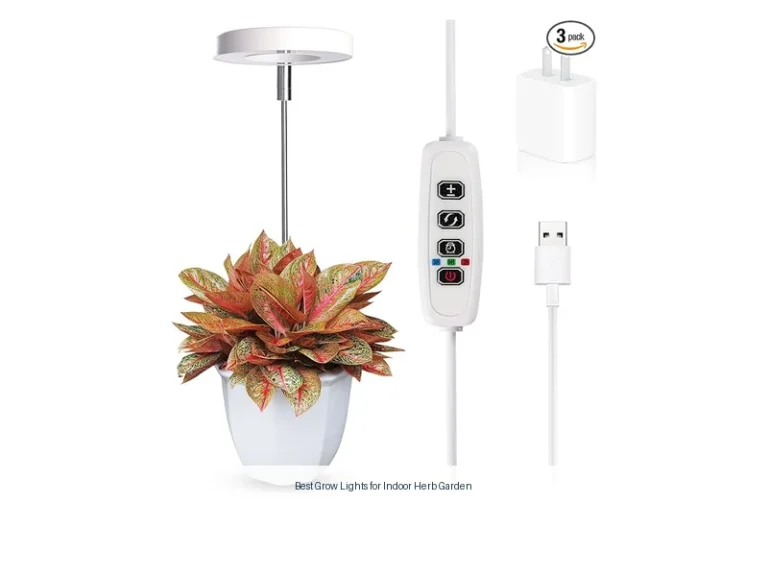
The yadoker is the most balanced choice in this group. Its 72 LEDs cover the stated 380nm-800nm range with a mixture of cool white, warm white, red, and blue LEDs. For an indoor tropical plant, that broad output is useful because it supports steady foliage growth rather than limiting the fixture to one narrow stage of development.
Placement is simple: the pointed pole goes directly into the planter, and the telescoping shaft extends from 13.7 to 61.1 inches. That range gives a young plant room to grow while still allowing the halo to sit above a taller specimen. The wider disc can also illuminate more than one nearby plant when fully extended, although coverage will naturally become less concentrated as the distance and area increase.
Ten dimming levels, from 10% to 100%, offer more gradual control than the four-level systems on some alternatives. The 8/12/16-hour timer is useful for maintaining a repeatable routine, and the 5V USB low-voltage design is intended for long-hour use without a hot lamp surface. Buyers should confirm the required plug or power arrangement before ordering, since the supplied information identifies the light as USB-powered rather than describing a conventional wall plug.
Pros
- Broad 72-LED full-spectrum output
- Large 13.7- to 61.1-inch height range
- Ten brightness levels and three timer choices
- 5V low-voltage design with a long cord
Cons
- USB power requires compatibility checking before purchase
- Stake installation may be less suitable for very small or crowded pots
My Opinion
This is the strongest all-around pick for most indoor growers. It offers enough adjustability for a changing plant, while the dimmer and timer make it easier to avoid an overly aggressive starting schedule.
Aumtrly Floor Grow Light Full Spectrum
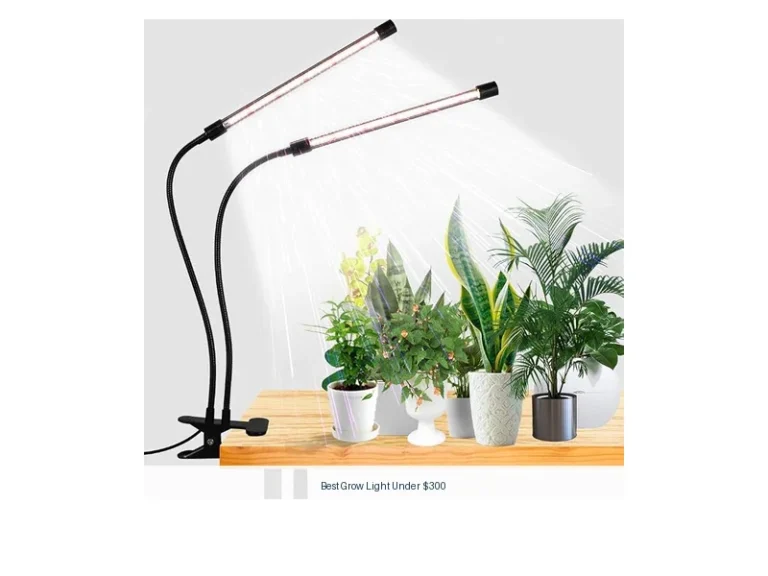
Aumtrly takes a different approach from the stake-style lights: it stands beside the planter. The adjustable stand reaches from 17 to 61 inches, while a 7.8-inch flexible gooseneck lets the lamp angle toward the canopy. That separation can be helpful when a bird of paradise is already tall, top-heavy, or planted in a decorative container where inserting a stake would be inconvenient.
The fixture combines red 660nm light with warm 3200K and white 5000K output. It also provides three lighting modes and five dimming levels, giving the buyer useful control over intensity and color balance. The available information does not state the LED count or a measured brightness value, so shoppers should view its positioning flexibility as the main advantage rather than assuming it is automatically more powerful than every halo fixture.
A 16-hour timing option is particularly useful for a room with limited daylight, but a longer schedule should still be introduced gradually. The white finish and simple floor-lamp shape may blend more naturally into a living room or office than a bare plant stake. Assembly requires adjusting the metal-ring extension mechanism, so the stand needs a stable floor position and enough clearance around the plant.
Pros
- Freestanding format suits large or valuable planters
- Adjustable height plus a flexible gooseneck
- Three light modes and five dimming levels
- Offers a 16-hour timer setting
Cons
- Needs floor space beside the pot
- LED count and brightness measurements are not supplied
My Opinion
Aumtrly is the best alternative when a stake is impractical or when the light needs to reach a tall canopy from the side. Its floor-standing design is more visible, but it is also easier to reposition without disturbing the soil.
LBW 6.3″ Grow Light
LBW is a straightforward halo-style option with 72 LEDs arranged as 34 cool white, 24 warm, 10 red, and 4 blue LEDs. That mixture is intended to provide full-spectrum support for germination, growth, blooming, and fruiting. For a foliage-focused tropical plant, the important practical point is the broad, uniform light source rather than any promise of a particular growth speed.
The pole adjusts from 11 to 56 inches, giving it a slightly lower minimum and maximum than the yadoker. It can still accommodate many indoor plants, but buyers with a very tall specimen should measure from the soil surface to the top of the canopy before deciding. The 13-foot cord is a genuine convenience in a corner, office, or room where the nearest outlet is not close to the pot.
Four brightness levels—25%, 50%, 75%, and 100%—keep the controls simple. That is less finely tunable than a nine- or ten-level dimmer, but it can be easier for a beginner who does not want to guess among many settings. The repeating 4/8/12-hour timer restores the same schedule each day, and installation involves attaching the telescoping pole and inserting it into the planter. Keep the stake secure if the plant is frequently bumped.
Pros
- 72 LEDs with a broad full-spectrum arrangement
- Very long 13-foot cord
- Adjustable 11- to 56-inch pole
- Simple four-level dimming and repeating timer
Cons
- Fewer dimming steps than the top two choices
- Its maximum height may be limiting for exceptionally tall plants
My Opinion
LBW makes sense for buyers who prioritize cord length and uncomplicated operation. It is a capable middle-ground fixture, provided the plant fits within its 56-inch adjustment range.
Little Joke 10-Inch Full-Spectrum Grow Light
The Little Joke stands out with a 10-inch light face and 160 LEDs, including cool white, warm white, red, and blue diodes across the stated 380nm-800nm spectrum. The larger panel and higher LED count suggest a useful choice for a broad canopy, although the supplied information does not provide a measured output or coverage map. In practice, the panel may be appealing when a smaller halo looks undersized above a wide plant.
Its telescoping pole reaches from 11 to 65 inches, which is the tallest maximum among the stake-mounted options here. That extra height can help keep the panel above a mature plant rather than inside the leaves. A six-foot cord is adequate for many living-room arrangements, but it is considerably less generous than LBW’s 13-foot lead, so outlet placement deserves attention.
The nine brightness levels offer fine control from 10% to 100%, while the automatic timer provides 3/9/12-hour cycles. Those shorter choices may suit supplemental lighting in a bright room, but a grower seeking a longer daily schedule will need to consider whether the available timer settings fit the plant’s natural-light situation. Installation is uncomplicated: connect the rod, insert it into the pot, connect power, and adjust the height.
Pros
- Large 10-inch panel with 160 LEDs
- Highest stake-mounted maximum height at 65 inches
- Nine brightness settings from 10% to 100%
- Decorative appearance for a living room or office
Cons
- Six-foot cord may restrict placement
- Timer tops out at 12 hours
- Larger panel may be visually prominent in a small pot
My Opinion
Little Joke is worth considering for a tall plant with a wide canopy, especially when panel size matters more than cord length. Its timer is less flexible for long supplemental schedules, so check the room’s natural light first.
Yiyehu Full-Spectrum Adjustable Grow Light
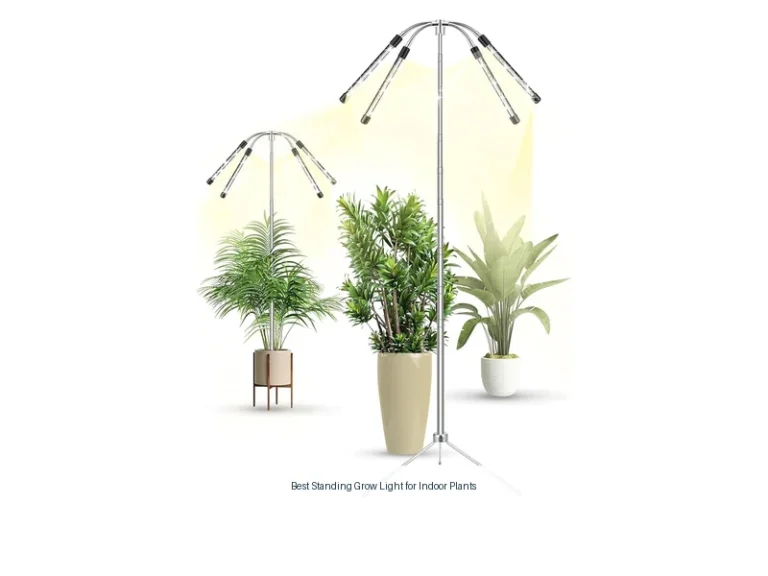
Yiyehu is the most flexible mounting design in the group. Its light can be used with a pointed attachment inserted into a pot, or with the included detachable tripod on a floor or desktop. That gives buyers a way to move between a compact seedling setup and a larger floor-standing arrangement without committing to only one installation style.
The height range runs from 15 to 62 inches. This is broad enough for small plants and many mature specimens, but the 15-inch minimum is not as compact as a short desktop lamp. The stated 380nm-800nm full-spectrum output is intended to mimic natural sunlight wavelengths, while the aluminum-alloy construction gives the fixture a modern appearance. Material quality alone does not establish brightness, so placement still matters more than the decorative finish.
Its 8/12/16-hour automatic cycle memory is convenient for consistent daily lighting. The tripod is particularly useful when a planter is too shallow, too crowded, or too attractive to disturb with a stake. On the other hand, a floor or desktop stand needs a level surface and can be knocked over if placed in a busy walkway. The detachable format also means there are more pieces to store when changing configurations.
Pros
- Works as a stake light, desktop light, or floor light
- 15- to 62-inch adjustable height
- 8/12/16-hour cycle memory timer
- Aluminum-alloy construction with a modern look
Cons
- Tripod needs a stable, unobstructed surface
- 15-inch minimum may be tall for very small plants
- Supplied data does not specify LED count or dimming levels
My Opinion
Yiyehu is the best fit for shoppers who value mounting choices more than the simplest possible setup. It is especially useful for a household that grows plants in several locations or expects the fixture to serve different sizes over time.
How I Selected These Lights for Bird of Paradise
The selection centers on the needs of a tropical plant that can become tall, develop a broad leaf canopy, and struggle when a bright window is unavailable. I gave priority to adjustable height, full-spectrum LED descriptions, timer controls, dimming, practical cord or mounting arrangements, and designs that can sit close enough to the foliage to be useful without crowding it.
Customer-feedback volume and ratings supplied for the products helped provide context, but those numbers do not replace a careful look at specifications. A high number of customer responses can indicate broad market use, while a smaller pool may simply mean less available evidence. I also separated clearly stated features from details that were not supplied, such as measured brightness, coverage area, or actual energy use.
For a tall tropical houseplant, adjustability is not a luxury. The light should be able to stay above the canopy as the plant grows, rather than becoming useful only for the first few months.
Brand diversity also matters because the right design depends on the room. A stake-mounted halo may be tidy in a planter, while a freestanding or tripod fixture may be safer and more adaptable for a heavy decorative pot. The ranking therefore favors fit and control, not just LED count.
Do not treat a full-spectrum label as a guarantee of equal performance. Position, daily duration, brightness control, and the plant’s existing window light still determine how useful the fixture will be.
How to Choose a Grow Light for Bird of Paradise
The right light should match the plant’s size, the room’s available daylight, and the location of the pot. Before ordering, measure the distance from the soil to the highest leaves, identify the nearest outlet, and decide whether a stake, floor stand, or tripod will be stable in that space.
- Choose a broad, full-spectrum LED source for year-round supplemental illumination.
- Prefer adjustable height so the fixture can follow new growth.
- Use dimming when the plant is moving from bright window light to artificial light.
- Pick a timer that matches how much natural light the room receives.
- Check cord length, plug format, and stand stability before buying.
Light size and canopy coverage
A small halo may work well for one upright plant or a narrow section of foliage, but a broad canopy can leave outer leaves farther from the center of the light. Larger panels or a flexible gooseneck can distribute illumination more effectively across a mature plant. If the plant has several separated stems, rotating the pot periodically may be more practical than buying a much larger fixture.
Height and distance
There is no single ideal distance that applies to every LED fixture because brightness varies by design. Start with the light above the upper leaves, use a moderate setting, and watch the plant over the following days. A lamp pressed into the foliage can create uneven coverage and may interfere with natural leaf movement, while a fixture placed too far away spreads its output over a larger area and may become less useful.
Dimming and light modes
More dimming steps are helpful during acclimation and when seasons change. A plant that receives several hours of direct window light may need less artificial intensity than one in a darker corner. Simple four-level controls are perfectly workable, but ten-level controls make smaller adjustments easier. Light modes can also change the appearance of the room, so consider whether a warm or mixed setting is comfortable in a living area.
Setting Up the Light Correctly
Begin by placing the fixture so the main light reaches the upper leaves rather than shining from a low side angle. A stake should be pushed firmly into the soil without cutting through major roots, and a floor stand should sit on a level surface outside the pot’s watering splash zone. Keep the cord routed where it cannot catch on people, pets, or the plant.
Set the timer after the light is positioned. Most repeating timers work from the time they are activated, so choose a start time that fits the household routine. A consistent schedule is more useful than switching the lamp on randomly. If the plant already receives strong daylight, use the grow light as supplemental illumination rather than automatically selecting the longest available cycle.
First-week adjustment
Start at a moderate brightness or shorter schedule and observe the leaves. If the plant is adapting from a dim room, a gradual increase is more comfortable than immediately selecting maximum output for many hours. Keep notes about the start time and brightness so you can identify which change helped if leaf behavior shifts.
Creating a Practical Daily Schedule
Artificial light works best when it fills a predictable gap in the day. A room with a bright window may need only a shorter morning or evening extension, while a dark corner may require a longer programmed period. The products in this list offer different timer choices, so do not assume that the fixture with the most LEDs is automatically the best match for the schedule you need.
Give the plant a consistent dark period rather than leaving the lamp on continuously. The timer settings listed for these products range from shorter cycles to 16 hours. Use the lowest useful duration at first, then adjust based on the room’s natural light and the plant’s response. A schedule that is easy to maintain every day is generally more practical than a theoretically ideal routine that is frequently forgotten.
Using a Grow Light with Natural Window Light
Artificial light should complement a window, not necessarily replace it. Place the plant where it receives useful daylight without allowing the grow lamp to cast a strong reflection into eye level. If the window provides light from one direction, turn the pot occasionally so growth does not lean toward one side.
During darker months, the lamp can extend the useful light period. During bright summer days, reduce the artificial contribution if the leaves appear stressed or the room becomes uncomfortably bright. Curtains, glass tint, seasonal sun angle, and nearby buildings all change how much usable light reaches the plant, so the same timer setting may not be appropriate all year.
Maintenance, Cleaning, and Longevity
Dust on a lamp face can reduce the amount of light reaching the leaves and make the fixture look dull. Unplug the light before cleaning, then wipe the accessible surface with a soft, dry or lightly damp cloth according to the product’s construction. Never spray cleaner directly onto the lamp, controller, USB connection, or power adapter.
Check the pole, gooseneck, tripod, and stake periodically. A loose extension can let the light tilt into the foliage, while a leaning stake can put pressure on the pot rim. Keep water and fertilizer splash away from electrical connections, and allow the soil surface to dry as appropriate for the plant before repositioning a stake.
Storage between uses
When storing a removable fixture, disconnect the power source, collapse the pole without forcing it, and keep the cord loosely coiled. Store tripod pieces together so they are not lost. Avoid placing heavy objects on the lamp head or controller, and keep the unit in a dry area rather than a damp shed or unprotected porch.
Compatibility and Placement Checks
Before purchasing, compare the light’s mounting method with the pot. A shallow planter may not hold a pointed stake securely, and a very heavy ceramic container may be difficult to move once a floor stand is positioned beside it. A tripod offers flexibility but takes more floor or desktop area than a single stake.
Electrical compatibility deserves equal attention. The yadoker is identified as a 5V USB-powered light, while the supplied information for the other products does not fully describe every plug or adapter detail. Confirm the included power arrangement and the outlet location before ordering. A long cord can solve placement problems, but it should not be stretched across a walkway where it creates a tripping hazard.
Signs the Setup Needs Adjustment
Thin, stretched growth or leaves that consistently reach toward the lamp can indicate that the light is too distant or that the schedule is not providing enough useful illumination. On the other hand, bleached-looking patches, crisp edges, or unusually stressed foliage may mean the plant needs a gentler transition, more distance, or less total exposure. These signs can also have watering, temperature, pest, or root-related causes, so avoid changing several care factors at once.
When adjusting, change one variable at a time. Raise or lower the fixture modestly, alter the brightness one step, or change the timer duration rather than doing all three together. Give the plant time to respond before making another change. The goal is steady, healthy growth—not simply the brightest possible appearance in the room.
Common Mistakes to Avoid
Many disappointing setups fail because the light is selected by appearance alone or installed without considering the plant’s future size. A full-spectrum description is helpful, but it does not eliminate the need for correct positioning and a stable routine.
- Do not place the light so close that leaves touch the lamp head.
- Do not assume maximum brightness is necessary from the first day.
- Do not let a stake wobble in loose soil or press against the pot rim.
- Do not ignore the timer after changing the light’s location.
- Do not use a cord or USB adapter that does not match the stated power requirements.
- Do not leave water near the controller, plug, or electrical connection.
- Do not judge success after only one day; observe new growth and overall leaf condition.
When to Replace or Reposition the Light
Reposition the fixture whenever the plant’s canopy outgrows the illuminated area or new leaves rise above the useful height range. A light that worked for a young plant may become too low, too narrow, or blocked by larger leaves later. Adjustable poles such as those on the yadoker, Aumtrly, LBW, Little Joke, and Yiyehu can delay the need for a different setup, but adjustment still has limits.
Replacement should be based on visible damage, unreliable controls, loose electrical connections, or a fixture that no longer suits the plant’s size. Since measured output and lifespan figures were not supplied for these products, it would be misleading to promise a specific replacement interval. Keep the lamp clean and inspect it regularly instead of replacing it on an arbitrary schedule.
FAQS About Best Grow Light for Bird of Paradise
What type of light is best for bird of paradise indoors?
A full-spectrum LED grow light with adjustable height and a timer is a practical choice. The ability to control distance and daily duration matters because indoor plants receive different amounts of natural window light.
How high should a grow light be above a bird of paradise?
Start with the light above the upper leaves rather than touching the canopy, then adjust based on brightness control and plant response. The correct distance varies by fixture output, so use dimming and gradual changes instead of relying on one universal measurement.
Is a halo or floor-standing light better for bird of paradise?
A halo stake is compact and works well when the pot can hold it securely. A floor-standing or tripod design is often better for a large decorative planter, a tall plant, or a setup where inserting a stake would disturb the roots.
How long should a grow light run for an indoor bird of paradise?
Use the timer setting that fills the room’s natural-light gap without treating the plant as though it needs nonstop illumination. Start conservatively, maintain a regular dark period, and adjust the duration according to the window exposure and the plant’s response.
Can one grow light cover a large bird of paradise?
It can provide useful supplemental light, but coverage depends on the fixture’s panel size, height, brightness, and the plant’s canopy width. A larger panel, adjustable gooseneck, or occasional pot rotation may help distribute light more evenly.
Which listed light is easiest to adjust as the plant grows?
The yadoker offers a 13.7- to 61.1-inch range with ten dimming levels, while Aumtrly and Yiyehu provide strong alternatives for floor or multi-position setups. Measure the plant and pot before choosing so the advertised height range matches the real distance required.
Final Thoughts
The best grow light for bird of paradise is the one that provides controllable, repeatable light without creating a placement problem. yadoker Grow Lights is my top all-around choice, Aumtrly Floor Grow Light Full Spectrum is the strongest floor-standing alternative, and LBW 6.3″ Grow Light is a sensible option when cord length and simple controls matter most.

I’m Maya L. Greenwood, a lifelong plant lover who believes anyone can grow something beautiful with the right guidance. After years of testing soil mixes, pruning methods, irrigation tricks, and pest-safe solutions, I started EasyGardenTips.com to turn hard-won lessons into step-by-step advice. From seed starting and container gardens to composting and seasonal checklists, my goal is to make gardening simple, sustainable, and fun.