5 Best Grow Light for Anthurium: Product Practical Practical
Finding the best grow light for anthurium is less about choosing the brightest lamp and more about matching light coverage, adjustability, heat control, and daily timing to the plant’s location. Anthuriums need steady, usable light, but an overly intense fixture or poorly aimed bulb can create unnecessary stress.
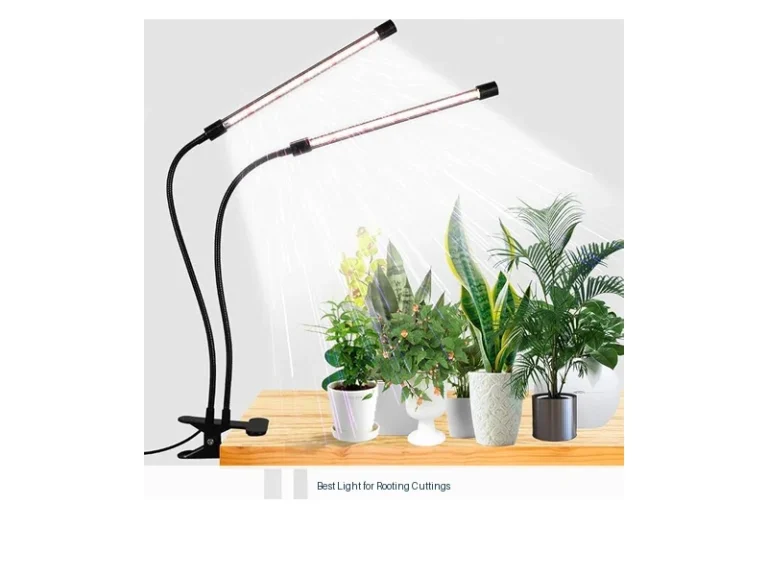
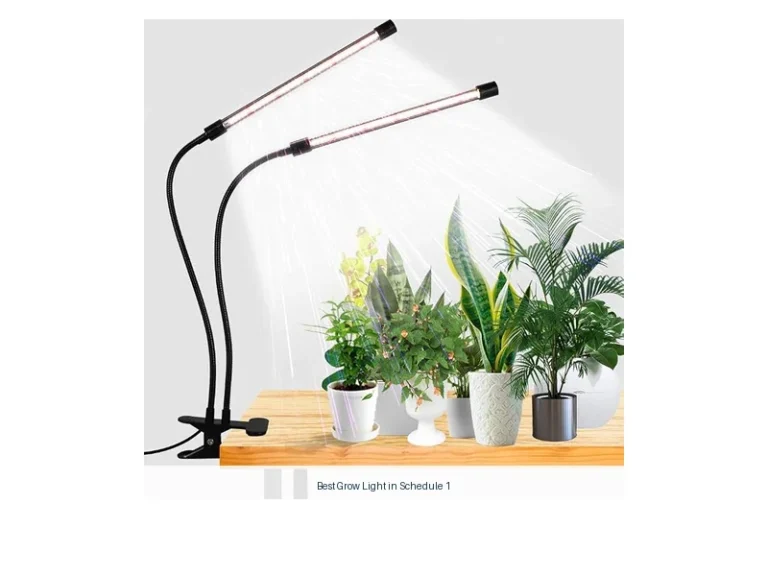
My first choice is GooingTop Grow Light. Its 10-watt LED panel uses 10 red and 74 white LEDs, while the clamp and 360-degree gooseneck make it easy to aim light around leaves.
My second choice is Briignite Grow Light Bulbs. Its standard E26 base, 1,000-lumen output, natural-looking 4000K appearance, and 11-watt draw make it a practical replacement for a regular household bulb.
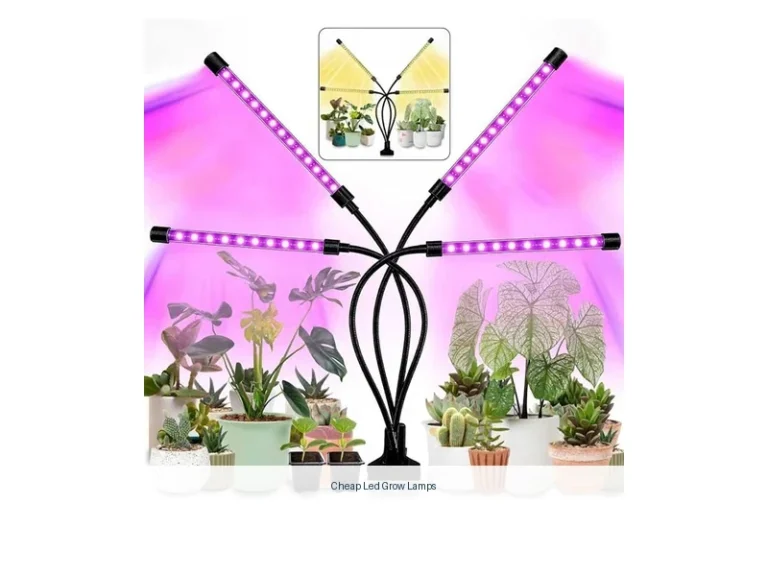
My third choice is LEOTER Grow Light. LEOTER Grow Light ranks third for shoppers who want more control over brightness, spectrum, and the direction of light. Its four adjustable heads, ten intensity settings, and three lighting modes suit a small plant grouping or an anthurium that changes position as it grows.
Below, I compare all five options and explain where each one fits best. You’ll also find practical guidance on placement, timing, brightness, cleaning, safety, common mistakes, and choosing a fixture that works with your room rather than merely looking powerful on paper.
Best Grow Light for Anthurium
I selected these products for their relevance to indoor tropical plants, flexibility in real home settings, power and spectrum information, installation practicality, and available customer-feedback evidence. The group also includes clamp lights, a replaceable household bulb, a larger high-output panel, and a standing tripod design so different anthurium setups are represented.
| # | Image | Product | Price on Amazon |
|---|---|---|---|
| 1 |  |
GooingTop Grow Light | Check Price |
| 2 |  |
Briignite Grow Light Bulbs | Check Price |
| 3 |  |
LEOTER Grow Light | Check Price |
| 4 |  |
VIVOSUN Lumalight 100W LED Grow Light | Check Price |
| 5 |  |
Yiyehu Grow Lights Indoor Plants Full Spectrum 15-62 Inches Height | Check Price |
GooingTop Grow Light
GooingTop’s compact lamp is a strong fit for an anthurium sitting on a desk, shelf, plant stand, or side table. The 6000K white light is intended to resemble bright midday daylight, while the combination of 74 white LEDs and 10 red LEDs provides a balanced appearance instead of the distracting purple glow associated with some older plant lamps. Its stated color rendering index of 95 also makes the foliage look more natural in a living space.
The practical advantage is control over placement. A strong clamp holds the lamp to furniture, and the flexible gooseneck can be directed toward the plant’s leaves or adjusted as the anthurium grows. USB or AC power gives you some flexibility, although the cord and nearby outlet still need to be planned before installation.
A built-in timer offers four-, eight-, or twelve-hour cycles based on a 24-hour period. That is helpful for keeping a consistent routine when work or travel interrupts normal care. At about 10 watts, it is also a modest-power option for one or a few small plants. The main limitation is coverage: one small spotlight is unlikely to illuminate a large anthurium evenly from every side.
Pros
- Natural-looking 6000K light with a high stated CRI of 95
- Flexible 360-degree gooseneck and strong clamp
- Four-, eight-, and twelve-hour timer settings
- USB or AC power and approximately 10-watt consumption
- 365-day warranty stated in the supplied product information
Cons
- Best suited to tabletop plants rather than broad collections
- One light may leave outer leaves less evenly illuminated
- Clamp placement depends on suitable nearby furniture
My Opinion
This is the most balanced everyday choice for a single small or medium anthurium. Choose it when you value discreet appearance, easy aiming, and low energy use more than maximum coverage.
Briignite Grow Light Bulbs
Briignite takes a different approach: instead of adding a dedicated plant fixture, it turns a standard lamp into a grow-light source. The A19 shape uses a regular E26 base, so compatibility is straightforward if your existing table lamp, floor lamp, or socket accepts that standard. That makes it especially convenient for anthuriums already placed in a bright-looking corner where a clamp lamp would be awkward.
The bulb produces 1,000 lumens and consumes 11 watts while being described as equivalent to a traditional 100-watt bulb. Its 4000K appearance is more neutral than the cool white of some plant lamps, and the stated full-spectrum output includes red and blue wavelengths. In a living room or office, that natural color can be more attractive than a red-blue fixture.
There are trade-offs. The bulb’s 180-degree light output works best when the socket and shade aim toward the plant. A deep lampshade, low socket, or fixture pointed away from the foliage can reduce useful illumination. The bulb also does not provide its own timer or adjustable neck, so scheduling and positioning come from the lamp or a separate outlet timer.
Briignite lists low heat generation, aluminum and plastic cooling construction, and a lifespan of up to 25,000 hours. Those details make it appealing for long-term supplemental use, but the lamp still needs ventilation and should not be enclosed in a fixture that traps heat.
Pros
- Fits standard E26 sockets
- Neutral 4000K appearance for home décor
- 1,000-lumen output with only an 11-watt draw
- Full-spectrum light with stated red and blue wavelengths
- Listed lifespan of up to 25,000 hours
Cons
- No built-in timer or brightness adjustment
- Coverage depends heavily on the lamp and shade
- Not every decorative fixture points light effectively at foliage
My Opinion
This is my preferred alternative for anyone who wants a low-fuss bulb rather than another piece of plant equipment. Confirm the E26 socket and use an open or well-ventilated fixture aimed toward the anthurium.
LEOTER Grow Light
LEOTER is the most adjustable option among the smaller multi-head lamps in this group. Its 80 LEDs combine red, blue, yellow, and white diodes, and the full-spectrum mode covers the stated 380nm–800nm range. A separate red-and-blue mode is available for users who want a more plant-focused appearance, though many people will prefer the full-spectrum mode in a living area.
Four light heads give this lamp an advantage when an anthurium has wide leaves, multiple stems, or neighboring pots. Each head can be directed independently through the flexible gooseneck arrangement, helping spread illumination instead of concentrating everything on one leaf. Ten brightness levels also make it easier to begin gently and increase output if the plant is still stretching toward the window.
The timer cycles through three, nine, or twelve hours and is intended to repeat automatically each day. One important ownership detail is that the supplied information says the timer needs to be reset if the grow light is unplugged or loses power. That matters if the lamp is connected to a switched outlet or if household power interruptions are common.
The USB connector and included AC adapter offer convenient power choices. Its aviation-grade heat sink and temperature-control design are intended to move heat away from the lamp, but the multiple-head format still needs thoughtful placement so leaves do not press directly against the LEDs.
Pros
- Four adjustable heads for broader small-plant coverage
- Ten brightness levels and three spectrum modes
- Full-spectrum, red, and blue lighting choices
- Repeating three-, nine-, and twelve-hour timer
- USB connection with an AC adapter included
Cons
- Timer may need resetting after unplugging or power loss
- More controls can be unnecessary for one small plant
- Several goosenecks require extra cord and mounting space
My Opinion
LEOTER is a good middle ground for a small collection or an anthurium with broad, uneven foliage. Pick it over a single-head lamp when coverage and adjustment matter more than the simplest possible setup.
VIVOSUN Lumalight 100W LED Grow Light
VIVOSUN’s LumaLight is the high-output choice in this comparison. It combines white, blue, red, and far-red LEDs, including 3000K, 5000K, 660nm, and 730nm sources. That broad mix is more extensive than most small desk lamps and is intended to support photosynthesis across different stages of plant development.
The strategic diode layout is meant to distribute light across the coverage area rather than concentrating intensity only in the center. That can be useful when several anthuriums share a shelf or when a mature plant has a broad canopy. The four-level dimming knob, from 25% to 100%, is particularly important here because a 100-watt fixture may be excessive for a small plant placed close to the lamp.
Heat and moisture are significant considerations with a larger fixture. VIVOSUN states that advanced thermal management helps dissipate heat, while the IP65 waterproof and dustproof construction is intended for humid environments and incidental sprays. That does not eliminate the need to keep electrical connections sensible or to avoid directing water into the fixture.
The LumaLight can work with the Vivosun GrowHub and mobile app for remote scheduling and monitoring, but that controller is sold separately. Its stated Q90 flux maintenance rate of up to 36,000 hours suggests long-term light consistency, although buyers should still plan placement and dimming around the plant’s actual response rather than assuming maximum power is always better.
Pros
- Powerful full-spectrum array with white, red, blue, and far-red LEDs
- Four dimming levels from 25% to 100%
- Designed for broad and uniform coverage
- IP65 waterproof and dustproof construction
- Optional GrowHub and app compatibility
Cons
- May be excessive for one small tabletop anthurium
- GrowHub automation requires a separate purchase
- Needs more careful hanging, spacing, and heat planning than a desk lamp
My Opinion
This is the best fit for a dedicated plant area, multiple pots, or a mature specimen with a wide canopy. It is not my first choice for a single beginner plant unless you specifically need its coverage and can use the dimming control responsibly.
Yiyehu Grow Lights Indoor Plants Full Spectrum 15-62 Inches Height
Yiyehu’s main advantage is physical versatility. The lamp can be used with its tripod on a desktop or floor, or the detachable pointed section can be inserted directly into a pot. Height adjusts from 15 to 62 inches, allowing the same fixture to follow an anthurium from a short tabletop plant to a taller specimen with leaves well above the pot.
The stated 380nm–800nm full-spectrum range is intended to mimic natural sunlight and support leafy growth, flowers, and fruiting plants. For an anthurium, the more useful benefit is the ability to raise or lower the light as the canopy changes. A taller stand can also keep the fixture above the leaves without requiring a shelf or clamp point.
Its automatic timer offers eight-, twelve-, and sixteen-hour settings with a daily memory cycle. That broad range gives more scheduling flexibility than the shorter timers on some compact lamps, but a longer setting is not automatically better. Begin with a moderate schedule and watch for stretching, pale new growth, or signs that the plant is receiving too much direct intensity.
The aluminum alloy construction gives the lamp a modern appearance and may fit better in visible rooms than a utilitarian clamp. Still, a freestanding stand occupies floor or desk space, and a pointed pot insert needs to be placed carefully so it does not destabilize the plant or interfere with roots.
Pros
- Adjusts from 15 to 62 inches
- Works as a desktop, floor, or pot-insert lamp
- Eight-, twelve-, and sixteen-hour automatic timer
- Full-spectrum range stated at 380nm–800nm
- Detachable aluminum tripod design
Cons
- Freestanding setup takes more room than a clamp lamp
- Pot insertion requires care around roots and stability
- Customer-feedback volume is lower than for the top-ranked options
My Opinion
Yiyehu is a sensible choice when your plant’s height or location may change. It offers the most adaptable physical installation here, though a compact lamp is easier if the anthurium will remain on one small shelf.
How I Selected These Options for the Best Grow Light for Anthurium
The selection starts with the needs of an indoor anthurium: dependable supplemental light, manageable heat, adjustable placement, and a schedule that can be repeated without constant attention. I also considered whether a product makes sense for one small plant, several pots, or a larger dedicated growing area.
Product data was compared for spectrum descriptions, power draw, brightness controls, timers, mounting methods, heat management, durability information, and compatibility with ordinary household fixtures. Customer-feedback volume and star ratings supplied in the research data helped identify products with broader buyer interest, but those figures do not replace checking whether the form factor suits your room.
The brightest option is not automatically the best match. A small anthurium usually benefits more from controllable placement and a repeatable schedule than from a powerful fixture operated at full output.
Brand diversity also matters because the five choices solve different problems. GooingTop and LEOTER emphasize flexible compact placement, Briignite uses a standard bulb socket, VIVOSUN targets higher-output coverage, and Yiyehu focuses on adjustable height.
Before buying, measure the distance from the power source to the plant and the space above the leaves. Physical fit can matter just as much as the listed spectrum.
How to Choose a Light for Your Anthurium
Start with the plant’s current location, not with the product’s maximum power. A shelf plant, a group of pots, and a tall floor specimen need different mounting styles even if all three are tropical houseplants.
- Choose a clamp or bulb for one compact plant, and a panel or stand for broader coverage.
- Prioritize dimming or height adjustment when the lamp may sit close to leaves.
- Look for a timer if your natural schedule is inconsistent.
- Check socket, USB, AC, clamp, tripod, and controller compatibility before ordering.
- Keep heat, water exposure, and cord routing in mind from the beginning.
Match coverage to the canopy
Anthurium leaves can overlap and shade one another. A narrow spotlight may brighten the uppermost leaf while leaving lower foliage dim. For a single small plant, that may be acceptable if you rotate the pot periodically. For a wide plant or several pots, multiple heads, a broad panel, or a height-adjustable stand usually creates more even coverage.
Understand spectrum without overcomplicating it
Full-spectrum wording generally means the lamp includes a broad mixture intended to support plant growth while producing a more natural visual color. Red and blue modes can be useful controls, but they are not required for every home grower. For a living room, a white or neutral-looking mode is often easier to live with every day.
Consider brightness and distance together
Brightness cannot be judged from wattage alone. LED efficiency, diode layout, reflector design, and distance all change how much light reaches the leaves. A dimmable lamp gives you a safer starting point, while an adjustable stand lets you change distance without forcing the plant or fixture into an awkward position.
Placement and Setup
Position the lamp so the main leaves receive light from above or slightly to the side, rather than aiming directly into one leaf at a very close distance. Keep the fixture stable, route cords away from water, and leave enough room for new leaves to emerge without touching hot or rigid parts.
For a clamp lamp, attach the clamp to a firm surface that will not wobble when the gooseneck is adjusted. For a bulb, choose an open fixture that directs illumination toward the plant. For a tripod, check that all legs are fully spread before raising the pole. A pot insert should be used only when it can stand securely without disturbing the root area.
After installation, look at the entire plant from several angles. If only one side is illuminated, reposition the head or rotate the pot occasionally. Avoid placing foliage directly against an LED head, even when the lamp is marketed as low heat.
Lighting Schedule for Indoor Anthuriums
Consistency is usually more useful than constantly changing the timer. Start with a moderate daily period appropriate to the lamp and room, then observe the plant over several weeks. A timer is helpful because it prevents accidental all-day operation and keeps the day-night pattern predictable.
The exact setting depends on intensity and distance. A high-output panel used near the plant may need dimming or a shorter period, while a modest desk lamp farther away may need a longer schedule. Make changes gradually rather than moving from a short schedule to the maximum timer option overnight.
Signs the schedule needs adjustment
- Long, weak stems or pronounced leaning can indicate insufficient usable light.
- Bleached-looking areas, crisp edges, or unusual leaf stress can indicate excessive intensity or heat.
- Leaves that remain healthy but are all facing one direction may need better coverage or occasional rotation.
- Slow growth can also result from watering, temperature, roots, or nutrition, so do not blame the lamp automatically.
How to Use Dimming and Height Adjustment
When a fixture offers multiple intensity levels, begin conservatively and increase only when the plant’s position and condition justify it. Dimming is especially valuable with VIVOSUN’s higher-output design, while height adjustment is central to Yiyehu’s usefulness. The goal is an even, comfortable light field across the canopy.
As the anthurium produces larger leaves, raise the light or spread multiple heads rather than allowing the newest leaf to grow into the brightest point. If the lamp cannot be dimmed, increasing distance is the simplest way to reduce intensity. Make one change at a time so you can identify what helped.
Compatibility, Power, and Room Safety
Check whether the fixture uses USB, an AC adapter, or a standard E26 socket. USB can be convenient at a desk, but the adapter and cable still need a safe location. A standard bulb is only useful if the lamp accepts an E26 base and does not enclose the bulb in a way that traps heat.
Keep water, fertilizer spray, and cleaning fluid away from plugs and connections. The VIVOSUN light is listed as IP65 waterproof and dustproof, but that should not be interpreted as permission to submerge it or ignore electrical safety. Other fixtures should be treated as ordinary powered equipment unless their supplied instructions state otherwise.
Maintenance and Cleaning
Dust on a lamp surface can reduce airflow and may gradually interfere with heat management. Unplug the fixture before cleaning, allow it to cool, and wipe accessible surfaces with a soft, dry cloth. Do not spray cleaner directly onto LEDs, switches, adapters, or sockets.
Inspect the gooseneck, clamp, tripod joints, and power cord occasionally. Tighten or reposition loose hardware before the lamp can fall into foliage. Replace a bulb or fixture when it flickers, develops visible damage, overheats unusually, or no longer operates reliably. Do not continue using equipment with a damaged cord.
Common Mistakes When Choosing and Using Plant Lights
Many disappointing results come from setup errors rather than a missing feature. Buyers often choose by wattage alone, place the lamp too close, or assume a timer solves every coverage problem.
- Do not run a powerful fixture at maximum intensity simply because that setting is available.
- Do not hide a grow bulb inside a sealed shade that traps heat.
- Do not aim a narrow lamp at one leaf and assume the entire plant is covered.
- Do not place a pot-insert stake where it can damage important roots or tip the container.
- Do not forget that some timers may need resetting after unplugging or power loss.
- Do not treat pale leaves, drooping, or slow growth as proof that more light is required without checking water and roots.
Choosing Between a Small Lamp and a High-Output Fixture
A small lamp is usually easier for a beginner because it costs less space, creates fewer placement complications, and can be aimed at one plant. GooingTop, Briignite, and LEOTER fit this category in different ways. They are practical when the anthurium lives near a desk, shelf, or ordinary household lamp.
A larger fixture makes more sense when you have multiple plants, a broad canopy, or a dedicated growing area. VIVOSUN offers the strongest coverage-oriented approach in this group, while Yiyehu occupies a middle position for shoppers who need height flexibility without committing to a fixed hanging panel.
FAQS About Best Grow Light for Anthurium
What type of light is best for an anthurium indoors?
A controllable full-spectrum LED is a practical choice because it can provide broad illumination while fitting comfortably into a home. The best format depends on whether the plant needs a clamp, bulb, multi-head, panel, or standing fixture.
Can an anthurium use a 6000K grow light?
Yes. A 6000K white LED can provide a cool, daylight-like appearance and supplemental illumination. Placement and intensity still matter, so avoid positioning the lamp so close that one leaf receives excessive direct light.
Is a regular LED bulb enough for an anthurium?
A regular household bulb may help, but a purpose-made grow bulb such as the Briignite A19 provides spectrum and output information more relevant to plant use. The socket, shade, direction, and distance determine how useful it will be.
How far should a grow light be from an anthurium?
There is no single distance that fits every LED fixture because output varies widely. Start farther away or at a lower setting, then adjust based on coverage, leaf response, and heat. Dimming and height adjustment make this process easier.
Does an anthurium need a grow light all day?
No. Anthuriums need a consistent light-and-dark cycle rather than continuous illumination. Use the lamp’s timer when available, and avoid assuming that the longest timer setting is automatically the most beneficial.
Which is better for one anthurium: a clamp lamp or a tripod light?
A clamp lamp is usually more compact and convenient when sturdy furniture is nearby. A tripod light is better when the plant may become taller, the location changes, or there is no suitable edge for a clamp.
Final Thoughts
For most indoor growers, the best grow light for anthurium is the GooingTop 6000K Full Spectrum Indoor Plant Growing Lamp because it balances aiming flexibility, timer control, natural-looking light, and low power use. Choose the Briignite A19 Full Spectrum Grow Light Bulb for the easiest standard-lamp installation, or the LEOTER 80-LED Adjustable Grow Light when you need multiple heads and more intensity control.

I’m Maya L. Greenwood, a lifelong plant lover who believes anyone can grow something beautiful with the right guidance. After years of testing soil mixes, pruning methods, irrigation tricks, and pest-safe solutions, I started EasyGardenTips.com to turn hard-won lessons into step-by-step advice. From seed starting and container gardens to composting and seasonal checklists, my goal is to make gardening simple, sustainable, and fun.