Best CO2 Generator for Grow Tent: 3 Practical Ways to Enrich
Choosing the best CO2 generator for grow tent use is different from choosing equipment for a large commercial grow room. A typical indoor tent may hold only a few hundred cubic feet of air, which means heat output, CO₂ production rate, exhaust-fan operation, and safety can matter more than maximum generator capacity.
That distinction is important because products sold as CO₂ generators use very different methods.
Some create carbon dioxide gradually through biological or chemical activity without a flame. Others burn propane or natural gas and can produce CO₂ much faster—but also add substantial heat and introduce combustion into the growing environment.
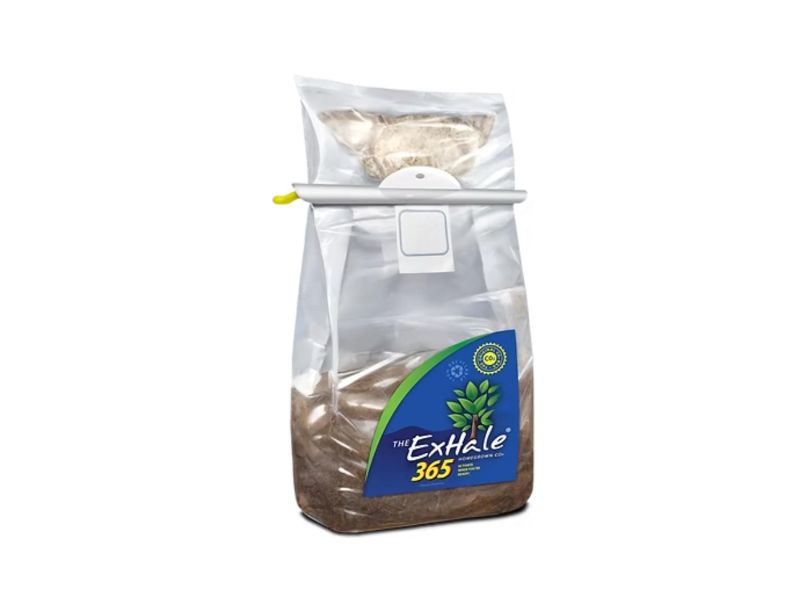
For a typical home grow tent, my primary recommendation is the ExHale CO2 365 Self-Activated Grow Bag. It does not require electricity, propane, a regulator, or an open flame. ExHale specifies the 365 for roughly a 4 × 4-foot or 128-cubic-foot growing space, with a production cycle lasting about nine months and the strongest production occurring during roughly six of those months.
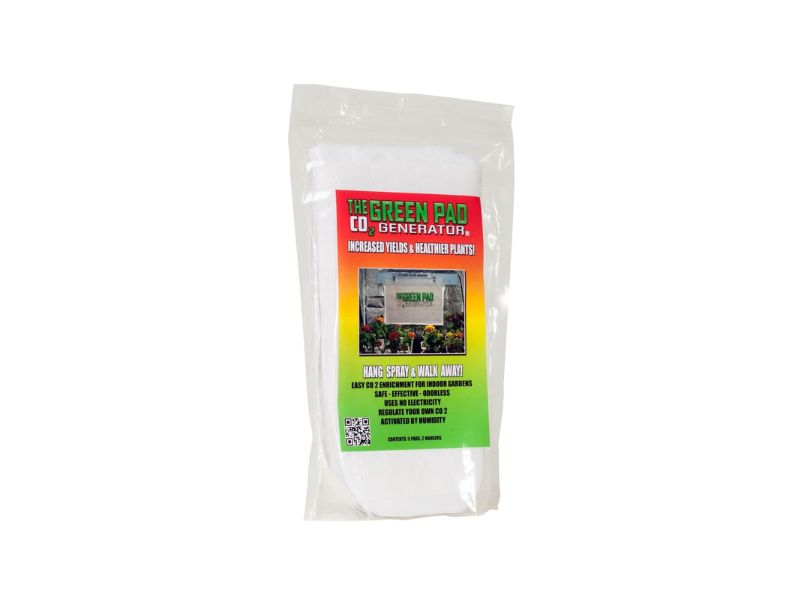
The Green Pad GP6050 CO2 Generator is another practical option for compact tents when simplicity matters. Instead of burning fuel, the pads react with moisture in the air and release CO₂ gradually. That keeps the setup compact and avoids adding burner heat inside the tent.
For a larger sealed growing environment where passive supplementation cannot keep up, the VEVOR two-burner propane generator offers much higher output. However, combustion equipment deserves a completely different level of caution. Fuel-burning equipment produces heat, consumes oxygen, and can create dangerous carbon monoxide if combustion is incomplete. Carbon monoxide is colorless and odorless, and CDC guidance emphasizes that fuel-burning equipment can create serious indoor CO hazards.
The practical takeaway is simple: a bigger CO₂ generator is not automatically better for a grow tent.
3 CO2 Generators That Make Sense for Indoor Grow Tents
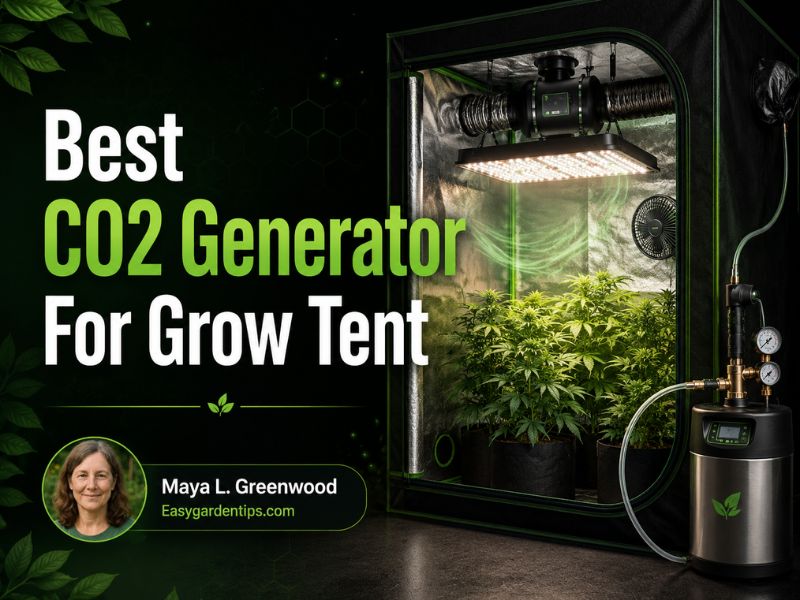
These products serve three different growers.
The ExHale 365 is the easiest fit for a normal home tent. The Green Pad is useful when low heat and simple replacement are more important than precise output. The VEVOR burner is for substantially larger, properly controlled spaces where active combustion-based enrichment is genuinely justified.
1. ExHale CO2 365 Self-Activated Grow Bag
Key Features
- Self-activated biological CO₂ source
- Designed around approximately 4 × 4 feet or 128 cubic feet
- No propane or natural-gas connection
- No electrical power required
- No open flame
- Long operating period with minimal maintenance
The ExHale CO2 365 takes the first position because it fits the realities of a home grow tent better than a traditional burner does.
A 4 × 4 tent is not a large greenhouse.
Its enclosed air volume is relatively small, lighting already contributes heat, and an inline exhaust fan may cycle frequently to control temperature and humidity.
Adding a propane flame inside that environment can create several new problems while solving only one.
The ExHale approach is much simpler.
The bag uses a mycelial mass to release carbon dioxide gradually. The manufacturer describes its natural CO₂ bags as requiring no electricity or refilling, and the 365 version is designed to provide enrichment for a roughly 4 × 4-foot, 128-cubic-foot area.
That size relationship is one of the main reasons it ranks first.
Someone operating a 3 × 3 or 4 × 4 grow tent usually does not need a machine capable of enriching several thousand cubic feet every hour.
A slower passive source is easier to integrate into the environment without causing large CO₂ spikes or adding significant thermal load.
No Flame Means Much Less Heat
Indoor growers already spend a lot of effort managing canopy temperature, leaf temperature, humidity, vapor-pressure deficit, and exhaust airflow.
High-intensity LED fixtures are more efficient than older lighting technologies, but they still release heat into the room.
A combustion-based CO₂ generator adds another heat source.
A passive bag does not.
That makes the ExHale particularly useful during warm weather or in a grow tent located inside an already climate-controlled bedroom, basement, spare room, or garage.
It also avoids another major complication: fuel storage.
There is no propane cylinder connected beside the tent and no natural-gas line to install.
It Is Easy to Hang Above the Canopy
Carbon dioxide disperses through air movement rather than simply dropping straight to the floor and staying there.
Inside a tent, the circulation fan helps distribute the enriched air throughout the plant canopy.
Hanging the bag above or near the upper part of the growing area gives the circulating air a chance to mix the released CO₂ rather than placing the source directly beside one plant.
The bag should not obstruct the grow light, exhaust port, circulation fan, or other equipment.
Passive Output Is Both Its Strength and Weakness
A passive biological generator cannot respond instantly to a controller.
That is the biggest difference between this product and a tank-and-regulator system or electronically controlled burner.
If a digital CO₂ controller measures a low concentration, it cannot simply switch the ExHale bag on at maximum output.
The bag releases carbon dioxide continuously.
This means the actual concentration inside the tent depends heavily on:
- Tent volume
- Exhaust rate
- Air leakage
- Circulation
- Temperature
- Plant uptake
- Number of bags
That makes it less precise.
For a hobby grower who wants moderate supplementation without building an advanced sealed-room system, that tradeoff can be perfectly reasonable.
Exhaust Fans Can Waste Passive CO₂
This is probably the most important limitation.
If an inline fan continuously pulls air out of the grow tent and replaces it with room air, much of the newly generated CO₂ leaves with that exhaust.
A passive generator works best when the tent can retain enriched air for a meaningful period.
That does not mean ventilation should simply be turned off.
Plants still need sensible control of temperature and humidity, and the surrounding indoor environment must remain safe for people.
Instead, growers need to recognize that CO₂ enrichment and continuous high-volume exhaust work against each other.
A heavily ventilated tent may gain very little from any passive CO₂ product.
Plants Need Enough Light to Use Additional CO₂
CO₂ is one input in photosynthesis.
Giving plants additional carbon dioxide does not compensate for weak lighting.
The plants also need adequate:
- Light intensity
- Water
- Root-zone oxygen
- Nutrients
- Temperature
- Healthy leaf area
Research in controlled environments shows that plant response to elevated CO₂ is not endlessly linear; for example, Cornell work with lettuce found increased biomass between 400 and 800 ppm but much smaller additional gains at still higher concentrations. The exact response varies by crop and environment, but the broader lesson is that “more CO₂” is not automatically “more growth.”
For a low-light tent, improving the grow light may provide much more value than adding CO₂.
What I Like
- Particularly well matched to common home-tent dimensions
- Produces no burner heat
- No fuel tank or gas connection
- No electrical controller required
- Easy to hang and largely leave alone
- Much simpler than a combustion generator
What I Do Not Like
- CO₂ output is not precisely adjustable
- Constant exhaust can remove much of the supplemental CO₂
- Cannot instantly raise concentration on command
- Performance depends on the tent retaining enriched air
For a typical 3 × 3 or 4 × 4 home tent, the ExHale 365 is the most practical option in this group. It adds CO₂ without turning a straightforward indoor garden into a fuel-burning mechanical system.
2. The Green Pad GP6050 CO2 Generator
Key Features
- Five CO₂-generating pads
- Includes hanging hardware
- Moisture-activated reaction
- No propane or natural gas
- No open flame
- Compact design for tents and small grow rooms
The Green Pad takes second place because it is even simpler mechanically than a burner and works well when a grower wants a compact CO₂ source that can be replaced in stages.
The GP6050 package contains five generator pads and hanging hardware.
The pads use layers containing carbon-based and acidic materials. Humidity activates the reaction, causing the pads to release carbon dioxide into the growing space. Product guidance indicates they begin reacting in environments around 35% relative humidity or higher, and light misting can accelerate activation.
This is a completely different approach from the ExHale bag.
The ExHale product uses biological activity over a long period.
The Green Pad operates more like a consumable chemical CO₂ source.
It Fits Very Tight Grow Spaces
Physical space inside a small grow tent is valuable.
A 2 × 4 tent can become crowded quickly once it contains:
- Plants
- Containers
- Trellis netting
- LED fixture
- Oscillating fan
- Carbon filter
- Inline ducting
- Humidifier or dehumidifier sensor
- Environmental probes
A flat hanging pad takes very little room.
There is no floor-mounted propane tank and no heavy metal burner assembly competing for vertical clearance.
That gives the Green Pad an advantage in compact tents.
The Pads Produce Virtually No Useful Heat Load
One of the biggest challenges in enclosed horticulture is heat management.
A propane burner creates carbon dioxide through combustion, and heat is an unavoidable by-product.
A moisture-activated pad does not create the same thermal burden.
That matters in summer.
If the tent is already operating near the maximum desired temperature, adding a burner can cause the exhaust fan or air conditioner to run harder.
Once the exhaust fan runs harder, much of the generated CO₂ gets removed.
This creates a frustrating loop:
- Burner makes CO₂.
- Burner also makes heat.
- Heat activates more ventilation.
- Ventilation removes the CO₂.
- Generator has to run again.
A passive pad avoids much of that conflict.
Replacement Is More Frequent
The downside is service life.
Green Pad guidance indicates that a full-size pad lasts roughly two weeks, with strongest production around the first week, and recommends rotating fresh pads into use periodically.
That is much shorter than a long-duration grow bag.
For someone running plants continuously throughout the year, replacement becomes part of the routine.
The five-pad package makes this easier, but the system is still more hands-on.
Humidity Influences Output
Because moisture drives the reaction, the environment affects how actively the pad produces CO₂.
A very dry tent may not activate the pads as effectively.
A humid tent may encourage faster activity.
This makes the product somewhat self-responsive to environmental moisture but not precisely controllable.
Spraying water onto a pad can increase reaction activity, but that also makes output less predictable.
If precise parts-per-million control is the objective, a passive pad is not the right tool.
Useful for Small Tents That Cannot Handle Burner Heat
The Green Pad makes the most sense in a compact indoor setup where simplicity matters.
Think:
- 2 × 2 tent
- 2 × 4 tent
- 3 × 3 tent
- Small propagation enclosure
- Small sealed cabinet
- Compact indoor garden
It is not trying to compete with a multi-burner commercial generator.
That is an advantage when the growing volume is small.
Air Circulation Still Matters
A circulation fan helps distribute the released gas throughout the canopy.
Do not aim an extremely strong fan directly at the pad in a way that dries it excessively or immediately blows the released CO₂ toward the exhaust intake.
The goal is gentle mixing.
It Still Cannot Overcome Heavy Ventilation
Like the ExHale bag, this product works poorly if a powerful inline fan immediately replaces all the tent air.
This is a fundamental limitation of passive CO₂ supplementation.
An exhaust-heavy grow tent is effectively an open system.
Fresh ambient air keeps entering while enriched air leaves.
Before adding a CO₂ product, it is worth asking whether the environment can retain enough supplementation to justify the effort.
What I Like
- Very compact
- No fuel or electrical connection
- Adds almost no heat to the tent
- Five-pad package allows staged replacement
- Useful for smaller grow areas
What I Do Not Like
- Each pad has a relatively short useful cycle
- Output varies with humidity
- Requires periodic replacement
- Not compatible with precise electronic PPM control
The Green Pad is the better choice when compact size and minimal heat are more important than set-and-forget longevity. It is especially practical in small tents where installing a combustion unit would make little sense.
3. VEVOR 2-Burner Liquid Propane CO2 Generator
Key Features
- Two brass burners
- Liquid-propane operation
- 5,588 BTU/hr rated heat output
- Electronic ignition
- Tip-over shutoff design
- Manufacturer lists coverage up to approximately 1,600 cubic feet
The VEVOR two-burner model is the only true combustion generator in this group.
It is also the product that requires the most careful buyer decision.
VEVOR specifies two brass burners, liquid-propane fuel, approximately 5,588 BTU/hr, electronic ignition, and a rated growing-space figure up to about 1,600 cubic feet.
Those specifications immediately show why it should not be treated like a passive CO₂ bag.
A normal 4 × 4 × 7-foot tent contains only about:
112 cubic feet of air.
A 5 × 5 × 7-foot tent contains about:
175 cubic feet.
A generator designed around a much larger volume can raise the concentration rapidly in such a small enclosure while simultaneously adding thousands of BTUs of heat.
That is why this ranks third despite offering far more CO₂ production capability.
Where the VEVOR Makes More Sense
The two-burner generator becomes more practical in a:
- Large sealed grow room
- Oversized tent
- Multi-tent lung room
- Greenhouse compartment
- Properly engineered controlled-environment room
It is less attractive inside a small bedroom-sized tent.
Propane Produces Heat Along With CO₂
Burning propane releases energy.
VEVOR rates this unit at 5,588 BTU/hr.
That heat has to go somewhere.
Inside an enclosed growing environment, it contributes directly to the cooling load.
If the grow lights already push the canopy temperature upward, the added burner heat may require:
- More air conditioning
- Greater exhaust
- Larger ventilation equipment
- Shorter generator cycles
The system therefore has to be designed as a whole.
A CO₂ Controller Becomes Much More Important
A powered burner should not simply operate continuously in a tent.
A dedicated CO₂ controller with an NDIR sensor can measure the concentration and operate compatible enrichment equipment only when needed.
That gives the grower a feedback loop rather than guessing how long the burners should remain active.
Placement of the sensor matters.
It should represent the air around the plant canopy rather than sitting directly beside the generator outlet, where it may detect an artificially concentrated pocket of CO₂.
Combustion Safety Is a Serious Consideration
Fuel-burning equipment changes the safety category of the setup.
Incomplete combustion can produce carbon monoxide, which is odorless, colorless, and potentially fatal. CDC guidance identifies gas- and fuel-burning equipment as sources of CO and emphasizes that indoor accumulation can be dangerous.
Carbon dioxide itself can also become hazardous at high concentrations because it displaces breathable air. OSHA maintains occupational exposure limits for CO₂; these workplace limits are far above typical horticultural enrichment levels, but they illustrate why unrestricted accumulation should never be treated casually.
A combustion-based indoor setup should therefore include appropriate monitoring and follow the manufacturer’s installation requirements and applicable fire/fuel-gas rules.
Tip-Over Protection Is Useful but Not Enough
VEVOR includes an automatic shutoff feature associated with the generator tipping.
That is useful.
It does not remove the need for:
- Secure mounting
- Proper propane connections
- Leak inspection
- CO monitoring
- CO₂ monitoring
- Fire-safe clearance
- Appropriate air management
Safety features supplement correct installation; they do not replace it.
The Burner Can Offer Real Control
Where the VEVOR clearly beats passive bags is controllability.
Paired with compatible environmental control equipment, an active generator can respond much more quickly to declining CO₂ concentration.
That makes maintaining a defined enrichment strategy much easier in a large sealed environment.
A passive bag may continuously produce a modest amount.
A burner can deliver a much larger amount during a short controlled cycle.
It Is Better for Larger High-Light Environments
CO₂ supplementation makes the most sense when the rest of the environment can support faster photosynthesis.
That usually means strong lighting and healthy plants with adequate water and nutrition.
A large controlled grow room equipped with substantial LED lighting and dedicated climate control is a more logical home for an active generator than a small tent under a modest light.
What I Like
- Much higher CO₂ production capability
- Electronic ignition
- Two-burner format is smaller than large commercial generators
- Can work with active environmental control
- Suitable for much larger controlled spaces
What I Do Not Like
- Produces significant heat
- Requires propane
- Combustion introduces carbon-monoxide and fire considerations
- Excessive for many normal grow tents
- Requires far more careful environmental monitoring
The VEVOR makes sense only when the growing environment is large and controlled enough to justify active combustion. For a normal 2 × 4 or 4 × 4 tent, a passive system is much easier to manage.
Grow Tent CO2 Generator Comparison
| Product | CO₂ Method | Heat Added | Control Style | Practical Space | Main Strength | Main Limitation |
| ExHale CO2 365 | Biological/mycelial | Minimal | Passive | Around 4 × 4 / 128 cu. ft. | Long-lasting, simple enrichment | Cannot precisely control output |
| Green Pad GP6050 | Moisture-activated pads | Minimal | Passive | Small tents and grow spaces | Compact and easy to place | Pads need frequent replacement |
| VEVOR 2-Burner | Propane combustion | High | Active/controller-friendly | Larger controlled spaces | High output and faster enrichment | Heat, fuel, and combustion safety |
The comparison highlights why this category should not be ranked purely by output.
The VEVOR can produce far more CO₂ than either passive product, but that does not make it the smartest equipment for a 4 × 4 tent.
For small indoor spaces, low heat and controlled accumulation are often more valuable.
Do Grow Tent Plants Actually Benefit From Extra CO2?
Plants use carbon dioxide during photosynthesis.
Light energy drives the process, allowing plants to incorporate carbon into sugars and ultimately new plant tissue.
So, in principle, increasing available CO₂ can support greater photosynthetic activity.
The important phrase is in principle.
CO₂ cannot correct a limitation somewhere else.
If light intensity is low, the plant may not have enough energy to use substantially more carbon dioxide.
If the root system is waterlogged or oxygen-starved, CO₂ is not the limiting factor.
If nutrition is badly unbalanced, raising atmospheric carbon dioxide does not fix the nutrient problem.
Controlled-environment research does demonstrate responses to elevated CO₂, but the size of the response depends on species and other growing conditions. Cornell research on lettuce, for example, recorded 20–28% increases in fresh and dry mass between 400 and 800 ppm CO₂, while additional gains above 800 ppm were relatively small in that experiment.
That is a useful reminder that there is no reason to chase the highest possible number.
Passive CO2 Generator vs Propane Burner
This is the biggest decision in the category.
Passive Generator
Examples include:
- Mycelium bags
- CO₂ pads
- Biological substrates
- Slow-release systems
Advantages include:
- Minimal heat
- No open flame
- No gas cylinder
- Simple installation
- Low maintenance
Disadvantages include:
- Slower output
- Less precision
- Difficult to regulate electronically
- Output can be overwhelmed by exhaust ventilation
Propane or Natural-Gas Generator
Combustion generators produce CO₂ by burning fuel.
Advantages include:
- High output
- Rapid enrichment
- Can be cycled with environmental controls
- Better suited to larger sealed rooms
Disadvantages include:
- Heat
- Fuel infrastructure
- Open combustion
- Carbon-monoxide concerns
- Greater fire-safety requirements
- Poor fit for many small tents
For most home grow tents, passive wins on practicality.
What Size CO2 Generator Does a Grow Tent Need?
Start by calculating cubic volume.
The formula is:
Length × Width × Height = cubic feet
2 × 2 × 6-Foot Tent
2 × 2 × 6 = 24 cubic feet
This is a tiny air volume.
A combustion generator makes little sense here.
2 × 4 × 6.5-Foot Tent
2 × 4 × 6.5 = 52 cubic feet
Again, passive supplementation is far easier to manage.
3 × 3 × 6.5-Foot Tent
3 × 3 × 6.5 = 58.5 cubic feet
A passive bag or pad is the logical equipment category.
4 × 4 × 7-Foot Tent
4 × 4 × 7 = 112 cubic feet
This sits comfortably near the size range associated with products such as the ExHale 365.
5 × 5 × 7-Foot Tent
5 × 5 × 7 = 175 cubic feet
Still a relatively small enclosed volume compared with the capacity of a burner generator.
A grower should therefore resist buying equipment according to burner count without first calculating tent volume.
Why Exhaust Fans Make CO2 Enrichment Difficult
Most grow tents use an inline exhaust fan.
The fan performs important jobs:
- Removes heat
- Controls humidity
- Creates negative pressure
- Moves air through a carbon filter
- Brings fresh room air through the tent
Unfortunately, it also removes supplemental CO₂.
Suppose the entire air volume inside a tent is exchanged once per minute.
Any CO₂ added during the previous minute is quickly exhausted.
This does not necessarily make supplementation impossible, but it makes it inefficient.
A more advanced controlled environment may coordinate:
- CO₂ injection
- Exhaust cycles
- Air conditioning
- Dehumidification
- Lighting
- Circulation
A simple tent usually does not have that level of integration.
That is why many small-tent growers should first optimize light, temperature, humidity, airflow, watering, and nutrition before adding CO₂.
Sealed Tent vs Ventilated Tent
Ventilated Tent
A ventilated tent constantly exchanges air with the surrounding room.
Advantages include straightforward temperature and humidity control.
The disadvantage is rapid CO₂ loss.
More Sealed Environment
A sealed or semi-sealed setup retains supplemented air longer.
It can make enrichment more efficient.
However, it also requires better environmental management because heat and humidity cannot simply be exhausted continuously.
That may require:
- Air conditioning
- Dehumidification
- Accurate temperature sensing
- CO₂ monitoring
- Circulation fans
CO₂ is therefore rarely an isolated upgrade.
Why CO2 Monitoring Matters
Without measuring CO₂ concentration, a grower is largely guessing.
An NDIR CO₂ sensor uses infrared absorption to estimate carbon-dioxide concentration and is commonly used in environmental controllers.
Monitoring is especially important with an active generator.
A digital display allows the grower to see whether enrichment is:
- Too weak
- Stable
- Excessive
- Being immediately lost through exhaust
Passive products can also benefit from monitoring because it reveals whether the tent actually retains the generated gas.
Do You Need a CO2 Controller?
With a Passive Bag
Usually no.
There is nothing electronic for the controller to switch.
A separate monitor can still be useful.
With CO2 Pads
Again, a controller cannot easily turn the chemical reaction on and off.
Monitoring remains more useful than automation.
With a Propane Generator
A suitable environmental controller becomes much more important.
Active enrichment needs feedback.
Running a burner continuously because the grower assumes “more is better” is neither efficient nor sensible.
Where Should a CO2 Generator Be Placed in a Grow Tent?
Placement depends on the technology.
Passive Bag
Hang it where circulating air can mix the released CO₂ across the canopy.
Avoid placing it directly against hot lighting equipment.
CO2 Pads
Hang them in an open area where humidity and air movement can reach them.
Do not position them where the exhaust intake immediately removes their output.
Burner
Follow the manufacturer’s installation and clearance requirements rather than improvising a position inside a small tent.
Combustion equipment must have appropriate clearance, fuel routing, and airflow.
Why Air Circulation Matters
CO₂ supplementation works best when the tent air is mixed.
An oscillating or circulation fan prevents localized pockets from forming around the source.
The goal is not hurricane-level airflow.
Leaves should move gently.
Proper circulation also reduces:
- Hot spots
- Humidity pockets
- Stagnant air around leaves
That makes air movement valuable whether CO₂ supplementation is used or not.
Does CO2 Help During the Dark Period?
For most commonly grown C3 horticultural plants, photosynthetic CO₂ uptake depends on light.
That means active enrichment is generally most useful during the illuminated period.
A passive bag cannot simply turn itself off at night, which is one of the efficiency disadvantages compared with controlled gas injection.
For a small tent, that inefficiency may be acceptable because the system is inexpensive and simple.
For a large room, precise scheduling matters more.
CO2 Does Not Replace Fresh Air
A common misunderstanding is that adding carbon dioxide eliminates the need to manage indoor air quality.
It does not.
The plant environment still needs appropriate:
- Temperature
- Humidity
- Air movement
- Root-zone conditions
More importantly, the surrounding occupied building has to remain safe for people and animals.
CO₂ is colorless and odorless. At high concentration it can displace oxygen, which is why monitoring and responsible system design matter. OSHA regulates workplace exposure to carbon dioxide, underscoring that elevated concentrations are not harmless simply because plants use the gas.
CO2 Generator Safety for Grow Tents
Passive systems and combustion systems should not be treated as having the same risk profile.
Passive Bags and Pads
These avoid fuel and open flames, which simplifies the setup significantly.
CO₂ concentration can still become elevated in a tightly enclosed space, so the surrounding room should not be ignored.
Propane Burners
Propane adds several hazards:
- Combustible fuel
- Open combustion
- Hot surfaces
- Added room heat
- Possible carbon monoxide
- Oxygen consumption
Carbon monoxide is particularly dangerous because people cannot see or smell it.
If a combustion generator is used indoors, the installation needs to be treated as combustion equipment—not as a harmless plant accessory.
Never Confuse CO2 With Carbon Monoxide
The names sound similar.
The gases are very different.
Carbon dioxide (CO₂) is the gas plants use during photosynthesis.
Carbon monoxide (CO) is a toxic gas created by incomplete combustion.
A properly functioning fuel-burning CO₂ generator is intended to create mostly carbon dioxide through combustion.
Poor combustion, insufficient oxygen, equipment problems, or incorrect installation can increase carbon-monoxide risk.
That is one of the strongest arguments for avoiding a burner when a passive source is sufficient.
Common Mistakes When Adding CO2 to a Grow Tent
Buying the Largest Generator
Maximum output is not the goal.
Controlled concentration is.
Running a Burner in a Tiny Tent
A high-output combustion generator can create excessive heat and gas concentration very quickly in a small volume.
Leaving the Exhaust Fan on Full Power
This can throw supplemental CO₂ directly outdoors or into the surrounding room.
Supplementing CO2 Under Weak Lighting
The plants may be limited by available light rather than carbon dioxide.
Ignoring Temperature
Combustion generators add substantial heat.
Not Using a CO2 Monitor
Without measurement, it is difficult to know whether supplementation is working.
Assuming Passive Bags Provide Precise PPM
Their output depends on biological or chemical activity and air exchange.
Putting the CO2 Source Beside the Exhaust Port
Much of the output may immediately leave the tent.
Treating CO2 as a Substitute for Good Growing Conditions
Poor watering, root health, lighting, or nutrition will still limit growth.
Ignoring Human Safety
The growing environment exists inside a home, garage, warehouse, or other occupied space.
People take priority over plant enrichment.
Frequently Asked Questions
1. What is the best CO2 generator for grow tent use?
For a typical home grow tent, ExHale CO2 365 is the most practical choice because it adds CO₂ without propane, electricity, an open flame, or significant heat.
It is particularly well matched to small and medium tents, with the manufacturer specifying approximately a 4 × 4-foot or 128-cubic-foot growing area. Larger sealed grow rooms may justify an actively controlled propane generator instead.
2. Does a grow tent really need a CO2 generator?
No. Many grow tents perform perfectly well using normal atmospheric CO₂ supplied through fresh-air exchange.
CO₂ supplementation becomes more useful after lighting, temperature, humidity, watering, nutrition, and plant health are already well controlled. If another factor limits photosynthesis, adding more carbon dioxide may offer little benefit.
3. What type of CO2 generator is safest for a small grow tent?
A passive bag or pad avoids the fuel, flame, and high heat associated with a combustion generator.
That makes passive systems much easier to integrate into common 2 × 4, 3 × 3, or 4 × 4 home tents. CO₂ concentration should still be monitored when enrichment is significant.
4. Is a propane CO2 generator safe in a grow tent?
A propane burner introduces combustion, heat, fuel, and potential carbon-monoxide hazards, so it is generally a poor fit for a small ordinary tent.
Larger professionally controlled environments may use combustion-based enrichment, but installation, monitoring, clearances, and fuel safety become critical. CO is odorless and colorless and can be deadly.
5. What size CO2 generator do I need for a 4×4 grow tent?
A 4 × 4 × 7-foot tent contains only about 112 cubic feet, so a passive CO₂ source is usually much easier to manage than a multi-burner generator.
ExHale specifies its 365 product around a 4 × 4-foot or approximately 128-cubic-foot space, making it a closer match to this tent size than a burner designed for well over 1,000 cubic feet.
6. Can I use a CO2 bag in a 2×4 grow tent?
Yes. A passive CO₂ bag can be used in a 2 × 4 tent, provided the grower understands that actual concentration depends heavily on ventilation.
A strong continuously operating exhaust fan can remove the generated CO₂ quickly. Monitoring provides a better picture of whether the bag is producing a meaningful change in the tent.
7. Are CO2 grow bags better than generators?
For small tents, they often are more practical; for large sealed rooms requiring precise high output, an active generator can offer more control.
Grow bags add little heat and require no combustible fuel. Burners can create CO₂ much faster but demand much more environmental and safety management.
8. How long does an ExHale CO2 365 bag last?
The 365 is marketed for approximately nine months of CO₂ production, with about six months identified as peak production.
Its actual effect on tent concentration depends on space volume and air exchange. Constant ventilation may reduce the practical benefit even while the bag continues generating CO₂.
9. How long do Green Pad CO2 pads last?
A full-size Green Pad is generally used for roughly two weeks, with production strongest around the first week.
The system requires more frequent replacement than a biological bag. Humidity activates the pads, and periodic rotation of new pads can maintain more consistent production.
10. Should I turn off my exhaust fan when using CO2?
Not blindly. Exhaust removes supplemental CO₂, but ventilation may also be controlling dangerous heat and humidity.
A properly designed controlled environment coordinates CO₂ enrichment with temperature and humidity management. Never sacrifice safe environmental conditions simply to retain more CO₂.
11. Do I need a CO2 monitor in a grow tent?
A monitor is highly useful because it shows whether supplementation is actually changing the concentration inside the tent.
It becomes much more important with active gas or combustion systems. An NDIR-based monitor provides far better information than estimating CO₂ concentration from generator run time alone.
12. Do I need a CO2 controller with a grow bag?
Usually not, because a passive grow bag cannot be switched on and off electronically.
A CO₂ monitor can still be worthwhile. It tells you whether the bag is making a measurable difference and how strongly the exhaust system affects concentration.
13. Can too much CO2 hurt plants?
Yes. More CO₂ is not endlessly beneficial, and extremely high concentrations are also unsafe for people.
Plant response eventually reaches diminishing returns, while excessive CO₂ can create an unsafe indoor environment. Controlled-environment research demonstrates that growth response depends on concentration and other growing conditions rather than increasing indefinitely.
14. Does CO2 work if my grow light is weak?
The benefit may be small because plants need sufficient light energy to use additional CO₂ effectively.
If the canopy receives inadequate light, improving lighting and general environmental conditions may provide more value than supplementing carbon dioxide.
15. Where should I put a CO2 bag in a grow tent?
Hang it where normal circulation can distribute the released CO₂ throughout the canopy without placing it directly in the exhaust airflow.
A circulation fan can mix the tent air. Avoid blocking lighting or placing the bag against hot electrical equipment.
16. Should a CO2 generator run at night?
Active CO₂ enrichment is generally most useful during the light period when photosynthesis is occurring.
Passive bags and pads release CO₂ continuously because they cannot follow a light schedule precisely. That simplicity is part of their advantage, although it also makes them less efficient than an electronically controlled system.
17. Does a propane CO2 generator create carbon monoxide?
Combustion equipment can produce carbon monoxide when combustion is incomplete, which is why indoor fuel-burning systems require serious safety precautions.
CO is colorless and odorless and can cause severe poisoning. A combustion CO₂ generator should never be treated like a simple passive garden accessory.
18. Is CO2 supplementation worth it in a ventilated grow tent?
It can be inefficient because the exhaust system may remove enriched air almost as quickly as CO₂ is added.
Before buying a generator, consider how often the tent exchanges its air. A heavily ventilated setup may benefit more from optimizing light, temperature, humidity, airflow, and plant nutrition.
Conclusion
The best CO2 generator for grow tent use depends much more on tent volume and environmental control than on maximum CO₂ output.
For most home growers using a 2 × 4, 3 × 3, or 4 × 4 tent, ExHale CO2 365 is the most practical choice in this comparison. It generates carbon dioxide gradually without an open flame, propane cylinder, electrical connection, or significant additional heat. That makes it much easier to integrate into an ordinary indoor growing environment.
The Green Pad GP6050 takes a similarly simple approach in a smaller, replaceable format. Its pads are useful when limited space and minimal heat are priorities, although the shorter replacement cycle requires more attention.
The VEVOR two-burner generator belongs in a different category. Its propane burners provide substantially greater output and can make sense in a larger sealed, actively controlled growing space. In a small tent, however, the heat load and combustion-safety requirements can outweigh the advantages.
Before adding any CO₂ source, calculate the tent volume and think about air exchange. A powerful exhaust fan can remove supplemental carbon dioxide quickly, while weak lighting may prevent plants from taking full advantage of enrichment in the first place.
For a typical home grow tent, the most useful CO₂ solution is usually not the biggest generator. It is the system that fits the air volume, adds manageable heat, works with the ventilation strategy, and allows the growing environment to remain controlled and safe.

I’m Maya L. Greenwood, a lifelong plant lover who believes anyone can grow something beautiful with the right guidance. After years of testing soil mixes, pruning methods, irrigation tricks, and pest-safe solutions, I started EasyGardenTips.com to turn hard-won lessons into step-by-step advice. From seed starting and container gardens to composting and seasonal checklists, my goal is to make gardening simple, sustainable, and fun.