What Is Sandy Loam Topsoil? Texture, Benefits, and Garden Uses
Sandy loam topsoil is the upper layer of soil that contains a high proportion of sand mixed with enough silt and clay to retain some moisture and nutrients. It has a slightly gritty, crumbly texture, drains relatively well, and is often suitable for growing vegetables, establishing lawns, and improving garden beds.
Unlike pure sand, sandy loam has enough fine particles to hold together lightly when moist. Unlike heavy clay soil, it generally allows water and air to move through more easily. This balance makes it easier to cultivate and creates favorable conditions for many plant roots.
However, not all sandy loam topsoil is equally fertile. Its organic matter content, pH, nutrient levels, and overall quality depend on where it comes from and how it has been managed. A soil can have an excellent texture but still need compost or fertilizer.
Sandy loam can also dry faster than heavier soil, particularly during hot weather.
In this article, I explain what sandy loam topsoil contains, how it differs from sand and ordinary loam, and where it performs best in lawns, vegetable gardens, and raised beds. You’ll also learn how to identify it, evaluate soil before buying, and improve its moisture retention and fertility.
What Is Sandy Loam Topsoil and What Makes It Different?
Sandy loam topsoil combines two soil descriptions: sandy loam and topsoil.
These terms describe different properties.
Sandy loam refers to the soil’s texture, specifically the proportions of sand, silt, and clay.
Topsoil refers to the upper, generally more biologically active portion of the soil profile.
When combined, sandy loam topsoil describes surface soil with a sandy loam texture.
What Does Sandy Loam Mean?
Sandy loam is a recognized soil texture class.
It contains more sand than a typical loam, but enough smaller particles to provide some cohesion and water retention.
The sand gives the soil a gritty feel and helps create relatively large spaces through which air and water can move.
Silt and clay contribute smaller pores, additional water retention, and the ability to hold certain plant nutrients.
According to Colorado State University Extension’s soil texture guide, soil texture is classified using the relative percentages of sand, silt, and clay.
A sandy loam generally feels gritty and can form a weak ball or short ribbon when properly moistened.
What Does Topsoil Mean?
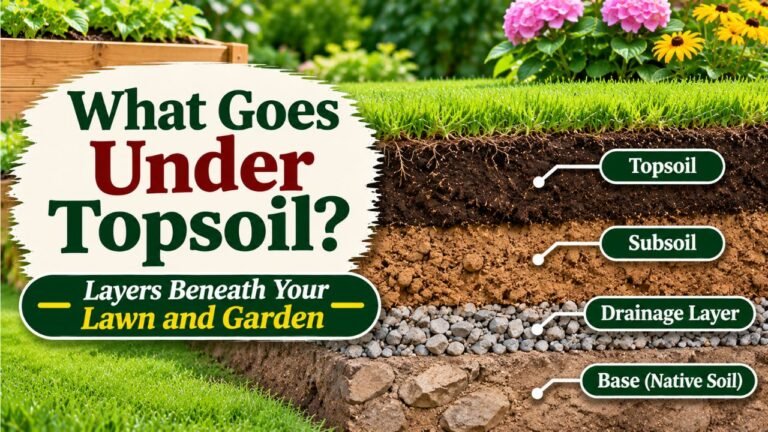
Topsoil is the surface layer of soil where organic matter and biological activity commonly accumulate.
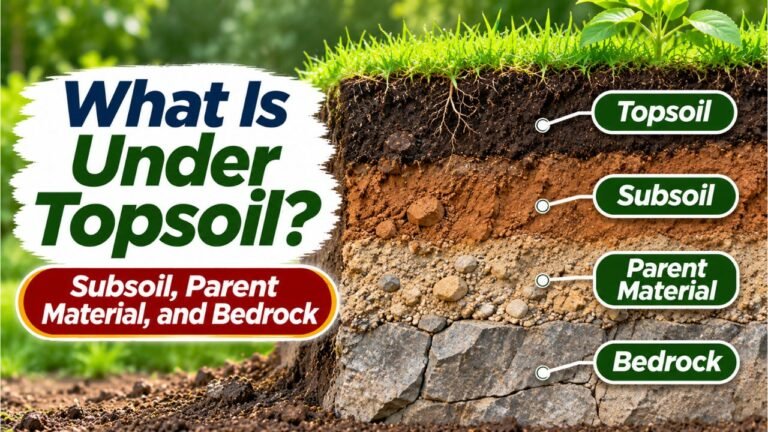
In an undisturbed soil profile, this often corresponds to the A horizon.
Topsoil commonly contains:
- Mineral particles
- Decomposed organic matter
- Plant nutrients
- Microorganisms
- Living roots
- Soil pores containing air and water
Natural topsoil generally has a greater concentration of organic matter than deeper mineral subsoil.
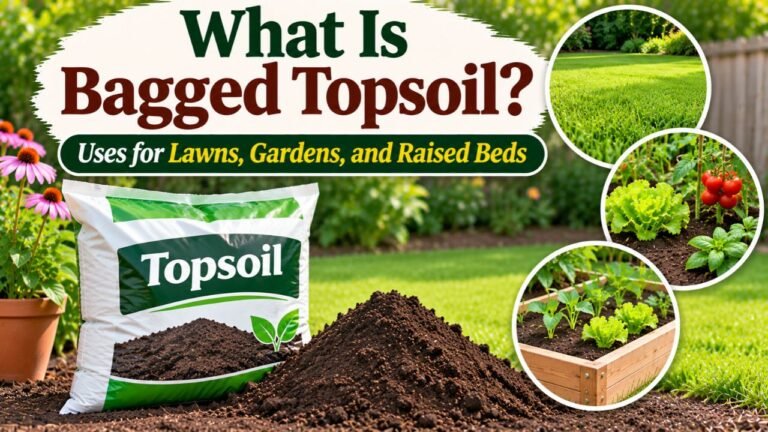
However, the term topsoil on a bag or bulk-soil listing doesn’t guarantee a particular composition or fertility level.
Commercially sold topsoil may be collected from different locations or manufactured by blending mineral soil with organic materials.
Is Sandy Loam Topsoil Natural?
Yes.
Sandy loam can form naturally as soil develops from mineral parent materials through weathering and other soil-forming processes.
Its texture reflects the relative quantities of sand, silt, and clay.
However, suppliers can also manufacture or blend products with a sandy loam texture.
A commercially prepared sandy loam topsoil may contain imported mineral soil and added compost.
The quality depends on the ingredients and processing.
Key Takeaway: Sandy loam describes soil texture, while topsoil describes the upper soil layer or a commercial soil product. Sandy loam topsoil should have a gritty but cohesive texture and suitable conditions for plant growth.
What Is Sandy Loam Topsoil Made Of?
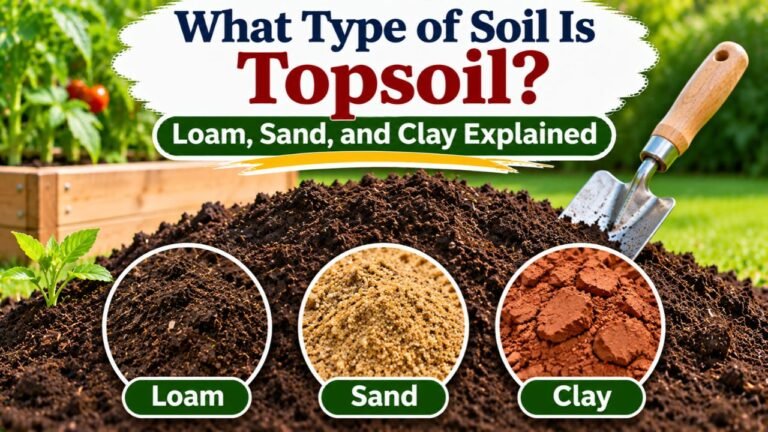
The three main mineral components are sand, silt, and clay.
Their relative proportions determine the soil’s texture classification.
Organic matter is also important in productive topsoil, but it isn’t what determines the sandy loam texture class.
1. Sand
Sand is the largest of the three primary mineral particle categories used in soil texture classification.
Under the USDA classification system, sand particles range from approximately 0.05 to 2 millimeters in diameter.
Sand contributes to:
- Drainage
- Aeration
- Loose soil texture
- Ease of cultivation
- Relatively rapid warming under suitable conditions
However, sand particles have relatively little surface area compared with silt and clay.
Very sandy soil generally retains less water and fewer nutrients.
2. Silt
Silt particles are smaller than sand but larger than clay.
They typically range from 0.002 to 0.05 millimeters in diameter under the USDA system.
Silt often feels smooth or floury when rubbed between the fingers.
It helps the soil hold moisture and contributes to a more cohesive texture.
However, soil containing too much silt can become susceptible to compaction or surface crusting under certain conditions.
3. Clay
Clay particles are extremely small, measuring less than 0.002 millimeters in diameter.
Clay contributes to water and nutrient retention.
Some clay minerals have substantial cation-exchange capacity, which helps soil retain positively charged nutrients.
However, excessive clay can make soil sticky when wet and hard when dry.
Sandy loam contains enough fine material to influence water retention without behaving like a heavy clay soil.
4. Organic Matter
Organic matter comes from decomposing plant and animal materials.
It can improve:
- Soil aggregation
- Moisture retention
- Nutrient cycling
- Biological activity
- Soil structure
However, sandy loam doesn’t automatically contain a high amount of organic matter.
Its fertility depends on the specific soil.
A poor-quality sandy loam with very little organic matter may require substantial improvement before it becomes productive garden soil.
What Percentage of Sand, Silt, and Clay Is in Sandy Loam?
There isn’t one fixed percentage combination.
The USDA classifies soil textures using a texture triangle that accounts for all three mineral particle groups.
For illustration, a soil might contain:
| Component | Example Proportion |
| Sand | 65% |
| Silt | 25% |
| Clay | 10% |
| Total | 100% |
This is an example of a sandy loam mineral particle mixture, not a required universal formula.
Other proportions may also fall within the sandy loam category.
The percentages refer to the mineral soil’s fine-earth fraction rather than the total volume of soil including air, water, and larger rocks.
For accurate classification, use a laboratory particle-size analysis or the USDA soil texture triangle.
What Does Sandy Loam Topsoil Look Like?
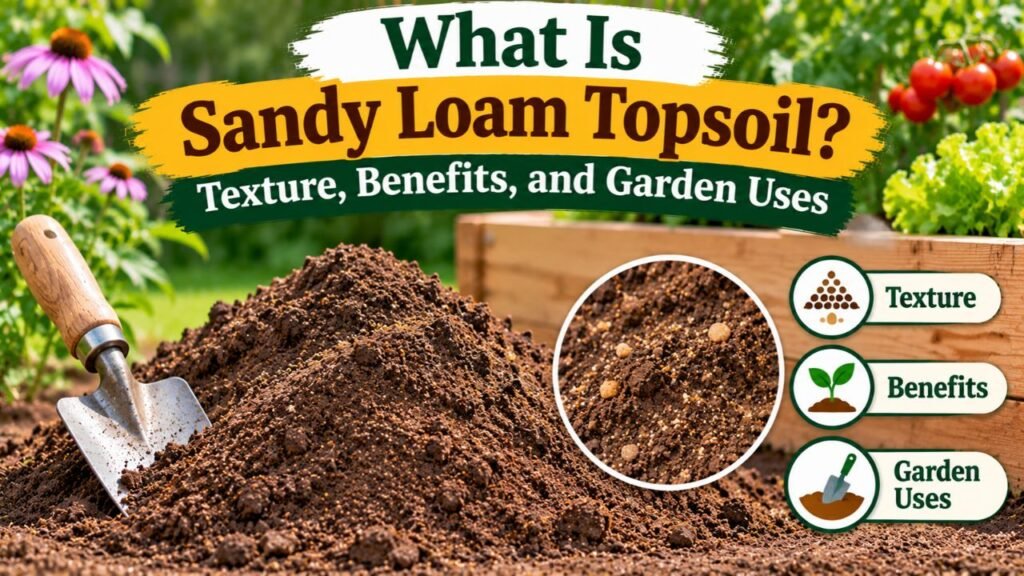
Sandy loam topsoil is generally loose and crumbly, with visible or noticeable sand grains.
Its color varies depending on mineral composition, organic matter, drainage history, and other soil conditions.
Common Sandy Loam Colors
Sandy loam topsoil may appear:
- Dark brown
- Medium brown
- Grayish brown
- Reddish brown
- Light brown
Darker soil may indicate more organic matter, but color alone doesn’t establish fertility.
Some dark soils can have poor structure or undesirable chemical properties.
Likewise, a lighter-colored sandy loam isn’t necessarily unsuitable for growing plants.
What Does It Feel Like?
When dry, sandy loam often feels loose and slightly gritty.
Small clods generally break apart with moderate or light pressure.
When moist, it can form a ball that holds together with careful handling.
However, the ball crumbles more easily than one made from clay-rich soil.
Is Sandy Loam Sticky?
Usually not very sticky.
You may notice slight stickiness when it is wet, depending on its clay content.
However, sandiness generally dominates the feel.
If the soil becomes extremely sticky and produces long, flexible ribbons, it may contain more clay than a typical sandy loam.
What Does Good Sandy Loam Smell Like?
Healthy topsoil commonly has an earthy smell.
A sour, sewage-like, or strongly chemical odor may indicate unsuitable material or contamination.
However, smell alone cannot establish whether the soil is safe for growing food.
What Are the Main Characteristics of Sandy Loam Topsoil?
Sandy loam is often valued for its balance of drainage, aeration, and moderate water retention.
However, these properties vary with compaction, structure, organic matter, and the soil below.
Sandy Loam Topsoil Properties
| Property | Typical Characteristic |
| Texture | Gritty but slightly cohesive |
| Sand content | Relatively high |
| Drainage | Generally good |
| Aeration | Generally good when not compacted |
| Water retention | Low to moderate |
| Nutrient retention | Often lower than finer-textured soils |
| Ease of digging | Usually easy |
| Compaction risk | Often lower than clay-rich soils |
| Organic matter | Variable |
| Soil pH | Variable |
| Gardening suitability | Good when fertility and moisture are managed |
Good Drainage
Sandy loam generally allows water to move through more readily than heavy clay soil.
This can reduce the likelihood of water remaining around roots for extended periods.
However, drainage depends on more than texture.
A sandy loam layer over compacted clay or an impermeable surface may still experience poor drainage.
Good Soil Aeration
The spaces between soil particles allow air to move through the root zone.
Roots need oxygen for normal respiration.
Sandy loam often provides favorable aeration when it has good soil structure and isn’t severely compacted.
Moderate Moisture Retention
Sandy loam retains more water than pure sand under many conditions.
However, it typically stores less plant-available water than a well-structured loam or some finer-textured soils.
This means watering requirements may be greater during hot weather.
Easy Cultivation
Sandy loam is often easier to dig, rake, and prepare for planting.
It generally forms fewer hard clods than heavy clay.
This makes it convenient for preparing seedbeds and planting vegetables.
Variable Fertility
Texture doesn’t establish nutrient content.
Two sandy loam soils can differ substantially in:
- Nitrogen availability
- Phosphorus
- Potassium
- Organic matter
- pH
- Salinity
- Micronutrients
A laboratory soil test is the best starting point for identifying specific nutrient needs.
What Is Sandy Loam Topsoil Used For?
Sandy loam topsoil is widely used in gardens and landscape projects.
Its ability to balance drainage and moisture retention makes it suitable for many purposes.
Vegetable Gardens
Sandy loam can provide a favorable environment for many vegetables.
It supports root development and generally allows water to drain without remaining saturated for long periods.
However, productive vegetable gardens still need appropriate fertility and irrigation.
Raised Garden Beds
Sandy loam topsoil can serve as the mineral-soil component of a raised-bed growing medium.
Its texture can make the soil relatively easy to cultivate.
Compost may be added to improve organic matter and water retention when needed.
Lawn Establishment
Sandy loam is often considered a useful texture for establishing turfgrass.
It offers a combination of aeration, drainage, and manageable soil structure.
However, a successful lawn also depends on soil depth, pH, nutrients, grading, and appropriate grass selection.
Flower Beds
Many annual and perennial flowers grow well in sandy loam.
Plants that prefer well-drained soil may particularly benefit.
However, species with high moisture requirements may need more frequent watering.
Landscaping
Sandy loam may be used for planting areas, landscape renovation, and suitable grading projects.
For structural fill or construction, soil selection must follow engineering requirements rather than gardening advice.
A soil that grows plants well isn’t automatically appropriate for load-bearing construction.
Is Sandy Loam Topsoil Good for Growing Vegetables?
Yes. Sandy loam is generally a good soil texture for many vegetables.
Its drainage and aeration can support healthy root growth.
However, organic matter, nutrients, and water availability must still be managed.
Tomatoes
Tomatoes can grow well in sandy loam.
Good drainage helps prevent prolonged saturation around roots.
However, tomatoes also need consistent moisture during flowering and fruit development.
Because sandy loam may dry quickly, mulch and drip irrigation can be useful.
Carrots
Carrots often benefit from loose, stone-free soil.
Sandy loam can allow roots to develop with relatively little resistance.
Remove rocks and hard clods before planting.
Avoid excessive fresh manure or other unsuitable amendments that may interfere with root development.
Potatoes
Potatoes can grow well in sandy loam because the soil is usually easy to cultivate and provides favorable aeration.
However, potatoes need consistent moisture during tuber development.
The soil must also have suitable nutrients and pH.
Lettuce
Lettuce can grow successfully in sandy loam.
However, it has a relatively shallow root system and benefits from regular moisture.
In hot weather, sandy loam may require more frequent watering to prevent stress.
Peppers
Peppers generally prefer well-drained soil.
Sandy loam can support healthy growth when moisture and nutrient requirements are met.
Cucumbers and Squash
Cucumbers and squash can perform well in sandy loam.
However, their substantial leaf area and fruit production can create high water demand.
Adding appropriate organic matter and maintaining a consistent watering schedule can improve performance.
Vegetable Suitability
| Vegetable | Sandy Loam Suitability | Main Management Need |
| Tomatoes | Good | Consistent moisture and fertility |
| Carrots | Very good | Remove stones and compacted layers |
| Potatoes | Good | Moisture during tuber development |
| Lettuce | Good | Frequent moisture checks |
| Peppers | Good | Balanced nutrients and watering |
| Cucumbers | Good | Regular water during fruiting |
| Zucchini | Good | Moisture, fertility, and space |
| Radishes | Very good | Even moisture for root development |
| Beans | Good | Suitable drainage and pH |
These are general suitability ratings, not yield guarantees.
Different cultivars and local growing conditions can affect results.
Is Sandy Loam Topsoil Good for Raised Garden Beds?
Yes. Sandy loam can be an excellent mineral-soil component for raised beds.
However, whether it should be used alone depends on the bed’s construction and the quality of the soil.
Open-Bottom Raised Beds
An open-bottom raised bed placed over healthy native soil can be filled with suitable sandy loam topsoil.
Roots may grow through the raised layer into the ground below.
Adding mature compost can improve organic matter and moisture retention.
Raised Beds on Concrete
Beds on concrete or another impermeable surface have different requirements.
Because roots cannot grow into the ground below, the contained medium needs enough depth, suitable drainage, and adequate water storage.
A straight mineral sandy loam may be quite heavy and may dry more quickly than a well-designed container mix.
A blended growing medium may be more appropriate.
Should You Mix Sandy Loam With Compost?
Often, yes, when the original soil is low in organic matter.
For example, incorporating a modest amount of finished compost can help improve water-holding capacity and soil structure.
However, there isn’t a universal percentage that works for every sandy loam.
The appropriate amount depends on the compost’s properties and the existing soil.
Avoid adding excessive compost without considering soluble salts, phosphorus accumulation, and nutrient balance.
Can You Use Sandy Loam Topsoil Alone?
You can use suitable sandy loam topsoil alone in some open-bottom beds.
However, it should have appropriate fertility and organic matter.
For a completely contained raised bed, a designed blend may be easier to manage.
The University of Maine Cooperative Extension’s raised-bed soil guidance recommends examining purchased mineral soil carefully, checking its texture, and testing it for pH and nutrients before relying on it.
Key Takeaway: Sandy loam is a useful raised-bed soil component, especially when it contains suitable organic matter. For contained planters, drainage, weight, and total water storage require additional consideration.
Is Sandy Loam Topsoil Good for Grass and Lawns?
Yes. Sandy loam is commonly considered a favorable soil texture for growing turfgrass.
It provides relatively good drainage and supports air movement around grass roots.
Why Sandy Loam Can Work Well for Lawns
Grass benefits from:
- Well-drained soil
- Adequate moisture storage
- Healthy root development
- Suitable nutrients
- Appropriate soil pH
Sandy loam can offer several of these physical properties.
However, it may require irrigation more frequently than heavier soils during dry weather.
How Much Topsoil Does New Grass Need?
The ideal depth depends on the condition of the existing soil and the lawn installation method.
If the native soil already provides a suitable rooting environment, a thin layer of topsoil may be sufficient for surface improvements.
If the site contains compacted construction fill or unsuitable subsoil, a more substantial soil renovation may be necessary.
Avoid spreading a thin, unincorporated layer of sandy loam over heavily compacted clay and assuming the entire root zone has been improved.
Can You Topdress an Existing Lawn With Sandy Loam?
Yes, in some circumstances.
However, the topdressing material should be compatible with the existing soil.
Adding a substantially different material can create undesirable layering.
Use an appropriate, thin application and follow turfgrass-specific recommendations.
Sandy loam topsoil is not automatically a suitable substitute for specialized turf topdressing sand.
Sandy Loam vs. Loam vs. Sandy Soil
Although the names sound similar, these soil texture classes behave differently.
Soil Texture Comparison
| Feature | Sand | Loamy Sand | Sandy Loam | Loam | Clay Loam |
| Texture | Very gritty | Strongly gritty | Gritty, slightly cohesive | Balanced, crumbly | More cohesive and sticky |
| Drainage | Very rapid | Rapid | Generally good | Moderate | Often slower |
| Water retention | Very low | Low | Low to moderate | Moderate | Moderate to high |
| Nutrient retention | Generally low | Generally low | Variable, often modest | Often better | Often relatively high |
| Ease of cultivation | Very easy | Easy | Easy | Easy to moderate | More difficult when wet |
| Moist ball | Usually won’t hold | Very weak | Holds loosely | Holds fairly well | Holds firmly |
| Garden management | Frequent watering | Frequent watering | Manage moisture and fertility | Generally balanced | Manage drainage and compaction |
These are typical tendencies, not fixed performance ratings.
Soil structure, organic matter, compaction, and underlying layers can significantly change how each soil behaves.
Sandy Loam vs. Pure Sand
Pure sand contains much less silt and clay.
It generally drains faster and retains less water.
Sandy loam has enough finer material to hold together when moist.
For many gardens, sandy loam offers a more manageable balance between drainage and moisture storage.
Sandy Loam vs. Loam
Loam contains a more balanced influence of sand, silt, and clay.
It typically feels less gritty than sandy loam.
Loam often retains more water and nutrients, while sandy loam generally drains more readily.
Neither is always better.
The suitable choice depends on the crop and growing conditions.
Sandy Loam vs. Clay Loam
Clay loam contains a greater proportion of clay.
It typically retains more moisture and can become harder to cultivate when wet.
Sandy loam is generally easier to work and drains more readily.
However, it may need more frequent watering.
Sandy Loam vs. Loamy Sand
Loamy sand contains more sand and less cohesive material than sandy loam.
It often barely holds together when moistened.
Sandy loam usually forms a more stable ball and has somewhat better water retention.
How to Identify Sandy Loam Topsoil at Home
You can make a reasonable estimate of soil texture using simple tests.
However, precise classification requires laboratory analysis or appropriately measured particle-size percentages.
Method 1: The Feel Test
Start with a small sample.
Remove large stones, roots, and debris.
Add a little water until the soil becomes moist but not saturated.
Rub the sample between your fingers.
Sandy loam should feel distinctly gritty.
You may also notice a little smoothness from silt and slight cohesion from clay.
Method 2: The Ball Test
Take a handful of moistened soil.
Squeeze it firmly.
Observe whether it forms a ball.
Typical results:
- Sand: Falls apart easily
- Loamy sand: Forms a very weak ball
- Sandy loam: Forms a ball that holds with careful handling
- Clay-rich soil: Forms a firmer, more persistent ball
This test is useful but not exact.
Organic matter and soil moisture can affect the result.
Method 3: The Ribbon Test
Take moistened soil and knead it into a putty-like consistency.
Press a small amount between your thumb and finger to create a thin ribbon.
Sandy loam generally produces only a short, weak ribbon that breaks easily.
It should feel noticeably gritty.
Clay-rich soils are more likely to produce longer, flexible ribbons.
Don’t use ribbon length alone to classify the soil.
Combine it with the gritty or smooth feel.
Method 4: The Jar Test
A simple settling jar can provide an approximate picture of soil components.
What You Need
- Clear glass jar
- Soil sample
- Clean water
- Lid
- Marker
Steps
- Remove large stones, roots, and debris.
- Add soil to roughly one-third of the jar.
- Add water while leaving enough space for shaking.
- Close the lid.
- Shake thoroughly.
- Place the jar on a stable surface.
- Allow the particles to settle.
- Observe the layers that develop.
Larger sand particles generally settle faster.
Silt settles more slowly.
Fine clay particles may remain suspended much longer.
However, organic matter, particle aggregation, and incomplete dispersion can make the layers difficult to interpret.
A home jar test provides an estimate, not a precise USDA texture classification.
Method 5: Laboratory Testing
For a more dependable result, submit a representative soil sample to a suitable laboratory.
Ask whether the test includes particle-size analysis.
A routine fertility test may report pH and nutrients without determining sand, silt, and clay percentages.
If you receive the three percentages, you can classify the soil using the USDA texture triangle.
How to Improve Sandy Loam Topsoil
Sandy loam often has good physical properties, but it may still need improvements.
The most common concerns involve moisture retention, organic matter, and nutrient availability.
Add Mature Compost
Finished compost can improve water retention and soil aggregation.
It can also support microbial activity and nutrient cycling.
Apply an appropriate amount based on existing soil conditions.
For a low-organic-matter garden bed, incorporating a modest layer of finished compost into the upper soil can be a useful starting approach.
Avoid excessive applications of nutrient-rich compost.
Use Organic Mulch
Mulch reduces direct exposure of the soil surface.
Suitable materials may include:
- Shredded leaves
- Straw
- Wood chips around appropriate perennial plantings
- Other crop-compatible organic mulches
A layer around 2–3 inches deep can reduce evaporation in many established garden beds.
However, mulch depth and placement depend on the crop.
Keep mulch away from stems and crowns when direct contact may create moisture problems.
Water According to Soil Moisture
Sandy loam may dry more quickly than loam or clay-rich soil.
During hot weather, check moisture several inches below the surface.
Avoid assuming that the soil needs daily watering without inspecting the root zone.
Deep-rooted plants and young seedlings may require different schedules.
Use Drip Irrigation
Drip irrigation can deliver water near the plant roots.
This may help reduce water waste.
However, sandy soil often has less lateral water movement than finer-textured soil.
Place emitters where the roots can access moisture.
Check the wetted area after irrigation.
Apply Fertilizer Based on a Soil Test
Sandy loam doesn’t automatically contain adequate nutrients.
A soil test can identify pH and nutrient needs.
Some sandy soils benefit from smaller, appropriately timed fertilizer applications because certain nutrients can be lost through leaching.
Follow the fertilizer label and local extension recommendations.
Grow Cover Crops
Cover crops can help protect bare soil and add organic residues.
Depending on the crop, they may contribute to improved soil structure and nutrient management.
Choose cover crops suitable for the season and garden space.
Avoid Unnecessary Tilling
Repeated tilling can disturb soil structure and accelerate organic matter loss.
Loosen compacted areas when necessary, but avoid cultivating more than the gardening task requires.
How Often Should You Water Sandy Loam Topsoil?
Sandy loam generally needs more frequent moisture checks than a heavier, moisture-retentive soil.
However, the correct watering schedule depends on the plant, climate, and rooting depth.
Vegetable Gardens
Many established vegetables need approximately 1–2 inches of water per week from rainfall and irrigation, depending on conditions.
In sandy loam, dividing that amount into several watering sessions may reduce excessive drainage below the roots.
However, the ideal frequency depends on actual moisture levels.
Raised Beds
Raised beds may dry relatively quickly during hot weather.
If filled with sandy loam, monitor moisture several inches below the surface.
Mulch and suitable compost can help reduce moisture fluctuations.
Lawns
Turfgrass watering requirements depend on the grass species, season, soil depth, and weather.
Sandy loam may require more frequent irrigation than clay-rich soil.
Avoid applying water faster or longer than the root zone can retain.
How Can You Tell if the Soil Needs Water?
Use a trowel or soil probe to inspect the root zone.
If the soil is drying below the depth used by active roots, additional irrigation may be necessary.
If the soil remains moist, wait before watering again.
Key Takeaway: Sandy loam usually drains well but can lose moisture relatively quickly. Mulch, organic matter, and appropriately timed irrigation help keep plants supplied with water.
How to Choose Good Sandy Loam Topsoil Before Buying
The words sandy loam topsoil on a product listing don’t guarantee quality.
Soil sold under this description can vary considerably.
Check the Soil Texture
Ask the seller whether the product has been classified through a soil test.
If possible, inspect a sample.
The soil should feel gritty but have some cohesion when moist.
Avoid assuming that any loose, sandy-looking material is genuine sandy loam.
Check Organic Matter Content
Good topsoil should contain enough organic matter to support healthy soil structure and biological activity.
According to the University of Connecticut Extension’s topsoil purchasing guide, topsoil often benefits from an organic matter content of approximately 2–10%, depending on the material and intended use.
However, more organic matter isn’t always better.
Excessive organic amendments can contribute to nutrient or salt problems.
Ask for Soil Test Results
Useful results include:
- Soil pH
- Organic matter percentage
- Phosphorus
- Potassium
- Soluble salts when relevant
- Texture classification
- Other nutrients where needed
For vegetable gardens, consider testing for lead or other potential contaminants when the soil source is uncertain.
Ask Where the Soil Came From
The original location matters.
Soil collected from an agricultural field may differ from soil removed during construction or collected from an industrial site.
Ask about previous land use and any amendments added by the supplier.
Inspect for Debris
Avoid products containing excessive amounts of:
- Construction debris
- Plastic
- Glass
- Large stones
- Unwanted plant material
- Trash
Screened topsoil may contain fewer large particles, but screening doesn’t guarantee good fertility or freedom from contamination.
Check the Moisture and Smell
A sample should generally have an earthy smell.
Be cautious of strongly foul-smelling or unusually wet, compacted stockpiles.
However, soil that looks and smells normal may still contain chemical contaminants.
Visual inspection is not a substitute for testing.
Compare Suppliers Carefully
Ask whether the quoted product is:
- Natural screened topsoil
- Sandy loam topsoil
- Topsoil blended with compost
- Manufactured planting soil
- A general-purpose soil blend
These products may have different compositions and suitable uses.
How Much Sandy Loam Topsoil Do You Need?
Soil volume depends on the area and desired depth.
Topsoil is commonly sold by cubic foot, cubic yard, or bag.
Soil Volume Formula
Cubic feet = Length (feet) × Width (feet) × Depth (inches) ÷ 12
To convert cubic feet into cubic yards:
Cubic yards = Cubic feet ÷ 27
Example: 4×8 Raised Bed
Suppose you want to fill a 4×8-foot raised bed to a depth of 12 inches.
Calculation:
4 × 8 × 12 ÷ 12 = 32 cubic feet
Convert to cubic yards:
32 ÷ 27 = approximately 1.19 cubic yards
Soil Volume Table
| Area | Soil Depth | Soil Volume |
| 4×4 ft bed | 6 inches | 8 cu. ft. |
| 4×8 ft bed | 6 inches | 16 cu. ft. |
| 4×8 ft bed | 12 inches | 32 cu. ft. |
| 4×8 ft bed | 18 inches | 48 cu. ft. |
| 10×10 ft garden | 3 inches | 25 cu. ft. |
| 100 sq. ft. lawn area | 2 inches | 16.7 cu. ft. |
These amounts assume an even depth and don’t include extra material for settling or grading irregularities.
If you are mixing sandy loam with compost, calculate the total desired soil volume before deciding how much of each component to purchase.
Can You Make Sandy Loam Topsoil by Mixing Sand and Clay?
You can change a soil’s texture by adding mineral components, but creating a true sandy loam from existing materials isn’t always practical.
The proportions must fall within the appropriate texture classification.
Why Adding Sand to Clay Is Difficult
A small amount of sand added to heavy clay may not improve the soil’s drainage.
Substantial quantities can be required to meaningfully change the texture class.
Improper combinations may create a dense material that is difficult to cultivate.
For many home gardens, adding appropriate organic matter and improving soil structure is more practical than attempting to convert heavy clay into sandy loam.
Can You Add Sand to Ordinary Topsoil?
Yes, mineral sand can change the mixture’s texture.
However, don’t add construction sand or play sand without understanding the existing soil and the resulting composition.
A laboratory texture analysis can help determine whether adding sand is appropriate.
For a vegetable garden, buying suitable sandy loam topsoil may be easier than trying to manufacture a precise texture from scratch.
Can Compost Turn Sand Into Sandy Loam?
Compost can improve sandy soil’s water retention and structure.
However, compost doesn’t change the percentages of mineral sand, silt, and clay in the fine-earth fraction in the same way that adding those mineral particles would.
A sandy soil amended with compost may become much better for growing plants while remaining classified as sand or loamy sand.
Important: Improving soil performance doesn’t necessarily require changing its official texture class.
Common Mistakes When Using Sandy Loam Topsoil
Sandy loam is relatively easy to work with, but several mistakes can reduce its benefits.
Assuming It Is Automatically Fertile
Texture and fertility are different.
Sandy loam may need compost, fertilizer, or pH adjustments.
Test the soil rather than assuming it contains everything plants need.
Using Pure Sand as a Substitute
Pure sand generally holds less moisture and nutrients.
It doesn’t provide the same growing conditions as sandy loam topsoil.
Adding Too Much Compost
Excessive compost can create nutrient imbalances or salt accumulation.
Use an amount appropriate for the soil and crop.
Watering Too Infrequently
Sandy loam can dry relatively quickly.
Monitor moisture during hot weather, especially in raised beds.
Overwatering Despite Good Drainage
Good drainage doesn’t prevent overwatering in every situation.
Repeatedly applying too much water can leach nutrients beyond the root zone.
Adjust irrigation to plant requirements.
Ignoring the Soil Beneath
A sandy loam layer over heavily compacted clay may drain poorly at the boundary.
Evaluate the entire rooting profile rather than just the purchased topsoil.
Buying Without Inspecting the Material
A seller’s product name doesn’t guarantee a consistent texture or organic matter content.
Request a sample and test results when possible.
Assuming Darker Soil Is Always Better
Dark color can indicate organic matter, but it isn’t proof of suitable nutrients, drainage, or safety.
Use multiple quality indicators.
Using Garden Topsoil as Potting Mix
Mineral topsoil may become dense or heavy in small containers.
Indoor pots and other fully contained planters generally benefit from a suitable container growing medium.
Is Sandy Loam Topsoil Better Than Regular Topsoil?
Not necessarily.
The term regular topsoil doesn’t describe a single texture class.
One topsoil product may be sandy loam.
Another may be loam, silt loam, or clay loam.
Sandy loam can be preferable when you want good drainage and relatively easy cultivation.
However, a high-quality loam may retain moisture and nutrients better.
Likewise, a well-structured clay loam may perform successfully under appropriate management.
Which Is Better for Vegetables?
Both loam and sandy loam can be excellent.
The better choice depends on existing soil conditions, climate, watering capacity, and the crops being grown.
Which Is Better for Raised Beds?
Sandy loam can be a good mineral-soil base.
However, the final growing medium should provide enough moisture retention and nutrients.
Don’t choose solely by texture.
Which Is Better for Lawns?
Sandy loam is often a favorable texture for turfgrass because of its drainage and aeration.
However, soil depth, pH, compaction, fertility, and grass selection also matter.
Which Requires Less Water?
A loam with greater water-holding capacity may require less frequent irrigation than a sandy loam under otherwise comparable conditions.
However, actual watering requirements depend on soil structure, rooting depth, rainfall, and climate.
Conclusion
Sandy loam topsoil is surface soil with a sand-dominant texture and enough silt and clay to provide some moisture retention and cohesion. It is valued for its relatively good drainage, aeration, crumbly structure, and ease of cultivation.
These properties make it suitable for many vegetables, lawns, flower beds, and raised gardens.
However, sandy loam isn’t automatically fertile or rich in organic matter.
Its growing performance depends on nutrient levels, pH, soil structure, moisture management, and the quality of the original material.
For garden use, choose sandy loam that is free of unsuitable debris, has appropriate organic matter, and comes from a reputable source.
A simple feel test can help you estimate the texture, but laboratory analysis provides more dependable information about particle percentages and fertility.
If the soil dries too quickly, use suitable compost, organic mulch, and carefully managed irrigation.
With the right preparation and care, sandy loam topsoil can provide a productive growing environment for a wide range of plants.
FAQs About Sandy Loam Topsoil
What Is Sandy Loam Topsoil Made Of?
Sandy loam topsoil contains a relatively high proportion of sand mixed with silt and clay. It may also contain organic matter, nutrients, microorganisms, air, and water. The exact proportions vary, and the USDA uses a soil texture triangle to classify the mineral particle mixture.
Is Sandy Loam Topsoil Good for Gardening?
Yes. Sandy loam is generally suitable for many vegetables, flowers, and other garden plants because it provides relatively good drainage and aeration. However, soil fertility and moisture retention still need to be managed.
Does Sandy Loam Topsoil Drain Well?
Generally, yes. Sandy loam typically allows water to drain more readily than heavy clay soil. However, drainage can be restricted by compaction, poor soil structure, or an impermeable layer beneath the topsoil.
Is Sandy Loam Better Than Regular Topsoil?
Not automatically. Sandy loam is a specific texture, while regular topsoil may contain different proportions of sand, silt, and clay. A high-quality loam or sandy loam can both be suitable for gardening depending on growing conditions.
What Color Is Sandy Loam Topsoil?
Sandy loam topsoil may be light brown, dark brown, grayish brown, or reddish brown. The color depends on organic matter, mineral composition, and soil conditions. Color alone doesn’t indicate fertility or safety.
Is Sandy Loam Topsoil Good for Raised Beds?
Yes. Sandy loam can provide a useful mineral-soil component for raised beds. However, adding suitable organic matter may improve water retention and nutrient availability, particularly when the original soil is relatively low in organic matter.
Can You Grow Tomatoes in Sandy Loam Topsoil?
Yes. Tomatoes can grow well in sandy loam when the soil has adequate fertility and consistent moisture. Because sandy loam can dry relatively quickly, mulch and drip irrigation may help reduce water stress.
What Is the Difference Between Sandy Loam and Loamy Sand?
Loamy sand contains a greater proportion of sand and usually has lower cohesion and water retention. Sandy loam contains enough silt and clay to form a more stable moist ball and generally retain somewhat more water.
How Do You Know if Soil Is Sandy Loam?
Moisten a sample and rub it between your fingers. Sandy loam should feel distinctly gritty and form a loose ball that breaks apart relatively easily. A short, weak ribbon may form. For an accurate classification, use laboratory particle-size analysis.
Does Sandy Loam Topsoil Need Compost?
Not always. If the soil already has adequate organic matter and fertility, additional compost may be unnecessary. If it is low in organic matter, suitable finished compost can help improve moisture retention, structure, and biological activity.
Is Sandy Loam Good for Grass?
Yes. Sandy loam is often a favorable soil texture for turfgrass because it supports drainage, aeration, and root development. However, lawns still need suitable soil depth, nutrients, pH, and irrigation.
How Often Should You Water Sandy Loam Soil?
Watering frequency depends on the crop, season, rainfall, and root depth. Sandy loam generally needs more frequent moisture checks than heavier soil. Inspect the root zone and water when necessary rather than using the same fixed schedule throughout the year.

I’m Maya L. Greenwood, a lifelong plant lover who believes anyone can grow something beautiful with the right guidance. After years of testing soil mixes, pruning methods, irrigation tricks, and pest-safe solutions, I started EasyGardenTips.com to turn hard-won lessons into step-by-step advice. From seed starting and container gardens to composting and seasonal checklists, my goal is to make gardening simple, sustainable, and fun.