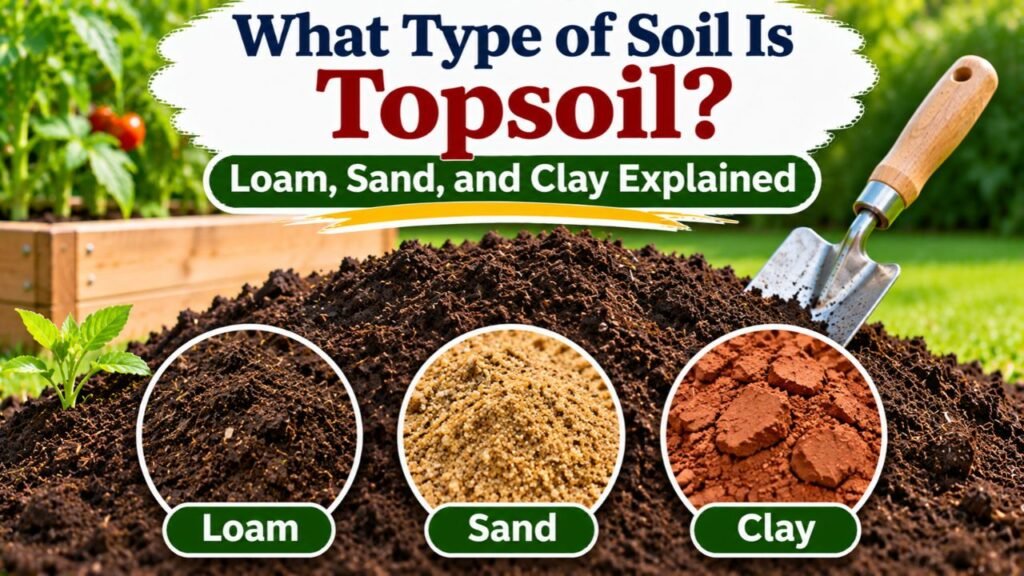
What Type of Soil Is Topsoil? Loam, Sand, and Clay Explained
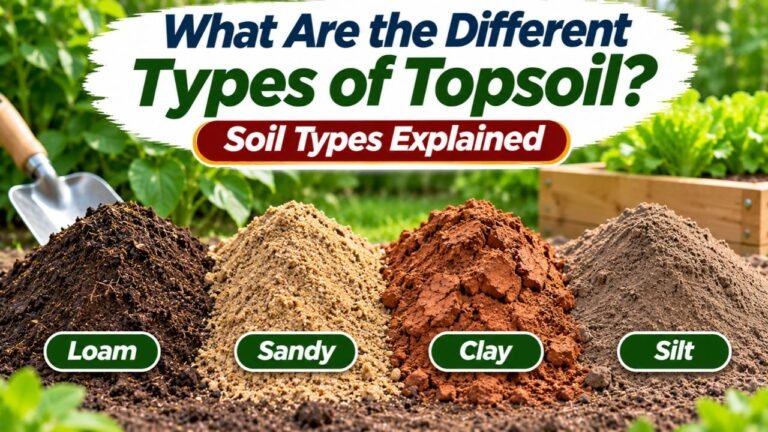
Topsoil is the upper mineral layer of soil, not a single soil-texture type. It can be sandy, silty, clay-rich, or loamy depending on the proportions of sand, silt, and clay it contains. For many lawns and gardens, loam or sandy-loam topsoil is a practical choice because it can provide a useful balance of drainage, moisture retention, and workability.
In soil science, topsoil generally refers to the A horizon, the surface mineral layer influenced by organic matter accumulation and biological activity. Soil texture describes something different: the relative amounts of sand, silt, and clay.
This distinction explains why two products labeled topsoil may behave very differently. One may drain quickly because it contains substantial sand, while another may remain wet and sticky because it contains more clay.
Commercial topsoil products also vary. Some contain naturally excavated soil, while others are screened or blended with compost.
In this article, I explain what type of soil topsoil is, how soil horizons differ from texture classes, and the characteristics of sandy, silty, clay, and loamy topsoil. You’ll also learn which types are suitable for lawns, vegetables, and raised beds, how to identify soil texture, and what to check before purchasing topsoil.
What Type of Soil Is Topsoil? Soil Layer vs. Soil Texture
Topsoil describes where soil occurs within a soil profile, while soil texture describes the proportions of different mineral particle sizes.
These are two different ways to describe the same material.
Topsoil Is Usually the A Horizon
In a natural soil profile, the A horizon is commonly called topsoil.
It generally contains mineral particles mixed with organic matter.
The USDA Natural Resources Conservation Service identifies the A horizon as the surface mineral-soil layer.
A separate organic O horizon may occur above it.
The A horizon commonly supports substantial root activity and nutrient cycling.
Topsoil Is Not Automatically Loam
Loam is a soil-texture class.
It describes a mixture of sand, silt, and clay within particular proportions.
Topsoil can have a loam texture, but it can also be sandy loam, silt loam, clay loam, or another texture.
Therefore, the words topsoil and loam are not interchangeable.
How Soil Scientists Describe Topsoil
A topsoil sample may be classified using several characteristics.
| Classification | Example | What it describes |
| Soil horizon | A horizon | Position and development within the soil profile |
| Soil texture | Sandy loam | Relative amounts of sand, silt, and clay |
| Soil structure | Granular | Arrangement of soil particles into aggregates |
| Soil chemistry | pH 6.5 | Acidity or alkalinity |
| Organic matter | Percentage measured by laboratory | Amount of organic material |
| Soil taxonomy | Named soil series or taxonomic group | Broader soil classification |
For example, a garden may contain dark-brown sandy-loam topsoil with a granular structure.
All these terms describe different characteristics of the same soil.
Key Takeaway: Topsoil is a layer, while sandy, silty, clay, and loamy are texture descriptions. A particular topsoil can belong to several descriptive categories at once.
What Are the Main Types of Topsoil?
Topsoil can be grouped by its mineral texture.
The most familiar categories are sandy, silty, clay-rich, and loamy soils.
However, the official USDA soil-texture system contains more detailed classes.
Main Topsoil Textures Compared
| Topsoil texture | Main characteristic | General gardening consideration |
| Sand | Very gritty and loose | Drains rapidly |
| Loamy sand | Mostly sandy | Limited moisture and nutrient retention |
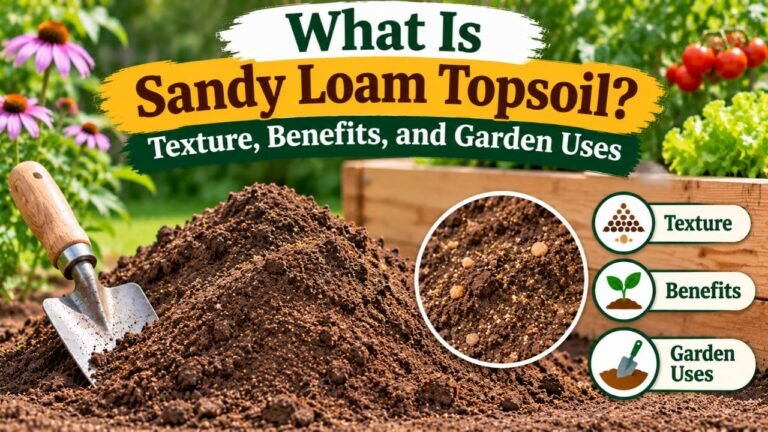
| Sandy loam | Gritty but more cohesive | Often suitable for gardens and lawns |
| Loam | Balanced mixture of particles | Good general-purpose texture |
| Silt loam | Smooth and moisture-retentive | Can be productive but may crust |
| Clay loam | More cohesive and moisture-retentive | Needs good structure and drainage |
| Clay | Sticky when wet, firm when dry | May compact and drain slowly |
These descriptions represent tendencies, not guarantees.
Actual drainage and fertility depend on soil structure, compaction, organic matter, and other factors.
1. Sandy Topsoil
Sandy topsoil contains a relatively high proportion of sand particles.
Sand is the largest of the three main soil particle groups.
What Does Sandy Topsoil Feel Like?
It usually feels gritty.
Individual grains may be visible.
The soil often falls apart easily when dry.
Advantages of Sandy Topsoil
Sandy soil can provide:
- Relatively rapid drainage.
- Good aeration when appropriately structured.
- Easy cultivation.
- Reduced waterlogging risk under many conditions.
However, these benefits depend on the soil’s actual structure and site conditions.
Limitations of Sandy Topsoil
Water can move through sandy soil quickly.
This may result in:
- Frequent irrigation needs.
- Lower nutrient retention.
- Faster drying during hot weather.
- Increased nutrient leaching under some conditions.
Is Sandy Topsoil Good for Gardening?
It can be.
Many vegetables and ornamental plants grow in sandy soils when water and nutrients are managed appropriately.
However, extremely sandy material is often less suitable for general landscaping than loam or sandy loam.
Adding finished compost may improve water and nutrient retention.
2. Silty Topsoil
Silty topsoil contains a substantial proportion of silt particles.
Silt is smaller than sand but larger than clay.
What Does Silty Soil Feel Like?
It often feels smooth or flour-like when dry.
When wet, it may feel silky or slippery.
It generally doesn’t have the pronounced gritty sensation of sandy soil.
Advantages of Silty Topsoil
Silt-rich soils can retain moisture effectively.
They may support good plant growth when their structure and drainage are suitable.
Silt loam is often considered a productive soil texture.
Limitations of Silty Topsoil
Poorly structured silty soil may develop a crust after heavy rain or irrigation.
Exposed surfaces can also be vulnerable to erosion.
Organic matter and protective mulch can help maintain favorable soil conditions.
Is Silt Loam Good for Vegetables?
Yes.
Silt loam can support many vegetables when fertility, drainage, and structure are appropriate.
However, avoid working it when excessively wet.
Compaction and crusting may reduce its performance.
3. Clay Topsoil
Clay-rich topsoil contains a high proportion of fine clay particles.
Clay has a strong influence on water retention, nutrient storage, and soil plasticity.
What Does Clay Topsoil Feel Like?
When wet, it may feel sticky.
It can often be rolled or pressed into a ribbon.
When dry, it may form hard clods or cracks.
Advantages of Clay Topsoil
Clay can help retain water and certain nutrient ions.
A well-structured clay loam can support healthy plant growth.
Clay isn’t automatically infertile.
Limitations of Clay Topsoil
Some clay-rich soils:
- Drain slowly.
- Become sticky when wet.
- Form hard clods when dry.
- Compact under traffic.
- Restrict root growth when structure is poor.
Avoid cultivating clay-rich soil while it is saturated.
Should You Add Sand to Clay Topsoil?
Not automatically.
Adding small quantities of sand to clay may not meaningfully change the soil’s overall texture.
Changing texture requires substantial amounts of material.
The Utah State University Extension topsoil quality guidelines explain that large-scale changes in texture are difficult, while appropriate organic matter additions can improve physical properties.
For clay-rich garden soil, improving structure and preventing compaction are often more practical strategies.
4. Loamy Topsoil
Loam is a soil texture containing a balanced mixture of sand, silt, and clay.
It doesn’t mean exactly one-third of each component.
The proportions fall within a defined region of the USDA soil-texture triangle.
Why Is Loam Popular for Gardening?
Quality loam often combines:
- Suitable drainage.
- Moisture retention.
- Nutrient-holding capacity.
- Workability.
- Root penetration.
These properties make it useful for many lawns, vegetable gardens, and ornamental plantings.
However, structure, fertility, and pH still matter.
Is Loam the Best Type of Topsoil?
For general landscaping, loam is often a strong choice.
However, it isn’t automatically best for every plant.
For example, certain drought-tolerant species prefer sharply draining soils.
Blueberries require acidic conditions that many ordinary loam products may not provide.
Choose soil according to the crop’s needs.
Is Sandy Loam Better Than Loam?
Not universally.
Sandy loam generally drains more freely than many loams.
It can be useful where waterlogging is a concern.
However, it may require more frequent watering.
A good loam may retain more moisture while remaining sufficiently well-drained.
The best choice depends on rainfall, irrigation, planting conditions, and the underlying soil.
Key Takeaway: Loam and sandy loam are often practical garden topsoils, but no soil texture is universally best for every plant or site.
What Are the 12 USDA Soil Texture Classes?
The USDA soil-texture classification system identifies 12 primary textural classes.
They are:
- Sand.
- Loamy sand.
- Sandy loam.
- Loam.
- Silt loam.
- Silt.
- Sandy clay loam.
- Clay loam.
- Silty clay loam.
- Sandy clay.
- Silty clay.
- Clay.
These classifications depend on the percentages of sand, silt, and clay.
A soil-texture triangle is used to identify the correct category.
Can Any of These Textures Occur in Topsoil?
Yes.
The topsoil layer can contain a wide range of mineral particle proportions.
However, some textures are much better suited to particular landscape applications than others.
For example, coarse sand may provide excellent drainage but poor water retention.
Heavy clay may retain substantial moisture but become difficult to cultivate.
Does Texture Tell You Whether Soil Is Fertile?
No.
Texture influences nutrient retention, drainage, and structure.
However, it doesn’t tell you whether the soil contains enough plant-available nutrients.
Soil fertility must be evaluated separately.
A sandy loam may need additional nutrients.
A clay loam may already contain ample phosphorus or potassium.
Is Topsoil Considered Sandy Soil or Clay Soil?
It can be either.
The word topsoil doesn’t specify the texture.
Sandy Topsoil
A natural topsoil formed from sandy parent material may be predominantly sandy.
This is common in some coastal and other sandy landscapes.
Clay-Rich Topsoil
Topsoil developing over clay-rich parent materials may contain substantial clay.
Its structure can improve through organic matter and biological activity.
Loamy Topsoil
A loamy topsoil contains a more balanced mixture.
It often provides useful general-purpose growing conditions.
Why Local Topsoil Varies
Soil formation depends on:
- Parent material.
- Climate.
- Vegetation.
- Topography.
- Organisms.
- Time.
- Human disturbance.
This explains why the same word, topsoil, may describe very different materials in different U.S. regions.
What Type of Topsoil Is Best for Raised Garden Beds?
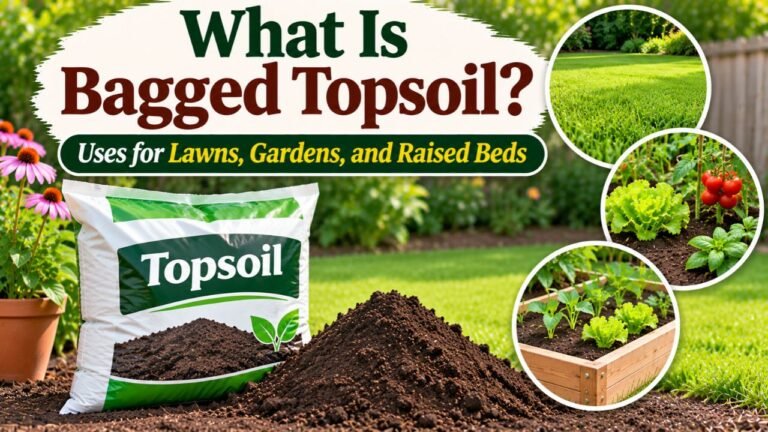
Loam or sandy-loam topsoil is often a practical mineral-soil component for traditional raised garden beds.
However, the bed’s construction matters.
Bottomless Raised Beds
A raised bed placed over suitable native ground can use quality mineral topsoil blended with appropriate compost.
Roots can extend into the soil below.
The University of Minnesota Extension’s raised-bed guidance recommends looking for loam or sandy-loam topsoil when purchasing bulk material.
Elevated Raised Planters
An elevated planter with a solid bottom behaves more like a large container.
Ordinary topsoil may become overly dense.
Use a growing medium suited to the planter’s drainage and root-volume requirements.
Should You Use 100% Topsoil?
A quality mineral topsoil can support plants in an open-bottom garden bed.
However, many gardens benefit from an appropriate amount of organic matter.
Avoid filling the bed entirely with compost or using arbitrary ratios without evaluating the soil.
What Type of Topsoil Is Best for Lawns?
For general lawn establishment, suitable loam or sandy loam is often useful.
The soil should provide adequate water storage while allowing excess moisture to drain.
New Lawn Establishment
Choose topsoil with:
- Suitable texture.
- Low debris.
- Good structure.
- Appropriate pH.
- Adequate nutrient availability.
Avoid extremely sandy or clay-heavy material unless it is appropriate for the site and grass species.
Lawn Topdressing
For an established lawn, topdressing material should be compatible with the existing soil.
A thin layer of fine-screened soil may be useful for specific surface repairs.
However, applying an incompatible material can create an undesirable interface.
Don’t cover living turf with a thick layer.
Lawn Leveling
Topsoil can help fill shallow depressions.
However, major grading work may require other materials or professional planning.
Maintain drainage away from buildings.
What Type of Topsoil Is Best for Vegetable Gardens?
Many vegetables perform well in loose, fertile loam or sandy loam with suitable organic matter.
However, different crops have somewhat different requirements.
Root Vegetables
Carrots, parsnips, and other root crops benefit from soil that allows roots to develop without severe obstruction.
Loose loam or sandy loam is often convenient.
Remove large rocks and address compaction before planting.
Fruiting Vegetables
Tomatoes, peppers, and other fruiting vegetables need suitable soil fertility, drainage, and moisture.
Loamy topsoil can provide a useful growing environment.
However, water and fertilizer requirements still depend on crop growth and soil tests.
Leafy Vegetables
Lettuce, spinach, kale, and similar crops benefit from reliable moisture and nutrients.
A well-structured loam can work well.
In fast-draining sandy soil, more frequent irrigation may be needed.
Special Soil Requirements
Not every crop prefers the same soil chemistry.
For example, blueberries generally require more acidic conditions than many vegetables.
A topsoil product that works well for tomatoes may not be appropriate for blueberries without adjustment.
How to Tell What Type of Topsoil You Have
You can estimate soil texture with a simple hand test.
For a more accurate classification, use a laboratory texture analysis.
Step 1: Collect a Representative Sample
Take a sample from the growing area.
Remove large stones, roots, and debris.
If the topsoil varies across the site, collect separate samples from noticeably different areas.
Step 2: Moisten the Soil
Add a little water.
The sample should become workable without turning into liquid mud.
Step 3: Feel the Texture
Rub the sample between your fingers.
- Gritty: suggests sand.
- Smooth: suggests silt.
- Sticky or plastic: suggests clay.
Many soils display more than one characteristic.
Step 4: Make a Ribbon
Press the moist soil between your thumb and forefinger.
Observe whether it forms a ribbon.
Longer, more cohesive ribbons generally indicate greater clay content.
A soil dominated by sand usually doesn’t form a stable ribbon.
Step 5: Consider a Laboratory Test
A laboratory texture test can estimate the percentages of sand, silt, and clay.
The results can then be classified using the soil-texture triangle.
A separate soil fertility test can measure pH and available nutrients.
The two tests answer different questions.
Key Takeaway: A hand test can help identify soil texture, but laboratory analysis provides a more dependable classification.
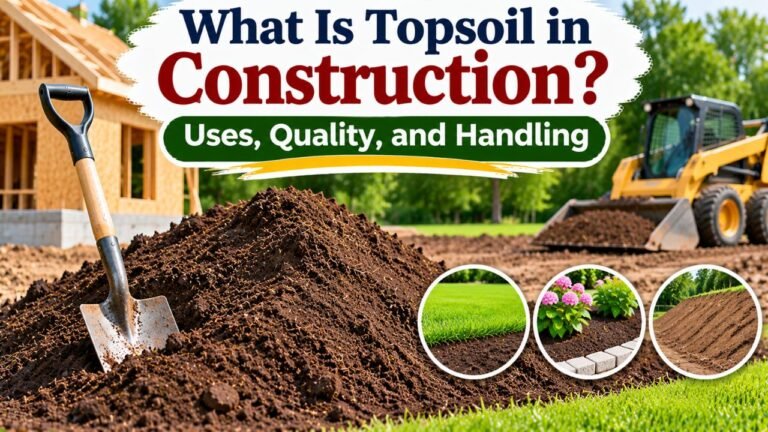
What Is Screened Topsoil Classified As?
Screening is a processing method, not a soil-texture category.
A screened topsoil product can still be sandy loam, loam, silt loam, or another texture.
What Does Screening Remove?
Depending on the screen size, processing may remove:
- Larger stones.
- Coarse roots.
- Some plant debris.
- Large clods.
- Certain foreign materials.
However, screening doesn’t change the fundamental proportions of sand, silt, and clay.
Is Screened Topsoil Always Loam?
No.
A sandy soil remains sandy after screening.
A clay-rich soil remains clay-rich.
Screening may make it easier to spread, but it doesn’t transform an unsuitable texture into ideal garden loam.
What About Blended Topsoil?
A blended product may contain several soil materials and compost.
This can change the overall physical and chemical characteristics.
However, don’t assume that all blended products meet the same standard.
Ask for the composition and intended use.
Topsoil vs. Garden Soil vs. Potting Soil
These names describe different things.
| Material | What it means | Typical use |
| Topsoil | Natural surface mineral soil or commercially sold surface-soil material | Lawns, gardens, landscaping |
| Garden soil | Commercial growing soil, often with amendments | In-ground beds |
| Potting soil or potting mix | Medium formulated for container growing | Pots and containers |
| Raised-bed mix | Product formulated for raised beds | Raised gardens |
| Compost | Decomposed organic material | Soil amendment |
A product labeled garden soil may contain mineral topsoil, compost, bark, or other ingredients.
A potting mix may contain little or no mineral soil.
Read labels carefully.
Is Topsoil a Potting Soil?
Not necessarily.
Ordinary topsoil may compact in small containers.
Potting mixes are generally formulated to maintain suitable drainage and air space in enclosed growing conditions.
For small pots, use a product intended for container growing.
Is Garden Soil Better Than Topsoil?
It depends on the product and application.
A quality topsoil may be excellent for an in-ground vegetable bed.
A garden soil product may contain suitable amendments.
Neither name guarantees quality.
How to Improve Different Types of Topsoil
Different textures require different management.
Improving Sandy Topsoil
Use suitable finished compost and organic mulch.
These can improve water retention and support nutrient management.
Monitor irrigation because sandy soil may dry quickly.
Improving Clay-Rich Topsoil
Avoid working the soil when wet.
Use organic amendments appropriately.
Maintain permanent walking paths to reduce compaction.
Address drainage problems rather than assuming a small amount of added sand will solve them.
Improving Silty Topsoil
Protect the surface with mulch or vegetation.
Avoid unnecessary tilling.
Maintain organic matter to support aggregation and reduce surface crusting.
Improving Loamy Topsoil
Even good loam requires maintenance.
Prevent compaction, maintain suitable organic matter, and replace nutrients according to crop needs.
Don’t add unnecessary fertilizer or compost merely because the soil is used every year.
Common Mistakes When Choosing Topsoil by Type
Assuming All Topsoil Is Loam
Topsoil can contain many different textures.
Check the actual material.
Buying Only Based on Color
Dark color doesn’t establish texture, nutrient balance, or drainage.
Choosing Very Sandy Soil for Every Project
Sandy soil may drain rapidly but require more irrigation.
Not every landscape plant benefits from very fast drainage.
Assuming Clay Is Always Bad
Clay can retain useful water and nutrients.
The problem is often poor structure, compaction, or unsuitable drainage rather than clay itself.
Confusing Screened Soil With Tested Soil
Screening removes larger material.
It doesn’t establish fertility, pH, salt levels, or freedom from contaminants.
Using One Soil Type for Every Plant
Different crops have different moisture, drainage, and nutrient requirements.
Choose soil that matches the plant and growing system.
Conclusion
Topsoil is not a single soil type such as sand, clay, or loam. It is the upper mineral layer of soil, usually called the A horizon, and it can have many different textures.
Sandy topsoil drains relatively quickly, silty topsoil often retains moisture, and clay-rich topsoil may store water and nutrients while becoming difficult to work when wet.
Loam and sandy loam are frequently suitable for general gardening because they can balance drainage, moisture retention, and workability.
However, soil texture alone doesn’t determine quality. Structure, organic matter, fertility, pH, and drainage are also important.
I recommend choosing loam or sandy-loam topsoil as a starting point for many lawns and ground-connected raised beds, then confirming that the actual product meets the requirements of your plants.
The best type of topsoil is the one with the appropriate texture, structure, nutrients, and drainage for your specific growing conditions—not simply the one labeled premium or black topsoil.
FAQs About What Type of Soil Is Topsoil
Is Topsoil a Type of Loam?
No.
Topsoil is a soil horizon or commercial surface-soil material.
Loam is a texture class based on sand, silt, and clay proportions.
Some topsoil is loamy, while other topsoil is sandy, silty, or clay-rich.
Is Topsoil Sandy or Clay?
It can be either.
The texture depends on the local soil’s mineral particle composition.
A laboratory soil-texture analysis can identify the proportions of sand, silt, and clay.
Is Topsoil Considered Organic Soil?
Most ordinary garden topsoil is mineral soil containing varying amounts of organic matter.
It is not necessarily classified as organic soil material.
Some soil environments have organic-dominated surface horizons, but these are different from typical mineral topsoil.
What Type of Topsoil Is Best for Growing Vegetables?
Loam and sandy loam are often suitable choices because they can support root growth, drainage, and moisture retention.
However, vegetables also require suitable fertility, pH, and soil structure.
What Type of Topsoil Is Best for Grass?
Suitable loam or sandy loam is often useful for new lawns.
For topdressing existing grass, choose material compatible with the original soil.
Avoid using a thick layer that buries living turf.
Is Black Topsoil Better Than Brown Topsoil?
Not automatically.
Black soil may contain more organic matter, but color alone doesn’t establish quality.
Brown topsoil can also be fertile and well-drained.
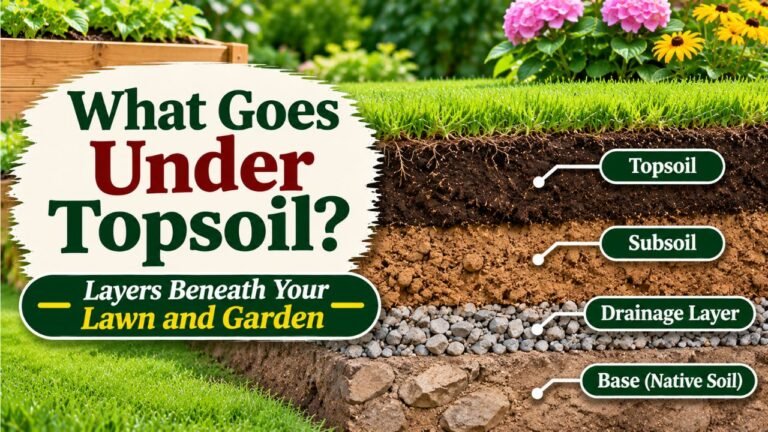
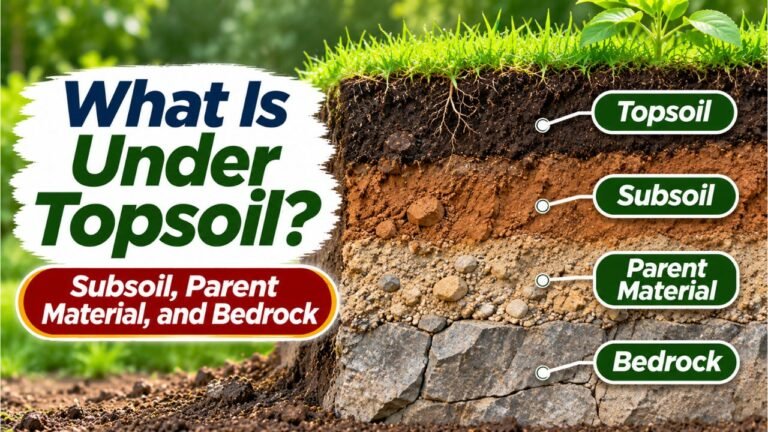
What Is the Difference Between Topsoil and Subsoil?
Topsoil is generally the surface A horizon, while subsoil is usually the deeper B horizon.
Topsoil often contains more organic matter and root activity.
Subsoil may have different structure, color, and mineral accumulation.
Is Screened Topsoil a Soil Type?
No.
Screening is a processing method that removes larger particles and debris.
Screened topsoil can still have any of several soil textures.
The actual texture depends on the original material or blend.

I’m Maya L. Greenwood, a lifelong plant lover who believes anyone can grow something beautiful with the right guidance. After years of testing soil mixes, pruning methods, irrigation tricks, and pest-safe solutions, I started EasyGardenTips.com to turn hard-won lessons into step-by-step advice. From seed starting and container gardens to composting and seasonal checklists, my goal is to make gardening simple, sustainable, and fun.