How Deep Should a Raised Bed Be for Tomatoes? Soil Depth Tips
For most tomatoes, build a raised bed with 12–18 inches of loose, well-drained soil; choose 18–24 inches when the bed sits on concrete or has a closed bottom. An open-bottom bed can be shallower if the native soil below is healthy and roots can grow into it.
Tomato roots need both depth and room to spread. Although much of their active root system occupies the upper portion of the soil, vigorous plants can explore farther down when conditions allow. A shallow, bottomless 8–12-inch bed over loose garden soil can work, while the same depth over pavement restricts the entire root system.
Depth also affects moisture storage, drainage, soil cost, and how firmly a cage or trellis can be supported. Deeper is often more forgiving in hot weather, but a deep bed filled with compacted soil or poorly drained material can still produce disappointing results.
In this article, I explain how deep a raised bed should be for tomatoes on native soil, concrete, or an elevated platform. You’ll also learn how root depth differs by tomato variety, how to calculate fill volume, and how to manage drainage, spacing, and watering.
How Deep Should a Raised Bed Be for Tomatoes?
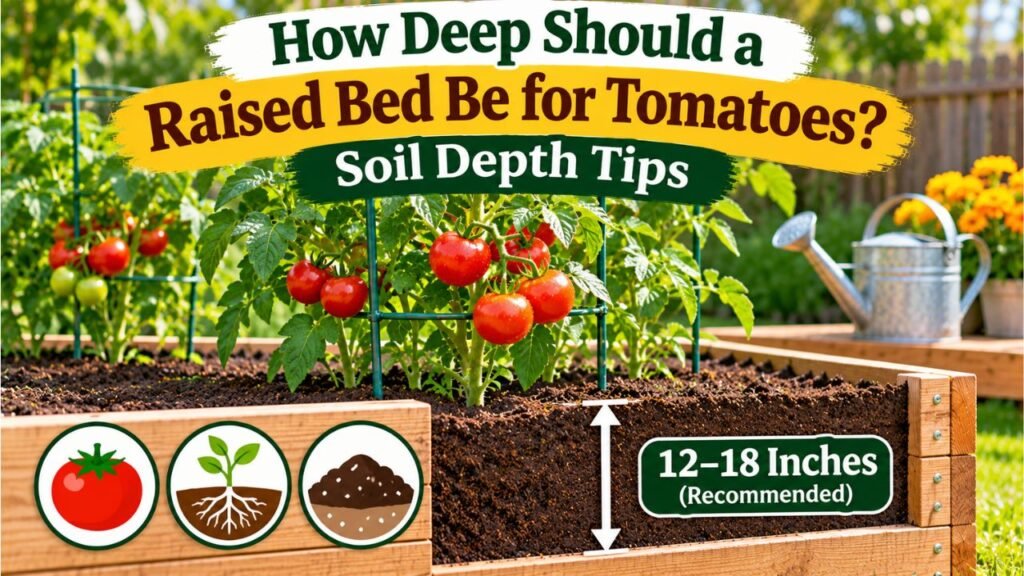
A soil depth of 12–18 inches is a practical choice for most raised-bed tomato gardens, while 18–24 inches provides more room for roots and moisture storage.
However, the ideal depth depends primarily on whether roots can grow into the ground below.
A raised bed placed directly on healthy garden soil functions differently from a planter with a solid bottom.
Tomato Raised Bed Depth Chart
| Raised Bed Depth | Suitability for Tomatoes | Important Consideration |
| 6 inches | Possible over healthy native soil | Roots must grow into the soil below |
| 8 inches | Workable over loose, well-drained ground | Limited raised-soil volume |
| 10 inches | Suitable in some open-bottom setups | Less forgiving during dry weather |
| 12 inches | Practical starting depth | Better if roots can extend below |
| 15 inches | Good for many tomato varieties | More room for roots and moisture |
| 18 inches | Excellent general-purpose depth | Suitable for many contained beds |
| 24 inches | Excellent for deeper contained beds | More soil, water storage, and expense |
| 30 inches or more | Usually more than necessary for root depth alone | Mainly useful for accessibility or special designs |
These are general recommendations rather than strict biological limits.
A healthy tomato plant in an 8-inch open-bottom raised bed may develop a larger root system than a plant growing in an 18-inch planter filled with poorly draining soil.
According to the University of Maryland Extension’s raised-bed gardening guide, roots can grow into the soil beneath open-bottom beds. For raised beds on impermeable surfaces, the university recommends 12–24 inches of soil for crops such as tomatoes, peppers, and squash.
Best Overall Depth for a New Tomato Bed
If you’re building a new raised bed and have enough space and budget, 18 inches is an excellent all-around choice.
It provides a useful balance between root space, water-holding capacity, construction cost, and soil volume.
For a bed on concrete or another hard surface, choosing 18–24 inches is particularly practical because the plants cannot access deeper native soil.
Key Takeaway: Choose 12–18 inches for a conventional open-bottom tomato bed and preferably 18–24 inches when the soil is completely contained. Good drainage and suitable soil matter as much as the measured depth.
How Deep Do Tomato Roots Grow?
Tomatoes can develop extensive root systems when the soil allows them to grow freely.
However, the depth reached by an individual plant depends on soil structure, moisture, nutrients, cultivar, and growing conditions.
Typical Tomato Root Depth
Many tomato roots are concentrated in the upper 12–24 inches of soil.
Some roots can grow considerably deeper under favorable conditions.
The University of Georgia Extension’s Commercial Tomato Production Handbook explains that tomatoes can be deep-rooted, but actual root development varies substantially with soil conditions. It identifies an effective rooting depth of approximately 12–18 inches in many Georgia production soils.
That doesn’t mean every tomato root stops at 18 inches.
It means the portion of the root system actively supplying water and nutrients is often concentrated within a relatively shallow zone, even when some roots extend farther.
Why Tomato Roots Need Enough Depth
A healthy root system performs several essential functions:
- Absorbing water
- Taking up nutrients
- Anchoring the plant
- Supporting foliage and fruit development
- Helping plants tolerate short periods of dry weather
Restricted rooting volume can make watering and nutrient management more difficult.
When roots cannot spread sufficiently, plants may dry out faster and experience greater stress.
However, greater depth alone doesn’t guarantee higher yields.
Soil quality, adequate sunlight, and consistent moisture remain essential.
Do Tomato Roots Grow Sideways?
Yes.
Tomato roots grow both downward and outward.
They don’t occupy only a narrow column directly beneath the stem.
This is why raised-bed width and spacing are important.
A deep but extremely narrow container may restrict root development even when it offers considerable vertical depth.
For vigorous tomatoes, provide enough overall soil volume instead of focusing only on height.
Is a 6-Inch Raised Bed Deep Enough for Tomatoes?
A 6-inch raised bed can support tomatoes under the right conditions, but it isn’t the preferred choice when building a new tomato bed.
The main factor is what lies underneath.
When a 6-Inch Bed Can Work
A shallow bed may work when:
- It has no solid bottom.
- It sits directly over healthy garden soil.
- The underlying soil drains adequately.
- Roots can grow into the ground below.
- The soil isn’t severely compacted.
- Irrigation is managed carefully.
In this situation, the raised bed adds a shallow layer of improved soil above an existing rooting area.
The total available rooting depth extends beyond the frame.
When a 6-Inch Bed Is Too Shallow
A 6-inch bed is generally unsuitable when it sits on:
- Concrete
- Paving stones
- An impermeable deck surface
- A solid planter base
- Contaminated soil that must be isolated
- Severely compacted ground that roots cannot penetrate
In these cases, the entire root system is restricted to the shallow soil layer.
The bed also contains relatively little water and nutrients.
Should You Upgrade a 6-Inch Bed?
If the bed sits on good soil and your tomatoes are growing well, an upgrade may not be necessary.
However, if you’re experiencing rapid drying, restricted growth, or poor soil conditions, increasing the depth can make management easier.
For a new build, 12–18 inches is a more flexible choice.
Is an 8-Inch Raised Bed Deep Enough for Tomatoes?
An 8-inch raised bed is workable for tomatoes when it has an open bottom and suitable soil underneath.
However, its performance depends on the condition of that underlying ground.
Advantages of an 8-Inch Bed
A shallow raised bed offers several practical benefits:
- Lower construction cost
- Less purchased soil
- Easier installation
- Improved surface drainage in some locations
- Access to the existing soil below
For gardeners with healthy native soil, an 8-inch frame can be enough to create a productive planting area.
Limitations of an 8-Inch Bed
The raised portion holds less moisture than a deeper bed of the same width and length.
Tomatoes may require more attention during hot, dry weather.
If the soil beneath is compacted or poorly drained, roots may struggle to move downward.
An 8-inch bed also leaves less room for deep transplant planting.
What Should You Do Before Planting?
Check the soil beneath the frame.
If it is compacted, loosen it carefully with a garden fork without unnecessarily turning over the entire soil profile.
Make sure there isn’t an impermeable barrier separating the raised-bed soil from the ground below.
If the underlying soil is suitable, roots can continue growing beyond the raised layer.
Best use: An economical open-bottom raised bed over healthy garden soil.
Is a 12-Inch Raised Bed Deep Enough for Tomatoes?
Yes. A 12-inch raised bed is a practical option for many tomato gardens.
It is particularly useful when the bed is open at the bottom.
Why 12 Inches Is a Common Choice
A 12-inch frame provides more planting media than a 6- or 8-inch bed.
This can improve moisture storage and provide additional room for initial root development.
It also allows gardeners to plant tomato transplants somewhat deeper.
Can Tomatoes Grow in a 12-Inch Bed on Concrete?
They can, but the restricted soil volume requires more careful management.
University of Maryland Extension includes 12 inches within its recommended 12–24-inch range for tomatoes on hard surfaces.
However, 12 inches is the shallow end of that range.
For large indeterminate tomato plants, a deeper contained bed may be more forgiving.
Is 12 Inches Enough for Cherry Tomatoes?
Many cherry tomatoes can grow in a 12-inch raised bed, especially when it has an open bottom.
However, cherry tomato plants aren’t automatically small.
Some indeterminate cherry varieties grow taller and more vigorously than standard slicing tomato plants.
Choose depth based on the cultivar’s mature growth habit rather than fruit size alone.
Is an 18-Inch Raised Bed Good for Tomatoes?
Yes. An 18-inch raised bed is an excellent choice for many tomato varieties.
It provides a substantial rooting area without requiring as much soil as a 24-inch bed.
Benefits of an 18-Inch Tomato Bed
An 18-inch bed generally offers:
- More room for root development
- Greater soil volume
- Improved moisture reserves compared with a shallower bed
- More flexibility for deep transplanting
- Space for a suitable soil mixture
- Easier management of larger plants
These benefits are especially useful during hot weather.
However, the bed still needs proper drainage.
Is 18 Inches Enough for Indeterminate Tomatoes?
For many indeterminate varieties, 18 inches of suitable soil can provide a productive growing environment.
If the bed is open-bottomed, roots may extend into the native soil below.
If the bed has a closed bottom, consider the overall width and soil volume as well.
A large indeterminate tomato may need more growing space and a stronger support system than a compact determinate cultivar.
Who Should Choose an 18-Inch Bed?
An 18-inch depth is useful for gardeners who want a flexible bed for:
- Cherry tomatoes
- Determinate tomatoes
- Indeterminate tomatoes
- Peppers
- Other relatively deep-rooted vegetables
For many home gardens, it offers a practical balance between depth and cost.
Is a 24-Inch Raised Bed Better for Tomatoes?
A 24-inch raised bed can be an excellent choice, particularly when roots cannot reach the ground below.
However, it isn’t automatically better in every garden.
Advantages of a 24-Inch Raised Bed
A deeper bed provides more growing media.
This can offer:
- More root space
- Greater water-storage capacity
- Additional nutrient reserves
- Less dependence on the native soil below
- More flexibility for deep-rooted crops
The benefits are especially noticeable when the bed sits on concrete or contains a solid bottom.
Does a 24-Inch Bed Produce More Tomatoes?
Not necessarily.
If tomatoes already have sufficient root space, increasing the bed depth may not produce a meaningful yield increase.
Sunlight, fertility, moisture, temperature, variety, pollination, and disease management all affect production.
A 24-inch bed filled with poor-quality soil may perform worse than a 12-inch open-bottom bed with healthy soil underneath.
Disadvantages of a 24-Inch Bed
Deeper beds require more soil and stronger construction.
A 4×8 bed filled to 24 inches contains approximately 64 cubic feet of growing media.
That is twice the volume needed for the same bed at 12 inches.
The added cost and weight can be substantial.
When Is 24 Inches Worth It?
Choose this depth when:
- The bed sits on concrete.
- The native soil cannot safely be used.
- The planter has a closed bottom.
- You want more moisture storage.
- You’re growing vigorous tomato varieties.
- You need a taller bed for comfortable access.
Key Takeaway: An 18-inch bed is an excellent general-purpose choice, while 24 inches is especially useful for contained growing systems and gardeners who want greater soil volume.
How Deep Should a Raised Bed Be for Tomatoes on Concrete?
For tomatoes on concrete, 18–24 inches is a practical target, although some plants can succeed at 12 inches with appropriate management.
Unlike open-bottom beds placed over soil, tomatoes on concrete cannot extend their roots into the ground below.
The entire rooting system must develop within the raised-bed growing medium.
Why Concrete Changes the Depth Requirement
A concrete surface limits downward root growth.
The bed must provide enough space for both the root system and the moisture needed between watering sessions.
Concrete can also absorb and reflect heat.
This may increase the temperature around the bed and accelerate soil drying during hot weather.
Recommended Tomato Bed Depth on Concrete
| Soil Depth | Practical Assessment |
| 8 inches | Generally too shallow for a full tomato-growing season |
| 12 inches | Workable with careful watering and cultivar selection |
| 15 inches | Better, but still limited for vigorous plants |
| 18 inches | Strong general recommendation |
| 24 inches | Excellent depth for contained tomato growing |
These are practical recommendations, not absolute yield thresholds.
Provide Adequate Drainage
A raised bed on concrete must allow excess water to escape.
Depending on the construction, this may involve an open base with a suitable drainage path or a container bottom with properly designed drainage openings.
Don’t seal the bottom with impermeable plastic.
If water accumulates beneath the soil, roots may become oxygen-starved.
Make sure runoff can leave without causing damage to nearby buildings or walkways.
Watch the Bed’s Weight
Moist soil is heavy.
A large, deep raised bed can weigh several thousand pounds when filled.
Concrete at ground level and an elevated deck are not the same structural situation.
If placing a large soil-filled bed on a deck, balcony, or roof, have the structure’s load capacity assessed by a qualified professional.
How Deep Should an Elevated Raised Bed Be for Tomatoes?
An elevated raised bed is a planter supported above the ground, often on legs.
Its depth requirement is different from that of a bottomless bed resting on native soil.
Minimum Practical Depth
For elevated tomato planters, approximately 12 inches of growing media may support some compact varieties with careful watering and feeding.
However, 18–24 inches is a more forgiving target for larger plants.
The total soil volume also matters.
A narrow container with 18 inches of depth may hold less growing media than a wider container with a somewhat shallower profile.
Raised Bed Height vs. Soil Depth
These measurements aren’t the same.
For example, a raised planter may stand 36 inches above the ground but contain only 12 inches of soil.
The remaining height may be legs or empty space.
Only the usable soil depth contributes to root development.
Drainage Is Essential
An elevated planter needs drainage openings or a suitable permeable bottom system.
The structure must also support the weight of wet soil and mature plants.
Use appropriate exterior-rated materials and check the manufacturer’s load rating for prefabricated elevated beds.
Which Tomatoes Work Best?
Compact patio tomatoes and small determinate varieties are often easier to manage in limited rooting volumes.
Vigorous indeterminate plants generally benefit from larger planters, sturdy supports, and more consistent watering.
Best Raised Bed Depth for Determinate vs. Indeterminate Tomatoes
Tomato growth habit affects the space and support the plant needs.
However, determinate and indeterminate tomatoes don’t have completely separate biological root-depth requirements.
Determinate Tomatoes
Determinate tomatoes grow to a more limited mature size and typically produce a concentrated harvest.
Many are suitable for raised beds.
A 12–18-inch open-bottom bed can work well when the underlying soil is suitable.
For a contained planter, more soil volume makes watering and nutrient management easier.
Indeterminate Tomatoes
Indeterminate tomatoes continue growing and producing fruit over an extended season when conditions permit.
They may become several feet tall.
These plants can benefit from the larger soil volume of an 18–24-inch bed, particularly when growing above concrete or in a closed planter.
However, a bottomless 12-inch raised bed can also support indeterminate tomatoes when the underlying garden soil is healthy.
Dwarf and Patio Tomatoes
Dwarf varieties generally require less above-ground space.
Some are bred specifically for containers and small gardens.
They may perform well in shallower beds or smaller containers.
However, don’t confuse dwarf plants with young plants.
Check the mature plant size and recommended container volume before choosing a shallow planter.
Depth by Tomato Type
| Tomato Type | Suitable Starting Depth | Important Note |
| Dwarf patio tomato | 12–18 inches in contained beds | Check container volume |
| Compact determinate | 12–18 inches | Can use open soil below |
| Standard determinate | 12–18 inches | Provide enough width |
| Indeterminate cherry | 18–24 inches preferred if contained | Often vigorous despite small fruit |
| Large slicing tomato | 18–24 inches preferred if contained | Strong support may be needed |
| Large indeterminate heirloom | 18–24 inches preferred if contained | Allow generous root and canopy space |
These are planning guidelines, not fixed minimums for every cultivar.
How Wide Should a Raised Bed Be for Tomatoes?
Depth is only one dimension.
A tomato raised bed should also provide enough horizontal room for roots and above-ground growth.
Best Raised Bed Width
A width of 3–4 feet is convenient for many home gardens.
It allows access from both sides without stepping on the soil.
Avoid making a bed so wide that you must walk inside it to reach the plants.
Walking on the soil can cause compaction.
Best Raised Bed Length
Common options include:
- 3×6 feet
- 4×4 feet
- 4×6 feet
- 4×8 feet
- 4×10 feet
Choose the length according to available space, access, and the number of tomato plants.
Longer wooden beds may require reinforcement to prevent their sides from bowing outward under soil pressure.
How Many Tomatoes Fit in a 4×8 Raised Bed?
For large indeterminate tomatoes, two plants with adequate supports are a comfortable starting point.
Some compact determinate varieties can be grown more closely when the cultivar’s spacing recommendations permit it.
Follow the seed packet or transplant label.
Tomato Plant Spacing
As general starting guidelines:
| Tomato Growth Habit | Approximate Plant Spacing |
| Compact dwarf varieties | Follow cultivar instructions; sometimes 12–18 inches |
| Determinate bush tomatoes | Often 24–36 inches |
| Staked or trained indeterminate tomatoes | Often 24–36 inches, depending on training |
| Large, vigorous tomatoes | Often 36 inches or more |
These distances vary with the variety, support system, pruning, and climate.
Poor spacing can reduce airflow and make pests and diseases harder to manage.
How Much Soil Do You Need for a Tomato Raised Bed?
Soil volume depends on the bed’s length, width, and actual fill depth.
Calculate using the inside dimensions of the bed, not just its advertised outside dimensions.
Raised Bed Soil Volume Formula
Soil volume (cubic feet) = Length (feet) × Width (feet) × Soil depth (feet)
To convert inches into feet:
Depth in feet = Depth in inches ÷ 12
To convert cubic feet into cubic yards:
Cubic yards = Cubic feet ÷ 27
Example: 4×8 Raised Bed at 18 Inches Deep
Length: 8 feet
Width: 4 feet
Depth: 18 inches, or 1.5 feet
Calculation:
8 × 4 × 1.5 = 48 cubic feet
Convert to cubic yards:
48 ÷ 27 = approximately 1.78 cubic yards
This is the full geometric volume.
Actual soil purchases may differ because of internal dimensions, unfilled headspace, and settling.
Soil Volume by Raised Bed Size and Depth
| Bed Size | 12 Inches Deep | 18 Inches Deep | 24 Inches Deep |
| 2×4 ft | 8 cu. ft. | 12 cu. ft. | 16 cu. ft. |
| 3×6 ft | 18 cu. ft. | 27 cu. ft. | 36 cu. ft. |
| 4×4 ft | 16 cu. ft. | 24 cu. ft. | 32 cu. ft. |
| 4×8 ft | 32 cu. ft. | 48 cu. ft. | 64 cu. ft. |
| 4×10 ft | 40 cu. ft. | 60 cu. ft. | 80 cu. ft. |
How Many Soil Bags for a 4×8 Tomato Bed?
Assuming the full bed volume is filled:
| Depth | Total Volume | 1.5-Cu.-Ft. Bags | 2-Cu.-Ft. Bags |
| 12 inches | 32 cu. ft. | 22 bags | 16 bags |
| 18 inches | 48 cu. ft. | 32 bags | 24 bags |
| 24 inches | 64 cu. ft. | 43 bags | 32 bags |
Bag counts are rounded up to whole bags.
These are calculations, not recommended purchase quantities for every bed.
If the interior dimensions are smaller or you leave headspace below the rim, you’ll need less soil initially.
Some growing mixes also settle after filling and watering.
Key Takeaway: A 4×8 raised bed needs approximately 48 cubic feet of material to reach an 18-inch fill depth. Measuring the actual interior dimensions helps avoid unnecessary soil purchases.
What Is the Best Soil Mix for a Tomato Raised Bed?
Tomatoes need loose, fertile, well-drained soil with sufficient moisture-holding capacity.
The ideal mixture depends on whether the bed is open to native soil or functions as a contained planter.
Soil Mix for an Open-Bottom Raised Bed
A practical starting blend is:
- 70% suitable mineral topsoil
- 30% mature, finished compost
This provides a combination of soil structure, mineral particles, and organic matter.
However, the ideal ratio depends on the existing soil and compost quality.
For example, a soil already rich in organic matter may need less compost.
A laboratory soil test is useful before adding large amounts of amendments.
Soil Mix for a Raised Bed on Concrete
For contained beds over hard surfaces, a lighter container-style growing medium may be preferable.
University of Maryland Extension recommends a mixture of compost and soilless growing media in equal proportions for these setups, with some topsoil permitted in deeper beds.
The goal is to provide a growing medium that holds water while allowing adequate drainage and aeration.
Don’t automatically use heavy native clay soil in an elevated or completely contained planter.
Why Not Fill the Bed With Pure Compost?
Compost is an amendment, not a universal replacement for a balanced growing medium.
Using only compost can create problems with:
- Excessive nutrient concentrations
- Unstable soil structure
- Variable drainage
- Salt accumulation
- Shrinkage as organic matter decomposes
- Inconsistent water retention
Use mature compost as part of a suitable blend.
What Soil pH Do Tomatoes Prefer?
A slightly acidic soil is generally suitable.
A pH around 6.2–6.8 is a useful target for many vegetable gardens.
However, productive raised beds can perform well outside that narrow range.
Avoid adding lime or sulfur without testing the soil.
Should You Add Fertilizer Before Planting?
Fertilizer needs depend on the soil’s existing nutrient levels.
Too much nitrogen can encourage excessive leafy growth.
It may also create nutrient imbalances.
Use soil-test recommendations and follow the fertilizer label.
What Should You Put in the Bottom of a Deep Tomato Raised Bed?
The bottom of a raised bed affects drainage and rooting depth.
It’s important to distinguish an open-bottom bed over soil from a contained planter.
Open-Bottom Beds on Garden Soil
If the underlying soil is healthy, allow tomato roots to grow into it.
You can remove weeds and loosen compacted soil where necessary before filling the frame.
Don’t install a permanent impermeable layer beneath the bed.
Can You Use Cardboard Under a Raised Bed?
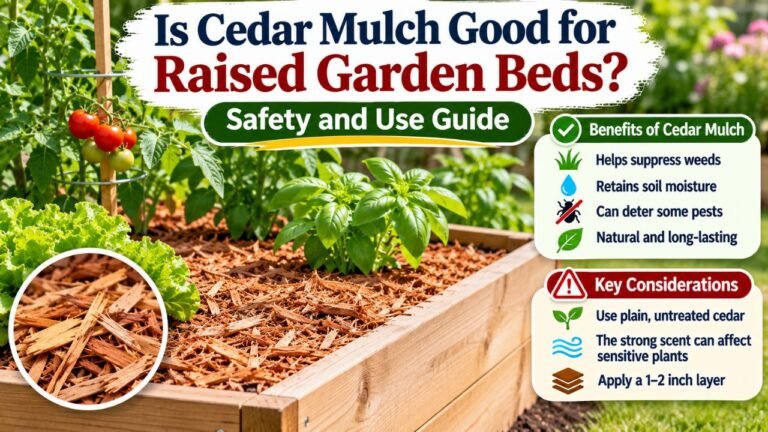
Plain, unwaxed cardboard can help suppress grass and weeds during bed establishment.
Remove tape, labels, and nondegradable materials.
The cardboard eventually decomposes.
However, a thick or slowly decomposing barrier can temporarily influence water movement and root access.
For tomatoes in a shallow raised bed, it’s especially important not to create a lasting obstruction between the bed and the underlying soil.
Should You Put Rocks in the Bottom?
A layer of gravel or rocks does not automatically improve root-zone drainage.
In some container systems, layering coarse material under finer growing media can create an unfavorable moisture distribution at the interface.
If the bed has a solid bottom, provide actual drainage openings and an appropriate growing medium rather than relying on rocks.
Can You Fill the Bottom With Logs or Branches?
Large woody materials are sometimes used in deep raised beds to reduce soil costs.
However, bulky logs and branches don’t provide the same immediate root environment as suitable growing soil.
They also decompose, settle, and may temporarily influence nutrient availability and water distribution.
For tomato beds, preserve enough continuous rooting depth above any buried material.
In a contained bed, don’t replace most of the recommended soil depth with logs, leaves, or other filler simply to save money.
What About Landscape Fabric?
Some permeable fabrics can help retain growing media in an elevated planter.
However, permanent landscape fabric under an open-bottom bed may restrict root movement and become clogged or entangled with roots.
Choose the bottom arrangement according to the bed’s construction and drainage needs.
How to Build a Raised Bed for Tomatoes Step by Step
A well-designed raised bed starts with location, dimensions, and drainage.
Step 1: Select a Sunny Location
Tomatoes generally need at least 6–8 hours of direct sunlight daily.
More sun can be beneficial under suitable growing conditions.
Choose a location with good air movement and access to water.
Avoid areas that remain waterlogged after rainfall.
Step 2: Decide on the Depth
Choose the depth based on the bed’s base:
- Healthy soil underneath: 12–18 inches is a comfortable target.
- Concrete or closed bottom: preferably 18–24 inches.
- Elevated planter: prioritize both depth and total soil volume.
If you already have a shallow open-bottom bed, evaluate the native soil before deciding that it needs replacement.
Step 3: Measure the Width and Length
A 3- or 4-foot-wide bed allows convenient access from both sides.
Choose the length according to the number of plants and available space.
For example, a 4×8 bed can provide room for two large indeterminate tomato plants with appropriate spacing and supports.
Step 4: Choose Suitable Materials
Raised-bed frames may be constructed from:
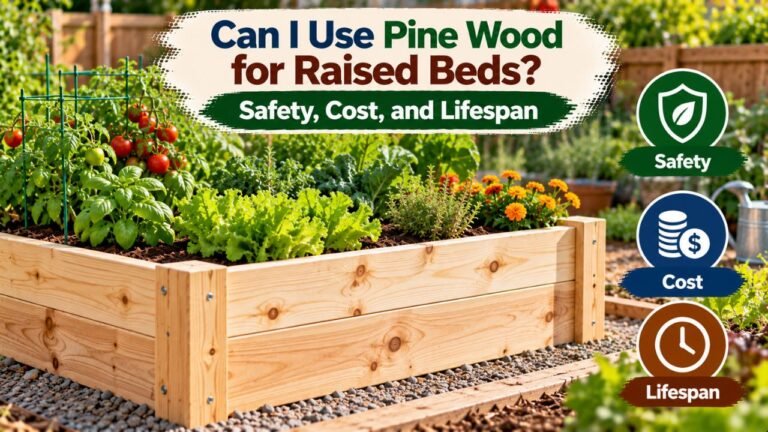
- Cedar
- Other suitable exterior wood
- Galvanized steel
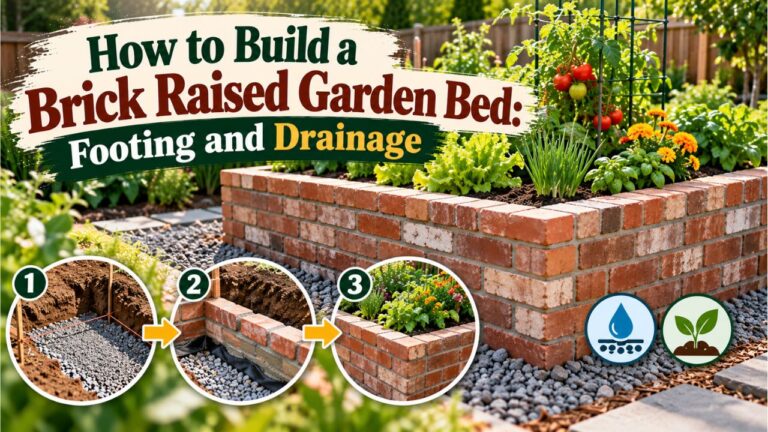
- Concrete blocks
- Durable composite materials
Choose materials appropriate for outdoor and food-garden use.
Avoid salvaged wood with unknown chemical treatments.
For metal beds, be mindful of exposed sharp edges.
Step 5: Prepare the Base
For open-bottom beds, remove unwanted vegetation and assess the underlying soil.
Loosen compacted ground where necessary.
For beds on concrete, plan a drainage path.
For elevated planters, ensure the bottom can support wet soil while allowing excess water to escape.
Step 6: Assemble the Frame
Build the frame on a stable, level location.
Use suitable fasteners.
Reinforce long sides if needed.
Check that the structure won’t shift or bow when filled.
Step 7: Add the Soil Mix
Fill the bed with an appropriate growing medium.
Spread the mix evenly.
Avoid heavily compacting it.
Water gently to help the soil settle.
Top up if necessary while leaving appropriate space below the rim for irrigation and mulch.
Step 8: Install Tomato Supports
Tomato cages, stakes, or trellises should be planned before the plants become large.
For indeterminate tomatoes, strong supports are particularly important.
Secure supports deeply or attach them to an appropriately designed frame.
Don’t assume a tall bed alone will hold a heavy trellis safely.
Step 9: Plant the Tomatoes
Wait until frost danger has passed and growing conditions are suitable.
Place the transplants according to the recommended spacing.
Water thoroughly after planting.
Step 10: Mulch and Monitor
Use a suitable organic mulch around established plants.
Keep mulch away from direct contact with the stem.
Monitor soil moisture and adjust irrigation as the weather changes.
How Deep Should You Plant Tomatoes in a Raised Bed?
Tomatoes are unusual among common garden vegetables because their buried stems can develop additional roots.
This allows gardeners to plant some tomato transplants deeper than they grew in their original containers.
Planting Standard Tomato Transplants
For a healthy, moderately sized transplant, you can often set the root ball a few inches deeper than its original level.
Remove leaves that would be buried.
Firm the soil gently around the plant and water it.
Planting Leggy Tomato Seedlings
If a tomato transplant has an unusually long stem, trench planting can be useful.
Instead of digging a very deep vertical hole:
- Dig a shallow trench.
- Remove leaves from the stem section to be buried.
- Lay the lower stem carefully in the trench.
- Position the growing tip above the soil.
- Cover the buried stem and root ball.
- Water thoroughly.
This allows additional roots to develop along the buried stem without requiring an extremely deep planting hole.
Does Deep Planting Mean You Need a 24-Inch Bed?
No.
Planting depth and total raised-bed soil depth are different measurements.
A tomato planted several inches deeper can still develop an extensive root system in a shallower open-bottom bed if roots have access to suitable soil below.
A deeper bed simply provides more room within the constructed growing medium.
How Often Should You Water Tomatoes in a Deep Raised Bed?
Watering frequency depends on soil texture, plant size, weather, and drainage.
A deeper bed generally holds more total water than an otherwise identical shallow bed, but that doesn’t automatically mean it needs less attention.
How Much Water Do Tomatoes Need?
Many established tomatoes need approximately 1–2 inches of water per week from rainfall and irrigation, depending on conditions.
Hot weather, large plants, and fruit development can increase demand.
A newly transplanted tomato may need smaller, more frequent applications while establishing.
Check Soil Moisture Below the Surface
Don’t rely only on the appearance of the top inch.
Use a finger, trowel, or soil probe to check moisture several inches down.
The soil should generally remain adequately moist without being continuously saturated.
Is Drip Irrigation Good for Tomato Raised Beds?
Yes.
Drip irrigation delivers water near the root zone and can reduce unnecessary wetting of leaves.
However, emitter flow rate and placement determine how much water reaches the plants.
A 30-minute run may deliver very different water volumes depending on the system.
Calculate the flow and inspect the wetting depth rather than choosing a fixed timer setting without testing.
Use Mulch to Reduce Moisture Loss
A suitable organic mulch can help reduce evaporation and moderate soil temperature.
Apply it around established plants without piling it against stems.
Consistent watering is especially important during fruit development.
Severe fluctuations in moisture can contribute to plant stress and problems such as blossom-end rot.
Common Mistakes When Choosing Tomato Raised Bed Depth
Depth alone won’t guarantee success.
Several common construction and growing mistakes can limit tomato performance.
Choosing a Shallow Bed Over Concrete
A shallow bed over concrete restricts roots to the depth of the planter.
Choose a deeper bed or a suitably large container.
Assuming All Tomato Varieties Need the Same Space
A compact patio tomato and a vigorous indeterminate heirloom may have very different mature sizes.
Check cultivar recommendations before selecting the bed dimensions.
Filling a Deep Bed With Poor Soil
An expensive 24-inch bed can still perform badly when filled with compacted clay or unsuitable material.
Use a well-drained, moisture-retentive growing medium.
Filling Most of the Bed With Large Logs
Large logs reduce the volume available for immediate root growth.
Don’t count bulky filler as equivalent to usable growing soil.
Blocking Drainage
A waterproof base without suitable drainage can lead to waterlogging.
Design drainage before filling the planter.
Ignoring the Underlying Soil
An open-bottom bed may allow roots to extend downward.
However, compacted, contaminated, or poorly drained native soil may not provide a suitable additional rooting area.
Investigate those conditions before relying on them.
Planting Tomatoes Too Close Together
Crowding reduces airflow and makes harvesting and pest management harder.
Choose spacing based on mature plant size, not seedling size.
Forgetting About Soil Settlement
Some growing mixes settle after watering and decomposition.
If the soil level drops significantly, the usable depth may become less than planned.
Top up appropriately while avoiding burying established stems or trapping mulch against the crown.
Neglecting Structural Support
Deep beds contain heavy soil.
Long frames, tall metal sides, and elevated structures must be strong enough for the load.
Add reinforcement where necessary.
What Is the Best Raised Bed Depth for Different Garden Setups?
The most practical choice becomes clearer when you consider the entire garden arrangement.
Best for a Backyard Bed on Healthy Soil
Recommended starting depth: 12–18 inches.
An open-bottom frame allows roots to use the native soil underneath.
A 12-inch bed can be adequate when the soil below is healthy.
Eighteen inches provides more soil volume and flexibility.
Best for a Bed on Concrete
Recommended starting depth: 18–24 inches.
The tomatoes must grow entirely within the contained soil.
Choose a deeper bed where possible and provide a reliable drainage route.
Best for a Deck or Elevated Planter
Recommended starting depth: 18–24 inches for larger tomatoes, where structurally practical.
For compact varieties, smaller containers can work when they provide enough soil volume and are properly managed.
Verify the deck or planter’s load capacity.
Best for a Budget Garden
Recommended starting depth: 8–12 inches over suitable native soil.
A shallow, bottomless bed can reduce the amount of purchased growing media.
However, this approach depends on the quality and drainage of the soil below.
Best for Large Indeterminate Tomatoes
Recommended starting depth: 18–24 inches if contained; 12–18 inches over healthy open soil can work.
Provide adequate horizontal space and strong supports.
Best for Compact Patio Tomatoes
Recommended starting depth: 12–18 inches in a suitable contained bed.
Some dwarf cultivars can grow in smaller containers.
Check the recommended minimum container volume and the cultivar’s growth habit.
Conclusion
How deep should a raised bed be for tomatoes? For most home gardens, 12–18 inches of suitable soil is a practical target, while 18–24 inches is a strong choice for beds on concrete or with closed bottoms.
A shallow open-bottom bed can also produce healthy tomatoes when the native soil below is loose, fertile, and well-drained. In that situation, roots aren’t restricted to the height of the raised-bed frame.
For gardeners building a new bed, 18 inches offers an excellent balance between rooting space, moisture storage, and soil cost.
A 24-inch bed provides more volume but isn’t always necessary, particularly when tomatoes already have access to healthy soil below.
Remember that soil quality, drainage, spacing, watering, and sunlight influence tomato growth as much as the bed’s depth.
Use a suitable growing medium, avoid impermeable bottom barriers without drainage, provide strong plant supports, and check soil moisture regularly.
The right raised bed is deep enough for the root system, wide enough for the mature plant, and designed to maintain healthy soil throughout the growing season.
FAQs About How Deep Should a Raised Bed Be for Tomatoes
Is 12 Inches Deep Enough for a Tomato Raised Bed?
Yes. A 12-inch raised bed can grow tomatoes, especially when it has an open bottom over healthy garden soil.
The roots can extend into the ground below.
For a bed on concrete or with a closed bottom, 18–24 inches provides more flexibility and moisture storage.
Can Tomatoes Grow in an 8-Inch Raised Bed?
Yes, when the bed sits directly on suitable native soil and has no impermeable bottom.
Roots need access to deeper soil below the frame.
An 8-inch bed over concrete is generally less suitable because the entire root system would be confined to a shallow layer.
Is an 18-Inch Raised Bed Deep Enough for Tomatoes?
Yes. Eighteen inches is an excellent general-purpose depth for tomatoes.
It provides substantial growing media for root development and moisture storage.
It is suitable for many determinate and indeterminate varieties when the bed also has enough width, good drainage, and proper maintenance.
Do Tomatoes Need 24 Inches of Soil?
Not always.
Tomatoes can grow well with less than 24 inches of soil, particularly in open-bottom beds where roots can extend into the ground.
A 24-inch contained bed is beneficial when additional soil volume and moisture storage are needed.
How Deep Should a Raised Bed Be for Cherry Tomatoes?
A depth of 12–18 inches can work well for many cherry tomato varieties.
However, some cherry tomatoes are vigorous indeterminate plants and may benefit from 18–24 inches in a contained bed.
Choose based on mature plant size, not just fruit size.
How Deep Should a Raised Bed Be for Beefsteak Tomatoes?
For large beefsteak varieties, 18–24 inches is a useful depth in a contained raised bed.
A shallower open-bottom bed can also work if roots have access to good soil below.
Provide substantial horizontal space and sturdy plant supports.
How Many Tomato Plants Can Grow in a 4×8 Raised Bed?
Two large indeterminate tomato plants are a comfortable starting arrangement for many 4×8 raised beds.
Compact or determinate varieties may allow different spacing.
Follow the cultivar’s mature plant-size recommendations and avoid overcrowding.
Can You Fill a Tomato Raised Bed With Only Compost?
Using pure compost as the entire growing medium isn’t generally recommended.
A balanced soil blend provides a more predictable combination of structure, aeration, water retention, and nutrients.
For open-bottom beds, suitable topsoil mixed with finished compost is a practical option.
Do Tomato Raised Beds Need Drainage Holes?
An open-bottom bed placed over well-drained native soil normally allows water to move into the ground below.
A planter with a solid bottom needs suitable drainage openings or an equivalent drainage system.
Without drainage, excess water may accumulate and damage roots.
How Much Soil Does a 4×8 Raised Bed Need at 18 Inches Deep?
A 4×8-foot bed filled to 18 inches requires approximately 48 cubic feet, or 1.78 cubic yards, of growing media.
That’s equivalent to 24 bags containing 2 cubic feet each.
Actual requirements vary with the bed’s interior dimensions, unfilled headspace, and soil settlement.

I’m Maya L. Greenwood, a lifelong plant lover who believes anyone can grow something beautiful with the right guidance. After years of testing soil mixes, pruning methods, irrigation tricks, and pest-safe solutions, I started EasyGardenTips.com to turn hard-won lessons into step-by-step advice. From seed starting and container gardens to composting and seasonal checklists, my goal is to make gardening simple, sustainable, and fun.