Are Galvanized Raised Beds Safe for Vegetables? Zinc and Rust
Yes, galvanized raised beds are generally considered safe for growing vegetables when they are made from quality materials and used with ordinary garden soil that isn’t highly acidic. The protective zinc coating on galvanized steel may release small amounts of zinc into surrounding soil, but this is not usually considered a significant concern under typical vegetable-growing conditions.
Galvanized steel is commonly used for raised garden beds because it resists rust, lasts longer than many untreated wooden frames, and requires relatively little maintenance. These beds can support tomatoes, peppers, lettuce, carrots, herbs, and other edible crops.
However, not all galvanized materials are identical. Older metal panels, poorly manufactured products, unknown coatings, and highly acidic soil may introduce additional concerns. Zinc is an essential plant nutrient in small amounts, but excessive concentrations can affect plant growth.
Understanding the difference between normal zinc exposure and potentially unsafe materials is important before choosing a metal garden bed.
In this article, I cover galvanized steel safety, zinc leaching, soil acidity, possible lead and cadmium contamination, rust, heat exposure, and protective liners. I also explain how to choose suitable metal beds and maintain a healthy environment for growing vegetables.
Are Galvanized Raised Beds Safe for Vegetables?
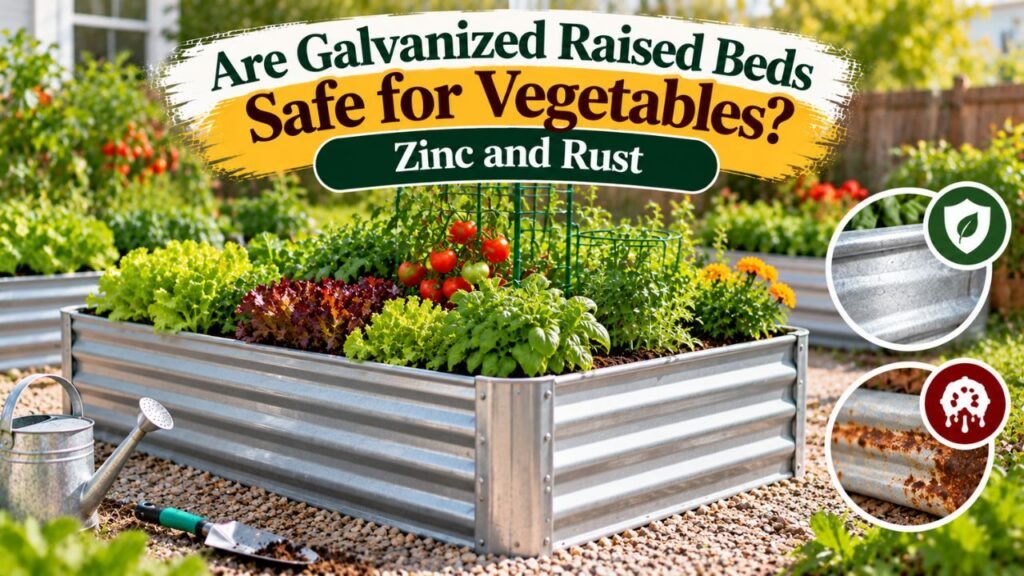
Modern galvanized steel raised beds are generally considered suitable for growing edible plants, including vegetables and culinary herbs.
The main reason is that galvanized steel has a protective zinc coating that resists corrosion under normal outdoor conditions.
The coating is not designed to dissolve rapidly in ordinary garden soil.
According to the University of Maryland Extension’s guidance on galvanized raised beds, these containers are generally considered safe for food crops. The extension specialist explains that small amounts of zinc released from the coating are not normally a problem for soil, plants, or people.
However, that assessment assumes suitable materials and typical growing conditions.
Several factors determine whether a particular galvanized raised bed is appropriate:
- Metal quality: The steel should come from a manufacturer that can identify its coating and production standards.
- Soil acidity: Highly acidic soil can increase zinc release.
- Previous material use: Salvaged metal may contain unknown coatings or chemical residues.
- Corrosion condition: Severely deteriorated metal deserves closer inspection.
- Additional coatings: Paints and protective finishes should be appropriate for the intended garden application.
- Soil quality: The growing medium should be free from known contamination.
A new galvanized steel bed from a reputable manufacturer is generally a more predictable choice than an unidentified secondhand metal container.
Is Galvanized Steel Food-Safe for Gardening?
Galvanized steel is commonly accepted as a material for vegetable-growing structures, but the term food-safe needs context.
A raised bed wall contacts soil rather than functioning as a cooking utensil or food-storage container.
The conditions are therefore different from placing acidic food directly into galvanized metal cookware.
The primary gardening concern is whether metals from the protective coating can enter the soil in amounts that affect plants or people.
For typical vegetable garden conditions, university extension guidance generally considers the risk low.
However, there is limited direct research covering every galvanized coating, soil chemistry, and long-term growing situation.
Key Takeaway: Properly manufactured galvanized steel raised beds are generally suitable for vegetables, but soil pH and material quality should be checked rather than assuming every metal container is equally safe.
How Does the Zinc Coating Affect Vegetable Garden Soil?
Galvanized steel is ordinary steel covered with a protective zinc coating.
Zinc protects the underlying steel by slowing corrosion and providing sacrificial protection when small areas of the coating are damaged.
This makes galvanized steel useful for outdoor structures exposed to rain and moisture.
However, the zinc coating can gradually react with its environment.
Can Zinc Leach From Galvanized Raised Beds?
Yes. Small amounts of zinc can move from galvanized surfaces into surrounding soil over time.
The amount depends on several conditions, including soil acidity, moisture, and the composition of the coating.
Under ordinary garden conditions, the zinc coating generally corrodes slowly.
Highly acidic conditions can accelerate zinc dissolution.
The University of Minnesota Extension’s raised bed gardening guidance notes that zinc may leach from galvanized raised beds in highly acidic soil, particularly at pH levels below 5.
The same guidance identifies galvanized steel as a common raised bed material and discusses the importance of choosing suitable products.
A small amount of zinc entering the soil does not automatically make vegetables unsafe.
The total concentration, chemical availability, and uptake by plants all influence its significance.
Is Zinc Harmful to Vegetable Plants?
Zinc is an essential micronutrient for plants.
Vegetables need small amounts of zinc for normal growth and important biological processes.
However, excessive available zinc can interfere with plant development.
Potential effects of excessive zinc exposure include:
- Reduced root growth
- Stunted plant development
- Leaf discoloration
- Nutrient imbalances
- Reduced overall plant vigor
These symptoms are not specific to zinc toxicity. Poor drainage, nutrient deficiencies, and other conditions can produce similar problems.
Do not assume that a struggling plant has excessive zinc simply because it is growing in a galvanized bed.
A soil test is more useful than diagnosing metal exposure through leaf appearance alone.
Does Zinc From the Metal Get Into Vegetables?
Zinc released into soil may become available for plant uptake, but the amount entering edible plant tissues depends on soil chemistry, crop type, and growing conditions.
Not all zinc present in soil is equally available to plants.
Soil pH, organic matter, and interactions with other minerals influence how zinc behaves.
There is also a difference between the total zinc in soil and the amount absorbed into edible vegetables.
The presence of a galvanized frame does not establish that the harvested produce contains harmful zinc concentrations.
For a standard vegetable bed with suitable soil pH and a known-quality galvanized coating, excessive zinc exposure is not generally expected.
However, specific safety conclusions about contaminated soil or unknown metal products require appropriate testing.
Does Soil pH Make Galvanized Raised Beds Unsafe?
Soil pH is one of the most important factors influencing zinc movement from galvanized steel.
As soil becomes more acidic, zinc generally becomes more soluble.
This can increase the amount released from the metal coating and the amount available to plant roots.
Galvanized Steel in Neutral and Slightly Acidic Soil
Most common vegetables grow well in slightly acidic to near-neutral soil.
A pH of approximately 6.0–7.0 is suitable for many vegetable crops, although individual requirements vary.
Under these conditions, galvanized steel is generally considered a reasonable raised bed material.
The zinc coating typically remains more stable than it would under strongly acidic conditions.
However, pH is only one factor.
Coating quality, moisture conditions, and other soil properties also affect corrosion.
Galvanized Steel in Highly Acidic Soil
Soil with a pH below approximately 5 presents greater potential for zinc release.
This is especially relevant for gardeners intentionally maintaining strongly acidic soil.
For example, blueberries typically require more acidic soil than most vegetables.
Using galvanized steel for an acid-loving crop may create more concern than using it for tomatoes, lettuce, or peppers.
In such situations, an untreated cedar bed, suitable plastic planter, or another compatible material may be preferable.
Do not raise soil pH merely to protect a metal container if the change would make the soil unsuitable for the intended plants.
Should You Test Soil pH Before Using a Galvanized Bed?
Testing pH is a practical precaution, especially when using existing garden soil or growing crops with special acidity requirements.
A soil test can identify whether the growing medium is unusually acidic.
If the pH is within the recommended range for the intended vegetables, there is generally no reason to alter it solely because the frame is galvanized.
If the soil is strongly acidic, investigate the appropriate amendments and consider whether another bed material would be better.
Avoid adding lime without a soil test or a crop-specific reason.
Important: A soil test for pH does not automatically include zinc, lead, or cadmium testing. If metal contamination is a concern, request the appropriate additional analysis from the laboratory.
Can Galvanized Raised Beds Contain Lead or Cadmium?
Potential contamination from metals other than zinc deserves attention, particularly when the product’s manufacturing history is unknown.
Galvanized coatings can contain trace impurities, and older manufacturing processes or recycled materials may introduce additional uncertainties.
However, the mere presence of a zinc coating does not mean the bed contains dangerous amounts of lead or cadmium.
Lead Concerns in Galvanized Garden Beds
Lead is not a nutrient required by plants or people.
Exposure to lead is undesirable, particularly for children.
Lead concerns may arise with unidentified coatings, older materials, or poorly manufactured products.
The University of Minnesota Extension warns that some prefabricated metal raised beds sold online have been found to contain lead.
For this reason, avoid choosing a metal bed based only on its advertised appearance or low price.
Ask manufacturers about their material specifications and relevant testing.
A reputable supplier should be able to provide meaningful information about the coating and manufacturing process.
What About Cadmium?
Cadmium is another metal of concern because it can be harmful to plants and people at sufficient exposure levels.
Trace cadmium may occur as an impurity in certain metal products.
However, the presence and quantity depend on the actual material and manufacturing process.
It is not accurate to assume that every galvanized bed releases significant cadmium into vegetable-growing soil.
For a new product, choose a manufacturer that provides transparent information about coating composition and material testing.
If a salvaged container has an uncertain industrial history, selecting a different bed material is generally more sensible than trying to guess its safety.
Are Old Galvanized Metal Panels Safe to Reuse?
Old roofing sheets, livestock tanks, and salvaged metal panels require additional evaluation.
Potential concerns include:
- Unknown paint or protective coatings
- Previous chemical storage
- Heavy corrosion
- Lead-containing materials
- Industrial residues
- Damaged or sharp edges
- Uncertain galvanizing processes
A clean, structurally sound galvanized livestock trough with known previous use is different from a container that once held pesticides, fuel, or industrial chemicals.
Avoid using unknown chemical-storage containers for edible gardening.
Old roofing panels with unidentified coatings may also be unsuitable.
When the material history cannot be verified, purchasing a new garden-specific bed is the more predictable choice.
Are Rusty Galvanized Raised Beds Safe for Vegetables?
Small rust spots do not automatically mean that vegetables growing nearby are unsafe.
Galvanized steel is made from an iron-based material protected by zinc.
When the coating becomes damaged or gradually wears away, the exposed steel may begin to rust.
However, the condition of the metal should be inspected before continuing to use the bed.
Surface Rust vs. Structural Corrosion
These conditions are different.
Surface rust generally affects limited exposed areas and may not immediately compromise the structure.
Structural corrosion involves substantial material loss, weakened connections, holes, or panels that can no longer safely retain the soil.
Signs requiring attention include:
- Deep pitting
- Perforated metal panels
- Loose or severely corroded fasteners
- Sharp, deteriorated edges
- Walls that bow outward
- Open seams that release soil
- Extensive flaking or breakdown of unknown coatings
A badly deteriorated raised bed may need replacement even if the soil itself remains suitable for growing vegetables.
Does Rust Contaminate Vegetable Soil?
Ordinary iron rust is not the same as lead or cadmium contamination.
Iron is naturally present in soil and is an essential plant nutrient.
However, rusty appearance alone does not identify every substance that may be present on old metal.
If corrosion involves paint, unknown coatings, or previously contaminated materials, additional concerns may exist.
Inspect the product history rather than relying only on whether rust is visible.
Should You Replace a Rusting Metal Raised Bed?
Replacement becomes appropriate when the structure loses strength or develops unsafe edges.
A few isolated rust marks do not necessarily justify discarding the entire bed.
However, extensive corrosion may indicate that the protective coating has deteriorated significantly.
For long-term vegetable gardening, a sound, well-supported frame is preferable to a weakened structure that may collapse or spill soil.
Do Galvanized Raised Beds Get Too Hot for Vegetables?
Galvanized metal can become hot when exposed to direct sunlight.
However, a hot metal surface does not automatically mean that the entire growing medium reaches a harmful temperature.
Soil temperature depends on more than the frame material.
Important factors include:
- Sunlight intensity
- Air temperature
- Bed dimensions
- Soil depth
- Moisture content
- Mulch coverage
- Metal color and surface finish
- Air movement around the structure
How Metal Walls Affect Soil Temperature
Metal conducts heat readily, so exposed walls can transfer warmth to soil immediately beside them.
The effect is generally more noticeable close to the metal than in the center of a large, well-filled bed.
Small, shallow containers may experience greater temperature changes than large beds containing substantial soil volume.
During hot summer weather, elevated beds can also lose moisture faster than traditional in-ground gardens.
Therefore, watering and soil volume often deserve as much attention as the metal itself.
Can Hot Galvanized Metal Damage Plant Roots?
Roots growing directly against a very hot metal wall may experience unfavorable temperatures, particularly when the surrounding soil is dry.
However, this does not mean galvanized beds are unsuitable for summer vegetables.
Tomatoes, peppers, cucumbers, and many other crops can grow successfully in metal raised beds when provided with sufficient rooting depth, moisture, and appropriate growing conditions.
To help manage heat:
- Use adequate soil depth for the selected vegetables.
- Apply suitable organic mulch.
- Maintain consistent soil moisture.
- Avoid severely overcrowding plants against the metal edges.
- Check moisture more frequently during extreme heat.
- Consider the site’s sun exposure when positioning the bed.
Avoid excessive irrigation simply to cool the metal. Waterlogged soil can create separate root problems.
Do Galvanized Raised Beds Need a Protective Liner?
A protective liner is not automatically necessary for a new, quality galvanized raised bed used with ordinary vegetable garden soil.
However, some gardeners prefer a liner to separate the growing medium from the metal.
This may provide additional reassurance about direct soil contact.
When a Side Liner May Be Useful
A suitable liner may be considered when:
- The gardener wants an additional barrier between soil and metal.
- The bed’s coating is known but direct contact is undesirable.
- The growing medium has special chemical conditions.
- The manufacturer recommends a liner for its particular product.
Choose a material appropriate for prolonged soil contact.
A liner should not be used to make an unidentified or potentially contaminated industrial container appear safe.
If the metal’s previous use or coating is unknown, replacing the material is often the better option.
Should You Line the Bottom?
For an open-bottom metal raised bed placed directly on suitable garden soil, a waterproof bottom liner is usually unnecessary.
The open bottom allows excess water to move into the soil beneath the frame.
It also lets roots grow downward when underlying conditions are suitable.
A continuous plastic sheet can interfere with drainage and restrict root growth.
If using a side liner, leave the bottom open unless the entire planter is specifically designed with another drainage system.
Can Landscape Fabric Prevent Zinc Leaching?
Ordinary permeable landscape fabric is not a reliable chemical barrier against dissolved zinc.
Water can pass through the material, potentially carrying dissolved substances with it.
A properly selected impermeable side liner may reduce direct soil-to-metal contact more effectively, but its installation must avoid trapping water.
Do not assume that any inexpensive fabric completely prevents metal transfer.
Key Takeaway: A liner is optional for many modern galvanized raised beds. Choosing a reliable metal product and maintaining suitable soil conditions is more important than adding an unverified barrier.
How to Choose a Safe Galvanized Raised Bed for Vegetables
Selecting a suitable product is one of the most effective ways to reduce uncertainty about metal contamination.
A well-designed garden bed should provide clear material information, stable construction, and adequate growing space.
1. Choose a Reputable Manufacturer
Look for manufacturers that identify the metal and coating used in their raised bed products.
Useful information includes:
- Type of galvanized steel
- Coating composition
- Manufacturing standards
- Relevant material testing
- Additional paint or powder coating
- Intended gardening application
- Product warranty
Be cautious of vague claims such as completely chemical-free or guaranteed nontoxic without supporting documentation.
Galvanized steel contains a metal coating by definition.
The meaningful question is whether the materials are suitable for their intended application.
2. Check for Additional Paint or Coatings
Some metal raised beds have painted or powder-coated finishes.
These coatings may improve appearance and corrosion resistance.
However, their composition varies.
Ask whether the coating is suitable for the intended soil-contact conditions.
Avoid using unidentified industrial paints, coatings, or chemical treatments on the inside of a vegetable-growing bed.
A coated metal bed should be evaluated as a complete product rather than assuming the galvanized layer is its only material.
3. Inspect the Edges and Structural Connections
Metal panels can have sharp edges.
Choose a frame with appropriately finished or covered upper edges.
Check that the panels fit securely and that bolts, brackets, and supports are suitable for outdoor use.
Long metal sidewalls may need reinforcement to resist the pressure of wet soil.
Thin panels should not bow excessively after the bed is filled.
4. Choose Suitable Bed Dimensions
The bed should provide enough growing space while remaining comfortable to maintain.
A width of approximately 3–4 feet is practical when both long sides are accessible.
For beds reached from only one side, a narrower design may be preferable.
The height depends on the crops and ground conditions.
Open-bottom metal beds on healthy soil can provide additional rooting depth through the ground beneath them.
Beds placed on concrete need sufficient internal soil depth because roots cannot grow downward into native soil.
5. Avoid Unknown Salvaged Metal
Reusing materials can save money, but uncertain coatings or chemical exposure are difficult to evaluate visually.
Avoid using metal that previously held pesticides, petroleum products, industrial chemicals, or other potentially hazardous substances.
A new galvanized bed with documented materials is generally a more reliable option for growing edible crops.
How to Prepare a Galvanized Raised Bed for Vegetable Gardening
Once an appropriate metal bed has been selected, proper preparation helps support healthy vegetable growth.
The metal frame is only one part of the growing environment.
Step 1: Choose a Suitable Location
Place the raised bed in an area with adequate sunlight and good drainage.
Most fruiting vegetables perform best with approximately 6–8 hours of direct sun daily.
Avoid locations where water repeatedly collects after heavy rainfall.
Make sure there is enough space around the bed for planting, watering, and harvesting.
Step 2: Assemble the Frame Securely
Follow the manufacturer’s assembly instructions.
Check that the panels are properly connected and any required support rods or braces are installed.
Use the specified hardware.
Protect exposed sharp edges before filling the bed.
Position the frame on stable ground so it does not rock or twist.
Step 3: Prepare the Ground Beneath the Bed
For an open-bottom bed, remove unwanted vegetation and debris.
If the underlying soil is compacted, gently loosen it when conditions are suitable.
This can help improve root penetration and drainage.
Do not install a waterproof sheet across the entire bottom.
If the bed is a repurposed galvanized trough with a solid floor, it needs adequate drainage openings.
Step 4: Fill With Suitable Garden Soil
Use a growing medium that provides sufficient nutrients, drainage, and moisture retention.
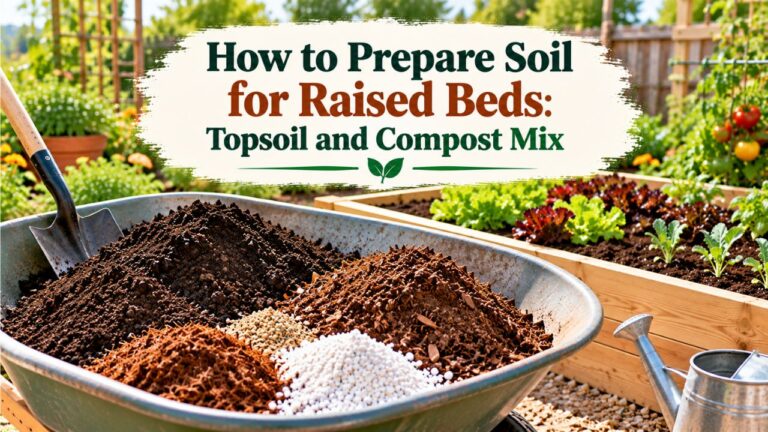
For many open-bottom vegetable beds, a practical starting mixture is:
- 2 parts quality topsoil
- 1 part finished compost
The exact blend should reflect the existing soil texture and crop needs.
Avoid filling the bed entirely with unfinished compost, dense clay, or unknown excavated material.
If the soil source is uncertain or contamination is suspected, request appropriate testing before growing edible crops.
Step 5: Check Soil pH
Test the soil to confirm that its acidity is suitable for the intended vegetables.
Most common vegetable crops grow well in slightly acidic to near-neutral conditions.
If the soil is extremely acidic, investigate the cause before planting.
Do not apply amendments solely to protect the galvanized coating without considering plant requirements.
Step 6: Plant and Maintain the Vegetables
Plant vegetables according to their mature spacing and root requirements.
Keep the soil evenly moist without allowing it to remain saturated.
Apply suitable mulch where appropriate.
Inspect the metal walls periodically for loose fasteners, corrosion, and damaged edges.
Regular maintenance helps protect both the raised bed structure and the growing environment.
Which Vegetables Can Grow in Galvanized Raised Beds?
Most common vegetables can grow in properly prepared galvanized steel raised beds.
The metal frame does not prevent ordinary vegetable production when the materials and soil conditions are suitable.
| Vegetable | Suitability for galvanized beds | Main growing consideration |
| Tomatoes | Suitable | Deep growing medium and consistent moisture |
| Peppers | Suitable | Warm conditions and adequate root space |
| Lettuce | Suitable | Regular moisture and suitable temperature |
| Spinach | Suitable | Cooler growing conditions |
| Carrots | Suitable | Loose, stone-free soil |
| Radishes | Suitable | Even moisture and correct planting depth |
| Cucumbers | Suitable | Sufficient space or trellis support |
| Bush beans | Suitable | Suitable temperature and drainage |
| Kale | Suitable | Adequate fertility and spacing |
| Onions | Suitable | Proper spacing and well-draining soil |
| Zucchini | Suitable | Substantial growing space |
These crops do not require special metal-specific planting methods.
Their normal requirements for sunlight, soil fertility, temperature, and moisture remain the main considerations.
Are Galvanized Beds Safe for Tomatoes and Peppers?
Yes. Tomatoes and peppers can grow successfully in quality galvanized raised beds.
Both crops generally prefer soil that is not strongly acidic.
Provide adequate rooting depth and consistent moisture.
Because metal-sided raised beds can dry relatively quickly during hot weather, regular moisture checks may be necessary.
Are Leafy Greens Safe to Grow in Galvanized Beds?
Lettuce, spinach, kale, and other leafy greens can be grown in properly selected galvanized raised beds.
However, leafy vegetables may accumulate some soil contaminants differently from fruiting crops.
If the growing medium or metal frame is suspected of contamination, do not assume the crop is safe simply because it looks healthy.
Appropriate soil testing and material verification are more reliable than visual plant inspection.
What About Acid-Loving Plants?
Plants requiring strongly acidic soil deserve additional consideration.
Blueberries are a common example because they need a substantially lower soil pH than most vegetables.
Under strongly acidic conditions, zinc can become more soluble.
For these crops, an alternative planter material may be preferable.
Galvanized Raised Beds vs. Wooden Raised Beds for Vegetable Safety
Both galvanized steel and suitable wood can be used for edible gardening, but their material-related concerns differ.
| Feature | Galvanized steel | Untreated cedar |
| Main material | Zinc-coated steel | Naturally decay-resistant wood |
| Primary material concern | Coating composition and zinc release in acidic soil | Natural deterioration and rot |
| Soil pH sensitivity | Highly acidic soil can accelerate zinc corrosion | No zinc coating to consider |
| Durability | Usually long-lasting with quality material | Depends on wood grade and moisture exposure |
| Maintenance | Inspect coatings, rust, and fasteners | Inspect decay, cracks, and joints |
| Heat behavior | Exposed metal sides can become hot | Wood conducts heat less readily |
| Liner requirement | Usually optional | Usually optional |
Is Galvanized Steel Safer Than Pressure-Treated Wood?
Neither material can be declared universally safer without knowing the specific product.
Modern pressure-treated lumber generally uses preservatives different from older arsenic-containing treatments.
Galvanized steel relies on a zinc-based coating.
Both materials should be selected according to their intended applications.
If avoiding added wood preservatives is a priority, galvanized steel may be appealing.
If avoiding metallic coatings is the main concern, untreated cedar or another suitable natural material may be preferable.
Is Galvanized Steel Better Than Cedar for Longevity?
Quality galvanized steel can provide a long service life because its protective coating resists corrosion.
Untreated cedar naturally resists decay, particularly when the boards contain substantial durable heartwood.
However, cedar eventually deteriorates in damp conditions.
Metal frames may last longer, but their actual lifespan depends on coating quality, soil exposure, corrosion, and structural design.
Choose based on material preferences, durability expectations, cost, and the growing environment.
When Should You Avoid Galvanized Raised Beds?
Although galvanized raised beds are generally suitable for vegetables, some situations call for additional caution or a different material.
Consider avoiding them when:
- The bed is made from unidentified industrial scrap.
- The metal previously held hazardous chemicals.
- Testing identifies concerning amounts of lead or other contaminants.
- The growing medium must remain strongly acidic.
- The coating is severely deteriorated.
- The manufacturer cannot identify the material or provide relevant product information.
- The structure has unsafe edges or inadequate support.
- The soil contains contamination unrelated to the bed material.
For gardeners who prefer to avoid uncertainty about galvanized coatings altogether, untreated cedar, suitable stone, or other well-characterized gardening materials are reasonable alternatives.
The objective is to choose a raised bed whose materials, condition, and intended use can be evaluated with confidence.
Conclusion
Are galvanized raised beds safe for vegetables? Yes, modern galvanized steel beds are generally considered suitable for growing common vegetables when made from quality materials and used with ordinary garden soil.
The zinc coating helps protect the steel against corrosion. Although small amounts of zinc may enter the soil, this is not normally considered a significant concern under typical vegetable-growing conditions.
The main exceptions involve highly acidic soil, unidentified coatings, contaminated salvaged materials, and products with questionable manufacturing quality.
For a new vegetable garden, I recommend choosing a reputable galvanized raised bed with clear material specifications, maintaining soil pH appropriate for the crops, and ensuring good drainage.
A protective side liner is optional for many garden beds, while regular inspection can help identify rust or structural damage before it becomes serious.
With suitable materials and proper soil care, galvanized raised beds can provide a durable growing space for tomatoes, peppers, leafy greens, root vegetables, and many other edible crops.
FAQs About Are Galvanized Raised Beds Safe for Vegetables
Can Zinc From Galvanized Raised Beds Contaminate Vegetables?
Small amounts of zinc may enter soil from the galvanized coating, especially under acidic conditions.
However, typical vegetable garden soil is not expected to cause substantial zinc release from quality galvanized steel.
If the soil or material is suspected of contamination, request appropriate testing rather than assuming the vegetables are unsafe or completely unaffected.
Are Galvanized Stock Tanks Safe for Growing Vegetables?
New galvanized stock tanks are generally considered suitable for vegetable gardening when their materials are appropriate and the containers have adequate drainage.
Avoid tanks previously used to store pesticides, fuel, or other hazardous substances.
Check soil pH and ensure the growing medium does not remain waterlogged.
Do Galvanized Raised Beds Need a Plastic Liner?
No. A liner is not generally required for a new, quality galvanized raised bed used under ordinary vegetable-growing conditions.
Some gardeners choose a suitable side liner to reduce direct contact between soil and metal.
Avoid installing an impermeable bottom barrier that prevents drainage.
Are Galvanized Raised Beds Safe for Tomatoes?
Yes. Tomatoes can grow successfully in galvanized raised beds when the soil, moisture, and growing conditions are suitable.
Provide adequate root space, nutrients, and sunlight.
The same general safety considerations apply to peppers, cucumbers, and other fruiting vegetables.
Can Galvanized Raised Beds Cause Zinc Toxicity in Plants?
Excessive zinc can harm plants, but ordinary galvanized beds are not generally expected to produce toxic zinc concentrations in suitable garden soil.
The risk becomes more relevant when the soil is strongly acidic or contains elevated zinc from another source.
A soil test can help investigate suspected problems.
Do Galvanized Raised Beds Release Lead?
A quality galvanized bed should not be assumed to contain hazardous lead simply because it has a zinc coating.
However, lead contamination has been identified in some metal raised bed products, and older or unknown materials may pose additional concerns.
Choose products with reliable manufacturing information and appropriate material testing.
Are Painted Galvanized Raised Beds Safe?
They can be, depending on the paint or protective coating.
Modern powder-coated and painted metal garden beds may be suitable for vegetable growing, but the coating composition matters.
Check the manufacturer’s specifications and avoid unknown industrial finishes on soil-contact surfaces.
How Long Do Galvanized Raised Beds Last?
Quality galvanized steel raised beds can remain usable for many years because the zinc coating helps protect against rust.
Their actual lifespan depends on coating thickness, steel quality, environmental exposure, soil acidity, and construction.
Inspect the panels and connections periodically rather than relying on a fixed replacement schedule.
Can You Grow Organic Vegetables in Galvanized Raised Beds?
Yes, using a galvanized raised bed does not automatically prevent vegetables from being grown with organic gardening methods.
However, certified organic production has specific material and production requirements.
If certification is involved, verify that the selected bed materials meet the applicable certifier’s requirements.
Should You Replace a Galvanized Raised Bed When It Starts Rusting?
Minor surface rust does not necessarily require immediate replacement.
However, widespread corrosion, weakened panels, unsafe edges, or failing connections may justify repair or replacement.
If the metal also has unknown coatings or a history of chemical exposure, avoid using it for edible gardening until its suitability is established.

I’m Maya L. Greenwood, a lifelong plant lover who believes anyone can grow something beautiful with the right guidance. After years of testing soil mixes, pruning methods, irrigation tricks, and pest-safe solutions, I started EasyGardenTips.com to turn hard-won lessons into step-by-step advice. From seed starting and container gardens to composting and seasonal checklists, my goal is to make gardening simple, sustainable, and fun.