What Is the Best Wood for Raised Garden Beds? Types and Safety
Cedar is the best all-around untreated wood for most raised garden beds because its naturally decay-resistant heartwood withstands damp conditions better than ordinary pine or fir. Redwood and black locust are also excellent choices when locally available, while untreated pine offers an affordable alternative for gardeners willing to replace the frame sooner.
Choosing wood for a raised bed involves more than appearance. Garden frames remain in contact with moist soil, experience changing weather conditions, and must support the weight of the growing medium. Some woods resist decay naturally, while others deteriorate relatively quickly without protective treatment.
Wood safety is another consideration, especially when growing vegetables. Modern pressure-treated lumber differs significantly from older products containing arsenic, but the type of treatment and intended use still matter.
In this article, I compare cedar, redwood, cypress, black locust, pine, and pressure-treated lumber to explain which materials offer the best durability, value, and suitability for vegetable gardens. I also cover board thickness, wood treatments, construction methods, and practical ways to extend the lifespan of wooden raised beds.
What Is the Best Wood for Raised Garden Beds for Different Needs?
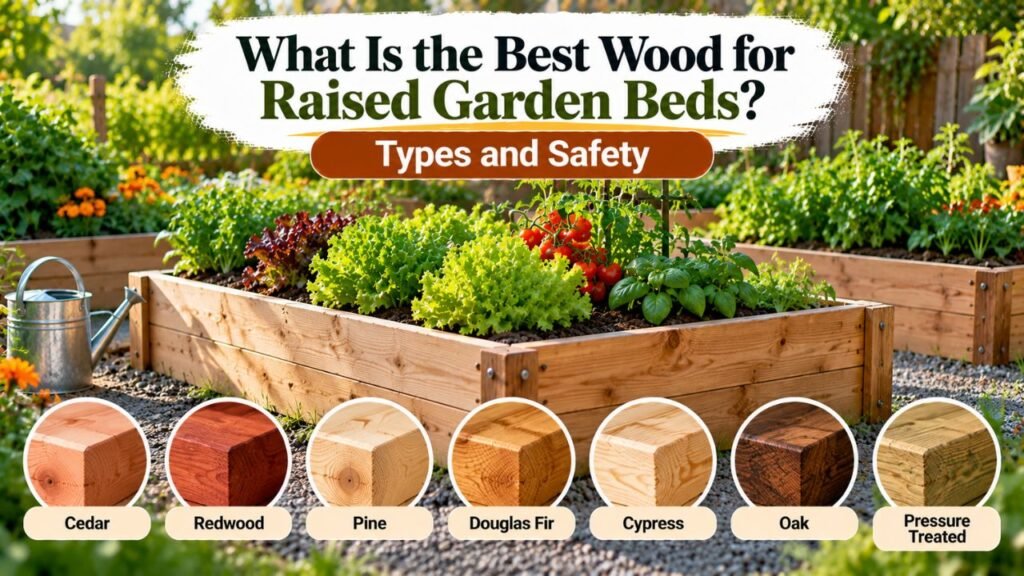
The best wood depends on whether you prioritize natural decay resistance, affordability, durability, or avoiding chemical preservatives.
For most home gardeners, untreated cedar offers the best balance of natural rot resistance, availability, and ease of construction.
However, cedar is not always the most economical choice. Modern ground-contact-rated pressure-treated lumber may last longer for the money, while untreated pine is often cheaper initially.
The following comparison highlights the main options.
| Wood Type | Natural Rot Resistance | Relative Cost | Best Use |
| Cedar heartwood | Good to high | Moderate to high | Best all-around untreated option |
| Redwood heartwood | High | High | Durable, premium garden beds |
| Cypress heartwood | Moderate to high, depending on source | Moderate to high | Naturally durable beds where available |
| Black locust | Very high | Variable, often high | Long-lasting untreated frames |
| White oak heartwood | Moderate to high | Moderate to high | Strong, durable construction |
| Untreated pine | Low | Low | Budget and temporary raised beds |
| Untreated fir | Low to moderate | Low to moderate | Budget frames with planned replacement |
| Modern pressure-treated lumber | High when properly rated | Low to moderate | Long-lasting, economical structures |
These are general comparisons, not guaranteed service-life ratings. Natural durability varies by species, heartwood content, growing conditions, and lumber quality.
For vegetable gardens, untreated naturally decay-resistant wood is a straightforward choice when the budget allows.
Is Cedar the Best Wood for Raised Garden Beds?
Cedar is one of the most practical materials for wooden raised beds because it combines useful decay resistance with relatively easy construction.
It is particularly appealing to gardeners who want an untreated frame for growing vegetables, herbs, and flowers.
Why Cedar Works Well for Raised Beds
Cedar heartwood contains naturally occurring compounds that help resist fungal decay and certain wood-damaging insects.
This makes it more suitable for repeated exposure to moisture than many common untreated construction softwoods.
Other advantages include:
- Naturally decay-resistant heartwood
- No need for chemical pressure treatment
- Relatively easy cutting and drilling
- Attractive natural appearance
- Suitable for vegetable and flower beds
- Available in common lumber dimensions
- Lighter and easier to handle than many dense hardwoods
Cedar also weathers to a gray appearance when exposed to sunlight and rain.
This color change does not automatically indicate structural damage.
Western Red Cedar vs. Eastern Red Cedar
Not all products labeled cedar come from the same tree species.
Western red cedar is commonly used for outdoor construction, fencing, and raised garden beds. Its heartwood offers useful resistance to decay.
Eastern red cedar, which is botanically a juniper, also has naturally durable heartwood and is sometimes available from regional sawmills.
The best choice often depends on local availability, lumber quality, and price.
Regardless of the species, heartwood generally provides better natural decay resistance than sapwood.
Disadvantages of Cedar Raised Beds
Cedar is not perfect.
Its main drawback is the higher purchase price compared with untreated pine or fir.
Some cedar boards are also relatively soft and may dent or split around fasteners if handled carelessly.
Thin boards can bow outward under soil pressure.
For larger raised beds, choose adequate board thickness and reinforce long walls.
Best for: Gardeners who want an untreated, naturally durable frame without relying on chemical preservatives.
Is Redwood Better Than Cedar for Raised Garden Beds?
Redwood is another excellent material for raised garden beds, particularly when high-quality heartwood is available.
Both cedar and redwood resist decay naturally, making them suitable for outdoor garden structures.
Advantages of Redwood Raised Beds
Redwood heartwood contains natural decay-resistant compounds that help protect it in damp conditions.
It also offers:
- Good resistance to fungal decay
- Attractive reddish-brown appearance
- Relatively easy woodworking
- Suitable structural boards for garden frames
- No need for chemical pressure treatment
High-quality redwood can be an excellent choice for long-term raised bed construction.
However, its durability depends on the grade and heartwood content.
A redwood board containing substantial sapwood may not provide the same decay resistance as a board made primarily from durable heartwood.
Redwood vs. Cedar Durability
Both woods are recognized for their resistance to outdoor deterioration.
The University of Maryland Extension’s raised-bed gardening guidance identifies cedar, redwood, black locust, and several oak species among naturally decay-resistant lumber choices.
However, it is not accurate to assume every redwood board will outlast every cedar board.
Actual performance depends on wood quality, moisture exposure, soil contact, and construction.
Why Redwood Is Not Always the Best Choice
Redwood may be expensive or difficult to obtain outside regions where it is commonly sold.
Transportation costs can also make it less economical.
When purchasing redwood, look for responsibly sourced lumber and compare its quality with locally available cedar.
If both materials have suitable heartwood content and similar dimensions, price and availability may be the deciding factors.
Best for: Gardeners seeking premium untreated lumber, especially where redwood is readily available.
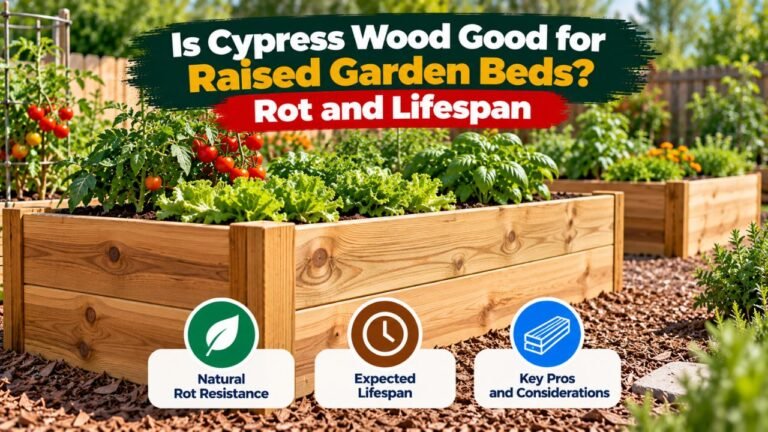
Is Cypress Good for Raised Garden Beds?
Cypress can be a good material for raised beds because some cypress heartwood has useful natural resistance to decay.
It is often considered alongside cedar and redwood for outdoor structures.
Benefits of Cypress Wood
Cypress can provide:
- Natural decay resistance in suitable heartwood
- Good strength for garden framing
- A distinctive natural appearance
- A practical alternative where locally available
Cypress is particularly worth considering in areas where regional sawmills sell it at competitive prices.
However, the durability of cypress lumber varies by species, age, and heartwood content.
Younger, plantation-grown material may not offer the same decay resistance as older, mature heartwood.
Cypress vs. Cedar for Raised Beds
Cedar is generally the more predictable purchase when it is clearly identified and sold as outdoor construction lumber.
Cypress can be equally appealing when the supplier provides suitable material.
Before buying, ask whether the boards contain substantial heartwood and whether the lumber is recommended for prolonged outdoor moisture exposure.
Do not assume every product labeled cypress will have the same lifespan.
Best for: Gardeners with access to affordable, high-quality cypress heartwood.
Is Black Locust the Most Durable Untreated Wood for Raised Beds?
Black locust is among the most naturally decay-resistant North American woods used in outdoor construction.
Its heartwood is particularly suitable for applications involving moisture and soil contact.
Why Black Locust Lasts Well Outdoors
Black locust heartwood has excellent natural resistance to decay.
It is also dense and mechanically strong.
These characteristics make it useful for:
- Raised garden bed walls
- Fence posts
- Garden borders
- Outdoor structural components
- Soil-contact landscaping projects
Unlike ordinary pine, black locust does not depend on chemical pressure treatment for its natural durability.
It can be a strong option for gardeners seeking a long-lasting untreated material.
Disadvantages of Black Locust
Black locust is not as widely available as pine or cedar at major home improvement retailers.
Its density can also make it harder to cut, drill, and fasten.
Pre-drilling is often helpful because screws installed near board ends can cause splitting.
The lumber may be expensive unless a local sawmill supplies it.
Best for: Long-lasting untreated raised beds where suitable black locust lumber is locally available.
Is Oak Good for Raised Garden Beds?
Certain oak species can be used successfully for raised garden beds, but their durability differs.
The distinction between red oak and white oak groups is especially important.
White Oak for Raised Garden Beds
White oak heartwood can provide substantial strength and useful decay resistance.
It is suitable for garden framing when the boards are sound and properly selected.
White oak is relatively dense, which can make construction more demanding than working with cedar.
It may also be expensive when purchased as high-grade lumber.
However, locally milled white oak can be a reasonable alternative to cedar or redwood.
Why Red Oak Is Less Suitable
Red oak generally has lower natural decay resistance than the more durable white oak group.
It can absorb moisture and deteriorate under prolonged wet conditions.
Although red oak is useful for many indoor woodworking applications, it is not usually the preferred untreated wood for raised beds that remain in direct contact with damp soil.
Other Durable Oak Species
Certain other oak species, including post oak, bur oak, and chestnut oak, may offer useful decay resistance.
However, local lumber availability and species identification matter.
Avoid assuming that any board sold simply as oak will perform equally well outdoors.
Best for: Gardeners who can obtain suitable white oak or another durable oak species at a reasonable price.
Is Untreated Pine or Fir Good for Raised Garden Beds?
Untreated pine and fir are popular budget choices because they are easy to find and generally cost less than cedar or redwood.
They can work well for raised beds, but their shorter service life should be expected.
Advantages of Untreated Pine
Pine is widely available at lumberyards and home improvement stores.
Its main advantages are:
- Low initial purchase cost
- Easy cutting and drilling
- Availability in many board sizes
- No added pressure-treatment chemicals
- Simple construction and replacement
Pine is especially practical for beginners building a first raised bed.
It allows gardeners to test different dimensions and locations without investing heavily in premium lumber.
How Long Does Untreated Pine Last?
Untreated pine generally deteriorates faster than naturally decay-resistant heartwood.
Its actual lifespan depends on:
- Local rainfall
- Soil moisture
- Wood thickness
- Drainage conditions
- Exposure to sunlight
- Construction quality
- Soil contact
- Fungal activity
Some untreated pine beds remain functional for several growing seasons, while others begin deteriorating sooner.
Do not rely on a fixed lifespan without considering the growing conditions.
Is Douglas Fir Better Than Pine?
Douglas fir is another commonly available construction softwood.
It can provide useful structural strength, but untreated Douglas fir is not as naturally decay-resistant as cedar or redwood heartwood.
For raised beds in consistently damp environments, untreated fir may require replacement sooner than naturally durable woods.
The best budget option often depends on which suitable lumber costs less locally.
Best for: Budget-conscious gardeners, temporary raised beds, and projects where replacing the frame later is acceptable.
Is Pressure-Treated Wood Safe for Vegetable Raised Beds?
Modern pressure-treated lumber can be a practical material for raised garden beds, but the type of preservative matters.
Older pressure-treated products were sometimes made using chemicals that are no longer used for general residential lumber.
Modern products commonly use copper-based preservatives.
Modern Copper-Based Pressure-Treated Lumber
Common residential wood preservatives include:
- MCA: Micronized copper azole
- CA-C: Copper azole
- ACQ: Alkaline copper quaternary
These preservatives help protect wood against decay and wood-damaging organisms.
For a raised bed, choose lumber specifically labeled for appropriate residential ground-contact use.
Avoid products intended only for protected indoor environments or applications that do not match garden conditions.
What Research Says About Treated Wood and Vegetable Safety
A study discussed in Oregon State University Extension’s research on pressure-treated raised beds compared raised beds made from untreated Douglas fir with beds made from copper azole-treated Douglas fir.
Researchers evaluated soil and vegetables over four growing seasons.
They found that copper concentrations increased slightly in soil immediately next to the treated boards, primarily within 1 inch of the wood.
However, the study did not find increased copper concentrations in the vegetables and herbs grown in those beds.
This finding supports the use of the particular modern copper azole-treated lumber studied under the conditions evaluated.
It does not establish that every wood preservative or every treated product is suitable for edible gardens.
Is Pressure-Treated Lumber Better Than Cedar?
Pressure-treated lumber may offer a better combination of price and durability in some locations.
Modern ground-contact-rated treated pine is often less expensive than premium cedar while providing substantial protection against decay.
However, untreated cedar remains attractive for gardeners who prefer naturally durable material without added preservatives.
The choice depends on budget, material preferences, local availability, and the product’s intended use.
Should You Line Pressure-Treated Raised Beds?
If you want to reduce direct contact between treated wood and growing soil, a suitable heavy-duty liner can be installed along the interior walls.
Keep the bottom open when building directly over suitable garden ground.
A sidewall liner may reduce soil contact with the treated boards, but it should not trap water within the growing area.
For gardeners who prefer to avoid pressure-treated lumber entirely, untreated cedar, redwood, or black locust provides an alternative.
Which Wood Should You Avoid for Raised Garden Beds?
Some wood products are poor choices because of chemical treatments, uncertain contamination, or inadequate durability.
This is particularly important for vegetable gardens.
Old CCA Pressure-Treated Lumber
Avoid older lumber treated with chromated copper arsenate (CCA) for edible raised beds.
CCA contains chromium, copper, and arsenic.
Its use in most residential outdoor applications was discontinued in the United States at the end of 2003, although older material may still exist in buildings and salvage piles.
Do not assume that unidentified reclaimed lumber is suitable simply because it has been outdoors for years.
Railroad Ties and Creosote-Treated Wood
Railroad ties are often treated with creosote or other industrial wood preservatives.
These materials are not recommended for vegetable raised beds.
Creosote-treated wood may contain compounds unsuitable for garden soil contact.
Avoid using railroad ties even if they appear old or weathered.
Painted or Unknown Reclaimed Wood
Reclaimed boards can reduce construction costs, but their previous treatment and use may be unknown.
Avoid lumber with:
- Unidentified paint or coatings
- Strong chemical odors
- Oil or solvent stains
- Unknown preservative treatments
- Significant rot
- Chemical-spill residue
Older painted wood may contain lead-based paint.
Do not sand or cut suspicious coatings without appropriate identification and safety procedures.
Wooden Shipping Pallets
Some pallets are heat-treated, but that does not automatically establish that they are suitable for growing food.
A heat-treatment mark identifies a pest-control treatment, not the pallet’s entire cargo or contamination history.
Only consider pallet wood when its treatment and previous use can be verified.
Avoid pallets marked for methyl bromide fumigation and those with suspicious staining or unknown chemical exposure.
Plywood and Oriented Strand Board
Ordinary plywood and oriented strand board (OSB) are generally poor choices for long-term raised bed walls.
These products consist of wood layers or strands bonded with adhesives.
Products not designed for prolonged wet exposure may swell, separate, or lose structural integrity.
Exterior-rated engineered panels may have different performance characteristics, but solid lumber is generally simpler for ordinary raised bed construction.
What Thickness of Wood Is Best for Raised Garden Beds?
The thickness of the boards affects structural strength, resistance to bowing, and long-term durability.
Raised bed walls must support the sideways pressure of moist soil.
Thin boards may be adequate for small, shallow beds but may require additional reinforcement.
One-Inch vs. Two-Inch Nominal Lumber
In the United States, lumber is commonly sold using nominal dimensions.
A nominal 1-inch-thick board is typically around ¾ inch thick after surfacing.
A nominal 2-inch-thick board is typically around 1½ inches thick.
| Nominal Lumber Size | Typical Actual Dimensions | Common Application |
| 1×6 | ¾ × 5½ inches | Small, shallow beds with support |
| 1×8 | ¾ × 7¼ inches | Lightweight garden frames |
| 2×6 | 1½ × 5½ inches | Strong low-sided beds |
| 2×10 | 1½ × 9¼ inches | Medium-depth raised beds |
| 2×12 | 1½ × 11¼ inches | Taller single-board walls |
Dimensions may differ for rough-sawn or specialty lumber, so measure the material before purchasing or cutting.
Are 2×10 Boards Good for Raised Beds?
Nominal 2×10 boards are a practical choice for a single-course frame.
They provide approximately 9¼ inches of wall height when installed vertically.
This can work for many open-bottom vegetable beds where roots are able to grow into suitable native soil.
The thicker boards also offer greater stiffness than common 1-inch nominal lumber.
Are 2×12 Boards Better?
Nominal 2×12 boards provide approximately 11¼ inches of wall height.
They offer additional growing depth without requiring multiple rows of lumber.
This is useful for gardeners who want a conventional vegetable bed with a relatively deep prepared soil layer.
However, a single 2×12 board is not automatically strong enough for every bed length.
Long walls may still require intermediate braces or stakes.
Should You Use Thicker Boards for Tall Beds?
Generally, taller beds require more substantial structural support because the amount of soil and the lateral pressure on the walls increase.
For a bed 24 inches high or taller, the design may require:
- Multiple courses of lumber
- Reinforced corner connections
- Intermediate vertical supports
- Cross-bracing
- Properly rated structural fasteners
The exact requirements depend on wall height, length, soil conditions, and frame design.
Do not assume that using thicker boards alone eliminates the need for reinforcement.
How to Choose Wood for a 4×8 Raised Garden Bed
A 4×8 raised bed is a common backyard size because gardeners can reach the growing area from both long sides.
However, its 8-foot walls need proper support.
Choose Boards Based on the Desired Height
For an approximately 11-inch-tall bed, a simple design may use nominal 2×12 lumber.
The main side boards would consist of two long pieces and two shorter end pieces.
However, the exact cutting lengths depend on whether the long boards overlap the end boards or fit between them.
Measure and plan the corner connections before cutting.
For a taller bed, multiple courses may be needed.
Reinforce Long Wooden Walls
An 8-foot wall can bow outward under the weight of soil.
Install suitable intermediate supports and secure the corners.
A support near the midpoint of each long wall is a common starting arrangement for conventional low raised beds.
Taller or more heavily loaded frames may require additional bracing.
Use sound lumber and secure structural connections rather than relying on thin decorative brackets.
Choose Compatible Screws and Fasteners
Exterior-rated screws are generally more appropriate than ordinary indoor screws.
For naturally durable untreated lumber, suitable corrosion-resistant screws help maintain reliable connections.
For pressure-treated wood, use fasteners specifically approved for contact with the preservative system.
Hot-dip galvanized or stainless steel fasteners may be suitable, depending on the treatment and manufacturer’s specifications.
Some copper-based preservatives can accelerate corrosion of incompatible metal hardware.
Avoid mixing unsuitable metals and fasteners in damp conditions.
How to Make Wooden Raised Garden Beds Last Longer
Even naturally decay-resistant wood benefits from suitable construction and maintenance.
A raised bed frame remains exposed to moisture, soil organisms, and changing temperatures throughout the growing season.
Build on a Well-Drained Site
Choose a location where water does not remain pooled against the frame.
Constant moisture encourages deterioration.
If the surrounding ground has poor drainage, address the site conditions before installing a permanent bed.
Avoid placing wooden frames where roof runoff or other concentrated water flows repeatedly against the boards.
Protect Exposed End Grain
Wood absorbs moisture differently along its grain.
Cut ends can be especially vulnerable to moisture entry.
For suitable untreated outdoor lumber, an appropriate exterior coating may help protect exposed surfaces.
Follow the manufacturer’s instructions for the chosen product.
For pressure-treated lumber, use an approved cut-end preservative where required by the wood manufacturer.
Do not use an unidentified preservative on the soil-facing surfaces of a vegetable bed.
Use a Suitable Sidewall Liner When Appropriate
A liner can separate growing soil from the wooden sidewalls.
This may be useful when using certain treated materials or when trying to limit direct soil contact.
However, a liner does not guarantee that untreated wood will remain dry or decay-free.
Moisture can still reach the boards through rain, joints, and other openings.
The liner should not block drainage through the bottom of an ordinary ground-based raised bed.
Avoid Direct Soil Contact With Unnecessary Wooden Components
Not every part of the frame needs to be buried.
Where the design allows, keep structural braces and exterior components from remaining continuously embedded in wet soil.
Do not create unnecessary pockets where moisture can collect.
However, the frame must still remain properly supported and structurally stable.
Inspect Boards and Connections Regularly
Check the raised bed at least once during the growing season and whenever visible damage appears.
Look for:
- Soft or crumbling wood
- Deep cracks
- Loose screws
- Bowing sidewalls
- Deteriorated corner joints
- Excessive fungal decay
- Insect damage
Replace weakened components before the frame becomes unstable.
A board can appear sound on the outside while showing substantial deterioration where it contacts damp soil.
Pay particular attention to the lower inside edges.
How Long Does Wood Last in a Raised Garden Bed?
There is no universal lifespan for every wood species.
The same material may last considerably longer in a dry climate than in an area with frequent rainfall and persistently wet soil.
The amount of heartwood, board thickness, and construction details also influence durability.
Naturally Durable Woods
Cedar, redwood, and black locust generally resist decay better than untreated pine or fir.
However, their service lives vary substantially.
A thin cedar board containing considerable sapwood may deteriorate sooner than thicker, higher-quality lumber.
For this reason, buying a naturally durable species is only one part of selecting suitable material.
Untreated Pine and Fir
Untreated pine and fir generally require replacement sooner, especially when they remain in direct contact with damp soil.
They can still be economical when the initial cost is low and the frame is easy to rebuild.
A temporary or experimental garden may not justify the expense of premium hardwood.
Modern Pressure-Treated Wood
Properly rated pressure-treated lumber is designed to resist biological deterioration under the specified exposure conditions.
In Oregon State University’s research described earlier, untreated Douglas-fir garden boxes showed substantial decay by the beginning of their sixth growing season, while comparable copper azole-treated boxes remained largely intact.
These observations demonstrate the durability difference under that study’s conditions.
They should not be treated as a guaranteed lifespan for every untreated or pressure-treated raised bed.
Which Wood Should You Buy Based on Your Budget?
The most suitable wood is not necessarily the cheapest board or the species with the highest natural decay resistance.
A practical decision should consider how long you intend to use the bed, how much maintenance you are willing to perform, and whether you prefer untreated wood.
Best Overall: Cedar
Choose suitable cedar heartwood when you want a naturally decay-resistant frame that is relatively easy to build.
It is a dependable all-around option for vegetable gardens.
Best Premium Alternative: Redwood
Redwood is worth considering when high-quality material is locally available.
It offers natural durability and an attractive appearance but may cost substantially more than other options.
Best Untreated Wood for Maximum Natural Durability: Black Locust
Black locust offers exceptional natural decay resistance.
Its main limitations are availability, density, and ease of construction.
Best Budget Untreated Wood: Pine
Untreated pine is appropriate when keeping initial costs low is the main priority.
Expect a shorter service life and plan for eventual board replacement.
Best Value When Treatment Is Acceptable: Ground-Contact Pressure-Treated Lumber
Modern residential pressure-treated lumber can provide long service life at a competitive cost.
Verify the preservative system, intended use, and product labeling.
For gardeners who prefer no added wood preservatives, cedar or another naturally durable wood is the simpler choice.
Conclusion
When deciding what is the best wood for raised garden beds, untreated cedar is the strongest all-around recommendation for most home gardeners. It combines natural decay resistance, practical availability, and suitability for growing vegetables without chemical pressure treatment.
Redwood and black locust are excellent alternatives when their price and availability make sense. Cypress and certain white oak species can also provide durable construction materials.
For gardeners working with a limited budget, untreated pine is a reasonable option, although it generally deteriorates faster.
Modern ground-contact-rated pressure-treated lumber offers another practical choice when long service life and cost are priorities, provided the treatment is appropriate for residential use.
Regardless of the species, choose sound boards, reinforce the frame, install compatible fasteners, and manage moisture around the bed.
The best long-term value comes from combining suitable wood with proper construction, not simply choosing the most expensive lumber.
FAQs About What Is the Best Wood for Raised Garden Beds
Is Cedar or Pine Better for Raised Garden Beds?
Cedar is generally better for long-term raised beds because its heartwood naturally resists decay more effectively than untreated pine. Pine costs less and is easier to replace, making it suitable for budget projects. Choose cedar for greater durability or pine when low initial cost is the priority.
What Is the Longest-Lasting Untreated Wood for Raised Beds?
Black locust is among the most naturally decay-resistant woods commonly considered for raised beds. High-quality redwood and cedar heartwood are also durable choices. Actual lifespan depends on wood quality, moisture exposure, board thickness, and construction.
Is Pressure-Treated Wood Safe for Growing Vegetables?
Modern residential pressure-treated lumber using appropriate copper-based preservatives can be suitable for raised beds. Research on a specific copper azole-treated product found limited copper movement into adjacent soil and no measured increase in copper in the vegetables tested. Avoid older CCA-treated lumber and industrially treated wood.
Can You Use Regular 2×4 Lumber for Raised Garden Beds?
Yes, ordinary 2×4 lumber can be used for framing, supports, or shallow bed construction. However, its relatively narrow face may require stacking multiple boards to create enough wall height. Wider boards such as 2×10 or 2×12 are often more convenient for constructing the main walls.
Should You Seal Cedar Raised Garden Beds?
Sealing is optional. Cedar heartwood already provides natural decay resistance, although an appropriate exterior finish may help protect its appearance or exposed surfaces. Use a product suitable for the intended application and follow the manufacturer’s instructions. Avoid applying unknown chemical treatments to surfaces that will contact vegetable-growing soil.
Can You Build Raised Beds From Reclaimed Wood?
Yes, provided the reclaimed wood has a known, suitable history and remains structurally sound. Avoid boards with unidentified treatments, old paint, chemical stains, or extensive decay. Clean untreated lumber from a known source is preferable to wood whose previous use cannot be verified.
Is One-Inch or Two-Inch Wood Better for Raised Beds?
Nominal 2-inch-thick lumber is generally better for the main walls of larger raised beds because it provides greater stiffness and strength than nominal 1-inch boards. Thin lumber can work for small, shallow beds with suitable supports. Taller or longer walls require additional structural reinforcement regardless of board thickness.

I’m Maya L. Greenwood, a lifelong plant lover who believes anyone can grow something beautiful with the right guidance. After years of testing soil mixes, pruning methods, irrigation tricks, and pest-safe solutions, I started EasyGardenTips.com to turn hard-won lessons into step-by-step advice. From seed starting and container gardens to composting and seasonal checklists, my goal is to make gardening simple, sustainable, and fun.