Planter Box vs Raised Bed: Differences in Soil, Size, and Care
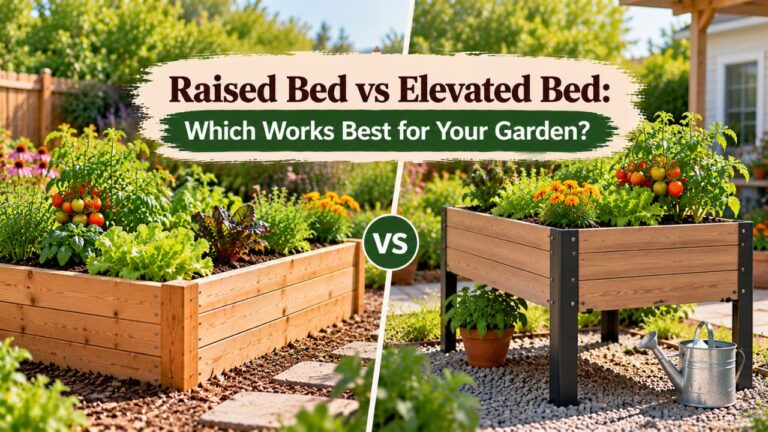
The main difference between a planter box and a raised bed is that a planter box usually has an enclosed bottom, while a traditional raised garden bed is typically open to the ground beneath it. Planter boxes are often better for patios, balconies, and compact spaces, while raised beds generally provide more growing area for vegetables and larger plants.
However, the terms sometimes overlap. Some raised beds have enclosed bottoms, and large planter boxes can function much like raised gardens. The actual construction matters more than the product’s name.
Choosing between them affects soil selection, drainage, watering frequency, root development, and long-term maintenance.
A small wooden planter may look like a miniature raised bed, but its limited soil volume changes how plants access moisture and nutrients. An open-bottom raised bed provides a different growing environment because roots may extend into the natural soil underneath.
Understanding these differences helps you choose a gardening setup that suits your available space, preferred plants, budget, and maintenance needs.
Planter Box vs Raised Bed: Main Differences
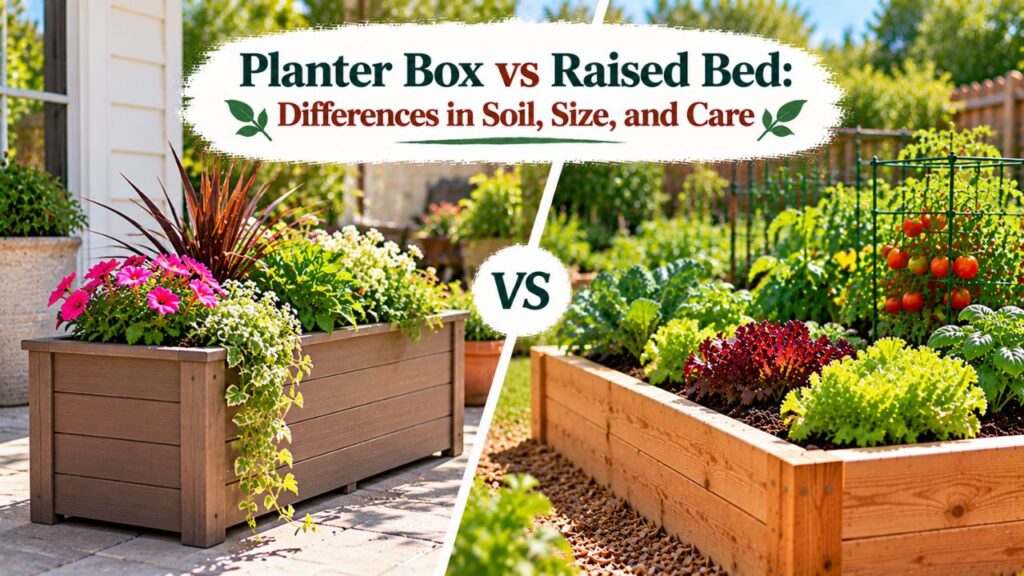
Planter boxes and raised beds both provide designated growing areas above the surrounding surface, but their designs and growing conditions can be quite different.
The most useful distinction is whether the structure has an enclosed bottom and how much rooting space it provides.
Planter Box vs Raised Bed Comparison Chart
| Feature | Planter Box | Raised Bed |
| Bottom design | Usually enclosed, with drainage holes | Usually open to the ground |
| Typical size | Small to medium, but varies | Often larger planting areas |
| Growing medium | Lightweight potting mix | Raised-bed soil or topsoil-based mix |
| Root growth | Usually confined to the container | Can extend into native soil |
| Drainage | Through drainage openings | Into underlying soil |
| Watering | Often needs more frequent checks | Usually retains a larger moisture reserve |
| Portability | Some models are movable | Usually stays in one location |
| Best location | Patios, balconies, decks | Yards and garden areas |
| Ideal plants | Herbs, flowers, compact vegetables | Vegetables, flowers, larger crops |
| Maintenance | Container watering and fertilizing | Soil management, watering, and seasonal care |
These are general differences. A raised bed installed over concrete or built with an enclosed bottom behaves more like a large planter box.
The most important factor is not whether the product is called a planter or raised bed. It is whether roots have access to the ground and how much suitable growing medium the structure contains.
What Is a Planter Box?
A planter box is a container designed to hold growing medium and plants.
It usually has a bottom panel or enclosed base, with drainage openings that allow excess water to escape.
Planter boxes may be made from wood, plastic, metal, fiberglass, concrete, or other materials.
They are commonly used on patios, decks, balconies, porches, and areas where planting directly into the ground is inconvenient.
Types of Planter Boxes
Several planter box designs are available.
- Window boxes: Narrow containers designed for flowers, herbs, and compact ornamental plants.
- Rectangular planter boxes: Longer containers suitable for herbs, vegetables, and decorative arrangements.
- Elevated planter boxes: Containers raised on legs or stands to provide easier access.
- Railing planters: Smaller containers attached to balcony or deck railings.
- Self-watering planters: Containers with built-in reservoirs that supply moisture through a designed wicking system.
A large planter box can provide substantial growing space, but roots remain limited to the container unless the bottom is open to the ground.
Where Planter Boxes Work Best
Planter boxes are especially useful when you need a garden without disturbing the existing landscape.
They work well for:
- Apartment balconies and patios.
- Decks and porches with suitable load capacity.
- Small outdoor spaces.
- Decorative flowers near entrances.
- Kitchen herbs grown close to the house.
- Compact vegetable varieties.
Some smaller planters can be moved to another location when sunlight or seasonal conditions change.
However, a large planter filled with wet growing medium can become very heavy and difficult to relocate.
What Is a Raised Garden Bed?
A raised garden bed is a growing area where the soil surface is elevated above the surrounding ground.
Traditional framed raised beds usually have sides but no solid bottom. This allows roots, water, and soil organisms to interact with the ground beneath the bed.
Raised beds may also be constructed without frames by forming elevated planting mounds.
Common framing materials include wood, galvanized steel, bricks, stone, and concrete blocks.
How Open-Bottom Raised Beds Work
An open-bottom raised bed provides an elevated layer of improved soil over the existing ground.
Plant roots can grow through the added soil and continue into suitable native soil underneath.
This can be helpful for vegetables that need substantial rooting space.
The University of Minnesota Extension’s raised-bed gardening guidance explains that raised beds can improve access, reduce problems associated with compacted soil, and warm earlier in spring.
However, they can also dry out faster than ground-level garden soil.
Can a Raised Bed Have a Bottom?
Yes. Some raised beds have enclosed bottoms, particularly models designed for patios, decks, or elevated gardening.
These structures are often marketed as:
- Elevated raised garden beds.
- Raised planter boxes.
- Standing garden beds.
- Raised garden tables.
Because the roots cannot reach the ground, these products function more like large containers.
They need appropriate growing media, sufficient planting depth, and reliable drainage.
This is why the terms raised bed and planter box cannot always be separated by appearance alone.
Soil Differences Between Planter Boxes and Raised Beds
Soil selection is one of the most important practical differences between the two gardening systems.
A growing medium that performs well in a traditional raised bed may not work properly inside an enclosed planter.
Best Soil for a Planter Box
Most enclosed planter boxes perform best with a lightweight potting mix designed for container gardening.
These mixes commonly contain ingredients such as:
- Coconut coir.
- Sphagnum peat moss.
- Perlite.
- Vermiculite.
- Composted bark.
- Other processed organic materials.
The purpose is to retain adequate moisture while maintaining air spaces around plant roots.
Avoid filling ordinary enclosed planter boxes with heavy garden soil or dense topsoil. These materials may compact inside containers and restrict drainage and root aeration.
A large planter still needs a medium that performs appropriately within its enclosed root zone.
Best Soil for a Raised Garden Bed
A traditional open-bottom raised bed can often use a quality topsoil-based mixture.
A suitable combination of mineral topsoil and finished compost provides a growing environment that supports vegetables and other garden plants.
Unlike enclosed containers, open-bottom beds can allow roots to extend into the soil underneath.
The appropriate mixture depends on the existing ground, drainage conditions, and intended crops.
If a raised bed has an enclosed base, use growing-medium principles similar to those for large containers rather than automatically selecting heavy mineral soil.
Can You Use Raised-Bed Soil in a Planter Box?
Sometimes.
A lightweight commercial raised-bed mix may work if the manufacturer also recommends it for containers.
However, raised-bed soil containing substantial amounts of mineral topsoil may be too dense for an enclosed planter.
The product name alone does not establish whether it is suitable.
Check its ingredients, drainage characteristics, and intended uses before filling a planter box.
Drainage Differences Between Planter Boxes and Raised Beds
Both systems need sufficient drainage to protect plant roots from prolonged saturation.
The difference is how excess water leaves the growing area.
How Water Drains From a Planter Box
Most planter boxes have an enclosed base with drainage holes.
After watering, excess water moves through the potting mix and exits through those openings.
The container must have enough drainage capacity to prevent water from remaining around the roots for extended periods.
According to the University of Maryland Extension’s container gardening guidance, adequate drainage is necessary for container plants, and placing gravel or broken pot pieces at the bottom does not improve drainage.
Instead, use a suitable potting mix and functional drainage openings.
For a planter sitting on a deck, consider where drained water will collect or flow.
How Water Drains From a Raised Bed
In a traditional open-bottom raised bed, water moves through the added soil into the ground below.
The actual drainage rate depends on the raised-bed soil and the condition of the underlying ground.
A bed constructed over compacted clay or poorly draining subsoil can still experience waterlogging.
Raising the planting surface does not automatically eliminate every drainage problem.
For raised beds built on concrete or pavement, provide an appropriate drainage pathway rather than assuming water can pass through the surface beneath the bed.
Which Requires More Frequent Watering?
Planter boxes often need more frequent watering checks because they contain limited amounts of growing medium.
Their enclosed sides are also exposed to outdoor temperatures, and the growing medium may heat up or dry out quickly.
Traditional raised beds generally contain a larger soil volume, which can provide a greater moisture reserve.
However, raised beds can also dry faster than surrounding ground-level gardens.
Actual watering frequency depends on:
- Container or bed size.
- Growing-medium composition.
- Plant species and maturity.
- Temperature and sunlight.
- Wind exposure.
- Drainage conditions.
- Mulch and irrigation methods.
A small planter in direct summer sun may require daily watering checks, while a larger mulched raised bed may need less frequent irrigation.
Neither system should be watered only according to a fixed schedule without checking moisture.
Planter Box vs Raised Bed for Growing Vegetables
Both planter boxes and raised beds can support productive vegetable gardens.
The better choice depends on available growing space and the root requirements of the vegetables.
Growing Lettuce and Leafy Greens
Lettuce, spinach, arugula, and other leafy greens are suitable for both systems.
Their relatively modest rooting requirements make them practical choices for adequately sized planter boxes.
An elevated planter may be especially convenient for harvesting salad greens near a kitchen or patio.
Raised beds are useful when growing larger quantities or multiple rows of leafy vegetables.
Best choice: Planter boxes for small harvests and limited spaces; raised beds for larger planting areas.
Growing Tomatoes and Peppers
Tomatoes and peppers can grow in both planter boxes and raised beds.
However, larger varieties need sufficient root volume, stable support, water, and nutrients.
A small decorative planter is unlikely to provide enough growing space for a vigorous full-size tomato plant.
Large containers can work when the variety and container size are compatible.
Raised beds offer more room to grow multiple plants and accommodate stakes, cages, or trellises.
Best choice: Raised beds for multiple full-size plants; large planter boxes for compact varieties or limited-space gardening.
Growing Carrots and Root Vegetables
Carrots, beets, and other root vegetables need a suitable growing medium with enough unobstructed depth.
Planter boxes can work if they are deep enough for the intended varieties.
For example, a shallow window box may support some leafy greens but may not provide sufficient depth for long carrots.
Open-bottom raised beds offer additional rooting space when the underlying soil is loose and suitable.
They also allow gardeners to improve soil texture over a larger planting area.
Best choice: Raised beds for a wider selection of root crops; sufficiently deep planters for compact varieties.
Growing Herbs
Herbs are particularly well suited to planter boxes.
Basil, parsley, cilantro, thyme, and similar herbs can be grown in containers placed near a kitchen entrance.
This makes routine harvesting convenient.
Raised beds are useful when growing larger herb collections or combining herbs with vegetables.
Some perennial herbs also benefit from having more room for root development.
Best choice: Planter boxes for convenient kitchen herbs; raised beds for larger herb gardens.
Growing Squash and Other Spreading Vegetables
Squash, pumpkins, and other sprawling plants can require substantial growing space.
Large containers may support certain compact or bush varieties, but ordinary small planter boxes can quickly become overcrowded.
Raised beds generally provide more planting area and flexibility for arranging larger crops.
However, some spreading plants may still extend beyond the bed’s edges.
Best choice: Raised beds for larger varieties and multiple plants; large planters for suitable compact cultivars.
Planter Box vs Raised Bed for Flowers and Ornamental Plants
For decorative gardening, the choice often depends on appearance, placement, and the desired planting arrangement.
When Planter Boxes Are Better for Flowers
Planter boxes are useful for decorative arrangements that need a defined shape or location.
They can be placed beside doors, along walkways, beneath windows, or on patio edges.
They are especially practical for:
- Seasonal flowering annuals.
- Compact ornamental grasses.
- Small decorative foliage plants.
- Mixed flower arrangements.
- Small trailing plants.
Changing seasonal arrangements is relatively easy because the planting area is contained.
The growing medium may still need refreshing or replacing as its physical structure breaks down.
When Raised Beds Are Better for Flowers
Raised beds are suitable for larger flower plantings, including many annuals and perennials.
They provide more growing area and allow gardeners to create mixed borders with different plant heights.
An open-bottom raised bed may also provide additional root space for established perennials.
However, some large shrubs and deeply rooted plants may eventually outgrow the practical dimensions of a small raised bed.
Choose plants based on their mature size rather than only their appearance at planting time.
Space and Accessibility: Which Garden Design Works Better?
A planter box and a raised bed can provide very different gardening experiences, even when they contain the same plants.
Location, height, reach, and available walking space all affect usability.
Planter Boxes for Balconies and Patios
Planter boxes are usually easier to incorporate into spaces where planting directly into the ground is not possible.
They can be arranged along walls, railings, and other available areas.
Some are compact enough to move when necessary.
However, filled planters can become extremely heavy.
For balconies, rooftops, and elevated decks, verify the structure’s load capacity before installing large, soil-filled containers.
Account for the weight of the wet growing medium, planter structure, plants, and accumulated water.
Raised Beds for Backyards
Raised beds are particularly useful in yards with enough room for permanent garden areas and walking paths.
Common layouts include rectangular beds arranged in rows or groups.
For comfortable maintenance, many gardeners choose beds approximately 3–4 feet wide when both sides are accessible.
A narrower bed is generally preferable when access is available from only one side.
The goal is to reach the planting area without stepping onto the soil.
Elevated Planters for Easier Gardening
Elevated planter boxes can reduce the amount of bending required during planting, watering, and harvesting.
They are useful for people who prefer gardening at a standing or seated working height.
However, the optimal height depends on the gardener’s reach, the planter’s width, and whether seated access is needed.
A tall raised bed can also provide easier access, but filling a deep structure with growing medium may require substantial material.
An elevated planter box with a shallower planting trough may use less growing medium while providing a similar working height.
Cost Differences Between Planter Boxes and Raised Beds
The total cost depends on the structure’s size, materials, growing-medium volume, and installation requirements.
Neither option is automatically cheaper.
Initial Cost of Planter Boxes
A small planter box may require relatively little material and growing medium.
Larger or decorative designs can cost considerably more.
Possible expenses include:
- Planter box or construction materials.
- Potting mix.
- Drainage accessories.
- Fertilizer.
- Plant supports.
- Irrigation equipment.
Elevated planters also need adequate structural support, which can increase construction costs.
Initial Cost of Raised Beds
Raised beds often require more materials because they occupy larger planting areas.
Common expenses include framing materials, soil, compost, and garden-path preparation.
Bulk soil may be more economical than individual bags for larger projects.
However, a raised bed with an open bottom may not require as much added soil as a similarly sized enclosed structure, because roots can use suitable ground beneath it.
Comparing Growing-Medium Requirements
Consider two example garden structures.
| Garden Structure | Inside Dimensions | Growing-Medium Volume |
| Planter box | 2 × 4 feet, 12 inches deep | 8 cubic feet |
| Raised bed | 4 × 8 feet, 12 inches deep | 32 cubic feet |
The planter requires four 2-cubic-foot bags.
The raised bed requires sixteen 2-cubic-foot bags.
This difference reflects their sizes, not an inherent requirement that raised beds use more growing medium.
For an equal planting area and depth, both structures have the same calculated volume. Their actual filling requirements can differ depending on their bottoms and root-zone design.
Maintenance Differences Between Planter Boxes and Raised Beds
Both gardening systems require watering, nutrient management, and seasonal cleanup.
However, their soil volumes and growing conditions affect how much attention they need.
Maintaining a Planter Box
Container growing media can gradually lose structure as organic ingredients decompose.
Nutrients may also be depleted or washed out during regular watering.
Typical maintenance includes:
- Checking moisture frequently.
- Applying fertilizer according to plant needs.
- Keeping drainage openings clear.
- Removing damaged or diseased plant material.
- Refreshing or replacing degraded potting mix when necessary.
- Inspecting the planter for structural damage.
Wooden planter boxes may also need protection from prolonged moisture exposure.
Maintaining a Raised Bed
Raised-bed soil can often remain productive for many growing seasons with suitable maintenance.
Typical tasks include:
- Periodic soil testing.
- Applying amendments according to soil needs.
- Restoring soil levels after settling.
- Managing weeds.
- Maintaining mulch.
- Checking irrigation systems.
- Inspecting framing materials for deterioration.
An open-bottom raised bed usually does not require complete soil replacement every year.
Its soil can often be maintained much like an ordinary garden bed.
Which Is Better: Planter Box or Raised Bed?
The better option depends on the location, plants, available space, and amount of gardening you want to do.
A planter box is usually more practical when space is limited or the planting area cannot connect to the ground.
A traditional raised bed is often preferable when you have a yard and want to grow a larger vegetable garden.
Choose a Planter Box If You:
- Have a patio, balcony, or small outdoor space.
- Want to grow herbs, flowers, or compact vegetables.
- Need an enclosed growing container.
- Prefer a decorative planting arrangement.
- Want an elevated growing area without filling a deep bed.
- May need to reposition smaller containers.
- Have room for only a limited number of plants.
Choose a Raised Bed If You:
- Have a backyard with suitable growing space.
- Want to grow multiple vegetable varieties.
- Need a larger planting area.
- Want roots to access suitable soil beneath the bed.
- Prefer a relatively permanent garden layout.
- Want to establish a larger herb or flower garden.
- Can maintain paths around the growing area.
Choose an Elevated Raised Planter If You Need Both
An elevated raised planter combines characteristics of both systems.
It provides a raised working height while keeping the growing medium inside a supported container.
This can be useful for gardeners who want easier access but do not have space for a large open-bottom raised bed.
However, because the growing area is enclosed, use appropriate potting media, provide suitable drainage, and ensure the structure can support the full weight of its contents.
Mistakes to Avoid When Choosing Between a Planter Box and Raised Bed
Some gardening problems result from selecting a structure based only on its appearance.
Assuming Every Raised Bed Has an Open Bottom
Not all raised beds are connected to the ground.
Some products advertised as raised garden beds have enclosed bottoms or sit on legs.
Inspect the actual construction before selecting soil or planning root depth.
Filling an Enclosed Planter With Heavy Topsoil
Dense mineral soil may compact inside a container and restrict water and air movement.
Use a growing medium designed for the particular container system.
Do not assume that soil labeled for raised beds will automatically work in every planter box.
Choosing a Planter That Is Too Small
A compact planter may look large enough for a young tomato or squash plant but provide insufficient root volume as the plant matures.
Consider the mature size of the plant and its root system before purchasing the container.
Larger plants generally need more growing-medium volume, water, and support.
Ignoring Drainage and Surface Conditions
A planter box without a suitable drainage system may retain excess water.
Similarly, a raised bed placed on poorly draining ground can develop saturated conditions.
Check the entire drainage pathway, not just whether the structure has openings at the bottom.
Making Raised Beds Too Wide
A raised bed should allow easy access to the planting surface.
If you cannot comfortably reach the center, routine maintenance may require stepping on the soil.
Plan the width and surrounding paths before constructing the bed.
For most home gardens, a width of approximately 3–4 feet works well when both sides are accessible.
Conclusion
The planter box vs raised bed decision comes down to growing space, soil conditions, drainage, and how you intend to use the garden.
Planter boxes are generally better for patios, balconies, decorative plants, herbs, and compact vegetable gardens. They provide flexibility but usually require lightweight growing media and closer attention to watering.
Traditional open-bottom raised beds are usually better for larger vegetable gardens because they provide more growing space and allow roots to extend into suitable soil below.
If you want a comfortable working height without building a deep, soil-filled structure, an elevated planter box can offer a useful compromise.
Choose based on the structure’s actual design, the plants’ mature size, and your gardening location rather than relying only on the product’s name.
FAQs About planter box vs raised bed
Is a Planter Box the Same as a Raised Bed?
Not always. A planter box usually has an enclosed bottom, while a traditional raised bed is typically open to the ground.
However, some elevated raised beds are essentially large planter boxes, so the terms can overlap.
Can You Grow Vegetables in a Planter Box?
Yes. Many vegetables grow well in appropriately sized planter boxes.
Lettuce, herbs, peppers, and compact tomato varieties are common choices. Larger plants need containers with sufficient rooting space, suitable growing media, and reliable watering.
Are Raised Beds Better Than Planter Boxes for Tomatoes?
Raised beds are often more convenient for growing several tomato plants because they provide more growing area and root space.
However, tomatoes can also grow successfully in large planter boxes when the containers provide adequate volume, drainage, nutrients, and support.
Do Planter Boxes Need Drainage Holes?
Most conventional planter boxes need functional drainage openings to allow excess water to escape.
Some specially designed self-watering planters use reservoirs and overflow systems instead of ordinary bottom drainage holes.
A sealed container without an appropriate drainage system can leave roots waterlogged.
Can You Put a Planter Box Directly on the Ground?
Yes. A planter box can sit directly on the ground if its construction and drainage system are suitable.
An enclosed planter will still restrict roots to its internal growing medium.
A bottomless planter placed on garden ground can function more like a traditional raised bed.
Which Lasts Longer, a Wooden Planter Box or a Raised Bed?
Lifespan depends more on material quality, construction, moisture exposure, and maintenance than on the type of garden structure.
Both wooden planter boxes and wooden raised beds can deteriorate when exposed to prolonged moisture.
Naturally durable woods, appropriate hardware, and good drainage can help extend service life.
Do Raised Beds Need Less Water Than Planter Boxes?
Not necessarily, but a large open-bottom raised bed may have access to a greater moisture reserve than a small enclosed planter.
Planter boxes with limited growing-medium volume can dry out quickly, especially in hot or windy conditions.
Watering needs still depend on plant type, soil composition, weather, and bed dimensions.

I’m Maya L. Greenwood, a lifelong plant lover who believes anyone can grow something beautiful with the right guidance. After years of testing soil mixes, pruning methods, irrigation tricks, and pest-safe solutions, I started EasyGardenTips.com to turn hard-won lessons into step-by-step advice. From seed starting and container gardens to composting and seasonal checklists, my goal is to make gardening simple, sustainable, and fun.