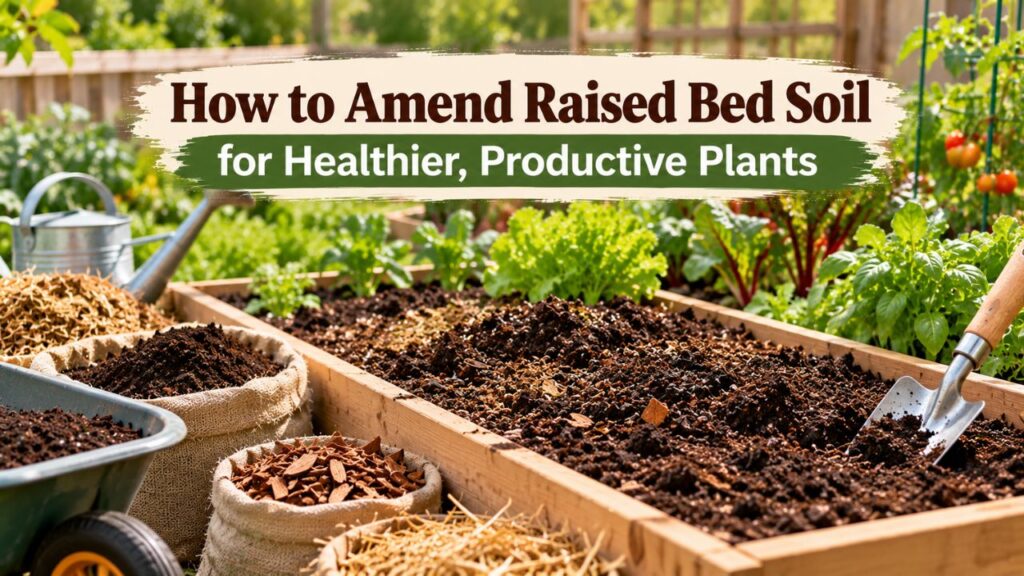
How to Amend Raised Bed Soil for Healthier, Productive Plants
To amend raised bed soil, add a suitable amount of finished compost, correct nutrient deficiencies based on soil test results, and gently loosen compacted areas when necessary. Most established raised beds don’t need completely new soil. They need occasional improvements to maintain healthy plant growth.
Over time, organic matter decomposes, soil levels drop, and repeated watering can affect soil structure. Vegetables also remove nutrients as they grow. These changes can leave raised bed soil less productive than it was during the first growing season.
However, adding more compost or fertilizer isn’t always the solution. Soil that drains too quickly needs different attention than soil that stays wet. Likewise, poor plant growth doesn’t automatically mean the soil lacks nutrients.
The best approach is to identify what your raised bed actually needs before adding amendments.
This guide explains how to evaluate existing soil, choose suitable amendments, calculate compost quantities, improve drainage and texture, and maintain productive raised beds throughout the growing season.
How to Amend Raised Bed Soil Step by Step
Improving existing raised bed soil is usually straightforward. The goal is to restore good soil structure and nutrient availability without unnecessarily disturbing the established growing area.
Step 1: Examine the Existing Raised Bed Soil
Before adding anything, inspect the condition of the soil.
Remove a small amount from several areas of the bed and examine its texture, moisture, and structure.
Healthy garden soil generally feels crumbly when moderately moist. It should hold some moisture without remaining waterlogged.
Look for these conditions:
- Hard, compacted soil: Roots may struggle to penetrate dense areas, and water infiltration may be slow.
- Dry, loose soil: Water may move through quickly, or overly dry organic material may resist absorbing moisture.
- Wet, sticky soil: Excess moisture may indicate poor drainage or a heavy soil mixture.
- Low soil level: Decomposition and settling may have reduced the original growing depth.
- Poor plant growth: Nutrient imbalance, drainage problems, pests, or unsuitable growing conditions may be involved.
Check the soil a few inches below the surface rather than judging it only by its appearance.
If water has recently been applied, allow excess moisture to drain before evaluating the texture.
Step 2: Test the Soil Before Adding Fertilizer
A soil test helps determine whether the bed needs additional nutrients or a pH adjustment.
Testing is particularly useful when vegetables have grown poorly, several seasons have passed since the previous test, or large quantities of compost and fertilizer have already been added.
A laboratory soil test can identify:
- Soil pH
- Available phosphorus and potassium
- Organic matter levels, when included in the test
- Other nutrients, depending on the laboratory
- Recommended fertilizer and soil amendment applications
A standard soil test may not measure available nitrogen because nitrogen levels change quickly. Follow your laboratory’s instructions when collecting samples and interpreting its recommendations.
The University of Minnesota Extension’s raised bed gardening guidance recommends testing established raised beds every two to three years and applying amendments according to the results.
Important: Don’t automatically add lime, sulfur, or a complete fertilizer every spring. An amendment that corrects one soil problem can create another when used unnecessarily.
Step 3: Remove Old Plants and Garden Debris
Clear the raised bed before spreading amendments, especially when preparing for a new planting season.
Remove dead annual crops, weeds, and unwanted plant material.
Healthy, disease-free plant residue can be composted separately. Plants affected by serious diseases should be handled according to appropriate disease-management guidance rather than automatically returned to the bed.
You don’t need to remove every remaining root. Small, healthy roots can decompose naturally and contribute organic material to the soil.
Avoid unnecessary digging while clearing the growing area.
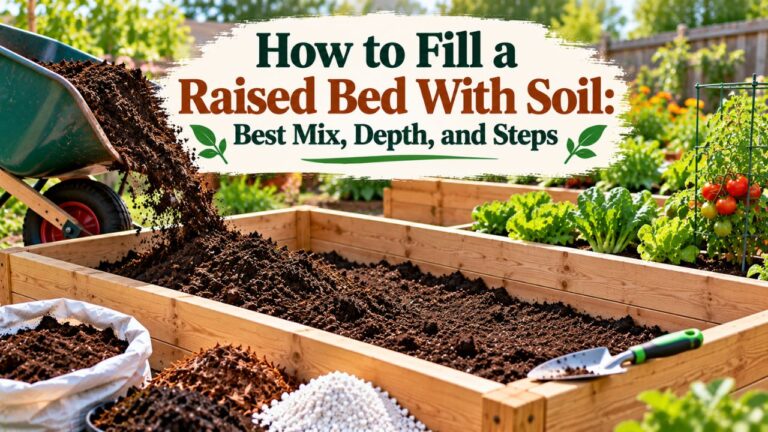
Step 4: Add Finished Compost to the Raised Bed
Finished compost is one of the most useful amendments for improving established raised bed soil.
It contributes organic matter, supports soil organisms, and helps improve the soil’s ability to hold moisture while maintaining a workable structure.
For routine annual maintenance, spread approximately ¼ to 1 inch of finished compost across the soil surface.
This range follows Oregon State University Extension’s guidance on using compost in gardens.
Choose compost that:
- Has a dark, crumbly appearance
- Smells earthy rather than sour or strongly of ammonia
- Contains no obvious trash or unwanted contaminants
- Is sufficiently decomposed for garden use
- Comes from a reliable source
Plant-based compost made from leaves, yard debris, or other suitable organic materials is often a practical choice.
Composted manure can also contribute organic matter, but it may contain relatively high phosphorus or soluble salt levels. Use it cautiously, particularly when soil testing already shows adequate phosphorus.
Step 5: Incorporate Amendments Only When Necessary
Established raised beds generally benefit from minimal soil disturbance.
If the soil is already loose and drains well, compost can remain on the surface as a topdressing. Soil organisms, moisture, and normal gardening activity gradually help incorporate its organic matter.
If the soil has become compacted, use a garden fork to gently loosen the affected areas.
Insert the fork into the soil and move it slightly backward without completely turning over the soil layers.
Avoid working the bed when it is saturated. Digging wet soil can damage its structure and create dense clumps as it dries.
Repeated deep tilling is rarely necessary for a properly maintained raised bed.
Step 6: Apply Needed Nutrients and Water the Soil
After adding compost, apply any additional fertilizer or pH amendments recommended by the soil test.
Follow the product label and laboratory recommendations for application rates and timing.
Gently water the amended soil to moisten the compost and support normal biological activity.
The goal is evenly moist soil, not a saturated growing bed.
If planting won’t happen immediately, cover the soil with a suitable organic mulch or establish an appropriate cover crop to help protect the surface.
What Amendments Should You Add to Raised Bed Soil?
Different soil amendments perform different jobs.
Some improve soil structure, while others provide nutrients or change soil chemistry. Choosing the right material is more important than adding several products together.
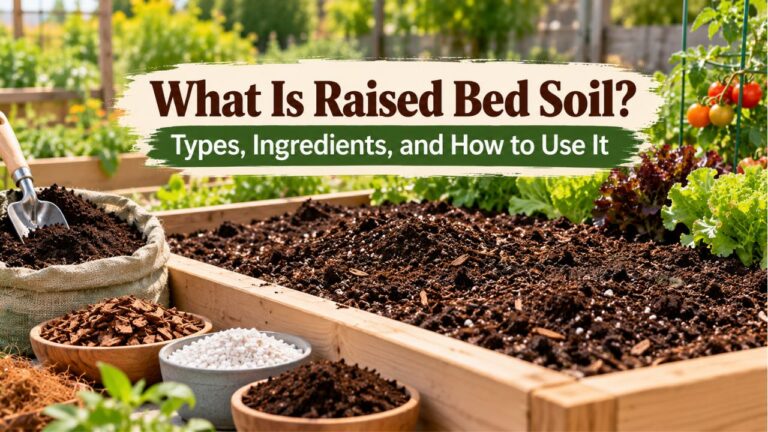
Compost for Organic Matter and Soil Structure
Finished compost is usually the first material to consider when refreshing established beds.
Organic matter helps sandy soil retain moisture and contributes to improved aggregation in heavier soils.
Compost also provides nutrients, although its nutrient content varies considerably.
It should not be treated as a guaranteed replacement for every fertilizer.
Avoid filling an established raised bed entirely with compost. A productive growing medium usually needs an appropriate balance of mineral soil or other growing-medium components and organic matter.
Topsoil or Raised Bed Mix for Lost Soil Volume
When a raised bed has settled significantly, compost alone may not provide the best replacement material.
Use quality screened topsoil or a suitable raised bed soil mix to restore missing volume.
A good raised bed mix should have a reasonably stable structure, retain moisture, and allow excess water to drain.
For a new bed, a mixture containing topsoil and plant-based compost can provide a useful starting point.
For an existing bed, however, it is usually better to retain the usable soil and add only enough new material to restore the desired depth.
Worm Castings for Small Nutrient Additions
Worm castings, also called vermicompost, are organic materials processed by earthworms.
They can contribute organic matter and some plant nutrients.
Worm castings are useful as a supplemental amendment, but they are not necessary when a raised bed already contains healthy soil and suitable compost.
Apply them according to the product instructions rather than assuming that larger amounts will produce better growth.
Fertilizer for Specific Nutrient Deficiencies
Fertilizer and compost are not interchangeable.
Compost primarily contributes organic matter while supplying variable amounts of nutrients. Fertilizer is used to supply nutrients in more defined amounts.
The three primary nutrients commonly shown on fertilizer labels are:
- Nitrogen (N): Supports leafy, vegetative growth.
- Phosphorus (P): Supports energy transfer, root development, and reproduction.
- Potassium (K): Helps regulate water use and other essential plant processes.
A raised bed may need nitrogen during a period of active growth without needing additional phosphorus or potassium.
Select fertilizer based on crop requirements, soil testing, and product directions instead of automatically applying a balanced fertilizer.
Lime or Sulfur for Soil pH Adjustment
Soil pH affects nutrient availability.
Agricultural lime is commonly used to raise soil pH, while elemental sulfur can be used to lower it under suitable conditions.
Neither amendment should be added without a reason.
Different crops have different preferred pH ranges, and the amount of material required depends on the soil’s buffering capacity and other characteristics.
Follow soil laboratory recommendations rather than trying to correct pH with household ingredients or guesswork.
How Much Compost Should You Add to Raised Bed Soil?
The appropriate amount depends on whether the bed is new, established, or being rebuilt because of poor soil conditions.
For an established vegetable bed, a modest annual compost application is generally more appropriate than repeatedly adding thick layers.
| Raised Bed Condition | Compost Approach |
| Established bed with healthy soil | Apply a light layer, generally ¼–1 inch annually |
| Soil with declining organic matter | Add finished compost within an appropriate soil-management plan |
| New bed being filled | Blend compost with suitable topsoil or raised bed mix |
| Bed with excessive phosphorus or salts | Test the soil before adding more compost |
| Bed with significant settling | Restore depth with an appropriate soil mix, not compost alone |
Calculate Compost for a Raised Bed
To calculate the required compost volume, multiply the bed’s surface area by the planned compost depth.
Compost volume (cubic feet) = Length (ft) × Width (ft) × Compost depth (in) ÷ 12
For example, consider a raised bed that measures 4 feet wide and 8 feet long.
With a 1-inch compost layer:
4 × 8 × 1 ÷ 12 = 2.67 cubic feet
That means the bed needs approximately 2.7 cubic feet of compost for a 1-inch application.
For a ½-inch layer, the required volume is approximately 1.3 cubic feet.
These quantities are examples, not universal prescriptions. If the soil already contains excessive nutrients or organic matter, adding compost may be unnecessary.
How to Amend Raised Bed Soil for Different Soil Problems
Not every raised bed needs the same amendment.
Matching the treatment to the problem helps avoid wasted materials and unnecessary changes to the growing medium.
Amend Hard or Compacted Raised Bed Soil
Compacted soil has fewer large pore spaces, making it harder for water, air, and roots to move through.
To improve compacted areas:
- Wait until the soil is moist but not excessively wet.
- Insert a garden fork into compacted sections.
- Gently loosen the soil without repeatedly turning it over.
- Add an appropriate amount of finished compost.
- Keep feet, heavy containers, and unnecessary equipment out of the planting area.
For severe compaction, physical loosening may be necessary before adding organic matter.
Do not assume that spreading compost over a deeply compacted layer will immediately solve the problem.
Improve Raised Bed Soil That Dries Out Too Quickly
Raised beds often lose moisture faster than surrounding ground because their exposed sides allow additional drying.
If the soil becomes dry shortly after watering, first inspect the soil composition and irrigation practices.
A modest addition of compost can improve moisture retention in a sandy mineral soil.
Apply organic mulch around established plants to reduce surface evaporation.
Water deeply enough to reach the active root zone, then check the moisture before watering again.
Extremely dry, peat-heavy, or other organic growing media may initially resist absorbing water. Rewet these materials gradually and evenly rather than repeatedly allowing the bed to dry completely.
Adding more loose potting mix is not always helpful when the existing soil already dries too quickly.
Improve Raised Bed Soil That Stays Too Wet
Poor drainage requires a different approach.
If water remains near the surface for an unusually long period, determine whether it can escape from the raised bed.
Check for:
- Blocked drainage openings in elevated or enclosed planters
- An impermeable bottom
- Dense, compacted material beneath an open-bottom bed
- Excessively frequent watering
- A growing medium that remains saturated
In open-bottom beds, gently loosening compacted soil beneath the growing area may improve water movement when preparing or rebuilding the bed.
If the bed sits on concrete or another impermeable surface, it needs a suitable drainage arrangement.
Adding compost cannot compensate for a blocked drainage outlet or an impermeable base.
Avoid mixing a small amount of sand into heavy clay as a quick fix. Improving the whole soil profile with appropriate organic matter and addressing drainage restrictions is usually more dependable.
Restore Raised Bed Soil With Poor Plant Growth
Stunted vegetables, pale leaves, and disappointing harvests can suggest nutrient problems, but they are not reliable proof of a specific deficiency.
Excess water, inadequate sunlight, damaged roots, pests, and unsuitable pH can produce similar symptoms.
Start with a soil test and an inspection of the growing conditions.
If testing identifies a nutrient deficiency, apply a fertilizer that supplies the needed nutrient.
If soil fertility is already adequate, adding more fertilizer may not improve the plants.
When Is the Best Time to Amend Raised Bed Soil?
The timing depends on the growing season, the amendment being used, and whether crops are already present.
Amend Raised Bed Soil in Spring
Early spring is a convenient time to refresh beds before planting vegetables.
Remove old debris, inspect the soil, and add finished compost if needed.
Wait until wet soil has dried enough to work without forming sticky clumps.
Apply any required fertilizer according to soil test recommendations and the needs of the crops you intend to grow.
Properly finished compost can generally be incorporated before planting without a lengthy waiting period.
However, certain fertilizers and pH amendments have specific application instructions or require additional time to react.
Amend Raised Bed Soil in Fall
Fall is another useful time to improve raised bed soil.
After harvesting annual crops, remove unwanted plant material and address any drainage or compaction problems.
A suitable amount of finished compost can be added as part of the bed’s maintenance plan.
Fall is also a practical time to establish a cover crop when the climate and planting schedule allow it.
Cover crops protect exposed soil and can contribute organic matter when managed correctly.
Avoid leaving large amounts of unfinished organic material mixed into the active root zone immediately before the next crop.
Amend Soil During the Growing Season
You can improve raised bed soil even while vegetables are growing.
The safest general approach is surface application rather than deep digging.
Spread a thin layer of finished compost between plants while keeping it away from direct contact with stems.
Avoid disturbing established root systems.
If growing plants need additional nutrients, use an appropriate side-dressing fertilizer according to the crop’s needs and product instructions.
Don’t apply large quantities of amendments simply because the plants are actively growing.
How to Refresh Raised Bed Soil Without Replacing It
Complete soil replacement is usually unnecessary when the existing material is reasonably healthy and free from serious contamination.
For an established bed, follow a simple maintenance routine:
- Remove weeds and old annual crop residue.
- Check whether the soil drains and absorbs moisture appropriately.
- Review recent soil test results.
- Add a suitable amount of finished compost if needed.
- Replace substantial lost volume with quality raised bed mix or topsoil.
- Apply fertilizer only when necessary.
- Protect the surface with suitable mulch or seasonal cover crops.
This approach preserves the existing growing medium while gradually maintaining its structure and fertility.
There are exceptions.
If a raised bed contains contaminated soil, severe persistent soil-borne disease problems, or an unsuitable growing medium that cannot be reasonably corrected, partial or complete replacement may be justified.
Replacing soil without fixing the underlying problem, however, may only provide temporary improvement.
Raised Bed Soil Amendment Mistakes to Avoid
Several common practices can make raised bed soil harder to manage.
Adding Too Much Compost Every Year
Although compost is beneficial, excessive applications can cause nutrient imbalances.
Repeated heavy additions, particularly of manure-based compost, may increase phosphorus and soluble salt concentrations.
High soluble salts can damage sensitive roots and emerging seedlings.
Use soil testing to decide whether additional organic amendments are appropriate.
Using Fresh Manure Around Vegetables
Fresh manure can introduce food-safety concerns and may contain ammonia or soluble salts that injure plants.
It is not a suitable substitute for properly finished compost during routine raised bed maintenance.
Use appropriately processed composted materials from reliable sources and follow applicable food-gardening safety recommendations.
Adding Undecomposed Wood Directly to the Root Zone
Wood chips and other woody materials are useful as surface mulch.
However, mixing substantial amounts of fresh woody material directly into soil can temporarily reduce nitrogen availability as microorganisms break it down.
Keep coarse woody mulch primarily on the surface unless it is part of a carefully planned growing-medium system.
Changing Soil pH Without Testing
Adding lime, wood ash, or sulfur without checking the existing pH can make nutrient availability worse.
Soil that is already alkaline doesn’t benefit from unnecessary liming.
Similarly, applying sulfur without knowing the starting pH and soil conditions can create unwanted acidity.
Repeatedly Digging the Entire Raised Bed
Routine deep digging can disturb soil aggregates and expose buried weed seeds.
Once a raised bed has good structure, extensive annual tilling is usually unnecessary.
Use surface compost applications and limited loosening when the soil actually needs them.
How to Keep Amended Raised Bed Soil Healthy
Maintaining soil quality is easier than repeatedly correcting severe problems.
After the initial amendments, pay attention to a few ongoing practices.
Protect the Soil Surface With Mulch
Organic mulch helps conserve moisture and reduce soil temperature fluctuations.
Suitable materials include clean straw, shredded leaves, and other appropriate garden mulches.
Keep mulch away from direct contact with plant stems and avoid making thick, constantly wet layers around crowns.
As organic mulch breaks down, some of its material becomes incorporated into the soil.
Avoid Walking on the Growing Area
Raised beds are designed to make plants accessible without stepping onto the growing soil.
Foot traffic can compress the soil and reduce its pore space.
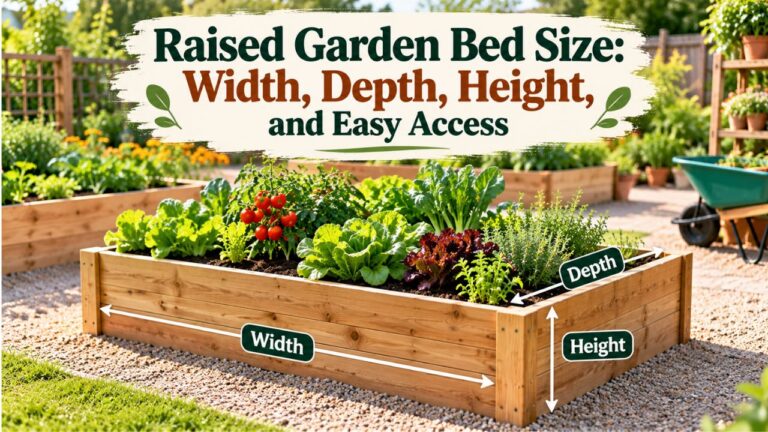
Use pathways around the beds and choose a width that allows you to reach the center comfortably.
Maintain Suitable Watering Practices
Water according to the crop, soil moisture, and weather rather than following a fixed schedule regardless of conditions.
Drip irrigation and soaker hoses can deliver water close to plant roots while limiting unnecessary wetting of foliage.
Periodically check moisture below the surface to determine whether irrigation is reaching the root zone.
Monitor Soil Fertility Over Time
Keep track of compost applications, fertilizers, and soil test results.
Changes in soil fertility develop over multiple seasons, particularly when large amounts of organic material are applied.
If vegetables are growing well and the soil test shows adequate nutrient levels, additional amendments may provide little benefit.
Conclusion
Understanding how to amend raised bed soil begins with identifying what the existing soil actually needs.
For most established beds, a modest addition of finished compost, appropriate watering, and occasional soil testing provide a practical foundation for maintaining healthy soil.
Compacted beds may need gentle loosening, while settled beds may require additional topsoil or raised bed mix. Nutrient deficiencies and pH problems should be corrected according to soil test results rather than assumptions.
The best long-term approach is to preserve healthy existing soil, avoid excessive amendments, and make gradual improvements based on actual growing conditions.
FAQs About How to Amend Raised Bed Soil
Do I Need to Replace Raised Bed Soil Every Year?
No. Most raised bed soil can be used for many growing seasons with proper maintenance.
Add compost or replacement soil when needed, monitor fertility, and address drainage or compaction problems rather than replacing the entire growing medium annually.
Can I Plant Immediately After Amending Raised Bed Soil?
Yes, you can generally plant immediately after adding properly finished compost to suitable soil.
However, certain fertilizers, lime, sulfur, and other amendments may require specific application timing. Always follow the product and soil laboratory recommendations.
Can I Use Regular Garden Soil to Refresh a Raised Bed?
Yes, suitable garden soil can be used when it has good structure, drains adequately, and is free from significant contamination.
Avoid introducing heavily compacted soil or material from areas with suspected chemical contamination. A mixture of quality topsoil and appropriate compost is often more suitable than poor-quality garden soil alone.
Can I Add Worm Castings and Compost Together?
Yes. Worm castings and finished compost can be used together in raised bed soil.
However, both contribute organic material and nutrients, so they should be applied in reasonable amounts. Healthy soil does not automatically need both products.
Should I Add Fertilizer Every Time I Add Compost?
No. Fertilizer is not automatically required whenever compost is applied.
Whether additional nutrients are needed depends on soil fertility, compost composition, crop requirements, and previous fertilizer applications. Soil testing provides a more reliable basis for that decision.
Can I Use Coffee Grounds or Eggshells Instead of Compost?
Coffee grounds and crushed eggshells are not complete replacements for finished compost.
Coffee grounds contain organic material but should generally be composted or used in modest amounts rather than added in thick layers. Eggshells break down slowly and should not be relied upon for quick calcium supplementation or pH correction.
How Do I Know If My Raised Bed Soil Needs More Amendments?
Check the soil’s moisture behavior, texture, growing depth, and recent soil test results.
If the soil drains appropriately, supports healthy roots, and contains suitable nutrient levels, major amendments may not be necessary. Poor plant growth alone is not enough to determine which material should be added.

I’m Maya L. Greenwood, a lifelong plant lover who believes anyone can grow something beautiful with the right guidance. After years of testing soil mixes, pruning methods, irrigation tricks, and pest-safe solutions, I started EasyGardenTips.com to turn hard-won lessons into step-by-step advice. From seed starting and container gardens to composting and seasonal checklists, my goal is to make gardening simple, sustainable, and fun.