Can You Use In Ground Soil for Raised Beds? How to Prepare It
Yes, you can use in-ground soil for raised beds, provided the soil is clean, reasonably loose, and drains well. You don’t have to buy expensive raised bed soil if the topsoil in your yard already supports healthy plant growth.
However, placing ordinary ground soil inside a raised bed doesn’t automatically improve its quality. Heavy clay can hold too much moisture, compacted soil may restrict root growth, and sandy soil may struggle to retain water and nutrients.
The condition of your existing soil matters more than whether it came from the ground or a commercial bag.
A raised bed built directly over natural ground can also use the soil beneath it as additional rooting space. This makes suitable native soil especially useful for permanent vegetable beds.
Before moving soil into a raised bed, check its texture, drainage, fertility, and potential contamination. Adding finished compost can improve many soil types, but it cannot make contaminated soil safe.
The following sections explain when in-ground soil works, how to prepare it correctly, and which conditions make purchased raised bed soil a better choice.
Can You Use In Ground Soil for Raised Beds Without Amendments?
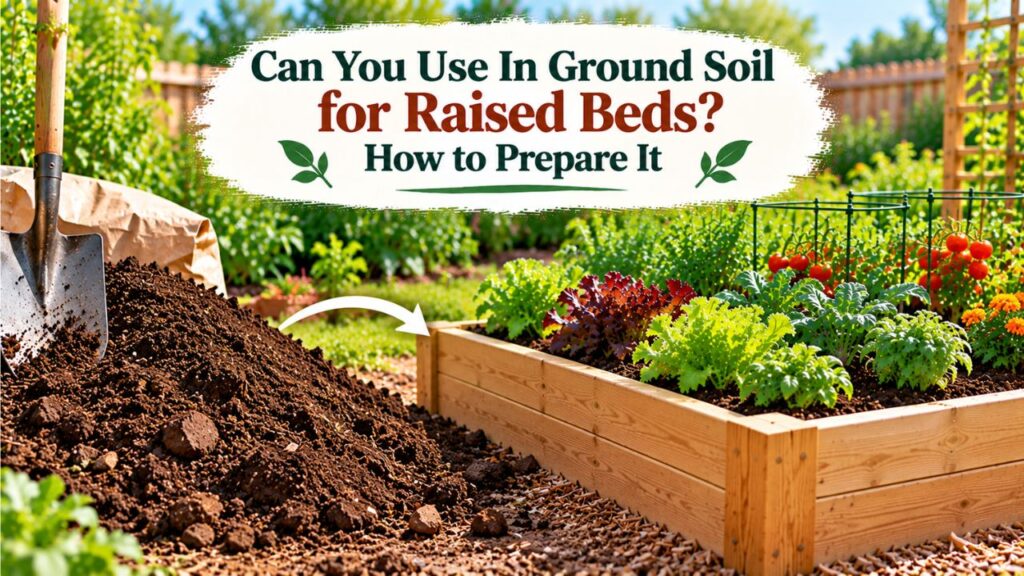
Yes, you can use untreated in-ground soil in a raised bed if it already has suitable physical structure, drainage, and fertility.
Healthy mineral soil contains a mixture of sand, silt, clay, organic matter, water, and air spaces. These components support root development and help plants access moisture and nutrients.
If your garden soil is already productive, adding large amounts of compost or other amendments may be unnecessary.
For example, soil taken from an established vegetable garden may already contain enough organic matter to support another growing season.
However, not every type of soil taken from the ground is equally suitable.
When Existing Ground Soil Works Well
In-ground soil is generally suitable for raised beds when it:
- Has a loose or crumbly structure
- Drains excess water without prolonged pooling
- Contains adequate organic matter
- Is not severely compacted
- Has suitable nutrient levels and pH
- Comes from a location without concerning contamination
Loamy soil is particularly useful because it typically balances water retention with drainage.
Key Takeaway: If your existing topsoil is clean, fertile, and well-drained, you can use it directly in a permanent open-bottom raised bed without purchasing a completely different growing medium.
When Ground Soil Needs Improvement
Some soil conditions make amendments or additional preparation necessary.
| Existing Soil | Main Concern | Practical Improvement |
| Heavy clay | Slow drainage and compaction | Loosen soil and incorporate mature compost |
| Sandy soil | Poor moisture retention | Add compost and maintain mulch |
| Compacted soil | Restricted roots and airflow | Gently loosen before filling |
| Low-organic-matter soil | Weak structure and limited nutrient retention | Add suitable finished compost |
| Contaminated soil | Potential exposure to harmful substances | Use verified clean soil and an appropriate bed design |
Contaminated soil should not simply be mixed with compost. The contamination must be addressed separately.
How to Check If In-Ground Soil Is Suitable for Raised Beds
Before transferring soil from your yard, evaluate whether it provides a suitable growing environment.
A few simple observations can identify obvious texture and drainage problems.
However, visual inspection cannot establish whether soil is free from contaminants or has balanced nutrients.
Check Soil Texture With a Hand Test
Take a handful of slightly moist soil and squeeze it gently.
Observe how it behaves when you open your hand.
- Loamy soil: Forms a loose ball that breaks apart under light pressure.
- Clay-heavy soil: Feels sticky when wet and may form a dense, smooth lump.
- Sandy soil: Feels gritty and breaks apart easily.
- Compacted soil: May contain hard clods that resist breaking.
This test provides a rough indication of texture, not a complete laboratory classification.
If the soil feels reasonably crumbly and has supported healthy plants previously, it may be a useful foundation for a raised bed.
Check How Well the Ground Soil Drains
Water movement is particularly important for raised garden beds.
Roots need moisture, but they also require oxygen in the spaces between soil particles.
To make an initial assessment, moisten a small area and observe whether water soaks in or remains pooled on the surface.
Soil that stays saturated for long periods may have compaction, high clay content, or drainage problems beneath the surface.
A simple surface watering check is not a complete drainage test. If the site regularly floods or holds standing water, investigate the underlying drainage before building the bed.
Test Soil Nutrients, pH, and Possible Contamination
For vegetable beds, laboratory soil testing is more reliable than guessing which amendments are needed.
A standard fertility test can provide information about soil pH and important nutrients.
Contamination testing may need to be requested separately.
The University of Maryland Extension’s Soil to Fill Raised Beds guidance recommends testing existing garden soil and specifically checking for lead when the raised bed will be used for food crops.
Additional testing may be appropriate if the soil comes from:
- Land near older buildings with deteriorating lead-based paint
- Former industrial or commercial properties
- Areas where hazardous materials were stored or disposed of
- Locations affected by chemical spills
- Unknown fill material or construction debris
If you suspect contamination, don’t use that soil for edible crops until its suitability has been evaluated.
How to Prepare In-Ground Soil for Raised Beds
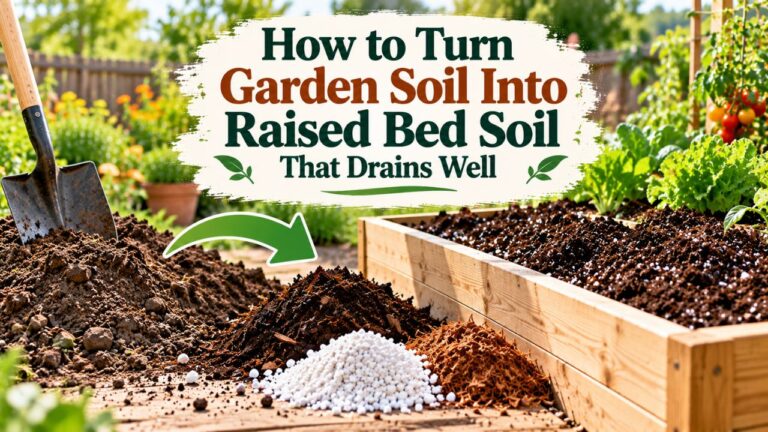
Once you’ve established that the soil is suitable, you can improve its structure and move it into your raised garden bed.
The process is relatively simple, although clay-heavy and compacted soils may require additional attention.
Step 1: Collect Clean Topsoil From the Ground
Choose soil from an area with a known history and healthy vegetation.
Remove established weeds and unwanted materials before collecting it.
Avoid including:
- Large stones
- Plastic or construction debris
- Persistent weed roots
- Diseased plant material
- Unidentified chemical residues
Collect usable topsoil rather than relying on dense subsoil taken from deeper excavation.
Topsoil usually contains more organic matter and biological activity than the underlying soil.
Step 2: Break Up Large Soil Clumps
Spread the collected soil over a clean tarp or suitable working surface.
Use a shovel or garden fork to separate large clods.
The goal is to create a loose, workable mixture while preserving useful soil aggregates.
Avoid repeatedly crushing the soil into a fine powder. Good soil structure depends partly on stable aggregates and pore spaces.
If the soil is extremely wet, allow it to dry until it can be worked without smearing or sticking heavily to tools.
Step 3: Add Finished Compost When Needed
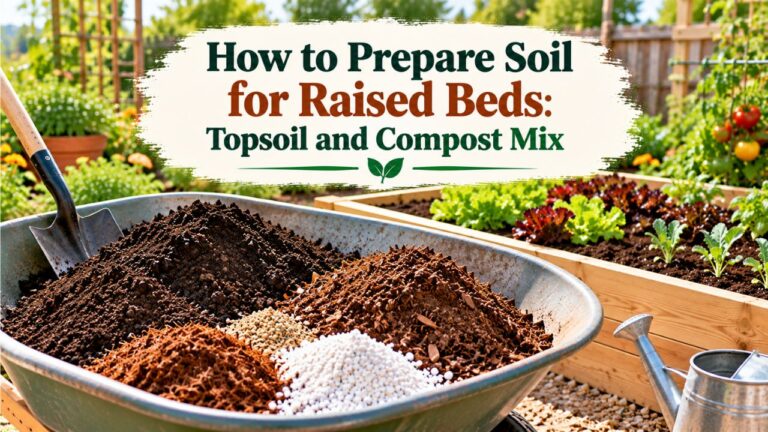
Finished compost can improve the structure and organic matter content of suitable ground soil.
For existing mineral soil that needs moderate improvement, adding 1–2 inches of compost and incorporating it into the upper 6 inches of soil is a reasonable starting method.
Rutgers Cooperative Extension’s Soil for Raised Beds recommends this approach for improving native soil and explains why mineral soil amended with compost is a useful long-term growing medium.
Use mature compost that is well decomposed and does not have a strong ammonia or rotten odor.
If your soil already has adequate organic matter and fertility, reduce or omit the compost application according to its condition.
Adding excessive compost can create nutrient imbalances and lead to additional settling as organic materials continue decomposing.
Step 4: Mix the Soil and Compost Evenly
Spread the finished compost over the garden soil.
Use a garden fork or shovel to distribute the amendment through the intended growing layer.
Avoid leaving a thick compost-only layer directly above dense, compacted soil.
A reasonably consistent mixture helps create a more uniform growing environment.
If you’re adding imported topsoil above existing soil, lightly blending the materials at their boundary can also create a more gradual transition for roots and water.
Step 5: Fill the Raised Bed Without Compacting It
Transfer the prepared soil into the raised bed.
Spread it evenly, breaking apart any remaining large clumps.
Avoid pressing the material down heavily.
Overcompaction can reduce the pore spaces responsible for water movement and root aeration.
After filling, water the soil gently and allow it to settle naturally.
Leave enough room below the bed’s upper edge for watering and mulch.
How to Improve Different Ground Soil Types for Raised Beds
The amendments needed depend on the existing soil.
Heavy clay, sand, and healthy loam behave differently, so the same treatment will not necessarily produce the same result.
Using Clay Soil in Raised Beds
Clay soil can be used in raised beds, but dense clay may require structural improvement.
Clay particles hold water effectively, which can be beneficial during dry conditions.
However, heavily compacted clay may drain slowly and restrict root development.
To prepare clay-heavy soil:
- Wait until it is moist but not saturated.
- Loosen the soil without crushing it excessively.
- Add mature compost when needed.
- Mix the materials evenly.
- Check whether excess water can drain into the soil beneath the bed.
Avoid assuming that adding a small quantity of sand will automatically improve clay drainage.
The effect depends on the original soil texture and the amount and grading of the sand.
For extremely dense clay, combining suitable native soil with clean, well-structured loamy topsoil may be a more practical approach.
Using Sandy Soil in Raised Beds
Sandy soil generally allows water to move through quickly.
Its main limitations are often low moisture retention and reduced ability to hold certain nutrients.
Adding finished compost can help improve both properties.
After planting, organic mulch can also reduce water evaporation from the soil surface.
Sandy raised beds may still need more frequent moisture checks than beds containing loam.
Water according to conditions rather than following a fixed schedule.
Using Loamy Soil in Raised Beds
Loamy soil is often a suitable choice because it contains a balanced mixture of mineral particles.
When properly structured, it retains useful moisture while allowing excess water to drain.
If your loamy soil already supports healthy vegetable growth, it may need little preparation beyond removing weeds, loosening compacted areas, and checking fertility.
Avoid adding amendments simply because commercial raised bed soil products contain them.
Suitable native loam can be a complete growing medium without an elaborate mixture.
Is In-Ground Soil Better Than Store-Bought Raised Bed Soil?
Neither option is automatically better.
The choice depends on soil quality, cost, the type of raised bed, and whether the growing area is connected to natural ground.
In-Ground Soil vs. Commercial Raised Bed Mix
| Feature | In-Ground Soil | Commercial Raised Bed Mix |
| Cost | Often inexpensive when already available | Requires purchasing materials |
| Composition | Natural mineral soil | Varies by product |
| Drainage | Depends on texture and structure | Depends on ingredients |
| Nutrients | Determined by existing fertility | May contain added nutrients |
| Organic matter | Varies by location | Often contains substantial organic material |
| Settling | Usually relatively stable when well structured | May settle more if rich in decomposable materials |
| Quality assurance | Testing may be necessary | Product origin and quality still matter |
For a permanent raised bed, suitable mineral soil can provide a stable foundation.
Commercial raised bed mixes may be convenient when the native soil is unsuitable or when you don’t have enough clean soil available.
Read product labels carefully because some products marketed as garden soil or raised bed soil contain mostly organic ingredients rather than mineral topsoil.
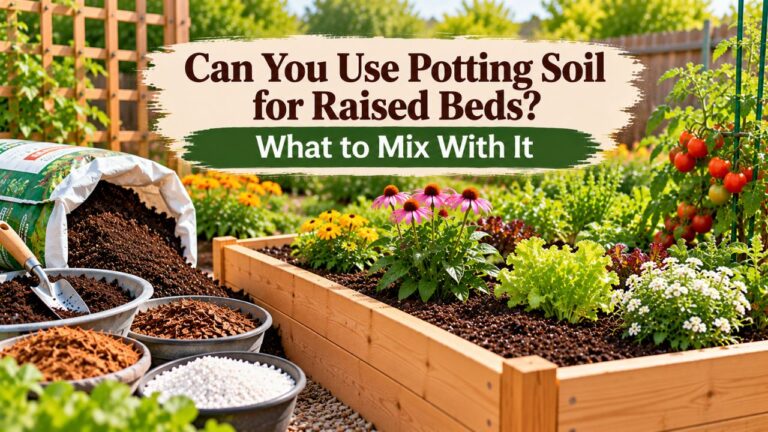
In-Ground Soil vs. Potting Mix
Potting mix is typically formulated for containers.
Many potting mixes contain ingredients such as peat, coconut coir, bark, perlite, or vermiculite.
These ingredients can create a lightweight growing medium suitable for planters.
However, a permanent open-bottom raised bed doesn’t necessarily require a container-style mix.
Good native mineral soil can provide structural stability and nutrient-holding capacity while allowing roots to reach the ground beneath.
For containers with solid bottoms, ordinary ground soil may be too dense or heavy, making an appropriately designed container mix preferable.
Can You Use In-Ground Soil in Raised Beds on Concrete?
Using in-ground soil in a raised bed on concrete requires more caution than using it in a bed placed directly over natural ground.
When the bed sits on soil, roots may extend below the raised layer.
On concrete, the available rooting volume is limited by the bed’s construction.
Water must also have a reliable drainage route.
Dense mineral soil can become difficult to manage in a contained planter, particularly if water collects at the bottom.
For these beds, consider:
- A growing medium appropriate for contained planting
- Sufficient depth for the intended vegetables
- Drainage outlets or other suitable drainage provisions
- The filled bed’s total weight
- The supporting surface’s load capacity
A mixture designed for an open-bottom bed may not behave the same way in a sealed or poorly drained structure.
For elevated beds with legs, the manufacturer’s weight and fill recommendations should take priority.
Can You Put Ground Soil Directly Over Existing Garden Soil?
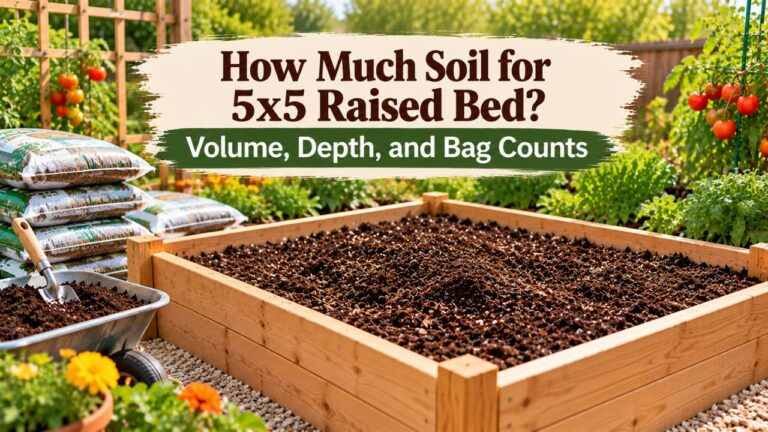
Yes. A raised bed built over natural garden soil can use that underlying soil as part of the growing environment.
In fact, you may not need to excavate or move much soil at all.
If the location has suitable native soil, you can build the raised bed directly over it and increase the growing depth with additional topsoil or compost as necessary.
Before filling:
- Remove persistent weeds or manage existing vegetation.
- Check whether the ground drains adequately.
- Loosen heavily compacted soil with a garden fork.
- Add suitable soil or compost according to the existing conditions.
- Maintain a connection between the raised growing layer and the soil underneath.
A permanent impermeable barrier is usually unnecessary for a conventional open-bottom bed on clean ground.
If the native soil contains harmful contaminants, however, the bed may require clean imported growing medium and a properly designed separation barrier.
Do not rely on ordinary cardboard or compost to isolate hazardous soil.
Mistakes to Avoid When Using Ground Soil in Raised Beds
Even clean garden soil can produce disappointing results if it is handled incorrectly.
Filling the Bed With Dense, Unbroken Soil
Large compacted clods can create uneven growing conditions.
Prepare the material before filling and avoid working it while saturated.
Using Soil From an Unknown Location
Soil may look healthy while containing elevated concentrations of unwanted substances.
Unknown fill, demolition debris, and soil from potentially contaminated locations should not be used for food production without appropriate evaluation.
Adding Too Much Compost
Compost can improve soil structure, but excessive applications aren’t always beneficial.
Choose amendments according to the existing soil’s condition and nutrient requirements.
Ignoring Drainage Beneath the Bed
A raised frame doesn’t automatically correct a poorly drained site.
If the underlying ground remains saturated, the new growing layer may also experience drainage problems.
Address the site’s water movement before planting crops that require well-aerated soil.
Walking on the Prepared Soil
Foot traffic can compact soil, especially when it is wet.
Keep paths outside the growing area and make the bed narrow enough to reach across comfortably.
How to Maintain Raised Beds Filled With Ground Soil
Once in-ground soil has been prepared and placed in a raised bed, it generally doesn’t need complete replacement every growing season.
Instead, monitor its structure, moisture, and fertility.
Maintain Organic Matter
Apply finished compost when the soil needs additional organic matter.
For established beds, a modest surface application may be sufficient.
Avoid repeatedly adding large amounts without checking soil conditions.
Protect the Surface With Mulch
Organic mulch helps limit evaporation, surface crusting, and erosion.
Clean straw and shredded leaves are common options.
Keep mulch from being packed against plant stems.
Check Fertility Periodically
Vegetable crops remove nutrients during growth.
Use periodic soil testing to decide whether fertilizers or pH adjustments are needed.
Do not assume that plants need more fertilizer simply because the soil came from the ground.
Prevent New Compaction
Avoid stepping on the growing area.
Minimize digging when the soil is wet.
Maintaining good soil structure is usually easier than repeatedly correcting severe compaction.
Conclusion
The answer to can you use in ground soil for raised beds is yes, provided the material is safe, suitable for growing plants, and able to drain properly.
Clean, fertile mineral soil can form an effective growing medium for permanent raised beds, particularly when they are built directly over natural ground.
Heavy clay may benefit from improved structure, sandy soil may need additional organic matter, and compacted soil should be loosened before planting.
However, ground soil from contaminated locations should not be reused for edible crops without appropriate assessment.
For most gardeners, the best starting point is to evaluate the soil already available, make only the improvements it needs, and avoid buying expensive replacement mixes unnecessarily.
FAQs About Can You Use In Ground Soil for Raised Beds
Can I Dig Up Soil From My Yard and Put It in a Raised Bed?
Yes, you can use soil from your yard if it is clean, fertile, and drains well. Remove persistent weeds and debris, check for compaction, and add mature compost if the soil needs improvement.
Do I Have to Mix Compost With Ground Soil?
No. If your existing soil already has good structure and sufficient organic matter, additional compost may not be necessary. A soil test can help determine whether amendments are needed.
Can I Use Clay Soil From the Ground in a Raised Bed?
Yes, but dense clay may need to be loosened and amended to improve its structure. Mature compost and suitable loamy topsoil can help create a more workable mixture, depending on the original soil.
Can I Use Ground Soil Instead of Buying Raised Bed Soil?
Yes. Suitable native mineral soil can replace purchased raised bed mix in many permanent open-bottom beds. Commercial mixes become more useful when existing soil is contaminated, unavailable, or poorly suited to the growing conditions.
Can I Use In-Ground Soil in a Raised Bed With a Bottom?
It depends on the planter’s drainage, depth, and structural capacity. Dense ground soil can be too heavy and may drain poorly in contained planters. A growing mix designed for containers is often preferable for raised beds with solid bottoms.
Does Ground Soil Need to Be Sterilized Before Using It?
No. Healthy garden soil contains beneficial microorganisms and normally doesn’t require sterilization. Remove troublesome weeds and avoid soil with known contamination or serious soilborne disease problems.
How Often Should I Replace Ground Soil in Raised Beds?
You generally don’t need to replace suitable mineral soil annually. Maintain its fertility and structure, add compost when necessary, and replenish material lost through settling or erosion.

I’m Maya L. Greenwood, a lifelong plant lover who believes anyone can grow something beautiful with the right guidance. After years of testing soil mixes, pruning methods, irrigation tricks, and pest-safe solutions, I started EasyGardenTips.com to turn hard-won lessons into step-by-step advice. From seed starting and container gardens to composting and seasonal checklists, my goal is to make gardening simple, sustainable, and fun.