5 Best Light for Lavender Plant: Product Practical Practical
Choosing indoor lighting for lavender is harder than it first appears. A sunny window may not provide enough consistent brightness, while an oversized lamp can waste energy, create awkward glare, or make a small pot difficult to position. The best light for lavender plant care should provide useful intensity, adjustable placement, and a schedule that fits your routine.
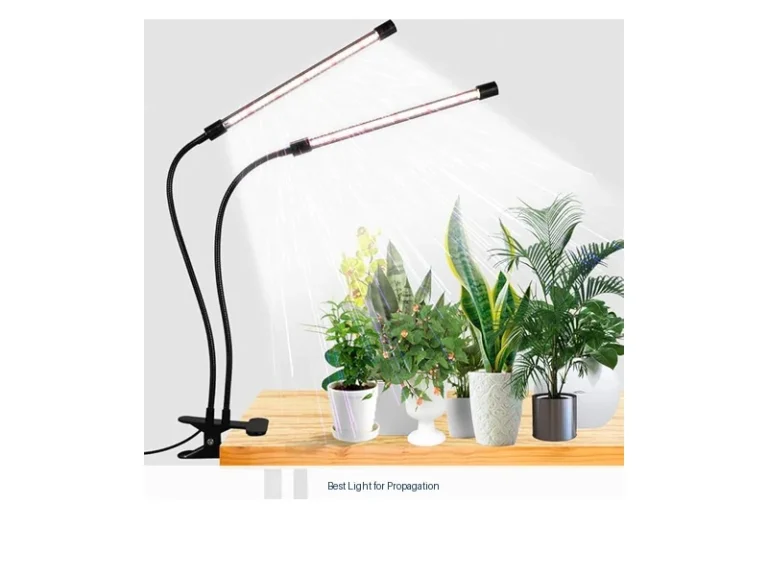
My first choice is GooingTop 6000K Full Spectrum Indoor Plant Growing Lamp. Its 6000K output comes from 74 white and 10 red LEDs, while the 360-degree gooseneck and clamp make it easy to aim light at a tabletop lavender pot.
My second choice is LEOTER Full Spectrum and Red Blue Spectrum Indoor Grow Light. Its four-head design, 10 brightness levels, three light modes, and automatic timer provide useful flexibility as a plant changes from establishing growth to stronger vegetative development.
My third choice is yadoker Full Spectrum 6.3-Inch Halo Plant Light. yadoker Full Spectrum 6.3-Inch Halo Plant Light earns third place for its height-adjustable halo shape and broad range of timer settings. The telescoping pole can rise from 13.7 to 61.1 inches, making it a particularly practical option when lavender is growing taller or several small plants are grouped together.
This guide compares all five lights by placement, controls, spectrum, power approach, and likely fit for indoor lavender. It also explains how to position a lamp, choose a daily schedule, avoid common mistakes, and decide which features matter most for your particular pot and growing space.
Best Light for Lavender Plant
I selected these products for their relevance to indoor plant lighting, useful details about spectrum and adjustment, practical controls, and available customer-feedback evidence. The group also includes several formats—clamp lamps, a halo stake, and a compact pot light—so a buyer can compare the right style rather than choosing only by LED count.
| # | Image | Product | Price on Amazon |
|---|---|---|---|
| 1 |  |
GooingTop 6000K Full Spectrum Indoor Plant Growing Lamp | Check Price |
| 2 |  |
LEOTER Full Spectrum and Red Blue Spectrum Indoor Grow Light | Check Price |
| 3 |  |
yadoker Full Spectrum 6.3-Inch Halo Plant Light | Check Price |
| 4 |  |
Juhefa 48LED White Red 6000K Full Spectrum Gooseneck Lamp | Check Price |
| 5 |  |
SANSI 5W 4000K Pot Clip-on Grow Light | Check Price |
GooingTop 6000K Full Spectrum Indoor Plant Growing Lamp
GooingTop’s lamp is a sensible match for a single lavender pot on a desk, shelf, or plant stand. The 6000K white-light emphasis gives it a daylight appearance, and the combination of 74 white LEDs with 10 red LEDs is intended to resemble full-spectrum sunlight. That makes the lamp visually comfortable for a living space rather than relying only on a strongly colored red-and-blue glow.
The flexible gooseneck and strong clamp are important here because lavender benefits from directed light rather than a lamp pointed vaguely across the room. The neck can be adjusted around the plant, helping you aim the beam toward the leaves as the pot is moved or rotated. USB or AC plug power also gives you more placement choices, although you still need an outlet or suitable USB power source close enough to the plant.
A built-in timer offers 4-, 8-, or 12-hour settings on a 24-hour cycle. That is useful for maintaining a predictable routine when natural daylight changes or when you are away from home. The lamp draws about 10 watts, and the supplied estimate places monthly electricity cost around $2 when used for 12 hours daily. Its CRI of up to 95 may also make the lamp pleasant for reading, but that does not replace judging the plant’s response by new growth and leaf condition.
Pros
- Daylight-style 6000K output with white and red LEDs.
- 360-degree gooseneck and clamp support precise placement.
- 4-, 8-, and 12-hour timer options.
- About 10 watts of LED power draw.
- 365-day warranty and customer service are supplied.
Cons
- Only three timer durations are available.
- The clamp format is best suited to one nearby plant or a small grouping.
- It requires USB or AC power rather than operating independently.
My Opinion
This is the most balanced pick for a beginner with one indoor lavender pot. The adjustable clamp, natural-looking light, simple timer, and modest power demand cover the practical basics without making setup complicated. I would choose it when straightforward positioning matters more than advanced spectrum controls.
LEOTER Full Spectrum and Red Blue Spectrum Indoor Grow Light
LEOTER stands out when adjustment matters more than minimal controls. Its 80 LEDs combine red, blue, yellow, and white light, and the lamp offers full-spectrum, red, and blue modes. For lavender, the full-spectrum setting is the most natural starting point, while the alternate modes give an experiment-minded grower additional ways to tailor the light without buying another fixture.
Ten dimming levels are useful for managing a plant that sits close to the lamp or for gradually increasing brightness after installation. That range can also help accommodate changing plant height and seasonal window light. The four-head arrangement gives you more ways to distribute light around a plant than a single narrow head, although it may occupy more visual space and require a sturdier mounting location.
The circular timer uses 3 9 or 12-hour settings and is intended to repeat automatically each day The supplied information notes that the timer needs to be reset if the light is unplugged or loses power so this is not completely maintenance-free after an interruption A USB connector and included adapter make power connection convenient and the aviation-grade heat.
The adjustable gooseneck heads can be directed independently around a small arrangement. This makes the lamp attractive for a lavender pot that shares space with other plants, provided the clamp has a secure edge and the leaves are not crowded against the LEDs.
Pros
- 80 LEDs and three spectrum modes provide broad adjustment.
- Ten brightness levels make fine-tuning easier.
- Four flexible heads can distribute light around a plant.
- Automatic 3-, 9-, and 12-hour timing is convenient.
- USB connection and included adapter improve placement flexibility.
Cons
- The timer may need resetting after a power interruption.
- Four heads can be more equipment than one small lavender pot needs.
- Its many controls may feel less simple to first-time growers.
My Opinion
LEOTER is the better alternative for someone who wants to tune brightness and spectrum rather than simply switch on a daylight lamp. Its flexibility is valuable, but the extra controls and multi-head shape make it a stronger fit for a small plant collection than for a minimalist single-pot setup.
yadoker Full Spectrum 6.3-Inch Halo Plant Light
Unlike the clamp lamps above, yadoker uses a halo light mounted on a telescoping stake. That format places the light around the plant instead of shining from one side, which can be helpful when you want more even coverage across a compact lavender plant. The 6.3-inch light disc contains 72 LEDs spanning 380 to 800 nanometers, including white, warm-white, red, and blue LEDs.
The standout feature is height adjustment The pole extends from 13 7 to 61 1 inches so it can start close to a young plant and rise as the lavender grows Fully extended the light can also reach a wider group of plants This flexibility comes with an important compatibility consideration the pointed stake needs to.
Ten brightness levels range from 10% to 100%, giving you a wide adjustment span. The 8-, 12-, and 16-hour timer options are especially useful when you want a longer daily schedule, although the supplied information notes that the light must be set again after a power interruption. Its 5V USB power design is low voltage and intended for long-hour use, while the long cord can help reach an outlet across a room.
The inline controller handles power, dimming, and timing without tools. Confirm the plug and power arrangement before ordering, particularly if the intended spot has limited USB access.
Pros
- Halo shape can provide more surrounding coverage than a one-sided lamp.
- Height adjusts from 13.7 to 61.1 inches.
- Ten brightness settings cover gentle to full output.
- 8-, 12-, and 16-hour timer choices suit longer schedules.
- 5V low-voltage USB operation and a long cord are practical.
Cons
- The stake must be pushed into the planter’s soil.
- Timer settings may need to be restored after power loss.
- A halo stake may be less suitable for very small or shallow containers.
My Opinion
yadoker is my third choice because its design solves a different problem exceptionally well: keeping a growing plant centered under an adjustable light. It is a strong option for taller lavender or several pots together, but the soil stake makes it less universally compatible than a clamp.
Juhefa 48LED White Red 6000K Full Spectrum Gooseneck Lamp
Juhefa keeps the lighting arrangement compact while adding useful independent controls. Its 48 LEDs consist of 40 white and 8 red LEDs, producing a crisp 6000K daylight-style beam. That combination should look natural in a room and is a reasonable fit for lavender placed on a desk, shelf, or plant stand where a larger fixture would be distracting.
The two flexible gooseneck arms can bend through 360 degrees and hold their shape allowing the light to be aimed toward the leaves rather than directly at the room This is helpful when a lavender pot sits beneath a shelf or beside a window and needs supplemental illumination from an.
Five brightness levels provide less precision than LEOTER or yadoker, but they are simple enough for a beginner to use. Juhefa’s 4-, 8-, and 12-hour timer runs on a 24-hour cycle, turning on again at the same time each day. Brightness can be adjusted while the timer continues, which means you can change the light level without rebuilding the schedule.
The lamp is described as suitable for flowers, herbs, succulents, hanging baskets, trellises, floor pots, and bonsai. That broad positioning range makes it useful beyond lavender, although the two-arm design may be more lamp than one very small pot requires. Its claimed CRI of 95 can make plant color and room illumination appear pleasant, but brightness and distance remain more important for plant results than appearance alone.
Pros
- 6000K white-and-red LED arrangement has a daylight appearance.
- Two 360-degree goosenecks allow targeted positioning.
- 77-inch USB cable supports flexible placement.
- Five brightness settings are easy to understand.
- Timer and brightness controls work independently.
Cons
- Five dimming levels offer less fine control than some competitors.
- The 4-, 8-, and 12-hour schedule may not suit every routine.
- USB power is still required near the chosen setup.
My Opinion
Juhefa is a practical middle-ground choice for a small indoor garden. It offers more directional coverage than a single-head lamp without the extensive controls of a multi-spectrum fixture. I would favor it when long cable reach and straightforward dual-arm positioning are more important than maximum dimming range.
SANSI 5W 4000K Pot Clip-on Grow Light
SANSI takes the most compact approach in this group This one-pack pot clip light produces 5 watts and uses a 4000K natural-light color intended to blend more comfortably into a home Its ceramic technology is presented as improving power conversion and the supplied output figure is 35 78 μmol.
The clamp attaches directly to a pot or nearby edge, while the 360-degree gooseneck lets you aim the light at the leaves. This can save space and avoid the need for a floor stand, but the small clip format also limits coverage. It is best matched with one compact lavender plant positioned close to the lamp. A taller plant or a wide group of pots may need a different design or more than one light.
Four brightness levels—25%, 50%, 75%, and 100%—make adjustment uncomplicated. The automatic timer offers 3-, 6-, or 12-hour cycles, turning off for the remaining 21, 18, or 12 hours. Since it uses 5V input, it can draw power from a power bank, laptop, or computer, which is convenient for a desk arrangement. ETL listing and a two-year service period are also supplied, giving buyers useful ownership support information.
The 4000K color is less blue-white than the 6000K options, so the room may feel warmer. That is a matter of preference and placement rather than an automatic disadvantage, but it is worth considering beside a window or work area.
Pros
- Compact pot clip format saves space.
- 5W output and 5V power suit a small desk setup.
- 360-degree gooseneck supports close targeting.
- Four brightness levels are simple to operate.
- ETL listing and two-year service are supplied.
Cons
- Close-range output is better for one small plant than a group.
- Only 3-, 6-, and 12-hour timer settings are available.
- 4000K light is warmer than the 6000K lamps in this comparison.
My Opinion
SANSI makes the most sense when space, low power use, and discreet placement are the priorities. It is not my first choice for a tall or wide lavender plant, but it is an appealing solution for one small pot kept close to a desk, shelf, or computer.
How I Selected These Lavender Plant Lights
The ranking gives the greatest weight to practical fit for indoor lavender: the ability to direct light toward the plant, adjust brightness or height, maintain a repeatable schedule, and operate comfortably in a home. I also considered whether the format suits one pot or several, whether the controls are beginner-friendly, and whether the supplied data explains power, mounting, timer behavior, or ownership support.
Customer-feedback volume and stated ratings helped identify products with meaningful buyer interest, but those numbers do not prove that every setup will perform identically. A lamp’s results depend on distance, room light, plant size, window exposure, and how consistently the schedule is maintained.
The most useful feature is not always the highest LED count. For a single lavender pot, reliable positioning and a repeatable timer can matter more than advanced modes you never use.
I included different mounting styles deliberately. Clamp lamps are usually easier to move, while a halo stake can keep illumination centered as a plant grows. A compact pot light may be the least disruptive option for a desk, but its close-range format is less suitable for broad coverage.
Before ordering, match the lamp to the container and the power location first. A technically appealing light becomes inconvenient if its clamp, stake, cable, or height cannot work in the intended spot.
How to Choose the Best Light for Lavender Plant
Start with the plant’s location, size, and access to natural light. Then choose the light style that can keep the leaves consistently illuminated without forcing the lamp against the foliage or making everyday care awkward. The best match is the one you can position correctly and operate regularly.
- Choose a clamp for a movable tabletop pot, or a halo stake for a taller plant that needs centered coverage.
- Prefer adjustable brightness when the lamp will sit close to the leaves or serve plants at different stages.
- Check timer durations against your daily routine before buying.
- Confirm USB, adapter, cable length, and outlet access at the intended location.
- Use the lamp’s distance and plant response—not color appearance alone—to guide adjustments.
Spectrum and color appearance
Several products use full-spectrum arrangements with white and red LEDs, while SANSI uses a 4000K natural-light presentation and the GooingTop and Juhefa lamps emphasize 6000K daylight color. A pleasant white appearance can make a lamp easier to live with, especially in a home office, but it should not be treated as a complete measure of plant performance. The stated wavelength range, usable brightness, and placement are more informative than color temperature by itself.
Brightness and distance
A dimmer becomes particularly valuable when a light is close to the plant. Begin with a moderate setting and observe the lavender instead of immediately using maximum output. If growth becomes stretched or weak, the plant may need more usable light or a closer position; if leaves show stress, check heat, dryness, watering, and distance before assuming the lamp needs to be replaced.
Coverage and mounting
A single head can be efficient for one pot, while multiple heads or a halo can spread light more evenly around several leaves. Measure the available clamp edge, pot depth, and vertical clearance. A stake light needs stable soil, whereas a clamp needs a firm surface. These simple compatibility checks prevent many setup problems.
How to Set Up an Indoor Lavender Light
Place the lamp so its useful beam reaches the foliage rather than the side of the pot or a nearby wall. Secure a clamp firmly, or insert a halo stake carefully into stable soil. Keep the fixture close enough to be useful but not touching leaves, and arrange the cable so watering cannot pull the lamp into the container.
Start with a repeatable schedule
Select a timer duration that complements the natural light already reaching the plant. A window with several hours of bright daylight may need less supplemental time than a dim interior corner. Set the timer at a convenient daily start time, then check whether the product retains its setting after unplugging or a power interruption.
Adjust as the plant changes
Reposition the lamp when the lavender grows, the pot is rotated, or the plant is moved to a different window. For a telescoping halo, raise the pole gradually rather than leaving the light far above a short plant. For a gooseneck, redirect the head so the developing foliage remains within the most useful part of the beam.
Using a Grow Light with a Sunny Window
Artificial lighting is often most useful as a supplement rather than something that must operate in isolation. A bright window can contribute natural light, but its intensity and duration change with season, weather, glass, and the direction it faces. Use the lamp to fill the predictable gaps instead of assuming a window provides the same conditions every day.
If the pot receives strong direct sun, watch the combined effect of window heat and the lamp. Move the fixture farther away or reduce brightness if the foliage becomes uncomfortably warm. If the plant leans strongly toward the window, rotate the pot periodically and redirect the lamp so growth remains more balanced.
Timer, Power, and Safety Tips
Timers reduce the temptation to leave a light running indefinitely, but they are only useful when the schedule is set correctly. Keep the controller accessible, avoid placing a power connection where it can be splashed during watering, and use the supplied adapter or an appropriate USB power source. Low-voltage products still need sensible cable management.
- Inspect the cable and connector occasionally for damage or looseness.
- Keep leaves from pressing against the light head or blocking ventilation.
- Do not allow a dangling cord to pull a clamp or stake out of position.
- Reset timer settings after an outage when the product instructions or supplied details indicate that memory is not retained.
- Use a stable surface for any clamp and avoid attaching it to a fragile edge.
Cleaning and Long-Term Ownership
Dust on a light surface can reduce useful output and make the fixture look dull. Turn the lamp off and disconnect it before wiping the exterior with a dry or lightly damp soft cloth. Keep moisture away from the LEDs, controller, USB connection, and adapter. Do not bend goosenecks more aggressively than needed, especially when changing the lamp’s position repeatedly.
Check the clamp or stake whenever the plant is moved. A loose clamp can change the light angle, while an unstable stake may lean as the soil is watered. Store the lamp in a dry place if it is removed for a season, and coil the cable loosely rather than wrapping it tightly around the neck or controller.
Matching the Light to Your Lavender Pot
A small pot on a desk generally benefits from a compact clip lamp or one flexible head. A larger plant with foliage extending in several directions may be easier to illuminate with multiple heads or a halo arrangement. Taller growth favors a fixture with meaningful height adjustment, such as the yadoker pole, provided the container can accept a stake.
Think about future growth rather than only the plant’s current size. A lamp that works for a six-inch plant may become awkward once the leaves rise above the beam. Conversely, an oversized multi-head fixture can make a tiny pot look crowded and may offer controls that add complexity without solving a real problem.
Common Mistakes to Avoid with Lavender Lighting
Most lighting problems come from inconsistent placement or assumptions about what the lamp is doing. A bright-looking bulb is not automatically effective at any distance, and a timer cannot compensate for a fixture aimed away from the leaves.
- Do not place the lamp so far away that the foliage receives only a weak spill of light.
- Do not press the LED head directly against leaves.
- Do not change brightness, distance, and watering all at once; make one adjustment so the result is easier to understand.
- Do not ignore a timer reset after a power interruption.
- Do not choose a soil stake for a container where inserting it could disturb roots or make the pot unstable.
- Do not judge success by color alone; look for steady, compact growth and overall plant condition.
Signs the Setup Needs Adjustment
Weak, stretched growth can indicate that the plant is not receiving enough useful light, although watering and temperature can also contribute. A plant leaning sharply in one direction may need a better angle or more even coverage. If the lamp is close and the foliage appears stressed, inspect heat, airflow, watering habits, and distance before increasing output.
Make gradual changes and allow time for the plant to respond. Raise or lower the lamp modestly, alter the brightness one step, or redirect a gooseneck. Keeping notes about the timer setting and lamp position can make it easier to identify which change helped.
FAQS About Best Light for Lavender Plant
What color light is suitable for indoor lavender?
White full-spectrum lighting is a practical starting point because it provides a natural appearance while supplying a broad stated range of wavelengths. Products in this comparison use daylight-style 6000K, natural 4000K, or mixed full-spectrum arrangements. Brightness, distance, and schedule still matter alongside color.
How close should a lavender grow light be?
Use the product’s intended range and begin at a moderate distance or brightness. A close-range lamp such as the SANSI pot clip light should be aimed carefully at the foliage, while an adjustable halo can be raised as the plant grows. Avoid touching leaves and change position gradually if the plant shows stress.
Is a timer useful for an indoor lavender light?
Yes. A timer creates a repeatable daily schedule and prevents the lamp from being left on accidentally. Available schedules differ: GooingTop and Juhefa offer 4-, 8-, and 12-hour choices, while yadoker offers 8, 12, and 16 hours. Check whether the timer must be reset after a power interruption.
Which light is best for one small lavender pot?
GooingTop is the strongest all-around choice because its clamp and gooseneck are easy to direct, while SANSI is the most compact option for a very small pot kept close to a desk or shelf. The final choice depends on available space, desired timer settings, and whether you prefer 4000K or 6000K-looking light.
Should I choose a clamp or halo light for lavender?
Choose a clamp when you want easy removal and flexible positioning beside one pot. Choose a halo when surrounding coverage and height adjustment are more important. A halo stake requires suitable soil and container stability, while a clamp requires a secure edge or nearby surface.
Final Thoughts
For most indoor growers, the best light for lavender plant care is the GooingTop 6000K Full Spectrum Indoor Plant Growing Lamp because it balances placement, timing, daylight-style output, and modest power use. Choose the LEOTER Full Spectrum and Red Blue Spectrum Indoor Grow Light for deeper control, or the yadoker Full Spectrum 6.3-Inch Halo Plant Light when adjustable height and centered coverage matter most.

I’m Maya L. Greenwood, a lifelong plant lover who believes anyone can grow something beautiful with the right guidance. After years of testing soil mixes, pruning methods, irrigation tricks, and pest-safe solutions, I started EasyGardenTips.com to turn hard-won lessons into step-by-step advice. From seed starting and container gardens to composting and seasonal checklists, my goal is to make gardening simple, sustainable, and fun.