3 Best 500 Watt LED Grow Light for Powerful Indoor Growing
A 500W-class LED grow light provides enough photon output to illuminate a substantially larger indoor canopy than typical 100W, 150W, or 300W fixtures. It is especially useful for 4×4 grow tents, larger vegetable gardens, mature high-light plants, and growers who want one powerful fixture instead of several smaller panels.
The best 500 watt LED grow light should be judged by more than its electrical draw. I would prioritize PPE, PPF, PPFD uniformity, dimming, diode distribution, full-spectrum output, thermal management, and realistic 4×4 coverage before buying.
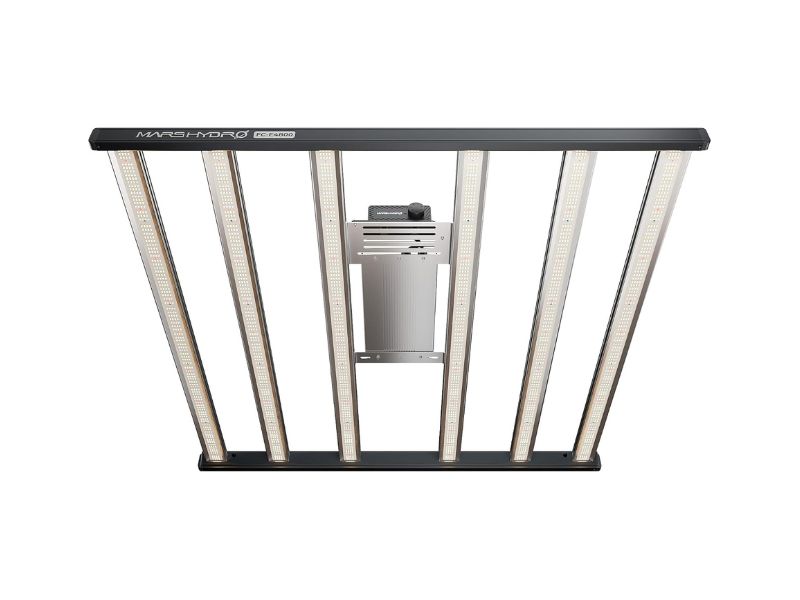
My primary recommendation is the MARS HYDRO FC-E4800 480W LED Grow Light. Although its actual draw is 480W rather than exactly 500W, it sits directly in the 500W performance class and combines Bridgelux 2835 diodes, Osram 660nm red LEDs, 2.8 µmol/J PPE, approximately 1,344 µmol/s PPF, removable construction, and up to 4×4-foot coverage.
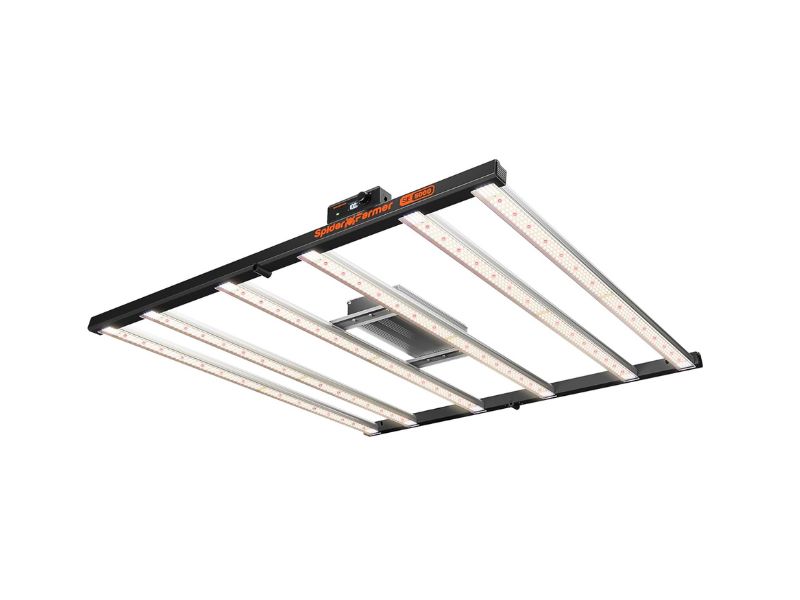
I would choose the Spider Farmer SE5000 480W LED Grow Light when smart controls and especially strong bar-style canopy distribution matter. Its current Amazon listing specifies 480W actual power, approximately 1,420 µmol/s photon output, Bridgelux diodes, Osram Hyper Red LEDs, app control, dimming, and 4×4-tent positioning.
For buyers who specifically want a true 500W fixture, I would choose the VIVOSUN LumaLight 500W LED Grow Light. It combines 500W power, a distributed bar matrix, micro-lens optics, 25–100% dimming, full-spectrum white/blue/red/far-red output, IP65 sealed light bars, GrowHub compatibility, and 4×4-foot coverage.
3 Best 500 Watt LED Grow Lights Reviewed
| Image | Product Name | Check Price |
|---|---|---|
Best Choice | MARS HYDRO FC-E4800 480W LED Grow Light | Check Price |
Second Best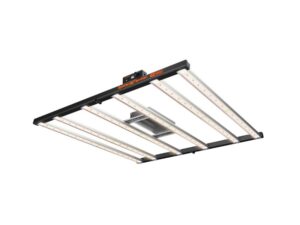 | Spider Farmer SE5000 480W LED Grow Light | Check Price |
Third Choice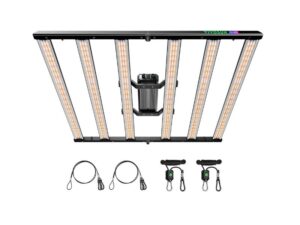 | VIVOSUN LumaLight 500W LED Grow Light | Check Price |
1. MARS HYDRO FC-E4800 480W LED Grow Light
Key Features
- 480W actual input power
- 2.8 µmol/J PPE
- Approximately 1,344 µmol/s PPF
- Bridgelux 2835 diodes
- Osram 660nm red LEDs
- Full-spectrum output
- Distributed bar-style construction
- Dimmable operation
- Removable design
- Maximum coverage around 4×4 feet
The MARS HYDRO FC-E4800 is my primary recommendation even though its actual power draw is 480W rather than exactly 500W.
A 20-watt difference at this scale is only about four percent.
In practical grow-light shopping, the FC-E4800 competes directly with 500W fixtures because canopy photon output and efficiency matter much more than hitting an exact round-number wall draw.
Amazon currently specifies 480W power, 2.8 µmol/J PPE, approximately 1,344 µmol/s PPF, Bridgelux LEDs, enhanced Osram red output, and maximum 4×4-foot coverage.
That combination gives the FC-E4800 considerable output for:
- Large vegetable seedlings
- Tomatoes
- Peppers
- Eggplants
- Herbs
- Leafy greens
- Larger indoor plants
- Dense 4×4 canopies
The 2.8 µmol/J PPE specification is particularly useful.
PPE, or photosynthetic photon efficacy, measures how efficiently the fixture converts electrical energy into photosynthetically active photons.
A fixture can consume a lot of electricity and still be mediocre if it converts that energy inefficiently.
The FC-E4800’s published efficiency means it is designed to produce substantial photon output from its 480-watt input.
Its approximately 1,344 µmol/s PPF gives another useful perspective.
PPF measures the total amount of photosynthetically active photons emitted each second.
At this output level, a grower has much more mature-plant headroom than with a 200W or 300W fixture.
That matters for high-light vegetables.
A 100W panel may be excellent for tomato seedlings.
It is far less suited to illuminating a dense 4×4 canopy of large plants.
The FC-E4800’s multi-bar design is equally important.
Instead of concentrating the diodes into a relatively small central board, the LEDs are distributed across several bars.
That can improve:
- Edge PPFD
- Corner coverage
- Center-to-edge uniformity
- Heat distribution
- Air movement through the fixture
A 500W-class fixture can create a serious hotspot if its output is concentrated too narrowly.
Distributed bars help spread that energy over the actual growing area.
This is especially useful for a 4×4 tent, where plants may occupy 16 square feet.
A strong center reading is not enough.
You want plants near the edges to receive meaningful photon density too.
The spectrum includes broad plant-useful output plus dedicated 660nm red LEDs.
That makes the FC-E4800 useful through multiple stages rather than limiting it to vegetative growth.
For seedlings, however, this fixture is massive overkill at full output.
A 480W LED should be dimmed substantially when used with:
- Newly emerged tomatoes
- Pepper seedlings
- Lettuce starts
- Young herbs
The advantage is that you do not need to replace the fixture later.
As the plants grow, output can increase until the same light supports a much larger mature canopy.
Heat management deserves attention.
A 480W fixture still places a large thermal load into an indoor grow area.
Even efficient LEDs eventually convert their electrical input into heat within the room.
A 4×4 tent using a fixture this powerful should generally have appropriate:
- Exhaust ventilation
- Fresh-air intake
- Canopy circulation
- Temperature monitoring
The removable design can also make installation and heat management more flexible.
What I Like
- High 2.8 µmol/J PPE
- Approximately 1,344 µmol/s PPF
- Excellent 4×4-class output
- Broad bar-style distribution
- Dedicated Osram red LEDs
- Dimmable design
- Strong mature-plant headroom
What I Do Not Like
- Actual draw is 480W, not exactly 500W
- Far too powerful for a small propagation area
- Requires serious ventilation in enclosed spaces
- Large physical footprint
The FC-E4800 is the model I would choose for most buyers searching in the 500W LED grow-light class. The slight difference between 480W and 500W matters less than its strong efficiency, substantial PPF, and broad 4×4-oriented canopy distribution.
2. Spider Farmer SE5000 480W LED Grow Light
Key Features
- 480W actual input
- Approximately 1,420 µmol/s photon output
- Premium Bridgelux diodes
- Osram Hyper Red LEDs
- Full-spectrum lighting
- Multi-bar fixture design
- Dimmable output
- Smart app control
- Designed for 4×4 grow tents
- Uniform-PPFD emphasis
The Spider Farmer SE5000 is the model I would choose when smart control and strong published photon output are priorities.
Its current Amazon listing specifies a true 480W input and approximately 1,420 µmol/s photon output, along with premium Bridgelux diodes and Osram Hyper Red LEDs.
That published photon output is particularly noteworthy.
At roughly 1,420 µmol/s, the SE5000 offers substantial total output for a 4×4-class indoor canopy.
Again, electrical wattage alone does not tell you this.
Two fixtures can both consume around 500 watts while producing different total photon flux.
The multi-bar format distributes the light across a wide frame.
That architecture is particularly valuable in a 4×4 tent.
Imagine a square canopy containing:
- Four large tomato plants
- Several peppers
- A dense leafy-green bed
- Multiple large indoor plants
The fixture should not produce one intense bright spot directly below the center while outer plants receive substantially less light.
Spider Farmer’s bar design is intended to create more uniform PPFD across the footprint.
Uniformity can improve consistency in:
- Plant height
- Internode spacing
- Leaf development
- Canopy maturity
It also makes the usable grow area more representative of the tent size.
The Osram Hyper Red component adds dedicated red wavelengths to the broader full spectrum.
Red photons are highly relevant to photosynthesis, but I would not buy a grow light solely because it advertises red diodes.
The fixture still needs good:
- Total PPF
- PPFD distribution
- Efficiency
- Thermal design
The SE5000 has those broader characteristics as well.
Smart app control is its biggest convenience advantage.
The current model supports app-based control for managing lighting without physically accessing the dimmer every time.
That can be useful if the light is mounted high inside a crowded tent.
Instead of reaching through mature plants, you can make supported adjustments remotely.
Potential uses include:
- Changing brightness
- Scheduling photoperiod
- Managing different growth stages
- Coordinating compatible lights
The plant does not inherently benefit from an app.
It benefits from the consistent light schedule that the app helps you maintain.
A basic external timer can still do an excellent job.
Dimming is essential at this power level.
You should not think of a 480W fixture as an “always run at 100%” device.
For small plants, running reduced output can:
- Save electricity
- Reduce heat
- Prevent excessive PPFD
- Make one fixture useful through several stages
As the canopy matures, intensity can increase.
This is especially useful for vegetables started indoors long before transplanting.
Tomatoes and peppers can progress from tiny seedlings to substantial plants under the same fixture.
Passive thermal design also keeps the lighting system relatively simple.
However, the room still needs to deal with approximately 480 watts of electrical input while the fixture is operating.
The biggest disadvantage is that much of this capacity is wasted in a small setup.
If you only have one nursery flat, a 100W or 150W fixture is more sensible.
The SE5000 becomes logical when you actually plan to use a substantial growing footprint.
What I Like
- Approximately 1,420 µmol/s photon output
- Broad bar-style canopy coverage
- Bridgelux diode platform
- Osram Hyper Red LEDs
- Smart app control
- Dimming
- Strong 4×4 positioning
What I Do Not Like
- Actual draw is 480W rather than exactly 500W
- Excessive for small seedling setups
- App functionality adds complexity
- Requires effective heat removal in enclosed tents
The SE5000 is the model I would choose when I want a high-output 500W-class fixture with smart controls and particularly strong bar-style 4×4 coverage.
3. VIVOSUN LumaLight 500W LED Grow Light
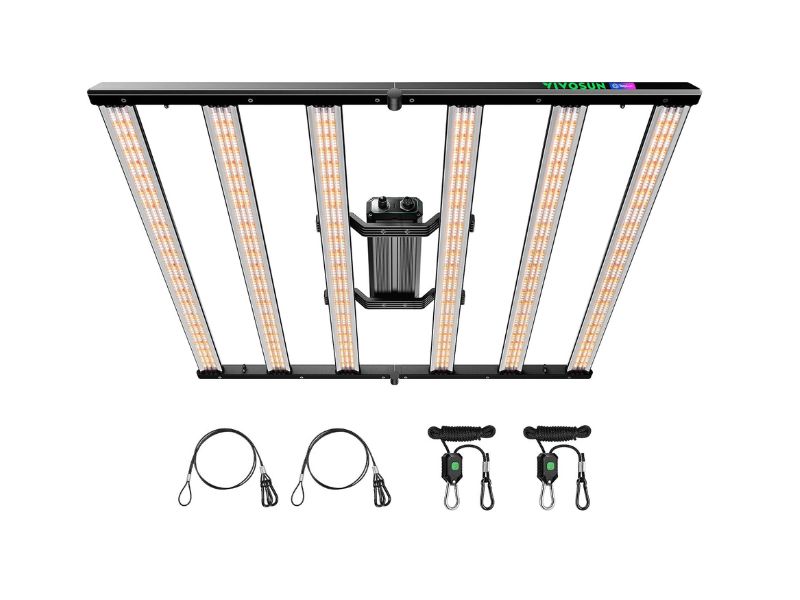
Key Features
- 500W actual power
- True 500W-class fixture
- Full-spectrum LED output
- 3000K and 5000K white LEDs
- 660nm red
- 730nm far red
- 25–100% dimming
- Micro-Lens Optic System
- Distributed bar matrix
- IP65 sealed bars
- GrowHub/app compatibility
- Designed for 4×4-foot coverage
The VIVOSUN LumaLight is the obvious choice if the phrase “500 watt” needs to mean exactly 500W actual input.
Its current Amazon listing identifies it specifically as a 500W LED grow light for 4×4-foot coverage.
The fixture uses a distributed bar matrix designed to spread light across the entire canopy.
VIVOSUN describes the layout as targeting strong uniformity while reducing center hotspots.
That is precisely what I want from a fixture in this power class.
At 500W, there is enough total energy available to produce extremely high local intensity.
If that energy is distributed poorly, the center of the tent can receive too much light while edges remain underlit.
A well-designed bar system reduces that problem.
VIVOSUN adds a Micro-Lens Optic System to the bars.
According to the current Amazon listing, the optical system redirects and concentrates light while aiming to increase PPFD and improve deeper canopy penetration.
Lens technology can be useful, but I would still evaluate it through real PPFD distribution rather than relying solely on the phrase “optical lens.”
What matters is what reaches the leaves.
The spectrum includes:
- 3000K white
- 5000K white
- 660nm red
- 730nm far red
This provides a broad full-spectrum environment designed to support plants from earlier growth through maturity.
Far red can influence plant morphology and developmental signaling.
However, far red should be treated as a supplemental design feature rather than the main reason to choose the light.
For most growers, canopy PPFD and daily light exposure matter much more.
Dimming is available in four practical steps:
- 25%
- 50%
- 75%
- 100%
That makes a 500W fixture far more versatile.
At 25% nominal output, you are operating around one-quarter of maximum power rather than blasting young seedlings with full intensity.
As plants mature:
25% → 50% → 75% → 100%
can provide a simple progression, although actual settings should be based on plant response and manufacturer guidance rather than following that sequence automatically.
The LumaLight also carries IP65 protection on its sealed light bars.
This is helpful in a humid grow environment where the fixture may encounter:
- High humidity
- Mist
- Dust
- Occasional cleaning exposure
IP65 does not mean submersible.
It also does not mean the wall outlet, timer, controller, and every cable connection are waterproof.
Keep electrical connections away from irrigation and standing water.
Smart controls are another advantage.
The fixture is compatible with the VIVOSUN GrowHub and mobile app, allowing supported scheduling and remote intensity management.
That is particularly useful in a complete VIVOSUN grow environment.
If you already use compatible:
- Controllers
- Fans
- Environmental equipment
the light can become part of one coordinated system.
The main drawback is marketplace history.
The current exact LumaLight 500W listing has substantially fewer ratings than the MARS HYDRO and Spider Farmer products above it.
That does not make the light technically weaker.
It simply means the specific Amazon listing has less customer-rating history at the moment.
What I Like
- True 500W actual power
- 4×4-oriented bar design
- Micro-lens optics
- 25–100% dimming
- Broad white/red/far-red spectrum
- IP65 sealed bars
- GrowHub smart-control compatibility
What I Do Not Like
- Smaller current Amazon rating history
- Smart ecosystem can be unnecessary for simple setups
- Full 500W output demands good environmental control
The LumaLight is the model I would choose when I specifically want a true 500W fixture rather than a 480W model, especially if GrowHub compatibility and environmental protection are priorities.
500 Watt LED Grow Light Comparison
| Product | Actual Power | Fixture Style | Published Output/Efficiency | Dimming | Smart Control | Coverage Focus |
| MARS HYDRO FC-E4800 | 480W | Multi-bar | 2.8 µmol/J, ~1,344 µmol/s | Yes | Model/controller dependent | 4×4 |
| Spider Farmer SE5000 | 480W | Multi-bar | ~1,420 µmol/s | Yes | App control | 4×4 |
| VIVOSUN LumaLight 500W | 500W | Bar + micro-lens | Model-specific | 25–100% | GrowHub/App | 4×4 |
The FC-E4800 provides a strong efficiency/output balance, SE5000 emphasizes very high photon output plus app control, and LumaLight is the true 500W choice with smart dimming, optical distribution, and IP65 sealed bars.
How to Choose the Best 500 Watt LED Grow Light
Decide Whether You Need Exactly 500W
There is very little practical reason to reject an excellent 480W fixture simply because it falls 20 watts below 500W.
A 480W light is only about 4% below 500W in electrical input.
More important questions include:
- How much PPF does it produce?
- What is its PPE?
- How uniform is its PPFD?
- Does its geometry match the canopy?
The FC-E4800 and SE5000 are therefore legitimately part of the 500W-class comparison despite their 480W wall draw.
Is 500W Enough for a 4×4 Grow Tent?
Yes, an efficient 480–500W LED is a strong power class for many 4×4 grow-tent applications.
All three selected lights are positioned around 4×4-style coverage.
A 4×4 canopy contains 16 square feet.
At 500W:
500 ÷ 16 = 31.25 watts per square foot.
Watt density does not directly predict plant performance, but it provides useful context.
Fixture efficiency and light distribution determine how well those watts become useful canopy photons.
Is 500W Enough for a 5×5 Grow Tent?
It depends heavily on the plant.
A 5×5 footprint covers 25 square feet.
At 500W, that equals only:
20 watts per square foot.
Efficient LEDs can still provide useful vegetative or moderate-intensity coverage across that area.
For a dense mature high-light canopy, however, one 500W fixture may be less ideal than a larger system.
Check the PPFD map across the full 5×5 area.
Is 500W Too Much for a 3×3 Tent?
Potentially.
A 3×3 area contains only nine square feet.
At 500W, that is about:
55.6 watts per square foot.
With a modern high-efficiency LED, that can create very high canopy PPFD at full output.
A dimmer makes the fixture usable, but a 300W-class model may be more proportionate for many 3×3 setups.
500W vs 300W Grow Light
Moving from 300W to 500W adds approximately 67% more electrical input.
That can provide:
- More total PPF
- Larger coverage
- Greater mature-plant headroom
- Better 4×4 suitability
But it also means:
- More heat
- Greater electricity consumption
- Larger fixtures
- Stronger ventilation requirements
For 3×3 spaces, 300W is often more balanced.
For 4×4, 500W class becomes considerably more attractive.
500W vs 600W Grow Light
A 600W fixture provides 20% more electrical input than 500W.
That extra power may be useful for:
- Very high-light 4×4 applications
- Larger canopies
- Greater headroom
However, higher wattage is not always necessary.
An efficient 480–500W bar fixture may already deliver excellent PPFD across a 4×4 canopy.
Compare actual PPF and maps rather than buying more watts automatically.
Why PPE Matters
PPE tells you how efficiently electricity becomes photosynthetically useful photons.
The FC-E4800 publishes 2.8 µmol/J PPE.
For a 500W-class fixture, efficiency matters substantially because the light runs for many hours each day.
Small efficiency differences accumulate over time.
Why PPF Matters
PPF measures the total amount of photosynthetically active photons produced each second.
The FC-E4800 publishes approximately 1,344 µmol/s PPF, while the current SE5000 listing specifies approximately 1,420 µmol/s photon output.
This is much more informative than an “equivalent wattage” marketing claim.
Why PPFD Matters Even More at the Canopy
PPF measures total output.
PPFD tells you how much photon density actually reaches a particular point on the plant canopy.
PPFD depends on:
- Hanging height
- Dimmer level
- Fixture geometry
- Tent reflectivity
- Position under the fixture
A 500W light can have excellent total output but still waste photons if distribution is poor.
Why Bar Lights Dominate This Power Class
At 500W, physically spreading the diodes becomes increasingly valuable.
Bar fixtures can improve:
- Center-to-edge uniformity
- Corner PPFD
- Passive heat distribution
- Air movement
- Canopy coverage
All three selections use distributed bar-oriented designs.
Dimming Is Essential
A 500W-class fixture without practical dimming would be much less versatile.
At maximum output, these lights can produce substantial canopy intensity.
For seedlings, lower settings are appropriate.
As plants mature, intensity can increase.
This lets one light support plants from:
Seedling → Vegetative Growth → Mature Canopy
without buying multiple fixtures.
Best 500W LED Grow Light for Seedlings
I would choose the MARS HYDRO FC-E4800, but only if I planned to use the same light later for a much larger mature canopy.
For seedlings alone, a 500W-class fixture is unnecessary.
A 100W or 150W light is generally more proportionate to one nursery tray.
The advantage of the FC-E4800 is long-term scalability.
Best 500W Grow Light for Vegetable Seedlings
If you are starting several large nursery flats at once, a dimmed bar fixture can provide broad uniform coverage.
Tomatoes, peppers, eggplants, and brassicas can all use the same lighting system as they mature.
For a large propagation area, distributed bars help prevent outer seedlings from stretching toward a central hotspot.
Best 500W Grow Light for Tomatoes
Tomatoes become high-light plants as they mature.
A 4×4 canopy containing several large tomato plants is a strong use case for this power class.
I would favor either the FC-E4800 or SE5000 because both provide substantial published photon output and broad bar distribution.
Best 500W Grow Light for Peppers
Peppers are another excellent candidate for a dimmable 500W-class fixture when several plants share a large tent.
Start at reduced output.
As the pepper canopy fills the tent, gradually increase intensity according to leaf response and PPFD.
Best 500W Grow Light for Lettuce
Five hundred watts is much more potential output than most lettuce setups require.
If you are growing a large 4×4 bed, dimming lets you spread moderate PPFD across the whole canopy.
You generally do not need to run maximum output just because the fixture can deliver it.
Best 500W Grow Light for Herbs
For a few herb pots, 500W is excessive.
For a commercial-style or very large indoor herb canopy, the broad footprint can be useful.
Run the dimmer according to crop demand rather than automatically using maximum power.
Full Spectrum vs Red-Heavy Lighting
I prefer broad full-spectrum white lighting for general growing.
It supports multiple stages while making it easier to visually inspect:
- Leaf color
- Pest damage
- Nutrient symptoms
- Water stress
Dedicated red wavelengths can supplement that spectrum.
FC-E4800 and SE5000 both advertise Osram red components, while VIVOSUN combines white, blue, red, and far-red wavelengths.
Do You Need Far Red?
Not necessarily.
Far red can influence plant shape and developmental signaling.
The VIVOSUN LumaLight includes 730nm far red.
But before optimizing far red, get these basics correct:
- PPFD
- Photoperiod
- Temperature
- Humidity
- Airflow
- Watering
- Nutrition
Far-red LEDs cannot compensate for poor environmental management.
How High Should a 500W Grow Light Be?
There is no universal distance.
The correct height depends on:
- Exact fixture
- Dimmer percentage
- Growth stage
- Plant type
- Tent reflectivity
Follow the manufacturer’s hanging guide first.
Then watch your plants.
Signs of insufficient light may include:
- Stretching
- Long internodes
- Weak stems
- Strong leaning
Signs of excessive intensity can include:
- Bleaching
- Upward leaf curling
- Pale upper growth
- Localized stress beneath the fixture
Make gradual changes.
How Long Should a 500W Grow Light Run?
Wattage does not determine photoperiod by itself.
The correct schedule depends on:
- Crop
- Growth stage
- PPFD
- Daily light requirement
- Natural daylight
Vegetable seedlings commonly use long daily light periods, while mature plants can have different requirements.
Use a timer or compatible controller for consistency.
Electricity Use of a 500W LED Grow Light
At full output:
500W = 0.5 kW
If it runs for 16 hours:
0.5 × 16 = 8 kWh per day
Over 30 days:
8 × 30 = 240 kWh per month
For a 480W fixture:
0.48 × 16 = 7.68 kWh per day
Over 30 days:
7.68 × 30 = 230.4 kWh per month
Multiply the relevant total by your electricity rate per kWh.
Dimming can reduce actual consumption.
Heat From a 500W LED Grow Light
Five hundred watts is a meaningful heat load.
LEDs do not make electrical energy disappear.
A powerful 4×4 setup generally needs careful environmental management.
Consider:
- Exhaust fan
- Intake air
- Circulation fans
- Temperature monitoring
- Humidity monitoring
A fixture can be fanless and still heat the room.
“Fanless” describes the cooling architecture, not the absence of thermal output.
Smart Control: Useful or Optional?
Smart control can be valuable when a high-power fixture is difficult to reach.
Spider Farmer SE5000 provides app-based control, while VIVOSUN LumaLight works with its GrowHub ecosystem.
Smart control can simplify:
- Schedules
- Brightness adjustments
- Remote management
However, a properly rated external timer and manual dimmer remain perfectly capable for a fixed daily routine.
IP65 Does Not Mean Waterproof Everywhere
VIVOSUN lists IP65 sealed light bars on the LumaLight 500W.
That is useful for dust, mist, and normal grow-room exposure.
IP65 does not mean:
- Submersible
- Safe in standing water
- Wall outlets can get wet
- Timers can get wet
- Plug connections can get wet
Keep electrical equipment away from irrigation runoff.
Timer Capacity Matters
A 500W grow light itself is not a huge household electrical load, but the entire grow setup can add up.
Your tent may also include:
- Exhaust fan
- Circulation fans
- Heater
- Humidifier
- Dehumidifier
- Pumps
Check total actual input wattage and circuit capacity.
Do not calculate load using LED “equivalent wattage.”
Common 500 Watt LED Grow Light Buying Mistakes
Rejecting a 480W Light Because It Is Not Exactly 500W
Photon output and efficiency matter more than a 20W difference.
Choosing Only by Wattage
Look at PPF, PPE, PPFD, and coverage.
Ignoring Light Distribution
A powerful hotspot does not equal a well-lit 4×4 canopy.
Buying 500W for a Tiny Grow Area
Match power to actual canopy size.
Running Full Output Over Seedlings
Use dimming.
Ignoring Heat
A 500W-class fixture adds substantial thermal load.
Ignoring Electrical Safety
Calculate real combined input wattage.
Assuming IP65 Means Submersible
It does not.
Frequently Asked Questions
What is the best 500 watt LED grow light?
The MARS HYDRO FC-E4800 is my primary recommendation in the 500W performance class.
Although it draws 480W, it publishes 2.8 µmol/J PPE, approximately 1,344 µmol/s PPF, and maximum 4×4 coverage.
Is 480W close enough to a 500W grow light?
Yes, 480W is only four percent below 500W in electrical input.
Photon efficiency, total PPF, and canopy distribution are generally much more important than that small difference.
Which model here is exactly 500 watts?
The VIVOSUN LumaLight is the true 500W fixture among these three selections.
Its current Amazon listing identifies it specifically as a 500W full-spectrum grow light for 4×4 coverage.
Is 500W enough for a 4×4 grow tent?
Yes, efficient 480–500W LEDs are a strong match for many 4×4 applications.
All three selected fixtures are positioned around 4×4-style coverage.
Is 500W enough for a 5×5 tent?
It can work, but demanding full-canopy crops may benefit from more total photon output.
Check the PPFD map across all 25 square feet rather than assuming the center reading represents the entire tent.
Is 500W too much for a 3×3?
At maximum output it can be excessive for many 3×3 setups.
A strong dimmer makes it usable, but a 300W-class fixture may be more proportionate.
Is 500W too much for seedlings?
Yes at full intensity and close range, so substantial dimming is important.
A 500W fixture makes sense for seedlings primarily when you intend to keep using it after they become much larger plants.
Which 500W-class grow light has the highest published photon output here?
Spider Farmer lists approximately 1,420 µmol/s for the current SE5000.
That specification comes from its current 480W Amazon listing.
Which light has published 2.8 µmol/J efficiency?
The MARS HYDRO FC-E4800 publishes 2.8 µmol/J PPE.
It also publishes approximately 1,344 µmol/s PPF.
Which 500W-class grow light has app control?
The Spider Farmer SE5000 provides smart app-control functionality.
It combines that convenience with dimming and broad 4×4 bar-style coverage.
Which true 500W light has smart control?
The VIVOSUN LumaLight 500W is compatible with GrowHub and mobile-app control.
This allows supported automated scheduling and remote dimming.
Which model has IP65 protection?
The VIVOSUN LumaLight uses IP65 sealed light bars.
The rating improves resistance to grow-room dust and moisture exposure but does not make the system submersible.
Is 500W good for tomatoes?
Yes, 500W-class lighting is well suited to several mature tomatoes in a compact canopy.
Its high output becomes much more useful after tomato plants grow beyond the seedling stage.
Is 500W good for peppers?
Yes, particularly when several large pepper plants share a 4×4 growing area.
Use dimming while plants are young and increase intensity as the canopy develops.
Can I grow lettuce under 500 watts?
Yes, but a small lettuce setup generally does not need full 500W output.
Use dimming to create broad moderate intensity rather than maximizing power.
Can I grow herbs under a 500W LED?
Yes, though 500W is excessive for only a few herb pots.
It becomes more appropriate for a large multi-plant indoor herb canopy.
What does 1,344 µmol/s PPF mean?
It measures the total photosynthetically active photon output emitted every second.
MARS HYDRO publishes approximately 1,344 µmol/s for the FC-E4800.
What does 2.8 µmol/J mean?
It measures photosynthetic photon output produced per joule of electrical energy.
Higher system PPE generally indicates greater photon efficiency.
How much electricity does a 500W grow light use?
At full output for 16 hours daily, it consumes approximately 8 kWh per day.
That equals about 240 kWh over a 30-day month.
Do 500W LED grow lights produce much heat?
Yes, 480–500W fixtures add substantial heat to an enclosed grow area.
Use appropriate ventilation and canopy circulation even with fanless LED designs.
Do I need a timer for a 500W grow light?
Yes, consistent automatic scheduling is highly useful for maintaining an appropriate photoperiod.
Use the fixture’s smart controls or an external timer rated appropriately for the electrical load.
Conclusion
The best 500 watt LED grow light should provide strong photon output across a large canopy while maintaining good efficiency, uniformity, dimming, and thermal control. An exact 500W wall draw is less important than how effectively the fixture converts that electricity into useful light and distributes it across the plants.
The MARS HYDRO FC-E4800 remains my primary recommendation. Although it is technically a 480W fixture, its 2.8 µmol/J PPE, approximately 1,344 µmol/s PPF, Bridgelux and Osram diode platform, distributed bar design, and 4×4 maximum coverage place it squarely in the 500W performance category.
The Spider Farmer SE5000 is the alternative I would choose when app control and maximum published photon output are priorities. Its 480W draw, approximately 1,420 µmol/s output, Bridgelux diodes, Osram Hyper Red LEDs, dimming, and broad bar architecture make it particularly appealing for a smart 4×4 setup.
The VIVOSUN LumaLight is the choice I would make when I specifically wanted a true 500W LED grow light. Its distributed bars, micro-lens optics, 25–100% dimming, IP65 construction, full spectrum, and GrowHub compatibility create a compelling modern package.
For most buyers, I would start with the MARS HYDRO FC-E4800. If smart app control is especially important, I would choose the Spider Farmer SE5000. If the requirement is specifically an exact 500W fixture, the VIVOSUN LumaLight 500W is the most direct match.

I’m Maya L. Greenwood, a lifelong plant lover who believes anyone can grow something beautiful with the right guidance. After years of testing soil mixes, pruning methods, irrigation tricks, and pest-safe solutions, I started EasyGardenTips.com to turn hard-won lessons into step-by-step advice. From seed starting and container gardens to composting and seasonal checklists, my goal is to make gardening simple, sustainable, and fun.