Best Surge Protector for Grow Tent: 3 Safer Electrical Picks
Choosing the best surge protector for grow tent equipment deserves more attention than simply finding a strip with enough sockets for your grow light, inline fan, circulation fans, controller, camera, and pumps.
A grow tent combines electronic equipment with an environment where water, nutrient solution, runoff, humidifiers, and elevated humidity may be present. That makes electrical organization especially important. A surge protector can help protect connected electronics from transient voltage spikes, but it does not make an unsafe electrical installation safe, does not increase the capacity of the household circuit, and does not replace GFCI protection where water and electricity may come into contact. ESFI recommends GFCI protection in indoor or outdoor areas where electrical products may encounter water.
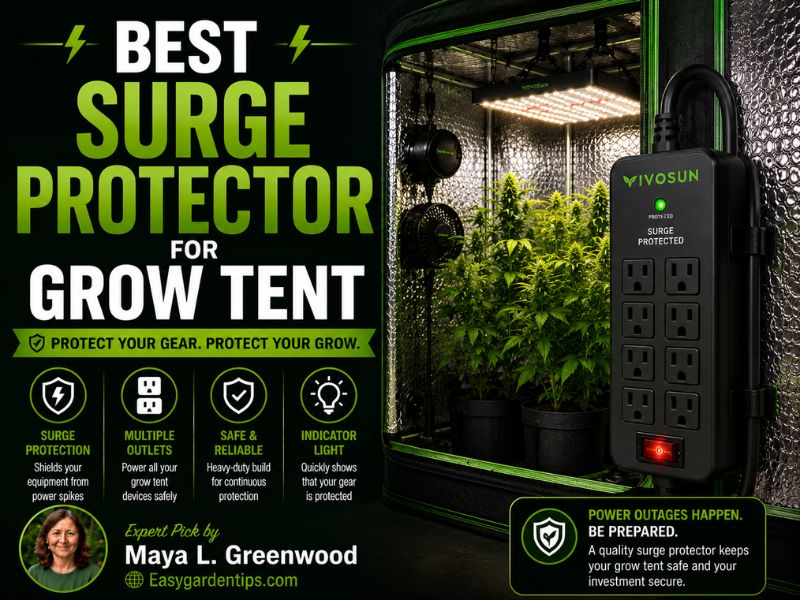
My first recommendation is the Belkin BE112230-08 12-Outlet Surge Protector. It combines an exceptionally established Amazon customer-feedback history with 12 grounded outlets, six widely spaced BlockSpace outlets, an 8-foot cord, a 3,940-joule surge rating, protection and grounding indicators, wall-mounting capability, and a 120V/15A electrical rating.
The Anker 351 Power Strip takes second place. It provides 12 AC outlets, generously spaced positions for bulky adapters, USB-C and USB-A charging, a 2,100-joule surge rating, a TUV-certified design, mounting slots, and a 125V/15A/1875W AC specification.
My third choice is the Eaton Tripp Lite TLP1208TELTV. Its 12 outlets, 8-foot 14-gauge cord, 2,880-joule rating, 15A resettable circuit breaker, diagnostic LEDs, transformer-friendly spacing, UL certification, and automatic shutoff when the protection circuit is incapacitated make it particularly appealing when protection-status feedback matters.
3 Best Surge Protectors for Grow Tent Equipment
| Image | Product Name | Check Price |
|---|---|---|
Best Choice | Belkin BE112230-08 12-Outlet Surge Protector | Check Price |
Second Best | Anker 351 12-Outlet Surge Protector | Check Price |
Third Choice | Eaton Tripp Lite TLP1208TELTV Surge Protector | Check Price |
I ranked these three models using current Amazon rating and review confidence first, followed by the specifications that matter most around indoor grow equipment:
- Surge-energy rating
- 15A electrical capacity
- Overload protection
- Safety certification
- Grounding/protection indicators
- Outlet spacing
- Cord length
- Mounting capability
- Protection-failure behavior
- Suitability for keeping electrical distribution away from wet areas
All three are conventional indoor surge protectors. None should be treated as a waterproof power distribution system simply because it is being recommended for grow-tent equipment.
1. Belkin BE112230-08 12-Outlet Surge Protector
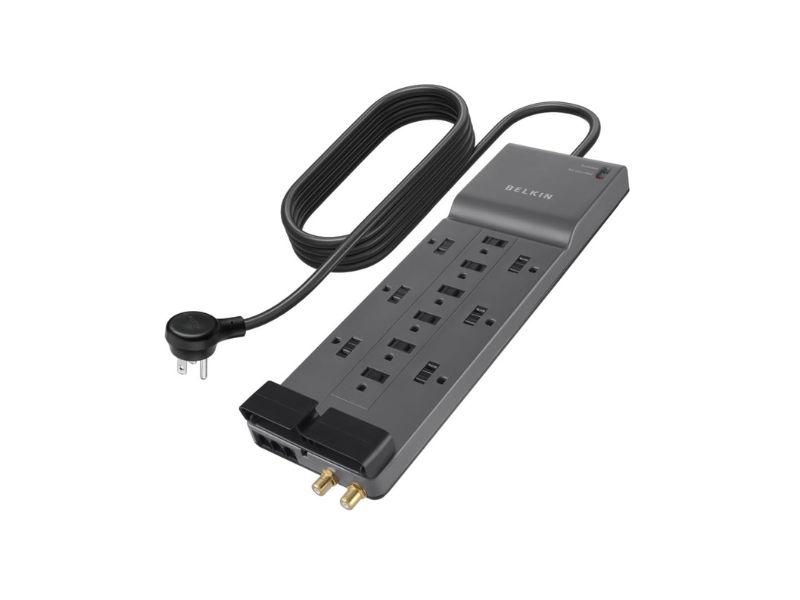
Key Features
- 12 grounded outlets
- Six BlockSpace outlets for larger adapters
- 3,940-joule surge rating
- 8-foot cord
- 120V / 15A / 1800W rating
- Ground and protection indicators
- Wall-mounting holes
- UL 1449 500V clamping specification
Belkin earns the first position because it combines excellent surge capacity with one of the strongest current Amazon customer-feedback histories in this category.
Its outlet layout is particularly useful around a grow setup. Belkin divides the 12 receptacles between six standard outlets and six BlockSpace outlets, giving larger transformers and controller adapters more physical room without automatically covering adjacent sockets. The unit can also be wall mounted, which is a meaningful advantage when the safest location is outside the tent and above the floor.
Belkin rates the unit at 3,940 joules, 120V, 15A, and 1,800W. Its support documentation also specifies a UL 1449 clamping voltage of 500V and states that exceeding the rated load causes the unit to shut off.
For grow-tent use, I particularly like the combination of a long cord and mounting holes. You can keep the surge protector in a dry, visible area while routing the individual equipment cords through the tent’s cable ports rather than placing the entire strip beside runoff trays.
What I Like
- Strong 3,940-joule specification
- Excellent Amazon customer confidence
- Six widely spaced outlets
- Long 8-foot cord
- Clear protection and grounding indicators
- Easy to mount above floor level
What I Do Not Like
- Phone and coaxial protection add little value to most grow tents
- It remains an indoor surge protector, not wet-location equipment
For a conventional U.S. grow setup running several modest electronic devices, the Belkin is the surge protector I would choose first.
2. Anker 351 12-Outlet Surge Protector
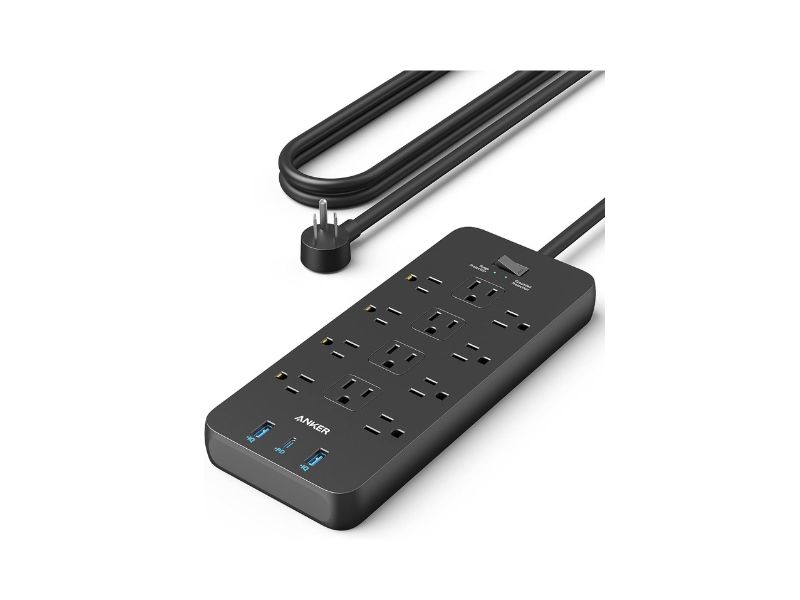
Key Features
- 12 AC outlets
- 2,100-joule surge protection
- 15A / 1875W AC rating
- One 20W USB-C port
- Two USB-A ports
- Extra spacing for large plugs
- TUV certification
- Eight-point safety system
- Rear mounting slots
The Anker 351 takes second place because its layout is exceptionally convenient when a grow tent uses several power adapters.
Anker places extra space between selected receptacles so bulky transformers can fit without blocking as many neighboring outlets. That is useful with fan controllers, monitoring cameras, small pumps, sensor hubs, and other devices that use external power bricks.
The AC side is rated for 125V, 15A, and up to 1875W, while Anker specifies a 2,100-joule surge-protection system and TUV certification. Its eight-point safety design includes features such as surge protection, grounded protection, overload-related safeguards, and fire-resistant construction.
The integrated USB-C and USB-A ports are secondary benefits rather than reasons to choose a grow-room surge protector, but they can free AC sockets when you need to power a monitoring device or charge a phone near the garden.
The main compromise is cord length. At five feet, it provides less placement flexibility than the eight-foot Belkin and Eaton models.
What I Like
- Excellent outlet layout
- Strong Amazon customer-feedback history
- Good accommodation for bulky plugs
- TUV-certified design
- Useful mounting slots
- USB ports can reduce adapter clutter
What I Do Not Like
- Lower joule rating than the Belkin
- Five-foot cord may limit dry mounting locations
The Anker 351 is particularly attractive when cable organization and large adapter spacing matter as much as raw surge rating.
3. Eaton Tripp Lite TLP1208TELTV Surge Protector
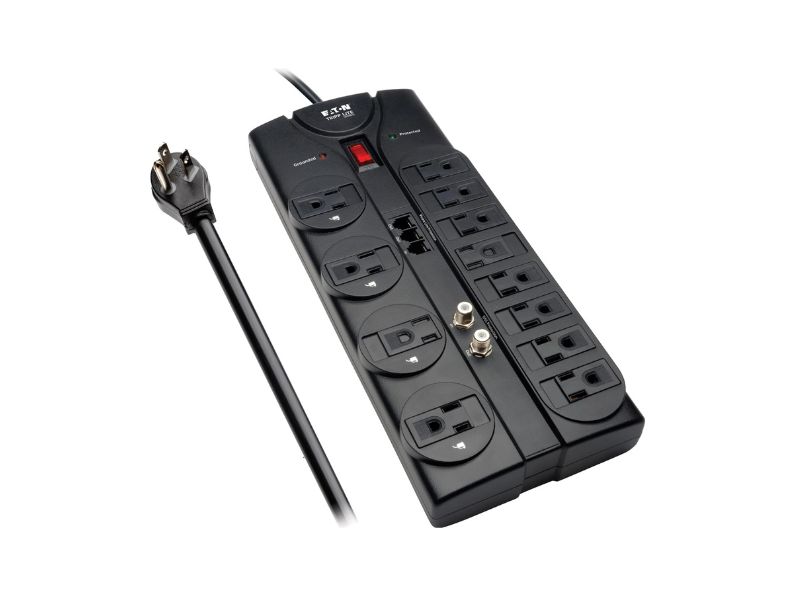
Key Features
- 12 grounded AC outlets
- Four transformer-friendly outlet positions
- 2,880-joule surge rating
- 8-foot, 14-gauge cord
- 15A resettable circuit breaker
- Automatic shutoff
- Protection and ground diagnostic LEDs
- UL certified
- Wall-mounting keyholes
The Eaton Tripp Lite takes third place because its Amazon feedback base is smaller than the Belkin and Anker models, but its protection architecture is particularly well documented.
Eaton specifies a 2,880-joule surge rating, 12 outlets, four transformer-friendly spaces, an 8-foot cord, a 15A resettable circuit breaker, protection-status LEDs, and automatic shutoff. The automatic shutoff is designed to permanently stop delivering power if the surge-protection circuit becomes incapacitated, providing a clear indication that the device needs replacement.
That behavior is valuable because a worn surge protector can otherwise be easy to overlook. A power strip continuing to provide electricity does not necessarily mean that its surge-suppression components remain functional. Eaton’s support materials specifically direct users to monitor the protection indicator and replace the unit when protection is no longer intact.
The unit also carries UL certification and uses a 14-gauge cord, a 15A breaker, and an eight-foot reach.
What I Like
- Automatic shutoff if protection fails
- 15A resettable circuit breaker
- Long 8-foot 14-gauge cord
- Diagnostic protection and grounding lights
- Four transformer-friendly outlets
What I Do Not Like
- Coaxial and telephone protection is unnecessary for most indoor gardens
- Smaller Amazon feedback history than Belkin and Anker
Choose the Eaton when protection-status visibility and automatic failure behavior are especially important to you.
Grow Tent Surge Protector Comparison
| Product | Outlets | Surge Rating | Electrical Rating | Cord | Main Strength |
| Belkin BE112230-08 | 12 | 3,940 J | 120V / 15A / 1800W | 8 ft. | Strong protection and customer confidence |
| Anker 351 | 12 | 2,100 J | 125V / 15A / 1875W | 5 ft. | Excellent adapter spacing |
| Eaton Tripp Lite TLP1208TELTV | 12 | 2,880 J | 15A-class | 8 ft. | Automatic protection shutoff |
The specifications should be viewed together. Joule rating does not tell you how much normal electrical load a surge protector can carry, while a 15A rating does not tell you how much transient surge energy the device is designed to absorb.
Surge Protector vs Power Strip
These terms are often used interchangeably, but they do not necessarily mean the same thing.
A basic power strip primarily expands one receptacle into several outlets.
A surge protector adds circuitry designed to limit transient voltage spikes before those spikes reach connected equipment.
That distinction matters in a grow tent because modern setups frequently contain electronic devices including:
- LED grow-light drivers
- EC inline fans
- Digital controllers
- Wi-Fi cameras
- Environmental sensors
- Electronic irrigation equipment
For equipment like this, I prefer an appropriately listed surge protector over a basic unprotected outlet bar.
What Does a Joule Rating Mean?
The joule specification describes the amount of surge energy the protection system is designed to handle.
Among these three:
- Belkin: 3,940 J
- Eaton Tripp Lite: 2,880 J
- Anker: 2,100 J
Those are manufacturer-published surge-energy specifications.
A higher number generally indicates more surge-energy capacity, but it should not be the only buying criterion.
You should also consider:
- Clamping or let-through performance
- Protection indicators
- Failure behavior
- Electrical rating
- Certification
- Grounding
- Outlet layout
A massive joule rating does not help if the product is overloaded during ordinary use.
Surge Protection Does Not Increase Circuit Capacity
This is one of the most important points in the article.
A surge protector does not give the wall circuit additional electrical capacity.
Twelve outlets simply make it possible to connect more plugs.
They do not create twelve separate circuits.
For example, the Belkin is still limited to a total of 15A and 1800W under its published specification, regardless of whether the load is spread across two outlets or all twelve.
Similarly, the Anker AC section is specified at 15A/1875W.
Always consider the combined load.
Add the Wattage of Your Grow Equipment
A grow tent may contain:
- LED grow light
- Inline exhaust fan
- Circulation fans
- Controller
- Humidifier
- Air pump
- Water pump
- Camera
- Supplemental lighting
Look at the electrical nameplate or manufacturer specifications for each device.
Then total the loads that may operate simultaneously.
Do not estimate power consumption based on the physical size of the device.
A small heater can draw much more electricity than several physically larger fans.
Why You Should Leave Electrical Headroom
Operating exactly at the maximum printed rating is not a useful design goal.
Grow equipment may operate for long periods, and some devices can have startup or inrush characteristics different from their steady running draw.
The better approach is to build a system that operates comfortably within the ratings of:
- The surge protector
- Wall receptacle
- Branch circuit
- Timer
- Controller
- Extension wiring, if any
If the grow setup is approaching the limits of an existing household circuit, adding another power strip is not a solution.
Have the electrical system evaluated by a qualified electrician.
Surge Protector Placement Is Critical
The surge protector should generally remain outside the grow tent or otherwise well away from irrigation and runoff.
A good location is:
grounded wall outlet → surge protector in dry elevated position → equipment cords routed into tent
This helps separate your main electrical distribution point from:
- Watering spills
- Hydroponic reservoirs
- Runoff trays
- Humidifier mist
- Wet tent floors
Even good surge protectors are not automatically designed for direct wet-location exposure.
Mount the Surge Protector Off the Floor
All three selected products provide designs that can be mounted or organized away from the floor. Belkin has rear mounting holes, Anker provides mounting capability, and Eaton includes keyhole-style mounting support.
An elevated location helps protect against an unexpectedly simple problem:
water flows downward.
If a reservoir leaks or a watering tray overflows, the floor is where that water collects.
Your multi-outlet electrical connection should not be sitting there waiting for it.
GFCI and Surge Protection Do Different Jobs
A GFCI and a surge protector are not substitutes for one another.
A surge protector is intended to limit transient overvoltage reaching equipment.
A GFCI is designed to protect people by quickly interrupting the circuit when it detects current leaking away from the normal electrical path. ESFI recommends GFCI use wherever water may come in contact with electrical products.
That distinction is highly relevant to:
- Hydroponics
- Irrigation systems
- Humidifiers
- Reservoir pumps
- Damp basements
- Garage grow setups
If you are uncertain whether your grow location has appropriate GFCI protection, have a qualified electrician evaluate it.
Why Grounding Matters
A three-prong surge protector should be connected to a properly grounded receptacle.
Belkin provides indicators related to protection and grounding status, while the Eaton TLP1208TELTV includes diagnostic LEDs to show whether surge protection and grounding conditions are present.
If a ground-warning indicator appears, do not solve the problem by defeating the ground pin.
Have the receptacle or circuit checked.
What Is UL 1449?
UL 1449 is a safety standard associated with surge protective devices.
Belkin publishes a UL 1449 clamping-voltage specification for the BE112230-08, while Eaton lists UL 1449 among the certifications for its surge-protection platform.
For buyers, recognized certification is useful because it provides more confidence than choosing an unknown multi-outlet strip based solely on marketing language.
Anker takes a different certification path for the 351, listing TUV among its certifications.
What Does Clamping Voltage Mean?
A surge protector responds when voltage rises significantly beyond ordinary operating conditions.
The clamping or voltage-protection level helps describe the voltage range at which protective components begin limiting the transient.
Belkin specifies a UL 1449 500V clamping value for the BE112230-08.
Eaton publishes UL 1449 let-through ratings for its surge products, illustrating why surge protection involves more than joule capacity alone.
For a consumer grow setup, you do not need to become an electrical engineer to compare every suppression parameter.
Look for established manufacturers, recognized certification, clear ratings, and protection-status indicators.
Why a Protection Indicator Matters
Surge-protection components are not immortal.
Eaton explains that a surge protector may sacrifice its protective capability while stopping a significant surge, which is why many models include a protection-status LED.
Belkin also includes protection-related indicator lights on the BE112230-08.
Get into the habit of checking those lights when you inspect the garden.
A strip that still powers your fan is not automatically a strip that is still providing full surge protection.
Eaton’s Automatic Shutoff Advantage
The TLP1208TELTV takes this idea further.
Eaton states that its automatic-shutoff design permanently cuts power to the outlets if the protection circuit is incapacitated.
That can be inconvenient if equipment unexpectedly shuts down, but from a protection standpoint it removes the ambiguity of continuing to power electronics through a unit whose suppression circuitry is no longer functional.
If it shuts down because its protection has failed, replacement—not bypassing the system—is the appropriate response.
Do Not Daisy-Chain Surge Protectors
Do not plug one power strip or surge protector into another.
OSHA’s guidance on relocatable power taps explains that listed units are intended to connect directly to a permanently installed branch-circuit receptacle and should not be series-connected to other relocatable power taps or extension cords.
So avoid configurations like:
wall → surge protector → second surge protector → equipment
If you need more outlets than one appropriately rated unit provides, your electrical setup may need additional permanent receptacles.
Avoid Long Extension-Cord Chains
Likewise, do not create a permanent grow-room wiring system from multiple temporary cords.
Every extra connection becomes another point that can:
- Loosen
- Heat
- Become damaged
- Encounter moisture
- Be accidentally disconnected
The cleanest setup is a surge protector located close enough to a suitable wall receptacle that it can plug in directly.
This is one reason the eight-foot Belkin and Eaton cords can be useful.
Do Not Plug a Space Heater Into the Surge Protector
This deserves its own section because small indoor tents are sometimes heated during cold weather.
CPSC specifically advises that portable electric space heaters be plugged directly into a wall outlet and never into an extension cord or power strip because overloading can create a fire hazard.
Do not plug a high-draw 1,500W heater into the Belkin, Anker, or Eaton just because the strip’s printed maximum wattage appears close to that value.
Follow the heater manufacturer’s requirements.
Be Careful With Other High-Draw Equipment
Other equipment that can use substantial electricity includes:
- Dehumidifiers
- Portable air conditioners
- Large humidifiers with heating elements
- High-powered water chillers
- Large grow lights
Check each device’s instructions.
If the manufacturer requires direct wall connection or a dedicated circuit, follow that requirement.
The surge protector should mainly organize appropriately rated equipment rather than become a workaround for inadequate building wiring.
Grow Light on a Surge Protector
Many electronic LED grow lights can be connected to appropriately rated surge protection when the light manufacturer permits it and the complete electrical load remains within all relevant limits.
What matters is the fixture’s actual input power, not a marketing model number.
A 100W fixture and a 700W fixture impose very different loads.
If you are operating several large LED fixtures, calculate the combined demand before adding fans, pumps, and other equipment to the same surge protector.
Inline Fans and Circulation Fans
Fans generally make good candidates for organized surge-protected distribution when their ratings fit within the total load.
A typical grow setup might have:
- One inline exhaust fan
- Two circulation fans
- Environmental controller
Using widely spaced outlets helps when those devices have large adapters.
That is where both the Belkin BlockSpace design and Anker’s wider plug spacing become especially useful.
Hydroponic Systems Need Extra Electrical Discipline
Hydroponics puts pumps and electrical equipment beside significant volumes of water.
That makes GFCI protection and dry connection placement even more important. ESFI specifically recommends GFCI protection where electrical equipment may encounter water.
For a DWC or irrigation system:
- Keep the surge protector away from buckets
- Keep it above possible spill level
- Route cables neatly
- Use drip loops where appropriate
- Keep connectors dry
- Inspect tubing for leaks
Do not mount the surge protector directly below a reservoir or nutrient line.
What Is a Drip Loop?
A drip loop is a section of cable that drops below the height of the electrical connection before rising back toward it.
If moisture travels along the cord, gravity encourages it to fall from the low point instead of moving directly into the plug.
A drip loop is a useful cable-management practice, but it does not make an indoor surge protector waterproof and does not replace GFCI protection.
Humidifiers and Surge Protectors
A humidifier may create a localized plume that is much wetter than the tent’s average relative humidity.
Keep your power distribution:
- Away from the mist outlet
- Away from condensation
- Away from open water tanks
- Outside direct airflow carrying visible moisture
A wall-mounted surge protector just outside the tent is much easier to protect than one hanging beside a humidifier inside it.
What Happens If a Surge Protector Gets Wet?
Treat water exposure seriously.
ESFI states that water-damaged surge protective devices are among the types of electrical equipment that should be replaced rather than simply dried and returned to service without appropriate evaluation.
If a strip is soaked by runoff, a reservoir leak, or significant water intrusion, unplug it safely and do not assume that leaving it to dry restores its original safety.
Surge Protector for a 2×2 Grow Tent
A small 2×2 may only need power for:
- Compact LED
- 4-inch exhaust fan
- Clip fan
- Small controller
You probably do not need twelve outlets for those devices.
However, using a high-quality 12-outlet surge protector does not force you to use every receptacle.
Unused outlets are preferable to filling a smaller strip to its physical limit.
Keep the surge protector outside the 2×2 and route only the required cords through a cable port.
Surge Protector for a 2×4 Grow Tent
A 2×4 may add:
- Larger grow light
- Additional circulation fan
- Camera
- Irrigation pump
This is where widely spaced receptacles become more useful.
The Anker 351 is particularly convenient if several devices use bulky adapters, while Belkin’s BlockSpace outlets serve a similar purpose.
Surge Protector for a 3×3 Grow Tent
A 3×3 often stays within manageable electrical demand if it uses one efficient LED fixture and modest ventilation equipment.
Still, calculate actual load rather than assuming.
A possible configuration could include:
- LED fixture
- 6-inch or 4-inch inline fan
- Two circulation fans
- Controller
- Humidifier
- Camera
The number of plugs is less important than their combined electrical draw.
Surge Protector for a 4×4 Grow Tent
A 4×4 can accumulate substantially more load.
A typical equipment list might include:
- 400–500W-class LED
- 6-inch exhaust fan
- Two circulation fans
- Environmental controller
- Supplemental lighting
- Camera
- Pump
One appropriately rated surge protector may still accommodate the modest electronic loads, but do not assume every additional appliance can be added indefinitely.
Especially watch for high-draw heating, cooling, or dehumidification equipment.
What if the Breaker Keeps Tripping?
Do not repeatedly reset a breaker without understanding why it trips.
A breaker trip may indicate:
- Excessive load
- Faulty equipment
- Damaged wiring
- Another electrical problem
Unplug equipment and reduce the load.
If the problem continues or you observe heat, discoloration, sparking, or unusual odor, stop using the setup and have it evaluated by a qualified electrician.
Do You Need a UPS Instead?
A UPS, or uninterruptible power supply, serves a different purpose.
A surge protector primarily protects against transient voltage disturbances.
A UPS can additionally provide temporary battery power during an outage.
That may be useful for:
- Controllers
- Network equipment
- Monitoring systems
Battery backup for a large grow light or heater requires far more capacity and is a different design problem.
Do not connect surge protectors and UPS units in unsupported configurations; follow the manufacturer instructions for both devices. Eaton specifically provides configuration guidance for its surge products and UPS systems.
Smart Surge Protector vs Standard Surge Protector
Smart strips can provide:
- Remote switching
- Scheduling
- Energy monitoring
- Individual outlet control
Those features are convenient but add another layer of software and electronic control.
For critical devices such as the main exhaust fan, reliability may matter more than remote switching.
A conventional certified surge protector paired with a purpose-built environmental controller can sometimes be simpler to troubleshoot.
Outlet Spacing Matters More Than Outlet Count
A 12-outlet strip is not particularly useful if four large adapters block eight of those outlets.
Belkin’s six BlockSpace receptacles are specifically designed for oversized plugs, while Anker also deliberately provides extra spacing for larger adapters. Eaton includes four transformer-spaced positions.
Before buying, look at the plugs used by:
- Inline fans
- Controllers
- Cameras
- Pumps
- Supplemental lights
A thoughtfully spaced strip can be much easier to use than a narrow one with the same outlet count.
Why Cord Length Matters
The cord needs to reach a safe location, not merely the nearest point inside the tent.
Belkin and Eaton both provide eight-foot cords, while the standard Anker 351 uses a five-foot cable.
A longer cord may allow you to mount the surge protector:
- On a nearby wall
- On a dry equipment board
- Above a shelf
- Away from humidifier output
Do not coil large amounts of unused cord tightly around hot equipment.
Route it neatly and keep it visible enough to inspect.
When Should a Surge Protector Be Replaced?
Replace it when:
- The protection indicator shows failure
- Automatic shutoff activates because protection is lost
- Housing is cracked
- Cord insulation is damaged
- Plug blades are loose or burned
- The unit has suffered water damage
- There are signs of overheating
Eaton specifically notes that surge suppression components can sacrifice themselves during a surge and provides protection indicators to show whether the circuit remains intact.
Do not judge the health of a surge protector only by whether it still supplies electricity.
Common Grow Tent Surge Protector Mistakes
Placing It on the Tent Floor
Runoff naturally collects at the lowest point.
Mount electrical distribution above floor level and away from irrigation.
Daisy-Chaining Multiple Strips
Power strips should connect directly to an appropriate permanent receptacle rather than to another strip.
Plugging in a Space Heater
CPSC says portable heaters should connect directly to a wall outlet rather than a power strip.
Using Every Outlet Because It Exists
Outlet count is not electrical capacity.
Ignoring Total Load
Add the wattage/current of simultaneously operating equipment.
Ignoring Ground Indicators
A grounding warning deserves attention.
Using the Strip Near Humidifier Mist
Keep connections in dry air.
Assuming a Surge Protector Replaces a GFCI
The two devices address different hazards.
Using Water-Damaged Equipment Again
ESFI recommends replacement of water-damaged surge protective devices.
Ignoring the Protection Light
Check the indicator periodically.
Buying an Unknown Strip Based Only on Joules
Certification, electrical ratings, and failure behavior also matter.
Frequently Asked Questions
1. What is the best surge protector for grow tent equipment?
The Belkin BE112230-08 is my first recommendation because it combines a strong 3,940-joule rating, 12 outlets, 15A capacity, an 8-foot cord, wide adapter spacing, and clear protection indicators.
It also has wall-mounting holes that make it easier to keep the surge protector outside the tent and above possible runoff.
2. Is a surge protector necessary for a grow tent?
It is a useful layer of protection for electronic grow equipment, although it does not replace correct wiring, overload protection, grounding, or GFCI protection where required.
Modern grow setups often contain electronic LED drivers, fan controllers, pumps, and monitoring devices that benefit from appropriate surge protection.
3. Is Belkin BE112230-08 good for a grow tent?
Yes, when it is used in a dry indoor location and kept within its published electrical limits.
Belkin specifies 12 outlets, 3,940 joules, 120V/15A capacity, an 8-foot cord, grounding/protection indicators, and mounting holes.
4. Is the Anker 351 good for grow equipment?
Yes, especially when your equipment uses several bulky wall adapters.
Its 12 AC outlets, extra plug spacing, 2,100-joule surge protection, TUV certification, and 15A/1875W AC specification make it a practical distribution option.
5. Is Eaton Tripp Lite good for grow-tent electronics?
Yes. The TLP1208TELTV adds a 15A breaker, diagnostic LEDs, and automatic shutoff if its surge-protection circuit is no longer functional.
Eaton also specifies a 2,880-joule rating and 8-foot cord.
6. Should a surge protector be inside or outside the grow tent?
Outside in a dry, elevated location is generally the better arrangement.
Route equipment cords through tent cable ports instead of placing the main multi-outlet connection beside water, runoff, or humidifier mist.
7. Can I place a surge protector on the grow-tent floor?
I would avoid it.
The floor is where runoff and reservoir leaks are most likely to collect, so mounting the surge protector above potential spill level is a better arrangement.
8. Can I plug my LED grow light into a surge protector?
Potentially, as long as the light manufacturer permits it and the complete load remains within the surge protector and branch-circuit ratings.
Use the fixture’s actual input-power specification when calculating load.
9. Can fans use the same surge protector as the grow light?
Yes if their combined electrical demand stays within all relevant ratings and their manufacturers allow the connection.
The available number of outlets does not determine safe load.
10. Can I plug a heater into my grow-tent surge protector?
No. Portable electric space heaters should be plugged directly into a suitable wall receptacle rather than a power strip.
CPSC specifically warns against using power strips or extension cords with portable electric heaters because of overload and fire risk.
11. Is a higher joule rating always better?
Higher surge-energy capacity can be useful, but joules should not be the only specification you compare.
Certification, grounding, failure indicators, electrical load rating, clamping behavior, and overall construction also matter.
12. Does surge protection prevent circuit overload?
No. Surge suppression and normal overload protection are separate functions.
A 3,940-joule surge rating does not mean the strip can exceed its normal 15A electrical limit.
13. Do I need GFCI protection with a grow tent?
GFCI protection is particularly important wherever water may come into contact with electrical equipment.
ESFI recommends GFCIs in indoor and outdoor areas where electricity and water may be in proximity.
14. Can I plug one surge protector into another?
No. Do not daisy-chain surge protectors or power strips.
OSHA’s guidance on listed relocatable power taps says they should connect directly to a permanently installed branch-circuit receptacle rather than being series-connected.
15. What happens when surge protection wears out?
The protective components may no longer provide their original suppression even though some designs could otherwise continue supplying normal power.
Use the product’s protection indicator as instructed. Eaton’s automatic-shutoff model stops powering outlets when its protective circuit becomes incapacitated.
16. Can a wet surge protector be dried and reused?
Do not assume it is safe merely because it appears dry afterward.
ESFI lists water-damaged surge protective devices among electrical equipment that should be replaced.
17. How many outlets do I need for a grow tent?
Count the devices you realistically intend to connect, then choose enough outlets with suitable spacing rather than trying to fill every receptacle.
A 12-outlet model is convenient for controllers and large adapters, but it does not increase the underlying electrical capacity.
18. Which surge protector is best for a 4×4 grow tent?
The Belkin BE112230-08 is my preferred general-purpose option for a 4×4-class setup because its 12 outlets, BlockSpace layout, long cord, and mounting capability make equipment organization easier.
Whether one surge protector can support the complete tent still depends on the actual wattage of the light, fans, pumps, and other connected devices.
Conclusion
The best surge protector for grow tent equipment is not simply the product with the largest joule number or the greatest number of outlets. It should combine credible surge protection with the electrical capacity, spacing, indicators, cord length, and mounting options needed to organize a real indoor growing setup safely.
The Belkin BE112230-08 is my first recommendation. Its 3,940-joule rating, 12 grounded outlets, six BlockSpace receptacles, 8-foot cord, 15A electrical capacity, protection indicators, and mounting holes create an excellent combination for grow lights, fans, controllers, cameras, and other appropriately rated electronics.
The Anker 351 is the better alternative when bulky adapters are your main frustration. It combines 12 AC outlets with a 2,100-joule surge system, TUV certification, 15A/1875W AC rating, USB charging, and an adapter-friendly layout.
Eaton’s Tripp Lite TLP1208TELTV stands out for its 2,880-joule protection, 15A resettable breaker, diagnostic LEDs, 8-foot cord, and automatic shutoff when the protection circuit fails.
Whichever you choose, placement and load management matter just as much as the surge protector itself. Keep it dry and elevated, plug it directly into an appropriate grounded receptacle, do not daisy-chain strips, keep portable heaters off power strips, and use appropriate GFCI protection where water and electrical equipment can meet.
A surge protector is one layer in a safe grow-room electrical system—not a substitute for one.

I’m Maya L. Greenwood, a lifelong plant lover who believes anyone can grow something beautiful with the right guidance. After years of testing soil mixes, pruning methods, irrigation tricks, and pest-safe solutions, I started EasyGardenTips.com to turn hard-won lessons into step-by-step advice. From seed starting and container gardens to composting and seasonal checklists, my goal is to make gardening simple, sustainable, and fun.