
5 Best Self Watering Raised Garden Bed for Busy Gardeners
A raised garden bed can make growing herbs and vegetables easier, but the wrong design creates a new chore. A shallow reservoir may dry out quickly, poor drainage can leave roots sitting in water, and a heavy planter may be difficult to move when the sun shifts. For a beginner, those problems can mean wasted soil, stressed plants, and a season of second-guessing every watering decision.
The useful features are simple: a reservoir should give roots access to moisture without leaving them submerged, a drain should let excess water escape, and the planting height should match your back and knees. Size matters too, since a planter that looks compact online can take up much more balcony or patio space once filled with soil.
Here is what the guide covers:
- Which design fits herbs, vegetables, flowers, and small patios.
- How water gauges, reservoirs, drains, and grow covers work.
- How to fill, position, water, and clean an elevated planter.
- Which beginner mistakes cause soggy soil, weak growth, or damaged wheels.
Quick Picks
-
Best For Balcony Herb Gardens

Keter Urban Bloomer 12.7 Gallon Raised Garden
A water gauge and controllable drainage help balcony gardeners maintain herbs without constant moisture guesswork.
-
Best For Easy Moving And Storage

GYMHILL Elevated Raised Garden Bed with Legs,
Locking wheels, an elevated frame, and a lower shelf suit gardeners who need flexible patio planting space.
Top 5 Self Watering Raised Garden Beds at a Glance
Keter is the simplest starting point for herbs and small outdoor spaces, while GYMHILL and WTFGO make more sense if mobility and comfortable working height matter most. Garden Elements adds a ventilated cover, and the two-pack planter gives you the most planting room across separate containers.
| Product image | Product name | Check product |
|---|---|---|
| 1 |
Keter Urban Bloomer 12.7 Gallon Raised Garden | Check Price |
| 2 |
GYMHILL Elevated Raised Garden Bed with Legs, | Check Price |
3 |
Garden Elements Black Elevated Raised Garden Bed, | Check Price |
4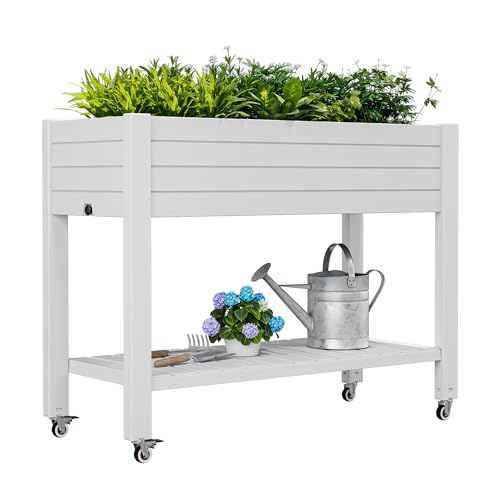 |
WTFGO Elevate 33.7″ Tall Raised Garden Bed | Check Price |
5 |
2PK 40Gal Raised Garden Bed with Legs,Wood-Look | Check Price |
5 Best Self Watering Raised Garden Beds: Detailed Reviews
When I chose the best self watering raised garden bed options, I paid attention to reservoir design, drainage control, planting height, footprint, and everyday care. Those details decide whether you can keep roots evenly moist, reach the plants without straining, and fit the planter where sunlight actually reaches.
I kept the group varied so you can compare a compact herb planter with taller wheeled beds, a covered growing box, and a two-piece set. Looking at those differences side by side makes the right choice clearer than focusing on the word “self-watering” alone.
1. Keter Urban Bloomer 12.7 Gallon Raised Garden
A water gauge and controllable drainage help balcony gardeners maintain herbs without constant moisture guesswork.
- Dimensions32. 3 in. L x 14. 7 in. W x 30. 7 in. H
- ColorDark Grey
- Size30.7 inches
- Release Date2018-02-13T00:00:01Z
Keter Urban Bloomer is a compact raised planter for herbs, balcony gardening, and anyone who wants a simple way to check moisture.
Water gauge and reservoir
A water gauge is a small indicator that shows the moisture level in the reservoir beneath the planting area. The Keter Urban Bloomer uses that gauge to tell you when additional water may be needed, so you do not have to poke into the soil every day or guess from the surface.
The reservoir is designed to hold water below the roots, which can help provide a steadier supply between watering sessions. That arrangement also helps separate the roots from standing water, though the planter still needs suitable soil and a clear drainage path.
Drainage control
The Keter Urban Bloomer has a drainage system that can be opened or closed with a plug. Opening the drain gives excess water a way out after heavy rain or an overfilled reservoir, while closing it helps retain water during normal use.
That control is useful on a balcony because a planter that constantly leaks can stain the surface below. The trade-off is that you must remember to adjust the drain for weather and watering habits, since no reservoir can replace basic attention to wet soil.
The 32. 3 in. L x 14.
7 in. W x 30. 7 in.
H footprint is more suited to herbs and compact plants than deep-rooted vegetables. Check the available floor space before filling the Keter planter, because wet soil becomes awkward to relocate.
Pros:
- Water gauge, makes moisture checks quicker.
- Controllable drainage, helps manage excess water.
- Elevated 30.7-inch size, keeps herbs within reach.
- Compact footprint, fits many balconies and patios.
- Simple assembly, reduces setup effort.
Cons:
- Narrow planting area limits larger crops.
- Drain plug needs attention after heavy rain.
- No wheels for moving a filled planter.
Buy it if: you want herbs on a balcony or patio, because the water gauge and adjustable drain make routine care easier.
Skip it if: you need a large vegetable bed that changes position often, because the compact fixed frame lacks wheels, and a mobile elevated planter would suit you better. For another fit, consider Gymhill or Garden.
What I like here is the plain, beginner-friendly layout. The Keter Urban Bloomer earns the top rank by combining a manageable size with two features that solve common watering mistakes, the gauge and the drain. Double-check the actual floor space and the plant depth you need before buying.
Choose the Keter planter if herbs, salad greens, and a low-fuss balcony setup are your main goals.
2. GYMHILL Elevated Raised Garden Bed with Legs,
Locking wheels, an elevated frame, and a lower shelf suit gardeners who need flexible patio planting space.
- Dimensions43.31 inches (L) x 17.72 inches (W) x 33.66 inches (H)
- ColorBlack
- Size43.31*17.72*33.66
- Number Of Items1
GYMHILL Elevated Raised Garden Bed suits gardeners who want a taller work surface, wheels for repositioning, and storage underneath.
Elevated working height
The GYMHILL planter stands 33.66 inches tall, which raises the planting area above a typical ground-level bed. A higher planting surface means less bending and kneeling during sowing, weeding, and harvesting, a welcome change if your back or knees complain after a few minutes outside.
The taller frame also makes the planting area easier to see from a standing position. That benefit comes with a stability check: place the filled planter on a flat surface and confirm that the wheels and frame sit evenly before adding a full load of soil.
Locking wheels
Locking wheels allow the GYMHILL bed to move between sun and shade, then stay in place when the locks are engaged. This helps on patios where buildings, railings, or nearby trees change the light during the day.
Moving a filled planter is still harder than moving an empty frame, so choose the final location carefully and use the wheels for small adjustments. The wheels are most useful for seasonal repositioning rather than daily wandering around the yard.
Lower shelf and planting space
A storage shelf under the planter gives you a place for hand tools, gloves, or empty pots. Keeping those supplies below the bed can reduce trips across the patio and make a small growing area feel more organized.
The 43.31 inches (L) x 17.72 inches (W) x 33.66 inches (H) size offers more length than the Keter planter. Measure doorways, balcony rails, and the turning space needed for the wheels before assembly.
Pros:
- Locking wheels, simplify sun and shade changes.
- 33.66-inch height, reduces bending while gardening.
- Lower shelf, stores common garden accessories.
- 12-gallon load capacity, supports a useful planting area.
- Detailed instructions, make assembly more approachable.
Cons:
- Longer footprint needs more patio space.
- Filled soil can make repositioning difficult.
- Wheel locks need a flat, stable surface.
Buy it if: you need a tall patio planter that can shift with the light, because locking wheels and a storage shelf add practical flexibility.
Skip it if: your balcony has very little clearance or an uneven floor, because the long wheeled frame needs room to roll and settle safely, and a compact fixed planter would suit you better. Keter and Garden are worth a closer look instead.
I’d pick the GYMHILL bed for a gardener who values posture and placement more than a tiny footprint. The height, wheels, and shelf address three annoyances at once, especially on a patio where sunlight is limited. Check the measured length and the load requirements for your chosen soil before ordering.
This GYMHILL planter is the sensible choice for movable container gardening in a medium-size outdoor space.
3. Garden Elements Black Elevated Raised Garden Bed,
The catalog lists Ergonomic Elevated Design: 31” tall raised planter box with legs reduces bending and back strain, making garde. Compare fit and care needs before choosing.
- ColorBlack
- Size29.5″ x 15″
- Capacity45L
- Number Of Items1
Garden Elements Elevated Raised Garden Bed is a covered growing box for beginners starting vegetables, herbs, flowers, or seedlings in a small space.
Ventilated grow dome
A grow dome is a removable cover that sits over plants to create a more protected growing area. The Garden Elements cover measures 14.5 inches L x 29.5 inches W x 8 inches H and includes adjustable vents, so you can monitor plants while allowing air to move through the cover.
The cover can help shield young plants from some pests and rough weather. Vent openings matter because enclosed warm air can become too humid, and seedlings need airflow to avoid staying wet for too long.
Reservoir and aerated base
The Garden Elements planter uses a built-in reservoir and an aerated base. An aerated base leaves space for air around the lower root area, which supports a more balanced moisture setup than having roots sit directly in pooled water.
A water level indicator shows when the reservoir needs attention. That saves you from watering by calendar alone, but the indicator does not tell you whether the topsoil is right for every plant, so check the soil surface and plant condition as well.
Planting depth and material
The planting area measures 15 inches L x 29.5 inches W x 10 inches H and has a 45L capacity, approximately 40 quarts. That depth is useful for many herbs, greens, flowers, and starter plants, though large root crops may need more room.
The planter uses weather-resistant polypropylene, a common plastic used for outdoor containers. The listed material is designed to resist fading, cracking, and warping, while the smooth surface should be fairly easy to wipe clean.
Pros:
- Ventilated grow dome, protects young plants.
- Adjustable vents, improve airflow under the cover.
- 45L capacity, gives small crops useful room.
- Water level indicator, simplifies reservoir checks.
- Polypropylene construction, makes cleaning easier.
Cons:
- Grow dome height limits taller plants.
- Covered space needs ventilation monitoring in warm weather.
- No wheels for changing the light position.
Buy it if: you are starting seedlings or tender herbs, because the ventilated dome adds protection while the reservoir helps maintain moisture.
Skip it if: you plan to grow tall tomatoes or need frequent repositioning, because the dome height and fixed frame limit those uses, and an uncovered mobile planter would suit you better. If those trade-offs rule it out, Keter or Gymhill may suit you better.
To me, the smartest feature on Garden Elements is the cover, not the reservoir alone. The dome gives a beginner a way to protect young plants while still adjusting airflow, which can be useful during the fragile early stage. Check the 8-inch cover height against the mature size of your plants before buying.
Pick Garden Elements if seed starting and compact protected growing matter more than mobility.
4. WTFGO Elevate 33.7″ Tall Raised Garden Bed
The catalog lists Effortless Mobility – Raised Garden Bed with 360° rotating locking wheels, easily move the raised planter box . Compare fit and care needs before choosing.
- ColorAshen
- Size33.7″h
- Planting Space17.7 gallon
- Load Capacity110lbs
WTFGO Elevate Raised Garden Bed is a tall wheeled planter for gardeners who want a generous container, lower storage, and frequent control over placement.
Mobility and height
The WTFGO bed has 360-degree rotating locking wheels and a 33.7-inch height. Rotating wheels help the planter change direction in tight patio areas, while the elevated frame keeps planting, weeding, and harvesting closer to standing height.
The wheel feature is useful when morning and afternoon light reach different parts of a yard. Lock the wheels after positioning the bed, and avoid pushing a fully filled planter across cracked concrete or soft soil where the casters may catch.
Drainage gauge
A drainage gauge gives you a visual reference for the water level, and the drainage system provides a path for excess water to leave. Together, those parts help you avoid treating every warm day as a reason to add more water.
The system still depends on correctly filled soil and an open path for drainage. If the soil is packed tightly, water may move slowly even when the reservoir is working as intended, so use a container-friendly planting mix rather than dense ground soil.
Capacity and storage
The WTFGO bed offers 17.7 gallon planting space and a 110lbs load capacity. That gives you more room than a compact herb box, while the lower shelf keeps tools, gloves, or small containers off the patio floor.
The 42.4″L×16.8″W×33.7″H size needs a stable, level location. The listing describes assembly in 20 mins with no complex tools, but allow extra time to sort parts and check wheel locks before loading soil.
For gardeners comparing mobile designs, a separate guide to movable raised garden beds can help clarify the difference between occasional repositioning and a planter intended to roll often.
Pros:
- 360-degree locking wheels, improve placement flexibility.
- 33.7-inch height, reduces kneeling and bending.
- 17.7-gallon space, supports a broader crop mix.
- Water gauge and drain, help manage moisture.
- Lower shelf, keeps supplies close at hand.
Cons:
- 110lbs load capacity requires careful soil planning.
- Wheels need level ground for stable placement.
- Larger footprint takes more room than Keter.
Buy it if: you want a tall planter for a patio or backyard, because the rotating wheels and drainage gauge make placement and watering easier to manage.
Skip it if: your growing area is cramped or the floor is uneven, because the wider frame and casters need stable clearance, and a smaller stationary bed would suit you better.
I’d choose WTFGO when you want more planting space without dropping to ground level. The combination of a 33.7-inch height, 17.7-gallon space, and rotating wheels gives the bed a clear purpose. Confirm that the intended soil load stays within the listed 110lbs capacity.
This planter fits gardeners who expect to adjust location during the season and need storage close by.
5. 2PK 40Gal Raised Garden Bed with Legs,Wood-Look
The catalog lists AMPLE GROWING SPACE FOR YOUR GARDEN: This 45 x 20 x 30-inch elevated raised planter box with legs offers gener. Compare fit and care needs before choosing.
- ColorGray
- Size45 x 20 x 30-inch
- Load Capacity330 lbs
- Number Of Items2
2PK Raised Garden Bed is a two-piece elevated planter set for gardeners who want separate planting areas and a wide, wood-look container style.
Two separate beds
The set includes two raised beds, which lets you separate herbs from flowers or place containers in different light conditions. Separate beds also make crop rotation and plant care easier because one container can be watered or amended without disturbing the other.
Each listed planter measures 45 x 20 x 30-inch, so the pair needs more total floor space than a single compact container. Measure each intended location rather than assuming two beds will fit side by side on a narrow deck.
Water gauge and drainage plug
The built-in water level indicator shows the condition of the reservoir, while the drainage plug lets surplus water leave the container. That pairing helps you maintain a steadier moisture routine and reduce the chance of roots sitting in excess water after rain.
A gauge is a guide, not an automatic watering system. Check the soil and the plants during hot, windy weather, and open the drain when the container has received more water than the soil can use.
Capacity and structure
The 2PK set lists a 330 lbs capacity on flat, stable ground. That figure gives you a useful planning limit for soil and water, but the surface beneath the legs still matters because soft or sloped ground can affect stability.
The wood-look finish provides the appearance of wood without the same routine upkeep as real wood. The listed surface resists fading and cracking and can be wiped clean, which is helpful when soil spills during filling.
A broad elevated bed can be especially useful for people who want several crops but cannot comfortably work at ground level. For more general height and accessibility ideas, see these elevated garden beds on legs before settling on a container size.
Pros:
- Two separate beds, divide crops and locations.
- 45 x 20 x 30-inch size, offers generous planting room.
- 330 lbs capacity, supports substantial soil loads.
- Water gauge, makes reservoir checks quicker.
- Wood-look surface, gives a tidy low-maintenance appearance.
Cons:
- Two beds need considerable combined floor space.
- Heavy soil makes relocation difficult after filling.
- Wide containers can be awkward on small balconies.
Buy it if: you want separate beds for several crop groups, because the two-container layout and 330 lbs capacity provide more room for a patio garden.
Skip it if: you have only a narrow balcony or cannot place heavy containers on a stable surface, because the wide pair needs substantial clearance, and a compact single planter would suit you better.
What I like about the 2PK set is the freedom to separate plants instead of crowding everything into one box. The generous dimensions and listed capacity make the set useful for greens, herbs, and flowers when space is available. Check the support surface and total filled weight before assembly.
Choose this set if two planting zones are more valuable to you than easy movement.
How to Choose the Best Self Watering Raised Garden Bed
The best self watering raised garden bed for you should match your plants, available space, working height, and willingness to monitor water. A reservoir helps with consistency, but the right size and drainage design matter just as much.
Start with the plants
A planter for basil, chives, lettuce, and small flowers does not need the same depth as a container for large vegetables. Look at the planting depth and total capacity, then match those measurements to the mature root needs of the plants you plan to grow.
Herbs and salad greens generally work well in compact beds, while larger crops may need more depth, width, or support. If the listing gives only outside dimensions, do not assume the full footprint equals usable planting space.
Match the height to your body
Raised planters place soil above the ground so you can work from a standing or seated position. A height around 30 to 34 inches may reduce bending for many adults, but the best height is the one that lets you reach the middle of the bed without leaning over the edge.
Check the distance from the ground to the planting surface, not just the total product height. Legs, shelves, and wheels can change how comfortably you reach the plants.
Understand the reservoir
A reservoir is a separate water-holding area beneath the planting bed. Moisture can move upward toward the soil, which may reduce how often you need to water during ordinary weather.
Look for a water gauge or indicator that you can read without digging into the soil. A reservoir is useful for routine care, but plants still need different moisture levels, so avoid treating every crop as if it has the same watering needs.
Check drainage before size
Drainage is the path that lets extra water escape. Choose a planter with a drain plug, openable outlet, or clearly described drainage system if the bed will sit outside in rain.
A container without a practical drain can leave roots wet for too long. A guide to drip irrigation for raised beds can help if you later add a separate watering system, but irrigation does not solve poor drainage.
Measure the location
Measure the available length and width, then leave space to walk around the planter and open any drain. On balconies, check railing height, door swing, floor slope, and the surface’s ability to support wet soil.
For wheeled beds, add turning room rather than measuring only the resting footprint. For two-piece sets, plan both locations before buying because filled containers are difficult to shift.
Decide if a cover helps
A cover protects young plants from some pests and weather while allowing you to watch growth. Choose a covered bed for seedlings, tender herbs, or a spot where insects are a regular problem.
A cover can become too warm or humid if vents stay closed in strong sun. Make sure the cover height matches the plants you want to grow, and use the vents as temperatures rise.
How to Use a Self-Watering Raised Garden Bed for the Best Results
Start with the planter on its final level surface, then fill it with a suitable container mix and set up the reservoir before planting. The first watering should thoroughly moisten the soil so the growing medium connects with the moisture system.
- Assemble the frame on a flat surface and tighten each connection gently.
- Confirm that the drain plug, reservoir parts, and water gauge are seated correctly.
- Place the planter where the plants will receive the light they need.
- Add container soil without packing it tightly against the roots.
- Water from the top during the first planting so the soil settles evenly.
- Fill the reservoir according to the indicator or product directions.
- Check the soil and leaves for the first week while learning the planter’s moisture pattern.
- Adjust watering for heat, wind, rain, and the needs of each crop.
Do not fill a reservoir simply because the weather is warm. Feel the soil near the root zone, look for wilted or yellowing leaves, and pay attention to whether water is leaving through the drain after heavy rain.
A covered bed needs a little extra attention. Open adjustable vents during warm, sunny periods, and remove or reposition the cover if plants begin touching the top.
How to Make Your Self-Watering Raised Garden Bed Last Longer
Keep the frame level, prevent standing water from freezing inside the reservoir, and clean the drain before debris blocks the outlet. Most long-term problems come from neglected water paths, overloaded containers, or rough movement across uneven ground.
At the start of each growing season, rinse the reservoir and inspect the gauge, drain plug, legs, shelf, and wheel locks. Remove old roots and loose soil before adding fresh planting mix.
After heavy rain, check the water level and confirm that the drain is working. If the bed stays saturated, pause watering and clear the drainage path instead of adding more soil on top.
Move wheeled planters slowly and only across surfaces that can support the load. Lock the wheels after positioning, and avoid dragging a bed by the frame because that can stress connections and casters.
Keep sharp tools away from resin and plastic surfaces. Wipe spills from shelves and exterior panels, especially if fertilizer or damp soil remains against the material for long periods.
At the end of the season, remove annual plants and store loose accessories in a dry place. If freezing weather is expected, follow the product directions for draining and protect exposed water components from ice.
Common Mistakes to Avoid When Buying and Using Self-Watering Raised Garden Beds
Most beginner problems come from choosing by appearance alone or assuming self-watering means maintenance-free. These mistakes are easy to prevent with a few measurements and regular checks.
- Buying a bed that is too shallow: large plants may run out of root room. Match planting depth to the crops you plan to grow.
- Ignoring the filled weight: wet soil is much heavier than dry soil. Check the balcony, deck, or patio surface before loading the planter.
- Blocking the drain: a closed or clogged outlet can leave roots waterlogged. Keep the drain clear and open it after unusually heavy rain.
- Filling the reservoir too often: extra water does not help roots that already have enough moisture. Use the gauge along with a soil and plant check.
- Packing soil tightly: compact soil slows air and water movement. Add container mix loosely and avoid crushing it down.
- Putting wheels on an uneven surface: casters can shift or bind when the frame is tilted. Choose a firm, level area and engage the locks.
- Leaving a cover closed in hot sun: trapped heat and humidity can stress seedlings. Use vents and check the plants during the warmest part of the day.
How to Set Up a Self-Watering Raised Garden Bed
Assembly is usually manageable, but the order matters because the reservoir and drain may sit below the soil. Work on a clear surface and keep small parts together until the frame is stable.
- Lay out the legs, planter body, shelf, wheels, drain parts, and fasteners.
- Read the instructions before tightening anything, since reversing a leg can make later steps awkward.
- Attach the legs or frame while the planter is empty and easy to turn.
- Install the reservoir, gauge, and drain plug, checking that each connection sits flush.
- Add the lower shelf or wheel hardware, then test that the frame stands level.
- Place the bed in its growing location before adding soil, since a full container becomes difficult to move.
- Fill with container mix and leave enough room for watering without spilling over the rim.
- Add plants, moisten the soil from above, and then use the reservoir as part of the normal routine.
For a covered planter, attach or place the dome only after the bed is stable. Check that vents open freely and that the cover does not press against the plants.
Common Questions About Self-Watering Raised Garden Beds
Are self-watering raised garden beds worth it?
Self-watering raised garden beds can be worth it if you often forget watering, garden on a patio, or want less bending. The reservoir can provide a steadier moisture supply, while the elevated frame keeps plants off the ground. These beds still need drainage checks, soil checks, and seasonal care.
What can you grow in an elevated self-watering planter?
Herbs, salad greens, flowers, and many compact vegetables grow well in elevated self-watering planters. Match the planting depth and width to the crop, since large root systems or tall plants may outgrow a shallow container. A cover can help with seedlings, but check its height before planting.
How often should you fill the water reservoir?
Fill the reservoir when the water indicator shows a low level and the soil or plants also suggest that moisture is needed. The timing changes with heat, wind, rain, plant size, and soil mix. Check more often during the first week because each planter drains and wicks differently.
Do self-watering garden beds prevent overwatering?
Self-watering garden beds can reduce overwatering when the reservoir, soil, and drain are used correctly, but they cannot prevent every watering mistake. Keep the drainage path clear, avoid constantly topping off the reservoir, and inspect the soil. Heavy rain may require opening the drain or pausing added water.
Are raised garden beds with wheels safe on a patio?
Raised garden beds with wheels are safest on a flat, stable patio with the wheel locks engaged. A filled bed can be heavy, so measure the surface and move the planter slowly. Avoid rolling across soft soil, broken pavement, stairs, or a sloped edge where the frame could shift.
Do covered raised beds need ventilation?
Covered raised beds need ventilation when sunlight and warm weather raise the temperature inside. Open adjustable vents and watch for condensation, wilting, or plants touching the cover. A cover is most useful when it protects young plants without trapping excessive heat and humidity around the leaves.
Choose the Bed That Fits Your Actual Growing Space
The practical next step is to measure the intended spot, note the plants you want to grow, and decide how much bending or moving you can comfortably handle. Then choose the reservoir, drainage, height, and cover features that solve your daily problem rather than paying for space or mobility you will not use.

I’m Maya L. Greenwood, a lifelong plant lover who believes anyone can grow something beautiful with the right guidance. After years of testing soil mixes, pruning methods, irrigation tricks, and pest-safe solutions, I started EasyGardenTips.com to turn hard-won lessons into step-by-step advice. From seed starting and container gardens to composting and seasonal checklists, my goal is to make gardening simple, sustainable, and fun.
One Comment