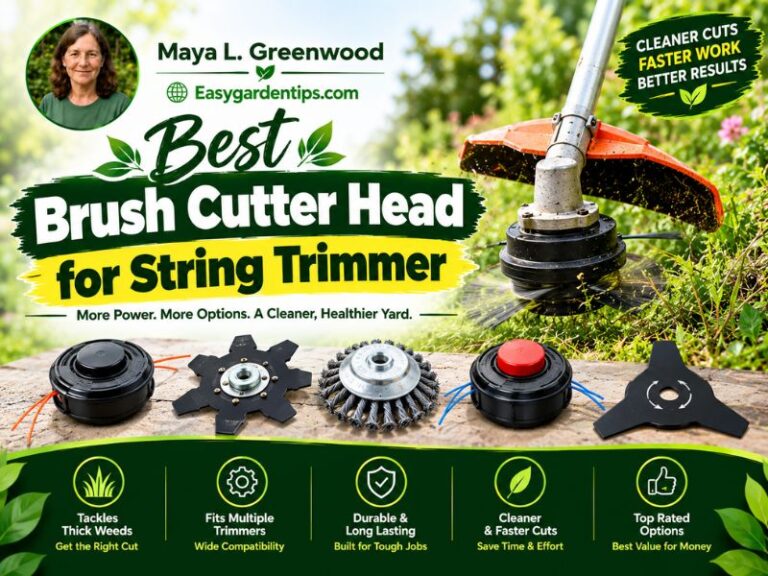
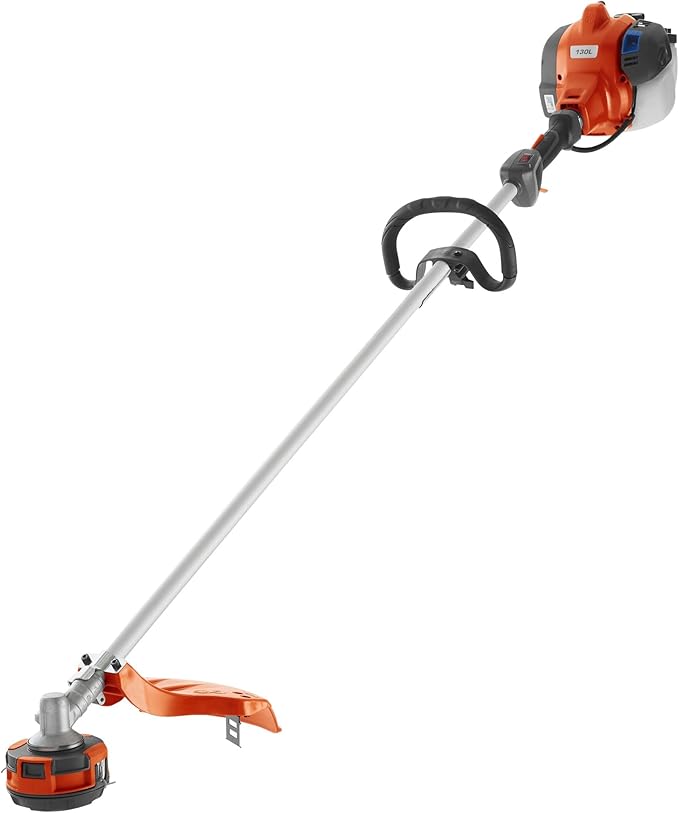
5 Best String Trimmer Head: Compared with Practical Buying Tips
Choosing the best string trimmer head is less about finding the most universal-looking replacement and more about matching the head to your trimmer’s shaft, thread, line size, and preferred feeding method. A head that loads quickly can save time, while a poorly matched adapter may create wobble, fitment problems, or frustrating line-feed issues.
For most owners, the Husqvarna 537388101 T35 String Trimmer Head Replacement is the strongest overall choice because it combines broad straight-shaft compatibility, a split-spool design, pre-wound line, and a relatively straightforward reload process. The Weed Warrior Autowinder II Universal String Trimmer is the clear alternative for shoppers who prioritize quick bump-feed operation and compatibility across many gas and selected cordless models.
This roundup compares five replacement heads by looking at compatibility information, line capacity and diameter support, reload design, feeding method, construction details, and the ownership trade-offs described for each product. The rankings favor practical fit and ease of use, but the right choice still depends on your exact trimmer model.
Best String Trimmer Head: Quick Comparison
| Product | Name | Price |
|---|---|---|
 |
Husqvarna 537388101 T35 String Trimmer Head Replacement | Check Price |
 |
Weed Warrior Autowinder II Universal String Trimmer | Check Price |
 |
3 Pack String Trimmer Head Compatible For | Check Price |
 |
SKIL 14-Inch Replacement Rapid Reload String Trimmer | Check Price |
 |
Upgraded Weed Eater Head with Steel Knob | Check Price |
1. Husqvarna 537388101 T35 String Trimmer Head Replacement
The Husqvarna 537388101 T35 earns the top position because it offers a useful balance of compatibility, convenient loading, and familiar bump-feed operation. It is designed for Husqvarna straight-shaft trimmers in the 100–500 series and is also described as compatible with most straight-shaft Echo, Stihl, and RedMax trimmers. That broad coverage makes it a practical replacement for homeowners who want a recognized head without moving to a more complicated adapter system.
One of its biggest advantages is the spool design. The spool comes off with the cap, so reloading does not require turning the trimmer upside down. Arrows indicate the winding direction, which helps reduce guesswork during line replacement. The split-spool layout is also intended to minimize tangling and line welding, two common annoyances when line is wound unevenly or exposed to heat and friction.
The T35 arrives pre-wound with .095-inch Titanium Force line and can hold about 28 feet of .095-inch line. It accepts line from .065 to .105 inch, giving users flexibility for lighter trimming or more substantial grass and weed work. That range is helpful if you already keep a preferred line size on hand.
The trade-off is that “universal” does not mean guaranteed for every trimmer. It is most compelling for compatible straight-shaft models, not curved-shaft machines or tools requiring a proprietary head. Before ordering, confirm the shaft and mounting arrangement in your owner’s manual. Once installed, keep the arrows visible during reloads and avoid forcing oversized line through the spool. This is the best starting point for buyers who want a simple, broadly compatible replacement with convenient maintenance.
2. Weed Warrior Autowinder II Universal String Trimmer
The Weed Warrior Autowinder II ranks second because it focuses strongly on fast line advancement and reload convenience. Its bump-feed system is designed to advance line with a simple tap, allowing the operator to continue trimming without stopping to pull line manually. For users who regularly maintain larger lawns, fence lines, or landscaped edges, that quick feed action can be more valuable than maximum line capacity.
Compatibility is another strength. The head is listed for most gas trimmer brands and selected cordless models, including Echo, Stihl, RedMax, Ryobi, Cub Cadet, Weed Eater, and MTD. That makes it an appealing alternative when a replacement head needs to serve a mixed collection of common equipment. Still, the phrase “most” matters: cordless tools often use proprietary mounting arrangements, so model-level confirmation remains important before purchase.
The Autowinder II accommodates up to 16 feet of .080-, .095-, or .105-inch line. Supporting three common diameters gives owners room to choose lighter or heavier line according to the work, although its stated capacity is lower than the T35’s 28-foot .095-inch capacity. The head is also built with rugged materials for trimming, edging, and cutting weeds around lawns, fences, and landscaping.
Its main limitation is that the universal design may require more careful fitment checking than a model-specific replacement. The shorter stated line capacity may also mean more frequent reloads for users who consume line quickly. Choose this head when quick bump-feed operation is your priority and your trimmer appears on the compatibility list. If you prefer a larger spool capacity and a clearly documented split-spool layout, the Husqvarna T35 is the better fit.
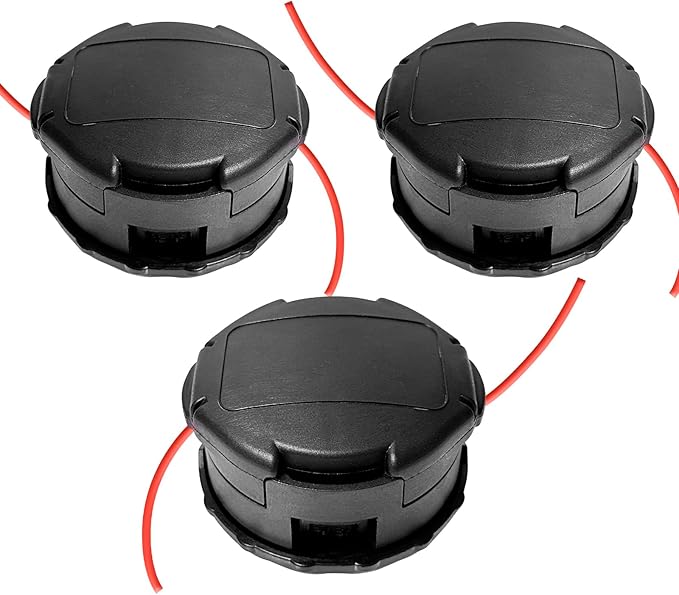
3. 3 Pack String Trimmer Head Compatible For
This three-pack takes third place because it offers strong value for owners of specific Echo, Shindaiwa, and related straight-shaft trimmers. The compatibility list is unusually detailed, covering Echo Speed Feed 400 applications and models such as the SRM-225, SRM-210, SRM-230, SRM-250, SRM-265, SRM-266, SRM-280, GT225, and several PAS power-source attachments. It also lists numerous Shindaiwa T-series and C-series models.
The main appeal is having three replacement heads available rather than purchasing a single unit. That can be useful for a homeowner who wants a spare, a property manager maintaining several compatible trimmers, or anyone who would rather keep replacements ready during the cutting season. The head is designed to accept several line sizes, including .080, .095, .105, and .130 inch, providing a wider stated range than the other options in this ranking.
Its bump head is designed for line replacement without complete disassembly. The supplied instructions describe aligning the holes, passing the line through, and turning the cover clockwise to shorten the exposed ends. A 3-3/4-inch head diameter, M10 x 1.25 mm bolt size, and stated maximum rotation speed of 10,000 RPM are included in the product information.
The drawback is that the broad compatibility language should not replace careful measurement. The listing specifically calls out a 10 mm female hole and asks buyers to confirm that the size fits their trimmer. It is also heavier than a single lightweight replacement at 1.6 pounds as listed. This pack makes the most sense for compatible Echo or Shindaiwa straight-shaft owners who want multiple heads and broad line-size support. It is less suitable when your trimmer is not explicitly listed or when you want the simplest one-for-one manufacturer replacement.
4. SKIL 14-Inch Replacement Rapid Reload String Trimmer
The SKIL replacement head ranks fourth because it is a focused, model-specific option rather than a broad universal solution. It is made for SKIL’s 14-inch and related brushless string trimmers, including the LT4818-10 and LT1400C-11-STH4818. The compatibility information also identifies SKIL Brushless PWR CORE 40 14-inch trimmers and Brushless PWR CORE 20 13-inch trimmers.
For an owner of one of those tools, that focused design can be a major advantage. Rather than sorting through multiple adapter nuts and bolts, the buyer can select a replacement intended for a known SKIL platform. Model-specific parts also make it easier to avoid the uncertainty that comes with a generic head, provided the exact trimmer model matches the listed applications.
The defining feature is Rapid Reload. The head is designed for quick and easy line loading, which addresses one of the most time-consuming parts of trimmer ownership. It also uses a bump-feed system, so the user can advance line while working by tapping the head against the ground in the normal manner for that style of feeder. Those features make it suitable for routine grass trimming and edging when convenience matters.
The limitation is narrow compatibility. Unlike the Husqvarna and Weed Warrior options, this is not presented as a replacement for a wide range of gas brands or general-purpose cordless equipment. It is also important to distinguish a compatible SKIL platform from a merely similar-looking trimmer; the listed model numbers should guide the purchase. If your tool is one of the specified SKIL brushless models, this head is a sensible direct replacement. If you use Echo, Stihl, RedMax, or another brand, select a head with confirmed mounting compatibility instead.
5. Upgraded Weed Eater Head with Steel Knob
The Upgraded Weed Eater Head with Steel Knob places fifth because it offers an extensive adapter kit and simple line insertion, but its broad fit claims require especially careful checking. The head is described as compatible with nearly all brands of gas and cordless straight-shaft trimmers, including Echo, Stihl, DeWalt, RedMax, Ryobi, Weed Eater, Poulan, Milwaukee, and MTD. That range is attractive for owners who have struggled to find a replacement for an uncommon model.
Its practical design does not require opening the head to load line. The user inserts line directly, and the package includes 12 feet of .095-inch trimmer line. A two-color design is intended to make the center section easier to locate during loading, while the tap-and-go system advances line when the head is tapped. The construction uses glass-fiber-reinforced polyamide, which the product describes as durable and abrasion-resistant.
The adapter kit is the product’s most distinctive feature. It includes five nuts and six bolts covering several metric and imperial thread patterns, including left-hand and right-hand configurations. That variety can help accommodate different shafts, but it also creates more opportunities for a wrong match if the buyer relies only on brand names. The listing specifically advises checking the trimmer’s shaft model before purchase.
The trade-off is reflected in its lower user rating and smaller review history compared with the higher-ranked choices. The 12-foot line supply is also less than the T35’s stated capacity. Treat the adapter selection as a fitment task, not an automatic guarantee. This head may suit an experienced owner who understands shaft threads and wants easy line insertion, while a model-specific or more clearly documented replacement is preferable for anyone who wants the lowest-installation-risk option.
How to Choose the Best String Trimmer Head
A replacement trimmer head is a mechanical part, so compatibility should come before convenience features. A head can look nearly identical to the original and still fail to install correctly because the shaft thread, bolt, nut, rotation direction, or mounting arrangement differs. Start with the trimmer’s brand and exact model number, then compare those details with the replacement listing.
Confirm the shaft style
Many replacement heads in this category are intended for straight-shaft trimmers. The Husqvarna T35 specifically identifies straight-shaft Husqvarna, Echo, Stihl, and RedMax applications, while the three-pack focuses heavily on Echo and Shindaiwa straight-shaft models. Straight-shaft and curved-shaft tools may use different driveline arrangements and head connections, so do not assume that a replacement advertised for a straight shaft will fit a curved-shaft machine.
Also determine whether the trimmer uses a standard removable head or a proprietary attachment system. Some cordless platforms are designed around brand-specific parts. The Weed Warrior listing includes selected cordless models, and the SKIL replacement is limited to specified SKIL brushless trimmers. That is why a product described as universal still needs model-level verification.
Check the thread, bolt, and rotation direction
Thread information is particularly important. The three-pack identifies an M10 x 1.25 mm bolt size, while the Upgraded Weed Eater Head includes several metric and imperial adapters. The latter also lists both left-hand and right-hand thread patterns. These details are not interchangeable.
Look at the original head, the owner’s manual, or the manufacturer’s parts diagram. Confirm whether the connection uses a nut, bolt, or adapter and whether the thread is left-hand or right-hand. A mismatch can prevent installation or cause the head to loosen during operation. Never force an adapter because it appears close to the correct size.
When a listing supplies multiple adapters, identify the correct one before beginning assembly. Lay the included pieces out and compare the thread marking with the trimmer documentation. If the listing gives a shaft-hole measurement, such as the 10 mm female hole specified for the three-pack, compare that measurement as well.
Choose the right line diameter
Line diameter affects the type of work a head can handle and whether the line fits correctly in the spool. The Husqvarna T35 accepts .065- to .105-inch line and arrives with .095-inch line. The Weed Warrior Autowinder II supports .080, .095, and .105 inch. The three-pack lists support for .080, .095, .105, and .130 inch. The Upgraded Weed Eater option includes .095-inch line.
Use the line size recommended for your trimmer rather than automatically choosing the thickest option. A larger diameter may not fit comfortably in the head and may be unsuitable for the trimmer’s intended operating design. If you are replacing an existing head, match the diameter printed in the manual or on the original spool.
Thicker line is not automatically better. It may be useful for demanding weed cutting when the head and trimmer support it, but line choice should remain within the documented range. For routine lawn edging and grass trimming, a commonly supported middle size such as .095 inch may be convenient, but the manufacturer’s specification should control.
Compare line capacity with your workload
Capacity determines how often you need to reload. The T35 is listed with room for 28 feet of .095-inch line, while the Weed Warrior Autowinder II accommodates up to 16 feet of line in its supported diameters. The Upgraded Weed Eater Head includes 12 feet of .095-inch line, although the included amount is not necessarily the maximum capacity of the head.
A larger capacity can reduce interruptions during a long trimming session, but it may also make a spool more involved to wind correctly. Smaller capacities can be perfectly practical for light residential work, especially when the reload design is quick. Think about how much trimming you do between line changes rather than treating capacity as an isolated specification.
The three-pack offers a different kind of convenience: multiple replacement heads. That does not necessarily mean each head holds more line, but it can reduce downtime if one head is worn or damaged. It may also make sense when maintaining more than one compatible trimmer.
Understand bump feed and reload methods
A bump-feed head advances line when the operator taps the rotating head against the ground. The Husqvarna T35, Weed Warrior Autowinder II, three-pack, SKIL replacement, and Upgraded Weed Eater Head all use or describe bump-feed or tap-advance operation. This style lets you extend line during work, but it depends on proper line winding and a functioning bump mechanism.
The reload method is separate from the feed method. The T35 spool comes off with the cap, and arrows show the winding direction. The Weed Warrior is designed for quick line changes without disassembling the entire head. The three-pack and Upgraded Weed Eater options are designed to load line without fully opening the head. The SKIL product emphasizes Rapid Reload.
For occasional users, simple visual instructions may matter more than maximum capacity. For frequent users, a head that avoids complete disassembly can save meaningful time. Consider who will maintain the trimmer and whether that person is comfortable removing a spool, aligning holes, or selecting an adapter.
Inspect the construction and likely wear points
Every trimmer head experiences abrasion from grass, soil, edging surfaces, and accidental contact with hard landscaping. The Weed Warrior describes rugged, heavy-duty construction, while the three-pack emphasizes stronger material intended to reduce breaks or cracks. The Upgraded Weed Eater model identifies glass-fiber-reinforced polyamide and a steel knob as part of its design.
These descriptions can help compare intended durability, but they do not eliminate normal wear. The cap, eyelets, bump knob, spool, and adapter connection deserve regular inspection. Replace a part if it is cracked, badly worn, distorted, or no longer holds the line securely.
A heavier or more robust head is not automatically the best choice for every trimmer. It must remain appropriate for the tool’s drive system and mounting arrangement. This is another reason to follow the exact model and compatibility information rather than choosing solely by construction language.
Decide between a manufacturer replacement and a universal head
A manufacturer-specific replacement is usually easier to evaluate when it clearly lists your exact model. The SKIL replacement illustrates this approach, with a defined group of SKIL trimmers. The Husqvarna T35 is also relatively focused while still covering multiple straight-shaft brands and line sizes.
A universal head may be more useful when you own several brands or when the original part is difficult to locate. The Weed Warrior and Upgraded Weed Eater options target broad brand coverage, and the latter includes multiple adapters. The cost of that flexibility is a greater need to confirm fitment.
Do not choose a universal product solely because it names your brand. A brand may produce multiple shaft sizes, thread patterns, and head assemblies. Exact model information is more reliable than brand-level compatibility alone.
Installation and setup practices
Before removing the old head, disconnect the trimmer from its power source. For a gas model, turn the engine off and allow hot components to cool. For a cordless model, remove the battery. Use gloves when handling worn line or a damaged head, and keep bystanders away during installation and the first operating check.
Clean grass and debris from the shaft area before installing the replacement. Debris can make the head sit unevenly and may hide damage. Follow the supplied instructions for locking the shaft and tightening the connection. The head should sit securely without visible wobble.
If the replacement uses an adapter kit, identify the correct nut or bolt before tightening. Do not combine pieces simply because the threads appear to start. A correct connection should engage smoothly and tighten according to the manufacturer’s instructions. If the head cannot be secured confidently, stop and verify the model, thread, and adapter.
After installation, check that the line ends are similar in length and that the spool rotates freely by hand with the power source disconnected. Start the trimmer in a clear area and observe the head at low or normal operating speed as appropriate. Stop immediately if you notice severe vibration, unusual noise, wobbling, or line feeding from only one side.
Reloading line without creating tangles
Line problems often begin during reloading. Use the correct diameter and cut a manageable length based on the head’s instructions. Keep the line organized and follow the winding arrows or guide holes. Uneven winding can cause line to overlap, weld together from heat, or fail to advance through the eyelets.
For a split-spool design such as the T35, keep each line section in its intended channel. Do not overfill the spool. The line should sit below the spool’s outer edge so the cap can close properly and the line can release during operation.
For heads that load without complete disassembly, follow the alignment process carefully. The three-pack instructions describe aligning holes, passing the line through, and turning the cover clockwise to shorten the exposed ends. The Upgraded Weed Eater model uses direct insertion and a center section intended to help locate the loading path. Even with these designs, forcing line or skipping the alignment step can produce poor feeding.
Maintenance that extends usable life
After trimming, remove packed grass and dirt around the head. A clogged area can interfere with bump movement and line release. Inspect the cap and knob for wear, especially if the head has been tapped frequently against hard ground. Keep replacement line dry and stored away from excessive heat so it remains easier to handle.
Check for cracks before every extended job. A small damaged area can become a larger failure when the head spins at operating speed. Examine adapters and fasteners as well, particularly on a universal head that has been removed and installed multiple times.
Avoid using a head outside its documented line-size range. Oversized line can create feeding resistance, and an incorrectly installed head may create vibration or loosen. If the head feeds unevenly, remove the power source, inspect the winding, confirm the eyelets are clear, and reload rather than repeatedly tapping a malfunctioning spool.
Matching the head to the work
Routine lawn trimming, edging, and light weed cutting do not necessarily require the same setup as dense growth or rough landscaping. A bump-feed head is convenient when line gradually wears during ordinary work because it allows controlled extension. A larger line size may be appropriate only when the head and trimmer documentation support it.
For fence lines and garden borders, reload convenience may matter more than maximum capacity because frequent contact with hard surfaces can consume line. For large properties, capacity and quick feeding may reduce interruptions. For occasional cleanup, a model-specific head that is easy to identify and install may be the least frustrating choice.
No string trimmer head should be treated as a brush-cutter blade replacement. Use the product only for the type of line-based trimming supported by your tool and head. Keep stones, glass, and other debris away from the cutting path whenever possible, and wear eye and leg protection during operation.
Best String Trimmer Head FAQ
What is the best string trimmer head for most homeowners?
The Husqvarna 537388101 T35 String Trimmer Head Replacement is the strongest general recommendation among these five. It supports several common straight-shaft trimmer brands, arrives pre-wound with .095-inch line, accepts .065- to .105-inch line, and uses a split-spool design intended to reduce tangling. Confirm your exact model before ordering.
Is a universal string trimmer head really universal?
Usually, “universal” means the head fits many listed brands or mounting patterns, not every trimmer ever made. The Weed Warrior Autowinder II and the Upgraded Weed Eater Head list broad compatibility, but cordless tools and different shaft threads may require specific fitment. Always verify the model, shaft style, thread, and adapter requirements.
What line size should I use in a replacement trimmer head?
Use the line diameter recommended for both the trimmer and the replacement head. The products in this roundup support different ranges, from .065 to .105 inch on the T35 to sizes up to .130 inch on the three-pack. Do not assume the thickest line will work best or fit properly.
Are bump-feed heads easier to use?
Bump-feed heads can be convenient because they let you advance line with a tap while trimming. They still require correct winding, a functional bump mechanism, and a compatible head. If the line does not feed, inspect the spool for tangles, overfilling, packed debris, or incorrect winding before continuing to tap the head.
How do I know whether a replacement head will fit my trimmer?
Compare the exact trimmer model with the replacement’s compatibility list. Then check whether the tool has a straight or curved shaft, the thread direction and size, and the required nut, bolt, or adapter. A product listing that names your brand but not your model should be treated as a starting point rather than a guarantee.
Is a three-pack better than buying one replacement head?
A three-pack can be useful when you own several compatible Echo or Shindaiwa models, want ready spares, or prefer replacing a worn head without waiting. It is not automatically better if your trimmer is not explicitly listed or if you only need a single model-specific replacement. Confirm the 10 mm female hole and other stated dimensions before purchase.
Why does my replacement head wobble after installation?
Possible causes include an incorrect adapter, mismatched thread, debris between the head and shaft, an incompletely tightened connection, or a damaged head. Disconnect the power source before inspecting it. If the correct adapter and installation procedure do not resolve the wobble, do not operate the trimmer until the fit is verified.
How often should I replace a string trimmer head?
Replacement timing depends on wear rather than a fixed schedule. Inspect the cap, spool, eyelets, bump knob, and mounting hardware regularly. Replace the head when it is cracked, badly worn, no longer feeds line reliably, or cannot remain secure. Keeping the head clean and using the correct line size can help reduce unnecessary wear.
Final Verdict
The Husqvarna 537388101 T35 String Trimmer Head Replacement is the best overall choice for compatible straight-shaft trimmers because it combines broad fitment, convenient reloading, pre-wound .095-inch line, and a 28-foot stated capacity. Choose the Weed Warrior Autowinder II when fast bump-feed operation and broad gas-and-cordless compatibility matter most. For every option, verify the exact trimmer model and mounting details before installation.

I’m Maya L. Greenwood, a lifelong plant lover who believes anyone can grow something beautiful with the right guidance. After years of testing soil mixes, pruning methods, irrigation tricks, and pest-safe solutions, I started EasyGardenTips.com to turn hard-won lessons into step-by-step advice. From seed starting and container gardens to composting and seasonal checklists, my goal is to make gardening simple, sustainable, and fun.