5 Best Self-Propelled Lawn Mower with Swivel Front Wheels Guide
Finding the best self-propelled lawn mower with swivel front wheels is harder than it sounds because product listings do not always explain how the front wheels turn or whether they actually swivel. A mower may offer strong traction, large rear wheels, or easy height adjustment without providing the tight maneuverability some buyers want around trees, beds, and other obstacles.
My first choice is PowerSmart 21″ Self-Propelled Gas Lawn Mower. It stands at the top of this 5-product list because it offers the strongest overall fit for the buying priorities covered below.
My second choice is YARDMAX 22 In. 201cc Select PACE 6 Speed CVT High Wheel FWD. It is the option I would compare next when a buyer has slightly different priorities from my first pick.
My third choice is SENIX 22” Self Propelled Gas Lawn Mower 170cc Gas Lawnmower because it balances a broad cutting path, rear-wheel drive, simple starting, and convenient vertical storage. It also includes a bagger, mulch plug, and discharge chute, although its single-speed drive offers less pace adjustment than the YARDMAX.
This guide explains what each mower can realistically do, which details are confirmed by the supplied product information, and where buyers should be careful about the swivel-wheel requirement. It also covers deck size, drive layout, cutting-height adjustment, power source, setup, maintenance, storage, safety, and the ownership trade-offs that matter after the purchase.
.amz-product-card:hover{transform:translateY(-3px)!important;box-shadow:0 10px 26px rgba(20,70,110,.12)!important;border-color:#bdd7ea!important;}
Best Self-Propelled Lawn Mower with Swivel Front Wheels
I selected these five mowers for their relevance to self-propelled walk-behind mowing, useful maneuverability or traction details, cutting versatility, and available customer-feedback evidence. The supplied information does not explicitly confirm swivel front wheels on any of the five models, so the ranking favors practical steering and terrain features without pretending that a conventional fixed-wheel design provides true swiveling action.
| # | Image | Product | Price on Amazon |
|---|---|---|---|
| 1 |  |
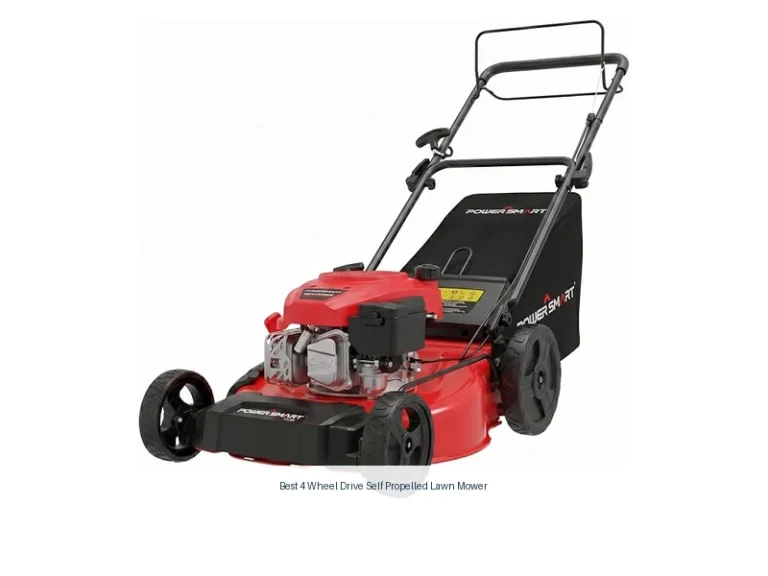
PowerSmart 21″ Self-Propelled Gas Lawn Mower | Check Price |
| 2 |  |
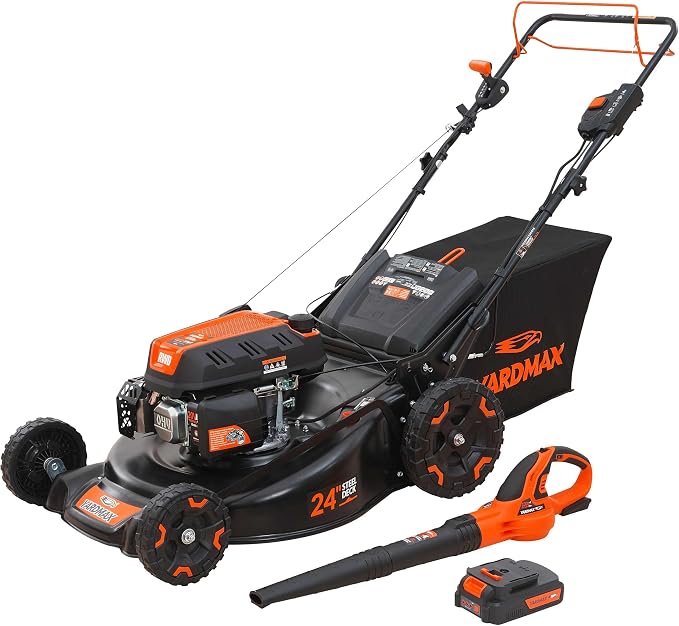
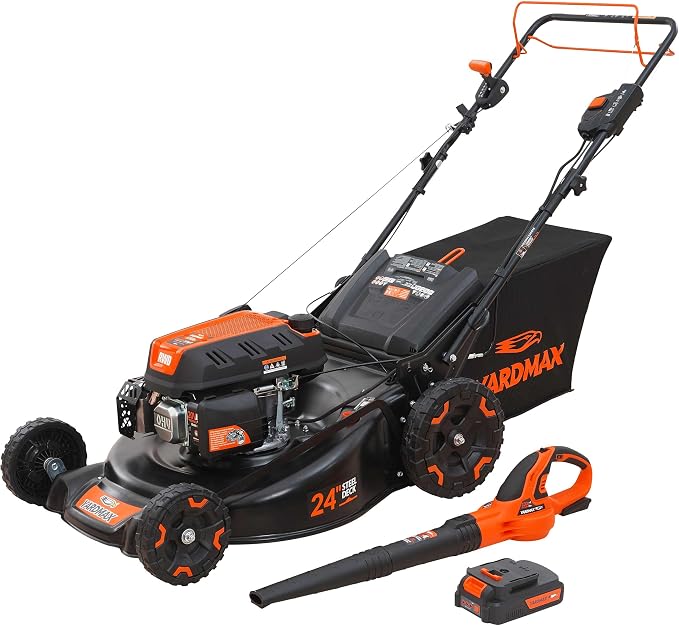
YARDMAX 22 In. 201cc Select PACE 6 Speed CVT High Wheel FWD | Check Price |
| 3 |  |
SENIX 22” Self Propelled Gas Lawn Mower | Check Price |
| 4 |  |
Greenworks 60V 21in Self-Propelled Lawn Mower | Check Price |
| 5 |  |
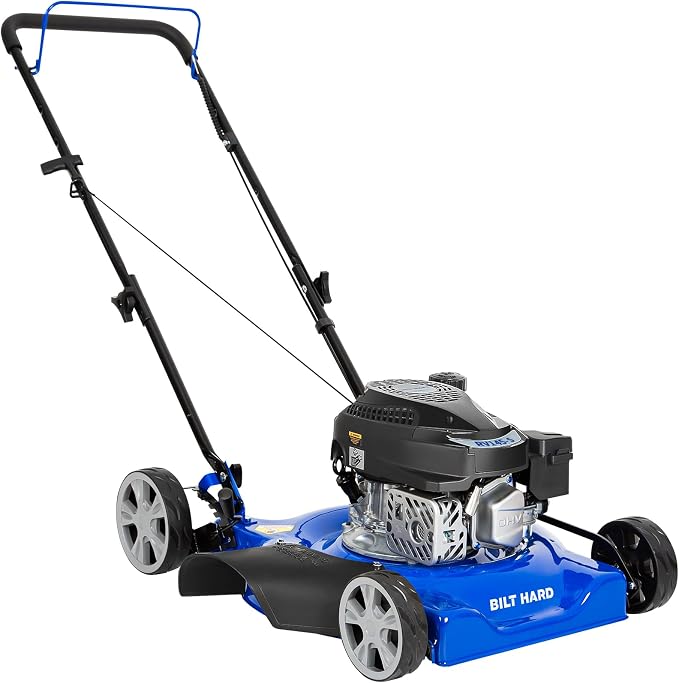
BILT HARD 21″ Self Propelled Gas Lawn Mower | Check Price |
PowerSmart 21″ Self-Propelled Gas Lawn Mower
The PowerSmart stands out as a balanced gas mower for a medium-sized lawn. Its 170cc OHV engine is paired with a 21-inch steel deck, giving it enough cutting width to reduce passes without making the machine unnecessarily large for tighter residential spaces. The rear-wheel-drive layout is useful when the lawn includes slopes or uneven patches because the driven wheels remain at the back where traction can help push the mower forward.
Its 3-in-1 setup lets you collect clippings in the 1.4-bushel bag, mulch them back into the lawn, or use rear discharge when speed matters more than cleanup. That flexibility is valuable for homeowners whose mowing routine changes with grass growth, weather, or seasonal preferences. The single-lever, six-position adjustment covers 1.5 to 3.9 inches, so the mower can be set lower for a neat appearance or higher when conditions call for less stress on the grass.
The important limitation is that the supplied specifications describe large 10-inch rear wheels but do not confirm swivel front wheels. Buyers who specifically need castering or swiveling front-wheel movement should verify the wheel construction before ordering. This model is better suited to someone who wants rear-wheel traction and ordinary walk-behind maneuverability than someone seeking zero-turn-like steering around many obstacles.
Pros
- Rear-wheel drive and large rear wheels support traction on slopes and uneven ground.
- Steel 21-inch deck offers a useful balance of coverage and residential maneuverability.
- Bagging, mulching, and rear discharge cover different mowing preferences.
- Six cutting heights range from 1.5 to 3.9 inches.
Cons
- Swivel front wheels are not confirmed in the supplied specifications.
- Gas ownership requires fuel, oil, engine care, and seasonal storage attention.
- The 1.4-bushel bag may require frequent emptying during heavy growth.
My Opinion
The PowerSmart is my strongest all-around pick when traction, a steel deck, and flexible clipping management matter more than specialized front-wheel steering. Confirm the wheel design first if swiveling is nonnegotiable.
YARDMAX 22 In. 201cc Select PACE 6 Speed CVT High Wheel FWD
YARDMAX takes a different approach by making walking speed the centerpiece. Its Select PACE system uses a continuously variable transmission with six selectable speeds, allowing the operator to slow down around landscaping or move faster across open lawn. That adjustment can make a substantial difference for households where more than one person uses the mower or where the mowing pace changes between flat stretches and congested areas.
The 22-inch high-wheel format covers a little more ground per pass than the PowerSmart, while the aggressive spiked tread is intended to improve traction and maneuverability. Front-wheel drive is worth considering carefully: it can make turning and repositioning feel convenient because lifting or easing the front end can reduce resistance, but it may not provide the same climbing confidence as rear-wheel drive on steeper slopes. The ideal buyer has a mostly manageable lawn and values steering flexibility and pace control.
Automatic choke operation simplifies starting, and the deck cleanout port gives the underside a more convenient cleaning route. A single lever handles cutting-height adjustment, though the supplied information does not state the exact height range. It also does not confirm that the front wheels swivel. Therefore, this is a strong candidate for variable-speed control and high-wheel traction, not a confirmed answer to a strict swivel-wheel specification.
Pros
- Six-speed CVT control lets the operator match the mower to walking pace.
- Aggressive tread supports traction on ordinary uneven lawn surfaces.
- Automatic choke removes a manual priming or choking step at startup.
- Deck cleanout port simplifies underside washing.
Cons
- Front-wheel drive may be less reassuring than rear-wheel drive on steep slopes.
- Exact cutting-height range is not provided in the supplied data.
- Swivel front wheels are not confirmed.
My Opinion
The YARDMAX earns second place because its six-speed pace system is unusually useful for real residential mowing. Choose it over a simpler mower when adjustable walking speed matters, but verify front-wheel movement and consider the terrain before relying on front-wheel drive.
SENIX 22” Self Propelled Gas Lawn Mower
The SENIX is a practical choice for a homeowner who wants broad coverage and a complete mowing package without adding separate accessories immediately. Its 22-inch steel deck supports faster coverage on small to medium-sized yards, and the 170cc four-cycle OHV engine supplies the power for a single-speed rear-wheel-drive system. That combination should appeal to buyers who prefer a straightforward drive rather than a transmission with several pace settings.
Three mowing modes are available through mulching, side discharge, and rear bagging. The included 19-gallon bagger is a notable convenience for people who collect clippings, while the mulch plug and discharge chute allow the mower to be configured for different grass conditions. The integrated washout port also helps remove buildup from beneath the deck, where wet clippings can accumulate if cleaning is postponed.
Cutting height adjusts through six positions from 1.25 to 4 inches. That wide range gives the operator room to raise the deck during stressful heat or vigorous growth and lower it when a shorter appearance is preferred. Eight-inch front wheels and 11-inch rear wheels help it cross uneven ground, but the available data does not say that the front wheels swivel. The foldable handle and vertical storage design are useful in a crowded garage, though upright storage still requires following the manual’s fuel and oil guidance.
Pros
- 22-inch steel deck covers lawn efficiently.
- Includes a 19-gallon bagger, mulch plug, and discharge chute.
- Six-position adjustment spans 1.25 to 4 inches.
- Vertical storage design can save garage or shed space.
- Backed by a stated two-year limited warranty.
Cons
- Single-speed propulsion gives less pace control than the YARDMAX.
- Swivel front wheels are not confirmed.
- Gas engine maintenance remains part of ownership.
My Opinion
The SENIX is a well-rounded third choice for small to medium yards, especially when included accessories and compact storage matter. Its wide height range is useful, but buyers wanting highly adjustable speed or verified swiveling wheels should look more closely at the alternatives.
Greenworks 60V 21in Self-Propelled Lawn Mower
Greenworks is the clear power-source alternative in this group. Instead of a gasoline engine, it uses a 60V brushless motor and two 4.0Ah batteries, with claimed coverage of up to three-quarters of an acre per charge depending on terrain and mowing technique. That qualification matters: battery runtime can change with grass height, slope, speed, and how often the mower enters demanding conditions.
Rear-wheel drive helps with traction on slopes and thick grass, while on-the-go pace adjustment lets the user control propulsion without stopping. The 4-in-1 system goes beyond the most common bag, mulch, and discharge arrangement by adding turbo leaf pickup. LED headlights extend practical mowing time into lower-light periods, although mowing in poor visibility still requires careful awareness of people, pets, and obstacles.
Quiet operation, instant starting, zero direct emissions during use, and little routine engine maintenance make this an attractive choice for neighborhoods where noise is a concern. The mower also works with more than 75 Greenworks 60V tools, which can improve battery value for someone already using that platform. However, the supplied information does not confirm swivel front wheels, and battery users must plan charging and runtime rather than simply refueling. The four-year limited tool and battery warranty is a meaningful ownership consideration.
Pros
- 60V brushless motor provides a gas-like power alternative without engine exhaust during use.
- Two 4.0Ah batteries are included.
- Rear-wheel drive and adjustable self-propelled speed support slopes and thick grass.
- 4-in-1 mowing adds turbo leaf pickup to the usual functions.
- Works with more than 75 Greenworks 60V tools and includes a four-year limited warranty.
Cons
- Actual coverage varies with terrain, grass, and mowing technique.
- Charging and battery planning replace the convenience of carrying spare gasoline.
- Swivel front wheels are not confirmed.
My Opinion
Greenworks is the best fit here for buyers prioritizing low noise, easy starting, and a broader cordless tool ecosystem. It is less suitable for anyone who cannot accommodate charging or who requires verified swivel-wheel hardware.
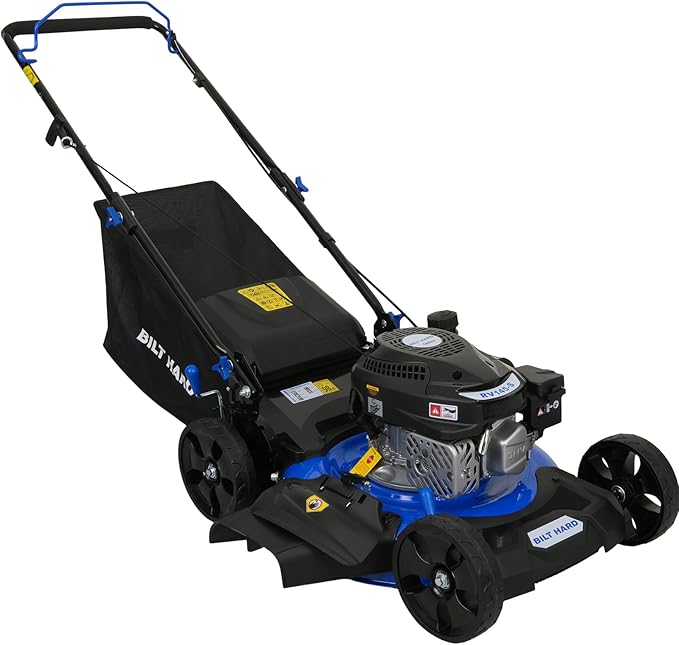
BILT HARD 21″ Self Propelled Gas Lawn Mower
BILT HARD focuses on straightforward gas-mower capability with a comparatively large 201cc four-stroke OHV engine. Its 21-inch steel deck supports bagging, mulching, and side discharge, giving the operator a useful choice between collecting clippings, returning them finely to the lawn, or clearing them away quickly. The no-choke, no-primer starting design is intended to reduce the number of manual steps before mowing.
The mower uses rear-wheel drive and single-speed self-propulsion, so it should suit a buyer who wants assistance across a larger lawn without needing a variable-speed transmission. Its foam-wrapped angled handle is intended to reduce hand fatigue, a detail that may be welcome during longer sessions. Cutting height is adjusted with one lever across all four wheels, with eight positions from 1.2 to 3.75 inches. That gives more intermediate choices than several competitors in this group.
There are still important unknowns. The supplied specifications do not state the mower’s wheel diameters, do not confirm swivel front wheels, and do not provide a specific warranty length. The limited customer-feedback sample is also smaller than the other listed gas models, so buyers may want to place more weight on return terms, support responsiveness, and the exact configuration shown at purchase.
Pros
- 201cc OHV engine provides substantial gas-powered capacity.
- Three-in-one deck supports bagging, mulching, and side discharge.
- Eight cutting-height positions range from 1.2 to 3.75 inches.
- No-choke, no-primer starting design is beginner-friendly.
- Angled foam-wrapped handle may reduce hand strain.
Cons
- Single-speed drive provides no pace adjustment.
- Wheel size and swivel action are not confirmed.
- Specific warranty coverage is not provided in the supplied data.
My Opinion
BILT HARD is a reasonable value-oriented contender for someone wanting a strong gas engine and many height settings. I would choose it only after confirming wheel construction, support details, and the maintenance expectations of a larger engine.
How I Selected These Mowers for the Swivel-Front-Wheel Search
The selection started with the central search intent: a self-propelled walk-behind mower that is easier to guide around a residential lawn. I then compared deck width, drive-wheel position, wheel descriptions, height adjustment, clipping options, power source, storage details, warranty information, and customer-feedback counts supplied for each product. Because none of the supplied listings explicitly states that its front wheels swivel, I treated that as an unresolved specification rather than filling the gap with an assumption.
Relevance also meant looking beyond the phrase itself. A mower with rear-wheel traction may be easier to control on slopes, while a high-wheel front-drive design may feel more convenient during turns. Variable self-propulsion can help a user avoid fighting the machine, and battery power may remove engine-related chores. Those are meaningful steering and ownership factors, but they are not proof of swiveling wheels.
Important selection takeaway: the supplied data confirms traction, drive layout, wheel sizes on some models, or pace adjustment, but it does not confirm a true swivel or caster front-wheel mechanism on any listed mower.
Brand diversity was also practical. The final group includes four gas-powered options and one cordless mower, with different deck widths, drive systems, height ranges, and storage approaches. That gives a buyer several ways to solve the maneuverability problem instead of treating one design as ideal for every yard.
If swivel action is essential for navigating many trees, garden borders, or narrow paths, ask the seller for a clear wheel photograph, an owner’s manual specification, or a direct confirmation before purchase.
How to Choose the Best Self-Propelled Mower for This Topic
A good purchase begins by separating three ideas that are often blended together: self-propulsion, steering maneuverability, and actual swivel-wheel construction. Self-propulsion moves the mower forward, but it does not automatically make the front wheels caster or pivot. Match the mower to the lawn’s slope, obstacles, size, storage area, and your willingness to maintain gas equipment or charge batteries.
- Verify the wheel mechanism: Look for explicit swivel, caster, pivoting, or independently turning front-wheel language rather than assuming that “high wheel” means swivel.
- Match drive type to terrain: Rear-wheel drive generally deserves closer attention on slopes, while front-wheel drive can be convenient for repositioning on more manageable lawns.
- Choose a suitable deck width: A 21- or 22-inch deck covers ground efficiently, but a narrower mower may be easier around dense landscaping.
- Check pace control: Variable speed is helpful when mowing around obstacles, while single-speed propulsion is simpler and often easier to operate.
- Plan for ownership: Gas models need fuel and oil care; battery models need charging access and realistic runtime planning.
Steering and obstacle layout
Walk the lawn mentally before buying. Count the trees, raised beds, fence corners, gates, drainage areas, and narrow passages that require repeated turns. Swiveling front wheels can potentially reduce the effort of redirecting a mower, but they may also make the machine feel less planted on rough ground if the design is not well controlled. If the listing does not explain how the wheels lock, pivot, or track, treat that as a question to resolve.
Drive layout and slopes
Rear-wheel drive is represented by the PowerSmart, SENIX, Greenworks, and BILT HARD models in this group. It can be useful when the mower needs traction while climbing or crossing uneven lawn. The YARDMAX uses front-wheel drive, which may suit flatter yards where frequent turning and pace adjustment are more important than maximum climbing confidence. No drive layout replaces safe mowing technique on a steep slope.
Deck width and cutting height
A wider deck reduces the number of passes, but only when the mower can move comfortably through the available space. The 22-inch SENIX and YARDMAX may cover open areas efficiently, while the 21-inch options may offer a slightly more manageable footprint. Cutting height matters for grass health and seasonal conditions. Among the listed models, the SENIX reaches 4 inches, the PowerSmart reaches 3.9, and the BILT HARD offers eight separate positions, which may help fine-tune the result.
Gas versus cordless power
Gasoline provides familiar refueling and avoids waiting for a battery, but it brings fuel handling, oil checks, engine maintenance, and storage considerations. The Greenworks model starts instantly and avoids direct emissions during use, but its stated three-quarter-acre coverage varies with conditions. A cordless mower makes most sense when the included batteries fit the yard and the owner already values the same battery platform.
Setup Before the First Mow
Read the supplied manual before adding fuel, oil, or batteries. Gas mowers commonly require correct engine oil and fresh fuel, while the exact procedure can differ by model. Do not guess about whether a mower may be stored vertically, especially when fuel or oil is present. The SENIX specifically promotes vertical storage, but the owner’s instructions still control the safe procedure.
Inspect the handle, wheel fasteners, discharge equipment, bagger connection, and height-adjustment lever. Make sure the blade area is clear and that the safety control works as described. On models with a washout or deck-cleanout port, identify the correct cleaning method before attaching a hose. Never place hands near the blade merely because the engine or motor is not currently running.
For the Greenworks mower, charge both 4.0Ah batteries according to the charger instructions and confirm that they seat securely. Check the battery indicator before starting a large lawn. For gas models, allow the engine to start and settle according to the manual before engaging propulsion, and keep bystanders away during the first operating check.
How to Mow More Efficiently
Begin with a high cutting setting when the grass is unusually tall, then make a second adjustment later if a shorter appearance is desired. Removing too much grass in one pass can leave the lawn stressed and may overload the mower. Overlap passes slightly so uncut strips do not remain between deck paths.
Use bagging when clippings would otherwise collect in visible piles, mulching when the grass is dry and the deck is not overloaded, and discharge when the lawn is long or damp enough to fill a bag quickly. Keep discharge directed away from roads, windows, people, and pets. The exact mode-change procedure should follow the manual, with the mower stopped and the blade fully inactive before changing attachments.
On slopes, move in the direction recommended by the manufacturer rather than improvising. Keep both hands on the handle, slow the propulsion speed, and avoid sudden turns. Even a mower with rear-wheel drive and large tires can lose traction on wet grass. The ability to swivel a front wheel, if a future model confirms it, would not remove the need for cautious slope control.
Maintenance and Storage That Extend Ownership
After each mowing session
Remove packed grass from the deck after the mower has been stopped, cooled, and made safe according to the manual. A clean deck helps preserve cutting performance and reduces the buildup that can interfere with discharge or mulching. Empty and dry the collection bag when appropriate. Inspect the blade area, wheels, handle, and drive-control cable for visible damage or loose hardware.
Gas mower care
Check engine oil at the intervals specified by the manufacturer and use the correct grade. Keep fuel fresh and follow the manual’s instructions for off-season storage. Air-filter, spark-plug, blade, and oil service are normal parts of gasoline ownership. A mower that becomes difficult to start or loses power should not be forced through a large lawn; stop and identify the cause first.
Battery mower care
Store batteries and the charger in a dry, protected location and avoid leaving them exposed to extreme heat or moisture. Keep battery contacts clean and inspect the housing for damage. Runtime depends on grass height, terrain, blade condition, and self-propelled speed, so reserve charge for the most demanding section of the lawn instead of assuming the advertised maximum applies in every situation.
Common Mistakes to Avoid
Most problems begin with an assumption made before purchase or a shortcut taken during setup. The swivel-wheel phrase is especially easy to misread because marketing language about maneuverability, high wheels, and traction does not necessarily describe a pivoting front axle.
- Do not assume “self-propelled” means the front wheels swivel.
- Do not choose front-wheel drive for a steep lawn without considering traction needs.
- Do not set the cutting height very low simply to reduce mowing frequency.
- Do not wash, inspect, or clear the deck while the blade could still move.
- Do not compare battery acreage claims without considering slope, grass height, and propulsion speed.
- Do not store a gas mower vertically unless the manual specifically permits the procedure.
- Do not ignore a smaller warranty or limited support description when two products otherwise look similar.
Before ordering, confirm three details in writing if they matter to your decision: whether the front wheels actually pivot, whether they can lock straight, and whether the mower’s drive system is appropriate for your steepest section of lawn.
FAQ
Do any of these mowers clearly have swivel front wheels?
No. The supplied product information does not explicitly confirm swivel or caster front wheels for any of the five models. Their traction, wheel size, drive layout, and speed controls may improve maneuverability, but those features should not be treated as proof of a swiveling front-wheel assembly.
Which listed mower is easiest to match to different walking speeds?
The YARDMAX has the clearest pace-control advantage because its Select PACE CVT offers six speeds. The Greenworks mower also provides on-the-go pace adjustment, while the SENIX and BILT HARD use single-speed propulsion. The supplied PowerSmart information describes self-propulsion but does not state a variable-speed range.
Which option is most suitable for a sloped yard?
The PowerSmart, SENIX, Greenworks, and BILT HARD use rear-wheel drive, which may offer a useful traction advantage on slopes. The PowerSmart specifically highlights rear-wheel drive for slopes and has large rear wheels. Actual suitability still depends on slope steepness, grass condition, and safe operating technique.
Is the cordless Greenworks model practical for a large lawn?
It may be, because the supplied information states up to three-quarters of an acre per charge with two 4.0Ah batteries. However, the result varies with terrain and mowing technique. Measure the lawn, consider slopes and grass density, and plan charging time before relying on that maximum coverage.
Which mower offers the most cutting-height positions?
The BILT HARD provides eight positions from 1.2 to 3.75 inches. The PowerSmart and SENIX each provide six positions, with the PowerSmart ranging from 1.5 to 3.9 inches and the SENIX from 1.25 to 4 inches. The YARDMAX’s supplied data confirms single-lever adjustment but does not state the exact range.
Final Thoughts
The PowerSmart is my top recommendation when a balanced 21-inch gas mower, rear-wheel traction, and three mowing modes matter most. The YARDMAX is the better alternative for six-speed pace control, while the SENIX is a practical third choice for included accessories, broad height adjustment, and vertical storage. For the best self-propelled lawn mower with swivel front wheels, verify the front-wheel mechanism directly before buying, because none of these supplied listings confirms true swivel action.

I’m Maya L. Greenwood, a lifelong plant lover who believes anyone can grow something beautiful with the right guidance. After years of testing soil mixes, pruning methods, irrigation tricks, and pest-safe solutions, I started EasyGardenTips.com to turn hard-won lessons into step-by-step advice. From seed starting and container gardens to composting and seasonal checklists, my goal is to make gardening simple, sustainable, and fun.