5 Best Awd Self Propelled Lawn Mower: Top Product Buying Guide
Finding the best awd self propelled lawn mower is not as simple as choosing the widest deck or the largest engine. Traction, cutting control, drive layout, terrain, maintenance, and whether you prefer gas or battery power all affect how comfortable and effective the mower will be.
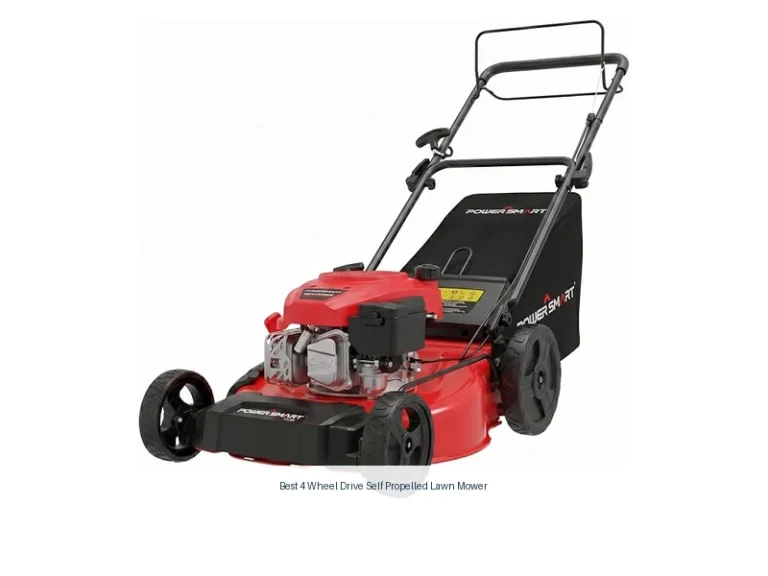
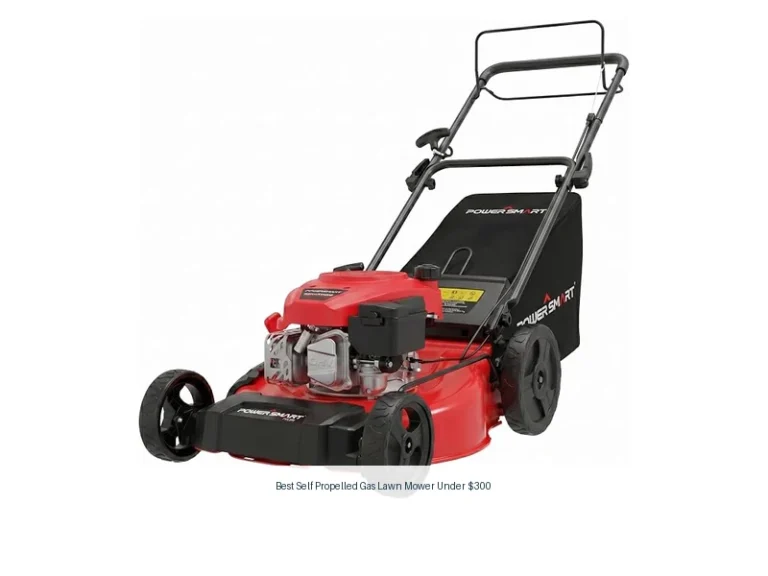
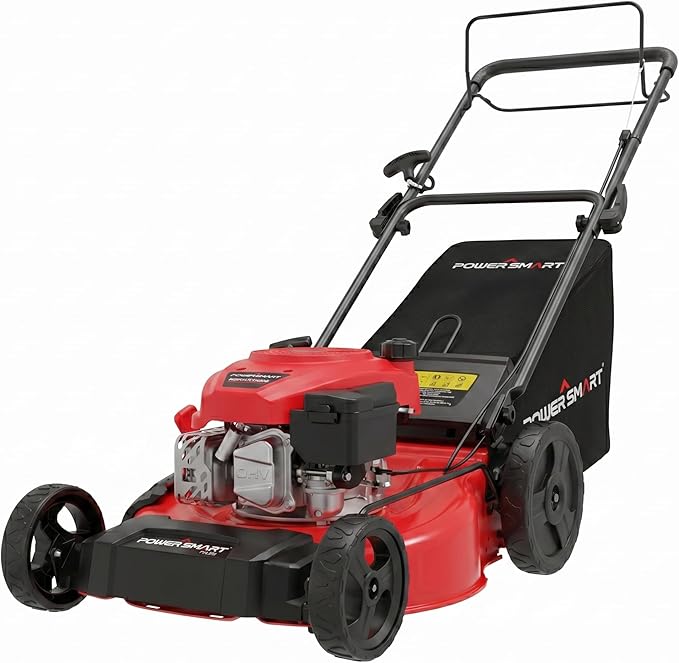
My first choice is PowerSmart 21″ Self-Propelled Gas Lawn Mower. It stands at the top of this 5-product list because it offers the strongest overall fit for the buying priorities covered below.
My second choice is SENIX 201cc 22″ 3-in-1 Variable Speed Self Propelled Gas Lawn Mower. It is the option I would compare next when a buyer has slightly different priorities from my first pick.
Greenworks 80V 21in Self-Propelled Lawn Mower 4.0 Ah Battery is my third choice for homeowners who want a quieter, lower-maintenance alternative to gas. Its brushless motor, rear-wheel drive, variable speed control, LED headlight, included battery and charger, and four-year tool-and-battery warranty make it especially appealing for cordless-tool owners.
This guide compares the five selected mowers, explains the important differences between rear-wheel drive, front-wheel drive, and true all-wheel drive, and covers deck size, power source, cutting adjustment, maintenance, setup, storage, and common buying mistakes.
.amz-product-card:hover{transform:translateY(-3px)!important;box-shadow:0 10px 26px rgba(20,70,110,.12)!important;border-color:#bdd7ea!important;}
Best Awd Self Propelled Lawn Mower
I selected these models for their relevance to self-propelled mowing, practical traction features, useful cutting systems, and the amount of product information available. Customer-feedback evidence and brand diversity also helped shape the ranking, although the supplied information does not indicate hands-on testing. One important clarification is that most of these products are identified as rear-wheel-drive or front-wheel-drive models rather than true all-wheel-drive mowers, so terrain and drive layout should be checked carefully before purchase.
| # | Image | Product | Price on Amazon |
|---|---|---|---|
| 1 |  |
PowerSmart 21″ Self-Propelled Gas Lawn Mower | Check Price |
| 2 |  |
SENIX 201cc 22″ 3-in-1 Variable Speed Self Propelled Gas Lawn Mower | Check Price |
| 3 | 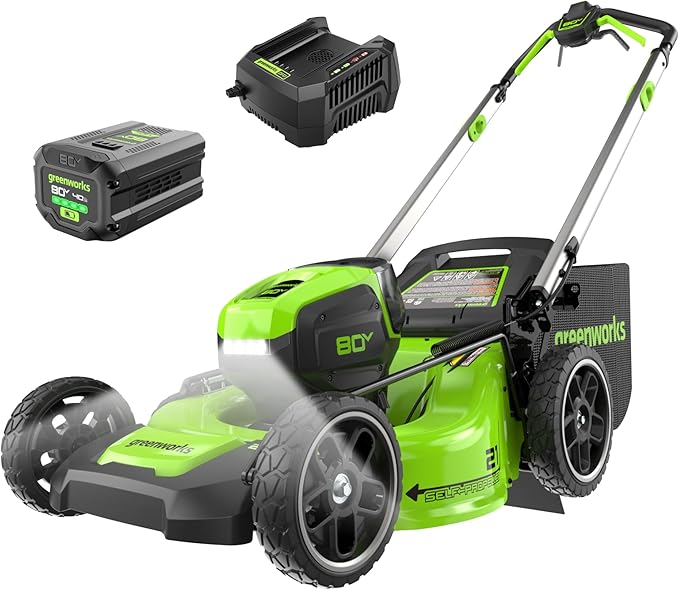 |
Greenworks 80V 21in Self-Propelled Lawn Mower | Check Price |
| 4 |  |
YARDMAX 22 In. 201cc Select PACE 6 Speed CVT High Wheel FWD | Check Price |
| 5 |  |
BILT HARD 21″ Self Propelled Gas Lawn Mower | Check Price |
PowerSmart 21″ Self-Propelled Gas Lawn Mower
The PowerSmart earns the top position by offering a balanced set of features for ordinary residential mowing. Its 170cc OHV engine provides the power needed for regular grass and demanding sections, while the 21-inch steel deck covers enough ground to keep medium-yard mowing reasonably efficient without making the machine excessively wide.
Rear-wheel drive is useful when the mower needs extra traction on slopes or uneven ground, particularly when the rear bag is carrying clippings. The 10-inch rear wheels should also help the mower roll over rougher areas more confidently than a small-wheel walk-behind model. This is not identified as a true all-wheel-drive mower, however, so buyers with very steep or persistently slippery terrain should keep that distinction in mind.
Its three-in-one system gives owners flexibility. Bagging keeps clippings contained, mulching returns finely cut material to the lawn, and rear discharge is convenient when speed matters more than collection. The single-lever height adjustment spans 1.5 to 3.9 inches across six positions, making seasonal changes straightforward.
Pros
- Rear-wheel drive and large rear wheels suit slopes and uneven ground.
- Steel 21-inch deck balances coverage and maneuverability.
- Bagging, mulching, and rear-discharge modes support different mowing preferences.
- Six cutting heights cover common lawn-care needs.
Cons
- It is not listed as a true all-wheel-drive mower.
- The 170cc engine is less substantial than the larger engines ranked below it.
- Gas ownership requires routine fuel and engine maintenance.
My Opinion
This is the most broadly sensible choice for a medium-size yard where rear traction, a steel deck, and flexible clipping management matter more than maximum power. Before buying, confirm that the available deck height range suits the grass type, and plan for normal gas-mower care such as blade inspection, underside cleaning, and seasonal storage.
SENIX 201cc 22″ 3-in-1 Variable Speed Self Propelled Gas Lawn Mower
SENIX moves into second place with a larger 22-inch cutting deck and a stronger 201cc four-cycle OHV engine. The wider path can reduce the number of passes across a larger lawn, although a wider mower may feel less convenient around narrow gates, garden beds, and tightly spaced landscaping.
Its variable-speed self-propelled system is one of the most useful differences here. Instead of forcing every operator to walk at the same pace, it allows the mowing speed to be adjusted to the person, grass density, and terrain. That can make long sessions more comfortable and gives better control when approaching obstacles or turning at the edge of a property.
The 11-inch rear wheels add clearance and traction for uneven ground, while the rear-wheel-drive layout is helpful when climbing or when the rear of the mower is loaded with clippings. Six height settings run from 1.25 to 4 inches, providing a particularly broad range for adapting to season and grass type. Its three-in-one cutting system supports bagging, mulching, and side discharge.
Pros
- 22-inch steel deck covers substantial ground efficiently.
- Variable speed helps match the mower to the operator and terrain.
- Large 11-inch rear wheels support uneven lawns and slopes.
- Six height settings range from 1.25 to 4 inches.
Cons
- Its wider deck may be awkward in confined yards or narrow storage areas.
- It uses side discharge rather than the rear-discharge arrangement listed for the PowerSmart.
- Rear-wheel drive should not be confused with all-wheel drive.
My Opinion
This is a strong alternative for a larger lawn where adjustable walking speed and extra cutting width are more valuable than compact handling. Check gate widths and storage space first, then make sure the selected height setting matches the recommended mowing height for the grass rather than removing too much at once.
Greenworks 80V 21in Self-Propelled Lawn Mower
The Greenworks brings a different ownership experience to the group. Its 80V battery platform and brushless motor avoid gasoline, oil, and many of the starting concerns associated with gas equipment. The included 4.0Ah battery and charger mean the basic operating package is supplied, rather than requiring an immediate separate battery purchase.
Greenworks states that the mower can cut up to one-half acre on a fully charged battery, although actual coverage varies with grass condition and operator technique. That qualification matters: tall, damp, dense, or frequently overgrown grass can use energy faster than a light, regularly maintained lawn. Battery charge planning is therefore part of choosing this mower, especially for properties near the upper end of its stated coverage.
Rear-wheel drive and variable speed control provide traction and pace adjustment, while the 21-inch steel deck is a familiar compromise between coverage and maneuverability. LED headlights make early-morning or evening mowing more practical, and the electric operation is described as three times quieter than gas. Compatibility with more than 75 Greenworks 80V tools may also add value for someone already invested in that platform.
Pros
- Quiet brushless electric operation avoids routine gas-engine care.
- Battery and charger are included.
- Variable speed and rear-wheel drive support controlled mowing.
- Four-year limited tool-and-battery warranty is supplied information.
- Works with more than 75 Greenworks 80V tools.
Cons
- Battery coverage depends on grass conditions and operating technique.
- Charging time and battery planning matter for larger properties.
- It is listed as rear-wheel drive, not true all-wheel drive.
My Opinion
This is the best fit of the five for a homeowner prioritizing quieter operation and cordless convenience. Confirm that the 80V battery ecosystem fits your future tool plans, keep the battery charged before mowing, and avoid assuming that the stated half-acre coverage will be identical in thick or wet grass.
YARDMAX 22 In. 201cc Select PACE 6 Speed CVT High Wheel FWD
YARDMAX stands out for its six-speed CVT Select PACE transmission. Rather than offering only one fixed propulsion rate, the shift lever lets the operator choose a pace that better matches walking speed, lawn conditions, and personal comfort. This is valuable on a larger property where a single speed may feel either too slow during open stretches or too fast near landscaping.
The mower uses front-wheel drive, which is an important difference from the rear-wheel-drive models above. Front-drive machines can be convenient for lifting the drive wheels slightly during turns, but they may not provide the same uphill traction as rear-wheel drive, particularly when the rear of the mower becomes heavier with a full bag. That makes this model more compelling for relatively level lawns or buyers who prioritize turning behavior and pace selection.
Aggressive spiked tread on the rubber tires is intended to improve traction and maneuverability. Automatic choke operation is another practical convenience because it eliminates manual priming or choking at startup. The deck cleanout port can simplify underside rinsing, while single-lever deck adjustment makes height changes quick.
Pros
- Six-speed CVT offers unusually broad pace control.
- 22-inch deck and 201cc engine suit larger mowing jobs.
- Automatic choke simplifies starting.
- Spiked tire tread supports traction and maneuverability.
- Deck cleanout port can make cleaning easier.
Cons
- Front-wheel drive may be less suitable for steep slopes than rear-wheel drive.
- The wider deck needs more room around gates and storage areas.
- It is not an all-wheel-drive mower.
My Opinion
YARDMAX is a sensible choice for a mostly level lawn where speed adjustment and easy turning are high priorities. Buyers with steep inclines should compare its front-drive layout against a rear-wheel-drive option, and owners should use the cleanout port carefully according to the operating instructions rather than treating water exposure as unlimited.
BILT HARD 21″ Self Propelled Gas Lawn Mower
BILT HARD offers a straightforward gas mower with a 21-inch steel deck, a 201cc four-stroke OHV engine, and 9.0 ft-lb of torque. Its single-speed rear-wheel-drive system keeps propulsion simple, which can be appealing to buyers who do not need variable pace controls and would rather avoid another adjustment to manage during mowing.
The no-choke, no-primer starting design is intended to reduce startup steps. That does not remove the need for fuel care or routine engine maintenance, but it can make ordinary starts less intimidating for a first-time gas-mower owner. The foam-wrapped angled handle is another comfort-oriented detail, potentially reducing pressure on the hands during longer sessions.
Eight cutting-height positions, from 1.2 to 3.75 inches, provide more adjustment points than the other listed gas models. The single lever synchronizes all four wheels, so changing the height should not require setting each corner separately. Bagging, mulching, and side discharge cover the main clipping-management choices.
Pros
- 201cc engine and stated 9.0 ft-lb torque provide substantial gas-mower power.
- No-choke, no-primer design simplifies starting.
- Eight height positions offer fine cutting adjustment.
- Rear-wheel drive and a comfort-oriented handle suit larger yards.
Cons
- Single-speed propulsion offers less pace control than the SENIX or YARDMAX.
- It is not identified as true all-wheel drive.
- The smaller supplied customer-feedback sample provides less evidence than the higher-ranked models.
My Opinion
BILT HARD deserves consideration from buyers who want strong engine capacity, easy starting, and detailed height adjustment without paying for a variable-speed drive system. Keep the blade sharp, clean packed grass from beneath the deck, and verify that the single speed feels comfortable before committing to long mowing sessions.
How I Selected These Best Awd Self Propelled Lawn Mower Options
The selection focused on mowers that combine self-propulsion with meaningful traction, usable cutting-width information, and practical clipping-management choices. I compared engine or battery power, deck construction, wheel size, drive layout, height adjustment, speed control, starting convenience, and ownership support. The exact keyword describes a demanding use case, but the supplied products mostly identify as rear-wheel-drive or front-wheel-drive rather than true all-wheel-drive models, so that limitation is stated instead of being hidden.
Important selection takeaway: Rear-wheel drive can be very useful on slopes, but it is not the same as all-wheel drive. Treat the drivetrain description as a central buying specification, not a minor wording difference.
Customer-feedback volume and product ratings were considered as supporting evidence, not as a substitute for specifications. The PowerSmart and SENIX offer strong gas-mower versatility, Greenworks provides a credible battery alternative, YARDMAX adds unusual pace control, and BILT HARD supplies a simpler high-power configuration. This creates useful comparison across different ownership preferences rather than five nearly identical machines.
A mower with the biggest engine is not automatically the best fit. The right choice depends on slope, lawn size, storage, desired noise level, clipping preferences, and whether the owner wants to maintain a gas engine.
How to Choose the Best Awd Self Propelled Lawn Mower
Start by matching the drive layout to the property instead of choosing by engine size alone. Then consider the deck width, cutting-height range, propulsion speed, power source, and the amount of maintenance you are willing to perform.
- Prioritize drivetrain: Look for true all-wheel drive if all four wheels are specified as powered; rear-wheel drive is often the more useful compromise for slopes.
- Match deck width to access: A 22-inch deck covers more ground, but a 21-inch mower may fit narrow gates and storage spaces more easily.
- Choose the power source: Gas offers refueling flexibility, while battery power reduces noise and engine-related maintenance.
- Check speed control: Variable speed helps when several people use the mower or when the yard includes both open areas and obstacles.
- Plan clipping management: Bagging, mulching, and discharge options change how often you stop and how the lawn looks afterward.
Drive system and terrain
Rear-wheel drive generally makes sense when traction while moving forward is important, especially on inclines or with a filled rear bag. Front-wheel drive can be easier to pivot around trees and beds, but it may unload the drive wheels during uphill work. True all-wheel drive, when actually specified, would be the most direct match for buyers seeking powered traction at both ends; none of the supplied product descriptions clearly make that claim.
Deck size and maneuverability
A wider deck reduces passes across open lawn, but the benefit disappears if the mower cannot pass through a gate or turn comfortably between landscaping. Measure the narrowest access point, not just the lawn itself. Steel decks can provide a durable platform, but they should still be cleaned after mowing so wet clippings do not remain packed underneath.
Gas engine versus battery motor
Gas models are useful when mowing time is unpredictable because a fuel refill can restore operating readiness quickly, but they require fuel, blade care, cleaning, and normal engine maintenance. Battery mowers are quieter and simpler during use, but coverage depends on charge level, grass density, and operator technique. For the Greenworks, consider whether other 80V tools would make the battery platform more valuable over time.
Setup and First Use
Read the supplied instructions before starting, especially for handle assembly, bag installation, battery placement, and any fuel or oil requirements. A careful first setup can prevent poor cutting performance and avoidable starting problems.
- Inspect the deck, wheels, handle, discharge equipment, and controls for shipping damage or loose hardware.
- Set the handle to a comfortable height and confirm that the self-propel control engages and releases correctly.
- Install the grass bag, mulch component, or discharge chute securely before starting the blade.
- Set a moderate cutting height for the first pass instead of removing a large amount of grass at once.
- For a battery mower, fully charge the battery and confirm it is locked into place before mowing.
- For a gas mower, follow the specified fuel and starting procedure; do not improvise with unknown fluids.
How to Mow Effectively on Slopes
Walk across a slope rather than directly up and down it when the operating instructions permit, and keep both hands on the handle. Avoid mowing wet grass whenever possible because slippery footing can overwhelm even a traction-oriented drive system.
Make gradual turns, reduce the walking pace near edges, and empty a collection bag before it becomes unnecessarily heavy. Never rely on the self-propel mechanism to control the mower on a slope by itself. If the ground is too steep, uneven, or slippery to walk safely, use a different lawn-care method rather than forcing the machine.
Maintenance and Storage Tips
Gas mower care
Inspect the blade regularly, remove packed clippings from the deck, and follow the engine instructions for oil, fuel, air-filter, and spark-plug care. Keep the drive controls and wheels free of grass buildup so propulsion remains predictable. Before working beneath the deck, stop the engine, disconnect the spark-plug lead when instructed, and make sure the blade has completely stopped.
Battery mower care
Remove the battery before cleaning, adjusting, or transporting the mower. Keep the battery and charger dry, store them according to the manufacturer’s temperature guidance, and avoid leaving the battery in a location where heat or moisture could damage it. The mower may be quieter, but the blade remains hazardous and still needs the same caution as a gas mower.
End-of-season storage
Clean the deck, inspect fasteners, and store the mower in a dry protected location. Gas owners should follow the engine maker’s fuel-storage directions, while battery owners should store the battery separately if required by the instructions. Do not use the grass bag as a permanent storage container for damp clippings.
Common Mistakes to Avoid
Many disappointing purchases come from matching the mower to a general lawn description instead of the actual property. A few minutes spent checking access, slope, and drivetrain details can prevent an expensive mismatch.
- Assuming rear-wheel drive means true all-wheel drive.
- Choosing a 22-inch deck without measuring gates, paths, or storage space.
- Expecting the advertised battery coverage under every grass and weather condition.
- Cutting wet or excessively tall grass in one aggressive pass.
- Ignoring the difference between single-speed and variable-speed propulsion.
- Leaving grass packed beneath the deck after mowing.
- Operating on a slope where footing is unsafe simply because the mower has large wheels.
FAQ: Choosing a Self-Propelled Mower for AWD-Like Traction
Are these products true all-wheel-drive lawn mowers?
The supplied descriptions identify PowerSmart, SENIX, Greenworks, and BILT HARD as rear-wheel-drive models, while YARDMAX is identified as front-wheel drive. None of the provided data clearly confirms a true all-wheel-drive system, so buyers seeking powered traction at all four wheels should verify that specification directly before purchasing.
Which listed mower is most suitable for a sloped yard?
PowerSmart is ranked first partly because its rear-wheel drive and 10-inch rear wheels are specifically positioned for slopes. SENIX also offers rear-wheel drive and larger 11-inch rear wheels. Neither should be treated as a substitute for safe footing or a confirmed all-wheel-drive system on very steep terrain.
Is a rear-wheel-drive mower better than front-wheel drive?
Neither layout is universally better. Rear-wheel drive generally supports uphill traction, especially with a rear bag, while front-wheel drive can make turning and repositioning convenient. The best choice depends on slope, obstacles, bagging habits, and how much maneuverability matters.
What is the best option for avoiding gasoline maintenance?
The Greenworks 80V mower is the battery-powered choice in this group. It includes a 4.0Ah battery and charger, uses a brushless motor, and avoids routine gas-engine tasks, although charge planning and battery-care requirements still apply.
Does a wider deck always mean faster mowing?
Not always. A 22-inch deck can reduce passes across an open lawn, but tight gates, landscaping, and storage limitations can offset that advantage. Measure the property’s access points before choosing between a 21-inch and 22-inch mower.
Final Thoughts
The best awd self propelled lawn mower depends on whether your priority is slope traction, pace control, quiet cordless operation, or simple gas-powered capability. PowerSmart is my overall first choice, SENIX is the strongest alternative for width and variable speed, and Greenworks is the best battery-focused option; just verify the drivetrain carefully because these supplied models are primarily rear-wheel-drive or front-wheel-drive rather than confirmed true all-wheel-drive machines.

I’m Maya L. Greenwood, a lifelong plant lover who believes anyone can grow something beautiful with the right guidance. After years of testing soil mixes, pruning methods, irrigation tricks, and pest-safe solutions, I started EasyGardenTips.com to turn hard-won lessons into step-by-step advice. From seed starting and container gardens to composting and seasonal checklists, my goal is to make gardening simple, sustainable, and fun.