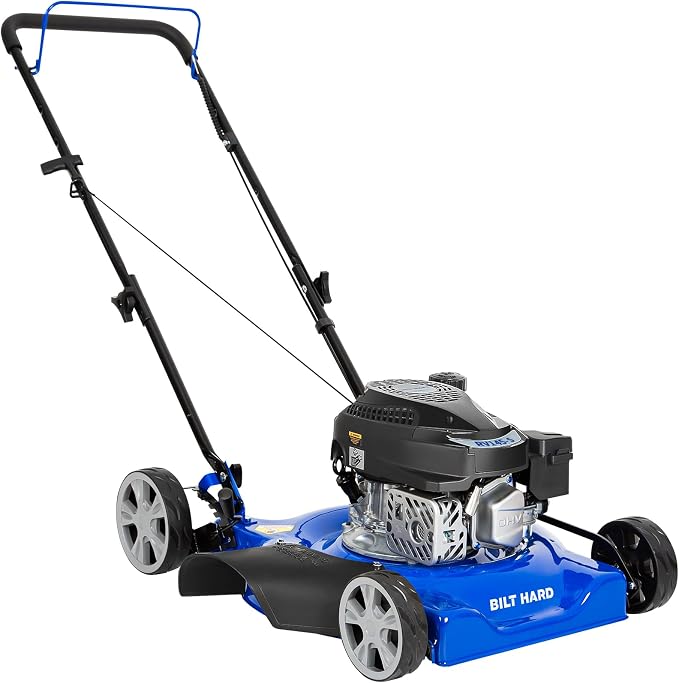
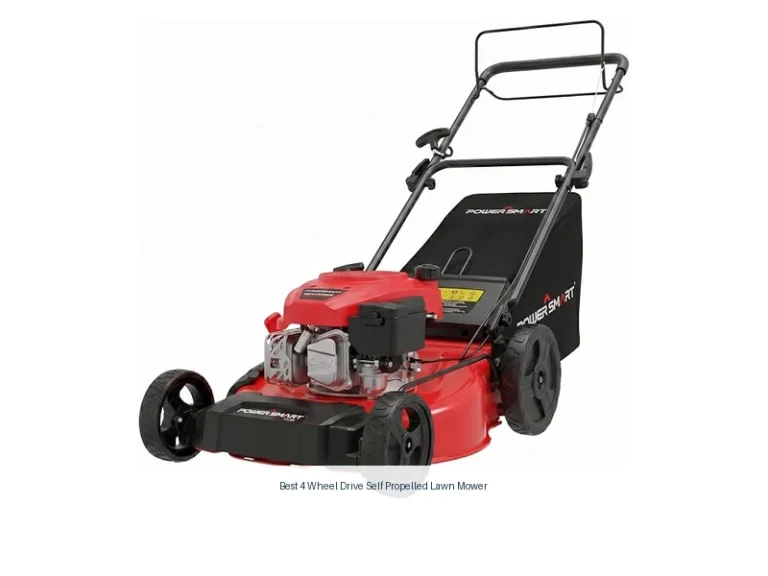
10 Best Self Propelled Lawn Mower for Hills: Products Compared
Finding the best self propelled lawn mower for hills is less about choosing the widest deck or the biggest engine and more about controlling traction, speed, cutting power, and fatigue on sloped ground. A mower that feels capable on level grass can become awkward when it must climb, turn, and stop safely.
My first choice is PowerSmart 21″ Gas Self-Propelled Lawn Mower. It stands at the top of this 10-product list because it offers the strongest overall fit for the buying priorities covered below.
My second choice is SENIX 201cc 22″ 3-in-1 Variable Speed Self Propelled Gas Lawn Mower. It is the option I would compare next when a buyer has slightly different priorities from my first pick.
My third choice is the Greenworks 80V 21in Self-Propelled Lawn Mower 4.0 Ah Battery because its brushless motor, rear-wheel drive, variable speed, quiet operation, and included battery and charger offer a low-maintenance alternative to gas. Its stated coverage of up to one-half acre makes it especially interesting for buyers with medium lawns.
The comparison below covers ten gas and cordless choices, followed by practical explanations of traction, deck width, runtime, height adjustment, maintenance, storage, and safe hillside mowing. I will also point out where each mower fits best, where its limitations matter, and what to check before buying.
.amz-product-card:hover{transform:translateY(-3px)!important;box-shadow:0 10px 26px rgba(20,70,110,.12)!important;border-color:#bdd7ea!important;}
Best Self Propelled Lawn Mower for Hills
I selected these products for their direct relevance to sloped or uneven lawns, with attention to drive layout, wheel size, speed control, engine or motor strength, cutting width, runtime, and mowing flexibility. Customer-feedback evidence, available ratings and customer-feedback volume, useful ownership features, and brand diversity also informed the ranking, but this comparison is based on the supplied product information rather than hands-on testing.
| # | Image | Product | Price on Amazon |
|---|---|---|---|
| 1 |  |
PowerSmart 21″ Gas Self-Propelled Lawn Mower | Check Price |
| 2 |  |
SENIX 201cc 22″ 3-in-1 Variable Speed Self Propelled Gas Lawn Mower | Check Price |
| 3 | 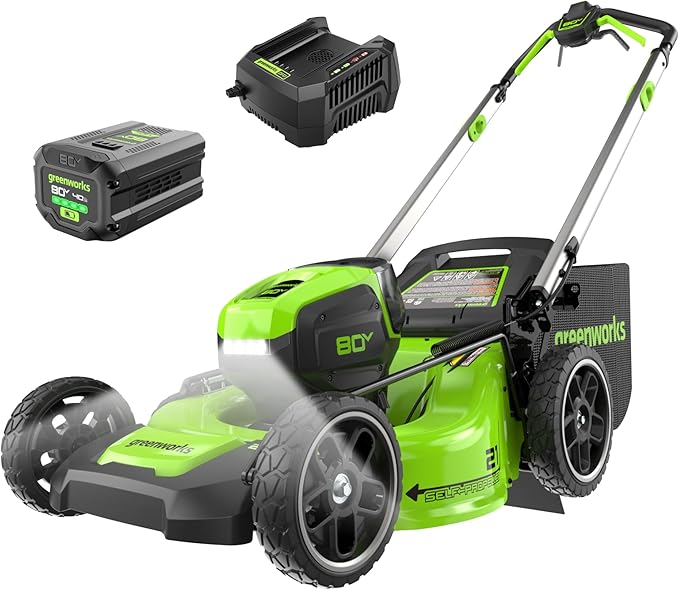 |
Greenworks 80V 21in Self-Propelled Lawn Mower | Check Price |
| 4 |  |
Greenworks 60V 21in Self-Propelled Lawn Mower | Check Price |
| 5 |  |
YARDMAX 22 In. 201cc Select PACE 6 Speed CVT High Wheel FWD | Check Price |
| 6 |  |
PowerSmart 22-Inch Self Propelled Gas Lawn Mower | Check Price |
| 7 |  |
BILT HARD 21″ Self Propelled Gas Lawn Mower | Check Price |
| 8 |  |
EGO Power+ 21″ Cordless Electric Lawn Mower | Check Price |
| 9 |  |
KraftSense Lawn Mower 80V Self-Propelled Mower 2 4.0ah Battery Charger | Check Price |
| 10 |  |
Skil PWR CORE 40 Brushless 40V 20-Inch Self-Propelled Mower Kit | Check Price |
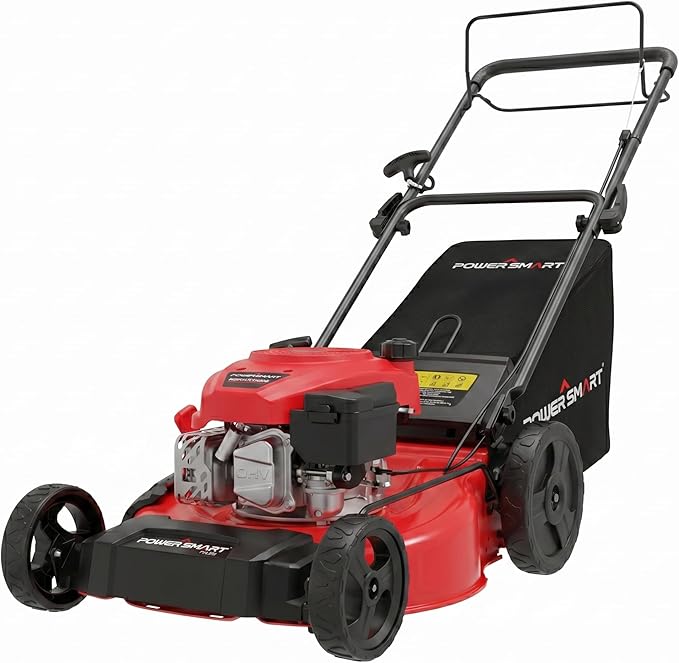
PowerSmart 21″ Gas Self-Propelled Lawn Mower
The PowerSmart earns the top position by putting the most hill-relevant features together without making the mower overly complicated. Its rear-wheel-drive system and large 10-inch wheels are intended to improve grip on slopes and uneven ground, where a basic push mower can demand tiring effort from the operator. Rear-wheel drive is also useful when the front end becomes lighter during an uphill pass.
A 170cc OHV engine gives this model practical cutting power for thick or overgrown grass, while the stated easy-start system is intended to get the mower running in one or two pulls. The 21-inch alloy steel deck offers a useful middle ground: wide enough to reduce passes, but not so large that maneuvering around trees, beds, and tighter turns becomes unnecessarily difficult.
The 3-in-1 setup lets an owner bag, mulch, or rear-discharge without tools. Six height positions from 1.5 to 3.9 inches cover common seasonal mowing needs, and the single-lever adjustment should make changes quick. The handle folds for vertical storage, potentially saving substantial garage space. One specific ownership detail matters: replacement blades for this model are listed as 20-inch blades, despite the 21-inch deck, so buyers should confirm fit before ordering parts.
Pros
- Rear-wheel drive and large 10-inch wheels suit slopes and uneven ground.
- 170cc OHV engine and easy-start design support thick-grass mowing.
- 3-in-1 bagging, mulching, and rear discharge add flexibility.
- Folding handle and six height settings improve everyday usability.
Cons
- Gas ownership requires fuel, engine care, and seasonal maintenance.
- Replacement blades are specified as 20-inch parts, so compatibility must be checked.
My Opinion
This is the strongest all-around match for a homeowner who wants a conventional gas mower with useful hill traction, straightforward controls, and enough versatility for changing lawn conditions.
SENIX 201cc 22″ 3-in-1 Variable Speed Self Propelled Gas Lawn Mower
SENIX takes second place for buyers who value extra engine capacity and a broad cutting path. Its 201cc four-cycle OHV engine is positioned for medium to large lawns, particularly where thicker grass can slow a smaller mower. The 22-inch steel deck can shorten mowing time by covering more ground per pass, although the additional width may require more attention around narrow gates, landscaping, and tight hillside turns.
The rear-wheel-drive system works with 11-inch rear wheels to provide traction across slopes and uneven terrain. Larger rear wheels can roll more smoothly over irregular ground than small wheels, while rear drive helps the mower maintain forward movement when climbing. The variable-speed control is an important advantage because a steady pace on a flat area may feel too fast on a turn or too slow on a steeper section.
Its 3-in-1 cutting system supports bagging, mulching, and side discharge, so the mower can be adapted to dry clippings, tall growth, or a cleaner finished appearance. A single lever adjusts the deck through six positions from 1.25 to 4 inches. That range gives the owner room to raise the deck when grass is stressed or long, rather than removing too much growth at once.
The trade-off is that this is still a gas mower with the associated fuel handling, noise, and engine upkeep. The wider deck and larger engine may also feel more substantial when maneuvering manually. It fits homeowners with larger, open yards who want adjustable pace and strong hill-oriented wheel geometry more than the lightest possible machine.
Pros
- 201cc OHV engine is suited to medium and large lawns.
- 11-inch rear wheels and rear-wheel drive support uneven terrain.
- Variable speed helps match travel pace to slope and mowing conditions.
- 22-inch steel deck and 3-in-1 operation improve productivity.
Cons
- Wide deck may be less convenient in confined spaces.
- Gas engine ownership involves more routine care than cordless operation.
My Opinion
This is a compelling alternative for a larger sloped property where adjustable speed, big rear wheels, and a 201cc engine matter more than compact handling.
Greenworks 80V 21in Self-Propelled Lawn Mower
The Greenworks 80V model is the strongest cordless choice near the top of this list. Its brushless motor is paired with a durable 21-inch steel deck and rear-wheel drive, giving it a useful combination of cutting torque, traction, and relatively low maintenance. For a homeowner who dislikes fuel, oil, and pull-starting, the battery format provides a much simpler starting routine.
Variable-speed control is particularly valuable on a hill. It allows the operator to slow the mower while turning or crossing uneven ground and increase the pace on a gentler section. The 80V system is also positioned for demanding cutting, while the included 4.0Ah battery is stated to cover up to one-half acre on a full charge. Actual coverage varies with grass condition and operator technique, so dense or wet growth may reduce that figure.
Quiet operation, listed as three times quieter than gas, can make early or late mowing less disruptive. An LED headlight adds visibility in lower-light conditions, though it should not be treated as a substitute for clear visibility and safe footing on a slope. The four-year limited tool and battery warranty offers useful ownership reassurance, and compatibility with more than 75 Greenworks 80V tools may help buyers building a larger cordless collection.
The main limitation is battery dependence: the mower must be charged before a long session, and the included battery may not cover every large or heavily overgrown property in one pass. It is best for buyers who want clean, quiet operation and already appreciate the Greenworks 80V ecosystem.
Pros
- 80V brushless motor provides strong cordless cutting performance.
- Rear-wheel drive and variable speed support slope control.
- Included 4.0Ah battery and charger reduce startup complexity.
- Four-year tool and battery warranty and broad tool compatibility add value.
Cons
- Stated half-acre coverage varies with grass and mowing technique.
- Battery charging becomes part of planning for larger properties.
My Opinion
This is my preferred high-voltage electric option for buyers who want hill-friendly control, quiet operation, and a durable cordless platform without giving up a steel deck.
Greenworks 60V 21in Self-Propelled Lawn Mower
This Greenworks 60V mower stands out because the kit includes two 4.0Ah batteries rather than relying on a single pack. That matters when mowing a larger property or when thick grass causes higher energy use. The stated coverage is up to three-quarters of an acre per charge, although terrain, grass density, and operator technique can change the real result. Having two batteries also gives the owner more flexibility for work sessions and other compatible tools.
Its brushless motor is intended to provide gas-like power without emissions, fuel storage, or routine engine servicing. Rear-wheel drive supplies traction on slopes, and on-the-go pace adjustment lets the operator slow down for careful turns or uneven patches. These controls are more meaningful on hilly ground than a simple fixed-speed drive because the safest comfortable pace can change several times in one yard.
The 21-inch deck is a practical size for a mix of open lawn and obstacles. Greenworks adds four cutting modes: mulching, bagging, side discharge, and turbo leaf pickup. That fourth function can make the mower more useful during seasonal cleanup, although buyers should still consider whether their main need is grass cutting or leaf collection.
LED headlights extend the usable mowing window, and the product is listed as three times quieter than gas. The four-year limited tool and battery warranty is another positive. The chief trade-off is ecosystem commitment: the benefits are greatest for someone who plans to use other Greenworks 60V equipment, while a buyer with no compatible tools may place more importance on included battery capacity and charging logistics.
Pros
- Two 4.0Ah batteries support longer mowing sessions.
- Rear-wheel drive and adjustable pace are useful on slopes.
- Four-in-one functionality includes turbo leaf pickup.
- Quiet, low-maintenance operation and a four-year warranty are appealing.
Cons
- Actual three-quarter-acre coverage depends on conditions and technique.
- Battery ecosystem compatibility may matter more than the extra accessories to some buyers.
My Opinion
This is a smart choice for larger hilly lawns when a buyer wants cordless convenience and appreciates having two batteries ready for extended work.
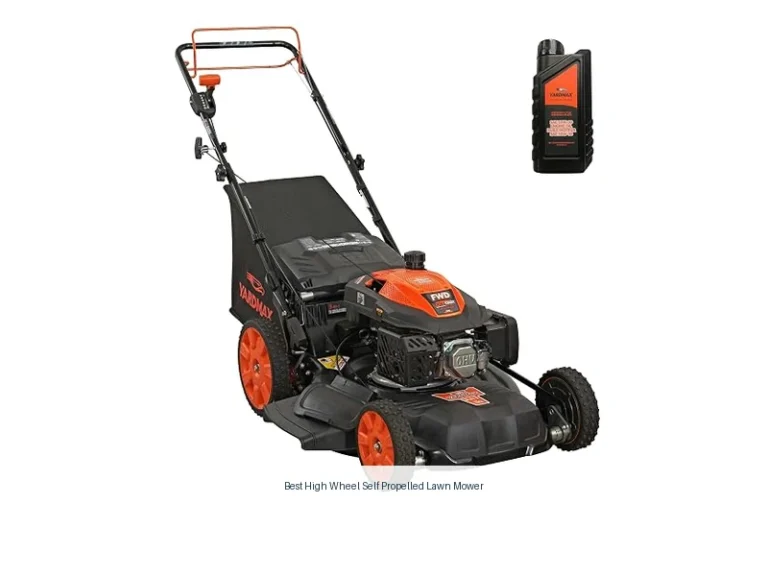
YARDMAX 22 In. 201cc Select PACE 6 Speed CVT High Wheel FWD
YARDMAX approaches hill mowing through pace control and wheel traction rather than simply relying on engine size. Its Select PACE system uses a six-speed continuously variable transmission, allowing the operator to choose a travel speed closer to their walking pace. That can reduce the uncomfortable tug-of-war that occurs when a self-propelled mower moves too quickly downhill or struggles to maintain a comfortable rhythm uphill.
The mower uses front-wheel drive, which is an important distinction for buyers comparing it with the rear-wheel-drive models above. Front drive can make lifting or pivoting the front end easier during turns, but rear-wheel drive is often preferred when maximum climbing traction is the priority. For relatively moderate slopes, the aggressive spiked rubber tires may provide useful grip and maneuverability across uneven ground.
A 201cc engine and 22-inch deck give this model the capacity to cover substantial lawn area efficiently. Its 3-in-1 design supports bagging, mulching, and discharge, while a single lever simplifies deck-height changes. The automatic choke is intended to make starting easier without manual priming or choking. A deck cleanout port also helps owners rinse or clear grass from underneath the cutting deck, provided the mower is handled according to the manufacturer’s safety instructions.
Because it is a wider, gas-powered machine with front-wheel drive, it may not be the best fit for steep terrain, narrow spaces, or buyers who want the simplest ownership routine. It is better suited to open yards with moderate slopes where speed matching and aggressive tire tread are high priorities.
Pros
- Six-speed CVT provides unusually flexible pace adjustment.
- 201cc engine and 22-inch deck suit larger lawns.
- Spiked rubber tires support traction and maneuverability.
- Automatic choke and deck cleanout port add convenience.
Cons
- Front-wheel drive may offer less climbing traction than rear-wheel drive.
- Wide gas mower format can be cumbersome in tight or very steep areas.
My Opinion
YARDMAX deserves consideration when walking-speed control is the main concern, but buyers with steep hills should carefully weigh its front-wheel-drive layout against the traction advantages of rear drive.
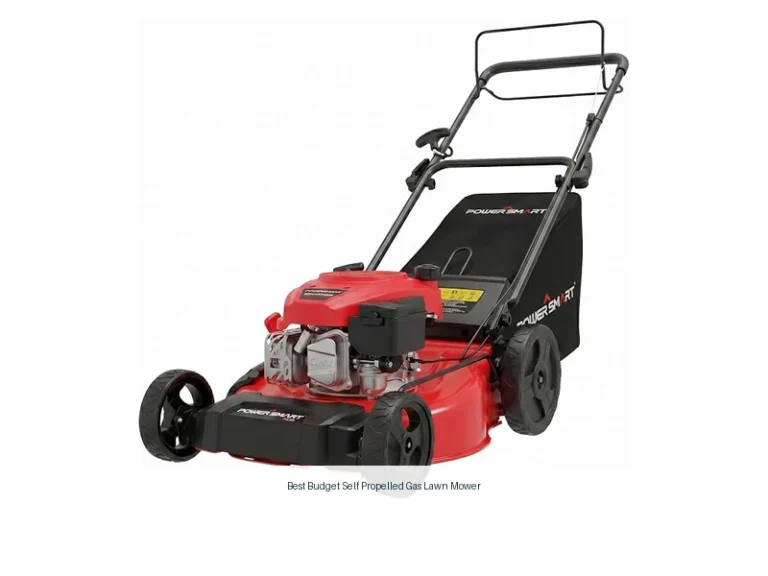
PowerSmart 22-Inch Self Propelled Gas Lawn Mower
This second PowerSmart model offers a wider 22-inch cutting path while keeping the familiar 170cc four-cycle OHV engine format. The additional deck width can reduce the number of passes across an open lawn, which is useful when a property is large enough that mowing time matters. In exchange, the mower may require more care around narrow paths, landscaping, and tight turns than a smaller deck.
Rear-wheel drive is the most relevant feature for sloped ground because it is intended to reduce pushing effort and improve traction on uneven sections. The auto-choke and recoil-start arrangement is designed to make ignition easier, though it still retains the fuel, noise, and maintenance considerations of a gas engine. For thick grass, the stated 170cc output should provide useful capacity, but mowing very tall growth may still require a slower pace and a higher initial cutting height.
The 3-in-1 system provides mulching, rear bagging, and rear discharge. That gives the owner a way to respond to different conditions instead of forcing every mowing session into one clipping method. Six height positions from 1.5 to 3.9 inches cover common preferences, and the folding handle helps reduce storage demands. The no-tool assembly claim can also simplify initial setup.
This mower is a reasonable fit for someone who wants a broad steel deck and rear-drive hill assistance at the same time. It is less attractive for a small, obstacle-filled lawn where deck width matters less than nimble handling, or for a homeowner seeking a quiet, low-maintenance battery mower.
Pros
- 22-inch cutting width can reduce passes on open lawns.
- Rear-wheel drive helps reduce effort on slopes and uneven ground.
- 170cc OHV engine supports thick grass and larger yards.
- 3-in-1 modes, folding handle, and six height settings are practical.
Cons
- Wider deck may be less maneuverable around obstacles.
- Recoil-start gas operation still requires fuel and engine maintenance.
My Opinion
This is a sensible wide-deck alternative to the top PowerSmart pick when faster coverage matters more than compact maneuverability.
BILT HARD 21″ Self Propelled Gas Lawn Mower
BILT HARD brings a strong 201cc four-cycle OHV engine and a 21-inch steel deck to this category. The engine is listed at 9.0 foot-pounds of torque, which suggests useful capacity for regular cutting through substantial grass. Its no-choke, no-primer starting design is meant to remove some of the manual steps associated with starting a traditional gas mower.
Rear-wheel drive and single-speed self-propulsion make the mower straightforward to operate on larger lawns. The trade-off is the lack of variable speed: the owner cannot fine-tune the travel pace for a steep section, a slow turn, or a narrow passage. That makes the mower easier to understand but potentially less adaptable than the variable-speed gas and battery options in this ranking.
Eight cutting-height positions from 1.2 to 3.75 inches give more adjustment choices than many competing models. A single lever synchronizes the four wheels, so changing the deck height should not require setting each wheel separately. The three cutting modes cover bagging, mulching, and side discharge, while the angled foam-wrapped handle is intended to reduce hand fatigue during longer sessions.
This mower fits buyers who prefer a conventional gas machine with a powerful engine and simple controls. It may not be ideal for highly varied slopes where speed adjustment is important, and the limited customer-feedback sample listed for this product is smaller than the counts shown for many other choices here. That does not determine performance, but it is worth considering when comparing purchase confidence.
Pros
- 201cc engine and listed 9.0 ft-lb torque suit demanding grass.
- Rear-wheel drive supports larger lawns and sloped areas.
- Eight height positions offer fine cutting-height control.
- No-choke, no-primer starting and a comfortable handle simplify use.
Cons
- Single-speed propulsion offers less pace control on changing slopes.
- Available customer-feedback volume is relatively limited in this comparison.
My Opinion
BILT HARD is worth a look for a buyer who values engine strength and easy height changes, provided a fixed self-propelled pace is acceptable.
EGO Power+ 21″ Cordless Electric Lawn Mower
The EGO LM2134SP-2 is one of the most feature-rich cordless options here. It includes two 56V 6.0Ah batteries and is rated for up to 100 minutes of runtime, giving it a strong case for larger mowing sessions without gasoline. Actual runtime can vary with grass length, moisture, terrain, and the amount of propulsion assistance used, so buyers should treat the published figure as a best-case reference rather than a guarantee for every yard.
Its Touch Drive self-propelled system uses palm pressure to engage propulsion, with a dial at the fingertips for variable speed. This arrangement may be especially useful on slopes because the operator can adjust pace without reaching for a distant control. The selectable speed range of 0.9 to 3.1 miles per hour also provides more flexibility than a fixed-speed mower.
EGO’s Select Cut multi-blade system allows the owner to choose lower blades for mulching, high-lift bagging, or extended runtime, with an upper blade included as part of the system. Eight height positions from 1 to 4 inches cover a broad range of grass preferences. The brushless motor is intended to reduce vibration and maintenance while maintaining strong cutting torque, listed at up to 7.0 foot-pounds.
The primary considerations are battery management and the need to understand which blade configuration best matches the task. This mower is a strong match for owners wanting quiet cordless operation, adjustable hill pace, and a premium-feeling control system, while buyers seeking the simplest possible electric setup may prefer a less configurable model.
Pros
- Two 56V 6.0Ah batteries provide up to 100 minutes of stated runtime.
- Touch Drive and variable speed offer precise propulsion control.
- Selectable blades support mulching, bagging, and runtime priorities.
- Eight height positions and a brushless motor add versatility.
Cons
- Runtime varies with terrain, grass conditions, and operating technique.
- Multiple blade choices may require more setup decisions than a basic mower.
My Opinion
This is an excellent electric candidate for buyers who want refined speed control and long stated runtime, especially when quiet operation is as important as hill performance.
KraftSense Lawn Mower 80V Self-Propelled Mower 2 4.0ah Battery Charger
This KraftSense mower presents an appealing equipment package on paper: an 80V brushless motor, a 21-inch deck, two batteries, a dual charger, and several cutting accessories. Two 4.0Ah batteries can reduce the chance of stopping midway through a mowing session, while the dual charger is intended to recharge both packs without requiring separate charging equipment.
The cordless design eliminates gasoline, cords, fumes, and pull-starting. For a homeowner who stores equipment indoors or near living areas, that simpler ownership routine can be meaningful. A brushless motor should also require less motor maintenance than a brushed design. The 21-inch deck is a practical size for medium lawns, and the included collection bag, rear side-discharge chute, mulch plug, and three blades provide flexibility for different cutting preferences.
However, this product needs a more cautious buying decision than the higher-ranked cordless choices. The supplied customer rating is 2.6 from 10 feedback, a much smaller evidence base than the other established options in this list. The feature data also contains a naming inconsistency: the title identifies two 4.0Ah batteries, while the included-equipment text refers to two 5.0Ah batteries. Buyers should verify the actual battery capacity and compatibility before placing an order.
The mower may suit someone attracted to the included accessory package and willing to confirm the details directly. It is not the safest recommendation for a buyer who wants a well-established ownership record or who cannot tolerate uncertainty about battery specifications.
Pros
- 80V brushless motor and 21-inch deck target medium-to-large lawns.
- Two batteries and a dual charger may support extended mowing.
- Includes bag, discharge chute, mulch plug, and three blades.
- Cordless operation avoids gas, cords, and fumes.
Cons
- Supplied rating is 2.6 from only 10 feedback.
- Battery-capacity information is inconsistent and should be verified.
My Opinion
The package looks generous, but the low rating, small feedback sample, and battery-detail conflict make this a conditional choice rather than a leading recommendation.
Skil PWR CORE 40 Brushless 40V 20-Inch Self-Propelled Mower Kit
SKIL’s PWR CORE 40 mower is a compact cordless option with a 20-inch deck, a 40V digital brushless motor, and a 6.0Ah battery. Its stated runtime reaches up to 50 minutes per charge, making it better suited to small or medium lawns than expansive properties requiring long continuous sessions. Terrain, grass height, and self-propelled use can all reduce the practical runtime.
Variable-speed self-propulsion is a helpful inclusion for sloped ground because the operator can adjust the mower’s pace rather than accept one fixed speed. Push-button starting also removes the pull-start process, and the included Auto PWR JUMP charger is intended to speed charging. The mower’s smaller deck may be easier to guide around landscaping and through tighter spaces, although it will usually need more passes than a 21- or 22-inch model.
Seven single-lever height settings from 1.5 to 4 inches give useful seasonal flexibility. The telescoping handle folds for vertical storage, which can help owners with limited garage space. The brushless motor offers a lower-maintenance alternative to gas, and a 4.5 rating from 213 feedback is a positive customer-feedback signal within this group.
Its main limitations are deck width and battery capacity. A homeowner with a steep but compact lawn may appreciate the manageable size and adjustable propulsion, while someone with a broad hillside property may prefer a larger battery platform or a second battery. It is also important to keep the charger and battery stored appropriately and charged according to the manufacturer’s instructions.
Pros
- Variable-speed self-propulsion supports pace changes on slopes.
- 6.0Ah battery provides up to 50 minutes of stated runtime.
- Push-button start, folding handle, and seven height settings are convenient.
- Compact 20-inch deck can be easier around obstacles.
Cons
- Shorter stated runtime and smaller deck limit large-property efficiency.
- One included battery may require a charging break for bigger lawns.
My Opinion
SKIL is a practical compact electric pick for smaller hilly yards, especially for buyers who value easy starting and storage more than maximum coverage.
How I Selected These Mowers for Sloped Lawns
The ranking gives priority to features that affect control on an incline: rear-wheel drive, wheel size and tread, variable propulsion, usable engine or motor power, and the ability to adjust cutting height. A mower that can move forward strongly but cannot slow down comfortably or maintain traction is not automatically a good choice for hills.
I also considered deck width, cutting modes, starting method, battery capacity, included accessories, storage design, warranty information where supplied, and the practical differences between gas and cordless ownership. Product ratings and customer-feedback counts helped provide context, but they were not treated as proof of hands-on performance.
For a sloped lawn, control matters as much as power. Rear-wheel drive and adjustable speed often provide more useful confidence than a larger deck alone.
Brand diversity was intentional. The list includes PowerSmart, SENIX, YARDMAX, BILT HARD, Greenworks, EGO, KraftSense, and SKIL so the comparison does not assume every buyer wants the same fuel type, battery ecosystem, or operating style. The lower ranking of the KraftSense model reflects the supplied rating and limited feedback sample, along with the inconsistent battery information.
Published runtime and acreage figures are conditions-dependent estimates. Treat them as planning guidance, not a promise that every battery will cover the same lawn in wet, tall, or dense grass.
How to Choose a Mower for Hills
Choosing the best self propelled lawn mower for hills starts with the slope itself, but the right answer also depends on lawn size, obstacles, grass density, storage, and how much maintenance you are willing to handle. Use the following priorities before focusing on engine size or a sale price.
- Prefer rear-wheel drive when climbing traction is a major concern.
- Choose variable speed when the property has changing slopes or tight turns.
- Match deck width to the lawn: wider for open areas, narrower for obstacles.
- Compare battery runtime with the actual mowing area and grass conditions.
- Confirm replacement parts, battery compatibility, and storage requirements before buying.
Drive layout and hill control
Rear-wheel drive generally places propulsion at the end of the mower that benefits from added traction while moving uphill. It can be a strong choice for sloped yards, especially when paired with larger rear wheels. Front-wheel drive can still be convenient for turning and lifting the front end, but it deserves closer scrutiny if the property includes meaningful climbs.
Variable speed is valuable because hills are not uniform. You may want a slower pace near a drop-off, during a turn, or across uneven ground, then a faster pace on a mild section. Single-speed systems are simpler, but their fixed pace may feel less comfortable when the terrain changes frequently.
Deck width and maneuverability
A 22-inch deck can reduce passes across an open lawn, while a 20- or 21-inch mower may be easier to guide between trees, garden beds, gates, and retaining walls. On hills, a deck that is easy to control can be more useful than a slightly wider cutting path. Think about the narrowest route the mower must take, not just the broadest part of the lawn.
Gas versus cordless power
Gas models offer refueling in minutes and can be convenient for long sessions, but they require fuel, engine care, and pull-start or recoil-start procedures depending on the model. Cordless mowers start quickly and avoid emissions, fuel storage, and many engine tasks. Their limitations are charging time, battery cost, runtime variation, and possible dependence on a specific tool platform.
Cutting height and grass health
Multiple height settings are helpful when grass is long, stressed, or growing at different rates through the season. Avoid removing too much height in one pass, particularly when mowing uphill or through dense growth. A higher initial setting can reduce motor or engine load and leave the lawn better able to handle heat and dry conditions.
Setting Up a Self-Propelled Mower
Before the first mowing session, inspect the handle, wheels, deck, bag, discharge components, and propulsion controls. Gas models should receive the correct fuel and any required fluids according to the manufacturer’s instructions. Cordless models should have the correct battery fully charged and securely seated before the mower is started.
Test the propulsion control in a clear, flat area first. Confirm that the mower starts and stops as expected, that the speed adjustment works, and that the blade-control bar or safety mechanism responds correctly. On a battery mower, check that the charger and battery indicators behave normally before taking the machine onto a slope.
Set the cutting height higher for the first pass through tall grass rather than forcing the mower to remove the full height at once. Install the bag, mulch plug, or discharge attachment securely, and make sure no accessory can obstruct the wheels or controls. For models with multiple blades or cutting configurations, use the setup that matches the intended job.
How to Mow Safely on a Slope
Read the operating instructions for the specific mower before using it on an incline. Walk at a controlled pace, keep both hands available for steering, and avoid mowing when grass is wet or footing is uncertain. Wet slopes can reduce traction for both the operator and the machine.
For many walk-behind mower safety recommendations, moving across a slope rather than straight up and down can reduce the risk of a runaway machine, but the correct method depends on the mower, slope, and manufacturer’s instructions. Follow the product manual first. Never pull a mower backward toward your feet, and keep children, pets, and bystanders away from the active mowing area.
Stop the blade and propulsion before clearing a blockage, emptying a bag, inspecting the deck, or moving between lawn sections. Disconnect the spark-plug connection or remove the battery when the instructions call for it.
Use traction without forcing the mower
Let the mower’s drive system do the work instead of leaning heavily into the handle. If the machine spins, slips, or struggles, stop and reassess the direction, cutting height, grass condition, and slope. Repeated wheel spin can damage turf and may signal that the conditions are beyond the mower’s comfortable capability.
Maintenance and Storage Tips
Grass buildup under the deck can interfere with airflow, mulching, and cutting performance. Clean the deck using the method approved for the model, and do not spray water into electrical components or battery compartments. A deck cleanout port, when supplied, can make the process easier, but it does not remove the need for safe shutdown before cleaning.
Gas mower owners should follow the specified schedule for oil, air-filter, spark-plug, fuel, and blade care. Keep fuel handling away from flames and store gasoline only as recommended by local safety guidance and the product instructions. Cordless owners should inspect battery contacts, keep packs dry, and use the supplied or approved charger.
Keep blades sharp and properly fitted. A dull or incorrect blade can increase cutting effort, leave an uneven finish, and place additional load on the engine or motor. The top PowerSmart model specifically notes that replacement blades are 20 inches, so checking the exact part specification before ordering is important.
For storage, fold the handle only after the mower is stopped and prepared according to its instructions. Store the machine upright only when the manufacturer permits that position. Protect batteries from extreme conditions and do not leave a gas mower with fuel-related storage needs unresolved between seasons.
Common Mistakes to Avoid
Many disappointing purchases come from matching a mower to the lawn’s size but not to its terrain. Buyers may focus on deck width, battery voltage, or engine displacement while overlooking drive layout, pace control, replacement-part access, and actual storage conditions.
- Do not assume every self-propelled mower has equal hill traction.
- Do not choose a wide deck if it cannot fit through gates or around obstacles.
- Do not treat advertised battery acreage as a guaranteed result in wet or tall grass.
- Do not mow a slippery slope simply because the mower has self-propulsion.
- Do not order replacement blades or batteries without confirming the exact model.
- Do not clear packed grass while the blade, engine, or battery system can still activate.
FAQ About Mowers for Hills
Is rear-wheel drive better for a hilly lawn?
Rear-wheel drive is often a strong choice for hills because the powered wheels are positioned where they can help maintain forward traction during an uphill pass. It is not a guarantee of safe or effortless operation, however. Wheel size, tread, slope condition, mower weight, grass moisture, and operator control all matter.
Are cordless self-propelled mowers suitable for slopes?
Yes, cordless models can be suitable when they provide enough motor power, rear-wheel drive, and adjustable propulsion. Greenworks and EGO models in this list offer those useful controls. The buyer must still match battery capacity to lawn size because hills, dense grass, and frequent self-propelled use can reduce runtime.
Should I buy a variable-speed mower for hills?
Variable speed is especially useful when a lawn has changing slopes, turns, or uneven sections. It allows a slower pace where control matters and a more comfortable pace on flatter ground. A single-speed mower can work on a consistent, moderate incline, but it gives the operator fewer options.
What deck size works best on a sloped yard?
There is no universal ideal size. A 21- or 22-inch deck can reduce passes on an open lawn, while a 20-inch deck may be easier around landscaping and narrow paths. On a steep or irregular property, maneuverability and control should generally carry more weight than a small increase in cutting width.
Can I use a self-propelled mower on wet hills?
Wet grass and soil can reduce traction, make the slope slippery, and increase the risk of turf damage or loss of control. It is safer to wait for better conditions and follow the mower’s instructions. Self-propulsion does not eliminate the risks created by poor footing.
How much battery runtime do I need for a hillside lawn?
Start with the mower’s stated runtime or coverage, then allow extra capacity for slopes, thick grass, wet conditions, turning, and the use of self-propulsion. A second battery can be more useful than a small increase in deck width if the lawn is large. The Greenworks 60V kit, EGO kit, and KraftSense package each approach extended use differently, so confirm the included batteries and charging arrangement.
Final Thoughts
The best self propelled lawn mower for hills depends on the balance of traction, pace control, cutting capacity, and ownership preferences. The PowerSmart 21 Gas Self-Propelled Lawn Mower is my top all-around choice, the SENIX 201cc 22 3-in-1 Variable Speed Self Propelled Gas Lawn Mower is my gas alternative for larger lawns, and the Greenworks 80V 21in Self-Propelled Lawn Mower is my leading cordless recommendation. Choose among them based on your slope, lawn layout, maintenance tolerance, and need for battery convenience.

I’m Maya L. Greenwood, a lifelong plant lover who believes anyone can grow something beautiful with the right guidance. After years of testing soil mixes, pruning methods, irrigation tricks, and pest-safe solutions, I started EasyGardenTips.com to turn hard-won lessons into step-by-step advice. From seed starting and container gardens to composting and seasonal checklists, my goal is to make gardening simple, sustainable, and fun.