5 Best Mulch for a Red Brick House: Colors That Match
Buy the wrong mulch and the front of your house can look oddly mismatched, with red brick fighting against a color that is too bright, too orange, or too dark. A poor choice can also wash away in rain, fade in sunlight, spread onto walkways, or leave you redoing the bed before the season is over.
Red brick usually looks best with mulch that repeats its warm undertone without copying the brick too closely. Coverage, color strength, weed control, and whether you are starting a bed or refreshing old mulch matter more than a fancy label.
Here is what the guide covers:
- How red, burgundy, brown, and wood-chip tones change the look of brick.
- Which choices suit small borders, large beds, slopes, and existing mulch.
- How to apply mulch or dye without staining paths and siding.
- What to check before buying, including coverage, care, and color expectations.
Quick Picks
-
Best For Small red accent beds

Gardenera Premium Red Mulch Cover – Enhance
Red mulch cover helps retain moisture and block weeds, making it suited to small beds near warm brick.
-
Best For Refreshing faded mulch
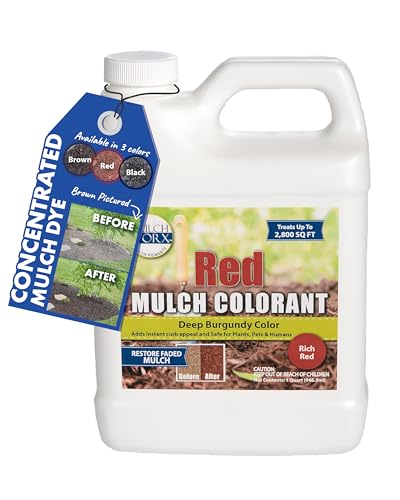
Mulch Worx Red Mulch Color Concentrate –
Mulch dye restores color on existing beds, helping homeowners update large areas without hauling fresh bags.
Top 5 Mulches for Red Brick House at a Glance
Gardenera Red Mulch is the simplest starting point for a small red accent bed, while Mulch Worx Color Concentrate makes more sense when old mulch only needs a color refresh. Gardenera Organic Red Mulch and MIGHTY109 Wood Chip Mulch are better suited to soil coverage, while Mulch Bond Dye & Glue is aimed at color retention and movement control.
| Product image | Product name | Check product |
|---|---|---|
| 1 |
Gardenera Premium Red Mulch Cover – Enhance | Check Price |
| 2 |
Mulch Worx Red Mulch Color Concentrate – | Check Price |
3 |
Organic Red Mulch by Gardenera – Boost | Check Price |
4 |
Mulch Bond – 1Gallon Red Color 2-in-1 | Check Price |
5 |
MIGHTY109 Red Wood Chip Garden Mulch, 42 | Check Price |
5 Best Mulches for Red Brick House: Detailed Reviews
When I chose the best mulch for red brick house beds, I looked at color relationship first, then moisture retention, weed suppression, coverage, and the amount of work each option creates. Those details help prevent a bed that looks disconnected, dries out too quickly, or needs constant touch-ups.
The group covers very different jobs, from a small bag of red cover to a 42-quart wood-chip option and a spray-on color treatment. Comparing those jobs side by side makes the choice clearer, especially if you already have mulch in place and do not need to replace every inch.
1. Gardenera Premium Red Mulch Cover – Enhance
Red mulch cover helps retain moisture and block weeds, making it suited to small beds near warm brick.
- ColorRed Mulch
- Size1 Quart Bag
- 🌈 Long-Lasting Color🎨 The vibrant red color of the mulch lasts for an extended period, adding visual appeal and enhancing the overall a
- WeightNot listed; check details
Gardenera Red Mulch is a small-bag red mulch cover for a compact bed, planter, or decorative area beside a brick wall.
Moisture and temperature support
This red mulch cover forms a layer over the soil that slows moisture loss. In plain terms, the soil does not dry as quickly under sun and wind, so roots may have a steadier supply between waterings.
The mulch also helps insulate the soil from temperature swings. That matters beside a brick house because masonry can hold and reflect heat, especially in a sunny front bed.
Weed and weather protection
A dense mulch layer blocks some light from reaching weed seeds. Fewer weeds can mean less hand pulling around flowers, shrubs, and edging.
Gardenera Red Mulch also claims protection from wind, sun, and heavy rain. The practical limit is coverage: a 1 Quart Bag is a small amount, so the bag is better suited to a narrow accent area than a long foundation border.
Pros:
- Red color echoes warm brick tones.
- Moisture retention can reduce frequent watering.
- Dense coverage helps suppress weed growth.
- Insulation helps moderate soil temperature.
- Small bag suits compact decorative areas.
Cons:
- 1 Quart Bag limits coverage for large beds.
- Bright red may look too strong against some brick.
- The listing does not state coverage depth or square footage.
Buy it if: you have a small brick-side planting area, because the red cover adds color while helping soil hold moisture.
Skip it if: you need to cover a long foundation bed, because a small bag can leave the color patchy, and bulk wood mulch would suit you better. For another fit, consider Mulch or Organic.
I’d pick Gardenera Red Mulch when the job is a small visual touch rather than a full landscape renovation. The moisture and weed-control claims give the cover a useful purpose beyond color. Double-check the bag’s real coverage before buying, since the listed size is only 1 Quart Bag.
This choice fits a homeowner who wants a compact red accent and does not need a truckload of material.
2. Mulch Worx Red Mulch Color Concentrate –
Mulch dye restores color on existing beds, helping homeowners update large areas without hauling fresh bags.
- ColorWhite
- Size1 count (pack of 1)
- Number Of Items1
- WeightNot listed; check details
Mulch Worx Color Concentrate is a liquid treatment for refreshing faded mulch already spread around a red brick house.
Color refresh without new bags
A mulch dye changes the appearance of old mulch after mixing with water in a yard sprayer. The listed mix is 2-5 ounces of concentrate per gallon of water, then the mixture is sprayed over the existing surface.
That approach can save lifting and spreading work when the mulch layer is still thick enough to protect the soil. It is also useful when the color has faded but the bed does not need a complete replacement.
Coverage and application
The product states that a quart treats 2,800 square feet. That is a large area compared with a small bag of loose mulch, though actual results can vary with the old mulch’s color, texture, and how evenly the spray is applied.
A mulch sprayer is a yard sprayer used to distribute the diluted color across the bed. Spray carefully near concrete, siding, edging, and light-colored stone because liquid color products can create cleanup work if overspray lands outside the bed.
The listing describes the concentrate as burgundy red, while the technical field lists Color as White. That conflict is a reason to confirm the current package appearance and color instructions before purchase.
Pros:
- Treats 2,800 square feet according to the listing.
- Refreshes old mulch without hauling fresh bags.
- Mixes at 2-5 ounces per gallon of water.
- Reduces lifting for large existing beds.
- Works with a yard sprayer.
Cons:
- Requires careful mixing and spraying.
- Overspray may create cleanup near hard surfaces.
- Product color information is inconsistent in the listing.
- It cannot replace missing mulch or fix bare soil depth.
Buy it if: you have faded mulch covering a broad bed, because the concentrate refreshes the surface without making you carry replacement bags.
Skip it if: your bed has little or no mulch left, because dye cannot provide soil coverage, and loose mulch would suit you better. Gardenera and Organic are worth a closer look instead.
Mulch Worx is the practical pick when the material is present but the color has lost its punch. The large stated treatment area makes the concentrate attractive for established beds around a larger brick facade. I would verify the color label and protect nearby paving before ordering.
This is for the homeowner who prefers a sprayer over a wheelbarrow.
3. Organic Red Mulch by Gardenera – Boost
The catalog lists 🌱 Enhances Soil Moisture Retention: ? Red Mulch Cover by Gardenera helps plants conserve moisture, reducing th. Compare fit and care needs before choosing.
- ColorRed Mulch
- Size2 Quart Bag
- 🌈 Long-Lasting Color🎨 The vibrant red color of the mulch lasts for an extended period, adding visual appeal and enhancing the overall a
- WeightNot listed; check details
Gardenera Organic Red Mulch is a 2 Quart Bag red mulch option for someone who wants a small amount of color with soil-covering benefits.
Soil cover that supports moisture control
The mulch sits on top of the soil and slows evaporation from the surface. That can help the planting area stay moist longer, especially during warm, dry stretches.
The listing also describes insulation around plant roots. A surface layer will not replace proper watering, but it can make the soil environment less exposed to quick heat and moisture changes.
Weed suppression and red color
A dense layer makes it harder for new weeds to receive light. The result depends on spreading enough material and removing established weeds first, since mulch placed over tall weeds rarely solves the whole problem.
Gardenera Organic Red Mulch also lists long-lasting red color. Red can work with brick when the shade is muted and the planting colors are restrained, but a very vivid red may compete with the wall rather than frame it.
The main watch point is size. A 2 Quart Bag is larger than the 1 Quart Bag in the first Gardenera option, yet the listing does not state square-foot coverage or recommended depth.
Pros:
- 2 Quart Bag offers more material than a 1-quart option.
- Red color creates a coordinated warm palette.
- Moisture retention supports steadier soil conditions.
- Dense coverage helps limit weed emergence.
- Insulation can soften soil temperature changes.
Cons:
- No square-foot coverage is listed.
- Vivid red may overpower pale flowers or light brick.
- A small bag may still fall short for foundation beds.
Buy it if: you want a little more red mulch for a compact planting area, because the larger bag gives extra coverage while supporting moisture and weed control.
Skip it if: you need a natural brown look or a measured large-area solution, because the red color and unlisted coverage make bulk landscape mulch easier to plan. If those trade-offs rule it out, Gardenera or Mulch may suit you better.
Gardenera Organic Red Mulch earns its place as a middle option between a tiny accent bag and a full bulk purchase. The extra listed size is useful, and the soil-care claims fit a planted bed rather than a purely decorative strip. Check the expected coverage and the shade of red before buying.
This choice suits a beginner who wants a modest planting upgrade near brick.
A red surface is not the only way to complement masonry. If the brick already has strong orange undertones, a darker neutral can create calmer contrast, and dark brown mulch often gives that effect without competing with the wall.
4. Mulch Bond – 1Gallon Red Color 2-in-1
The catalog lists 【2-in-1 Red Mulch Dye & Glue】Shabebe Mulch bond seamlessly blends color with adhesive, allowing it to deeply p. Compare fit and care needs before choosing.
- ColorClear
- Size1Gallon
- Number Of Items1
- Material【Wide Compatibility & Enhanced Erosion Resistance】2-in-1 Red Mulch Dye & Glue is a potent adhesive that effect
Mulch Bond Dye & Glue is a liquid color-and-adhesive treatment for holding mulch, chips, gravel, sand, shells, pine straw, pebbles, or stones in place.
Color and binding in one application
The formula combines dye with an adhesive that forms a protective layer over the surface. The adhesive part is meant to reduce movement from wind and rain, while the color part helps maintain a more even appearance.
That can help on sloped beds, exposed corners, and areas where a leaf blower scatters loose pieces. It is not the same job as adding a deep layer of mulch, so bare spots still need enough material underneath.
Drying and application effort
The listing says drying takes 12-24 hours depending on weather, with hold lasting up to 12 months. Those time claims are product statements, not a promise for every yard, so plan around dry conditions and keep people and pets away until the treated surface is ready according to the package directions.
For small mulch pieces, the instructions call for at least 10-50% water dilution to help prevent sprayer clogging. The application also calls for two or three coats, with full drying between coats.
That means Mulch Bond Dye & Glue can reduce repeated scattering, but the trade-off is more preparation than simply spreading mulch. The listing calls the formula water permeable, non-toxic, safe for pet paws, and plant-safe; confirm the package directions for your specific use instead of treating those statements as independent certification.
Pros:
- Combines red dye and adhesive in one treatment.
- Helps hold mulch on slopes and uneven ground.
- Works with mulch, chips, gravel, and stones.
- Water dilution can help prevent sprayer clogging.
- Clear 1Gallon size supports larger treatment areas.
Cons:
- Requires sprayer preparation and careful dilution.
- Two or three coats increase labor time.
- Drying can take 12-24 hours.
- Adhesive is unnecessary for a stable, level bed.
Buy it if: wind and rain repeatedly move your mulch, because the adhesive layer can help hold loose material in place.
Skip it if: you only need simple soil coverage on a flat bed, because multiple coats add work, and ordinary loose mulch would suit you better.
What I like about Mulch Bond Dye & Glue is that the feature matches a real landscape nuisance: mulch migrating onto paths after weather or blowing. The red color also aims to keep the bed looking finished, though the process is closer to a small application project than a quick sprinkle. Check the dilution, drying, and plant-contact directions before buying.
This fits a homeowner with movement problems, not someone seeking the easiest possible mulch refresh.
For a red brick facade, color durability matters because fading can create a washed-out border beside a strong wall. A useful place to compare color-holding options is non fading mulch choices, especially if replacing the surface each season is not appealing.
5. MIGHTY109 Red Wood Chip Garden Mulch, 42
The catalog lists PREMIUM RED MULCH: Vibrant red wood chip mulch colored with non-toxic dye that is safe for soil, pets, and pla. Compare fit and care needs before choosing.
- ColorRed
- Size1344 Ounce
- GENEROUS COVERAGE42-quart bag provides ample mulch coverage for garden areas, delivering long-lasting protection and aesthetic enhan
- WeightNot listed; check details
MIGHTY109 Wood Chip Mulch is a 42-quart red wood-chip mulch for larger beds, borders, planter boxes, walkways, and areas around trees and shrubs.
Broad coverage for real planting beds
Wood chips provide a physical layer between the soil and the open air. The stated 42-quart size gives this option far more material than the small Gardenera bags, making it more practical for a foundation bed or several planting zones.
The listing says the chips help maintain moisture and regulate soil temperature. That can reduce drying at the surface, though mulch still needs to be spread evenly and kept away from direct contact with trunks and building surfaces.
Weed control and gradual soil enrichment
Wood chips block sunlight from reaching weed seeds, which can reduce new weed growth. Existing weeds should be removed first because a mulch layer is not a magic blanket.
The chips are also described as gradually decomposing and adding organic matter to soil. That is useful for garden beds over time, but decomposing wood is not a substitute for matching the soil to the needs of the plants.
MIGHTY109 uses a red dye described as non-toxic and safe for soil, pets, and plants. Those are seller claims, so follow the package directions and keep the mulch where intended, especially if children or animals play near the bed.
The color can create a strong, tidy frame against brick, yet a large red bed may look busy if the house, flowers, and trim already have many warm colors. If the goal is a calmer front entry, the right mulch color depends on the brick undertone, trim, roof, and nearby plants rather than the wall alone.
Pros:
- 42-quart size suits larger planting areas.
- Wood chips help retain moisture.
- Red color creates a coordinated border.
- Weed suppression reduces exposed soil.
- Decomposition can add organic matter over time.
- Suitable for beds, borders, and walkways.
Cons:
- Large red areas may look too intense.
- Wood chips need occasional raking and topping up.
- The listing does not provide square-foot coverage.
- Dye and safety claims should be checked on the package.
Buy it if: you need substantial coverage around beds or shrubs, because the 42-quart bag provides more loose material than the small accent options.
Skip it if: you only need to recolor mulch already in place, because a large bag creates extra spreading work, and a dye treatment would suit you better.
MIGHTY109 is the most practical choice here for a genuine garden bed rather than a tiny decorative patch. The large size, wood-chip structure, moisture support, weed suppression, and gradual breakdown all fit routine landscape care. I would still measure the bed first and check whether the red shade works with the brick before ordering.
This is the better match for a homeowner who needs coverage more than a quick color touch-up.
How to Choose the Best Mulch for Red Brick House
The best mulch for red brick house beds should support the plants while sitting comfortably beside the wall’s undertone. Start with the job, then choose the color, material, coverage, and care level that match that job.
Start with the size of the bed
Measure the length and width of each simple rectangular area, then multiply those numbers to estimate square feet. For irregular beds, divide the space into smaller rectangles and add the results.
Small bags are easier for narrow borders and planters. A 42-quart bag is more useful for broader beds, but the listing still may not tell you the exact square footage at a chosen depth.
Match the color to the brick
Red mulch repeats the warm color family of brick and can make the border look deliberate. The risk is too much red, especially if the brick, roof, flowers, and trim all have strong warm colors.
Burgundy or deep red usually reads more quietly than bright scarlet. Brown wood chips soften the contrast, while black mulch creates a sharper frame that can make green foliage stand out.
A useful rule is to look at the brick from the street, not only from a close-up. The color that seems subtle in your hand may look intense across a full foundation bed, so black mulch for beds can be worth considering when you want contrast instead of a close color match.
Decide whether you need new material
Fresh loose mulch adds depth, protects soil, and helps cover bare areas. Dye only changes the visible surface, so it makes sense when the existing layer is still present and reasonably even.
Use a color concentrate when the main problem is fading. Use loose chips when soil is exposed, weeds are returning through thin spots, or the bed needs a complete refresh.
Check the mulch material
Wood chips are larger pieces that create a natural landscape texture. Liquid color is a coating or treatment, not a replacement for the physical layer beneath it.
Organic mulch can gradually break down and add organic matter. Decorative dyed mulch may focus more on appearance, so check the package wording if soil improvement is a major goal.
Plan the depth and edges
A mulch layer needs enough thickness to shade soil and slow moisture loss, but piling it against a wall, tree trunk, or plant stem can trap moisture and create maintenance problems. Keep a small clear space around trunks and siding.
The listing data for these choices does not give a universal application depth or square-foot figure. Measure the bed, read the package directions, and buy based on the stated coverage rather than guessing from the bag’s appearance.
Consider upkeep
Loose chips may need raking after storms and topping up as they settle or decompose. Dye needs a sprayer, accurate dilution, and care around hard surfaces.
If you dislike seasonal touch-ups, a color-and-adhesive treatment may be useful where movement is the main issue. If you dislike spraying, loose mulch is simpler to handle.
How to Use Mulch for the Best Results
Good results come from preparing the bed before spreading or spraying. Clear weeds, protect nearby surfaces, spread evenly, and leave room around plants and the house.
- Remove visible weeds and old debris from the bed.
- Check the soil moisture before adding mulch, since a dry layer can slow later watering.
- Spread loose mulch evenly instead of making a tall mound near stems or trunks.
- Keep mulch away from direct contact with the brick wall, siding, doors, and foundation vents.
- Rake the surface so the color looks consistent from the street.
- Water plants at the soil line rather than washing mulch onto paths.
- For dye, mix only the amount directed on the package and test a small hidden area first.
- Keep spray away from concrete, stone, siding, and painted trim.
- Let treated surfaces dry before foot traffic, pets, or heavy watering.
- Recheck the bed after the first hard rain and move loose pieces back into place.
The best visual result usually comes from a clean edge. A simple spade-cut border or restrained edging keeps red chips from creeping onto the lawn and makes the brick-and-mulch color relationship easier to see.
How to Make Your Mulch Last Longer
Mulch lasts longer when water, wind, and foot traffic are controlled. Regular light maintenance is easier than waiting until the bed is scattered and bare.
Rake loose chips back into thin areas after heavy rain. Do not rake so deeply that you pull soil to the surface or disturb shallow roots.
Keep leaf blowers on a lower setting near loose mulch. Directing air across the bed instead of straight down helps remove leaves without sending chips into the grass.
Water slowly at the base of plants. Strong spray can wash red color and small pieces onto paving, while slow watering gives moisture time to enter the soil.
Inspect the bed every few weeks during the growing season. Look for bare spots, weeds, faded patches, moldy-looking clumps, or mulch touching trunks and siding.
Top up thin areas rather than dumping a deep layer over the whole bed. New mulch can change the color quickly, so blend the edges with a rake instead of leaving a sharp patch.
For liquid treatments, clean the sprayer after use and follow the package directions for storage. Dried concentrate or adhesive in the nozzle can turn the next application into an avoidable chore.
Common Mistakes to Avoid When Buying and Using Mulch
Most mulch problems come from choosing the wrong job, overestimating coverage, or ignoring the surfaces around the bed. A few simple checks prevent the most expensive mistakes.
- Choosing by color alone: A pretty red sample may not suit the whole facade. View the color beside the brick and trim before covering the bed.
- Using dye on bare soil: Color treatment cannot provide physical coverage. Add enough loose mulch first if weeds and moisture loss are the main problems.
- Buying without measuring: A small bag may cover only an accent area. Measure square feet and confirm the package’s coverage details.
- Piling mulch against trunks: Constant contact holds moisture against bark. Leave a clear ring around trunks and plant stems.
- Ignoring overspray: Liquid dye or adhesive can reach walks and siding. Cover nearby surfaces and use a controlled spray pattern.
- Applying before rain: Rain can move loose mulch and interfere with a liquid treatment. Check the weather and allow the required drying period.
- Expecting a red shade to stay identical: Sun, rain, and the old surface affect appearance. Plan for occasional raking, touch-up, or topping up.
- Skipping the small test area: A color can look different on old chips than on the package. Test an inconspicuous section before treating the whole bed.
How to Set Up Mulch Around a Red Brick House
Setting up loose mulch is simple, but the order matters. Prepare the bed first, protect the house and walkways, then spread the material in a controlled layer.
- Measure the bed. Mark the length and width, including curves as smaller sections so the amount is easier to estimate.
- Define the edge. Use a spade or edging tool to separate mulch from lawn and make the finished line clear.
- Remove weeds. Pull or remove visible weeds before covering the soil, since mulch works better as prevention than as a cure for tall weeds.
- Clear debris. Remove fallen leaves, sticks, and old clumps that would make the surface uneven.
- Check drainage. Make sure water can move away from the wall and does not collect against the foundation or walkway.
- Spread the mulch. Use a rake to distribute the chips evenly, keeping the layer away from trunks, stems, vents, and siding.
- Inspect from the street. Step back and look for sections that appear too bright, too thin, or too close to the brick.
- Water carefully. Water plants at soil level and recheck the edge after the first rain.
For dye or binder, add sprayer preparation, a small test area, careful dilution, and the full drying time before normal yard use. The likely stumbling point is treating too much area too quickly, so a small test saves a larger cleanup job.
Common Questions About Mulch for a Red Brick House
What color mulch looks best with red brick?
Warm brown, burgundy, muted red, and some black mulch can work with red brick. The best choice depends on the brick’s orange, brown, or purple undertone, along with the roof, trim, plants, and amount of sunlight. Test a small patch before covering the entire bed.
Is red mulch too bright beside a red brick house?
Red mulch can look too bright when the brick already has a strong orange or scarlet tone. A deeper burgundy, brown, or dark neutral can create a quieter border. If the brick is muted, red mulch may coordinate well, but judge the color from the street rather than close up.
Is black mulch better than red mulch for brick?
Black mulch is better when you want sharp contrast and stronger attention on green plants. Red mulch is better when you want the bed to repeat the house’s warm color family. Neither is automatically right, so compare the brick, trim, roof, and planting colors together.
How much mulch do I need for a foundation bed?
The amount depends on the bed’s square footage and the depth recommended on the package. Measure each section, add the areas, and use the stated coverage rather than estimating from bag size alone. The listed choices here do not provide one universal square-foot coverage figure.
Can mulch touch a brick wall or house foundation?
Mulch should not be piled against brick, siding, vents, doors, or the foundation. Leave a small clear gap so moisture and debris do not collect against the house. Keep mulch away from plant trunks as well, since constant contact can hold moisture against bark.
Does mulch dye replace fresh mulch?
Mulch dye changes the color of existing material, but it does not fill bare areas or restore lost depth. Dye makes sense when the old layer is still present and only the surface has faded. Fresh loose mulch is the better starting point when soil is exposed or weeds are growing through thin areas.
Choose the Color Before You Buy the Bag
Stand at the curb, look at the brick in daylight, and decide whether you want a close warm match or calmer contrast. Then measure the bed, choose between loose mulch and a color treatment, and confirm the package coverage and application directions before placing the order.

I’m Maya L. Greenwood, a lifelong plant lover who believes anyone can grow something beautiful with the right guidance. After years of testing soil mixes, pruning methods, irrigation tricks, and pest-safe solutions, I started EasyGardenTips.com to turn hard-won lessons into step-by-step advice. From seed starting and container gardens to composting and seasonal checklists, my goal is to make gardening simple, sustainable, and fun.