10 Best Inexpensive Grow Lights: Product Practical Practical
Finding the best inexpensive grow lights is less about choosing the brightest-looking lamp and more about matching the light to your plants, available space, and daily routine. A small clip-on lamp may be ideal for one or two houseplants, while seedlings or a plant shelf may need broader, more even coverage.
My first choice is GooingTop 6000K Full Spectrum Indoor Plant Growing Lamp. It stands at the top of this 10-product list because it offers the strongest overall fit for the buying priorities covered below.
My second choice is Briignite A19 Full Spectrum LED Grow Light Bulb. It is the option I would compare next when a buyer has slightly different priorities from my first pick.
My third choice is LEOTER 80-LED Full Spectrum Adjustable Grow Light. It rounds out my top three with a useful alternative for buyers whose priorities differ from the first two choices.
My third choice is LEOTER Grow Light because its four-head arrangement, three spectrum modes, ten brightness levels, and circular timer provide unusually flexible coverage for a small indoor collection. The adjustable goosenecks and included USB-to-AC power option make it practical for desks, shelves, and plant corners.
.amz-product-card:hover{transform:translateY(-3px)!important;box-shadow:0 10px 26px rgba(20,70,110,.12)!important;border-color:#bdd7ea!important;}
Best Inexpensive Grow Lights
I selected these products for their relevance to affordable indoor plant lighting, the usefulness of their stated specifications, visible customer-feedback evidence, and variety of designs. The list includes single-bulb solutions, flexible clip lamps, multi-head fixtures, linear bars, and a stronger panel so different plant collections and room layouts are represented without claiming hands-on testing.
| # | Image | Product | Price on Amazon |
|---|---|---|---|
| 1 |  |
GooingTop 6000K Full Spectrum Indoor Plant Growing Lamp | Check Price |
| 2 |  |
Briignite A19 Full Spectrum LED Grow Light Bulb | Check Price |
| 3 |  |
LEOTER 80-LED Full Spectrum Adjustable Grow Light | Check Price |
| 4 |  |
bseah Full Spectrum Indoor Plant Grow Lamp | Check Price |
| 5 | 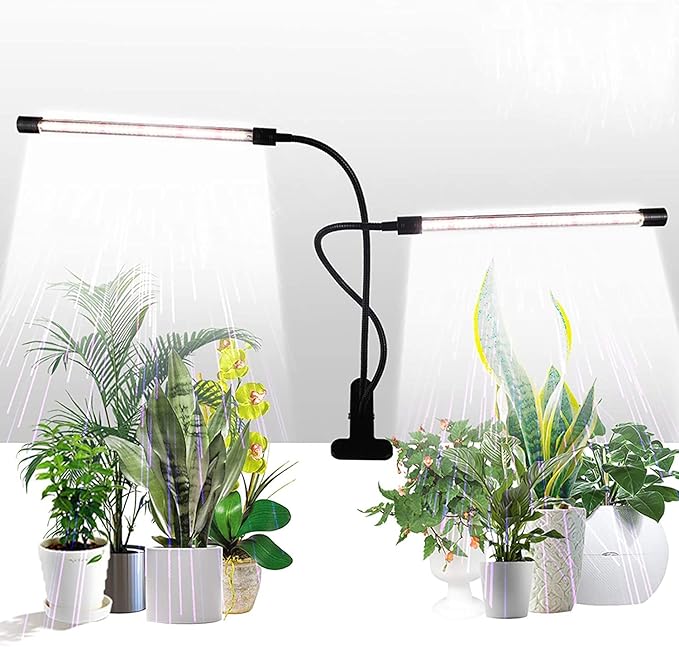 |
GHodec 6000K Full Spectrum 84-LED Clip Plant Light | Check Price |
| 6 |  |
Barrina T5 5000K Full Spectrum Grow Lights | Check Price |
| 7 |  |
VIPARSPECTRA 70-Watt Dimmable LED Grow Light | Check Price |
| 8 |  |
Aokrean Full Spectrum Grow Light | Check Price |
| 9 |  |
Hywyimlait 84-LED Four-Head Clip Plant Light | Check Price |
| 10 |  |
LBW 214-LED Adjustable Desk Grow Light | Check Price |
GooingTop 6000K Full Spectrum Indoor Plant Growing Lamp
The GooingTop is a compact spotlight-style lamp for buyers who need supplemental light around a desk, shelf, or small group of pots. Its 6000K white output uses 10 red and 74 white LEDs, producing a daylight-like appearance rather than the strong purple cast associated with some older grow lamps. The stated color rendering index of up to 95 also makes the light pleasant for ordinary room use.
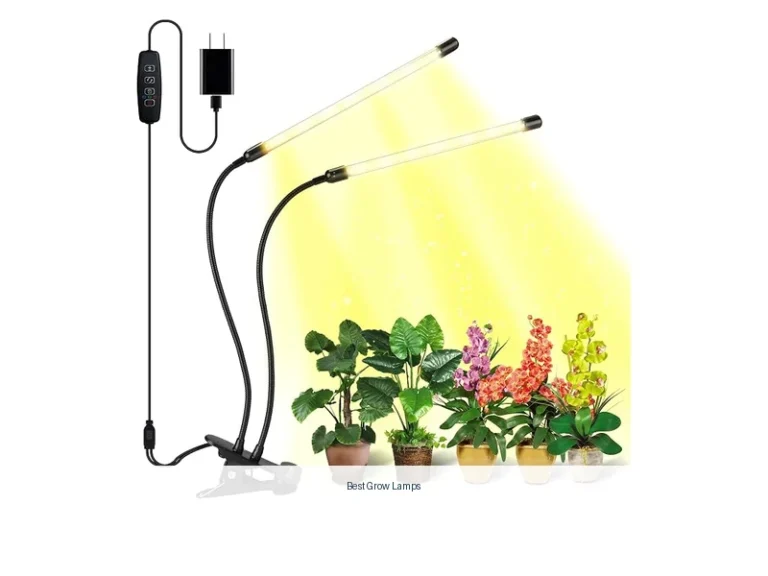
Positioning is straightforward. A flexible gooseneck and strong clamp let you aim the lamp from above or from the side, which is useful when a plant has uneven growth or sits in an awkward corner. The light can run for four, eight, or twelve hours on a 24-hour cycle, so a new plant owner can establish a routine without remembering to switch it off every evening.
At approximately 10 watts, it is better suited to small plants, seedlings, succulents, and supplemental lighting than to a large shelf or demanding indoor garden. USB or AC power gives it some placement flexibility, although the lamp still needs to remain near an outlet or suitable USB source. The single-head design also means coverage is narrower than a multi-head lamp.
Pros
- Natural-looking 6000K light with high stated color rendering.
- Flexible gooseneck and clamp make aiming simple.
- Four-, eight-, and twelve-hour timer choices.
- Low stated power draw of about 10 watts.
- 365-day warranty support is provided in the product information.
Cons
- Single-head coverage is limited for wide plant shelves.
- Best suited to smaller plants and supplemental lighting.
- Timer choices are less flexible than some competing models.
My Opinion
This is the most balanced choice for a beginner who wants one affordable lamp with natural-looking light, simple positioning, and low operating demand. Choose something broader if you need to illuminate several large plants at once.
Briignite A19 Full Spectrum LED Grow Light Bulb
The Briignite takes a different approach from clip lamps: it puts the growing light into a familiar A19 bulb shape. Its E26 base fits standard household sockets, so buyers can install it in an existing desk lamp, pendant, floor lamp, or clamp fixture without purchasing a specialized stand. That makes it especially appealing when the main challenge is keeping the setup visually simple.
Although the bulb appears white at around 4000K, its output includes red and blue portions of the spectrum along with the visible white light. The result is more comfortable in a living area than a reddish or violet bulb, while still being aimed at plants such as herbs, leafy greens, tomatoes, peppers, and cucumbers at different growth stages.
The bulb is rated at 1000 lumens while consuming 11 watts, with a stated PPF of 25 micromoles per second. Those figures suggest useful efficiency for a single-bulb setup, but coverage will depend heavily on the fixture, distance, reflector, and plant density. A ceiling socket may spread light too broadly, while a nearby adjustable lamp can concentrate it more effectively. The plastic and aluminum construction is intended to manage heat, and the stated lifespan is up to 25,000 hours.
Pros
- Standard E26 base works with many ordinary fixtures.
- Natural-looking 4000K appearance is comfortable in a home.
- Uses 11 watts while producing a stated 1000 lumens.
- Suitable for herbs, leafy greens, and several fruiting plants.
- Aluminum construction supports heat dissipation.
Cons
- Requires a separate lamp or socket.
- One bulb may not cover a broad plant shelf evenly.
- No built-in timer or dimmer is listed.
My Opinion
This is the cleanest option for someone who already owns a suitable E26 fixture. It keeps the setup inexpensive and discreet, but buyers should plan the lamp position carefully because the bulb itself does not provide adjustable mounting or scheduling.
LEOTER 80-LED Full Spectrum Adjustable Grow Light
LEOTER is aimed at plant owners who want more control than a basic single-spectrum lamp provides. Its 80 LEDs combine red, blue, yellow, and white emitters, with a full-spectrum mode stated across 380–800nm and separate red-and-blue operation. That gives the user a way to adjust the appearance and emphasis of the light as plants move from rooting and sprouting toward flowering.
The four-head arrangement is the main practical advantage. Each head can be directed toward a different pot or angled to cover a wider area than a single spotlight. Ten dimming levels help reduce the chance of overwhelming a small plant, and they make it easier to adjust brightness as the lamp is moved closer or as foliage grows taller.
A circular memory timer provides three, nine, or twelve hours of operation, with the color-coded control system indicating the selected setting. The timer needs to be reset after a power interruption according to the supplied information, so it is not completely maintenance-free. The lamp connects by USB and includes an AC adapter, while the metal clamp and 360-degree goosenecks help hold the heads in place. An aviation-grade heat sink and temperature-control design are intended to manage generated heat.
Pros
- Four adjustable heads provide more directional coverage.
- Full-spectrum and red-blue modes support different plant stages.
- Ten brightness levels offer fine adjustment.
- Includes a USB connection and AC adapter.
- Memory timer can run for three, nine, or twelve hours.
Cons
- Timer settings may need resetting after a power interruption.
- Multiple controls can feel less simple for a first-time user.
- Clip mounting may not suit heavy or unusually wide plant displays.
My Opinion
LEOTER is a strong value when flexibility matters more than absolute simplicity. It is particularly suitable for a varied collection of small pots, although buyers who want one fixed daylight setting may prefer a simpler lamp.
bseah Full Spectrum Indoor Plant Grow Lamp
The bseah grow lamp focuses on adjustable operation in a familiar clip-on format. Its combination of yellow and white LEDs is intended to support photosynthesis through germination, growth, flowering, and fruiting, while the selectable lighting modes let the user change the presentation as plant needs change. That flexibility is useful for a mixed collection rather than one identical group of seedlings.
Ten dimming levels make it possible to start gently with young plants or brighten the setup when foliage becomes denser. The automatic timer cycles through three, nine, or twelve hours and can repeat daily when power remains connected. This is a practical convenience for a desk or shelf because the owner does not need to operate the switch at the same time every day.
The metal gooseneck is described as strong and supported by a non-slip mat design, which should help the lamp maintain its angle once positioned. A USB connector gives the fixture compatibility with USB power sources, although the buyer should confirm that the chosen outlet or adapter is conveniently located. The stated service life is up to 50,000 hours, but this is a claimed lifespan rather than a guarantee of identical performance over that entire period.
Pros
- Three lighting modes and ten brightness levels.
- Automatic three-, nine-, and twelve-hour cycle timer.
- Metal gooseneck and non-slip support improve stability.
- USB connector suits desks and indoor plant shelves.
- Broad use case from seedlings through flowering plants.
Cons
- USB power may require a separate suitable adapter depending on the setup.
- Clip format is less appropriate for a large growing area.
- Long-life figure is a stated estimate, not a measured guarantee.
My Opinion
This is a sensible middle-ground lamp for someone who wants adjustable brightness and scheduling without moving up to a larger panel. Its main limitation is coverage, so keep expectations realistic for a small indoor garden.
GHodec 6000K Full Spectrum 84-LED Clip Plant Light
GHodec uses two LED bars rather than one concentrated head, giving it a useful balance between directional control and broader coverage. Each bar combines red and sunlight-white LEDs, with a 6000K appearance intended to resemble midday light. The stated color rendering of up to 95 also makes it less intrusive in a bedroom, office, or living space than a strongly colored lamp.
The bars can be controlled individually, allowing one light, both lights, or neither to operate. That matters when a small plant needs only modest supplemental lighting but a wider group later needs more coverage. Brightness can also be adjusted, although the supplied information does not specify the exact number of levels. A four-, eight-, or twelve-hour automatic schedule reduces the need for daily manual switching.
The anti-slip clamp and 360-degree gooseneck make it possible to position the bars around foliage rather than shining from only one direction. GHodec describes the lamp as suitable for seedlings, succulents, houseplants, balconies, greenhouses, and darker indoor locations. As with other compact clip lamps, the real coverage will depend on how close the bars are to the leaves and whether surrounding plants block the light. It is most practical for a modest collection, not a full-size rack.
Pros
- Two independently controllable LED bars.
- 6000K white light with a high stated color-rendering value.
- Four-, eight-, and twelve-hour automatic timing.
- Adjustable gooseneck and anti-slip clamp.
- Useful for seedlings, succulents, and houseplants.
Cons
- Coverage remains limited compared with a larger panel or bar array.
- The exact brightness-level count is not provided.
- Clip placement requires a suitable nearby edge or support.
My Opinion
GHodec is a good fit for a couple of pots or a narrow shelf where two light bars can spread illumination more evenly. It offers more coverage flexibility than a single-head lamp without becoming a complicated installation project.
Barrina T5 5000K Full Spectrum Grow Lights
Barrina’s T5 format is built for shelves, cabinets, and other horizontal growing spaces rather than individual decorative plants. The four one-foot fixtures provide a combined 96 LEDs and use 20 watts in total, with a 5000K white full-spectrum output. This linear shape can distribute light along a row of seedlings more evenly than a small clamp lamp pointed from one end.
Each fixture has its own on-off switch, so the owner can operate the lights separately or together according to the amount of coverage needed. That arrangement is useful as plants occupy different shelf sections or when a young tray needs less light than a full row of mature foliage. The product information also states that the lights can be linked in a series of up to 16 units, which allows a larger installation to grow over time.
Installation is intended to be approachable: the package includes clips, double-sided tape, cable ties, connecting cords, small connectors, and two power cords with switches. However, the included tape should be applied only to clean, cured, smooth surfaces. The supplied instructions specifically caution against uncured plaster, dusty, greasy, or rough mounting areas. The fixtures are non-magnetic, so buyers should plan to use the included hardware rather than relying on magnetic attachment.
Pros
- Four one-foot bars suit shelves and seed-starting areas.
- 5000K full-spectrum white output.
- Separate switches allow selective lighting.
- Up to 16 lights can be connected in series.
- Mounting hardware and connecting cables are included.
Cons
- Installation is less portable than a clip-on lamp.
- Double-sided tape needs a clean, suitable surface.
- Non-magnetic construction limits mounting options.
My Opinion
Barrina is the better choice for a plant shelf, seed tray, or cabinet where even linear coverage matters. It is less convenient for a single floor plant, but the four-pack offers a practical path to a more organized growing area.
VIPARSPECTRA 70-Watt Dimmable LED Grow Light
The VIPARSPECTRA fixture is the most substantial lighting option in this group for buyers who need stronger output over a defined area. It uses a balanced combination of 660nm red, 3000K white, and 5000K white light, and the product information lists 11,000 lumens. The stated coverage target is a 2-by-2-foot vegetative area, making it more appropriate for seedlings, herbs, and vegetative plants than for a tiny decorative pot.
At 70 watts, it consumes more power than the compact lamps here, but the product is described as comparable to a 150-watt HPS/MH light while using less electricity. That comparison should be viewed as a product claim rather than a promise that every growing setup will perform identically. The higher output also means buyers need to pay more attention to mounting height and brightness, particularly with delicate seedlings.
A four-level dimmer allows the light intensity to be reduced for different plants and growth stages. The fanless design uses large aluminum heat sinks, avoiding fan noise while helping dissipate heat. Because this is a stronger panel rather than a clamp lamp, it needs a stable overhead mounting arrangement and enough clearance around the fixture. It is not the most decorative option for a living room, but it may be the most useful budget choice for a dedicated small growing area.
Pros
- Higher-output 70-watt design for a stated 2-by-2-foot area.
- Balanced red and white spectrum for seedlings and vegetative growth.
- Four-level dimmer supports different plant needs.
- Fanless aluminum heat-sink design.
- Strongest option in the group for a small dedicated grow space.
Cons
- Requires more careful mounting than a clip lamp.
- Uses more electricity than the compact alternatives.
- May be excessive for one or two small houseplants.
My Opinion
VIPARSPECTRA is the value-oriented pick for buyers who need meaningful coverage and intensity rather than a decorative accent lamp. Choose it only if you can provide stable overhead placement and enough distance for young plants.
Aokrean Full Spectrum Grow Light
Aokrean is designed as a freestanding or soil-insert plant light, giving it a different advantage from clamp-mounted models. It can be inserted into the soil or assembled with its base, which makes it useful when there is no convenient desk edge or shelf lip for a clamp. The stand must be pressed down by the flower pot to remain stable, and the unit is not wireless, so it still needs a nearby power connection.
The light provides three modes: white, warm white and red, plus ten brightness levels. That range lets the owner choose a softer appearance for a living space or a more targeted setting for plants at different stages. The timer cycles for three, nine, or twelve hours and can repeat daily while power remains connected.
Height adjusts from 10 to 26 inches, and the pole can rotate 90 degrees to change the angle. This makes the lamp adaptable as a plant grows or as the pot moves. The design can also work with floor planters and hanging arrangements, but the base requirement is important: a lightweight or unstable pot may not hold it securely. Buyers should consider the pot’s shape and weight before choosing the freestanding configuration.
Pros
- Can be inserted into soil or used with an adjustable base.
- Three spectrum modes and ten brightness levels.
- Height adjusts from 10 to 26 inches.
- Three-, nine-, and twelve-hour timer cycle.
- Suitable for locations where a clamp cannot attach.
Cons
- Base needs support from the flower pot to remain stable.
- It is not wireless and must stay near power.
- Single-light design may not cover several wide plants.
My Opinion
Aokrean is a convenient decorative option for one floor plant or planter when clamp mounting is impractical. Its adjustable height is helpful, but check stability first, especially with a small or lightweight pot.
Hywyimlait 84-LED Four-Head Clip Plant Light
Hywyimlait combines four LED heads with the familiar clip-on form, making it a practical choice for spreading light across several nearby plants. Each bar uses red and sunlight-white LEDs in a 6000K-style output, so the lamp provides a soft, daylight-like appearance instead of a harsh colored glow. The four-head design gives more freedom to distribute light around foliage than a conventional two-head fixture.
Each LED strip can be switched separately, which helps avoid wasting light on empty areas. Ten dimming levels provide additional control, while three spectral modes offer flexibility for different growth stages and room preferences. The timer is unusually broad for this type of lamp, with four-, eight-, twelve-, and eighteen-hour choices that can repeat automatically at the same time the following day.
The four 360-degree flexible goosenecks and sturdy clips make it possible to aim the heads from multiple angles. That flexibility is useful when pots vary in height, although it also creates more cable and head positioning to organize. Hywyimlait is suitable for flowers, vegetables, fruiting plants, and succulents according to the supplied information, but the compact clip format remains better for a small collection than for a large shelf or room-sized growing area.
Pros
- Four adjustable heads provide broad directional flexibility.
- Four timer choices, including an eighteen-hour setting.
- Ten dimming levels and three spectral modes.
- Individual strips can be controlled separately.
- 6000K-style light is soft and natural-looking.
Cons
- Multiple goosenecks and cables can require tidying.
- Clip mounting needs a secure edge.
- Not intended to replace a larger overhead fixture for broad coverage.
My Opinion
Hywyimlait is one of the more adaptable clip lamps for a mixed group of small plants. Its long timer option and four independently aimable heads make it especially attractive for owners who travel or keep plants at different heights.
LBW 214-LED Adjustable Desk Grow Light
The LBW uses a single broad light panel rather than several narrow heads. Its 214 LEDs cover a stated 380–780nm full-spectrum range and are arranged across an 11-by-4.7-inch panel. That larger surface can provide more uniform illumination across a plant or small group than a tiny spotlight, while the desk-style construction avoids the need to clamp onto furniture.
A height range of 10 to 26 inches accommodates plants at different stages, and the sturdy metal base includes an anti-slip sponge pad. This is useful for a tabletop plant display where stability and appearance matter. The light panel also has heat-dissipating holes and a patterned rear surface intended to help manage heat and extend the lighting system’s service life.
Three automatic timing choices—three, six, and twelve hours—give the owner a straightforward schedule. Six dimming levels allow some adjustment for seedlings, established plants, or changing distances. Because the light sits on a base, it is easier to reposition than a mounted bar, but the base also occupies desk or shelf space. The single panel may not reach around tall or widely separated foliage as effectively as a multi-head clip lamp.
Pros
- Broad 214-LED panel provides uniform light over a small area.
- Full-spectrum range is stated as 380–780nm.
- Height adjusts from 10 to 26 inches.
- Sturdy metal base with anti-slip pad.
- Three timer options and six brightness levels.
Cons
- Base takes up usable desk or shelf space.
- Single panel is less flexible around irregular foliage.
- Three-, six-, and twelve-hour settings offer fewer choices than some rivals.
My Opinion
LBW is a neat fit for a stable tabletop display, especially when even panel coverage is more important than a nearly invisible setup. It is a sensible alternative to a clip lamp for one larger plant or several closely grouped pots.
How I Selected These Indoor Plant Lights
The ranking weighs practical usefulness rather than a single specification. I considered the quality of the stated light format, timer options, dimming control, mounting method, coverage style, power demand, and compatibility with common indoor plant locations. Customer feedback volume and rating information were also part of the selection context, but those figures do not replace checking whether a particular design suits the buyer’s plants.
Brand and format diversity mattered as well. A standard E26 bulb solves a different problem from a four-pack of shelf bars, while a 70-watt panel serves a different area from a 10-watt clip lamp. Including those alternatives makes the comparison more useful than listing ten nearly identical fixtures.
Selection takeaway: A low purchase cost does not make every lamp interchangeable. The best match depends on coverage, mounting, adjustment, and how reliably the owner can maintain a daily lighting schedule.
The top positions favor products that combine several useful controls with uncomplicated placement. That is why the GooingTop leads the list for general beginner use, while the Briignite bulb and LEOTER multi-head lamp follow for their distinct installation and adjustment advantages.
How to Choose Affordable Indoor Grow Lighting
When comparing the best inexpensive grow lights, start with the plant area rather than the product name. Measure the shelf, count the pots, and decide whether the light will supplement a bright window or provide most of the plant’s usable illumination. A compact lamp is often enough for a few small plants, while a shelf or seed tray benefits from a bar or panel that spreads light evenly.
- Match coverage to the plant area: Choose a bulb or clip lamp for a small target and linear bars or a panel for a shelf.
- Prioritize adjustability: Dimming, flexible heads, and adjustable height help as plants grow.
- Check the mounting method: Confirm that a clamp, base, soil stake, or overhead installation will work in the intended location.
- Use a timer when possible: Consistent daily scheduling is easier when the lamp can repeat automatically.
- Consider room comfort: Natural white light, low heat, and quiet fanless construction matter in living spaces.
Bulb, clip lamp, bar, or panel?
An E26 bulb is the easiest choice when an existing fixture already points toward the plants. It keeps the setup familiar, but its coverage depends on the lamp reflector and distance. Clip-on lamps are more adjustable and portable, though their coverage is usually concentrated and they require a stable edge.
Linear T5 bars are particularly effective for shelves because their length spreads light along a row. A desk panel offers broad illumination and a stable base, while a stronger overhead panel is more suitable for a dedicated growing area. The more coverage a fixture provides, the more important mounting, heat clearance, and distance become.
Understanding spectrum and color appearance
Full-spectrum wording generally indicates that the lamp is intended to provide a broad range of wavelengths useful for plant growth. In everyday use, color temperature also affects how the room looks. The 5000K and 6000K products here appear similar to daylight, while a 4000K bulb has a slightly warmer, more natural indoor appearance.
Red and blue modes can be useful when a lamp provides them, but beginners do not always need to switch modes constantly. A good white full-spectrum setting is often easier to live with, especially in a bedroom, office, or living room. Spectrum labels alone do not tell the entire story; placement and coverage remain important.
Timer and dimmer choices
A timer reduces the risk of inconsistent lighting caused by forgotten switches. Compare the available durations with your routine: some products offer three, six, and twelve hours, while others extend to eighteen hours. A timer generally requires continuous power, and some units may need their schedule reset after a power interruption.
Dimming is helpful when moving a lamp closer to seedlings or when a collection includes plants with different light preferences. Start at a moderate setting and observe the plants rather than assuming the highest level is best. A brighter setting can also increase heat near leaves even when the lamp itself feels relatively cool.
Setting Up a New Plant Light
Place the fixture so the useful light reaches the foliage rather than shining mostly onto the pot rim or surrounding wall. For a clip lamp, angle the heads from above or slightly to the side and check that the clamp is fully engaged. For a base-mounted lamp, use a stable, level surface and make sure the cord cannot tug the stand over.
Install shelf bars only on clean surfaces that can support the included clips or tape. Barrina specifically cautions against uncured plaster, dusty, greasy, or rough surfaces, so allow the mounting location to dry and cure before installation. Keep cables organized and avoid placing them where watering can splash directly onto plugs or connectors.
Begin with the manufacturer’s suggested timer range and a moderate brightness level. Watch for leaning growth, unusually stretched stems, pale foliage, or signs of excessive heat. Adjust the lamp gradually rather than making several changes at once, which makes it harder to understand how the plant responds.
Placement and distance basics
There is no single distance that works for every lamp because output varies widely between a 10-watt clip light and a 70-watt panel. Place compact lamps close enough to illuminate the leaves, but not so close that the foliage becomes hot or the brightest area covers only one small spot. Wider panels can usually sit farther away while maintaining more even coverage.
Turn pots occasionally if the fixture illuminates from one side. Multi-head lamps can reduce this problem by aiming separate heads at different sides of the plant. Keep the light path clear of large leaves, decorative covers, and shelving that may cast a shadow over the lower foliage.
Making the Light Last Longer
Dust can reduce the amount of light leaving an LED panel and may interfere with heat dissipation. Disconnect the lamp before gently wiping accessible surfaces with a dry or slightly damp cloth, following the product’s care instructions. Do not spray cleaner onto the fixture or allow moisture into vents, switches, sockets, or connectors.
Heat management is also an ownership issue. Avoid covering vents on the LBW panel or blocking the aluminum heat sinks on the VIPARSPECTRA. Do not bundle power cords tightly against a hot fixture, and provide reasonable clearance around stronger lights. A fanless lamp can be quiet, but quiet operation does not mean heat can be ignored.
Inspect clamps, goosenecks, and cables occasionally. If a neck no longer holds its position, a clamp slips, or a cord becomes damaged, stop using the fixture until the problem is resolved. When storing a seasonal lamp, keep it dry, protect the LED surface from impact, and retain small connectors and adapters in a labeled container.
Common Mistakes to Avoid
Most disappointing results come from mismatched coverage or inconsistent use rather than from choosing the wrong color temperature. A small lamp cannot effectively illuminate a wide shelf simply because it is left on longer, and a powerful panel can be excessive for a delicate plant when positioned too closely.
- Do not assume a high lumen number automatically describes plant-usable coverage.
- Do not place a clip lamp where the clamp can slip into water or pull the fixture down.
- Do not cover heat sinks, vents, or the rear of a panel.
- Do not rely on a timer after a power outage without checking whether the schedule was retained.
- Do not mount adhesive-backed bars on dusty, greasy, rough, or uncured surfaces.
- Do not judge success after only one day; watch the plant’s growth pattern over time.
Safety caution: Keep electrical connections away from watering splash, use a stable mounting point, and unplug the fixture before cleaning, relocating, or changing connected components.
FAQ About Choosing Indoor Grow Lights
Are inexpensive LED grow lights suitable for houseplants?
Yes, many compact LED lamps are suitable for supplementing light for houseplants, seedlings, succulents, and herbs. Their usefulness depends on coverage, distance, daily schedule, and plant type. A small clip lamp may work well for one or two pots but will not provide the same coverage as a shelf-length bar or stronger panel.
Is a white grow light better than a purple grow light?
Not automatically, but white light is often more comfortable in a home and makes it easier to see the actual color of foliage. Products such as the GooingTop, Briignite, Barrina, and LBW use white or daylight-style appearances while still providing a broader plant-oriented spectrum. Red-blue modes can remain useful when a lamp offers them, especially for buyers who want selectable settings.
Do inexpensive grow lights need a timer?
A timer is not mandatory, but it makes consistent scheduling much easier. Several products in this list offer repeating cycles between three and twelve hours, while the Hywyimlait extends to eighteen hours. Keep the lamp connected to continuous power and verify the schedule after an outage because some timer systems may need to be reset.
Should I choose a grow-light bulb or a clip-on lamp?
Choose a bulb if you already have a compatible E26 fixture and want the simplest appearance. Choose a clip-on lamp if you need to aim the light, change its height, or place it around a plant without buying another lamp. The bulb requires less specialized equipment, while the clip lamp generally provides more positioning control.
How many plants can one affordable grow light cover?
There is no universal number because plant size, spacing, fixture output, and mounting height all change the result. A single-head lamp is generally intended for a small target, while four-head lamps, a four-pack of T5 bars, or a broad panel can cover more area. Arrange plants so their leaves receive reasonably even illumination rather than placing many pots at the edge of a narrow beam.
Final Thoughts
The best inexpensive grow lights should fit the plants and the room, not merely offer the longest feature list. GooingTop 6000K Full Spectrum Indoor Plant Growing Lamp is my first choice for balanced everyday use, Briignite A19 Full Spectrum LED Grow Light Bulb is the simplest alternative when an E26 fixture is available, and LEOTER 80-LED Full Spectrum Adjustable Grow Light is the flexible pick for several small plants with different lighting needs.

I’m Maya L. Greenwood, a lifelong plant lover who believes anyone can grow something beautiful with the right guidance. After years of testing soil mixes, pruning methods, irrigation tricks, and pest-safe solutions, I started EasyGardenTips.com to turn hard-won lessons into step-by-step advice. From seed starting and container gardens to composting and seasonal checklists, my goal is to make gardening simple, sustainable, and fun.