5 Best High Wheel Self Propelled Lawn Mower: Products Compared
Choosing the best high wheel self propelled lawn mower means balancing traction, cutting width, engine power, maneuverability, and maintenance. A high-wheel design can make uneven ground easier to manage, but the right drive system and cutting controls matter just as much.
My first choice is YARDMAX Select PACE 6-Speed CVT 22-Inch High-Wheel FWD Self-Propelled Gas Mower. It stands at the top of this 5-product list because it offers the strongest overall fit for the buying priorities covered below.
My second choice is TANAUT 140cc High-Wheel FWD Self-Propelled Gas Lawn Mower. It is the option I would compare next when a buyer has slightly different priorities from my first pick.
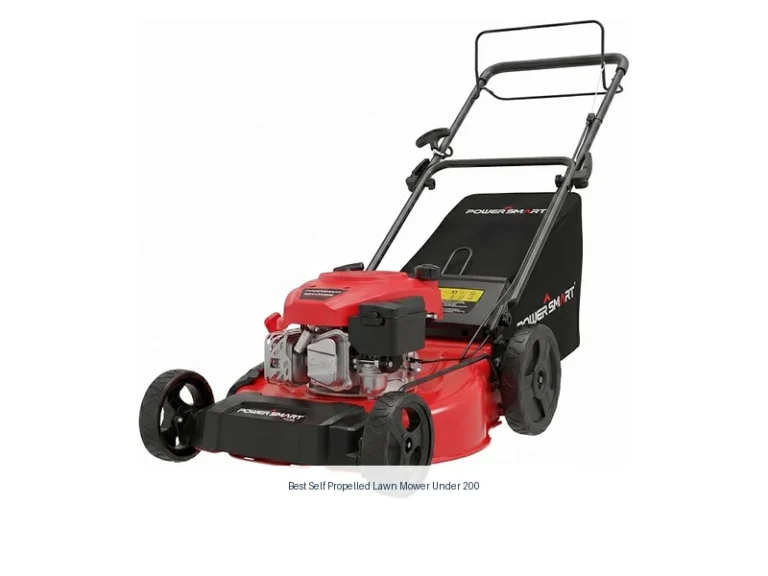
My third choice is PowerSmart 21-Inch 170cc OHV Rear-Wheel Self-Propelled Gas Lawn Mower. It rounds out my top three with a useful alternative for buyers whose priorities differ from the first two choices.
This comparison explains where each mower fits, what its drive system changes in real use, and which compromises deserve attention. You will also find selection criteria, setup and maintenance advice, common mistakes to avoid, and focused answers to questions shoppers often ask before choosing a high-wheel self-propelled mower.
.amz-product-card:hover{transform:translateY(-3px)!important;box-shadow:0 10px 26px rgba(20,70,110,.12)!important;border-color:#bdd7ea!important;}
Best High Wheel Self Propelled Lawn Mower
I selected these five models for their direct relevance to high-wheel, self-propelled mowing and for the practical details supplied about engines, drive layouts, cutting systems, storage, and ownership support. Customer-feedback evidence was considered where available, while brand diversity helps show the differences between gas and battery power rather than presenting five nearly identical choices.
| # | Image | Product | Price on Amazon |
|---|---|---|---|
| 1 |  |
YARDMAX Select PACE 6-Speed CVT 22-Inch High-Wheel FWD Self-Propelled Gas Mower | Check Price |
| 2 |  |
TANAUT 140cc High-Wheel FWD Self-Propelled Gas Lawn Mower | Check Price |
| 3 |  |
PowerSmart 21-Inch 170cc OHV Rear-Wheel Self-Propelled Gas Lawn Mower | Check Price |
| 4 | 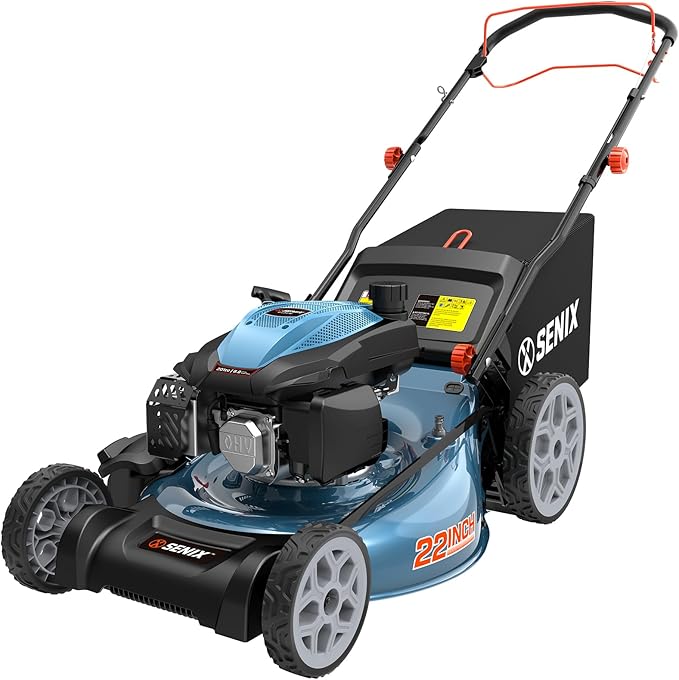 |
SENIX 22-Inch 201cc Rear-Wheel Self-Propelled Gas Lawn Mower | Check Price |
| 5 |  |
Greenworks 60V 21-Inch Rear-Wheel Self-Propelled Battery Mower | Check Price |
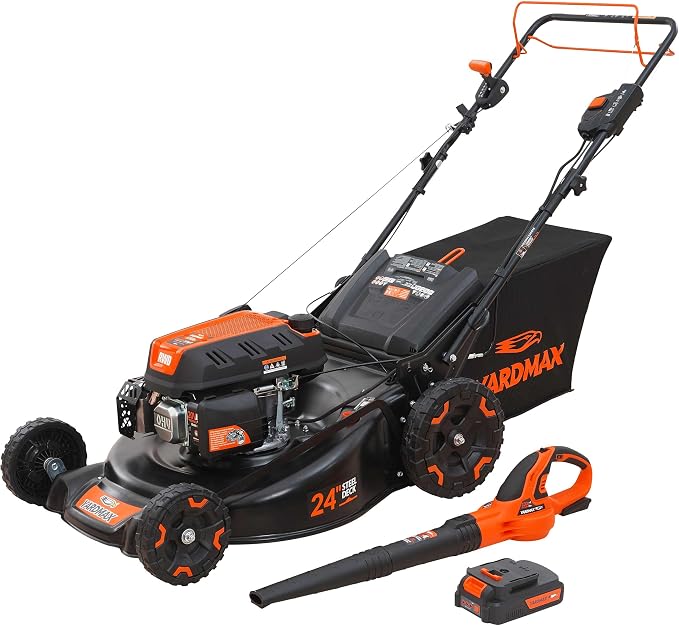
YARDMAX Select PACE 6-Speed CVT 22-Inch High-Wheel FWD Self-Propelled Gas Mower
The YARDMAX stands out because its Select PACE system uses a continuously variable transmission with six speed settings. That is more adaptable than a single-speed drive: you can choose a slower pace around landscaping or a quicker setting across an open section of lawn. It is a useful match for anyone whose comfortable walking speed changes during a mowing session.
Its front-wheel-drive layout pairs with rubber tires that use an aggressive spiked tread pattern. That combination should help with traction and maneuverability in ordinary uneven-yard conditions, while front-wheel drive can make it easier to lift or pivot the front end when changing direction. It may not be the first choice for someone who spends most of the time on steep slopes, where rear-wheel traction can be more helpful.
The 22-inch deck covers a generous path, and the 201cc engine supplies a substantial gas-powered platform for routine residential mowing. An automatic choke simplifies starting by removing the need to prime or manually set a choke. The single-lever deck adjustment also makes height changes quicker when grass conditions change.
Pros
- Six-speed CVT allows more walking-pace control than a single-speed drive.
- Aggressive tread supports traction and maneuverability.
- Automatic choke makes starting simpler.
- 22-inch deck and 3-in-1 capability suit regular residential mowing.
- Deck cleanout port can simplify underside cleaning.
Cons
- Front-wheel drive may be less suitable than rear-wheel drive for sustained steep slopes.
- Gas power requires fuel, oil, and engine maintenance.
- The larger deck may feel less nimble in tight planting beds.
My Opinion
This is the strongest all-around choice in the group when variable walking speed matters. Buyers should confirm that front-wheel drive suits their terrain, then plan to use the cleanout port and regular blade maintenance to preserve cutting performance.
TANAUT 140cc High-Wheel FWD Self-Propelled Gas Lawn Mower
The TANAUT takes a simpler approach while offering an unusually broad range of cutting-height choices. Eight settings span 1 to 3.2 inches, so a homeowner can leave grass taller during stressful weather or lower it when a shorter appearance is preferred. That adjustability is more useful than a fixed “one height fits all” setup, particularly when lawn species and seasonal growth vary.
A 20-inch cutting width is slightly narrower than the YARDMAX and SENIX decks, but it can be easier to maneuver around trees, borders, and tighter passages. The manganese steel straight blade receives quenching treatment and is described as sturdy, sharp, and resistant to gravel. Even so, owners should clear stones and branches before mowing; blade toughness is not a reason to intentionally strike debris.
The 140cc four-stroke engine is rated at 5HP and 2,800 rpm in the supplied information. A 15.9-gallon grass bag and 0.42-gallon fuel tank are intended to reduce interruptions during longer jobs. The 42.1-inch stated handle height may also be welcome for taller users, although comfort remains personal and the mower should be adjusted carefully before extended use.
Pros
- Eight cutting-height positions cover varied grass conditions.
- Large stated grass bag can reduce emptying stops.
- High-wheel FWD layout supports routine uneven-yard mowing.
- Quenched manganese steel blade is specified for durability.
- Detailed manual and included accessories support initial assembly.
Cons
- Only four customer ratings are supplied, so long-term feedback is limited.
- 20-inch deck covers less ground per pass than the 22-inch models.
- Front-wheel drive may not provide the best traction on steep slopes.
- Gas ownership still requires fuel and oil upkeep.
My Opinion
This is a sensible second choice for someone who values height flexibility, a large bag, and a comfortable operating position. Because the available customer-feedback sample is very small, I would verify parts and service support before committing to long-term ownership.
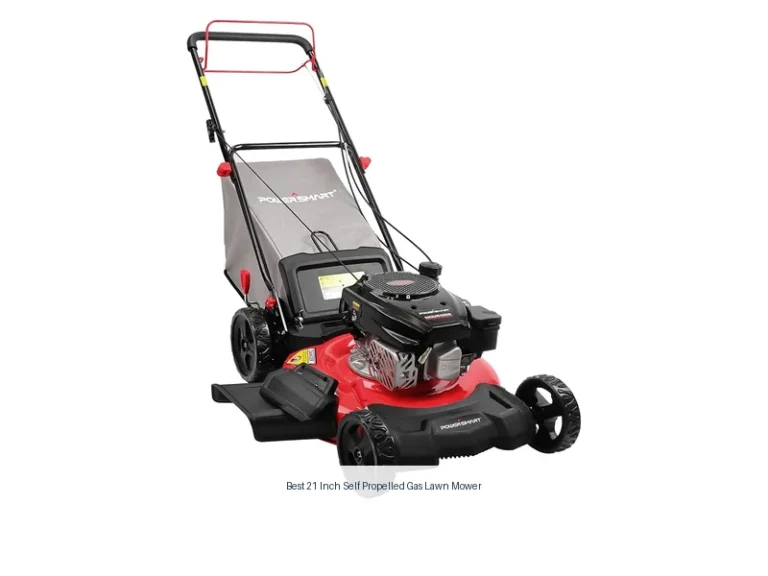
PowerSmart 21-Inch 170cc OHV Rear-Wheel Self-Propelled Gas Lawn Mower
PowerSmart earns its position through a practical combination of rear-wheel drive, a 170cc overhead-valve engine, and a 21-inch steel deck. The 10-inch rear wheels are particularly relevant on slopes or uneven areas because the drive wheels remain at the back, where traction can help push the mower through changing ground. This layout is often a better fit than front-wheel drive for a yard with sustained inclines.
The mower supports three mowing methods: collect clippings in the 1.4-bushel bag, mulch them back into the lawn, or use rear discharge when speed matters more than collection. That flexibility lets the owner adapt to grass volume and weather rather than using one method every time. The six-position height range runs from 1.5 to 3.9 inches, covering both shorter and taller mowing preferences.
The 21-inch width offers a useful compromise. It should reduce passes across a medium or large yard without becoming as cumbersome as a much wider commercial-style deck. However, the supplied rating is 3.5 from 1,877 customer ratings, lower than the other listed gas alternatives with stronger scores. That does not identify a specific fault, but it is meaningful evidence to weigh alongside the otherwise capable specification.
Pros
- Rear-wheel drive and large rear wheels suit slopes and uneven terrain.
- 170cc OHV engine provides a strong gas-powered platform.
- Bagging, mulching, and rear discharge cover different mowing preferences.
- Steel 21-inch deck balances coverage and maneuverability.
- Single-lever adjustment offers six cutting heights.
Cons
- Customer-feedback score is lower than the other listed gas choices.
- Bag capacity is smaller than the TANAUT’s stated 15.9-gallon bag.
- Gas engine requires routine fuel, oil, and seasonal maintenance.
- Rear-wheel traction does not eliminate the need for careful slope mowing.
My Opinion
PowerSmart is the most terrain-focused gas option among the first three choices, especially for a medium yard with slopes. Its broader mowing modes are valuable, but the lower customer-feedback score means buyers should place extra emphasis on return terms, parts availability, and local support.
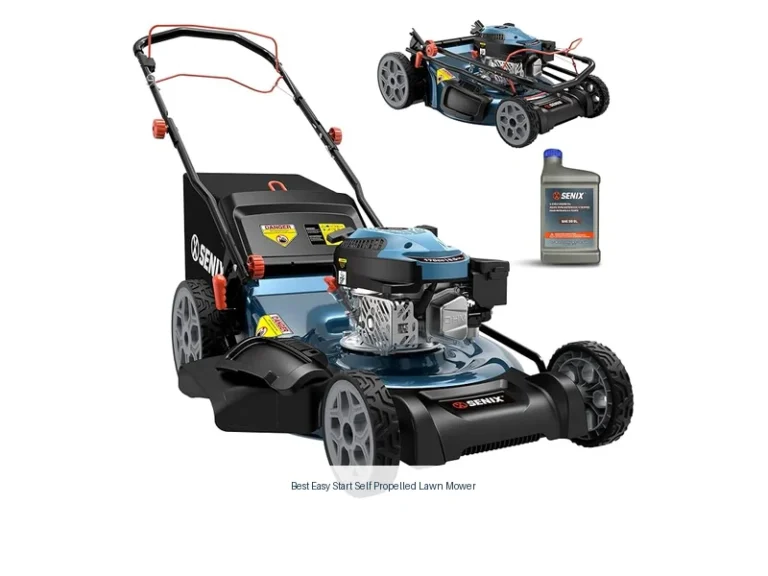
SENIX 22-Inch 201cc Rear-Wheel Self-Propelled Gas Lawn Mower
SENIX combines a wide 22-inch cutting deck with a 201cc OHV four-cycle engine rated at 4.7HP and 8.8 foot-pounds of torque. The size and output make it a reasonable candidate for larger residential lawns, with the supplied recommendation reaching up to 2,200 square meters, or about 11/20 acre. A wider deck can reduce mowing time, though it also needs more room to turn comfortably.
Its rear-wheel self-propelled system travels up to 2.9 mph and uses a single drive speed. That is easy to understand and may appeal to buyers who prefer fewer controls, but it provides less pace flexibility than the YARDMAX. The rear-wheel layout should be helpful on uneven ground, while the vortex-tunnel airflow design is intended to improve discharge and bag filling.
The 3-in-1 system supports mulching, side discharge, and rear bagging. Six central height positions cover 1.25 to 4 inches, a notably broad span for switching between seasonal mowing conditions. The low-carbon high-strength steel deck and manganese steel alloy blades are specified for impact resistance and harder use. A foldable handle helps storage, and the supplied two-year warranty adds useful ownership support.
Pros
- 22-inch deck covers large lawns efficiently.
- Rear-wheel drive and 2.9 mph self-propelled operation suit uneven ground.
- Mulching, side discharge, and rear bagging provide mowing flexibility.
- Height range reaches from 1.25 to 4 inches.
- Foldable handle and two-year warranty support ownership convenience.
Cons
- Single-speed drive offers less pace control than the YARDMAX.
- Wide deck may be awkward in narrow or heavily landscaped yards.
- Gas power involves more upkeep and noise than the battery option.
My Opinion
SENIX is a compelling choice when deck width, rear-wheel traction, and a tall maximum cutting height matter more than variable speed. It is especially well matched to an open, larger lawn with enough storage space for a full-size gas mower.
Greenworks 60V 21-Inch Rear-Wheel Self-Propelled Battery Mower
The Greenworks offers the clearest alternative to the gas models. Its 60V brushless motor runs from two 4.0Ah batteries, with the supplied estimate reaching up to three-quarters of an acre per charge depending on terrain and mowing technique. That qualification matters: thick grass, slopes, wet conditions, and repeated self-propelled use can affect actual runtime.
Rear-wheel drive gives the mower useful traction, while adjustable self-propelled control lets the operator change pace during the job. Instant starting, zero emissions during operation, and an operating noise level described as three times quieter than gas are meaningful benefits for neighborhoods, early schedules, and owners who dislike fuel handling. The trade-off is that battery availability and charging habits become part of the mowing routine.
A four-in-one system adds mulching, bagging, side discharge, and turbo leaf pickup. LED headlights extend the usable time into lower-light periods, although safe visibility and local regulations should still guide when mowing takes place. The kit includes two batteries, and the platform works with more than 75 Greenworks 60V tools, so it becomes more valuable if the owner already uses compatible equipment.
Pros
- 60V brushless system provides gas-like power without fuel or emissions during use.
- Two 4.0Ah batteries are supplied with the kit.
- Rear-wheel drive and adjustable pace support slopes and varied walking speeds.
- Four-in-one mowing and turbo leaf pickup add seasonal versatility.
- Four-year limited tool and battery warranty is supplied.
Cons
- Runtime varies with terrain, grass density, and self-propelled use.
- Battery charging is necessary before longer mowing sessions.
- Initial kit weight and battery management may matter to some users.
- Buyers outside the Greenworks 60V platform may gain less from tool compatibility.
My Opinion
Greenworks is the best fit for a buyer who prioritizes quieter operation, low routine maintenance, and cordless convenience. Choose it confidently when the stated runtime matches the lawn and compatible 60V tools would be useful, but do not assume the maximum acreage applies to every yard.
How I Selected These High-Wheel Self-Propelled Mowers
I compared the products by looking first at the features that directly affect high-wheel mowing: wheel and drive placement, cutting width, height adjustment, propulsion control, and the ability to handle uneven or sloped ground. I then considered practical ownership details such as bagging and discharge options, deck cleaning, storage, starting, warranty coverage, and whether the power system requires gas or batteries.
The best high wheel self propelled lawn mower is not automatically the mower with the largest engine or widest deck. A useful selection must match the yard: front-wheel drive can be convenient for turning, rear-wheel drive can help on slopes, and battery power can simplify maintenance while introducing runtime limits.
Compare the drive layout with the terrain before comparing engine size. A mower that is easier to control on your property can be more useful than one with a larger stated power figure.
Customer-feedback evidence also influenced the ordering, but not in isolation. The YARDMAX, PowerSmart, SENIX, and Greenworks listings provide substantially more feedback than the TANAUT listing, while the TANAUT’s four-rating sample is too small to carry the same confidence. Brand variety was retained so gas and cordless buyers could make a meaningful comparison.
Runtime, bag capacity, and cutting width are estimates of convenience—not guarantees of identical results on every lawn. Grass height, moisture, slopes, blade condition, and mowing speed all change the workload.
How to Choose a High-Wheel Self-Propelled Mower
Start with the shape and condition of the lawn, then decide how much control and maintenance you want. A mower for a mostly flat, open yard can be selected differently from one that regularly crosses slopes, rough patches, gates, and densely planted borders.
- Match drive to terrain: Rear-wheel drive is worth prioritizing for sustained slopes, while front-wheel drive can be convenient for turning and maneuvering.
- Choose the right deck width: A 22-inch deck reduces passes on open lawns; a 20- or 21-inch deck can be easier around obstacles.
- Check pace control: Multi-speed or adjustable propulsion helps when your walking speed changes across the yard.
- Think about clipping management: Bagging, mulching, side discharge, and rear discharge each suit different mowing habits.
- Plan for ownership: Gas models need fuel and oil care, while battery models require charging and realistic runtime planning.
Front-wheel drive versus rear-wheel drive
Front-wheel-drive mowers are often pleasant to turn because lifting or lightening the front wheels can help pivot around a bed. They are a practical choice for flatter yards with frequent direction changes. Rear-wheel-drive models keep powered wheels at the back, which can improve traction as the mower climbs or crosses uneven ground. Neither arrangement makes a steep slope risk-free, so walk across slopes when appropriate, keep both hands on the handle, and follow the manual.
Engine size, cutting width, and grass conditions
Engine displacement can suggest how much reserve a gas mower has, but it does not tell the whole story. Blade condition, mowing height, grass moisture, and deck airflow affect performance too. Wider decks save time on open space but may be difficult to fit through gates or maneuver between shrubs. Measure the narrowest route to the storage area before buying.
Gas or battery power
Gas gives you the familiar ability to refuel and continue, but it brings oil, fuel storage, starting procedures, and engine upkeep. Battery power starts instantly and avoids fuel handling, yet a long or thick-grass session may require careful charge planning. If you already own compatible Greenworks 60V equipment, the cordless option has additional platform value; otherwise, compare the full kit’s charging routine with your lawn size.
Setup and First-Use Checklist
Even a self-propelled mower benefits from a careful first setup. A few minutes spent checking the controls and cutting area can prevent poor results and avoidable damage.
- Read the supplied manual before adding fuel, oil, or batteries, and confirm every handle control moves freely.
- Set the cutting height high for the first pass if the grass is long; lowering it gradually is easier on the mower and lawn.
- Inspect the blade area and remove stones, wire, sticks, and toys from the mowing route.
- For gas models, use the specified fluids and check levels before starting. Do not store fuel casually or spill it on hot components.
- For the Greenworks mower, fully charge the batteries and confirm they are seated correctly before leaving the charger area.
- Test propulsion at a slow pace in an open section, especially if the mower has a speed selector or adjustable drive control.
- Use the correct bag, mulch plug, or discharge attachment for the selected mowing mode.
How to Mow More Effectively
Self-propulsion should reduce pushing effort, not encourage rushing. Keep a steady walking pace so the blade has time to process clippings and the bag or discharge path does not overload.
Adjust for grass height
When grass is unusually tall, remove less at a time. A high first setting followed by a later pass can be easier on the engine and produce a cleaner result than cutting aggressively in one pass. Avoid mowing saturated grass when possible because wet clippings can clog the deck and leave clumps.
Use the mowing mode intentionally
Bagging is useful when the lawn needs a clean finish or clippings are too heavy to leave behind. Mulching can return finely cut material to the lawn, but it works best when mowing regularly and not removing an excessive amount at once. Discharge is efficient for overgrown areas, provided the discharge direction is safe and does not send debris toward people, vehicles, or windows.
Handle slopes carefully
Large rear wheels and rear-wheel drive can help maintain movement, but they do not replace safe technique. Follow the instructions for your specific model, avoid sudden turns, keep clear of drop-offs, and stop if the mower becomes difficult to control. Never defeat a safety control or reach near the blade while it is moving.
Maintenance and Storage Tips
Routine care has a direct effect on cut quality, starting, airflow, and service life. The specific schedule belongs in the product manual, but these habits apply broadly.
- Remove grass buildup from the deck after use, using the YARDMAX cleanout port as intended if that model’s instructions permit it.
- Keep the blade sharp and inspect it for bending, cracks, or impact damage after striking an object.
- Check the wheels, drive controls, bag, discharge parts, and handle fasteners regularly.
- Keep engine oil and fuel maintenance current on gas models; never work near the blade with the engine running.
- Store batteries in the manner specified by Greenworks and avoid leaving them exposed to damaging heat or moisture.
- Fold the SENIX handle for compact storage only after making sure the mower is stable and the controls cannot be activated accidentally.
- Before seasonal storage, clean the mower, protect it from weather, and follow the manual’s fuel and battery instructions.
Common Mistakes to Avoid
Many ownership problems come from choosing based only on deck width or engine power. The following errors can reduce performance, shorten component life, or create unnecessary safety risks.
- Ignoring the terrain: Do not choose front-wheel drive for a steep property simply because the mower has a large engine.
- Cutting too low too soon: Removing too much grass at once can overload the deck and leave an uneven finish.
- Skipping debris checks: High-wheel tires do not protect the blade from stones, wire, or hidden objects.
- Overlooking storage access: Measure gates, shed doors, and turning areas before selecting a 22-inch mower.
- Assuming maximum battery runtime: Treat the Greenworks acreage figure as condition-dependent, not a guaranteed result.
- Neglecting the underside: Packed clippings restrict airflow and can interfere with mulching, bagging, and discharge.
Stop the engine, remove the ignition source or battery as directed, and wait for moving parts to stop before clearing a clog or inspecting the blade area.
Best High-Wheel Self-Propelled Mower FAQ
Are high-wheel self-propelled mowers good for uneven lawns?
They can be a good fit because larger wheels help bridge minor changes in ground level and reduce the tendency to catch on small dips. Drive layout still matters: rear-wheel drive is generally the more compelling choice when slopes and uneven sections are a regular part of the route.
Is rear-wheel drive better than front-wheel drive for hills?
Rear-wheel drive usually offers a traction advantage while climbing because the powered wheels remain at the back. Front-wheel drive can be easier to pivot and maneuver on flatter yards. For any slope, follow the operating instructions and use a route that keeps the mower controllable.
What cutting width is suitable for a medium lawn?
A 20- or 21-inch deck is a practical middle ground for many medium residential yards, while a 22-inch deck can reduce passes across more open space. The best width also depends on gate openings, trees, landscaping, and storage access.
Are battery-powered mowers suitable for large yards?
They can be, provided the battery kit’s expected runtime matches the lawn and mowing conditions. The Greenworks listing states up to three-quarters of an acre per charge, but terrain, grass density, and self-propelled use can change that result. Charge planning is essential for longer sessions.
Do all self-propelled mowers have adjustable speed?
No. The YARDMAX provides six CVT speed settings, and Greenworks supplies adjustable self-propelled control. The SENIX uses a single-speed drive, while the other specifications should be checked carefully before purchase if pace control is important to you.
Final Thoughts
The best high wheel self propelled lawn mower for most buyers in this comparison is the YARDMAX Select PACE because its six-speed CVT, traction-focused tires, and 22-inch deck create a well-balanced package. Choose the TANAUT 140cc High-Wheel FWD mower for broad height adjustment and a large bag, or the PowerSmart 170cc Rear-Wheel mower when slope traction and three mowing modes matter most.

I’m Maya L. Greenwood, a lifelong plant lover who believes anyone can grow something beautiful with the right guidance. After years of testing soil mixes, pruning methods, irrigation tricks, and pest-safe solutions, I started EasyGardenTips.com to turn hard-won lessons into step-by-step advice. From seed starting and container gardens to composting and seasonal checklists, my goal is to make gardening simple, sustainable, and fun.