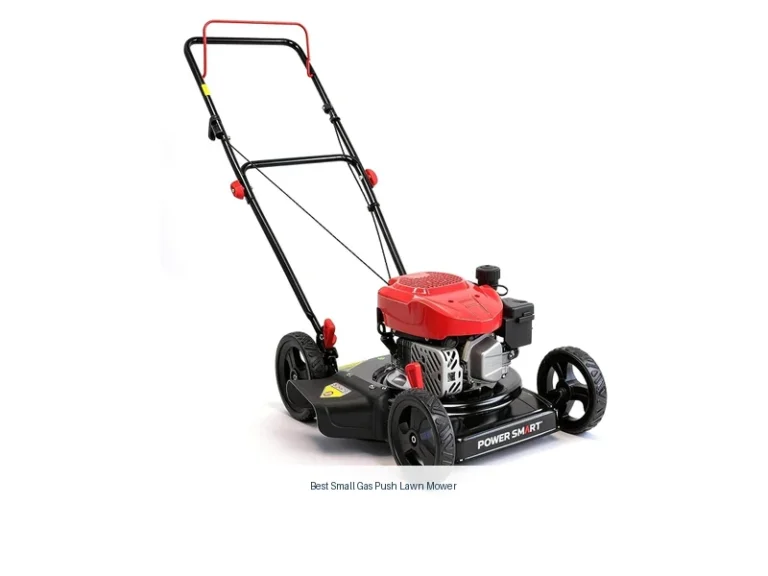
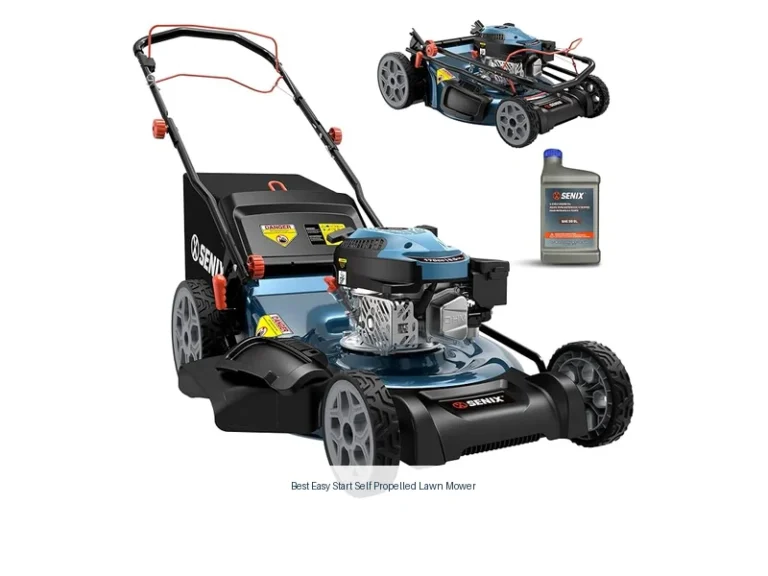
5 Best Self Propelled Lawn Mower for Commercial Use: Top Picks
Choosing the best self propelled lawn mower for commercial use means balancing cutting speed, traction, engine or battery performance, maintenance, and long-term comfort. A mower that works well for occasional home mowing may feel slow or tiring when used across several properties in a day.
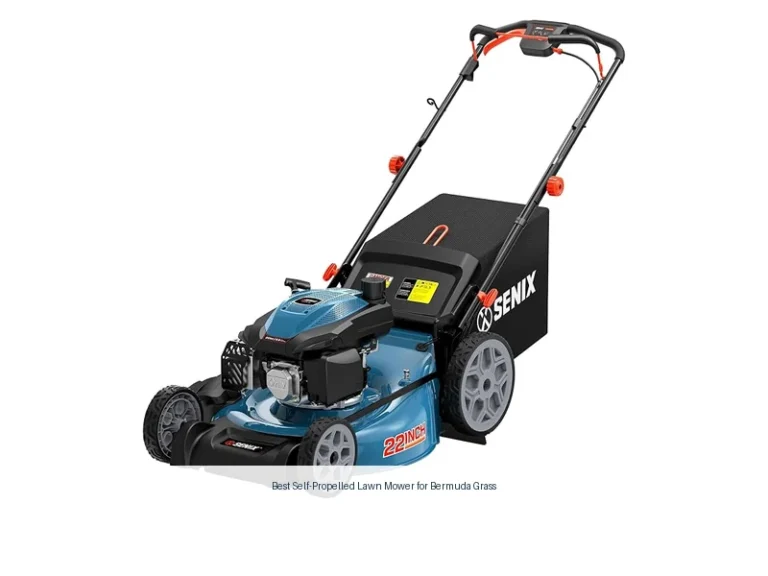
SENIX 22” Self Propelled Gas Lawn Mower 170cc Gas Lawnmower is my first choice because it combines a useful 22-inch deck, rear-wheel drive, three cutting options, and an included bagger in a straightforward package. Its foldable handle, vertical storage capability, washout port, and adjustable cutting height make it practical for operators who need dependable coverage without an overly complicated control system.
Greenworks 60V 21in Self-Propelled Lawn Mower is my second choice and the strongest alternative for buyers who want a quieter, low-maintenance cordless mower. The two 4.0Ah batteries, brushless motor, rear-wheel drive, LED headlight, and four cutting modes give it useful flexibility for larger lawns and routine property maintenance.
YARDMAX 22 In. 201cc Select PACE 6 Speed CVT High Wheel FWD takes third place because its six-speed CVT offers more pace control than the single-speed models. High wheels, aggressive tread, automatic choke, and a deck cleanout port make it especially appealing when mowing speed, traction, and maneuverability matter.
This guide compares all five choices by power source, drive system, deck design, cutting flexibility, maintenance demands, and practical ownership concerns. You will also find setup advice, selection criteria, common mistakes to avoid, and answers to focused questions about choosing a commercial-capable self-propelled mower.
.amz-product-card:hover{transform:translateY(-3px)!important;box-shadow:0 10px 26px rgba(20,70,110,.12)!important;border-color:#bdd7ea!important;}
Best Self Propelled Lawn Mower for Commercial Use
I selected these mowers for their direct relevance to demanding walk-behind mowing, useful cutting and drive features, available customer-feedback evidence, and variety of ownership styles. The group includes both gas and battery options, along with single-speed, variable-speed, front-wheel-drive, and rear-wheel-drive designs, so different operators can match the machine to their properties and working habits.
| # | Image | Product | Price on Amazon |
|---|---|---|---|
| 1 |  |
SENIX 22” Self Propelled Gas Lawn Mower | Check Price |
| 2 |  |
Greenworks 60V 21in Self-Propelled Lawn Mower | Check Price |
| 3 |  |
YARDMAX 22 In. 201cc Select PACE 6 Speed CVT High Wheel FWD | Check Price |
| 4 |  |
PowerSmart 22-Inch 170cc Self Propelled Gas Lawn Mower | Check Price |
| 5 |  |
BILT HARD 21″ Self Propelled Gas Lawn Mower | Check Price |
SENIX 22” Self Propelled Gas Lawn Mower
The SENIX earns the top position by offering a balanced set of features for routine commercial-style lawn work. Its 170cc four-cycle OHV engine provides conventional gas power, while rear-wheel drive helps the mower maintain traction when the ground is uneven or mildly sloped. The single-speed system is simple to operate, although it gives the operator less pace control than the variable-speed YARDMAX.
A 22-inch steel deck gives this mower a useful compromise between coverage and maneuverability. It should help reduce passes across small and medium-sized properties without making the machine as cumbersome as a much wider commercial walk-behind. The three-in-one system supports mulching, side discharge, and rear bagging, and the included 19-gallon bagger is convenient when a clean finish matters.
Height adjustment runs from 1.25 to 4 inches through a single lever with six positions. That range allows a shorter appearance on maintained turf or a taller setting when conditions call for less aggressive cutting. Eight-inch front wheels and 11-inch rear wheels can also make uneven areas easier to navigate. The foldable handle and vertical storage design are valuable for contractors with limited garage or shed space.
Pros
- 22-inch steel deck with mulch, side-discharge, and rear-bagging options
- Rear-wheel drive and large rear wheels support uneven terrain
- Includes a 19-gallon bagger, mulch plug, discharge chute, and engine oil
- Six-position height adjustment from 1.25 to 4 inches
- Washout port and foldable handle simplify ownership
Cons
- Single-speed drive offers less pace adjustment
- Gas operation requires fuel, oil, and routine engine maintenance
- The stated coverage is aimed at small to medium-sized yards rather than broad open acreage
My Opinion
The SENIX is the most broadly practical pick here for an operator who wants a familiar gas mower with useful included equipment. Its main limitation is the fixed self-propelled pace, but its cutting flexibility, storage design, and rear-wheel drive make that trade-off reasonable for many property-maintenance routes.
Greenworks 60V 21in Self-Propelled Lawn Mower
The Greenworks is the best fit for an operator who prefers cordless convenience over gas-engine ownership. Its 60V brushless motor is intended to provide gas-like power, and the kit includes two 4.0Ah batteries. Depending on terrain and mowing technique, the stated runtime can reach up to three-quarters of an acre per charge, though actual coverage will vary with grass thickness, slope, speed, and cutting conditions.
Rear-wheel drive gives the mower useful traction on slopes and thicker grass, while adjustable self-propelled speed lets the operator match the machine to a comfortable walking pace. That control can be particularly useful when moving between open sections and tighter landscaping. The 21-inch deck is slightly narrower than the 22-inch gas models in this group, which may help maneuverability around beds, trees, and gates.
Four-in-one operation adds mulch, bag, and side-discharge functions along with turbo leaf pickup. Bright LED headlights extend the usable mowing window into early morning or evening, subject to safe visibility and local noise rules. The mower is also described as three times quieter than gas models and produces no direct emissions during use. Its four-year limited tool and battery warranty and compatibility with more than 75 Greenworks 60V tools strengthen its appeal for crews already invested in that battery platform.
Pros
- Includes two 4.0Ah batteries for extended cordless use
- 60V brushless motor and rear-wheel drive support demanding mowing
- Four-in-one mowing and leaf-pickup capability
- Quieter operation, instant starting, and no fuel or oil handling
- Works with more than 75 Greenworks 60V tools
Cons
- Runtime changes with terrain, grass conditions, and operating technique
- Battery charging and spare-battery planning are important for continuous routes
- The 21-inch deck covers slightly less per pass than a 22-inch deck
My Opinion
This is the most appealing choice for quiet residential routes, indoor-adjacent properties, or operators who already use Greenworks 60V equipment. It removes many gas-related tasks, but a commercial user should plan charging logistics carefully before relying on it for several properties in one day.
YARDMAX 22 In. 201cc Select PACE 6 Speed CVT High Wheel FWD
The YARDMAX stands out because its six-speed CVT gives the operator considerably more control over forward travel than a typical single-speed mower. Select PACE technology allows the walking speed to be adjusted through the shift lever, which can help when moving slowly around obstacles or increasing pace across open sections. That flexibility is especially valuable when one machine serves different lawn sizes and operator preferences.
Its 201cc gas engine provides a larger displacement than the 170cc models listed here, while the front-wheel-drive layout can be useful when turning at the end of a row or maneuvering around landscaping. Front-wheel drive may not provide the same slope confidence as rear-wheel drive when climbing or working across uneven ground, so property layout should influence the decision.
High wheels with aggressive spiked rubber tread are intended to improve traction and maneuverability. The automatic choke removes a manual starting step, and the deck cleanout port makes it easier to rinse grass from below the cutting deck after use. A single-lever height adjustment also saves time when changing the mowing height. Buyers should note that the supplied information confirms a three-in-one gas walk-behind configuration but does not state the bagger capacity, warranty term, or exact cutting-height range.
Pros
- Six-speed CVT provides useful control over mowing pace
- 201cc engine offers strong gas-powered capacity
- High wheels and aggressive tread support maneuverability
- Automatic choke simplifies starting
- Deck cleanout port and single-lever height adjustment aid routine care
Cons
- Front-wheel drive may be less suitable for some steep or consistently uneven lawns
- Specified bagger capacity and warranty information are not provided here
- Gas ownership still requires fuel and engine maintenance
My Opinion
The YARDMAX is the right choice when pace control is more important than the simplest possible drivetrain. Its CVT and high-wheel design give it a distinctive advantage, but buyers should confirm included accessories and support details before purchase, especially if bagging is central to a commercial mowing route.
PowerSmart 22-Inch 170cc Self Propelled Gas Lawn Mower
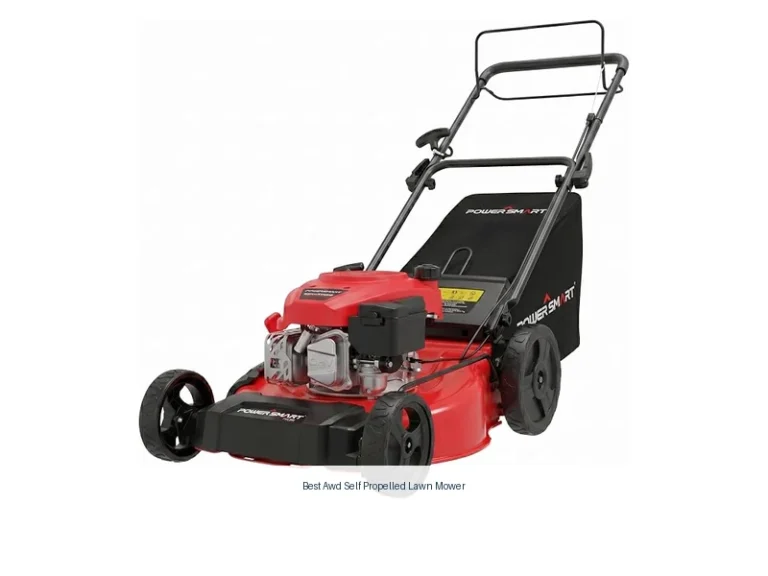
PowerSmart focuses on familiar gas-mower fundamentals: a 170cc four-stroke OHV engine, rear-wheel drive, and a durable 22-inch steel cutting deck. The engine uses an automatic choke and recoil start, so starting should not require manually setting a choke or priming the carburetor. For operators who prefer straightforward mechanical controls, this can be easier to understand than a battery system or a more advanced variable-speed transmission.
Rear-wheel drive is a meaningful advantage on sloped or uneven property because the driven wheels remain at the back of the mower where traction can help during forward travel. The 22-inch deck supports efficient coverage, while the heavy-duty blade and steel construction are intended for repeated seasonal use. As with any gas mower, however, the operator must account for fuel storage, oil checks, and engine care.
The three-in-one cutting arrangement supports mulching, rear bagging, and rear discharge. A large 60-liter grass bag can reduce interruptions when collecting clippings, although a fuller bag also adds weight and may make the mower less comfortable to maneuver. Six cutting-height positions cover a range from 1.5 to 3.9 inches, giving enough flexibility for ordinary lawn preferences and changing seasonal conditions.
Pros
- 170cc OHV engine with automatic choke and recoil start
- Rear-wheel drive improves traction on slopes and uneven ground
- 22-inch steel deck and heavy-duty blade support repeated use
- Three cutting modes cover mulching, bagging, and rear discharge
- 60-liter bag reduces the frequency of emptying
Cons
- Single-speed self-propelled operation offers limited pace control
- Gas maintenance is more involved than cordless ownership
- A large, full grass bag can increase handling weight
My Opinion
PowerSmart is a sensible gas option for buyers who want rear-wheel traction and a generous bag without paying for a more complex speed-control system. It suits larger lawns and regular cleanup work, provided the operator is comfortable managing fuel, oil, and seasonal engine maintenance.
BILT HARD 21″ Self Propelled Gas Lawn Mower
The BILT HARD combines a 201cc four-cycle OHV engine with a 21-inch steel deck and rear-wheel-drive propulsion. Its no-choke, no-primer starting design removes two common manual steps, which may be helpful for newer operators or crews that want a consistent starting routine. The supplied information does not specify a variable-speed drive, so buyers should expect a simpler single-speed self-propelled experience.
Eight cutting-height positions range from 1.2 to 3.75 inches through a single lever that adjusts all four wheels together. That fine adjustment is useful when maintaining different turf types or changing height through the season. Mulching, side discharge, and rear bagging provide the basic flexibility needed for lawns where clippings may either remain on the turf or be collected for a cleaner finish.
The foam-wrapped, angled handle is intended to reduce hand fatigue, an important consideration when the mower is used repeatedly. Rear-wheel drive can also help on uneven areas, while the 201cc engine is rated at 9.0 ft-lb of torque. At 21 inches, its deck is slightly narrower than the 22-inch alternatives, which may make it easier to guide through tighter spaces but can require an additional pass on broad open lawns.
Pros
- 201cc OHV engine with stated 9.0 ft-lb torque
- No-choke, no-primer starting design
- Eight height settings from 1.2 to 3.75 inches
- Rear-wheel drive and angled foam-wrapped handle
- Three-in-one steel deck supports bagging, mulching, and side discharge
Cons
- 21-inch deck may cover slightly less per pass
- Supplied information does not identify a variable-speed control
- Gasoline and routine engine service remain part of ownership
My Opinion
The BILT HARD is a strong value-oriented candidate for buyers who prioritize engine capacity, easy starting, and precise height adjustment. It is particularly attractive for varied lawn conditions, though the smaller deck and less-detailed drive information make it a less obvious choice for very large, open routes.
How I Selected These Mowers for Commercial Use
The selection centered on the tasks that make commercial mowing different from occasional backyard use: repeated starts, frequent transport, long periods of walking, changing terrain, clipping-management needs, and the ability to keep working when grass is thick or conditions are inconvenient. I compared the listed engine or battery systems, deck widths, drive layouts, cutting modes, height controls, starting systems, storage features, and maintenance aids.
Customer-feedback evidence was also considered through the supplied rating and guide-count information, but those numbers were not treated as a substitute for specifications. A product with more customer feedback offers a broader ownership signal, while a newer or less-established option may have fewer comments and therefore less evidence to interpret. I avoided claims about cutting quality, reliability, or comfort that were not supported by the provided data.
The most useful commercial feature is not always the biggest engine. A mower that matches the property layout, walking pace, clipping method, storage space, and maintenance routine can be more productive than a more powerful machine that is difficult to control or keep ready.
Brand diversity was another practical consideration. Including SENIX, Greenworks, YARDMAX, PowerSmart, and BILT HARD gives the comparison different approaches to power and operation rather than presenting five nearly identical gas mowers. The Greenworks battery platform is especially important because it changes the ownership calculation: fuel and oil disappear, but charging capacity and route planning become more important.
Specifications such as “up to” acreage, torque, or bag capacity should be treated as planning information rather than guaranteed daily output. Grass height, moisture, slope, operator pace, blade condition, and stopping time all influence real productivity.
How to Choose the Best Self Propelled Lawn Mower for Commercial Use
The best self propelled lawn mower for commercial use depends on the route more than on one headline specification. Start by estimating how many lawns are cut between breaks, then consider whether the properties are flat or sloped, whether clippings are collected, how much storage is available, and whether fuel or battery charging is easier to manage.
- Choose the power source first: Gas supports quick refueling, while battery power reduces noise, emissions, and engine maintenance.
- Match drive to terrain: Rear-wheel drive is useful on slopes and uneven ground; front-wheel drive can make turning and maneuvering easier.
- Check pace control: Single-speed systems are simple, while multiple speed settings adapt better to different operators and properties.
- Compare deck width with access: A 22-inch deck covers more per pass, but a 21-inch mower may fit tight gates and landscaping more comfortably.
- Plan clipping management: Bag capacity, mulching, and discharge options affect both finish quality and time spent stopping.
Gas or Battery Power
Gas mowers remain attractive for routes where quick refueling matters and electricity access is limited. The SENIX and PowerSmart use 170cc engines, while the YARDMAX and BILT HARD use 201cc engines. Gas ownership also brings oil checks, fuel storage, recoil starting, and engine maintenance. Those tasks are manageable, but they should be included in the work schedule.
Battery equipment is quieter and starts immediately, which can be valuable in residential neighborhoods or early-day work. The Greenworks kit includes two batteries and is part of a broader 60V tool platform. The trade-off is planning: the operator needs enough charge for the route, access to charging, and an understanding that thick grass, slopes, and damp conditions may reduce coverage.
Deck Width and Property Access
A wider deck can reduce the number of passes across open lawns, but width is only beneficial when the mower can reach the entire property. Measure narrow gates, side yards, sheds, and paths before choosing a 22-inch model. If a crew frequently works around ornamental beds or tight corners, the slightly narrower Greenworks or BILT HARD may be easier to guide.
Drive System and Walking Pace
Rear-wheel drive generally deserves priority when slopes and uneven terrain are common. Front-wheel drive can be useful for frequent turning because lifting or easing the drive wheels during a turn may feel more natural, but the supplied YARDMAX information does not establish that it will outperform rear-wheel drive on every slope. The six-speed CVT is its main advantage because it allows more pace adjustment.
Bagging, Mulching, and Discharge
Bagging is useful when clients expect a clean lawn or when clippings must be removed from certain properties. Mulching saves emptying time and returns finely cut material to the turf, while discharge is often fastest when appearance requirements are less strict. A larger bag reduces stops but becomes heavier as it fills. Confirm that the bagger, chute, and mulch plug are included before assuming every desired mode is ready out of the box.
Initial Setup and First Use
Read the supplied operating instructions before adding fuel, oil, or batteries. Gas models should be checked for shipping materials, handle security, wheel condition, blade-area obstructions, and the correct engine-oil procedure. The SENIX listing specifically states that engine oil is included, but the operator should still follow the manual for the proper amount and first-use process.
For the Greenworks mower, charge both batteries with the correct charger before the first route and confirm that each battery locks into place. Avoid starting a long job with only a partial charge unless the route has a realistic return point. Keep the charger and batteries protected from moisture, heat, and unauthorized access.
Before mowing a customer property, test the height adjustment, propulsion control, discharge or bagging setup, and stopping procedure in a clear area. Walk the lawn first to remove stones, wire, toys, and branches. Begin with a moderate pace and a taller cut if the grass is long; forcing a low setting through overgrown turf can increase clogging and load on the mower.
Maintenance That Supports Longer Ownership
Gas Mower Care
Check engine oil according to the manual, keep the air-intake area clear, and inspect the blade and underside of the deck regularly. Grass buildup can interfere with airflow and discharge, so the washout port on the SENIX and cleanout port on the YARDMAX can make routine cleaning more convenient. Disconnect the spark-plug lead or follow the manufacturer’s safe procedure before working near the blade.
Use fresh, appropriate fuel and avoid leaving fuel in the tank longer than recommended by the engine instructions. Inspect the drive cable, wheels, handle fasteners, and bagger connections during route preparation. A mower that starts easily but has a loose wheel, damaged bag, or worn control cable is not ready for commercial work.
Battery Mower Care
Keep battery contacts clean and store batteries in a dry, moderate environment. Inspect the deck and blade just as you would on a gas mower; cordless operation does not eliminate physical wear or grass buildup. Charge batteries after the route when appropriate, but follow the battery and charger instructions for storage and temperature limits.
Blade and Deck Checks
A sharp, properly secured blade improves the quality and efficiency of each pass. Do not attempt to sharpen or remove a blade unless you can safely support the mower and follow the correct procedure. Look for bent metal, unusual vibration, or damage after striking an object. Stop using the mower if a safety-critical part appears damaged.
How to Use a Self-Propelled Mower More Efficiently
Walk the property before starting and decide where clippings should go, which gates must remain open, and how the mowing pattern will minimize unnecessary turns. On open lawns, long straight passes usually reduce wasted movement. Around trees and beds, reduce the self-propelled pace so the mower does not pull the operator into obstacles.
Set the cutting height according to grass condition rather than trying to remove excessive growth in one pass. Tall or wet grass may require a slower pace, a higher setting, or a second pass. Keep the bag from becoming excessively full because added weight affects handling, and empty it at a convenient stopping point rather than waiting until the mower becomes difficult to steer.
For battery work, organize properties around available charge and carry only the batteries needed for the route. For gas work, refuel only in a safe, well-ventilated location with the engine stopped and cool. Keep the mower clear of traffic, pets, children, and bystanders while the blade is engaged.
Storage, Transport, and Route Preparation
Clean the deck before storage and allow the mower to dry. Foldable handles can save space, and the SENIX specifically supports vertical storage, but never store a mower in a position that conflicts with its operating instructions or risks fuel and oil leakage. Keep gas equipment away from ignition sources and store fuel only in an approved container.
During transport, secure the mower so it cannot roll or tip. Confirm that the grass bag, discharge chute, mulch plug, batteries, charger, and tools are not left behind at the previous property. A short pre-route checklist can prevent more lost time than any minor difference in deck width.
Common Mistakes to Avoid
Many ownership problems begin with a mismatch between the mower and the route rather than with a defective machine. Buyers often focus on engine size or battery voltage while overlooking access width, terrain, bagging needs, charging time, and the operator’s preferred walking pace.
- Do not assume stated acreage is guaranteed in thick, wet, sloped, or unusually tall grass.
- Do not choose front-wheel drive automatically for steep terrain without considering the route layout.
- Do not skip the width measurement for gates, side yards, and storage doors.
- Do not run a gas mower without following the correct oil and fuel procedure.
- Do not work under the deck until the mower is stopped and the manufacturer’s safety procedure is followed.
- Do not leave a battery mower route without confirming charge levels and spare-battery availability.
- Do not wait for severe vibration or poor cutting before checking the blade and deck.
Never trade safe handling for speed. A slower pass, an emptied bag, or a planned battery change is preferable to forcing a mower through conditions it cannot handle comfortably.
FAQ: Choosing a Commercial Self-Propelled Mower
Is a self-propelled mower suitable for commercial lawn work?
Yes, a self-propelled mower can suit commercial lawn work when the properties are appropriate for a walk-behind machine and the operator plans fuel, charging, maintenance, and transport properly. These models are especially useful where a larger riding mower cannot access gates, narrow passages, landscaped areas, or smaller residential properties.
Is rear-wheel drive better for commercial mowing?
Rear-wheel drive is often a strong choice for slopes and uneven ground because the driven wheels can provide useful traction during forward travel. It is not automatically best for every route, though. Front-wheel drive may be easier to maneuver around obstacles and at turns, while terrain, wheel tread, and operator preference all matter.
Are battery mowers practical for several properties in one day?
They can be practical when the battery capacity, charging schedule, and route length are planned carefully. The Greenworks kit includes two 4.0Ah batteries and states coverage of up to three-quarters of an acre per charge under varying conditions. Actual output can change significantly with grass density, slopes, mowing speed, and technique.
Is a 22-inch deck enough for commercial use?
A 22-inch deck can be efficient for residential routes, medium properties, and areas where access is limited. It will not cover as quickly as a much wider commercial machine on broad open acreage, but its smaller size can make transport and maneuvering easier. The SENIX, YARDMAX, and PowerSmart all use 22-inch decks.
What cutting options should a commercial mower have?
Mulching, bagging, and discharge provide the most useful flexibility. Bagging supports a clean finish, mulching can reduce disposal stops, and discharge can speed up work when clippings may remain on the lawn. Consider the client’s expectations and whether the bagger capacity is adequate for the properties on the route.
Which mower is easiest to maintain?
The Greenworks battery model avoids fuel, oil, and many engine-related tasks, making it the simplest from a power-system standpoint. Gas models remain manageable but require routine checks of fuel, oil, air intake, blade condition, and other engine components. Washout or cleanout ports on selected models can simplify deck cleaning.
Final Thoughts
The SENIX 22” Self Propelled Gas Lawn Mower 170cc Gas Lawnmower is my leading choice for balanced gas performance, cutting flexibility, storage convenience, and included accessories. Greenworks 60V 21in Self-Propelled Lawn Mower is the better alternative for quieter cordless operation and an expandable battery platform, while YARDMAX 22 in. 201cc Select PACE 6 Speed CVT High Wheel FWD 3-in-1 Gas Walk Behind Self Propelled Lawn Mower is the standout for adjustable mowing pace. For the best self propelled lawn mower for commercial use, match one of these three to your terrain, route size, clipping plan, and maintenance preferences.

I’m Maya L. Greenwood, a lifelong plant lover who believes anyone can grow something beautiful with the right guidance. After years of testing soil mixes, pruning methods, irrigation tricks, and pest-safe solutions, I started EasyGardenTips.com to turn hard-won lessons into step-by-step advice. From seed starting and container gardens to composting and seasonal checklists, my goal is to make gardening simple, sustainable, and fun.