How Long Do Cedar Raised Beds Last? Lifespan and Rot Prevention
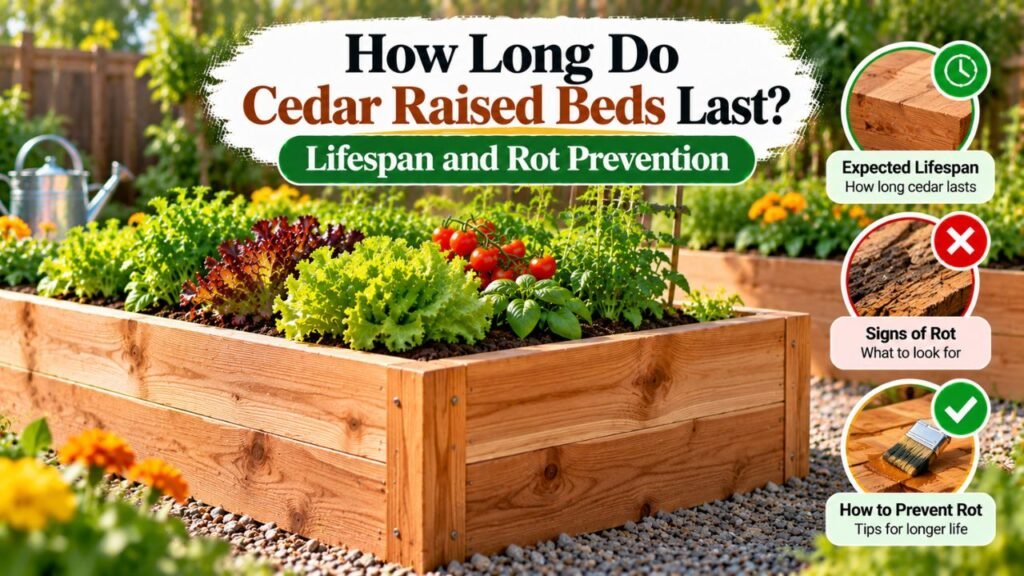
Cedar raised garden beds typically last around 10–15 years, although some may deteriorate sooner and well-built beds can last 20 years or longer under favorable conditions. Their actual lifespan depends on the cedar species, lumber quality, board thickness, soil moisture, climate, and how the frame is constructed and maintained.
Cedar is one of the most popular materials for wooden raised beds because it naturally resists decay and certain wood-damaging insects. Unlike ordinary untreated pine, cedar contains natural compounds that help protect its heartwood from deterioration.
However, cedar isn’t rot-proof. Raised bed boards remain exposed to damp soil, irrigation, rainfall, and changing temperatures. Over time, these conditions can weaken the wood, particularly along the bottom edges, corners, and joints.
Not every cedar bed needs replacing after a decade. Some frames remain structurally sound for considerably longer, while thin boards in constantly wet conditions may fail much earlier.
In this article, I explain how long cedar raised beds last, why different cedar boards deteriorate at different rates, and which conditions cause premature rot. I also cover practical ways to extend their lifespan, warning signs that indicate structural damage, and how to decide whether repairing or replacing an aging cedar bed makes more sense.
How Long Do Cedar Raised Beds Last in Different Conditions?
The typical lifespan of a cedar raised bed is an estimate rather than a fixed expiration date.
A well-constructed bed made from quality cedar may remain useful for more than a decade. However, constant soil moisture, poor construction, and thin lumber can shorten that period.
According to the University of Maryland Extension’s raised bed planning guidance, cedar boards may last close to 15 years, while ordinary pine lumber may last approximately 3–5 years.
That comparison helps explain why cedar generally costs more than pine.
Typical Cedar Raised Bed Lifespan
For a conventional cedar raised vegetable bed, approximately 10–15 years is a reasonable planning estimate.
However, individual beds can perform differently.
| Cedar Bed Condition | Expected Durability |
| Quality cedar, good drainage, sturdy construction | May reach or exceed the typical 10–15-year range |
| Thin cedar boards in a frequently wet garden | May deteriorate earlier |
| Thick cedar heartwood with well-maintained connections | May remain serviceable considerably longer |
| Cedar with persistent standing water against the frame | Increased risk of premature decay |
| Cedar with structural damage or extensive rot | Repair or replacement may already be necessary |
These are qualitative expectations, not guaranteed service-life ratings.
A cedar bed’s useful life ends when its frame can no longer safely hold the soil, not when the wood first changes color or develops small surface cracks.
Cedar Raised Beds in Dry Climates
Cedar beds in relatively dry climates may last longer because the wood spends less time at moisture levels that support fungal decay.
However, dry conditions don’t eliminate every problem.
Strong sunlight and repeated wetting and drying can cause surface checking, splitting, and dimensional movement.
These changes don’t always mean the wood is rotting.
A cedar frame can develop a weathered appearance while remaining structurally sound.
Cedar Raised Beds in Wet and Humid Climates
Wet and humid climates can shorten the life of a cedar raised bed when the wood remains damp for long periods.
Frequent rainfall, poor air circulation, and soil that doesn’t drain properly increase moisture exposure.
The lower edges and inside faces are particularly vulnerable because they remain close to wet soil.
In these conditions, selecting thicker lumber and managing drainage becomes more important.
Can Cedar Raised Beds Last 20 Years?
Yes, some cedar raised beds can remain serviceable for 20 years or longer.
However, this shouldn’t be treated as a guaranteed lifespan for ordinary cedar boards.
Long service life is more realistic when the bed uses durable heartwood, substantial timber, strong connections, and construction details that limit prolonged moisture exposure.
Replacing individual damaged boards can also extend the life of the overall structure.
Why Cedar Raised Beds Last Longer Than Ordinary Wood
Cedar’s natural decay resistance is the main reason gardeners choose it for raised bed construction.
However, its durability depends on which part of the tree the lumber comes from and the type of cedar used.
Natural Resistance to Rot
Cedar heartwood contains naturally occurring extractives that help resist certain wood-decaying organisms.
These substances contribute to the wood’s durability without requiring conventional chemical pressure treatment.
The University of Arkansas Cooperative Extension’s raised bed construction guide explains that cedar contains natural oils and tannins that help resist rot. Its guidance notes that cedar beds may last well beyond 10 years.
This makes cedar a practical choice for vegetable gardens where untreated framing material is preferred.
However, natural resistance doesn’t mean immunity.
Cedar can still decay when exposed to suitable moisture and biological conditions for extended periods.
Cedar Heartwood vs. Sapwood
Heartwood is the older wood near the center of a tree.
Sapwood is the younger, outer wood that originally transports water and nutrients.
In naturally decay-resistant cedar species, the heartwood generally provides better resistance to fungal deterioration than the sapwood.
This distinction matters when purchasing lumber.
Two boards sold as cedar may have different amounts of durable heartwood.
A board containing substantial sapwood may deteriorate more quickly in wet, soil-contact conditions.
For a long-lasting raised bed, choose sound lumber with a high proportion of naturally durable heartwood when available.
Western Red Cedar vs. Eastern Red Cedar
Not all products sold as cedar come from the same tree species.
Two materials used in outdoor construction are:
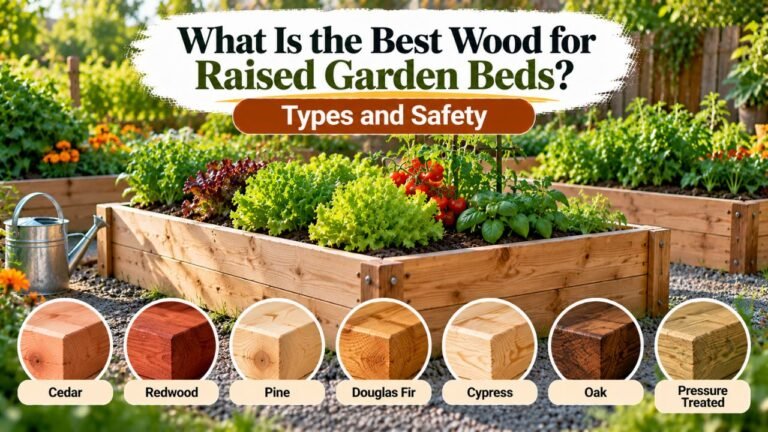
- Western red cedar (Thuja plicata): Commonly available in lumber products, relatively lightweight, and easy to work with.
- Eastern redcedar (Juniperus virginiana): Naturally decay-resistant heartwood, although suitable boards may be harder to source in some regions.
Despite their common names, these woods belong to different botanical groups.
Their durability also depends on heartwood content, board quality, and environmental exposure.
Don’t assume every product labeled cedar has identical properties.
When purchasing lumber, ask the supplier which species is being sold.
What Factors Affect Cedar Raised Bed Lifespan?
Several conditions determine whether a cedar bed remains strong for many years or begins deteriorating relatively quickly.
Constant Moisture Against Cedar Boards
Moisture is one of the most important factors in wood decay.
Fungi that break down wood require suitable moisture and environmental conditions.
Raised bed boards experience regular contact with damp growing soil.
The inside face may stay wet even when the exposed outside surface appears dry.
The problem becomes more severe when:
- Irrigation frequently wets the boards.
- Soil remains saturated.
- Rainwater collects around the frame.
- Organic mulch is piled against the exterior walls.
- Water becomes trapped between boards and liners.
Reducing prolonged moisture exposure can help extend the frame’s service life.
Board Thickness and Structural Strength
Cedar lumber thickness affects both strength and durability.
Thicker boards provide more material to resist bending and can remain structurally useful longer as their surfaces weather.
For example, consider the difference between:
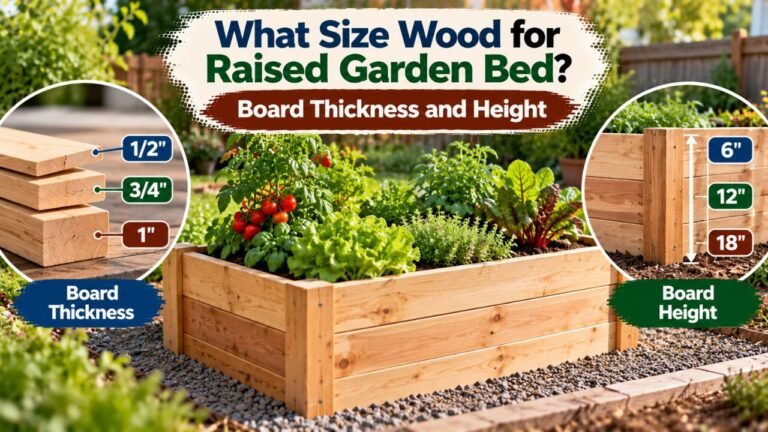
- Nominal 1-inch-thick cedar boards.
- Nominal 2-inch-thick cedar boards.
- Larger cedar landscape timbers.
In common surfaced dimensional lumber, nominal 1-inch boards are usually approximately ¾ inch thick, while nominal 2-inch boards are generally approximately 1½ inches thick.
Actual dimensions can differ for rough-sawn lumber.
A thicker board doesn’t automatically last twice as long, but it generally provides greater resistance to bending and allows more material before decay compromises its strength.
For a permanent vegetable bed, thicker cedar is often worth considering when the budget allows.
Soil Pressure on Long Cedar Boards
Wet soil places substantial pressure on raised bed walls.
Long, unsupported boards may gradually bow outward.
This is particularly noticeable in rectangular beds with long sides.
For example, an 8-foot cedar board holding back a deep layer of soil may need intermediate bracing.
Without sufficient support, the frame can spread at the corners or develop excessive movement.
Bowing doesn’t always indicate rot, but repeated stress can damage connections and shorten the frame’s useful life.
Rainfall and Poor Ground Drainage
A raised bed installed in an area with persistent standing water exposes its lower boards to prolonged moisture.
Even naturally decay-resistant cedar can deteriorate under these conditions.
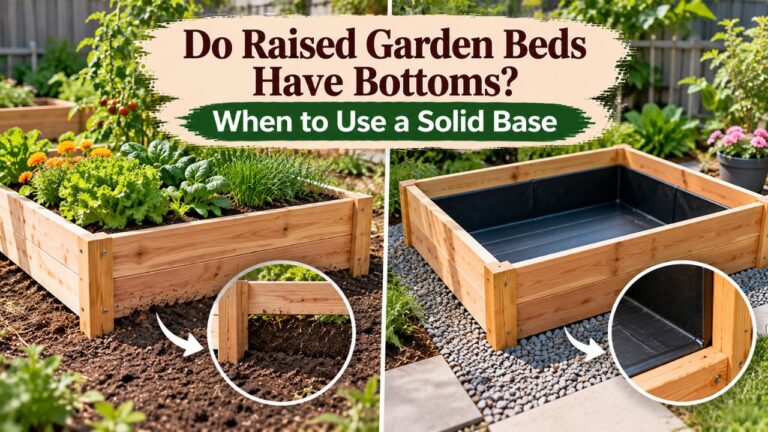
An open-bottom bed placed on suitable natural ground usually allows excess water to drain into the soil underneath.
However, compacted clay, an unsuitable location, or blocked drainage routes can cause water to accumulate.
Correcting those problems protects both the growing environment and the wooden frame.
Fasteners and Corner Connections
A cedar bed may become unstable before its main boards have completely deteriorated.
Weak corners, corroded fasteners, and inadequate supports can shorten its useful life.
Loose connections allow the walls to separate or move under soil pressure.
Use appropriate outdoor-rated fasteners compatible with cedar.
Stainless steel is often a good choice, while suitable corrosion-resistant coated fasteners may also work when approved for the application.
Avoid fasteners that are too short or poorly positioned.
How to Make Cedar Raised Beds Last Longer
Extending the life of a cedar raised bed starts with proper construction.
Maintenance helps, but it can’t fully compensate for poor materials or a frame that allows water to remain trapped against the wood.
1. Choose Thick, Good-Quality Cedar Lumber
Select straight, sound boards without obvious decay or major structural damage.
For long-term beds, nominal 2-inch lumber provides greater thickness and strength than nominal 1-inch boards.
Choose boards with substantial heartwood when available.
Inspect the lumber for severe splits, loose knots near important connections, and areas that already appear deteriorated.
Small cosmetic knots or surface variations aren’t necessarily problems.
However, avoid defects that significantly reduce the board’s strength.
2. Build on Well-Drained Ground
Choose an area where water doesn’t remain standing for long periods.
Level the ground before assembling the frame.
For open-bottom beds, keep the soil beneath suitable for drainage and root growth.
Avoid placing the frame where roof runoff, downspouts, or irrigation water repeatedly collect against it.
If the garden is on a slope, plan a stable foundation and manage surface runoff.
Don’t undermine the frame by excavating deeply beside its supporting edges.
3. Avoid Burying Cedar Boards Unnecessarily
The lower edges of cedar boards are often exposed to the most persistent moisture.
If the design allows, avoid burying large portions of the frame beneath surrounding soil or mulch.
Keep the external ground level below the upper boards.
Where cedar support posts must enter the ground, recognize that those sections may deteriorate faster than above-ground components.
Use a structural arrangement that allows damaged posts to be replaced when necessary.
4. Consider a Suitable Sidewall Liner
A liner may reduce direct contact between growing soil and the inside face of the cedar boards.
However, liners have limitations.
They can sometimes trap water against wood, especially when installed without appropriate drainage or when moisture enters from above.
If using a liner:
- Choose material appropriate for gardening.
- Install it along the sidewalls rather than sealing the entire bottom.
- Maintain an unobstructed drainage route.
- Avoid creating pockets that hold water against the wood.
- Follow the liner and bed manufacturers’ installation guidance.
For a conventional open-bottom bed, don’t install waterproof sheeting across the entire base simply to protect the frame.
The bed still needs adequate drainage.
Key Takeaway: A liner may help manage soil contact, but drainage and sound construction remain more important than lining alone.
5. Reinforce the Corners and Long Sides
Use sturdy corner posts or suitable brackets to connect the boards.
Long beds may require center braces to control outward movement.
For example, a cedar bed measuring 4 feet by 8 feet may benefit from reinforcement along its long sides, especially when the frame is tall.
Use appropriate structural connections rather than relying on a few short screws.
Check that any braces are suitable for contact with growing soil.
If using metal supports, choose materials with appropriate corrosion resistance.
6. Protect the Exterior With a Suitable Finish
Some exterior wood finishes may help reduce moisture absorption or weathering.
However, not every deck stain, paint, or wood preservative is appropriate for a vegetable garden.
Check the manufacturer’s instructions before applying a finish.
For untreated cedar beds, consider whether the product is suitable for outdoor raised garden structures and whether it will contact growing soil.
If an approved finish is used, applying it before assembly can make exposed surfaces and end grain easier to reach.
Allow it to cure according to the manufacturer’s instructions.
Avoid treating the inside of a vegetable bed with products that aren’t approved for the intended soil-contact application.
7. Keep Mulch Away From the Exterior Walls
Organic mulch is useful for protecting garden soil, but thick piles against wooden frame walls can remain wet.
Keep exterior pathways and mulch levels from burying the cedar unnecessarily.
Allow the exposed sides to dry between rain or watering events when conditions permit.
This also makes it easier to inspect the lower edges of the boards.
8. Inspect the Frame Every Growing Season
Check cedar beds before the main planting season and after severe weather.
Look for:
- Soft or decaying wood.
- Loose screws.
- Bowing sidewalls.
- Cracked corner supports.
- Water collecting beside the frame.
- Connections separating under soil pressure.
Repairing a small problem early can prevent it from affecting the entire structure.
How Long Do 1-Inch vs. 2-Inch Cedar Raised Beds Last?
Thicker cedar boards generally offer better structural durability, but assigning a fixed lifespan based on thickness alone would be misleading.
A thin board made from durable heartwood in a well-drained garden may outlast a thicker board containing less resistant wood in consistently wet conditions.
The main differences are structural.
| Feature | Nominal 1-Inch Cedar | Nominal 2-Inch Cedar |
| Typical surfaced thickness | About ¾ inch | About 1½ inches |
| Material weight | Lower | Higher |
| Resistance to bending | Lower for comparable layouts | Greater for comparable layouts |
| Initial cost | Generally lower | Generally higher |
| Suitability for taller beds | More support may be needed | Often provides better stiffness |
| Potential longevity | Depends on exposure and wood quality | May last longer with comparable conditions |
Are 1-Inch Cedar Boards Good Enough?
Yes. Nominal 1-inch cedar boards can work for appropriately designed shallow raised beds.
They are lighter and often more economical.
However, longer sides may need extra support.
Inspect thin boards more carefully as they age because even limited decay can significantly reduce the remaining sound wood.
Are 2-Inch Cedar Boards Worth the Extra Cost?
For a permanent garden, nominal 2-inch cedar boards can be a worthwhile investment.
They provide greater resistance to soil pressure and may tolerate more surface deterioration before structural failure.
However, the improvement depends on the complete construction.
Thicker side boards won’t prevent failure if the corner posts, joints, or fasteners are inadequate.
Does Cedar Raised Bed Wood Need to Be Sealed?
Cedar doesn’t necessarily need a protective coating to function as raised bed framing.
Its natural decay resistance allows it to be used untreated.
However, some gardeners choose suitable exterior finishes to preserve appearance or limit weather-related moisture exposure.
Leaving Cedar Raised Beds Untreated
Untreated cedar is a practical choice for vegetable gardens.
Over time, exposed cedar naturally changes color.
Fresh cedar may have reddish or brown tones, while weathered surfaces often develop a silver-gray appearance.
This color change is largely associated with surface weathering and doesn’t automatically indicate decay.
Untreated cedar can remain structurally sound after turning gray.
Sealing the Outside of Cedar Beds
An appropriate exterior finish may reduce some weathering effects.
However, finishes vary widely in their ingredients and intended applications.
Choose a product suitable for the location and follow its preparation, application, and reapplication instructions.
Avoid assuming that a product labeled natural or water-based is automatically suitable for direct contact with vegetable-growing soil.
Should You Seal the Inside of a Cedar Raised Bed?
The inside of a raised bed remains in regular contact with moist soil.
An ordinary decorative wood finish may not provide reliable protection under those conditions.
Some products aren’t approved for soil contact.
For that reason, leaving the inside untreated or using an appropriate physical separation system may be more practical than applying an unverified coating.
The right choice depends on the product and how the bed is constructed.
How to Tell if a Cedar Raised Bed Is Rotting
A cedar frame can look weathered long before it becomes structurally unsafe.
The important distinction is between ordinary surface aging and actual wood deterioration.
Signs of Normal Cedar Weathering
Some changes are expected as cedar ages.
These include:
- Gray or faded surface color.
- Small surface checks.
- Minor dimensional movement.
- Slight roughness.
- Uneven discoloration.
These changes don’t necessarily mean the wood needs replacing.
If the boards remain firm and the frame holds its shape, continued use may be appropriate.
Signs of Cedar Wood Rot
More serious warning signs include:
- Soft or spongy wood.
- Crumbling sections.
- Deep deterioration near the lower edges.
- Wood that breaks apart under modest pressure.
- Loose screws surrounded by damaged wood.
- Extensive decay around corner posts.
- A sidewall that no longer retains the soil properly.
Inspect suspicious areas with a screwdriver or another suitable blunt tool.
Sound wood generally resists light probing, while severely decayed material may yield easily.
Avoid using excessive force that could damage otherwise healthy boards.
Where Cedar Raised Beds Usually Rot First
Pay particular attention to areas where moisture tends to remain trapped.
Common locations include:
- Lower board edges.
- Inside corners.
- Soil-contact faces.
- Board ends and joints.
- Support posts entering the ground.
- Areas beneath thick exterior mulch.
A board may appear sound on its outside face while deterioration develops where it touches the soil.
Inspect both sides when possible.
Can You Repair a Rotting Cedar Raised Bed?
Yes. Many cedar raised beds can be repaired without rebuilding the entire frame.
The appropriate repair depends on how much wood has deteriorated and whether the remaining structure can safely support the soil.
Replacing One Damaged Cedar Board
If only one board has deteriorated, replacing that section may extend the bed’s useful life.
A basic repair process involves:
- Remove plants or soil from the affected area as needed.
- Support the remaining soil and frame before loosening structural connections.
- Remove the damaged board carefully.
- Inspect the adjacent corner posts and fasteners.
- Cut a suitable replacement board to the required dimensions.
- Install it using appropriate outdoor-rated fasteners.
- Restore the growing soil and check the frame’s stability.
A full raised bed contains substantial soil weight.
Don’t remove a load-bearing board without supporting the soil and adjoining structure.
If the wall has already bowed severely, it may be safer to empty the bed before rebuilding.
Repairing Loose Cedar Corners
Corner connections may become loose as wood weathers and moves.
If the wood remains structurally sound, replacing corroded fasteners or adding suitable reinforcement may restore stability.
However, screws won’t hold reliably in badly rotted wood.
If the corner post is soft or crumbling, replace the damaged structural member.
Repairing Bowed Sidewalls
A long cedar board may bow outward because of soil pressure.
If the board is sound, appropriate bracing may correct or prevent additional movement.
If the board is cracked, severely deformed, or weakened by rot, reinforcement alone may not provide a reliable repair.
Consider replacing the affected section.
When Should You Replace a Cedar Raised Bed Completely?
Complete replacement becomes more appropriate when extensive rot affects several structural components.
For example, a cedar bed may have significant decay along multiple lower boards and corner posts.
If the remaining frame can’t safely retain the soil, replacing individual pieces may require nearly as much work as constructing a new bed.
Consider rebuilding when:
- Multiple boards have serious rot.
- Corner posts are structurally unsound.
- The frame leans or separates.
- Fasteners no longer hold securely.
- Several walls are badly bowed or cracked.
- Repairs would cost nearly as much as a new frame.
The growing soil doesn’t necessarily need to be discarded when replacing the wooden frame.
If it’s healthy and free from known contamination or serious unresolved disease problems, it can often be reused.
Move or support the soil carefully during construction, then restore the intended filling depth.
Cedar vs. Pine vs. Metal Raised Bed Lifespan
Cedar is often selected because it offers a useful balance of natural appearance, decay resistance, and workability.
However, other materials may offer advantages depending on the garden design.
| Material | Durability Characteristics | Main Tradeoff |
| Untreated cedar | Naturally resistant to decay; often around 10–15 years | Higher initial lumber cost |
| Untreated pine | Generally deteriorates faster in soil contact | Lower initial cost |
| Redwood | Naturally decay-resistant heartwood | May be expensive or difficult to source |
| Galvanized steel | Doesn’t experience biological wood rot | Coating quality and corrosion matter |
| Concrete block | Doesn’t rot like wood | Heavy and requires stable installation |
| Suitable recycled plastic | Resists biological decay | Product quality and UV resistance vary |
Cedar vs. Untreated Pine Raised Beds
Pine is often less expensive than cedar.
However, ordinary untreated pine generally has lower natural decay resistance.
This means pine beds in wet soil-contact conditions may need replacement sooner.
For a temporary garden or a project with a limited budget, pine can still be reasonable.
For a permanent garden, cedar may reduce how often the frame needs rebuilding.
Cedar vs. Galvanized Metal Raised Beds
Galvanized steel doesn’t rot biologically like wood.
A well-manufactured metal bed may provide a long service life, although corrosion, coating damage, and structural problems can eventually affect it.
Cedar offers a natural appearance and is relatively easy to cut, repair, and customize.
The better choice depends on material cost, preferred appearance, climate, and maintenance requirements.
Cedar vs. Concrete Block Raised Beds
Concrete blocks don’t experience fungal wood decay.
They can provide a durable raised bed border when installed on a stable foundation.
However, they are considerably heavier than cedar boards and may be less convenient to modify.
Cedar is often easier for DIY construction.
Concrete blocks may be more practical when a permanent masonry-style border is preferred.
Is Cedar Worth the Cost for a Raised Garden Bed?
Cedar often costs more initially than common untreated construction lumber.
Whether it’s worth the extra expense depends on how long you plan to use the bed and how frequently you’re willing to rebuild it.
Consider the Cost Over Several Growing Seasons
A lower-cost wooden bed may require replacement sooner.
For example, consider two hypothetical projects:
| Example | Initial Frame Cost | Assumed Lifespan | Average Annual Frame Cost |
| Untreated pine bed | $80 | 4 years | $20 |
| Cedar raised bed | $180 | 12 years | $15 |
These prices and lifespans are illustrative assumptions, not current retail quotations or guaranteed performance.
They show why purchasing a more expensive, durable material can sometimes reduce long-term replacement costs.
However, local lumber prices and actual service life will determine the result.
Consider Repair Costs
Cedar frames can often be repaired one board at a time.
If the original construction uses accessible screws and replaceable corner components, repairs may be relatively straightforward.
A bed built with complicated connections or inaccessible fasteners may be more difficult to maintain.
Designing for future repairs can improve the overall value of the project.
Consider Your Garden’s Intended Lifespan
For a temporary garden, purchasing premium cedar may not be necessary.
For a garden expected to remain in place for many years, cedar’s decay resistance and repairability can justify the initial expense.
A well-constructed cedar bed is particularly appealing when you want natural wood without relying on conventional pressure-treated lumber.
How to Maintain Cedar Raised Beds Each Year
Annual maintenance doesn’t require rebuilding the frame or applying a finish every season.
The goal is to identify damage early and reduce unnecessary exposure to conditions that encourage rot.
Before the Growing Season
Inspect the boards, corner posts, and fasteners.
Check whether any wood feels soft or has developed severe cracks.
Look for loose connections and signs of outward movement.
Repair structural problems before adding more soil or installing heavy trellises.
During the Growing Season
Avoid directing irrigation water against the cedar walls unnecessarily.
Maintain appropriate soil moisture for the crops rather than constantly saturating the bed.
Keep surrounding mulch from accumulating excessively against the lower boards.
Check that drainage remains unobstructed.
After the Growing Season
Remove unwanted plant debris from around the frame.
Inspect the lower edges and corners again.
If the bed uses a suitable exterior finish, follow the manufacturer’s maintenance schedule.
Don’t apply sealers automatically when the existing finish is still performing as intended.
After Heavy Rain or Winter Weather
Check for standing water, shifted supports, loose joints, and frame movement.
Freezing and thawing can affect the ground beneath the bed in colder regions.
Correct uneven support before the frame becomes severely distorted.
A small amount of preventive maintenance can help preserve the structure without unnecessary replacement.
Conclusion
So, how long do cedar raised beds last? Most gardeners can reasonably plan for approximately 10–15 years, although the actual lifespan can be shorter or longer depending on wood quality, moisture exposure, climate, and construction.
Cedar lasts longer than many ordinary untreated woods because of its natural decay resistance. However, it still deteriorates when exposed to persistent moisture and unfavorable conditions.
For a long-lasting bed, choose sound cedar lumber, consider thicker boards, install appropriate supports, and provide good drainage. Inspect the lower boards and corners regularly because these areas often experience the greatest moisture exposure.
A weathered gray appearance doesn’t automatically mean the bed needs replacement. Focus on the condition of the wood and whether the frame remains structurally sound.
For a permanent vegetable garden, quality cedar remains a practical choice when you want a natural, repairable raised bed that can provide many years of service.
FAQs About How Long Do Cedar Raised Beds Last
Will Cedar Raised Beds Last 20 Years?
Yes, some cedar beds can last 20 years or longer when built from durable lumber and maintained under favorable conditions.
However, 20 years isn’t a guaranteed lifespan for ordinary cedar boards. Soil moisture, climate, thickness, and structural support can substantially affect durability.
Do Cedar Raised Beds Rot From the Inside?
Yes. The inside faces remain exposed to moist growing soil, which can encourage decay over time.
The lower boards and inside corners are particularly vulnerable.
Adequate drainage and proper construction help reduce prolonged moisture exposure.
How Long Do Untreated Cedar Raised Beds Last?
Untreated cedar raised beds commonly last around 10–15 years, although service life varies considerably.
Cedar contains naturally occurring compounds that help resist decay, so conventional pressure treatment isn’t necessary to obtain its natural durability.
Should I Line My Cedar Raised Bed to Make It Last Longer?
A suitable sidewall liner may reduce direct soil contact, but it isn’t always necessary.
Poorly installed liners can trap moisture against wood and may create additional problems.
If using a liner, choose appropriate material and maintain drainage through the bottom of the bed.
Does Cedar Last Longer Than Pine in Raised Beds?
Generally, yes. Cedar heartwood has greater natural resistance to decay than ordinary untreated pine.
Pine is often less expensive, but it may require replacement sooner in moist soil-contact conditions.
The actual difference depends on material quality, board thickness, and climate.
Should I Replace Cedar Raised Beds When They Turn Gray?
No. Gray coloring is a normal result of weathering and doesn’t necessarily indicate structural damage.
Inspect the wood for softness, crumbling, extensive cracking, and weakened connections.
If the frame remains firm and stable, it may continue serving the garden.
Can I Use Old Cedar Raised Bed Soil in a New Frame?
Yes. Healthy growing soil can generally be reused when replacing an old cedar frame.
Remove substantial wood debris, inspect the soil’s condition, and replenish nutrients or lost volume as needed.
There’s usually no reason to replace all the soil simply because the surrounding cedar boards have deteriorated.

I’m Maya L. Greenwood, a lifelong plant lover who believes anyone can grow something beautiful with the right guidance. After years of testing soil mixes, pruning methods, irrigation tricks, and pest-safe solutions, I started EasyGardenTips.com to turn hard-won lessons into step-by-step advice. From seed starting and container gardens to composting and seasonal checklists, my goal is to make gardening simple, sustainable, and fun.