Can You Use Painted Wood for Raised Garden Beds? Paint Safety
Yes, you can use painted wood for raised garden beds, provided the wood is suitable for gardening and the paint is a modern, properly applied coating without hazardous ingredients. Exterior water-based latex paint is a commonly recommended option for protecting wooden garden beds. However, old painted lumber with unknown coatings should generally be avoided, especially when growing vegetables.
Painting a raised garden bed can improve its appearance and help protect the wood from weather exposure. The main concern is whether the coating could introduce unwanted substances into the growing soil as it ages, peels, or wears away.
Not all painted wood carries the same risk. Freshly painted untreated lumber is different from reclaimed fence boards, old house siding, or wood covered with unidentified paint. Soil moisture, paint quality, and the age of the coating also affect whether a painted bed is a practical choice.
In this article, I explain which paints are suitable for raised beds, the risks of using older painted wood, and whether painting the inside of a vegetable bed is advisable. I also cover proper preparation, soil barriers, wood durability, and safer alternatives for growing edible plants.
Can You Use Painted Wood for Raised Garden Beds Safely?
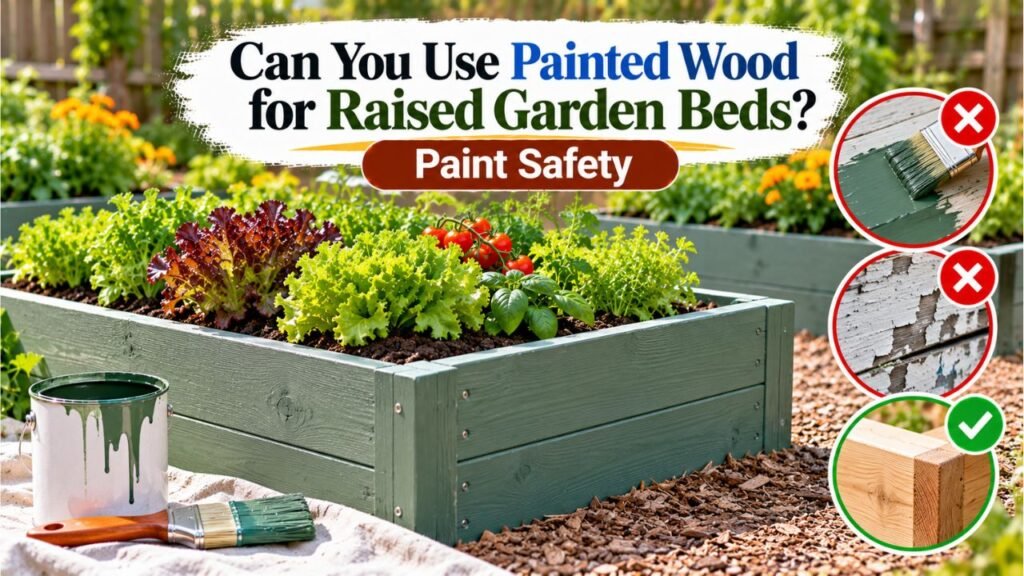
Painted wood can be suitable for raised garden beds when the underlying lumber and coating are appropriate for outdoor gardening.
The safest practical approach is to start with new, untreated lumber and apply a known exterior coating according to the manufacturer’s directions.
The University of Maryland Extension’s guidance on raised bed materials identifies exterior latex paint as an option for preserving wooden raised beds and reducing soil contact with treated lumber.
However, that recommendation does not mean every paint or every painted board is suitable for growing food.
The following comparison helps distinguish between common materials.
| Painted Wood Type | Suitable for Raised Beds? | Main Concern |
| New untreated wood with modern exterior latex paint | Generally yes | Select an appropriate coating and allow it to cure |
| New wood with water-based acrylic exterior paint | Often suitable | Check the product’s ingredients and intended use |
| Previously painted wood with a verified modern coating | Potentially | Inspect paint condition and wood treatment history |
| Old painted wood with unknown coating | Not recommended | Possible lead or other hazardous substances |
| Wood with peeling or flaking paint | Avoid until evaluated | Paint fragments may contaminate soil |
| Creosote-treated or old CCA-treated wood covered in paint | Avoid | Paint does not reliably eliminate preservative concerns |
| Unpainted cedar or other naturally durable wood | Generally suitable | Gradual weathering and natural decay |
Key Takeaway: The condition and history of the wood matter as much as the paint itself. New wood with a known coating is a more dependable choice than salvaged painted boards.
What Type of Paint Is Best for Raised Garden Beds?
Exterior water-based latex or acrylic paint is often a practical option for wooden raised beds.
These coatings are widely available, designed for outdoor exposure, and can form a protective film over the wood.
However, product formulations vary, so check the label and manufacturer instructions before applying any coating to a vegetable garden bed.
Exterior Water-Based Latex Paint
Exterior latex paint is a common choice for protecting raised bed lumber.
It creates a surface coating that helps reduce direct exposure to rain, sunlight, and weathering.
Potential advantages include:
- Suitable outdoor formulations are widely available.
- Application and cleanup are generally straightforward.
- Many products provide good color retention.
- The finish can be maintained through repainting.
- Some formulations offer useful moisture resistance.
Choose paint intended for exterior wood surfaces.
If the coating will contact garden soil, confirm that the manufacturer considers it appropriate for that application.
Avoid assuming that every exterior latex paint has identical ingredients or long-term performance.
Water-Based Acrylic Paint
Acrylic exterior paint is another option for raised garden beds.
Many products marketed as latex paint use acrylic-based binders, so these categories can overlap.
Quality acrylic coatings are designed to accommodate normal outdoor temperature changes and wood movement.
However, the exact formulation matters more than whether the can says acrylic or latex.
Check whether the product is intended for:
- Exterior wood
- Moisture exposure
- Outdoor temperature changes
- The expected surface preparation and primer system
For soil-contact areas, seek specific manufacturer guidance rather than relying on general exterior-use claims.
Are Low-VOC and Non-Toxic Paints Better?
Low-VOC paints can be worth considering, particularly when reducing solvent emissions during application is a priority.
However, low-VOC does not automatically mean food-safe or suitable for prolonged contact with garden soil.
VOC ratings primarily concern volatile organic compound emissions, not every chemical contained in a finished coating.
Similarly, a product advertised as non-toxic may have that description based on a particular testing standard or intended use.
The label alone does not establish suitability for a raised vegetable bed.
Check the manufacturer’s documentation, especially if you plan to coat the surfaces directly against the soil.
Should You Use Oil-Based Paint?
Oil-based paints can provide durable protective finishes, but they vary considerably in formulation.
Some products contain solvents, additives, or other ingredients that may not be appropriate for garden soil contact.
Modern oil-based paint is not automatically hazardous, but it should not be selected for food-growing beds without checking its intended use.
For a straightforward DIY project, a suitable exterior water-based coating is often the easier option.
Avoid using industrial coatings, marine antifouling paints, or unidentified preservative products simply because they are designed to withstand harsh outdoor conditions.
Is Painted Wood Safe for Growing Vegetables and Herbs?
Modern painted wood can be suitable for vegetable and herb beds when the lumber and coating are appropriately selected.
The central issue is preventing unwanted substances from entering the growing environment.
Paint can break down through sunlight, moisture, abrasion, and repeated weather exposure.
As a coating deteriorates, small fragments may enter the surrounding soil.
The possible risk depends on what those fragments contain.
Can Paint Chemicals Leach Into Raised Bed Soil?
Some substances contained in wood coatings may migrate or be released as the coating deteriorates.
However, the amount and significance depend on the paint formulation, its condition, exposure to water, and soil chemistry.
It is not accurate to assume that every modern painted board contaminates vegetables.
It is equally misleading to assume that all cured paints are safe for direct, continuous soil contact.
For edible gardens, the most dependable choices are products with known ingredients and suitable manufacturer instructions.
Avoid adding unknown materials to the garden simply to reuse inexpensive lumber.
Does Paint Affect Vegetable Growth?
An appropriate coating on a raised bed frame should not directly affect plant growth when it remains intact and does not introduce harmful substances into the soil.
Vegetables depend primarily on suitable soil, water, sunlight, nutrients, and root space.
The paint on the outside of the bed does not normally influence those growing conditions.
Problems become more likely when deteriorating coatings or unsuitable wood preservatives enter the growing medium.
A painted frame also cannot compensate for poor soil drainage or inadequate growing depth.
Are Painted Raised Beds Safe for Root Vegetables?
Carrots, radishes, beets, and potatoes can be grown in appropriately constructed painted raised beds.
However, root crops deserve particular attention when soil contamination is suspected because their edible portions grow within the soil.
Lead-contaminated soil can adhere to harvested produce, and some contamination may also be taken up by plants.
Use clean growing soil and avoid unknown painted lumber.
If the garden has a history of contamination, a laboratory soil test is more reliable than judging the soil by its appearance.
Why Old Painted Wood Can Be Dangerous for Raised Garden Beds
Old painted lumber presents a different concern from newly painted boards.
The age, original use, and chemical composition of the coating may be unknown.
This is especially relevant when reusing materials from older houses, sheds, fences, and demolition projects.
Lead Paint on Older Lumber
Lead-based paint is one of the main concerns with salvaged painted wood.
In the United States, residential lead-based paint was banned for consumer use in 1978. Older buildings and materials may still contain it.
According to the EPA’s guidance on reducing lead exposure at home, deteriorating lead-based paint can release dust and chips, and peeling exterior paint can contribute to lead-contaminated soil.
This matters in raised garden beds because the wood remains close to the soil used for growing food.
Potential exposure can occur through contaminated soil, dust, or produce carrying soil particles.
Do not use old painted lumber of unknown origin for edible raised beds.
If you suspect lead paint, do not sand, scrape, saw, or burn the material. These activities can release hazardous dust or fumes.
Can You Tell Whether Old Paint Contains Lead?
You generally cannot determine whether paint contains lead simply by looking at its color or surface condition.
A smooth coating may still contain lead.
Likewise, white, green, red, or dark-colored paint cannot be classified as safe or unsafe based only on its appearance.
Professional paint testing or appropriate laboratory analysis can identify lead.
However, testing does not necessarily establish that every other coating or wood treatment is suitable for food gardening.
For a new vegetable bed, purchasing known untreated lumber is usually more practical than attempting to make unidentified painted wood suitable.
Can You Paint Over Old Lead Paint to Make It Safe?
Painting over suspected lead-based paint is not a dependable solution for reusing lumber in raised vegetable beds.
A new coating may temporarily cover the older material, but the underlying paint remains.
Moisture, wood movement, mechanical damage, and future deterioration can compromise the coating.
If the original lumber contains lead paint, use different building material rather than relying on ordinary exterior paint as a permanent barrier.
How to Paint Wood for Raised Garden Beds
Painting a new raised bed is relatively straightforward when the wood is clean, dry, and suitable for the chosen finish.
Complete as much preparation as practical before filling the bed with soil.
Step 1: Select Suitable Untreated Lumber
Start with new wood that has a known treatment history.
Untreated pine, fir, cedar, and other suitable construction lumber can be used depending on the desired durability and budget.
Cedar and some other naturally decay-resistant species may last longer without relying entirely on a protective coating.
Avoid wood with:
- Unknown chemical treatments
- Existing unidentified paint
- Severe rot or mold damage
- Heavy oil or chemical contamination
- Unexplained stains or industrial residue
Inspect the boards before assembly.
Choose reasonably straight material with no major structural defects.
Step 2: Cut and Prepare the Boards
Measure and cut the lumber according to the raised bed design.
Remove splinters and rough edges.
If surface smoothing is needed, lightly sand new, known untreated wood using appropriate dust protection.
Do not use this sanding procedure on old painted boards that might contain lead.
Remove sawdust and other surface contamination.
Make sure the wood is sufficiently dry for the coating system.
Painting damp lumber can contribute to poor adhesion and premature peeling.
Step 3: Choose the Paint and Primer
Select a suitable exterior paint intended for wood.
Check whether the manufacturer requires a primer.
Some products are self-priming under specified conditions, while others need a separate primer for proper adhesion.
For a raised vegetable bed, avoid products with unclear suitability for prolonged soil exposure.
If you only plan to paint the exterior, ensure the coating is appropriate for that exposed outdoor surface.
Follow the manufacturer’s application and compatibility instructions.
Step 4: Paint the Wood Before Filling the Bed
Apply the coating to clean, prepared surfaces using a suitable brush, roller, or other recommended method.
Pay attention to exposed board ends and cut edges because they can absorb moisture readily.
Follow the product instructions for:
- Surface preparation
- Primer application, if required
- Paint coverage
- Recoat timing
- Suitable temperatures and weather conditions
- Final drying and curing
Do not apply unusually thick coats in an attempt to make the wood waterproof.
Thick applications can dry poorly or fail to adhere as intended.
Step 5: Allow the Paint to Cure
After painting, allow the coating to dry and cure according to the manufacturer’s directions.
Dry-to-touch time is not necessarily the same as full curing time.
Curing may take longer in cool, humid, or poorly ventilated conditions.
Avoid filling the bed immediately if doing so would expose an incompletely cured coating to wet soil.
Never assume that a fixed waiting period applies to every exterior paint.
Step 6: Assemble and Fill the Raised Bed
Once the coating is ready for service, complete the bed assembly.
Use suitable outdoor fasteners and follow the structural requirements for the bed’s dimensions.
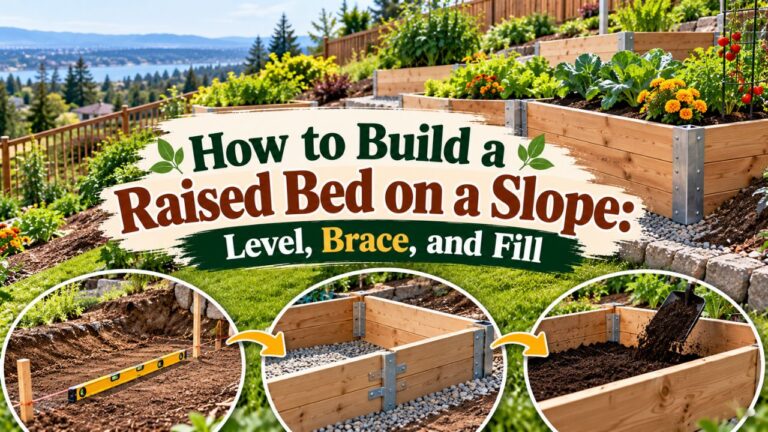
Place the bed on a reasonably level, well-drained site.
If you choose a soil-side liner, install it before adding the growing medium.
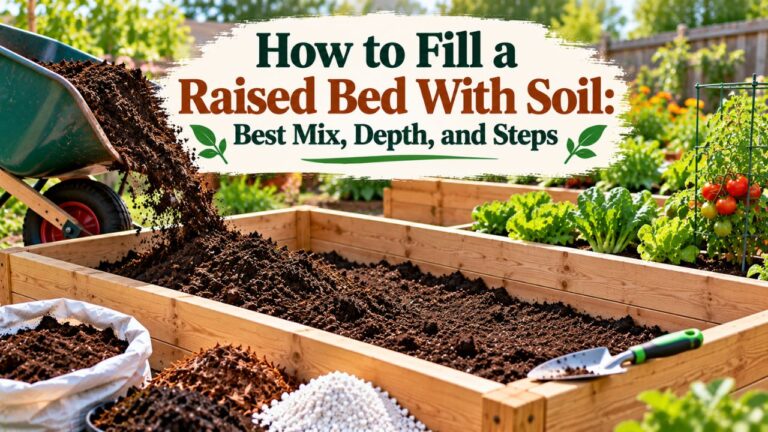
Fill the bed with suitable raised bed soil and compost rather than relying on an excessive amount of pure organic material.
Keep drainage open and avoid creating an enclosed container that traps water around plant roots.
Should You Paint the Inside or Outside of a Raised Garden Bed?
Painting the outside is often the simplest option for improving appearance and reducing direct weather exposure.
Painting the inside requires additional attention because that surface remains in contact with moist soil.
Painting the Outside of the Raised Bed
Exterior boards experience rain, sunlight, temperature changes, and physical wear.
A suitable exterior coating can provide a protective finish.
Pay particular attention to exposed top edges and board ends.
However, painting only the outside does not prevent moisture from entering through the interior surface.
The wood can still absorb moisture from the soil and deteriorate over time.
Painting the Inside of the Raised Bed
The inside of a raised bed experiences prolonged exposure to soil moisture.
Some exterior coatings may not be designed for that condition.
If you intend to paint the soil-contact surfaces, confirm that the specific product is appropriate for the application.
Avoid assuming that a paint suitable for siding, fences, or furniture is automatically intended for direct garden soil contact.
An alternative is to leave the interior untreated and use a suitable sidewall barrier where needed.
Can You Use a Plastic Liner With Painted Wood?
Yes. A properly installed liner can help separate the garden soil from the wooden frame.
Heavy-duty plastic sheeting may be used along the interior sidewalls, particularly when limiting soil contact with the wood is the goal.
However, a liner has limitations.
- It can trap moisture against the wood if water becomes confined behind it.
- Sharp edges and gardening tools may puncture it.
- It may eventually need replacement.
- It does not make lead-painted or contaminated reclaimed lumber suitable for growing food.
For an open-bottom raised bed, avoid covering the entire ground surface with impermeable plastic that prevents normal drainage.
For an elevated planter with a solid bottom, appropriate drainage outlets are necessary.
Key Takeaway: A liner can reduce direct soil contact with a suitable frame, but it should not be used to justify building edible garden beds from hazardous or unidentified materials.
Does Painting Wood Make Raised Garden Beds Last Longer?
Painting may help wooden raised beds resist weathering by reducing exposure to moisture and sunlight.
However, it does not make ordinary wood completely waterproof or permanently resistant to rot.
Raised bed lumber faces demanding conditions because its inner surface remains near damp soil.
How Paint Helps Protect the Wood
A properly applied exterior coating can reduce surface wetting and slow some weather-related deterioration.
It also provides a decorative finish that can be maintained over time.
The potential benefit depends on:
- Wood species
- Surface preparation
- Paint formulation
- Coating thickness
- Exposure to sunlight and rainfall
- Soil moisture
- Drainage around the bed
- Regular maintenance
A high-quality coating may last longer than a poorly applied finish, but no universal lifespan can be guaranteed.
Why Painted Raised Beds Still Rot
Wood decay occurs when conditions favor wood-destroying organisms.
Persistent moisture is one important factor.
Even painted lumber can absorb water through joints, cracks, exposed fastener holes, and damaged coatings.
The soil-facing side may also stay damp for extended periods.
Once moisture becomes trapped behind a failing coating, peeling and deterioration may increase.
Good construction and drainage are therefore as important as paint selection.
How Often Should You Repaint a Raised Garden Bed?
There is no fixed repainting schedule for every bed.
Inspect the finish periodically, especially after winter or prolonged wet weather.
Look for:
- Peeling or flaking
- Blistering
- Cracks
- Exposed wood
- Soft or damaged boards
- Persistent moisture around joints
Repaint known modern coatings according to their maintenance instructions.
If the existing paint is unidentified, do not sand or scrape it before determining whether it may contain lead.
Can You Use Old Painted Fence Boards or Pallets?
Reusing lumber can reduce material costs, but painted fence boards and pallets need careful evaluation.
Their previous use and coating history are often uncertain.
Painted Fence Boards
Old fence boards may have been painted, stained, or treated repeatedly.
A board that appears structurally sound may still carry older coatings underneath a newer finish.
Do not assume that the latest visible paint represents every material present.
If the treatment history cannot be confirmed, avoid using the boards to contain vegetable garden soil.
Painted Pallets
Pallet lumber may have been exposed to industrial products, spills, coatings, or unknown storage conditions.
Even when a pallet carries an appropriate treatment mark, that marking does not establish that any paint or other contamination is harmless.
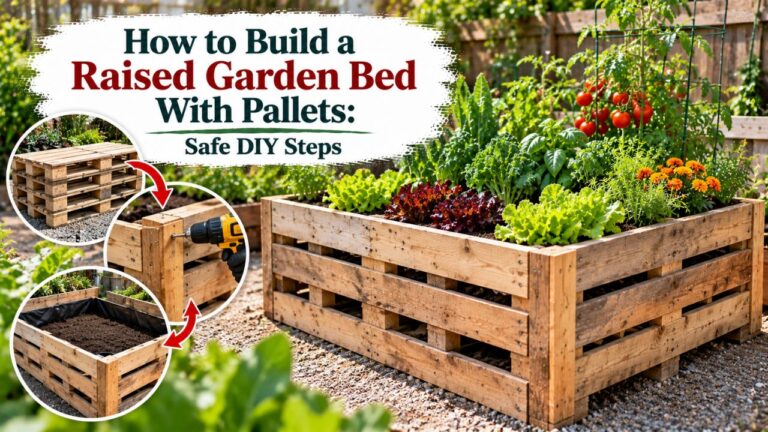
Painted pallets of unknown origin are a poor choice for edible raised beds.
New untreated lumber with a known history is more dependable.
Old House Siding and Reclaimed Furniture
Painted siding, doors, window frames, and furniture should generally not be reused for vegetable raised beds when their coating history is uncertain.
Older architectural materials may contain multiple layers of paint.
Some may also have been treated with products unrelated to ordinary garden use.
Using these materials for outdoor decoration away from edible soil is a different decision from placing them directly against growing vegetables.
What If Your Existing Raised Bed Has Peeling Paint?
If an existing raised bed has peeling paint, identify the coating before disturbing it.
The correct response depends on whether the paint is a known modern product or an unidentified older finish.
If You Know the Paint Is Modern
If the coating is documented as a suitable modern product, inspect the affected area for moisture damage.
Prevent loose fragments from entering the soil.
Follow the manufacturer’s repair procedure for cleaning, surface preparation, and repainting.
Where practical, cover or remove exposed garden soil during maintenance to keep coating debris out of the growing medium.
If the wood itself is soft or severely damaged, replacement may be more appropriate than another coat of paint.
If the Paint Is Old or Unknown
Do not begin sanding, scraping, or power washing an unidentified old coating.
Avoid disturbing the surface until the possibility of lead-based paint has been evaluated.
For a food garden, consider replacing the questionable boards with known suitable material.
If paint chips may already have entered the soil, arrange for appropriate lead testing.
A standard garden fertility test does not always include heavy metal analysis, so request that testing specifically.
A local university extension service, health department, or qualified laboratory can help identify appropriate testing options.
Should You Replace the Soil Too?
Replacing the boards does not automatically mean all the soil must be discarded.
The appropriate response depends on whether contamination is present and at what concentration.
If lead or another hazardous substance is suspected, obtain reliable soil test results before deciding how to manage the bed.
Avoid simply mixing potentially contaminated soil with clean soil to conceal the problem.
If contamination is confirmed, follow appropriate local health or environmental guidance on soil management or replacement.
Painted vs. Unpainted Wood for Raised Garden Beds
Both painted and unpainted wood can work well for garden beds.
The better option depends on appearance, maintenance preferences, material history, and budget.
| Feature | Painted Wood | Unpainted Wood |
| Appearance | Customizable colors | Natural wood appearance |
| Weather protection | Depends on coating quality | Depends on wood species |
| Soil-contact concerns | Requires suitable paint | Requires suitable wood |
| Maintenance | May require repainting | May weather naturally |
| Peeling risk | Possible as coating ages | No paint film to peel |
| Material identification | Paint may hide defects | Surface easier to inspect |
| Best choice | Decorative beds with known coatings | Simple, low-maintenance construction |
When Painted Wood Makes Sense
Painted lumber may be a suitable choice when you want a specific garden color or appearance.
It can also be practical when using new untreated pine or fir and you want to provide some protection against outdoor weathering.
Choose a known coating that is compatible with the intended exposure.
Keep the paint maintained and inspect the wood regularly.
When Unpainted Wood Is Better
Unpainted cedar, redwood, and other naturally decay-resistant woods are often appealing for vegetable gardens.
They avoid the additional decision of selecting a soil-compatible paint.
They can still weather, discolor, and eventually decay, but they don’t produce paint flakes as a coating ages.
For gardeners who prefer simple construction with fewer coating-related concerns, suitable untreated wood is a practical choice.
Alternatives to Painted Wood for Raised Garden Beds
If you prefer not to use painted lumber, several materials can provide a durable raised bed structure.
Untreated Cedar or Redwood
Naturally decay-resistant woods are common choices for vegetable garden beds.
They can be left unfinished and will gradually weather outdoors.
Their durability still depends on moisture conditions, wood quality, and construction details.
Galvanized Steel Raised Beds
Galvanized steel raised beds provide an alternative to wooden frames.
They do not rot like wood and are available in a range of sizes.
However, the metal coating, manufacturing quality, corrosion conditions, and edge construction should be considered.
Choose products intended for garden use rather than unidentified industrial scrap.
Brick and Stone Raised Beds
Brick and natural stone are useful when a permanent garden border is desired.
They avoid concerns about wood rot and paint peeling.
However, larger structures may require a suitable foundation, drainage planning, and careful construction.
Concrete Blocks
Concrete blocks offer another practical material for raised garden beds.
They are modular and can be arranged into different shapes.
Select clean, suitable materials and avoid blocks with an unknown industrial or chemical contamination history.
Consider wall stability when constructing taller beds.
Common Mistakes When Using Painted Wood for Raised Beds
Several mistakes can reduce the durability of a painted bed or introduce unnecessary soil concerns.
Using Unknown Paint Because the Wood Looks Good
A clean appearance does not establish that old paint is free from hazardous substances.
Avoid reusing unidentified painted lumber for edible gardens.
Assuming All Exterior Paints Are Suitable
Exterior coatings vary by ingredients and intended application.
A product designed for outdoor structures is not necessarily approved for constant wet soil contact.
Check manufacturer instructions.
Painting Damp Wood
Wet or poorly prepared lumber can cause adhesion problems.
Allow the wood to reach suitable painting conditions before applying the finish.
Filling the Bed Before the Paint Cures
Paint that feels dry may not have completed its curing process.
Follow the product’s instructions before exposing coated surfaces to prolonged moisture.
Using Paint to Cover Rotten Wood
Paint cannot restore the structural integrity of decayed boards.
Replace deteriorated lumber rather than hiding damage beneath a new coating.
Blocking Drainage With Plastic
An impermeable liner across the bottom of an open raised bed can interfere with drainage.
Use barriers according to the bed design and keep appropriate drainage paths available.
Ignoring Peeling Paint
Deteriorating paint can release fragments into the soil.
Inspect painted beds regularly and address coating damage promptly using methods appropriate for the paint’s known composition.
Conclusion
So, can you use painted wood for raised garden beds? Yes, when the wood has a known, suitable treatment history and the coating is appropriate for the intended use.
Modern exterior water-based latex paint is a commonly recommended option for protecting raised bed lumber. However, product selection, proper application, curing, and maintenance still matter.
Avoid old painted boards with unidentified coatings, especially materials salvaged from older buildings. Lead-based paint and other unknown treatments can create unnecessary concerns in vegetable gardens.
For a practical DIY project, I recommend starting with new untreated lumber, using a suitable exterior coating where desired, and maintaining proper drainage.
If minimizing coating-related concerns is the priority, naturally decay-resistant unpainted wood is another dependable choice.
FAQs About Can You Use Painted Wood for Raised Garden Beds
Is Latex Paint Safe for Vegetable Raised Beds?
Modern exterior latex paint is commonly recommended by university extension services as an option for coating raised bed wood.
However, formulations vary, and a product intended for general exterior use is not automatically suitable for prolonged soil contact.
Check the manufacturer’s instructions, particularly before painting interior surfaces that will touch the growing soil.
Can You Paint the Inside of a Raised Garden Bed?
Yes, if the chosen coating is appropriate for the expected soil and moisture exposure.
Not every exterior paint is intended for prolonged direct contact with wet soil.
If the product’s suitability is unclear, consider leaving the interior untreated or using a suitable sidewall barrier while maintaining drainage.
Can You Use Wood With Old Paint for a Vegetable Garden?
Old painted wood with an unknown coating should generally be avoided for vegetable raised beds.
It may contain lead-based paint or other substances from previous treatments.
New untreated lumber is a more reliable option than attempting to make unidentified salvaged material safe through repainting.
Does Painting Raised Bed Wood Prevent Rot?
Painting can help reduce surface exposure to moisture and weathering, but it does not completely prevent wood decay.
Water may still enter through joints, board ends, cracks, and damaged coatings.
Durable wood, good construction, suitable drainage, and periodic maintenance all contribute to a longer-lasting raised bed.
Can You Use Painted Pressure-Treated Wood for Raised Beds?
Some modern pressure-treated lumber is used for raised garden beds, and suitable paint or liners may reduce direct soil contact with the treated surfaces.
However, the particular preservative system and intended use must be considered.
Avoid older lumber treated with CCA, creosote, or other unsuitable preservatives. Painting over these materials does not make them an appropriate choice for growing food.
Should You Line a Painted Wooden Raised Bed With Plastic?
A sidewall liner is optional for many beds made from suitable materials, but it can help separate soil from the wood.
Use a durable material and avoid trapping water against the frame.
Do not seal the bottom of an open-bottom bed with impermeable plastic, and do not use a liner to justify using hazardous painted lumber.
What Color Paint Is Best for a Raised Garden Bed?
The paint’s ingredients, exterior durability, and suitability for the intended use matter more than its color.
Light colors may reflect more sunlight, while dark colors generally absorb more solar energy.
However, actual soil temperature depends on bed design, material, climate, moisture, and sunlight exposure. Choose a suitable coating first, then select the color that fits your garden’s appearance and growing conditions.

I’m Maya L. Greenwood, a lifelong plant lover who believes anyone can grow something beautiful with the right guidance. After years of testing soil mixes, pruning methods, irrigation tricks, and pest-safe solutions, I started EasyGardenTips.com to turn hard-won lessons into step-by-step advice. From seed starting and container gardens to composting and seasonal checklists, my goal is to make gardening simple, sustainable, and fun.