How to Line a Raised Garden Bed: Bottom, Sides, and Drainage
To line a raised garden bed, choose a liner for the specific problem rather than covering every surface. Most open-bottom raised beds on garden soil don’t need a bottom liner, but you can line the sides to protect the frame or install metal mesh underneath to help keep burrowing pests out.
The correct approach depends on the bed’s material, location, and construction. Wooden beds may benefit from a moisture-resistant sidewall barrier, while elevated planters sometimes need permeable fabric to prevent soil from falling through their bases.
Choosing the wrong material can create problems. A waterproof plastic sheet covering the entire bottom may trap excess moisture and prevent roots from reaching the ground underneath. Landscape fabric can also restrict root growth when used unnecessarily.
Cardboard, hardware cloth, plastic, and landscape fabric serve different purposes, so they shouldn’t be used interchangeably.
In this article, I explain how to line a raised garden bed step by step, compare the best liner materials, and cover the differences between wooden, metal, elevated, and ground-level beds. You’ll also learn how to protect drainage, manage weeds and burrowing pests, and avoid installation mistakes.
Should You Line the Bottom or Sides of a Raised Garden Bed?
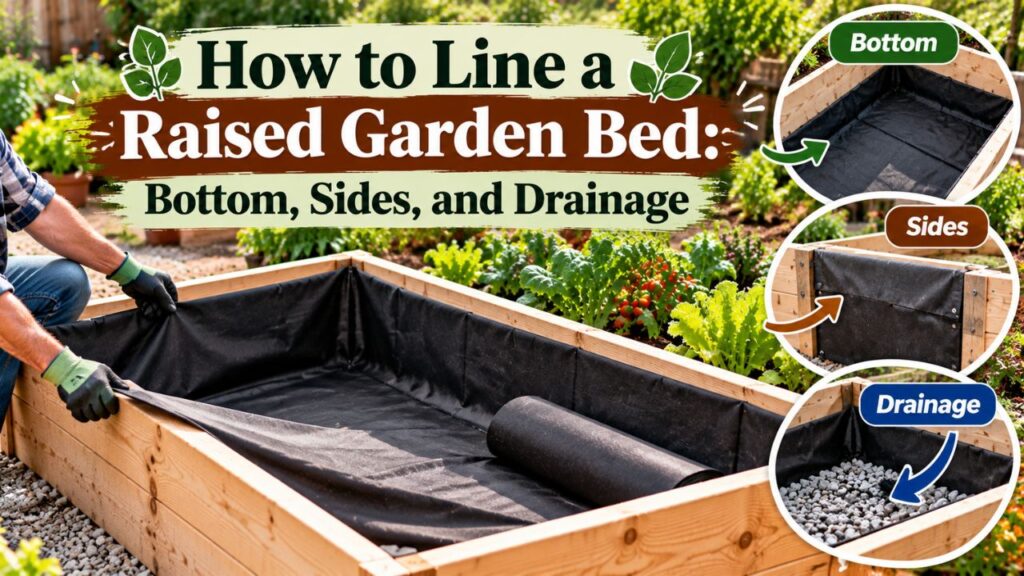
You don’t always need to line a raised garden bed. Whether a liner is useful depends on what you want it to accomplish.
For traditional beds installed directly on healthy garden soil, leaving the bottom open is generally preferable. It allows excess water to drain into the ground and gives plant roots access to additional growing space.
Sidewall liners serve a different purpose. They separate the growing medium from the frame and may reduce direct moisture contact with wooden boards.
Raised Garden Bed Liner Requirements by Bed Type
| Raised bed type | Recommended lining approach | Main purpose |
| Open-bottom wooden bed | Optional sidewall liner | Reduce soil contact with wood |
| Open-bottom metal bed | Usually no liner needed | Preserve natural drainage |
| Bed over existing grass | Optional temporary cardboard | Suppress grass and weeds |
| Bed with burrowing pests | Galvanized hardware cloth underneath | Reduce animal entry |
| Elevated wooden planter | Permeable fabric over a slatted base | Prevent soil from escaping |
| Bed on concrete | Permeable liner with a drainage outlet | Retain soil while allowing runoff |
| Self-watering raised bed | Waterproof reservoir liner with overflow | Store irrigation water |
These are general recommendations. Always consider the actual bed design and the manufacturer’s instructions.
According to the University of Minnesota Extension’s raised-bed gardening guidance, most raised beds don’t require a barrier between the growing medium and the ground below. The guidance also describes sidewall liners, hardware cloth for burrowing animals, and permeable liners for beds on hard surfaces.
Key Takeaway: Line the sides when frame protection is needed, use a suitable barrier underneath for a specific pest or soil-retention problem, and avoid sealing the bottom of an ordinary ground-level raised bed.
What Is the Best Material to Line a Raised Garden Bed?
The best raised-bed liner depends on whether you need moisture protection, weed suppression, pest control, or soil retention.
No single material performs all these functions equally well.
Landscape Fabric for Raised Garden Beds
Landscape fabric is a synthetic, water-permeable material commonly used for landscaping and weed control.
It can be useful for elevated raised planters with slatted bottoms because it helps retain the growing medium while allowing water to pass through.
However, not every landscape fabric drains at the same rate.
Some products are more permeable than others, and fine soil particles can eventually reduce water movement through the material.
Landscape fabric is most useful when:
- Soil might escape through gaps in an elevated planter.
- The bottom needs a permeable soil-retaining layer.
- The material is supported adequately beneath the growing medium.
It is generally unnecessary across the bottom of a conventional raised bed on healthy garden ground.
Permanent weed-barrier fabric can also restrict roots from entering the soil below.
Cardboard for Raised Garden Bed Bottoms
Plain cardboard is a temporary option for suppressing existing grass or weeds underneath a newly installed raised bed.
It works by blocking sunlight from the vegetation beneath it.
Over time, the cardboard becomes wet and decomposes, allowing roots to move into the underlying soil.
For this purpose, choose:
- Plain, non-waxed cardboard.
- Material without plastic coatings.
- Sheets with packaging tape and labels removed.
- Cardboard free from obvious chemical contamination.
Cardboard isn’t a permanent weed barrier, and it may temporarily slow water infiltration before breaking down.
For a bed installed over already cleared, healthy ground, cardboard generally isn’t necessary.
Heavy-Duty Plastic for Wooden Raised Bed Sides
A heavy-duty plastic liner can reduce direct contact between moist soil and the inside walls of a wooden raised bed.
This approach is particularly relevant when using suitable pressure-treated lumber or when trying to reduce moisture exposure against wooden boards.
The important distinction is where the plastic goes.
For a traditional open-bottom bed, attach the plastic to the sidewalls while leaving the entire bottom open.
The University of Maryland Extension’s raised-bed material safety guidance identifies a heavy plastic barrier between the wood and soil as an option for reducing direct contact, provided soil drainage is maintained.
Choose durable material suitable for long-term soil contact and the intended gardening use.
A liner may reduce moisture exposure, but it doesn’t make wood completely waterproof or prevent all deterioration.
Hardware Cloth for Burrowing Pest Protection
Hardware cloth is a rigid wire mesh with relatively small openings.
It’s useful when animals such as gophers, voles, or other burrowing pests enter raised beds from underneath.
Unlike solid plastic, hardware cloth allows water and roots to pass through.
For garden use, select galvanized mesh with openings small enough to deter the particular animals in your area.
Avoid relying on ordinary chicken wire when smaller burrowing animals are the concern. Its openings may be too large.
Hardware cloth is not a waterproof liner or a reliable weed barrier.
Should You Use Burlap or Natural Fiber Liners?
Natural materials such as burlap and jute can temporarily retain soil while allowing moisture to pass through.
However, they gradually decompose in contact with damp soil.
That makes them less suitable when a permanent barrier is required.
Natural fiber liners may be useful for short-term planting arrangements, but a durable, water-permeable material is generally more practical for a permanent elevated planter.
How to Line a Raised Garden Bed Step by Step
The following method works for preparing a typical wooden raised garden bed before adding soil.
The process includes optional bottom protection and sidewall lining. You only need to install the materials appropriate for your situation.
Step 1: Prepare and Inspect the Raised Bed
Start with an empty raised bed.
If it is already assembled, check that the frame is stable and positioned on suitable ground.
Remove:
- Sharp stones and construction debris.
- Loose nails or exposed screw tips.
- Unwanted vegetation.
- Materials that could puncture the liner.
Inspect the interior corners carefully, particularly on wooden beds with metal brackets.
If the bed is installed directly on natural ground, check the soil underneath.
Loosen severely compacted surface soil if necessary so roots and water can move downward.
Avoid placing the bed in an area where surrounding runoff regularly collects.
Step 2: Measure the Area You Want to Line
Measure the interior length, width, and height of the raised bed.
For a sidewall liner, calculate how much material is needed to cover the inside walls.
Use:
Sidewall liner area = 2 × (Length + Width) × Height
For example, a 4-by-8-foot raised bed with 12-inch-high sides has:
2 × (4 + 8) × 1 = 24 square feet of sidewall area
This is the theoretical coverage area before allowing for trimming, overlaps, and corner folds.
Purchase enough material to cover the intended surfaces without stretching it tightly.
For bottom lining, measure the entire interior footprint separately.
Step 3: Prepare the Ground Underneath
For a conventional raised bed placed directly on garden soil, remove persistent weeds and examine the condition of the ground.
If the area contains thick grass, you can remove the turf or use an appropriate temporary smothering method.
For cardboard suppression:
- Flatten plain cardboard boxes.
- Remove plastic tape, labels, and staples.
- Overlap the sheets to reduce uncovered gaps.
- Lay them flat across the ground.
- Wet the cardboard so it stays in position.
- Cover it with suitable growing medium.
This method is most appropriate where existing vegetation needs suppression.
If the ground is already clean and suitable for growing, skip the cardboard and leave the base open.
Step 4: Install Hardware Cloth if Burrowing Animals Are a Problem
If you need protection against tunneling animals, install suitable hardware cloth across the bottom before filling the frame.
Follow these steps:
- Measure the interior footprint.
- Cut the mesh to the required size using suitable wire cutters.
- Wear heavy-duty gloves to protect your hands from sharp wire.
- Lay the mesh flat against the bottom.
- Secure the edges to the frame or supporting perimeter.
- Check for openings large enough for the target animals to enter.
For wooden beds, compatible corrosion-resistant staples or fasteners may help secure the mesh.
Avoid leaving loose wire points inside the growing area.
The mesh should remain flat and securely positioned when soil is added.
Safety Note: Cut hardware cloth can have sharp edges. Wear gloves and eye protection, and fold or cover exposed wire ends where possible.
Step 5: Attach Plastic Lining to the Sidewalls
For wooden raised beds that need a sidewall barrier, cut heavy-duty liner material to fit the inside walls.
Position it against the wood rather than across the entire base.
To install it:
- Start at one inside corner of the raised bed.
- Position the liner against the first wall.
- Allow enough material for the corner and adjoining wall.
- Secure the upper edge with suitable staples or fasteners.
- Continue along the remaining walls.
- Fold excess material neatly around the corners.
- Trim material that extends unnecessarily above the frame.
Avoid excessive fasteners through the lower portions of the liner.
Keep the bottom edge open so water can continue moving downward.
The goal is to separate the wood from the soil without creating a sealed basin.
Step 6: Check That the Liner Doesn’t Block Drainage
Before adding growing medium, examine the finished installation.
For an open-bottom bed, confirm that water can pass directly into the ground.
For an elevated planter, make sure the liner allows excess water to reach the drainage openings.
Check for:
- Plastic covering unintended drainage areas.
- Folded material blocking outlets.
- Unsupported fabric that may sag excessively.
- Gaps where growing medium could escape.
- Sharp fasteners or exposed mesh edges.
Correct these issues before filling the bed.
Step 7: Add Growing Soil and Finish the Bed
After the liner is installed correctly, fill the bed with a suitable growing mixture.
For an ordinary open-bottom bed, a mixture of quality topsoil and finished compost is a practical option.
Add the mixture gradually and spread it evenly.
Avoid forcefully pressing soil against the lining.
Leave approximately 1–2 inches below the upper rim for watering and mulch.
Water the growing medium thoroughly, then inspect the frame and surrounding ground.
Excess water should drain away rather than collecting inside the structure.
Key Takeaway: The installation is successful when the liner performs its intended job without restricting drainage, damaging the frame, or unnecessarily limiting root growth.
How to Line a Wooden Raised Garden Bed
Wooden raised beds are commonly lined to reduce moisture contact between the soil and the framing material.
However, lining isn’t mandatory for every wooden bed.
Should You Line a Cedar Raised Garden Bed?
Cedar is naturally resistant to decay, particularly when the lumber contains a substantial amount of durable heartwood.
An untreated cedar raised bed can be used without a plastic liner.
Some gardeners choose to line the sides to reduce direct contact with moist soil, but others prefer leaving the boards uncovered.
If you install a liner, make sure water can’t become trapped continuously between the liner and the wood.
A sidewall barrier may help reduce exposure, but its actual effect on longevity depends on drainage, construction details, and climate.
How to Line Pressure-Treated Wood Raised Beds
Modern residential pressure-treated lumber commonly contains copper-based preservatives rather than the arsenic-containing compounds used in some older treatments.
A sidewall liner can serve as an additional separation layer between suitable treated wood and vegetable-growing soil.
For this application:
- Verify the lumber’s treatment and intended use.
- Choose durable liner material suitable for soil contact.
- Attach the liner only to the walls.
- Leave the bottom open for natural drainage.
- Avoid reusing lumber with unknown preservatives.
Do not use old chromated copper arsenate (CCA)-treated lumber, creosote-treated railroad ties, or other materials with questionable contamination histories for a new edible garden bed.
Can You Line Wood With Landscape Fabric Instead of Plastic?
Yes, but landscape fabric and plastic perform differently.
Permeable landscape fabric allows water to move through it, so it does not provide the same moisture separation as an intact plastic barrier.
It may help keep growing medium away from gaps or joints, but it shouldn’t be treated as a waterproof coating.
If moisture protection is the main purpose, a suitable sidewall plastic barrier is generally more appropriate.
If retaining soil while allowing water to pass is the goal, permeable fabric may work better.
How to Line Metal and Galvanized Raised Garden Beds
Most metal raised garden beds don’t need lining when installed directly on suitable garden soil.
Many are manufactured with an open bottom, allowing roots and water to move downward naturally.
However, some gardeners prefer adding a sidewall barrier.
Do Metal Raised Beds Need a Plastic Liner?
A plastic liner is generally optional for galvanized steel raised beds.
Galvanized steel has a protective zinc coating that helps resist corrosion.
Very acidic growing conditions can affect the coating, but that doesn’t mean every galvanized bed requires lining.
If a liner is added, keep the bottom open unless the structure is specifically designed as a contained planter.
Inspect the metal frame for exposed edges or fasteners that could tear the lining.
Should You Put Landscape Fabric Under a Metal Raised Bed?
Not routinely.
If the metal bed is open at the bottom and placed on suitable natural soil, a permanent fabric barrier may interfere with deeper root growth.
Hardware cloth can be installed when burrowing animals are a concern.
Plain cardboard can temporarily suppress existing grass.
Neither material is automatically needed simply because the raised bed is made from metal.
How to Line Elevated Raised Garden Beds
An elevated raised bed stands above the ground on legs, supports, or a platform.
Because its growing medium may sit directly on a constructed base, it often needs a different lining approach from a traditional ground-level frame.
Line a Slatted Bottom With Permeable Fabric
If the base consists of wooden slats with gaps between them, a strong water-permeable liner can help prevent soil from falling through.
The liner should allow water to escape freely.
To install it:
- Check that the slatted base can support the weight of wet growing medium.
- Cut a suitable piece of permeable landscape fabric.
- Position it across the base and slightly up the sides.
- Secure the material according to the planter design.
- Ensure the fabric has sufficient structural support underneath.
- Add the growing medium without stretching or tearing the liner.
A fabric liner is not a substitute for structural support.
Soil becomes significantly heavier when saturated with water, and the planter base must be designed to carry that weight.
Line a Solid-Bottom Elevated Planter
If your elevated bed has a solid bottom, locate its drainage holes before installing a liner.
A waterproof sheet must not seal those outlets.
Where a liner is needed, use a suitable permeable material or provide aligned openings that allow water to drain.
A watertight bottom without drainage can leave plant roots saturated.
For enclosed planters, a suitable container-style growing medium may also be preferable to dense garden soil.
What About Self-Watering Raised Beds?
A self-watering raised bed is an important exception to ordinary liner recommendations.
These beds intentionally store water in a reservoir below the growing medium.
A waterproof liner is necessary around the reservoir, but the system must also have a properly positioned overflow outlet.
The reservoir should be connected to the growing medium through an effective wicking arrangement.
Simply lining an ordinary raised bed with solid plastic does not create a functional self-watering system.
Without a designed reservoir and overflow, it may only create waterlogging.
How to Line a Raised Garden Bed on Concrete
A raised bed on concrete or pavement cannot drain directly into native soil.
It also doesn’t allow plant roots to extend into the ground below.
For this reason, both the liner and drainage arrangement need attention.
Use a Permeable Liner to Retain Soil
If the frame has an open bottom and sits on concrete, a suitable permeable liner may help contain the growing medium.
However, water must still have a clear way to move away from the base.
Possible arrangements include a supported, slightly raised base with drainage clearance or a planter designed with outlets that direct runoff safely.
Avoid placing an entirely waterproof liner across the base without drainage.
Protect the Surface Without Trapping Water
Concrete or paver surfaces may need protection against soil staining and constant moisture exposure.
However, protecting the surface should not create a sealed container that holds standing water.
Consider where runoff will travel.
Water should not discharge against a building foundation, collect underneath the planter, or create a slippery walkway.
For beds installed on balconies, elevated decks, or rooftop areas, confirm that the supporting structure can safely carry the weight of the saturated growing medium and frame.
A liner does not reduce the need for adequate structural support.
Should You Line a Raised Garden Bed Over Contaminated Soil?
A raised bed can help create a separate growing area when native soil quality is a concern, but ordinary liner materials are not reliable contamination barriers.
This distinction is important for vegetable gardens.
Why Landscape Fabric Isn’t a Contamination Barrier
Standard landscape fabric is designed to allow water through.
Plant roots may also penetrate the fabric or grow around its edges.
Therefore, it cannot reliably isolate vegetable roots from contaminated ground.
Hardware cloth offers even less separation because it is an open metal mesh.
Cardboard decomposes and is unsuitable as a permanent protective barrier.
What to Do if Native Soil May Be Contaminated
If the site previously contained industrial activity, demolition debris, older peeling paint, or other possible contamination sources, arrange appropriate soil testing before planting edible crops.
A standard nutrient test may not include lead, herbicides, or other pollutants.
Request testing for the suspected contaminants.
If unsafe soil is confirmed, a properly designed raised bed may need clean imported growing medium and a durable physical separation system appropriate for the specific problem.
The required separation and growing depth depend on the contaminants, exposure pathways, and intended crops.
Seek guidance from a local cooperative extension service or qualified environmental professional rather than relying on an ordinary weed-control liner.
Raised Garden Bed Lining Mistakes to Avoid
Even a good liner can cause problems when installed in the wrong location or used for the wrong purpose.
Covering the Entire Bottom With Waterproof Plastic
This is one of the most common raised-bed lining mistakes.
In a traditional open-bottom bed, solid plastic can prevent water from moving into the ground.
It can also stop plant roots from accessing the soil underneath.
Use solid plastic on the sidewalls when needed, not as an unrestricted bottom barrier.
The exception is a purpose-built contained system with suitable drainage or a designed water reservoir.
Expecting Landscape Fabric to Stop Every Weed
Landscape fabric isn’t a permanent solution for all weeds.
Weed seeds can germinate in soil above the fabric, while some persistent plants may grow through openings or around the edges.
For open-bottom raised beds, removing existing vegetation and maintaining suitable mulch are often more practical than installing a permanent underground fabric barrier.
Putting Gravel Under the Liner for Drainage
Gravel beneath a waterproof bottom liner won’t correct the absence of a drainage outlet.
In a solid-bottom planter, water still needs a path to escape.
The useful solution is an appropriately designed drainage system, not simply adding stones.
Using Thin or Damaged Plastic
Thin plastic can tear when exposed to rough boards, sharp corners, and soil pressure.
A damaged barrier may no longer protect the framing material as intended.
Inspect the installation before adding soil and use durable materials suitable for the application.
Trapping Moisture Between the Liner and Wood
A sidewall liner can reduce direct soil contact, but water may still enter behind it.
If moisture remains trapped for long periods, the wooden frame can deteriorate.
Avoid creating pockets that collect water.
Use suitable framing materials, protect the structure from persistent runoff, and inspect the boards periodically.
Using Unknown Reclaimed Materials
Old plastic sheets, used industrial liners, and reclaimed building materials may contain unwanted chemical residues.
For edible gardens, avoid materials with unknown previous uses or uncertain composition.
Select products whose intended applications and material properties can be confirmed.
How to Maintain a Raised Garden Bed Liner
Raised-bed liners can remain useful for multiple growing seasons, but their condition should be checked periodically.
A liner’s service life depends on its material, installation, sunlight exposure, moisture conditions, and physical damage.
Inspect the Liner Before Each Growing Season
Check accessible liner edges and fastening points before planting.
Look for:
- Tears or punctures.
- Loose staples or fasteners.
- Fabric pulling away from corners.
- Plastic collecting water behind wooden boards.
- Soil escaping through gaps.
- Blocked drainage outlets.
Small problems are easier to correct before plants become established.
Replace Damaged Materials When Necessary
If a liner has become brittle, torn, or unable to perform its intended purpose, replace the affected section.
For an empty raised bed, the process is relatively straightforward.
For a planted bed, avoid extensive disturbance unless the damaged liner is causing a meaningful drainage, safety, or soil-retention problem.
Do not assume a liner must be replaced every year simply because it has been in contact with soil.
Maintain the Soil and Drainage System
Keep the raised bed filled with appropriate growing medium and avoid excessive compaction.
Check drainage after unusually heavy rainfall.
For elevated planters, inspect the underside periodically to confirm that outlets remain clear.
For open-bottom beds, keep the surrounding ground from directing excessive runoff toward the frame.
Good soil and water management help the entire raised-bed structure function properly, whether or not it contains a liner.
Conclusion
Understanding how to line a raised garden bed starts with identifying what the liner needs to accomplish.
For most open-bottom beds placed directly on healthy garden soil, leaving the bottom unobstructed is the best starting point. A sidewall plastic liner can help reduce direct moisture contact with wooden frames, while galvanized hardware cloth may be useful against burrowing animals.
Cardboard can temporarily suppress grass, and permeable landscape fabric can help retain soil in elevated planters.
However, waterproof plastic should not cover the entire bottom of an ordinary raised bed unless the structure has a suitable drainage system or is intentionally designed to store water.
The best liner is the one that solves a specific problem without interfering with drainage or root growth. Choose the material according to the bed’s construction, install it securely, and inspect it periodically for damage.
FAQs About How to Line a Raised Garden Bed
Do I Need to Line the Bottom of a Raised Garden Bed?
No, most open-bottom raised garden beds installed on suitable garden soil don’t need a bottom liner.
Leaving the bottom open allows water to drain and roots to grow into the underlying soil.
A temporary weed-suppression layer or pest-resistant mesh may be useful when those specific problems exist.
What Is the Best Liner for a Wooden Raised Garden Bed?
A durable plastic barrier suitable for soil contact is an option when the main goal is to reduce moisture contact between the growing medium and the wooden walls.
Install it along the sides while leaving the bottom open.
For an elevated wooden planter with a slatted base, water-permeable fabric is more suitable for retaining soil.
Can I Use Black Plastic to Line a Raised Garden Bed?
Yes, black plastic can be used along the inside walls when it is suitable for the application.
However, it should not seal the entire bottom of a conventional open-bottom raised bed.
Make sure the plastic doesn’t interfere with drainage, and avoid materials with unknown chemical histories.
Can I Use Cardboard Instead of Landscape Fabric?
Cardboard can replace landscape fabric when the goal is temporary suppression of existing grass or weeds beneath a new raised bed.
It will gradually decompose and does not provide permanent soil retention.
For elevated planters with gaps in the bottom, durable water-permeable fabric is generally more appropriate.
Should I Put Landscape Fabric Under My Raised Bed?
Usually not if the bed sits directly on healthy garden soil.
A permanent fabric barrier may restrict deeper root growth and is often unnecessary.
Landscape fabric is more useful when soil needs to be retained above a slatted or constructed planter base while still allowing water to drain.
Will Hardware Cloth Stop Gophers From Entering Raised Beds?
Properly selected and securely installed hardware cloth can help reduce entry by gophers and other burrowing animals.
Choose mesh with openings appropriate for the local pests, and secure the edges so animals cannot push around the barrier.
Hardware cloth allows water and roots to pass through, although it cannot guarantee complete pest exclusion.
Is It Safe to Grow Vegetables in a Plastic-Lined Raised Bed?
A plastic sidewall liner can be appropriate for vegetable gardening when the material is suitable for the intended use and doesn’t interfere with drainage.
Choose products with known composition and avoid contaminated or previously used industrial plastics.
For open-bottom beds, keeping the plastic off the bottom also preserves access to the underlying soil.
Can I Line an Existing Raised Garden Bed Without Removing All the Soil?
Sometimes. If only the upper portion of a sidewall liner needs repair, you may be able to move soil away from that area and install a replacement section.
Installing a complete bottom barrier usually requires removing most or all of the growing medium.
Before disturbing an established bed, determine whether the lining is actually necessary and whether the work could damage existing plant roots.

I’m Maya L. Greenwood, a lifelong plant lover who believes anyone can grow something beautiful with the right guidance. After years of testing soil mixes, pruning methods, irrigation tricks, and pest-safe solutions, I started EasyGardenTips.com to turn hard-won lessons into step-by-step advice. From seed starting and container gardens to composting and seasonal checklists, my goal is to make gardening simple, sustainable, and fun.