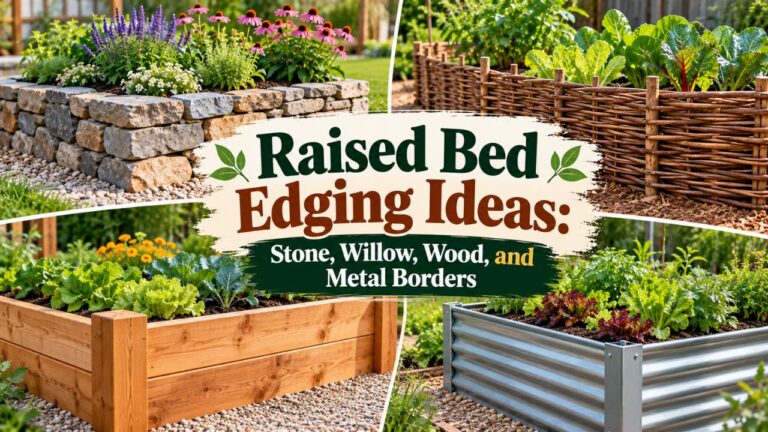
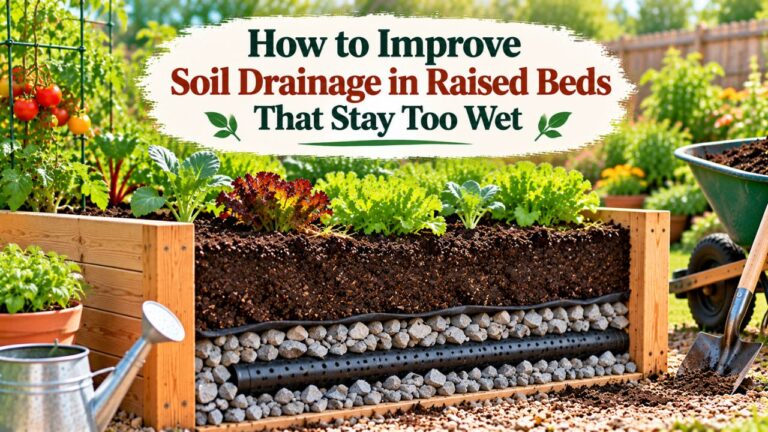
What Is a Raised Garden Bed? Types, Benefits, and How It Works
A raised garden bed is a growing area where soil is elevated above the surrounding ground, usually inside a frame made from wood, metal, stone, or another durable material. It provides a defined space for growing vegetables, herbs, flowers, and other plants while allowing gardeners to manage soil quality, drainage, and planting conditions more easily.
Unlike a traditional garden planted directly at ground level, a raised bed contains an elevated layer of prepared growing soil. Most ground-based raised beds have open bottoms, allowing plant roots to extend into the natural soil underneath.
Raised beds are popular in backyards, small gardens, and areas where the existing soil is compacted or difficult to improve. They can also make planting, watering, and harvesting more convenient, depending on their height and design.
However, not every raised bed works the same way. Some are shallow wooden frames, others are tall metal structures, and some are simply mounds of soil without walls.
Understanding these designs, their sizes, soil requirements, and practical limitations can help you decide whether raised bed gardening is suitable for your space.
What Is a Raised Garden Bed and How Does It Work?
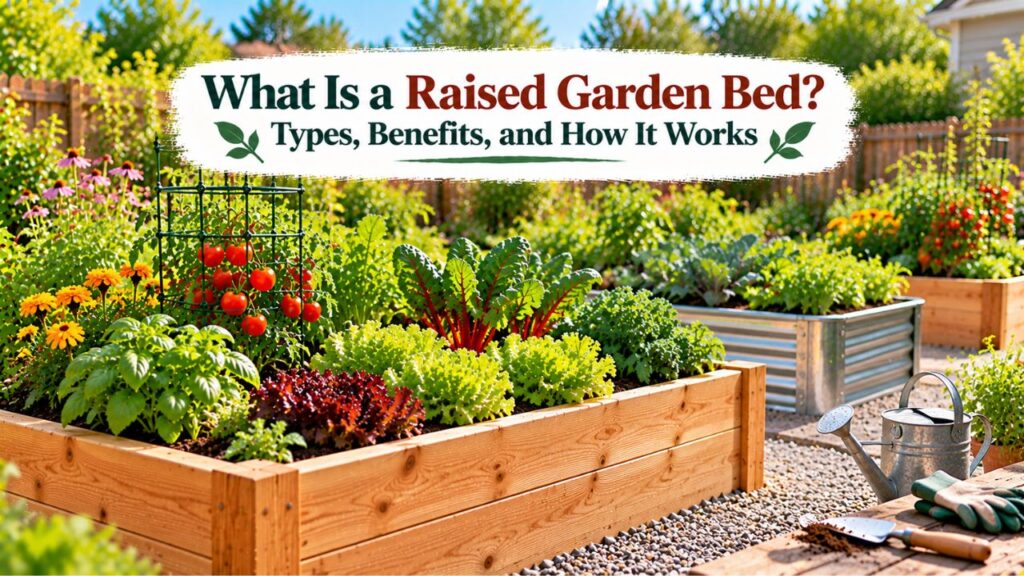
A raised garden bed is an intentionally elevated planting area designed to provide suitable growing conditions above the surrounding ground level.
The simplest design consists of a mound of prepared garden soil. More commonly, raised beds have a rectangular frame that holds the growing medium in place.
According to the University of Maryland Extension’s guide to growing vegetables in raised beds, raised beds are improved areas of elevated soil, commonly 2–4 feet wide and 2–12 inches high, although taller designs are also used.
The raised structure helps separate the growing area from pathways and allows gardeners to improve soil conditions within a manageable space.
How Does a Raised Garden Bed Support Plant Growth?
A raised bed works by creating a defined area of soil where plants can develop roots, absorb water, and obtain nutrients.
The growing medium usually contains mineral soil and organic matter.
When properly prepared, this mixture provides:
- Rooting space: Loose soil allows roots to spread and grow.
- Drainage: Excess water can move through the growing medium.
- Moisture retention: Soil and organic matter hold water for plant use.
- Nutrient availability: Minerals and decomposing organic materials contribute plant nutrients.
- Soil aeration: Spaces between soil particles allow oxygen to reach roots.
Most raised beds placed directly over garden soil do not have a solid bottom.
Roots can grow through the prepared soil and extend into the native ground below, provided that soil is suitable.
A raised bed installed on concrete works differently because its rooting space is limited to the depth of the contained growing medium.
Does a Raised Garden Bed Need a Frame?
No. A raised garden bed does not necessarily need wooden boards, metal panels, or permanent walls.
An elevated mound of prepared soil can also function as a raised bed.
However, frames help retain the soil, maintain a consistent shape, and prevent the edges from spreading into surrounding pathways.
Framed beds are especially useful when the garden needs clear boundaries, a level planting surface, or additional height.
What Are the Different Types of Raised Garden Beds?
Raised garden beds come in several designs, each suited to different growing spaces and gardening needs.
The main differences involve the bed’s structure, bottom, height, and materials.
Traditional Framed Raised Garden Beds
A traditional framed raised bed uses boards or other materials to contain soil above the surrounding ground.
These beds are commonly rectangular, although square, U-shaped, and L-shaped designs are also available.
Many have open bottoms, allowing plants to access the native soil beneath the frame.
They are suitable for growing vegetables, herbs, and flowers in yards with adequate sunlight.
A low wooden frame is often one of the simplest options for a beginner.
Mounded Raised Garden Beds
A mounded raised bed consists of soil shaped into an elevated planting area without a permanent enclosure.
The surface is generally flattened for planting, while the sides slope toward the surrounding ground.
This design avoids the cost of constructing a frame.
However, the edges can erode or spread over time, particularly in sandy soil or areas receiving heavy rainfall.
Mounded beds are practical when the gardener has enough space to maintain pathways around the growing area.
Elevated Raised Garden Beds
Elevated raised beds are usually supported by legs or another structure that lifts the entire growing container above ground level.
They resemble large planters or planting tables.
Unlike ordinary open-bottom beds, these structures generally have a contained bottom with drainage openings.
They can reduce the need to bend while planting or harvesting, making them helpful for some gardeners with limited mobility.
However, their soil volume is restricted, and they may dry out faster than ground-based beds.
The structure must also be strong enough to support the weight of wet soil, plants, and water.
Raised Garden Beds on Concrete or Patios
Some raised beds are designed for locations without accessible natural ground.
These include patios, paved courtyards, and certain rooftop or balcony spaces.
Because roots cannot extend into the soil underneath, the bed must provide enough internal growing depth.
Adequate drainage is particularly important.
For balconies and rooftops, the structure’s load capacity must also be checked before installing a heavy soil-filled bed.
Raised Garden Beds vs. In-Ground Gardens
The main difference between raised bed gardening and traditional in-ground gardening is the position and management of the growing soil.
In-ground gardens use soil at approximately the surrounding ground level.
Raised beds elevate the planting area and often use a specially prepared growing medium.
| Feature | Raised Garden Bed | In-Ground Garden |
| Soil position | Elevated above ground | At surrounding ground level |
| Soil preparation | Often filled or amended with a prepared mix | Existing soil is improved as needed |
| Drainage | Can improve with suitable soil and site conditions | Depends heavily on native soil |
| Soil compaction | Easier to limit with permanent pathways | Depends on layout and foot traffic |
| Watering | May need more frequent watering | Often retains moisture longer |
| Initial cost | Usually higher, especially with a frame | Often lower |
| Accessibility | Height can make gardening easier | Usually requires bending or kneeling |
| Garden layout | Defined growing areas | More flexible planting areas |
Neither method is automatically more productive.
Plant growth depends on soil quality, sunlight, moisture, nutrients, crop selection, and maintenance.
A well-managed in-ground garden can produce excellent results without raised beds.
What Are the Benefits of a Raised Garden Bed?
Raised beds offer several practical advantages, particularly where the existing garden soil is difficult to manage.
However, their benefits depend on proper construction and maintenance.
Better Control Over Garden Soil Quality
One of the main benefits is the ability to prepare a growing medium with suitable texture and organic matter.
For example, a yard containing compacted clay may be difficult to cultivate directly.
Adding a raised layer of loamy topsoil and finished compost can create a more workable rooting environment.
This does not automatically eliminate problems in the underlying ground, but it provides gardeners with greater control over the upper growing layer.
Improved Drainage in Suitable Locations
Raised beds can help excess water move away from the primary growing area when their soil and underlying ground drain adequately.
This is particularly helpful where native soil is dense or compacted.
However, raised beds are not a guaranteed solution for severe drainage problems.
If water cannot leave the bed or surrounding ground, the growing medium may still become waterlogged.
Avoid placing a waterproof plastic sheet across the bottom of an ordinary open-bottom raised bed.
Reduced Soil Compaction
Garden soil becomes compacted when repeatedly walked on or pressed by heavy equipment.
Compaction reduces the spaces available for air and water movement.
Raised beds allow gardeners to work from surrounding pathways rather than stepping into the planting area.
This helps preserve the soil structure and makes it easier for roots to develop.
Easier Planting and Maintenance
Depending on their height, raised beds can make planting, watering, weeding, and harvesting more comfortable.
Taller beds may reduce bending, while narrower beds make it easier to reach plants without stepping on the soil.
The benefit depends on the gardener’s reach, mobility, and bed dimensions.
An elevated planter may offer greater accessibility than a shallow frame sitting directly on the ground.
Earlier Soil Warming in Spring
Elevated growing soil may warm faster than surrounding ground-level soil during spring.
This can help gardeners begin planting certain cool-season crops earlier when other growing conditions are suitable.
However, faster warming can also mean faster drying during hot weather.
Soil temperature should still be checked before planting temperature-sensitive crops.
What Are the Limitations of Raised Garden Beds?
Raised beds are useful, but they are not always the most economical or convenient gardening method.
Understanding their limitations helps prevent unnecessary expenses and maintenance problems.
Higher Initial Construction Costs
A framed raised bed may require purchased materials, fasteners, soil, and compost.
Taller beds need considerably more growing material than shallow designs.
A 4×8 bed filled to a depth of 12 inches requires 32 cubic feet of soil, or approximately 1.19 cubic yards.
The total expense depends on local material prices and whether suitable soil is already available.
More Frequent Watering
Raised bed soil can dry faster because the growing area is exposed above the surrounding ground.
This is especially noticeable in elevated planters, tall beds, and hot or windy locations.
Mulch and drip irrigation can help maintain more consistent moisture.
However, plants should be watered according to actual soil conditions rather than a fixed daily schedule.
Ongoing Frame Maintenance
Wooden frames may eventually rot, while metal structures can develop corrosion or loose connections.
The lifespan depends on material quality, climate, and construction.
Regular inspections help identify damage before the frame becomes unstable.
Stone and masonry beds may last longer but can require more labor and expense during installation.
What Size Should a Raised Garden Bed Be?
Raised beds can be built in many dimensions, but practical sizing depends on accessibility, available space, and the plants being grown.
The width and depth are usually more important than the overall length.
Recommended Raised Bed Width
For a bed accessible from both sides, 3–4 feet wide is a practical starting point.
This allows many gardeners to reach the center without stepping onto the growing soil.
If the bed is positioned against a wall or fence and can only be accessed from one side, a width of around 2 feet may be more convenient.
Choose dimensions based on comfortable reach rather than assuming one width suits everyone.
Recommended Raised Bed Length
Common lengths include 4, 6, and 8 feet.
Longer beds can provide more growing space, but they may require stronger side supports to prevent bowing.
Leave enough room around the frame for watering, weeding, and harvesting.
Paths should also accommodate any wheelbarrow, garden cart, or mobility equipment you intend to use.
How Deep Should a Raised Garden Bed Be?
The required depth depends on the crop and whether roots can grow into the natural soil underneath.
For an ordinary open-bottom raised bed, approximately 8–12 inches of prepared soil is a practical starting point for many vegetables.
The underlying ground can provide additional root space when it is suitable.
Beds on hard surfaces require more attention to internal growing depth.
For example, leafy greens can grow in relatively shallow containers, while tomatoes and other large crops benefit from greater rooting space.
Very tall beds are not automatically necessary for ordinary backyard vegetable production.
Common Raised Bed Dimensions
| Bed Size | Typical Use |
| 2 × 4 feet | Small spaces and herbs |
| 3 × 6 feet | Compact vegetable gardens |
| 4 × 4 feet | Small mixed vegetable plantings |
| 4 × 8 feet | General backyard vegetable gardening |
| 4 × 10 feet | Larger planting areas |
| 2 × 6 feet, elevated | Accessible planting where the design suits the gardener |
These dimensions are examples rather than fixed standards.
What Materials Are Used to Build Raised Garden Beds?
Raised garden bed frames can be made from several materials.
The best choice depends on budget, appearance, durability, and the intended location.
Wooden Raised Garden Beds
Wood is a common choice because it is easy to cut, assemble, and customize.
Pine and fir are often relatively inexpensive, although they may deteriorate faster than naturally decay-resistant lumber.
Cedar and certain other durable woods may last longer, depending on local conditions.
Use lumber from a known source.
Avoid old railroad ties, wood treated with older arsenic-based preservatives, and salvaged painted lumber with unknown chemical history for vegetable-growing structures.
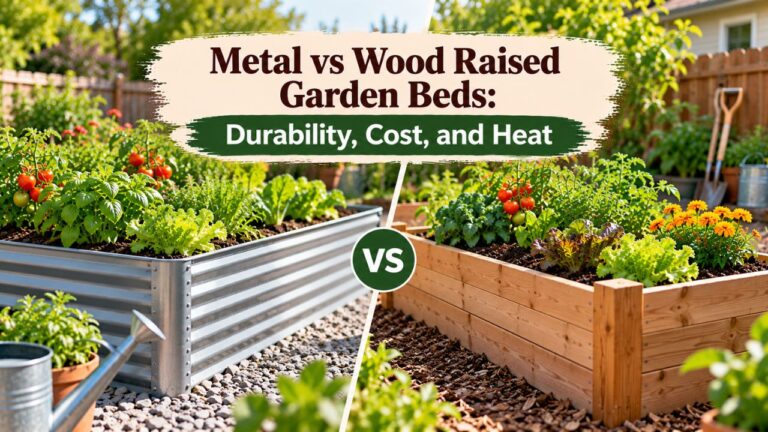
Metal Raised Garden Beds
Galvanized steel is frequently used for prefabricated raised bed kits.
Metal beds can be durable and are available in several shapes and heights.
However, metal surfaces can become hot in direct sunlight, particularly in warm climates.
Choose a well-made structure with secure joints and protected edges.
For edible gardens, check the manufacturer’s material information and avoid products with questionable coatings or contamination.
Stone, Brick, and Concrete Block Beds
Stone and masonry materials can create permanent raised bed structures.
They are often suitable for landscaped gardens where appearance and durability are priorities.
However, they are heavier and may require additional site preparation.
Large or tall masonry walls must be constructed to remain stable under pressure from soil and water.
Composite and Fabric Raised Beds
Some raised bed kits use recycled composite boards or fabric containers.
Composite materials vary in construction and durability, so product quality matters.
Fabric grow bags allow drainage through their sides and bottom but generally behave more like containers than ordinary open-bottom raised beds.
They may need more frequent watering because of their relatively exposed growing medium.
What Soil Should You Put in a Raised Garden Bed?
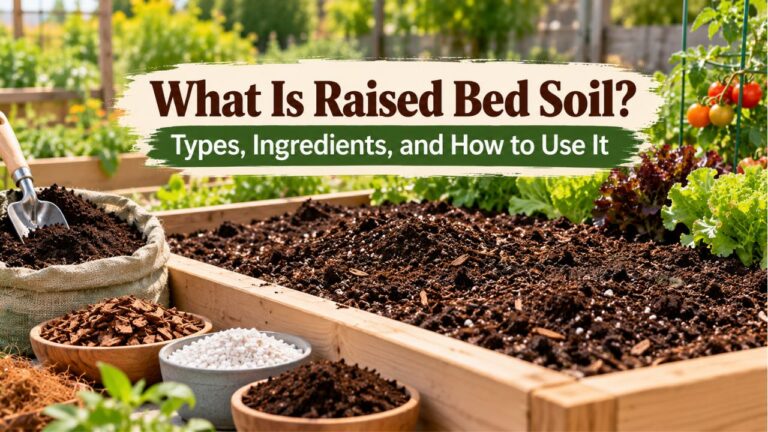
A raised garden bed needs a growing medium that supports roots, holds suitable moisture, and allows excess water to drain.
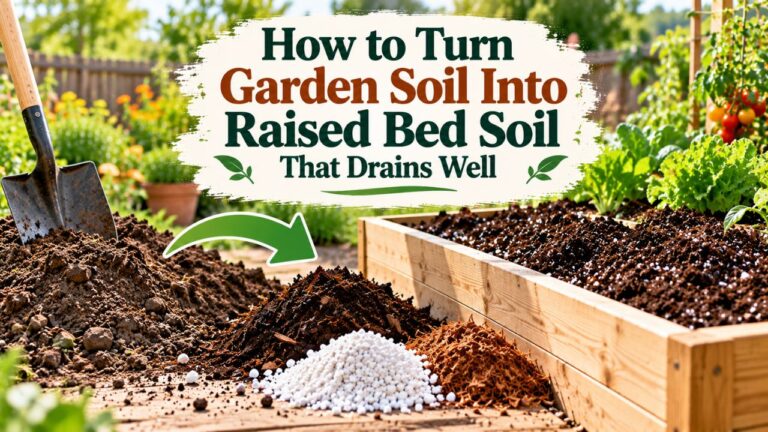
For an open-bottom bed, a combination of quality topsoil and finished compost is a practical starting point.
The University of Minnesota Extension’s raised-bed gardening recommendations describe a mixture containing approximately one-half to two-thirds topsoil and one-third to one-half plant-based compost.
Topsoil and Compost Mixture
For a typical open-bottom vegetable bed, consider a mixture of:
- Two parts quality loamy topsoil
- One part finished plant-based compost
Topsoil supplies mineral particles that influence drainage, moisture retention, and nutrient storage.
Compost contributes organic matter and some nutrients.
The precise mixture should reflect the quality of the available materials and the soil’s existing condition.
Avoid using large amounts of compost simply to increase organic matter. Excessive compost can contribute unwanted nutrients and moisture-management problems.
How Much Soil Does a Raised Bed Need?
For a rectangular bed, calculate the soil volume using:
Soil Volume (Cubic Feet) = Length (Feet) × Width (Feet) × Soil Depth (Feet)
For example, a 4-foot-wide, 8-foot-long raised bed filled to 12 inches requires:
4 × 8 × 1 = 32 cubic feet
Since 27 cubic feet equals one cubic yard, this is approximately 1.19 cubic yards.
Measure the interior dimensions and planned fill depth before purchasing soil.
Does a Raised Bed Need Drainage Holes?
Most open-bottom raised beds placed directly on suitable ground do not require drainage holes because their bottoms are already open.
Water can move into the soil below.
However, elevated raised beds and contained planters require suitable drainage openings.
Without drainage, excess water can accumulate around roots.
Do not add a thick layer of rocks to the bottom expecting it to solve poor drainage. Proper soil structure and an adequate water outlet matter more.
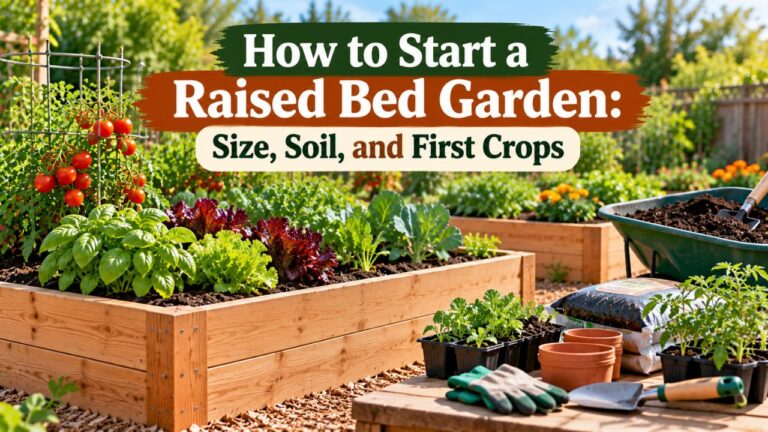
How to Start a Raised Garden Bed
Starting a small raised bed is manageable with basic tools and suitable materials.
The following process applies mainly to an open-bottom framed bed placed on existing garden ground.
Step 1: Choose a Suitable Location
Select a reasonably level area with appropriate sunlight and access to water.
Most fruiting vegetables, including tomatoes and peppers, grow best with at least 6–8 hours of direct sunlight daily.
Some leafy greens tolerate less sunlight, particularly in warm conditions.
Avoid locations where water stands for extended periods after rain.
Step 2: Decide on the Size and Shape
Choose a width that allows comfortable access to the center.
For many gardeners, a 4×4 or 4×8 frame is a practical starting size.
Consider the depth needed for the intended crops and whether plant roots can access suitable soil underneath.
Step 3: Choose and Assemble the Frame
Select an appropriate frame material, such as untreated cedar, suitable galvanized steel, or stone.
Assemble the structure according to its design.
Make sure corners and connections are secure, particularly for taller frames that must resist pressure from the soil.
Step 4: Prepare the Ground
Remove unwanted debris and persistent weeds.
Grass can be removed or smothered using an appropriate method before filling the bed.
If the underlying ground is heavily compacted, gently loosen it using a garden fork.
Avoid unnecessarily disturbing soil that already has good structure.
Step 5: Add the Growing Medium
Fill the frame with suitable soil and finished compost.
Spread the material evenly and break apart large clumps.
Avoid walking on the prepared growing surface.
Leave a small amount of space below the rim to accommodate watering and mulch.
Step 6: Water the Soil
Water the new growing medium evenly.
Allow the material to settle naturally.
If the surface drops significantly, add more prepared soil until it reaches the desired level.
The soil should be moist but not waterlogged before planting.
Step 7: Plant Seeds or Transplants
Choose plants suitable for the season and local growing conditions.
Follow crop-specific spacing and planting-depth recommendations.
Avoid placing too many large plants in a small bed.
After planting, check soil moisture regularly and use mulch when appropriate.
What Can You Grow in a Raised Garden Bed?
Raised beds can support many vegetables, herbs, flowers, and some compact fruiting plants.
Successful planting depends on available rooting space, sunlight, crop spacing, and soil conditions.
Vegetables for Raised Garden Beds
Common options include:
- Lettuce
- Spinach
- Kale
- Radishes
- Carrots
- Beets
- Bush beans
- Peppers
- Tomatoes
- Cucumbers
Smaller leafy vegetables and radishes are often convenient for beginners because they have relatively short growing periods.
Larger plants need more space and may require stakes, cages, or trellises.
Herbs for Raised Garden Beds
Many culinary herbs grow well in raised beds.
Examples include basil, parsley, chives, cilantro, thyme, and oregano.
However, their moisture requirements differ.
Basil and parsley generally benefit from more consistent moisture than drought-tolerant Mediterranean herbs such as thyme and oregano.
Group plants with similar watering needs where practical.
Flowers for Raised Garden Beds
Raised beds can also support ornamental flowers and pollinator-friendly plantings.
Marigolds, zinnias, calendula, and many other flowering annuals can grow in suitable raised bed soil.
Choose varieties based on the available sunlight, mature plant size, and local climate.
Flowers can be planted in dedicated beds or alongside compatible vegetables.
How Do You Maintain a Raised Garden Bed?
After the bed is established, regular care helps preserve soil quality and plant health.
Water According to Soil Moisture
Raised beds often dry faster than surrounding ground-level gardens.
Check moisture a few inches beneath the surface rather than watering only because the top looks dry.
Water deeply enough to moisten the active root zone while avoiding prolonged saturation.
Drip irrigation or soaker hoses can help deliver water directly to the growing soil.
Maintain Soil Fertility
Vegetables remove nutrients as they grow and are harvested.
However, fertilizer is not automatically necessary after every planting.
Use soil testing to determine whether additional nutrients are needed.
Add finished compost when appropriate, but avoid repeated heavy applications that could increase phosphorus or soluble salt levels.
Protect Soil With Mulch
An appropriate organic mulch can help limit evaporation, reduce weed growth, and protect the soil surface.
Suitable materials may include clean straw or shredded leaves.
Keep mulch away from direct contact with plant stems where excessive moisture could cause problems.
Inspect the Raised Bed Frame
Check the frame periodically for loose joints, deteriorating wood, corrosion, or movement.
Taller frames should remain stable under the weight of moist soil.
Repair damaged components before the structure becomes unsafe or begins losing soil.
Conclusion
What is a raised garden bed? It is an elevated growing area that provides a defined space for plants and greater control over soil conditions, drainage, and garden layout.
Raised beds can be simple mounds of soil, framed structures, or elevated planters designed for easier access. The most suitable design depends on the gardener’s available space, intended plants, budget, and physical needs.
For beginners, a modest open-bottom frame filled with quality topsoil and finished compost is often a practical starting point.
Choose dimensions that are comfortable to reach, provide sufficient root space, and position the bed where plants receive suitable sunlight.
A raised garden bed does not automatically guarantee better plant growth, but proper construction, healthy soil, and consistent maintenance can make it a useful option for growing vegetables, herbs, and flowers.
FAQs About What Is a Raised Garden Bed
Is a Raised Garden Bed the Same as a Planter Box?
Not exactly. A traditional raised garden bed usually has an open bottom and allows roots to grow into the ground underneath. A planter box generally has a contained bottom with drainage openings. However, manufacturers sometimes use the terms interchangeably.
Does a Raised Garden Bed Need a Bottom?
No. Most raised garden beds placed directly over suitable ground do not need a solid bottom. An open bottom allows roots and water to move into the existing soil. Elevated planters require a supporting bottom with appropriate drainage.
Can You Put a Raised Garden Bed Directly on Grass?
Yes, but the grass should be removed or effectively smothered first. Persistent grass and weeds may otherwise grow through the new soil. Prepare the growing area and address underlying compaction before filling the frame.
Do Raised Garden Beds Need Special Soil?
Not necessarily. Many open-bottom raised beds grow well in a suitable mixture of quality topsoil and finished compost. However, enclosed or elevated planters may require a lighter growing medium designed for container-style drainage.
Are Raised Garden Beds Better Than Growing in the Ground?
Raised beds can be helpful where natural soil is compacted, poorly structured, or difficult to access. They may also make gardening more organized and comfortable. However, healthy in-ground soil can support excellent crops with lower initial construction costs.
How Long Does a Raised Garden Bed Last?
The lifespan depends on the construction material and maintenance. Untreated softwood may deteriorate sooner than durable lumber, galvanized metal, or masonry. The growing soil can remain productive for many years with appropriate care, even if the frame eventually needs replacement.

I’m Maya L. Greenwood, a lifelong plant lover who believes anyone can grow something beautiful with the right guidance. After years of testing soil mixes, pruning methods, irrigation tricks, and pest-safe solutions, I started EasyGardenTips.com to turn hard-won lessons into step-by-step advice. From seed starting and container gardens to composting and seasonal checklists, my goal is to make gardening simple, sustainable, and fun.