Raised Garden Bed Liner: Plastic, Fabric, and Proper Drainage
A raised garden bed liner is optional for most open-bottom garden beds, but it can help protect wooden sides, contain soil, or create a barrier where needed. For wooden raised beds, heavy-duty plastic can be installed along the inside walls. However, covering the entire bottom with waterproof plastic can trap excess water and interfere with root growth.
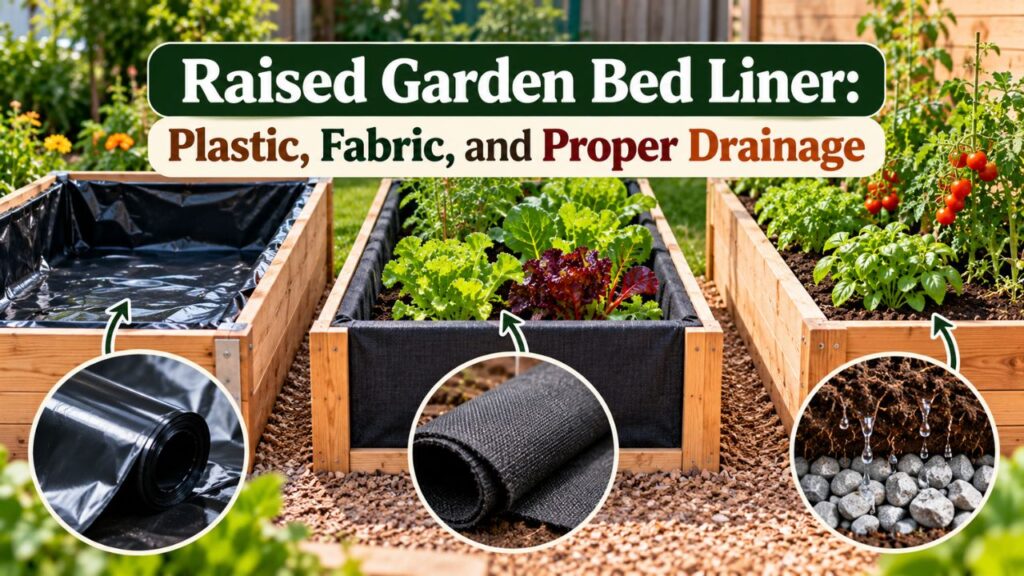
The best liner depends on what you’re trying to accomplish. Plastic sheeting can separate damp soil from wooden boards, landscape fabric allows water to pass through, and metal hardware cloth helps prevent burrowing animals from entering through the bottom.
Not every raised bed needs the same material. A wooden bed sitting on natural ground has different drainage requirements from an elevated planter or a bed installed on concrete.
Using the wrong liner can create problems instead of preventing them. Before installing anything, it’s important to understand which materials belong on the sides, which can go underneath, and when leaving the bed unlined is the better choice.
Do You Need a Raised Garden Bed Liner?
No, a liner isn’t necessary for every raised garden bed. Many open-bottom beds work well without any lining, especially when built with suitable materials and placed over healthy, well-drained soil.
A liner becomes useful when there is a specific reason to separate the soil from the frame, contain the growing medium, or protect the planting area.
When a Raised Garden Bed Liner Is Useful
A liner may help in the following situations:
- Wooden raised beds: A suitable plastic barrier can reduce direct contact between damp soil and wooden boards.
- Elevated planters: Water-permeable fabric can prevent soil from falling through gaps between supporting slats.
- Beds on patios: A suitable fabric layer may help contain soil while allowing drainage.
- Gardens with burrowing pests: Metal hardware cloth can help keep certain animals from entering beneath the bed.
- Areas with contaminated ground: A properly designed separation system may be needed to reduce contact with contaminated native soil.
The material should match the specific problem.
For example, landscape fabric may retain loose soil in an elevated planter, but it won’t provide the same moisture barrier as heavy plastic against wooden sides.
When You Should Leave a Raised Bed Unlined
An open-bottom raised bed built over clean, healthy garden soil usually doesn’t need a bottom liner.
Leaving the bottom open allows plant roots to extend into the native soil beneath the bed.
It also provides a natural route for water to move downward, assuming the ground itself drains adequately.
The University of Minnesota Extension’s raised bed gardening guidance explains that barriers beneath raised beds are unnecessary in most situations and may restrict root development. It recommends permeable landscape fabric rather than waterproof plastic when a bottom liner is needed to contain soil over a hard surface.
Key Takeaway: Don’t install a liner simply because you’re building a raised bed. Identify whether you need wood protection, soil retention, weed management, or pest exclusion before choosing a material.
Best Materials for a Raised Garden Bed Liner
Different lining materials provide different levels of moisture protection, drainage, and physical separation.
The most common options are plastic sheeting, landscape fabric, geotextile fabric, metal mesh, and biodegradable materials such as cardboard.
Raised Garden Bed Liner Material Comparison
| Liner Material | Main Purpose | Allows Drainage? | Best Placement |
| Polyethylene plastic | Separate soil from wooden sides | No, unless perforated | Interior sidewalls |
| HDPE plastic liner | Durable plastic separation barrier | No, unless designed with openings | Interior sidewalls |
| Landscape fabric | Retain soil while allowing water through | Yes | Bottom of elevated beds |
| Geotextile fabric | Soil separation and filtration | Yes, for permeable types | Specific bottom barrier applications |
| Hardware cloth | Exclude burrowing pests | Yes | Bottom of open-ground beds |
| Plain cardboard | Temporarily suppress existing vegetation | Limited initially; breaks down | Ground preparation |
| Burlap | Temporary soil retention | Usually, depending on material | Short-term applications |
A material that works well for one application may be unsuitable for another.
Plastic Liners for Wooden Raised Beds
Polyethylene plastic is a common choice for lining the sides of wooden raised beds.
It provides a physical barrier between the soil and the wood, reducing direct exposure to moisture from the growing medium.
This may help slow some forms of deterioration in wooden sidewalls.
Heavy-duty polyethylene sheets are available in different thicknesses. Materials sold specifically for garden beds or suitable soil-contact applications are preferable to unidentified scrap plastic.
HDPE (high-density polyethylene) is another option used in durable plastic products and some garden lining materials.
Choose a product whose manufacturer confirms its suitability for the intended gardening application.
Plastic should generally be installed along the sides rather than used to seal the bottom of a conventional open-bottom bed.
Landscape Fabric for Raised Bed Bottoms
Landscape fabric is designed to allow water to pass through while physically separating materials.
It can be useful for elevated raised beds that have wooden slats or other gaps in their supporting base.
The fabric helps prevent potting mix or other growing material from falling through those openings.
However, landscape fabric is not completely problem-free.
Some products can become clogged with fine particles over time, and certain fabrics may deteriorate with prolonged exposure.
Choose a durable, water-permeable product and ensure the supporting structure still provides adequate drainage.
Geotextile Fabric for Soil Separation
Geotextiles are manufactured fabrics used for separation, filtration, and drainage in landscaping and construction.
Some permeable geotextiles are suitable for separating different soil materials.
They can also form part of a carefully designed raised bed system where the existing ground requires isolation.
However, not every geotextile is a root barrier or a reliable chemical contamination barrier.
If your garden is on contaminated ground, a fabric liner alone should not be assumed to make the growing area safe.
Soil testing, verified clean growing medium, sufficient rooting depth, and appropriate professional or local extension guidance may be necessary.
Hardware Cloth for Burrowing Pests
Hardware cloth is a rigid metal mesh rather than a conventional fabric liner.
It can help keep gophers, voles, and certain other burrowing animals from entering through the bottom of a raised garden bed.
Unlike solid plastic, hardware cloth allows roots and water to pass through its openings.
Choose a durable, corrosion-resistant mesh with openings small enough to exclude the particular pest.
Attach it securely to the bottom perimeter of the raised bed frame before adding soil.
Hardware cloth is particularly useful when animals regularly tunnel into planting areas.
Cardboard as a Temporary Bottom Layer
Plain cardboard is sometimes placed beneath new raised beds to suppress existing grass and weeds.
Unlike permanent plastic or fabric liners, cardboard breaks down over time.
This makes it a temporary ground-preparation material rather than a durable lining system.
Remove tape, labels, staples, and non-paper coatings before using it.
Cardboard can also temporarily slow water movement and root penetration, especially when installed in thick layers.
For a bed on clean, suitable ground, removing persistent vegetation and loosening the underlying soil may be preferable to installing a barrier.
Raised Garden Bed Plastic Liner: Should You Line the Bottom?
In most traditional open-bottom raised beds, waterproof plastic should not cover the bottom.
Plastic sheeting prevents water from moving freely into the ground beneath the bed.
Unless the system has properly designed drainage outlets, excess water may accumulate inside the growing medium.
This can reduce oxygen availability around plant roots and create conditions that favor certain root diseases.
Why Plastic Works Better on the Sides
The primary reason for installing plastic along wooden sidewalls is to reduce contact between damp soil and the boards.
This location provides separation without blocking the bed’s natural drainage route.
According to the University of Maryland Extension’s guidance on growing vegetables in raised beds, heavy-duty plastic can cover the inside of a wooden frame. The guidance emphasizes maintaining drainage by leaving the bottom open or providing appropriate drainage openings where plastic extends across the base.
For a wooden raised bed built over natural soil, lining only the vertical sides is usually the simpler arrangement.
What Happens If You Line the Entire Bottom With Plastic?
A continuous plastic sheet can act like the bottom of a container without drainage holes.
Water from rainfall or irrigation may accumulate above the liner.
Potential problems include:
- Waterlogged growing medium
- Reduced oxygen around plant roots
- Increased likelihood of moisture-related root problems
- Restricted root access to the soil underneath
- Difficulties managing excess water after heavy rain
If you need a contained, waterproof planting system, it must be designed as a planter with appropriate drainage and overflow provisions.
Simply laying plastic beneath an ordinary raised bed is not an effective drainage design.
Can You Put Drainage Holes in a Plastic Bottom Liner?
Yes, drainage holes can allow water to escape from an otherwise contained plastic liner.
However, a few punctures do not guarantee adequate drainage.
The number, position, and size of openings must match the planter’s design and drainage requirements.
For an open-bottom raised bed sitting on healthy soil, leaving the bottom uncovered is generally more straightforward.
For an elevated planter, consider water-permeable fabric supported by a suitable base instead of improvising a waterproof plastic bottom.
How to Line a Raised Garden Bed With Plastic
Lining a wooden raised bed is a manageable project when the frame is empty and the correct material has been selected.
The objective is to cover the interior sidewalls while keeping the drainage route open.
Step 1: Measure the Inside of the Raised Bed
Measure the bed’s interior length, width, and height.
For a rectangular bed, calculate the inside perimeter using:
Perimeter = 2 × (Length + Width)
For example, a 4 × 8-foot raised bed has an approximate perimeter of:
2 × (4 + 8) = 24 feet
You need enough liner to cover that perimeter, plus additional material for overlapping ends, corners, and attachment.
For sidewall lining, the required width should cover the full soil-contact height with a little extra at the top for fastening.
Step 2: Choose an Appropriate Plastic Liner
Select heavy-duty plastic sheeting that the manufacturer identifies as suitable for garden-bed lining or the intended soil-contact application.
Avoid materials of unknown origin.
Thin packaging film and ordinary household plastic bags are poor choices because they tear easily and are not designed for long-term garden exposure.
If the raised bed will contain edible crops, check the manufacturer’s material information and relevant use recommendations.
Step 3: Clean and Inspect the Wooden Frame
Before installing the liner, inspect the inside of the raised bed.
Remove:
- Loose dirt and debris
- Protruding nails or screws
- Sharp wood splinters
- Broken fasteners
- Any objects that could puncture the plastic
Allow wet wood to dry where practical before installation.
A plastic liner should not be used to conceal wood that has already developed serious rot or structural damage.
Damaged boards may need repair or replacement before the bed is filled.
Step 4: Attach the Plastic Along the Interior Walls
Position the plastic against the inside of the wooden frame.
Start at one corner and work around the perimeter.
Keep the material reasonably flat while allowing enough slack to avoid excessive tension when soil is added.
Secure the upper edge with suitable staples, battens, or other fasteners appropriate for the frame.
Where possible, place fasteners near the upper edge rather than creating unnecessary holes lower in the moisture barrier.
Overlap adjoining pieces so soil isn’t directly exposed to uncovered sections of wood.
Important: Keep the plastic on the vertical walls. Don’t fold it across the entire bottom of an open-ground raised bed.
Step 5: Trim Excess Plastic
Once the liner is securely positioned, trim the material as needed.
Avoid leaving long loose sections that could interfere with planting or become damaged by garden tools.
If the upper edge is exposed to direct sunlight, a suitable finishing strip or cap can help protect it from damage.
Check that the liner remains securely attached along the corners.
Step 6: Confirm the Bottom Remains Open
Before adding soil, inspect the bottom of the bed.
Make sure the plastic doesn’t form a continuous waterproof layer across the base.
If hardware cloth is being used for pest exclusion, verify that it is installed securely and does not block water movement.
The underlying ground should also be prepared for planting.
Remove persistent weeds and loosen heavily compacted soil where appropriate.
Step 7: Add Soil and Check Water Movement
Fill the bed with a suitable growing mixture.
Add the material gradually, spreading it evenly without pressing it heavily against the sidewalls.
Water gently and observe how the soil absorbs moisture.
Check that water can drain into the ground below and that the liner has not pulled away from the frame.
Once the bed is filled, avoid using sharp tools directly against the lined walls.
How to Line a Raised Garden Bed on Concrete or a Patio
A raised bed installed on concrete requires a different approach from one built over natural soil.
The underlying surface does not provide the same rooting and drainage conditions.
The bed therefore functions more like a large container.
Use a Permeable Bottom Liner When Soil Retention Is Needed
If the bed has an elevated, slatted base, water-permeable landscape fabric can help retain the growing medium.
The fabric should be supported by a structure capable of carrying the soil’s weight.
If the bed rests directly on concrete, a fabric liner alone won’t create a drainage route where none exists.
The design must allow water to reach suitable outlets and escape without collecting beneath the growing medium.
Avoid allowing drainage water to remain trapped against nearby wooden structures or building foundations.
Check the Weight of the Filled Raised Bed
Soil becomes considerably heavier when wet.
A large raised bed filled with mineral soil can place substantial weight on the surface supporting it.
Before placing raised beds on balconies, elevated decks, or other load-sensitive areas, confirm the structure’s load capacity.
For raised planters with legs, follow the manufacturer’s soil weight and loading recommendations.
Choose Enough Soil Depth for the Plants
Unlike an open-bottom raised bed, a bed on concrete does not allow roots to grow into the native ground.
Provide sufficient growing medium for the expected root development of the chosen crops.
Leafy greens may need less depth than large tomatoes, peppers, or squash.
The liner should retain soil and support drainage without unnecessarily reducing usable rooting volume.
Are Plastic Liners Safe for Vegetable Raised Beds?
Plastic liners can be appropriate for vegetable gardens when the material is suitable for the intended use and installed correctly.
However, not every plastic sheet is equally suitable.
Different plastics contain different additives, and products vary in their resistance to sunlight, moisture, temperature changes, and long-term environmental exposure.
Choosing Plastic for Food-Growing Beds
Polyethylene products are commonly used in gardening applications.
When selecting a liner for vegetables, look for:
- A clearly identified plastic material
- Manufacturer confirmation of suitability for soil contact
- Appropriate durability for outdoor conditions
- Information about additives or previous use
- Installation guidance that maintains drainage
A material marketed as food-safe is not necessarily designed to withstand years of outdoor soil contact.
Likewise, a recycled plastic product should not automatically be considered unsuitable, but its composition and intended application should be verified.
Avoid using old chemical containers, unknown industrial plastic, or previously contaminated materials as liners.
Should You Line Pressure-Treated Wood?
Some gardeners line pressure-treated wooden raised beds to create separation between the treated boards and the growing soil.
Modern residential pressure-treated lumber commonly uses copper-based preservatives rather than older arsenic-containing formulations.
However, the specific treatment matters.
Unknown reclaimed lumber, old railroad ties, creosote-treated wood, and older arsenic-treated wood are unsuitable choices when their safety cannot be established.
A liner should not be treated as a guarantee that hazardous building materials are safe for vegetable production.
If you’re constructing a new bed and want to avoid treated wood, suitable naturally decay-resistant lumber or non-wood materials may be alternatives.
Do Metal Raised Beds Need Plastic Liners?
Most metal raised beds don’t automatically require plastic lining.
Galvanized steel and other metals commonly used for raised beds are generally designed to tolerate outdoor exposure.
Some gardeners use liners when they want additional separation between the soil and the metal.
However, lining the metal sides is optional in many circumstances, and a plastic barrier does not replace proper drainage.
If you’re using an unfamiliar metal product, verify its suitability for growing food before filling the bed.
How to Choose a Liner for Weeds, Roots, and Burrowing Animals
Different garden problems require different solutions.
A plastic liner designed to protect wood is not necessarily useful for suppressing weeds or excluding pests.
Using Landscape Fabric to Reduce Weeds
Landscape fabric may help suppress some weeds growing upward from beneath a raised bed.
However, it does not prevent new weed seeds from entering the soil from above.
Persistent perennial weeds may also grow around or through some barriers.
For a new bed on clean ground, removing existing weeds and their persistent roots is often preferable to installing a permanent bottom barrier.
A layer of organic mulch on the soil surface can help manage weeds after planting.
Using Hardware Cloth to Stop Burrowing Animals
For gophers, voles, and other tunneling pests, hardware cloth is usually more appropriate than ordinary landscape fabric.
Install the mesh across the bottom of the bed and attach it firmly to the frame.
The mesh should cover the entire area without leaving large gaps along the edges.
Select the opening size and material based on the particular pest and expected exposure conditions.
Using a Root Barrier Against Invasive Plants
Aggressive roots from nearby trees or spreading plants may enter raised beds in search of moisture and nutrients.
A thin landscape fabric liner may not stop persistent roots.
Specialized root barriers are designed for particular root-control applications, but they can affect drainage and available growing space.
If invasive roots are a continuing problem, consider relocating the raised bed or selecting a specifically engineered root-control system.
Don’t assume that ordinary plastic sheeting will provide a permanent solution.
Common Raised Garden Bed Liner Installation Mistakes
A liner can create problems when its material or placement doesn’t match the bed’s design.
Covering the Entire Bottom With Waterproof Plastic
This is one of the most common errors.
A solid plastic bottom can prevent excess water from draining into the underlying ground.
For conventional open-bottom raised beds, limit waterproof plastic to the interior sidewalls.
Using Thin Plastic That Tears Easily
Lightweight household plastic can rip during installation or when soil presses against it.
Choose a material designed for the intended application, and avoid unnecessary punctures.
Assuming Landscape Fabric Is Waterproof
Landscape fabric generally allows water to pass through.
It may retain soil, but it won’t provide the same moisture separation as an intact plastic sheet.
Use the correct material for the problem you’re addressing.
Trapping Moisture Against Wooden Boards
Although a liner can separate damp soil from the wood, it does not guarantee that the boards will remain dry.
Rainwater, condensation, or water entering behind the liner may still wet the frame.
Keep drainage routes clear and inspect wooden sidewalls periodically.
Using a Liner to Conceal Unsafe Materials
A plastic liner cannot reliably correct contaminated soil, unknown treated wood, or hazardous construction materials.
Evaluate those conditions before planting edible crops.
Installing a Permanent Barrier Without a Clear Purpose
An unnecessary bottom barrier may restrict root growth, complicate future soil preparation, or interfere with natural drainage.
If a raised bed sits over clean, healthy soil and has no pest or contamination concerns, leaving the bottom open may be the better option.
How Long Does a Raised Garden Bed Liner Last?
There is no single replacement schedule for every raised bed liner.
Durability depends on the material, thickness, UV exposure, installation method, soil conditions, and physical wear.
Heavy-duty plastic protected from direct sunlight may last longer than thin plastic exposed above the soil line.
Landscape fabric can also deteriorate or become clogged over time.
Signs a Plastic Liner Needs Replacement
Inspect the liner when preparing the bed for a new season or repairing the frame.
Look for:
- Large tears or holes
- Brittle or cracked plastic
- Sections pulling away from the frame
- Exposed wood where a barrier was intended
- Material becoming fragmented or severely degraded
Small damaged sections may be repairable with compatible materials, depending on the product.
Extensive damage may require replacing the affected liner.
Should You Remove All the Soil to Replace a Liner?
Not always.
For minor damage near the top of a raised bed, repairs may be possible without emptying the entire structure.
If the liner is badly damaged below the soil level, removing enough soil to access and replace the affected section may be necessary.
Work carefully around established roots.
If the frame itself is severely deteriorated, repairing or replacing the structure may be more important than installing a new liner.
Conclusion
A raised garden bed liner can be useful, but it isn’t necessary for every garden.
For wooden raised beds, heavy-duty plastic along the interior sidewalls can reduce direct contact between soil and wood. For elevated planters, permeable landscape fabric can help retain soil without preventing water from draining.
Hardware cloth is a better choice when the main concern is burrowing pests, while permanent bottom barriers are often unnecessary for open-ground beds.
The most important rule is to match the material to its purpose. Avoid sealing the bottom of a conventional raised bed with waterproof plastic, and don’t assume a liner can make contaminated soil or hazardous building materials safe.
For most gardeners, lining the sides when needed and keeping the bottom open provides a practical balance between wood protection, drainage, and root growth.
FAQs About Raised Garden Bed Liner
Should I Line My Raised Garden Bed With Plastic?
You can line the interior sides of a wooden raised bed with suitable heavy-duty plastic to separate the soil from the boards. However, the bottom should generally remain open in beds placed directly on natural ground so excess water can drain.
Is It Better to Use Plastic or Landscape Fabric in a Raised Bed?
Plastic is generally more useful as a moisture barrier along wooden sides. Landscape fabric is better when you need a water-permeable layer to retain soil in an elevated planter. The best option depends on whether the goal is moisture protection or soil retention.
Can I Use Black Plastic as a Raised Garden Bed Liner?
Yes, black polyethylene sheeting may be suitable for lining wooden sides if the product is appropriate for garden use. Avoid using unknown plastic materials, and don’t cover the entire bottom of an open-ground raised bed with waterproof sheeting.
Should I Put Landscape Fabric Under My Raised Garden Bed?
Usually not if the bed sits on clean, suitable native soil. A permanent barrier may restrict root growth. Landscape fabric can be useful in certain elevated planters or specially designed beds where soil separation is necessary.
Will a Plastic Liner Stop Wood From Rotting?
A plastic liner can reduce direct contact between damp soil and wooden boards, which may help slow deterioration. However, it cannot prevent all moisture exposure or guarantee that wood will never rot.
Can I Use a Tarp to Line My Raised Garden Bed?
Some heavy-duty tarps may provide a physical barrier, but their materials, coatings, and additives vary. Avoid using an unidentified tarp for vegetable-growing applications. If plastic lining is needed, choose a product whose manufacturer confirms its suitability.
Do Metal Raised Garden Beds Need Liners?
Most metal raised beds don’t require liners simply because they’re made of metal. A liner may be useful for specific concerns involving soil separation or material exposure, but it should not interfere with drainage.
What Should I Put at the Bottom of a Raised Garden Bed to Stop Gophers?
Securely installed hardware cloth is a practical option for excluding gophers and other burrowing animals. Choose a corrosion-resistant mesh with appropriately sized openings and attach it firmly to the frame before filling the bed.
Can I Use Cardboard Instead of Landscape Fabric?
Cardboard can temporarily suppress existing grass and some weeds, but it eventually decomposes. It is not a durable replacement for landscape fabric in an elevated planter that needs long-term soil retention. It may also temporarily slow drainage and root penetration.

I’m Maya L. Greenwood, a lifelong plant lover who believes anyone can grow something beautiful with the right guidance. After years of testing soil mixes, pruning methods, irrigation tricks, and pest-safe solutions, I started EasyGardenTips.com to turn hard-won lessons into step-by-step advice. From seed starting and container gardens to composting and seasonal checklists, my goal is to make gardening simple, sustainable, and fun.