Raised Garden Bed vs In Ground: Which Is Better for Vegetables?
Raised garden beds are generally better for improving poor soil, controlling drainage, and making gardening more accessible, while in-ground gardens are often better for lower costs, larger planting areas, and conserving soil moisture. Both methods can produce healthy vegetables, but the better choice depends on your yard, soil conditions, available space, and gardening needs.
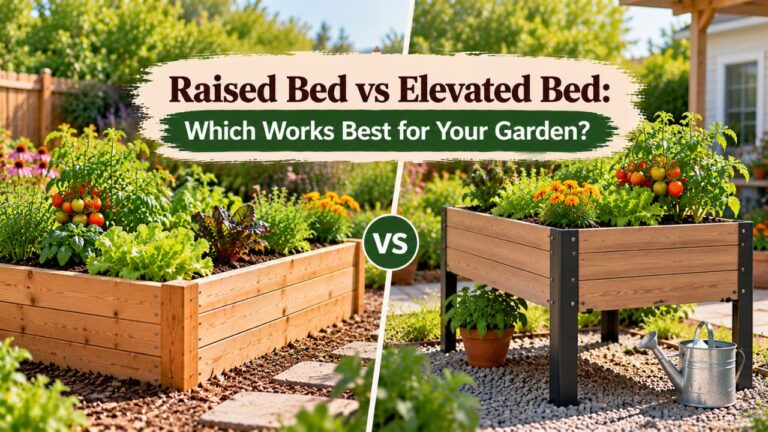
Raised garden beds use soil elevated above the surrounding ground, usually contained within wood, metal, or another type of frame. In-ground gardens grow plants directly in the existing soil without requiring an elevated structure.
The differences become noticeable during soil preparation, watering, planting, and routine maintenance. Raised beds provide greater control over growing conditions but usually require more materials and initial investment. In-ground gardens are simpler to establish when the existing soil is suitable, although compacted or poorly drained ground may require improvement.
Neither approach automatically produces a larger harvest.
Understanding how these gardening methods compare in soil quality, drainage, water requirements, cost, root development, and crop selection can help you choose an arrangement that works for your growing conditions.
Raised Garden Bed vs In Ground: Key Differences
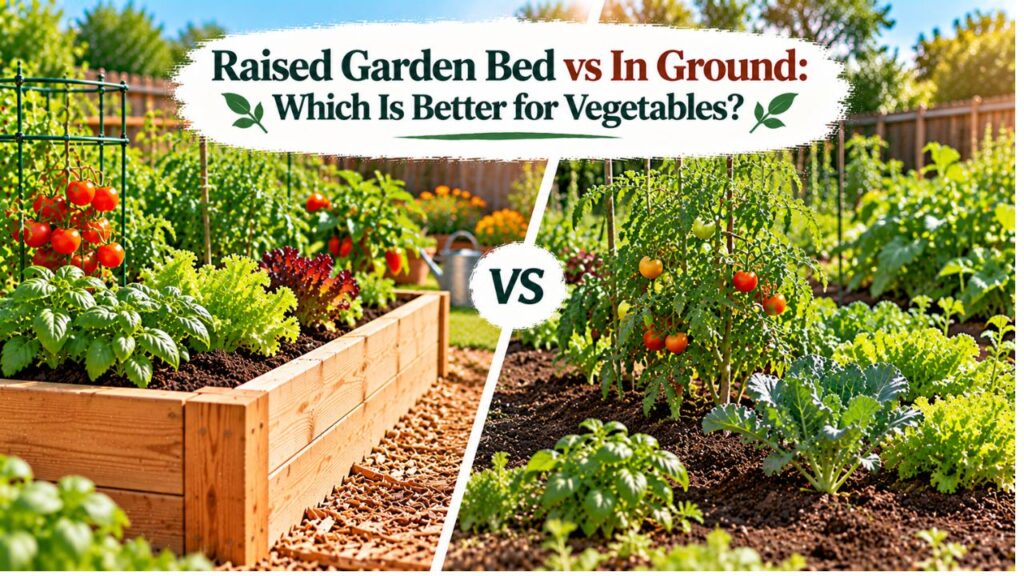
Raised garden beds and traditional in-ground gardens provide different advantages depending on soil conditions and garden design.
The following comparison highlights their main differences.
| Feature | Raised garden bed | In-ground garden |
| Soil quality | Easier to control with added growing mix | Depends on existing native soil |
| Drainage | Often better with suitable soil and an open bottom | Depends on soil texture and site conditions |
| Initial cost | Usually higher due to frames and additional soil | Usually lower when existing soil is usable |
| Watering | May require more frequent watering | Often retains moisture longer |
| Soil temperature | Typically warms faster in spring | Temperature changes more gradually |
| Root development | Depends on soil depth and access to native ground | Roots can extend into suitable surrounding soil |
| Weed management | Easier to limit some existing weeds | Weed pressure varies with site preparation |
| Accessibility | Taller beds can reduce bending | Usually requires more bending or kneeling |
| Planting area | Defined by bed dimensions and paths | Flexible for larger or irregular spaces |
| Maintenance | Soil care plus frame upkeep | Primarily soil, weed, and pathway maintenance |
| Best application | Poor soil, wet sites, compact spaces, accessible gardening | Healthy soil, large plots, and budget-conscious gardening |
The largest differences involve the growing medium, moisture conditions, and cost of establishing the garden.
A well-maintained in-ground garden can perform just as well as a raised bed when the native soil supports healthy roots.
Raised Bed vs In-Ground Soil: Which Is Better for Plant Growth?
Soil quality is one of the most important factors when deciding between raised beds and traditional gardening.
Plants need soil that provides moisture, nutrients, oxygen, and enough space for roots to develop.
Both garden types can meet these requirements, but they begin with different soil conditions.
Raised Beds Provide Greater Control Over Soil Quality
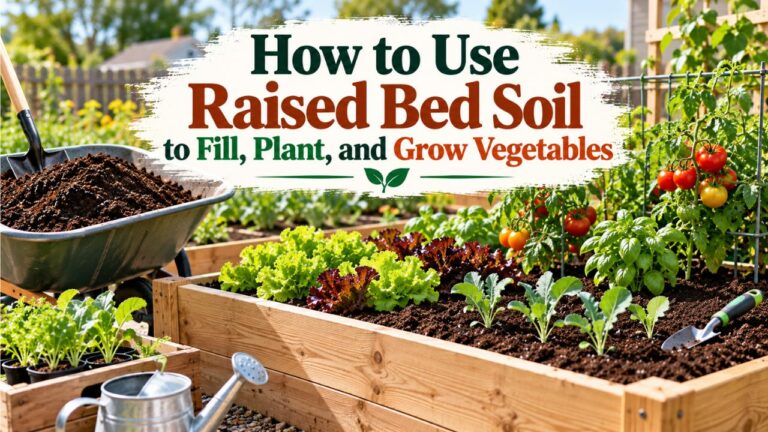
A raised garden bed allows gardeners to bring in a suitable growing mixture rather than relying entirely on the existing ground.
This can be useful when the yard contains:
- Dense clay soil
- Compacted construction fill
- Rocky or shallow topsoil
- Soil with poor structure
- Existing ground that is difficult to cultivate
A suitable raised bed mixture often combines quality topsoil with finished compost.
The mixture should hold moisture while allowing excess water to drain and oxygen to reach the roots.
Raised beds also make it easier to concentrate amendments within a defined planting area.
However, purchasing soil does not guarantee quality. Poorly blended commercial mixes can contain excessive coarse material, undecomposed organic matter, or unsuitable soil textures.
In-Ground Gardens Use the Existing Soil
Traditional gardens depend primarily on the soil already present in the yard.
If that soil is deep, fertile, and well-draining, it may provide an excellent growing environment without requiring additional soil purchases.
Gardeners can improve existing soil through appropriate compost additions, mulching, cover crops, and reduced compaction.
Native soil also provides continuity between the upper growing area and deeper ground.
This can allow roots to explore a larger soil volume when conditions are suitable.
However, heavily compacted or waterlogged ground may need substantial improvement before supporting productive vegetable growth.
Key Takeaway: Raised beds are particularly useful when existing soil is difficult to improve. In-ground gardening is often more economical when the natural soil is already suitable.
Which Has Better Drainage: Raised Beds or In-Ground Gardens?
Raised beds often drain more readily than ground-level gardens because their soil sits above the surrounding surface and can be prepared with a loose structure.
However, drainage depends on the soil texture, underlying ground, and bed construction.
Drainage in Raised Garden Beds
Excess water can move through a properly prepared raised bed and into the soil beneath it.
This reduces the likelihood of prolonged saturation in the upper growing area.
Raised beds can be especially helpful in yards with heavy clay or soil that remains wet after rainfall.
According to the University of Maryland Extension’s raised-bed gardening guidance, raised beds typically offer improved drainage, reduced compaction, and earlier spring soil warming compared with conventional ground-level growing areas.
However, a raised bed installed over severely compacted or saturated ground may still experience drainage restrictions.
An open bottom generally allows water and roots to move into suitable native soil.
Elevated planters with enclosed bottoms require appropriate drainage openings.
Drainage in In-Ground Gardens
In-ground drainage depends largely on natural soil structure and landscape conditions.
Sandy soil generally allows water to move through more quickly, while clay-rich soil tends to drain more slowly.
Loamy soil with stable aggregates can provide a useful balance between drainage and moisture retention.
Poorly drained sites may require improved surface grading, appropriate organic matter management, or other drainage corrections.
If water repeatedly collects in the same location after rainfall, evaluate the site before planting vegetables.
Which Drainage System Is Better?
Raised beds generally have an advantage where the native ground is dense or poorly drained.
In-ground gardens can be equally effective when the existing soil drains well.
The objective is not to remove water as quickly as possible. Healthy vegetable roots need soil that remains moist while allowing sufficient oxygen movement.
Raised Bed vs In-Ground Watering Requirements
Water management is another important difference between the two methods.
Raised bed soil often dries faster, especially during hot or windy weather.
In-ground soil can retain usable moisture longer because plant roots may access a larger, more continuous soil volume.
Why Raised Beds May Need More Watering
Raised bed soil has a greater exposed surface area, particularly when the sides are elevated above surrounding ground.
The growing medium may also contain more loose organic materials than native soil.
These conditions can increase drying during warm weather.
The University of Minnesota Extension’s raised-bed gardening guidance explains that raised beds generally dry more quickly than in-ground gardens and may require more frequent irrigation.
Taller, container-like raised beds can be particularly sensitive to moisture loss.
To manage moisture:
- Apply organic mulch around established plants.
- Check moisture several inches below the surface.
- Use drip irrigation or soaker hoses when practical.
- Water according to soil conditions rather than a fixed schedule.
- Avoid growing mixes that contain excessive coarse, fast-drying materials.
A properly managed raised bed should remain moist without becoming waterlogged.
Why In-Ground Gardens Often Retain Moisture Longer
In-ground gardens usually provide greater contact with the surrounding soil.
Plant roots may extend downward and outward to access moisture beyond the immediate planting area.
This can be beneficial during hot, dry periods.
However, native soil texture still matters.
Sandy ground may dry rapidly, while heavy clay can retain excessive water.
In-ground gardening is not automatically a low-water method, but suitable native soil often provides more moisture storage than a small enclosed raised bed.
Which Is Better in Hot, Dry Climates?
In-ground gardening often has an advantage in hot, dry areas when the existing soil is healthy and has adequate water-holding capacity.
Large raised beds can also perform well, but they may require closer moisture management.
For particularly dry locations, mulching and efficient irrigation are useful with either method.
Raised Bed vs In-Ground Soil Temperature
Raised beds and in-ground gardens also respond differently to seasonal temperature changes.
This can influence planting dates, seed germination, and root development.
Raised Beds Warm Faster in Spring
Raised bed soil generally warms more quickly during spring because it is elevated and exposed to changing air temperatures.
Warmer soil can allow certain crops to establish earlier when other growing conditions are favorable.
This advantage is particularly useful in areas with cool spring weather.
However, soil warming does not eliminate the danger of frost.
Plants can still suffer cold damage even when the raised bed soil has warmed sufficiently for germination.
In-Ground Soil Changes Temperature More Gradually
Ground-level soil is connected to a larger mass of earth.
Its temperature generally changes more slowly than the soil in highly exposed raised beds or elevated planters.
This can delay warming during spring but may provide more stable conditions during periods of extreme temperature change.
For some perennial crops, root systems in natural ground may also experience less severe winter temperature fluctuations than roots contained in exposed elevated planters.
Which Is Better During Summer?
In hot climates, raised bed soil can become excessively warm or dry, particularly in exposed locations.
In-ground soil may offer more stable root-zone conditions.
Mulch, appropriate irrigation, and suitable planting times can help protect vegetables in either garden.
The warmer soil of a raised bed is an advantage during cool weather, but it is not necessarily beneficial during every season.
Which Costs More: Raised Beds or In-Ground Gardening?
In-ground gardening is generally less expensive to establish when the yard already has suitable soil.
Raised beds often require additional materials, growing media, and construction work.
However, the actual difference depends on the garden size and site conditions.
Initial Cost of Raised Garden Beds
A framed raised bed may require:
- Wood, galvanized metal, or another framing material
- Corner brackets or structural connectors
- Purchased topsoil or raised bed mix
- Finished compost
- Irrigation equipment
- Mulch for the growing surface and surrounding paths
The cost of filling a deep bed can become substantial.
For example, a raised bed measuring 4 feet wide, 8 feet long, and 12 inches deep requires approximately 32 cubic feet of soil when filled to that depth.
That equals about 1.19 cubic yards.
Actual requirements depend on the internal dimensions and intended fill height.
Purchasing growing media in bulk may be more economical than buying numerous small bags.
Initial Cost of In-Ground Gardens
An in-ground garden does not need a frame or enough purchased soil to fill an elevated structure.
Initial expenses may include soil testing, compost, mulch, tools, and irrigation equipment.
If the site has healthy soil and minimal weed problems, the setup may be relatively inexpensive.
However, difficult ground conditions can increase costs.
Removing rocks, correcting drainage, and improving heavily compacted soil may require additional work and materials.
Long-Term Maintenance Costs
Raised beds may require repairs as wooden frames decay or other materials deteriorate.
Soil levels can also decline through settling and organic matter decomposition, requiring occasional additions.
In-ground gardens avoid frame replacement costs but still need soil maintenance, weed control, and irrigation.
Neither system is maintenance-free.
For gardeners with limited budgets and good native soil, in-ground gardening is usually the more economical starting point.
Raised Bed vs In-Ground Gardening for Weeds and Pests
Raised beds can simplify some weed management tasks, but they do not eliminate weeds or garden pests.
Both growing systems require regular monitoring.
Weed Management in Raised Beds
A raised bed filled with clean growing medium may initially contain fewer weed seeds than an existing garden plot.
Permanent pathways also make it easier to separate planted areas from surrounding vegetation.
However, wind, birds, contaminated compost, and existing soil can introduce weed seeds.
Perennial weeds may grow through open-bottom beds if the site was not properly prepared.
Mulch and consistent removal of young weeds remain important.
Weed Management in In-Ground Gardens
In-ground gardens can contain a larger existing population of weed seeds and perennial roots.
Preparing an area previously covered by lawn may require additional weed management.
However, permanent planting beds, mulched paths, cover crops, and reduced soil disturbance can make weed control much easier.
A properly managed in-ground garden does not necessarily require more weeding than a raised bed.
Do Raised Beds Prevent Garden Pests?
Raised bed walls may create a minor obstacle for certain ground-moving pests, but they do not reliably prevent insects, slugs, rabbits, or other animals from entering the garden.
Additional protection may include:
- Insect netting or row covers
- Appropriate fencing
- Physical barriers against burrowing animals
- Regular removal of diseased plant material
- Crop rotation and sanitation
Similar pest management methods can be used in traditional in-ground gardens.
Which Produces More Vegetables: Raised Beds or In-Ground Gardens?
Neither method consistently produces higher yields under every condition.
Harvest size depends on soil fertility, sunlight, plant spacing, available water, crop selection, pest pressure, and growing season conditions.
Raised beds may improve productivity where native soil restricts root growth.
In-ground gardens can produce equally strong harvests when the existing soil is healthy.
Why Raised Beds Can Be Productive
Raised beds provide a defined growing area where soil structure and fertility can be managed carefully.
Because gardeners generally avoid stepping on the planting surface, the soil is less likely to become compacted.
This supports root development and can make intensive vegetable planting more practical.
Raised beds can also be arranged to keep frequently harvested crops within comfortable reach.
However, closely spaced plants still need sufficient water, nutrients, sunlight, and airflow.
Planting more vegetables in the same space does not guarantee a greater usable harvest.
Why In-Ground Gardens Can Produce Large Harvests
Traditional ground-level gardens are often easier to expand.
This can be beneficial for vegetables that need substantial growing space.
Examples include:
- Pumpkins
- Winter squash
- Sweet corn
- Potatoes
- Watermelons
- Large quantities of bush beans
These crops can also grow in raised beds, but their spacing or sprawling growth may make a larger in-ground plot more practical.
In-ground beds allow gardeners to adjust row lengths and planting areas without changing fixed frames.
Which Is Better for Small Vegetable Gardens?
Raised beds are often convenient for compact vegetable gardens because they organize planting areas and provide clear access paths.
A small raised bed can accommodate lettuce, herbs, carrots, peppers, and other vegetables when appropriately spaced.
However, a small in-ground garden with permanent paths can provide similar growing efficiency.
The better option depends on soil condition, available space, and the gardener’s preference for a framed layout.
Raised Beds vs In-Ground Gardens for Accessibility
Accessibility is one of the clearest advantages of taller raised beds.
Traditional in-ground gardening often requires bending, kneeling, or sitting close to the soil.
A properly designed raised bed can bring the planting surface closer to a comfortable working height.
Raised Beds Reduce the Need to Bend
Taller raised beds can make planting, weeding, watering, and harvesting easier for gardeners who have difficulty working at ground level.
However, height alone does not guarantee accessibility.
The design should account for:
- Comfortable reaching distance
- Pathway width and surface stability
- Bed height relative to the gardener
- Wheelchair clearance when needed
- Access to watering equipment
- Structural support for the weight of wet soil
A tall bed that is too wide may be difficult to reach across.
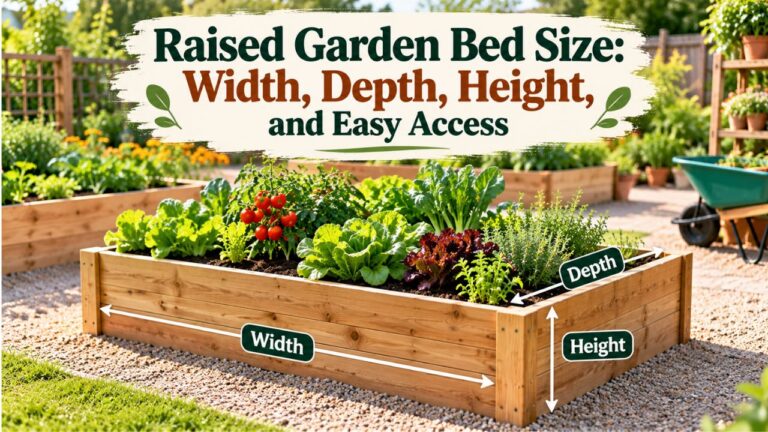
For many conventional raised beds, a width of approximately 3–4 feet is convenient when both long sides are accessible.
Beds approached from only one side generally need to be narrower.
In-Ground Gardens Can Also Be Designed for Easier Access
Ground-level gardens can use permanent pathways, narrow planting rows, long-handled tools, and low-maintenance layouts.
These improvements reduce unnecessary walking on growing soil and simplify maintenance.
However, the plants remain at ground level, so bending and kneeling may still be required.
For gardeners who need a significantly higher working surface, an appropriately designed raised bed may provide a better solution.
When Is a Raised Garden Bed the Better Choice?
Raised bed gardening is particularly useful when natural ground conditions make conventional planting difficult.
Heavy Clay or Compacted Ground
Raised beds allow vegetables to grow in an improved upper soil layer rather than depending entirely on dense native soil.
This can provide better aeration and drainage during early root development.
An open-bottom bed can also allow roots to reach deeper soil when the underlying conditions permit.
Poorly Drained Areas
Raising the planting surface above surrounding ground may reduce the time roots spend in saturated soil.
However, persistent flooding or a high water table may require additional site drainage measures.
Potentially Contaminated Soil
Raised beds filled with verified clean growing medium can be part of a safer gardening approach where native soil contains elevated lead or other contaminants.
The site should first be evaluated through appropriate soil testing.
Depending on the contamination, a suitable physical barrier, clean fill, and measures to prevent contaminated soil or dust from entering the bed may be necessary.
Simply placing a shallow frame on contaminated ground does not automatically make the site safe for edible crops.
Limited Space and Accessible Gardening
Raised beds can provide an organized planting area within small yards, patios, and other restricted spaces.
Elevated models can also reduce the need for bending or kneeling.
For gardening on concrete, use a suitably designed planter with adequate soil depth, drainage, and structural support.
When Is In-Ground Gardening the Better Choice?
Traditional gardening is often more practical when soil conditions are favorable and there is enough land for planting.
Healthy, Deep Native Soil
If the yard already contains loose, fertile, well-draining soil, a raised frame may provide limited additional growing benefits.
Improving the existing soil can be more economical than buying large volumes of replacement material.
Large Vegetable Growing Areas
In-ground gardens allow flexible planting layouts for crops requiring significant space.
Long rows of corn, potatoes, beans, or sprawling squash can be easier to accommodate without purchasing multiple raised bed frames.
Hot, Dry Growing Conditions
Where soil moisture is difficult to maintain, the larger available rooting area of an in-ground garden may be beneficial.
Mulching and efficient irrigation remain necessary, but suitable native soil may provide a useful moisture reserve.
Gardens With Limited Setup Budgets
If construction materials and purchased soil would make raised beds expensive, beginning with a small in-ground plot may be more practical.
The garden can be expanded or modified after the soil conditions and preferred crops become familiar.
Can You Combine Raised Beds and In-Ground Gardening?
Yes. A mixed garden layout can use the advantages of both methods.
For example, raised beds can hold leafy greens, carrots, and frequently harvested herbs, while the surrounding ground supports pumpkins, potatoes, or other crops needing more space.
This arrangement is useful when different parts of the yard have different soil conditions.
A practical mixed layout might include:
- Raised beds: Carrots, lettuce, herbs, and vegetables needing improved soil structure.
- In-ground rows: Corn, potatoes, beans, and other crops grown over larger areas.
- Permanent pathways: Mulched walking areas that reduce compaction in planting zones.
- Shared irrigation: Watering systems adjusted to the moisture needs of each area.
The beds do not need identical watering schedules.
Raised soil and native ground can dry at different rates, even when planted with similar crops.
Grouping plants according to their water needs can make irrigation easier to manage.
How to Choose Between a Raised Garden Bed and an In-Ground Garden
Before building a raised bed or preparing an in-ground plot, evaluate the actual growing conditions.
A few simple checks can prevent unnecessary spending and soil problems.
1. Evaluate Your Existing Soil
Inspect the soil for compaction, drainage, and visible obstructions.
Consider a laboratory soil test to identify pH and nutrient conditions.
If the property has a history suggesting possible contamination, request appropriate contaminant testing before planting edible crops.
Healthy soil may make in-ground planting the simplest choice.
Poor soil conditions may justify a raised bed.
2. Check Sunlight and Water Access
Most fruiting vegetables, including tomatoes and peppers, perform best with substantial direct sunlight.
Choose a location that receives approximately 6–8 hours of direct sun during the growing season when possible.
Also consider access to a hose, irrigation connection, or water source.
A raised bed placed far from convenient watering access can become difficult to maintain during hot weather.
3. Consider the Crops You Want to Grow
Think about the vegetables you plan to grow most often.
For small greens, herbs, and root crops, a compact raised bed may be convenient.
For large plantings of corn, potatoes, and sprawling vegetables, an in-ground plot may offer greater flexibility.
If the native soil is healthy, both approaches can support a wide selection of vegetables.
4. Compare the Full Setup Requirements
Calculate the materials needed before choosing a raised bed.
For a framed garden, account for the structure, soil volume, compost, irrigation, and surrounding pathways.
For an in-ground plot, consider soil preparation, weed removal, amendments, and access paths.
Include the time and effort required for each method.
5. Choose Based on Long-Term Maintenance
Consider whether the garden will remain in the same location for several years.
Raised beds become relatively difficult to move once filled.
In-ground planting areas are often easier to reshape or expand, particularly when permanent structures are absent.
Choose the method that fits the available maintenance time and the expected use of the space.
Conclusion
The raised garden bed vs in ground decision depends mainly on existing soil conditions, available space, watering needs, accessibility, and budget.
Raised beds offer greater control over the growing medium, often improve drainage, and can make gardening more comfortable. Their main tradeoffs are additional setup costs, faster soil drying, and eventual frame maintenance.
In-ground gardens are generally more affordable when native soil is healthy. They also provide flexible growing areas and can offer more stable soil moisture during hot weather.
For compacted or poorly drained ground, a raised bed is often the more practical starting point. For fertile, well-draining soil and larger vegetable plots, an in-ground garden may be the better investment.
A combination of both methods can also provide an efficient solution when crops and soil conditions vary across the yard.
FAQs About Raised Garden Bed vs In Ground
Are Raised Garden Beds Better Than Planting in the Ground?
Raised beds are better for some conditions, especially compacted soil, poor drainage, and accessible gardening.
In-ground gardens may be better when the natural soil is healthy, the available planting area is large, and setup costs need to remain low.
Do Vegetables Grow Faster in Raised Beds?
Vegetables may establish earlier in raised beds during cool spring weather because the elevated soil often warms sooner.
However, faster growth is not guaranteed. Soil nutrients, moisture, sunlight, temperatures, and plant variety also affect development.
Do Raised Beds Need More Fertilizer Than In-Ground Gardens?
Not necessarily. Fertilizer needs depend on the existing nutrient levels, growing medium, crop requirements, and previous amendments.
Both raised beds and in-ground gardens benefit from soil testing and targeted nutrient management.
Adding fertilizer without checking existing conditions can create nutrient imbalances.
Are Raised Beds Better for Tomatoes?
Raised beds can be excellent for tomatoes when they provide sufficient root space, sunlight, nutrients, and consistent moisture.
However, tomatoes can grow equally well in healthy in-ground soil. Raised beds are particularly helpful when the existing ground is compacted or poorly drained.
Do Raised Garden Beds Dry Out Faster Than In-Ground Gardens?
Yes, raised beds often dry more quickly, particularly when they are tall, exposed to sun and wind, or have limited soil volume.
Mulch and carefully managed irrigation can reduce moisture loss. Actual drying rates depend on the soil mixture, weather, and bed design.
Is In-Ground Gardening Better for Beginners?
In-ground gardening can be easier for beginners who already have suitable garden soil because it avoids the cost and construction of a raised frame.
However, raised beds may be easier to manage in yards with poor soil, limited space, or accessibility concerns.
Can Raised Beds and In-Ground Gardens Have the Same Soil?
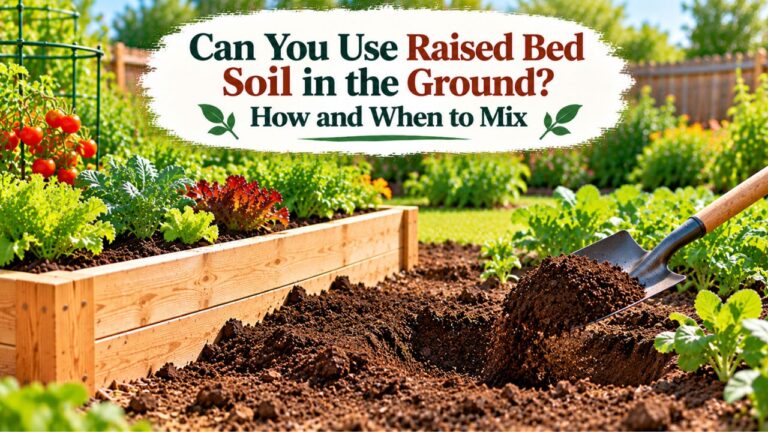
Yes. Raised beds can contain the same soil found in an in-ground garden, often with suitable amendments to improve its structure.
However, raised bed soil may be blended with additional topsoil or compost to create a deeper, more manageable growing area. Soil quality matters more than whether the bed is framed.

I’m Maya L. Greenwood, a lifelong plant lover who believes anyone can grow something beautiful with the right guidance. After years of testing soil mixes, pruning methods, irrigation tricks, and pest-safe solutions, I started EasyGardenTips.com to turn hard-won lessons into step-by-step advice. From seed starting and container gardens to composting and seasonal checklists, my goal is to make gardening simple, sustainable, and fun.