How Much Does Raised Bed Soil Cost? Prices for Common Bed Sizes
Raised bed soil typically costs around 5–7 per cubic foot for common bagged products in U.S. home improvement stores, while bulk raised bed mixes can cost approximately 50–120 per cubic yard before delivery. Actual prices depend on the soil blend, retailer, location, and quantity purchased.
For example, current retail listings include raised bed soil priced at $9.97 for either a 1.5-cubic-foot or 2-cubic-foot bag, depending on the product. At those prices, filling a standard 4 × 8-foot raised bed to a depth of 12 inches costs approximately 160–220 using bags.
Bulk soil can be considerably cheaper per cubic foot, but delivery fees and minimum order quantities affect the final price.
The right purchasing method also depends on how many raised beds you’re filling. A few bags may be convenient for a small planter, while bulk soil often becomes more economical for larger gardens.
This guide breaks down bagged and bulk raised bed soil prices, compares filling costs for common bed sizes, and explains how to calculate your budget without buying unnecessary soil.
How Much Does Raised Bed Soil Cost Per Bag and Per Yard?
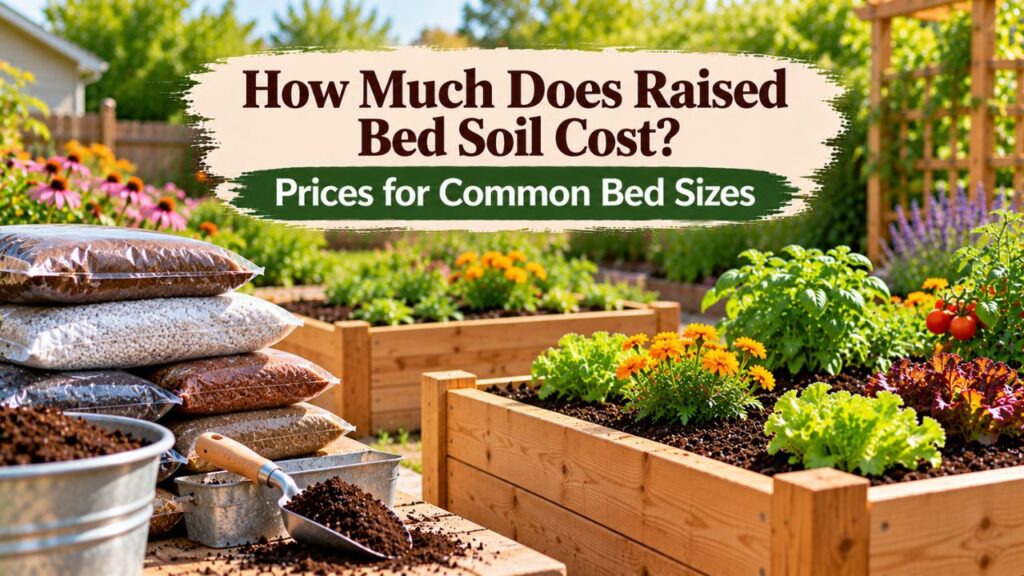
Raised bed soil is commonly sold in individual bags, pallet quantities, and loose bulk loads.
Each purchasing method uses different volume measurements, so comparing prices by cubic foot provides a more accurate picture than comparing package prices alone.
Average Cost of Bagged Raised Bed Soil
Bagged raised bed soil is convenient for smaller gardens because it is prepackaged and easier to transport in manageable quantities.
As of October 2026, The Home Depot’s raised bed soil listings include these examples:
| Raised Bed Soil Product | Bag Volume | Listed Price | Cost per Cubic Foot |
| Miracle-Gro Organic Raised Bed and Garden Soil | 1.5 cu. ft. | $9.97 | $6.65 |
| Kellogg Garden Organics Raised Bed and Potting Mix | 2 cu. ft. | $9.97 | $4.99 |
These are specific retailer examples, not fixed nationwide prices. Local store pricing, promotions, and availability may change.
The table shows why bag size matters.
Two bags with the same price can contain significantly different amounts of soil. In this example, the 2-cubic-foot bag provides more volume for the same purchase price.
However, the products may have different ingredients and performance characteristics, so price shouldn’t be the only consideration.
How Much Does Bulk Raised Bed Soil Cost?
Bulk raised bed soil is generally sold by the cubic yard.
One cubic yard equals 27 cubic feet.
For budgeting, approximately 50–120 per cubic yard is a useful broad planning range for bulk raised-bed mixes, although actual local quotations can fall outside it.
A specific current example comes from Riverside Wood’s 2026 landscape material pricing in Norman, Oklahoma:
- Raised bed Rich Mix: $58.50 per cubic yard
- Screened topsoil: $38.50 per cubic yard
- Compost: $65 per cubic yard
These prices exclude delivery and taxes.
At $58.50 per cubic yard, the raised bed mix costs approximately $2.17 per cubic foot.
That’s substantially less per cubic foot than the two bagged soil examples above.
However, the final savings depend on local purchasing and delivery conditions.
Bagged vs. Bulk Raised Bed Soil Cost Comparison
| Buying Method | Example Material Price | Best Suited For |
| 1.5-cu.-ft. bags | $9.97 per bag | Small beds and minor refills |
| 2-cu.-ft. bags | $9.97 per bag | Small to medium beds |
| Loose bulk raised bed mix | $58.50 per cubic yard | Larger beds and multiple beds |
| Bulk topsoil | $38.50 per cubic yard | Custom soil mixtures |
| Bulk compost | $65 per cubic yard | Mixing and soil amendments |
These figures are based on the cited retailer and supplier examples. Bulk prices are local, and the listed products are not identical soil formulations.
For a single small bed, bagged soil may be more economical after delivery costs are considered.
For several beds, the lower material cost of bulk soil can produce substantial savings.
How Much Does It Cost to Fill a Raised Garden Bed?
The total soil cost depends mainly on the bed’s length, width, and filling depth.
A deeper bed requires more soil, even when its surface area stays the same.
The following examples assume rectangular beds filled completely to the stated depth.
Raised Bed Soil Cost by Garden Bed Size
The table uses the two verified bagged product prices above.
| Raised Bed Size | Soil Required | Estimated Bagged Soil Cost |
| 2 × 4 × 1 ft. | 8 cu. ft. | 40–60 |
| 4 × 4 × 1 ft. | 16 cu. ft. | 80–110 |
| 3 × 6 × 1 ft. | 18 cu. ft. | 90–120 |
| 4 × 8 × 1 ft. | 32 cu. ft. | 160–220 |
| 4 × 8 × 1.5 ft. | 48 cu. ft. | 240–320 |
| 4 × 8 × 2 ft. | 64 cu. ft. | 320–430 |
The estimates account for purchasing whole 1.5- or 2-cubic-foot bags at $9.97 each.
They exclude sales tax, delivery charges, and possible discounts.
These are illustrations based on two current products rather than universal low and high market prices.
Cost to Fill a 2 × 4 Raised Garden Bed
A 2 × 4-foot bed filled 12 inches deep requires:
2 × 4 × 1 = 8 cubic feet
Using 2-cubic-foot bags:
8 ÷ 2 = 4 bags
At $9.97 per bag:
Estimated soil cost: $39.88
Using the 1.5-cubic-foot product requires six whole bags, costing $59.82.
For a small raised bed like this, purchasing bags is often convenient because the soil volume is relatively low.
Cost to Fill a 4 × 4 Raised Garden Bed
A 4 × 4-foot bed filled 12 inches deep requires 16 cubic feet.
Using 2-cubic-foot bags:
16 ÷ 2 = 8 bags
8 × $9.97 = $79.76
Estimated soil cost: Approximately $80
Using 1.5-cubic-foot bags requires 11 bags, costing $109.67.
For one bed, compare the total price of bags with any minimum bulk purchase and delivery fee before deciding.
Cost to Fill a 4 × 8 Raised Garden Bed
A 4 × 8-foot raised bed is a common size for home vegetable gardening.
At a 12-inch soil depth:
4 × 8 × 1 = 32 cubic feet
Using 2-cubic-foot bags requires:
32 ÷ 2 = 16 bags
16 × $9.97 = $159.52
Using 1.5-cubic-foot bags requires 22 bags:
22 × $9.97 = $219.34
Therefore, filling this bed costs approximately 160–220 with the two bagged products.
For bulk soil, 32 cubic feet equals about 1.19 cubic yards.
At the example rate of $58.50 per cubic yard, that amount has a proportional material value of approximately $69.
The actual bill depends on whether the supplier sells fractional cubic yards, its minimum purchase, and delivery charges.
Cost to Fill a 4 × 8 Raised Bed 18 Inches Deep
Increasing the soil depth to 18 inches raises the volume requirement.
4 × 8 × 1.5 = 48 cubic feet
Using 2-cubic-foot bags:
48 ÷ 2 = 24 bags
24 × $9.97 = $239.28
Using 1.5-cubic-foot bags requires 32 bags, costing $319.04.
Estimated bagged soil cost: 240–320
At the example bulk price of $58.50 per cubic yard, 48 cubic feet represents approximately $104 in material, before delivery and minimum-order adjustments.
A deeper bed may be useful for certain vegetables, but additional soil volume increases the initial expense.
How to Calculate Raised Bed Soil Cost
Calculating the required soil volume before shopping helps avoid purchasing too many bags or ordering an oversized bulk delivery.
Step 1: Measure the Raised Bed
Measure the interior length and width of the bed.
Then determine the actual soil depth.
If the frame is 14 inches tall but you plan to leave 2 inches below the rim, calculate using a 12-inch soil depth.
Step 2: Calculate the Required Soil Volume
Use this formula:
Cubic feet = Length (ft.) × Width (ft.) × Soil depth (in.) ÷ 12
For example, a bed measuring 3 feet wide, 6 feet long, and 12 inches deep requires:
3 × 6 × 12 ÷ 12 = 18 cubic feet
For bulk soil, convert cubic feet to cubic yards:
Cubic yards = Cubic feet ÷ 27
Therefore:
18 ÷ 27 = 0.67 cubic yards
Step 3: Calculate the Number of Bags
Divide the required soil volume by the volume printed on the bag.
Number of bags = Required cubic feet ÷ Cubic feet per bag
Always round up to the next whole bag.
For example, 18 cubic feet of soil requires:
- 12 bags containing 1.5 cubic feet each
- 9 bags containing 2 cubic feet each
The total cost depends on the selected product’s bag price.
Step 4: Calculate the Total Soil Cost
For bagged products:
Total cost = Number of bags × Price per bag
For bulk products:
Total cost = Cubic yards × Price per cubic yard + Delivery and other fees
Confirm minimum order requirements before relying on the bulk calculation.
A supplier may charge for a full cubic yard even when your project needs less.
How Much Does Bulk Raised Bed Soil Delivery Cost?
Bulk delivery can change which purchasing method offers the best value.
The price of loose soil usually doesn’t include transportation, and delivery charges vary by distance, load size, and supplier.
Local Delivery Charges
Some landscape suppliers charge a flat fee within a limited service area.
Others calculate transportation costs using mileage, truck size, or order quantity.
For example, Riverside Wood’s listed 2026 delivery schedule starts at $75 for a pickup truck load within the first 10 miles, with additional charges beyond that distance.
This is an example of one supplier’s pricing, not a standard nationwide delivery rate.
If a 4 × 8-foot bed requires approximately 1.19 cubic yards, the proportional cost at $58.50 per cubic yard is about $69.
Adding the example $75 delivery fee produces approximately $144 before tax.
However, the actual invoice may be higher if the supplier requires a larger minimum purchase or rounds the order to a standard load size.
When Bulk Delivery Becomes More Economical
Bulk delivery becomes increasingly attractive when several raised beds can be filled from one load.
For example, four 4 × 8-foot beds filled 12 inches deep require:
4 × 32 = 128 cubic feet
128 ÷ 27 = 4.74 cubic yards
At the example bulk material price of $58.50 per cubic yard, the proportional soil cost is approximately $277.
Buying 5 cubic yards would cost $292.50 in material at that rate.
By comparison, filling all four beds using 2-cubic-foot bags at $9.97 each would require 64 bags and cost $638.08 before tax.
Even with a delivery charge, bulk soil may offer meaningful savings for a project of this size.
Picking Up Bulk Soil Yourself
Some suppliers allow customers to collect loose soil directly from their yard.
This can eliminate delivery charges.
However, soil is heavy, and its weight varies with moisture content and composition.
Before transporting bulk soil, verify your vehicle’s payload capacity and the estimated weight of the load.
A full cubic yard of moist mineral soil can exceed the safe carrying capacity of many passenger vehicles and some light-duty pickups.
Renting a suitable trailer or arranging delivery may be safer and more practical.
What Affects the Price of Raised Bed Soil?
Not all products labeled raised bed soil contain the same materials.
Several factors influence the price and the amount needed.
Soil Ingredients and Composition
Raised bed mixes may contain varying amounts of:
- Screened topsoil
- Finished compost
- Coconut coir
- Peat moss
- Composted bark
- Perlite
- Other growing-medium ingredients
A product containing screened topsoil and compost may have a different price from a lightweight soilless mixture.
The label doesn’t guarantee that a more expensive mix is better for every garden.
Choose a product that suits the drainage, moisture retention, and nutrient needs of your plants.
Organic and Specialty Soil Products
Some soil products are marketed for organic gardening or contain added fertilizers.
These products may cost more than ordinary topsoil or basic garden mixes, although price differences vary by brand.
Check what the product actually contains.
An organic label doesn’t automatically mean the soil has better structure, a suitable nutrient balance, or greater moisture retention.
Bag Size and Packaging
Smaller packages can cost more per cubic foot.
Larger bags may offer better value, but this isn’t guaranteed.
For example, the two cited bagged products both cost $9.97 despite containing different volumes.
Calculate the unit price before purchasing.
Regional Availability
Soil costs vary among states, cities, and local suppliers.
Transportation expenses, available raw materials, labor, and local demand can affect pricing.
A garden mix sold by a landscaping supplier in Oklahoma may not have the same price in California, Florida, or New York.
Local quotes are more useful than a single national estimate when planning a purchase.
Seasonal Pricing and Promotions
Garden soil prices can change throughout the year.
Retailers may offer seasonal discounts, quantity promotions, or clearance sales.
However, availability can be limited, particularly for specific brands or mixes.
Compare actual total costs rather than assuming that a seasonal promotion is automatically the cheapest option.
Is It Cheaper to Make Your Own Raised Bed Soil?
Mixing raised bed soil from separate materials can reduce costs, especially when you’re filling several large beds.
However, the savings depend on local prices and whether you can buy the ingredients in bulk.
Cost of Topsoil and Compost
A practical raised bed growing medium often includes mineral topsoil and finished compost.
For illustration, consider the previously cited supplier prices:
- Screened topsoil: $38.50 per cubic yard
- Compost: $65 per cubic yard
If you purchased equal volumes of these materials, the proportional material cost would average approximately $51.75 per cubic yard.
That is slightly less than the supplier’s $58.50-per-yard preblended raised bed mix.
However, this example assumes equal volumes and excludes transportation, mixing labor, taxes, and potential minimum purchases.
It also doesn’t establish that a 50/50 mix is appropriate for every raised bed. Existing soil fertility, compost composition, and drainage requirements matter.
Using Existing Garden Soil
An open-bottom raised bed placed over healthy native soil may not need to be filled entirely with purchased material.
Roots can grow into the ground below when the underlying soil is suitable.
For example, filling a 4 × 8-foot bed to 8 inches instead of 12 inches reduces the purchased volume from 32 to approximately 21.33 cubic feet.
At $9.97 per 2-cubic-foot bag:
- 12-inch depth: 16 bags, costing $159.52
- 8-inch depth: 11 bags, costing $109.67
That’s a material saving of approximately $50.
However, don’t reduce soil depth simply to save money if the plants need more rooting space or the underlying ground is unsuitable.
Making Compost at Home
Homemade compost can reduce the amount of purchased organic amendment needed over time.
Suitable yard debris and plant-based kitchen scraps can become useful compost when managed properly.
However, homemade compost should not be treated as a complete replacement for mineral topsoil.
A raised bed filled almost entirely with compost may settle substantially and develop nutrient or moisture-management problems.
Use finished compost in amounts appropriate for the soil and intended crops.
How to Save Money When Buying Raised Bed Soil
Soil is often one of the largest initial expenses when starting a raised garden.
Several purchasing decisions can lower the total cost without compromising the growing medium.
Compare Prices per Cubic Foot
Don’t compare bags by price alone.
Divide each bag’s price by its labeled volume.
For example:
- $9.97 ÷ 1.5 cu. ft. = approximately $6.65 per cubic foot
- $9.97 ÷ 2 cu. ft. = approximately $4.99 per cubic foot
For 32 cubic feet, that difference can add up.
Make sure the two products are both suitable for the intended growing area before choosing based on unit price.
Request Quotes From Local Landscape Suppliers
For larger orders, contact more than one soil supplier.
Ask for the total cost of the required volume, including delivery.
Also ask about the soil’s composition.
A cheap load of poor-quality fill dirt isn’t equivalent to a prepared vegetable garden mix.
Avoid Buying More Soil Than Necessary
Calculate the actual filling depth.
If a raised bed is 18 inches tall but only needs 16 inches of soil because you’re leaving space below the rim, use 16 inches in the volume calculation.
Likewise, don’t automatically buy enough material for a full 24-inch depth when the bed is intended to have a smaller planting compartment.
The goal is to purchase enough usable growing medium, not simply the greatest possible amount.
Combine Multiple Raised Bed Projects
If you’re building several beds, calculate their combined soil requirements.
One bulk order may be cheaper than several small deliveries.
For example, ordering soil for three beds at once may reduce the total transportation cost compared with placing three separate orders.
Confirm whether the supplier offers volume discounts or has minimum delivery quantities.
Refresh Existing Soil Instead of Replacing It
Established raised beds generally don’t need entirely new soil every year.
Soil levels may drop as organic matter decomposes and loose material settles.
In many cases, adding a suitable amount of finished compost or additional raised bed mix is enough to maintain the growing depth.
Soil testing can help determine whether fertilizer or other amendments are needed.
Replacing the entire growing medium unnecessarily increases cost and wastes usable soil.
Is Bagged or Bulk Raised Bed Soil Worth the Money?
The better choice depends on the amount required, available transportation, and product suitability.
Choose Bagged Soil for Small Projects
Bagged soil is often practical when you’re:
- Filling a small elevated planter
- Preparing one compact raised bed
- Adding soil to an existing bed
- Purchasing material in small quantities
- Working without access to bulk delivery
Bags are convenient to transport and allow you to purchase relatively precise quantities.
However, filling several large beds with individual bags can become expensive.
Choose Bulk Soil for Larger Projects
Bulk soil is often the more economical choice when you’re:
- Filling multiple raised beds
- Building a large vegetable garden
- Purchasing several cubic yards
- Able to arrange affordable delivery or pickup
- Working with a supplier offering a suitable preblended growing medium
Before ordering, ask for the mix ingredients and whether the material is appropriate for vegetable gardening.
A low price isn’t useful if the soil has poor structure, contains debris, or requires extensive additional amendments.
Hidden Raised Bed Soil Costs to Include in Your Budget
The advertised soil price may not represent the full project expense.
Consider several additional costs before purchasing.
Sales Tax
Sales tax may apply to bagged or bulk soil purchases depending on the location and transaction.
Include any applicable taxes when comparing final prices.
Delivery and Handling
Bulk suppliers may charge delivery fees, minimum-order fees, or separate unloading charges.
Bagged soil ordered online may also involve transportation or delivery expenses.
Check the total before purchasing.
Additional Soil Amendments
Some growing media require additional fertilizer or specific amendments.
However, don’t automatically buy perlite, vermiculite, lime, or fertilizer without checking whether the mix needs them.
A ready-to-use raised bed mix may already contain suitable ingredients.
Soil Settling
Newly filled raised bed soil may settle after watering.
Organic components also decompose over time.
You may need to add material later to maintain the desired depth.
Keep this possibility in mind, but avoid buying an arbitrary amount of excess soil without a reason.
Raised Bed Structure
If you’re calculating the cost of the entire raised garden rather than soil alone, include the frame or planter.
Wood, metal, concrete blocks, and elevated planter systems have different purchase and installation costs.
The soil-cost estimates in this article exclude those materials.
Conclusion
The answer to how much does raised bed soil cost depends on whether you purchase individual bags or bulk growing medium.
For common bagged products, approximately 5–7 per cubic foot is a useful reference based on the current retailer examples. A 4 × 8-foot raised bed filled 12 inches deep would cost about 160–220 using those products.
Bulk raised bed mix can be substantially cheaper per cubic foot. However, delivery charges and minimum purchases may reduce the savings for a single small bed.
For one compact planter, bagged soil is usually the more convenient choice. For several larger beds, compare local bulk soil quotes before buying dozens of bags.
The most reliable way to control costs is to calculate the exact soil volume, compare products by cubic foot, and choose a suitable growing medium rather than buying solely on price.
FAQs About How Much Does Raised Bed Soil Cost
How Much Does a 40-Pound Bag of Raised Bed Soil Cost?
The price depends on the product, brand, and retailer.
However, soil bags sold by weight shouldn’t be compared directly with bags sold by volume. Moisture content and soil composition affect how much a given weight occupies.
Check the bag’s cubic-foot volume or ask the supplier for its volume equivalent before calculating how many bags you need.
How Much Does 1 Cubic Yard of Raised Bed Soil Cost?
Bulk raised bed soil may cost approximately 50–120 per cubic yard before delivery, depending on location and ingredients.
For example, one verified 2026 supplier listing offers raised bed mix at $58.50 per cubic yard.
One cubic yard contains 27 cubic feet of soil.
How Much Does It Cost to Fill a 4 × 8 Raised Bed?
A 4 × 8-foot raised bed filled 12 inches deep requires 32 cubic feet of soil.
Using the two bagged product prices examined in this article, the estimated cost is approximately 160–220 before tax and delivery.
A suitable bulk blend may cost less, depending on the local supplier’s fees and minimum purchase.
Is Bulk Raised Bed Soil Cheaper Than Bags?
Bulk soil generally costs less per cubic foot than bagged soil, particularly when purchased in larger quantities.
However, delivery charges and minimum orders can make bags more economical for a single small raised bed.
Compare the total delivered price for the required volume.
How Much Soil Do I Need for a 4 × 4 Raised Bed?
A 4 × 4-foot raised bed filled to a depth of 12 inches needs 16 cubic feet of soil.
That equals eight 2-cubic-foot bags or approximately 0.59 cubic yards.
The exact amount changes if the filling depth is greater or smaller.
Is It Cheaper to Buy Topsoil and Compost Separately?
It can be cheaper, especially when purchasing both materials in bulk.
However, the final cost depends on the mix proportions, local material prices, delivery charges, and the labor required to combine them.
Check soil suitability before assuming that the cheapest combination will provide the best growing medium.
Do I Need to Buy New Raised Bed Soil Every Year?
No. Most established raised beds can continue using their existing soil for many growing seasons.
Add suitable compost or additional soil when necessary, and use soil testing to guide nutrient amendments.
Replacing the entire growing medium is generally unnecessary unless there is a serious problem such as contamination or an unsuitable soil composition.

I’m Maya L. Greenwood, a lifelong plant lover who believes anyone can grow something beautiful with the right guidance. After years of testing soil mixes, pruning methods, irrigation tricks, and pest-safe solutions, I started EasyGardenTips.com to turn hard-won lessons into step-by-step advice. From seed starting and container gardens to composting and seasonal checklists, my goal is to make gardening simple, sustainable, and fun.