How Deep Should Soil Be in a Raised Garden Bed? Depth by Crop
Raised garden bed soil should generally be 12–18 inches deep for growing a variety of vegetables. However, 8–12 inches can be sufficient for many crops when the bed has an open bottom and roots can grow into healthy soil underneath. Larger vegetables grown in fully contained beds may benefit from 18–24 inches of soil.
The correct depth depends on what you’re planting and where the raised bed is installed. Lettuce, spinach, and radishes can grow in relatively shallow soil, while tomatoes, peppers, and long-rooted vegetables often benefit from a deeper growing area.
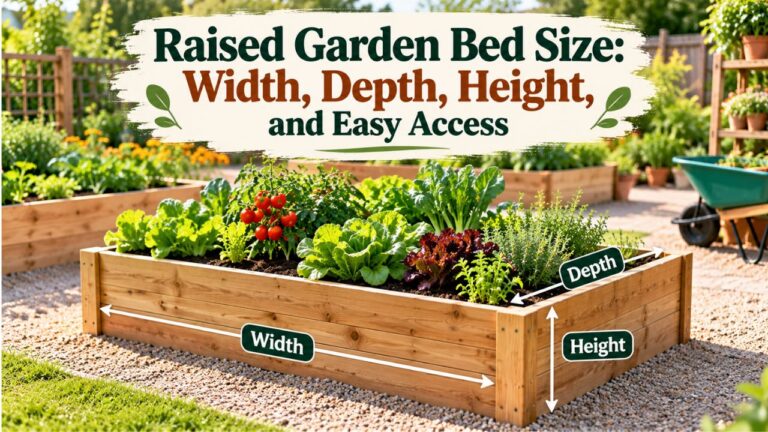
Another detail is the difference between raised bed height and actual soil depth. A 24-inch-tall frame doesn’t necessarily contain 24 inches of usable soil, especially if the bottom is filled with logs, stones, or other materials.
Choosing the right depth helps plants develop healthy roots, improves moisture management, and prevents unnecessary spending on soil.
This guide covers recommended soil depths for common vegetables, differences between open-bottom and contained beds, minimum practical depths, and how much soil you need for different raised bed sizes.
How Deep Should Soil Be in a Raised Garden Bed?
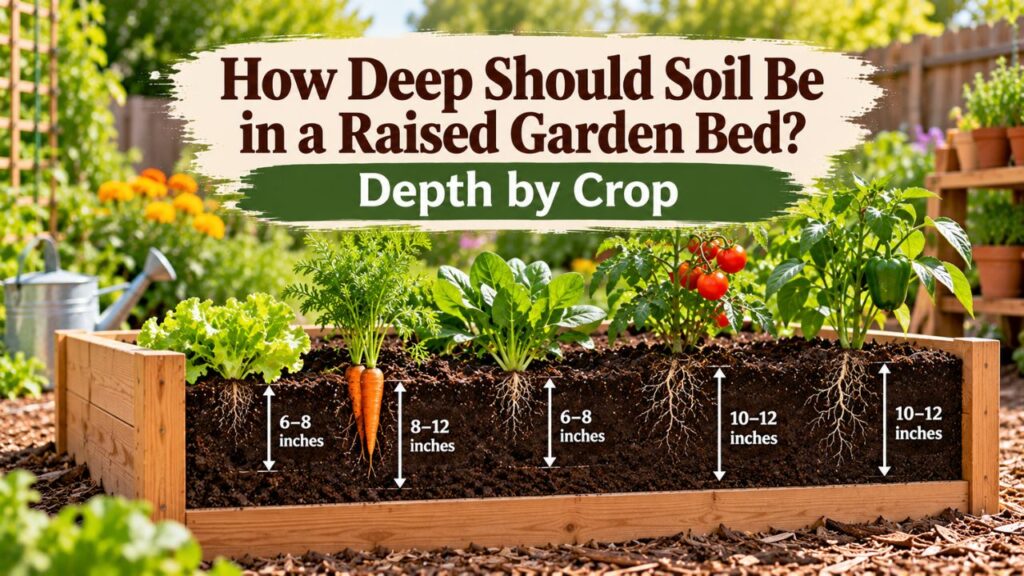
For a general-purpose vegetable garden, 12–18 inches of suitable soil provides a practical growing depth. However, the minimum depth changes depending on whether roots can extend into the ground below.
A raised bed sitting directly on healthy garden soil functions differently from a planter built over concrete.
Soil Depth for Open-Bottom Raised Garden Beds
Open-bottom raised beds allow plant roots to grow through the added soil and into the native ground.
If the underlying soil is loose, well-drained, and suitable for planting, 8–12 inches of added soil can support many vegetables.
This arrangement provides more rooting space than the raised bed frame alone.
For example, an 8-inch-tall wooden bed placed over healthy garden soil doesn’t restrict roots to 8 inches. Tomato roots and other vegetable roots can continue growing downward into the native soil.
Before installing the frame, check the existing ground for compaction, drainage problems, and possible contamination.
If the native soil is hard, gently loosen it with a garden fork before filling the bed.
Soil Depth for Raised Beds on Concrete
A raised garden bed on concrete, pavement, or another impermeable surface needs enough soil to support the entire root system.
According to the University of Maryland Extension’s raised bed gardening guidance, beds on hard surfaces can support leafy greens, beans, and cucumbers with at least 8 inches of depth. Peppers, tomatoes, and squash require approximately 12–24 inches.
For gardeners planning to grow several types of vegetables in the same contained bed, 18–24 inches provides useful additional root space.
These beds also need effective drainage. Water must be able to escape rather than collect at the bottom.
Because roots cannot reach moisture in the underlying ground, contained beds may need more frequent watering.
Soil Depth for Elevated Raised Garden Beds
Elevated raised beds stand on legs or another support structure.
Their overall height may be much greater than the depth of the planting compartment.
For example, a planter can stand 30 inches above the ground while containing only 10 inches of soil.
The planting depth, rather than the total structure height, determines the available root space.
For elevated planters:
- 8–12 inches: Suitable for many leafy greens and smaller herbs.
- 12–18 inches: Offers flexibility for compact vegetables and some root crops.
- 18–24 inches: Provides additional root space for larger vegetables.
Deeper elevated planters also hold more soil, increasing their total weight. Make sure the structure can safely support wet soil, plants, and irrigation water.
Recommended Raised Garden Bed Soil Depth for Different Vegetables
Different vegetables have different root systems and growing requirements.
The table below provides practical soil-depth targets for beds where roots cannot grow into native soil underneath.
| Vegetable | Suggested Soil Depth |
| Lettuce and spinach | 8–12 inches |
| Arugula and leafy kale | 8–12 inches |
| Radishes and green onions | 8–12 inches |
| Bush beans and peas | 12–18 inches |
| Cucumbers | 12–18 inches |
| Beets and standard carrots | 12–18 inches |
| Tomatoes and peppers | 18–24 inches |
| Eggplants | 18–24 inches |
| Long carrots and parsnips | 18–24 inches |
| Squash and zucchini | 18–24 inches |
These are useful planning ranges, not universal minimum requirements. Actual performance depends on plant variety, soil structure, watering, available rooting space, and growing conditions.
How Deep Should Soil Be for Lettuce and Spinach?
Lettuce and spinach are suitable choices for relatively shallow raised beds.
Approximately 8–12 inches of soil generally provides enough growing space for these leafy vegetables under suitable conditions.
Smaller leafy crops are also practical for elevated planters and compact garden beds.
However, shallow soil can dry out quickly, especially during warm weather.
Maintain consistent moisture without keeping the growing medium saturated.
How Deep Should Raised Bed Soil Be for Carrots?
Carrots need loose soil that allows their storage roots to develop without hitting hard obstacles.
For many standard carrot varieties, 12–18 inches of suitable soil is a practical target in a contained bed.
Shorter carrot varieties can grow in shallower soil, while longer varieties benefit from additional depth.
Remove stones, hard clumps, and other obstructions from the growing area.
Compacted soil can cause misshapen carrots even when the raised bed is deep enough.
If your bed is only 8 inches deep, consider shorter carrot varieties rather than long types.
How Deep Should Soil Be for Tomatoes?
For tomatoes grown in a contained raised bed, 18–24 inches is a useful target.
Tomato plants can develop extensive root systems, and a larger volume of soil helps provide moisture and nutrients.
However, a 12-inch open-bottom raised bed can grow tomatoes successfully when the roots can enter healthy soil below.
The actual rooting environment matters more than the frame height.
Tomatoes also need adequate sunlight, consistent watering, proper spacing, and suitable support.
Adding extra soil won’t correct poor growing conditions.
How Deep Should Soil Be for Peppers and Eggplants?
Peppers and eggplants benefit from a well-drained growing medium with enough space for root development.
For contained beds, approximately 18–24 inches provides a useful growing depth, although smaller plants may perform well with less under favorable conditions.
An open-bottom bed can be shallower when roots have access to suitable native soil.
Avoid waterlogged growing conditions, particularly in deep planters with restricted drainage.
How Deep Should Soil Be for Potatoes?
Potatoes need enough loose soil for tuber development and any planned hilling.
Approximately 12–18 inches of usable growing medium can work for many raised bed potato-growing methods.
The ideal depth depends on the variety and planting technique.
If you’re planning to hill potatoes by adding soil around the growing stems, leave enough room within the bed or use another suitable growing system.
Avoid heavy compaction because potatoes develop better in loose, well-drained soil.
Is 6, 8, 12, 18, or 24 Inches Deep Enough for a Raised Garden Bed?
Raised garden beds come in several common heights. Each depth has different advantages and limitations.
Is 6 Inches of Soil Deep Enough?
Six inches is relatively shallow for a self-contained raised vegetable bed.
It may support some smaller crops, but available root space and moisture storage are limited.
A 6-inch frame can be more useful when it sits directly over healthy garden soil and roots can grow beneath it.
For a bed with a solid bottom, a deeper planting compartment provides greater flexibility.
Is 8 Inches Deep Enough for Vegetables?
Yes. Eight inches can support leafy greens, compact herbs, and certain other vegetables.
It is also a practical minimum for some crops in raised beds built on hard surfaces.
However, larger vegetables may benefit from more soil, particularly if their roots cannot grow into native ground.
An 8-inch bed requires closer attention to moisture because its limited soil volume can dry out relatively quickly.
Is 10 Inches Deep Enough for a Raised Garden Bed?
Ten inches can be sufficient for many common vegetables when the bed has an open bottom and suitable soil underneath.
It provides more growing space than a shallow 6-inch frame while requiring less purchased soil than a deeper bed.
For contained beds, 10 inches is best reserved for crops that tolerate relatively shallow growing conditions.
Is 12 Inches Deep Enough for a Raised Garden Bed?
Yes. Twelve inches is a practical soil depth for many home vegetable gardens.
It offers enough growing space for numerous leafy greens, herbs, root crops, and other vegetables.
A 12-inch open-bottom bed is especially versatile because roots can extend farther into healthy ground.
For tomatoes and other larger vegetables growing over concrete, additional depth may make watering and root development easier to manage.
Is 18 Inches Deep Enough for Most Vegetables?
Yes. Eighteen inches provides a generous root zone for many common garden vegetables.
It offers additional space for root development and more soil volume for moisture storage.
For gardeners who want to grow tomatoes, peppers, leafy greens, and root vegetables in the same contained bed, 18 inches is a practical choice.
However, the growing medium must still drain properly.
Is 24 Inches Too Deep for a Raised Garden Bed?
No. A 24-inch-deep bed can be useful for larger crops, gardening over hard surfaces, and situations where native soil is unsuitable.
It also provides more growing-medium volume than shallower alternatives.
However, a deeper bed costs more to fill and becomes significantly heavier.
If roots can already grow into healthy ground below a 12-inch raised bed, purchasing enough soil to fill a 24-inch frame may not be necessary.
How to Measure the Correct Soil Depth in a Raised Garden Bed
A raised bed’s advertised height doesn’t always match the amount of usable soil inside it.
The correct measurement depends on the location of the soil surface and any barriers beneath the growing medium.
Measure From the Soil Surface to the Root Barrier
For a contained planter, measure vertically from the top of the soil to the inside bottom.
For an open-bottom bed, the effective rooting depth may extend into the soil underneath.
If the bed contains a thick layer of logs, stones, or other bulky materials, that layer should not automatically be counted as usable growing soil.
For example, a 24-inch-tall bed containing 10 inches of bulky filler and 12 inches of soil provides about 12 inches of continuous soil above the filler.
The remaining space between the soil and rim also affects the final measurement.
Leave Room Below the Raised Bed Rim
A raised bed doesn’t need to be filled completely to its top edge.
Leaving approximately 1–2 inches below the rim makes watering and mulching easier.
However, that space reduces the actual soil depth.
For example:
- Frame height: 12 inches
- Space below the rim: 2 inches
- Actual soil depth: 10 inches
If your plants need 12 inches of contained soil, choose a frame tall enough to provide that depth after accounting for headspace.
Newly filled soil may also settle after watering.
Check the level before planting and add more suitable soil if necessary.
How Much Soil Is Needed for Different Raised Bed Depths?
Once you know the desired depth, calculate the amount of soil needed using the bed’s interior dimensions.
Raised Bed Soil Volume Formula
For a rectangular raised bed:
Soil volume (cubic feet) = Length (feet) × Width (feet) × Soil depth (inches) ÷ 12
To convert cubic feet to cubic yards:
Cubic yards = Cubic feet ÷ 27
Use the actual planned soil depth, not the total frame height when leaving space below the rim.
Soil Volume for a 4 × 8 Raised Garden Bed
A 4 × 8-foot raised bed has a surface area of 32 square feet.
The amount of soil required changes considerably with depth.
| Soil Depth | Cubic Feet | Cubic Yards |
| 6 inches | 16 | 0.59 |
| 8 inches | 21.33 | 0.79 |
| 10 inches | 26.67 | 0.99 |
| 12 inches | 32 | 1.19 |
| 18 inches | 48 | 1.78 |
| 24 inches | 64 | 2.37 |
For example, a 4 × 8-foot bed with 12 inches of soil requires approximately 32 cubic feet, or 1.19 cubic yards.
Increasing the depth to 24 inches doubles the soil requirement to 64 cubic feet.
That’s why choosing the correct depth before purchasing soil can make a substantial difference in the cost of a new raised garden bed.
These are geometric estimates. Actual purchases may need to account for interior dimensions, soil settling, and existing fill.
How to Fill a Raised Garden Bed to the Proper Soil Depth
After choosing the depth, fill the bed with a growing medium suited to its design and intended crops.
A deep raised bed filled with unsuitable material may perform poorly despite having plenty of space.
Step 1: Prepare the Surface Beneath the Bed
For open-bottom raised beds, remove unwanted vegetation and inspect the native soil.
If the ground is heavily compacted, gently loosen it before filling.
This helps roots move beyond the added soil layer.
Don’t install an impermeable plastic barrier across the bottom of an ordinary open-bottom bed unless a specific site condition requires separation.
Beds built over concrete need a suitable drainage arrangement.
Step 2: Select Quality Raised Bed Soil
The growing medium should provide a balance of moisture retention, drainage, and available nutrients.
The University of Minnesota Extension’s raised bed gardening recommendations describe a mixture containing approximately one-half to two-thirds topsoil and one-third to one-half plant-based compost as a useful option for raised beds.
The appropriate mixture can differ for contained planters, especially on hard surfaces.
Look for a growing medium that:
- Has a loose, workable texture
- Holds moisture without staying saturated
- Allows excess water to drain
- Contains appropriate organic matter
- Is suitable for growing edible crops
Avoid filling an entire bed with uncomposted manure, pure compost, or poor-quality fill dirt.
Step 3: Add Soil Evenly Across the Bed
Spread the soil mixture across the growing area.
Break apart large clumps without aggressively compacting the material.
For beds that require a continuous rooting zone, avoid placing large rocks, thick layers of wood, or other bulky obstacles directly beneath the planting soil.
The goal is a reasonably uniform growing medium that roots can enter easily.
Step 4: Water and Check for Settling
Moisten the soil after filling.
Watering helps loose material settle and reveals uneven areas.
Check the final depth using a measuring tape.
Add more suitable soil if settling has reduced the planting depth below the intended level.
Avoid walking on the soil or pressing it down heavily.
Step 5: Plant According to Crop Requirements
Once the soil has settled, choose vegetables appropriate for the available depth.
Smaller leafy vegetables are useful for shallow beds.
Larger fruiting vegetables and long-rooted crops may benefit from deeper growing areas.
Maintain suitable plant spacing, watering, and fertility throughout the growing season.
What Happens If Raised Bed Soil Is Too Shallow?
Shallow soil can restrict plant growth when roots cannot enter suitable material underneath.
The severity depends on the crop and growing conditions.
Limited Root Development
When roots encounter a solid bottom or dense barrier, their downward growth is restricted.
Plants may compensate by growing roots horizontally, but the total available growing volume remains limited.
Larger vegetables can become more sensitive to inadequate watering and nutrient availability.
Faster Soil Drying
A shallow contained bed holds less total water than a deeper bed of the same surface area when the soil mixture is otherwise similar.
During warm or windy weather, the soil may dry quickly.
This can be especially noticeable with tomatoes, cucumbers, and other actively growing vegetables.
Consistent watering becomes more important as available soil volume decreases.
Restricted Root Vegetable Growth
Carrots, parsnips, and other root crops can develop poorly when their edible roots encounter hard obstacles.
The results may include shorter, misshapen, or otherwise restricted roots.
Choosing shorter varieties or increasing the usable soil depth can help address this problem.
Greater Sensitivity to Temperature Changes
Shallow soil has less thermal mass than a deeper growing medium of the same composition.
Its temperature may change more quickly under fluctuating weather conditions.
Mulching and consistent watering can help moderate conditions around plant roots.
Can Raised Garden Bed Soil Be Too Deep?
A deep bed isn’t automatically harmful, but additional depth may create unnecessary costs or management problems.
Excess Soil Increases Costs and Weight
Doubling a bed’s soil depth approximately doubles the volume needed when the length and width stay the same.
This can significantly increase the cost of purchased soil.
For elevated planters, the extra weight also matters structurally.
Consider the load of fully watered soil rather than judging weight only when the material is dry.
Poor Drainage Can Affect Deep Beds
A deep planter with a blocked outlet can retain excessive water.
The issue is not the depth itself but the lack of a suitable drainage path.
Waterlogged conditions reduce the amount of oxygen available to roots and can contribute to plant health problems.
Make sure contained beds have effective drainage before adding soil.
Deep Beds May Not Provide Additional Benefits
An open-bottom bed placed over healthy, well-drained ground already gives roots access to deeper soil.
In that situation, increasing the frame height from 12 to 24 inches may not meaningfully improve root access.
A shallower frame can provide similar growing conditions while requiring less purchased material.
How to Maintain the Right Soil Depth Over Time
Raised bed soil levels can decrease as organic matter decomposes and loose material settles.
Maintaining the desired depth helps preserve a consistent growing area.
Check Soil Depth Before Each Planting Season
Measure the soil level at several points before planting.
If the bed has settled significantly, restore its depth with an appropriate raised bed soil mixture.
A small amount of finished compost can help maintain soil quality, but compost alone may not be the best material for replacing a large volume of lost soil.
Avoid Compaction
Don’t step inside raised beds when tending plants.
Repeated foot traffic can reduce pore space and make the growing medium harder for roots to penetrate.
Design the bed so its center can be reached comfortably from the surrounding paths.
Maintain Suitable Moisture Levels
Water according to soil moisture, weather, and crop requirements.
Check below the surface rather than relying only on whether the top layer looks dry.
Mulch can help limit moisture loss, but keep it away from direct contact with plant stems.
Healthy soil structure and appropriate watering are more useful than extra depth alone.
Conclusion
The answer to how deep should soil be in a raised garden bed depends primarily on plant requirements and the type of surface beneath the bed.
For most mixed vegetable gardens, 12–18 inches of soil is a practical choice. Open-bottom beds can work with 8–12 inches when roots can grow into healthy native soil underneath.
Leafy greens and compact herbs tolerate shallower growing areas, while tomatoes, peppers, and long-rooted vegetables often benefit from deeper soil.
For contained beds on patios or concrete, 18–24 inches provides additional flexibility for larger vegetables.
Before purchasing soil, measure the actual usable planting depth, check the drainage arrangement, and choose a growing medium suited to the crops.
A properly filled 12-inch bed over healthy garden soil can be more useful than a poorly drained 24-inch planter.
FAQs About How Deep Should Soil Be in a Raised Garden Bed
How Deep Should a Raised Bed Be for Beginners?
A 12-inch-deep open-bottom raised bed is a practical choice for beginners growing vegetables over healthy garden soil.
It supports many common crops without requiring excessive soil. For a contained bed on concrete, consider a deeper design if you plan to grow larger vegetables.
Can Tomatoes Grow in 12 Inches of Raised Bed Soil?
Yes. Tomatoes can grow in a raised bed containing 12 inches of soil, particularly when roots can extend into healthy ground underneath.
For a fully contained bed, additional depth provides greater root volume and can make moisture management easier.
Is 8 Inches of Soil Enough for a Raised Garden Bed?
Yes, 8 inches can be sufficient for leafy greens, smaller vegetables, and certain other crops.
An open-bottom bed provides additional rooting space when the underlying soil is suitable. For larger plants in contained beds, consider a deeper growing area.
How Much Space Should I Leave at the Top of a Raised Bed?
Leaving approximately 1–2 inches between the soil surface and the upper rim is a practical choice.
This provides space for watering and mulch. Remember to subtract that space when calculating the actual soil depth.
Should the Bottom of a Raised Garden Bed Be Open?
An open bottom is usually useful when the bed sits over suitable garden soil.
It allows roots to grow downward and provides a natural drainage path. Contained beds built over pavement need a separate drainage arrangement.
Do Raised Beds Need a Layer of Gravel at the Bottom?
No. A gravel layer is generally unnecessary for proper raised bed drainage and reduces the space available for suitable growing soil.
Use an appropriate soil mixture and provide a reliable drainage outlet instead of relying on gravel to correct waterlogging.
Can I Add Soil to a Raised Garden Bed After Planting?
Yes. You can carefully add small amounts of suitable soil or finished compost around established plants when needed.
Avoid burying the crowns or stems of plants that are sensitive to deep planting, and don’t disturb established roots unnecessarily. For major soil-level adjustments, it is usually easier to work before planting the next crop.

I’m Maya L. Greenwood, a lifelong plant lover who believes anyone can grow something beautiful with the right guidance. After years of testing soil mixes, pruning methods, irrigation tricks, and pest-safe solutions, I started EasyGardenTips.com to turn hard-won lessons into step-by-step advice. From seed starting and container gardens to composting and seasonal checklists, my goal is to make gardening simple, sustainable, and fun.