5 Best Grow Lights for Vegetable Seedlings: Top Picks Compared
Choosing the best grow lights for vegetable seedlings is less about finding the brightest-looking lamp and more about matching coverage, adjustability, timer controls, and installation style to your growing space. A small countertop tray needs a different solution than several seedling flats on a shelf or rack.
My first choice is Spider Farmer SF1000 2 Pack LED Grow Lights. The 5-year after-service coverage and compatibility with GGS controllers add useful ownership value.
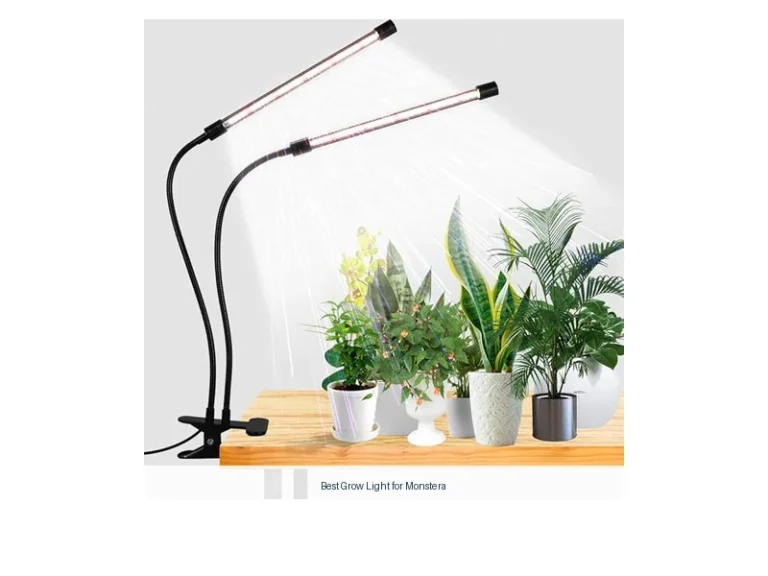
My second choice is LEOTER 80-LED Gooseneck Grow Light. Its four adjustable goosenecks, three spectrum modes, 10 brightness levels, and circular timer make it easy to aim light at individual pots or a compact tray.
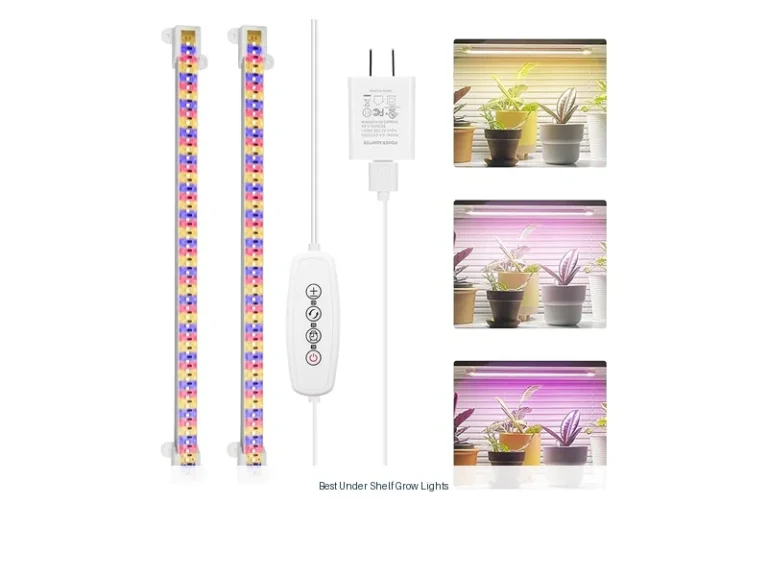
My third choice is Barrina T5 5000K Full-Spectrum Grow Lights. Barrina T5 Grow Lights earns third place for gardeners who want a neat, efficient light strip system for shelves. The four 1-foot fixtures can be controlled separately, connected in a series, and installed with the included clips, tapes, and cable ties.
This guide compares the five ranked options, explains where each one fits, and covers light placement, coverage, timers, heat, installation, maintenance, and common seed-starting mistakes. The goal is to help you choose a practical setup instead of simply chasing the highest wattage or most elaborate feature list.
Best Grow Lights for Vegetable Seedlings
I selected these products for their direct relevance to indoor seed starting, useful control and installation features, coverage potential, brand variety, and available customer-feedback evidence. The ranking also considers how clearly each light fits a real beginner use case, from a single windowsill tray to a dedicated 2-by-4-foot growing area, without claiming hands-on testing.
| # | Image | Product | Price on Amazon |
|---|---|---|---|
| 1 |  |
Spider Farmer SF1000 2 Pack LED Grow Lights | Check Price |
| 2 |  |
LEOTER 80-LED Gooseneck Grow Light | Check Price |
| 3 |  |
Barrina T5 5000K Full-Spectrum Grow Lights | Check Price |
| 4 |  |
VIPARSPECTRA 70 Watt Dimmable LED Grow Light | Check Price |
| 5 |  |
Yiyehu Full-Spectrum Three-Head Grow Light | Check Price |
Spider Farmer SF1000 2 Pack LED Grow Lights
The Spider Farmer SF1000 two-pack is the strongest all-around choice for gardeners raising multiple trays or planning to expand beyond a few countertop plants. Two fixtures provide more flexibility than one large lamp: you can place them over separate trays, adjust their spacing across a shelf, or reserve one light for a smaller batch of seedlings.
Its upgraded LED system is rated at 2.5 µmol/J system PPE, with a diode layout gathered toward the edges to promote more uniform coverage. For seedlings, that matters because uneven light can leave plants on the outer edges stretching toward the center. The full-spectrum combination includes 3000K, 5000K, 660nm red, and IR 760nm light, while the stronger blue component is particularly relevant to vegetative growth and root development.
A dimming knob lets you reduce intensity as young plants emerge and increase it as they develop. The fanless design is also appealing in a home office, basement, or quiet living area because there is no fan noise to manage. Heat is handled through a thick aluminum heat sink and a separate Spider Farmer driver.
Pros
- Two fixtures can cover separate trays or a broader growing area.
- Full spectrum includes blue, white, red, and IR diodes.
- Dimming control and GGS controller compatibility add flexibility.
- Fanless, silent construction and a stated 5-year after-service warranty.
Cons
- It is more equipment than needed for one or two small pots.
- Hanging and positioning two fixtures requires planning.
- IR output is dimmer than the other red diodes and may be visually noticeable.
My Opinion
This is the best fit for a dedicated seed-starting shelf, several trays, or anyone who wants a system that can remain useful after seedlings become larger plants. Buyers with very limited space may prefer a simpler clamp light.
LEOTER 80-LED Gooseneck Grow Light
LEOTER takes a different approach from the larger panel-style lights. Its four-head design attaches with a metal clamp and uses flexible goosenecks, allowing each head to be directed toward a different pot, tray section, or houseplant. That makes it especially convenient when seedlings are not arranged in one perfectly rectangular block.
The 80 LEDs combine red, blue, yellow, and white emitters. A full-spectrum mode covers 380nm to 800nm for general growth, while separate red-and-blue operation gives you another option for growth stages or visual preference. Ten brightness settings are useful when seedlings are newly emerged and more sensitive to intensity, though the best setting will still depend on distance and plant response.
The built-in circular memory timer can run for 3, 9, or 12 hours and repeat the schedule daily. It needs to be reset after a power interruption or if you change the lighting schedule, so it is convenient but not completely maintenance-free. A USB connector and included adapter make the lamp suitable for a desk, counter, or small plant stand.
Because the heads are independently positionable, this light can solve awkward coverage problems better than a fixed bar. The trade-off is that a clamp-and-gooseneck arrangement is less tidy for a long shelf full of uniform seedling trays.
Pros
- Four flexible heads can target unevenly arranged plants.
- Three spectrum modes and 10 dimming levels support adjustment.
- Daily 3-, 9-, or 12-hour timer reduces manual switching.
- USB connectivity, included adapter, and clamp mounting suit small spaces.
Cons
- Coverage is better for compact areas than for multiple long trays.
- The timer requires resetting after certain schedule or power changes.
- Several flexible arms can look cluttered when used on a crowded shelf.
My Opinion
Choose LEOTER when positioning flexibility matters more than maximum area coverage. It is a friendly second choice for apartment growers, countertop seed starting, and anyone who wants one lamp to serve several small plant locations.
Barrina T5 5000K Full-Spectrum Grow Lights
The Barrina T5 package is a practical shelf-lighting solution built around four 1-foot fixtures. Rather than aiming one lamp at a cluster from above, you can mount these slim bars under a shelf or along a compact growing rack. That arrangement helps place light close to the seedlings and makes the available space easier to organize.
Each fixture uses 96 LEDs and consumes 20W, with a 5000K white full-spectrum output intended to replace some of the light plants would receive outdoors. The product information also positions the bars for seedling, vegetative, and flowering stages, so they can remain useful after transplanting if the coverage and height still suit the plants.
Separate switches on the housings let you operate the bars individually or together. This is helpful when one tray is smaller than another, when only part of a shelf is occupied, or when you want to reduce the illuminated area. The kit includes two power cords with on/off switches, three nearly 39-inch connecting cords, small connectors, clips, double-sided tape, and cable ties.
Up to 16 lights can be linked in a series, which gives the system room to grow. Installation is straightforward, but the included adhesive should be used only on clean, suitable surfaces; the instructions caution against uncured plaster, dusty, greasy, or rough mounting areas. The fixtures are non-magnetic, another detail to consider when planning installation.
Pros
- Four compact bars fit shelves and narrow growing racks.
- Separate switches allow more precise control of each fixture.
- Linking capability supports future expansion up to 16 lights.
- Installation hardware and connecting cords are included.
Cons
- One-foot bars may not cover a wide tray without careful spacing.
- Mounting adhesive is surface-sensitive and is not suitable for every wall or shelf.
- The setup is less portable than a clamp-mounted lamp.
My Opinion
Barrina is the most sensible choice for an organized shelf or rack where low-profile bars can stay in place. It offers strong expandability, but buyers should measure the shelf first and plan cable routing before attaching anything.
VIPARSPECTRA 70 Watt Dimmable LED Grow Light
The VIPARSPECTRA 70-watt panel is aimed specifically at seedlings and vegetative plants, with a stated 11,000 lumens and coverage for a 2-by-2-foot vegetative area. That makes it a useful middle ground: more substantial than a decorative desk lamp, but not as large a commitment as a multi-light rack system.
Its spectrum combines 660nm red with 3000K and 5000K white light to create a balanced full-spectrum output. The four-level dimmer gives beginners a straightforward way to adjust brightness as plants emerge, fill out, or move closer to the fixture. Dimming is also helpful when the same light serves herbs, flowers, and vegetable seedlings with different spacing needs.
Heat management comes from a fanless design and large aluminum heat sinks. The lack of a fan keeps operation quiet, while the heat sink provides a passive way to move heat away from the LEDs. Even so, it is wise to leave ventilation around the housing and avoid placing heat-sensitive plastic directly against it.
The stated performance is comparable to a 150W HPS/MH light while using 70W, according to the supplied product information. That comparison should be treated as a positioning reference rather than a promise that every growing situation will produce identical results. The panel works best when hung or mounted evenly above a defined area instead of being used as a casual room lamp.
Pros
- Designed around a useful 2-by-2-foot vegetative coverage area.
- Four dimmer levels simplify brightness adjustments.
- Balanced 660nm, 3000K, and 5000K spectrum.
- Fanless operation with large aluminum heat sinks.
Cons
- One panel may not evenly cover several long trays.
- It needs a suitable hanging or mounting arrangement.
- Passive heat dissipation still requires open space around the fixture.
My Opinion
VIPARSPECTRA is a good value-oriented option for a defined 2-by-2-foot seedling zone. It suits buyers who want a conventional panel with simple dimming rather than multiple flexible heads or linked light bars.
Yiyehu Full-Spectrum Three-Head Grow Light
Yiyehu is the most furniture-friendly option in this group. Its detachable tripod can stand on a desktop or floor, while the pointed nut allows the light to be inserted directly into a plant pot. That dual mounting approach is helpful for renters, temporary seed-starting stations, and rooms where drilling or permanent shelf installation is not practical.
The height adjusts from 15 to 62 inches, so the same stand can sit close to young seedlings and rise as plants grow. Three heads distribute light from different angles, which may be useful when a single central beam leaves the outer leaves shaded. The aluminum-alloy construction gives the lamp a modern appearance and is intended to help with heat handling without adding a fan.
A full-spectrum range from 380nm to 800nm is provided for general photosynthetic support, and the automatic timer offers 8-, 12-, or 16-hour settings. Once configured, the daily cycle can continue without requiring manual switching every morning and evening. That is convenient for busy households, although buyers should still confirm that the selected schedule suits their seedlings and room routine.
This is not the most obvious pick for a large propagation shelf. Its 939 customer-feedback count is also smaller than the counts shown for the other selections, so there is less broad feedback evidence to draw on. Still, the portability and adjustable height make it distinctive for individual pots and decorative indoor growing areas.
Pros
- Detachable tripod supports floor or desktop placement.
- Pointed mounting option can place the light directly in a pot.
- Height adjusts from 15 to 62 inches as plants grow.
- Three heads and 8-, 12-, or 16-hour timer provide flexible positioning and scheduling.
Cons
- Less suitable for broad, uniform coverage across several trays.
- Tripod and floor placement use more surrounding space than a mounted bar.
- Smaller customer-feedback sample than the higher-ranked products.
My Opinion
Yiyehu makes the most sense when portability, appearance, and adjustable height are priorities. It is a convenient individual-plant or small-batch solution, but shelf growers will usually get more uniform coverage from bars or a panel.
How I Selected These Grow Lights for Vegetable Seedlings
The selection starts with the actual needs of indoor seedlings: dependable artificial light, manageable coverage, adjustable positioning, sensible controls, and a setup that a beginner can realistically use. I gave additional weight to products with clear spectrum information, dimming or scheduling features, practical mounting options, and enough customer-feedback evidence to show that the item is not an obscure one-off listing.
The ranking is not a claim that one fixture will outperform every other fixture in every room. A two-light panel system naturally suits a different buyer than a four-head clamp lamp, and a one-foot bar system can be better than either when a shelf is the limiting factor. Brand diversity was also useful because it lets the comparison cover several common installation styles instead of presenting five nearly identical panels.
Selection takeaway: The top choice is not simply the product with the most diodes. Coverage, adjustability, installation, and the size of the seedling area are equally important.
Customer ratings and customer-feedback volume were treated as supporting evidence rather than proof of horticultural performance. Higher feedback volume gives a broader picture of ownership experience, but it does not remove the need to check dimensions, timer behavior, mounting requirements, and the condition of the product when it arrives.
Practical takeaway: Measure the growing area before shopping. A light that is excellent over a 2-by-2-foot zone may be frustrating over a long shelf, while a compact gooseneck lamp may leave the center of a large tray underlit.
How to Choose Grow Lights for Vegetable Seedlings
Start with the seedling area, then choose the light style that can cover it evenly without forcing you to improvise a risky mounting arrangement. The right setup should let you control daily exposure, keep the light close enough to prevent stretching, and adjust as plants grow.
- Match the fixture to the tray, shelf, or floor area rather than choosing by wattage alone.
- Look for dimming or height adjustment so young plants are not overwhelmed.
- Use a timer whenever possible to create a consistent daily schedule.
- Consider whether you need portable placement, permanent mounting, or future expansion.
- Leave room for airflow and make sure cords and connectors cannot contact water.
Coverage and shape
Light shape determines how evenly a tray receives illumination. A panel or two-panel kit can spread light across a defined zone, while bars are better suited to long, narrow shelves. Multi-head lamps offer directional control, but their individual heads may not cover a full flat evenly unless positioned carefully.
Measure the usable area, not just the outside dimensions of the shelf. Account for tray edges, walls, posts, and the distance between the fixture and the leaves. If you expect to start seeds in several batches, a system with multiple fixtures or linkable bars can be more convenient than replacing a small lamp later.
Brightness, height, and dimming
Seedlings need enough light to grow compactly, but newly emerged plants should not automatically be placed at the closest possible distance. Dimming, adjustable height, and flexible heads give you ways to fine-tune the setup. If the lamp cannot be dimmed, begin with a little more distance and observe the plants before making changes.
Leggy stems usually indicate that the light is too weak, too far away, or not covering the plants evenly. Pale or stressed-looking leaves can have several causes, so do not respond by immediately increasing intensity. Check watering, temperature, airflow, and the distance from the fixture as a group.
Spectrum for early growth
Full-spectrum lighting is a practical choice because it supports general growth and is more comfortable to live with than a strongly colored red-and-blue lamp. Blue-rich output is commonly associated with vegetative growth and compact development, while red wavelengths are useful across plant growth and flowering applications.
The listed products use different combinations, including 5000K white light, 3000K white light, 660nm red, blue emitters, and broader 380nm-to-800nm claims. Those numbers help describe the light, but they do not by themselves tell you how evenly it will reach every leaf. Coverage and placement still matter.
Timers and daily consistency
A timer removes one of the easiest ways to stress seedlings: irregular lighting. Choose a schedule that fits your household and keep the dark period consistent. The LEOTER and Yiyehu lamps have built-in repeating timer options, while the other products may require an external timer or manual switching depending on the final setup.
Check how the timer behaves after a power interruption. LEOTER specifically notes that its timer needs to be reset if the light loses power or the schedule changes. A memory function is useful, but it should not be assumed to replace checking the lamp after installation.
How to Set Up a Seedling Grow Light
Set up the fixture before sowing if possible. This lets you confirm the mounting position, cord length, timer operation, and coverage without disturbing newly emerged plants. Keep the light centered over the growing area, with enough clearance to raise it as stems and leaves develop.
For panels and two-light systems
Hang or mount the light so it stays parallel to the tray surface. With the Spider Farmer two-pack, divide the coverage area logically instead of placing both fixtures directly beside each other. With the VIPARSPECTRA panel, center the lamp over the stated 2-by-2-foot vegetative area and leave open space around its heat sink.
For bars and shelf systems
Place Barrina bars so their light overlaps slightly across the tray rather than leaving dark gaps between fixtures. Use the included clips or suitable tape only on clean, stable surfaces. Route connecting cords along the side or rear of the shelf, away from water, and test every switch before loading the shelf with plants.
For clamp and tripod lamps
Fasten the LEOTER clamp to a solid edge and aim its heads from several angles. Tighten the clamp enough to prevent movement without damaging a delicate shelf. For the Yiyehu lamp, check that the tripod is stable on the selected floor or desktop surface. If using the pointed pot insert, confirm that the container is heavy and deep enough to resist tipping.
How Long Should Seedlings Use Grow Lights?
There is no single schedule that suits every vegetable, room, and fixture. The available products offer different timer choices, including 3, 9, and 12 hours on LEOTER and 8, 12, and 16 hours on Yiyehu. Those controls are convenient starting points, but the schedule should be considered alongside natural window light and the intensity at plant level.
Use a timer to keep the light cycle predictable, and provide a consistent dark period rather than leaving the lamp on continuously. If seedlings are also receiving strong sunlight, reduce artificial exposure or adjust the lamp position so the total daily light does not become excessive for the plants.
Signs the schedule needs adjustment
- Long, thin stems suggest insufficient usable light or too much distance.
- Leaning plants may indicate that the fixture is off-center or coverage is uneven.
- Dry media can result from increased evaporation under lights, requiring closer watering checks.
- Leaf stress after moving a plant close to the lamp suggests a slower transition may be appropriate.
Heat, Airflow, and Electrical Safety
LED fixtures generally use energy efficiently, but every light still produces some heat. Fanless models such as Spider Farmer and VIPARSPECTRA rely on passive heat sinks, so do not cover the housing with fabric, place it tightly against a wall, or stack materials on top. Leave a clear path for heat to dissipate.
Keep power supplies, plugs, and connectors above the level where water can collect. Water seed trays carefully, avoid spraying toward the fixture, and inspect cords for damage before each growing season. The Barrina kit includes several connecting cords, so label or organize them during installation to avoid pulling on a connection when moving a tray.
Metal shelving can be convenient, but verify that clamps are secure and that the light cannot swing into the plants. A tripod should stand on a stable surface rather than a walkway where it can be knocked over. If a lamp becomes unusually hot, flickers, smells like overheated plastic, or shows damaged wiring, unplug it and stop using it until the issue is resolved.
Using Grow Lights in Small Spaces
Small apartments, offices, and kitchen counters benefit from fixtures that can be repositioned without rebuilding a shelf. LEOTER’s clamp and goosenecks work well when pots are scattered, while Yiyehu’s detachable tripod offers a more decorative floor or desktop arrangement. Either style can be moved aside after seedlings are transplanted.
For a narrow rack, Barrina’s 1-foot bars keep the light close to the shelf and avoid the footprint of a floor stand. For a compact but more intensive station, one Spider Farmer fixture may be placed over a smaller tray while the second remains available for another batch. The main limitation in small spaces is not only lamp size; it is also the ability to keep the fixture stable and the cords out of the way.
How to Maintain and Store Grow Lights
Dust gradually reduces the amount of light leaving a fixture and can interfere with passive heat dissipation. Unplug the lamp, allow it to cool, and wipe accessible surfaces with a soft, dry cloth. Do not spray cleaner directly onto LEDs, switches, drivers, connectors, or power supplies.
Inspect mounting clips, adhesive pads, goosenecks, tripod joints, and hanging hardware at the start of each growing cycle. Adhesive can lose grip over time, especially on dusty or humid surfaces. Barrina’s installation guidance specifically excludes uncured plaster, greasy surfaces, and rough mounting areas, so replacing a weak adhesive mount is safer than trusting it with a light over seedlings.
When storing a seasonal setup, coil cords loosely rather than sharply folding them. Keep connectors with the correct fixture, label multi-light cables if necessary, and store the lights in a dry place where aluminum housings and plugs will not be exposed to moisture or impact.
Common Mistakes to Avoid
Many seedling problems blamed on the light actually come from mismatched coverage, inconsistent schedules, or poor placement. Avoid making a purchase based only on a high lumen number or an attractive spectrum description.
- Do not place a wide tray under a narrow lamp and assume the outer seedlings receive equal light.
- Do not mount adhesive-backed hardware to dusty, greasy, rough, or uncured surfaces.
- Do not leave lights running continuously without a planned dark period.
- Do not place fixtures where watering splashes can reach the power supply or connectors.
- Do not move seedlings abruptly from weak light to very close, intense light without watching their response.
- Do not ignore stretched stems; first check height, centering, coverage, and schedule.
- Do not cover fanless heat sinks or press them tightly against other materials.
When seedlings are uneven, adjust the fixture position and coverage before assuming you need a stronger lamp. Uniform placement often solves problems that extra brightness cannot.
When to Upgrade or Add Another Light
An upgrade becomes reasonable when the seedling area expands beyond the fixture’s practical coverage, when trays must be placed at very different heights, or when one lamp cannot illuminate new growth evenly. A second fixture may be more useful than increasing the intensity of a single light because it can reduce dark edges and let you separate batches.
The Spider Farmer two-pack is already suited to dividing coverage, while Barrina’s series-linking capability allows a shelf system to grow over time. With LEOTER or Yiyehu, adding another small lamp can make sense when the plants no longer fit within the available head positions or stand height. Keep the original light for a smaller tray rather than discarding it if it remains functional.
FAQS About Best Grow Lights for Vegetable Seedlings
What type of grow light is easiest for beginner seed starting?
A dimmable panel, shelf bar, or adjustable clamp lamp can all work well. The easiest choice depends on the space: Barrina suits a fixed shelf, LEOTER suits a small flexible arrangement, and VIPARSPECTRA suits a defined 2-by-2-foot area.
Are full-spectrum lights suitable for vegetable seedlings?
Yes. Full-spectrum products in this comparison are intended to provide a broad range of light for indoor plant growth. Spectrum alone is not enough, however; the fixture must also be close enough and wide enough to illuminate the seedlings evenly.
Should seedlings have a dark period under grow lights?
Yes. Use a consistent timer schedule that includes darkness rather than leaving the lamp on around the clock. The appropriate schedule depends on the fixture, plant stage, and any natural sunlight entering the room.
Which option is best for a long seed-starting shelf?
Barrina T5 bars are the most shelf-oriented choice because the 1-foot fixtures can be arranged along a rack, switched separately, and linked for expansion. Measure the shelf and plan the cable layout before installation.
Which light is best for several seedling trays?
Spider Farmer’s SF1000 two-pack is the strongest fit when you need multiple fixtures and broader coverage flexibility. The two lights can be positioned over separate trays or adjusted as the growing area changes.
Can a clamp grow light replace a shelf-mounted fixture?
It can for a small tray or scattered pots, but a clamp lamp may not distribute light as evenly across a wide shelf. LEOTER’s four heads offer positioning flexibility, while fixed bars generally create a neater long-shelf arrangement.
How should a grow light be positioned above seedlings?
Keep it centered over the growing area and adjust the distance or dimming level as plants develop. Watch for leaning or stretched stems, which can indicate insufficient light, excessive distance, or uneven coverage.
Final Thoughts
The best grow lights for vegetable seedlings depend on the size and shape of your growing area, but Spider Farmer SF1000 2 Pack LED Grow Lights is my top overall choice for flexibility and expansion. Choose LEOTER 80-LED Gooseneck Grow Light for compact, adjustable placement, or Barrina T5 5000K Full-Spectrum Grow Lights for an organized shelf. VIPARSPECTRA fits a defined 2-by-2-foot zone, while Yiyehu is the most portable decorative option.

I’m Maya L. Greenwood, a lifelong plant lover who believes anyone can grow something beautiful with the right guidance. After years of testing soil mixes, pruning methods, irrigation tricks, and pest-safe solutions, I started EasyGardenTips.com to turn hard-won lessons into step-by-step advice. From seed starting and container gardens to composting and seasonal checklists, my goal is to make gardening simple, sustainable, and fun.