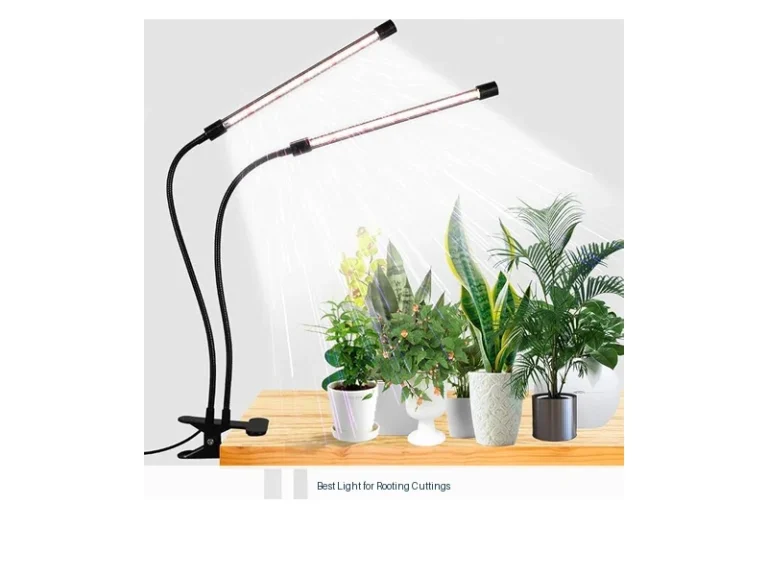
5 Best Lights for Flowering Stage: Compared With Buying Guide
Choosing the best lights for flowering stage can be confusing because “grow light” listings do not all mean the same thing. You need to balance usable light, coverage, spectrum, heat, installation, and electrical practicality rather than choosing only by an impressive watt-equivalent number.
My first choice is HYPERBLOOM LED GROW LIGHTS 850W Equivalent LED Grow Light Full. Its actual 85W power draw and 30 × 30 cm format make it a practical option for a small controlled growing area.
My second choice is U`King 36 LED RGB Stage Par Lights. It ranks below dedicated horticultural fixtures because its stage-lighting design does not provide the growing-specific spectrum or plant coverage information a flowering grower normally needs.
My third choice is Barrina 200W Full-Spectrum LED Grow Light Panel. This 200W panel uses 720 LEDs, includes 660nm red and 730nm IR light, covers a stated 4 × 4 feet, and adds dimming and adjustable positioning for a more adaptable indoor setup.
This guide compares all five products, separates genuine plant lights from stage fixtures, and explains how to judge coverage, PPFD, spectrum, controls, installation, heat, safety, and long-term ownership. The goal is to help a beginner choose a fixture that fits the growing space instead of buying based on marketing language alone.
Best Lights for Flowering Stage
I selected these products for their relevance to flowering or indoor lighting, the practical specifications supplied for each model, and customer-feedback evidence where it was available. The list also includes different formats and brands so readers can compare a compact hanging panel, a larger adjustable grow light, strip-style fixtures, and stage lights that may appear in related searches but serve a different purpose.
| # | Image | Product | Price on Amazon |
|---|---|---|---|
| 1 |  |
HYPERBLOOM LED GROW LIGHTS 850W Equivalent LED Grow Light Full | Check Price |
| 2 |  |
U`King 36 LED RGB Stage Par Lights | Check Price |
| 3 |  |
Barrina 200W Full-Spectrum LED Grow Light Panel | Check Price |
| 4 |  |
Betopper 120W RGBW 4-in-1 Stage Par Lights | Check Price |
| 5 |  |
Barrina 252W 6-Pack 4-Foot T8 LED Grow Lights | Check Price |
HYPERBLOOM LED GROW LIGHTS 850W Equivalent LED Grow Light Full
The main attraction here is the balance between compact size and stated light output. Although the fixture uses only 85W of actual power, HYPERBLOOM presents it as an 850W-equivalent LED light and lists PPFD up to 680 µmol/m²/s. For a small tent, shelf, or enclosed growing zone, that combination can provide meaningful intensity without the power demand or heat associated with traditional high-wattage systems.
Its full-spectrum design is useful when one fixture needs to remain in place from seedlings through vegetative growth, flowering, and fruiting. The separate Veg and Bloom switches add a little more control than a basic single-mode panel. A grower can use a more growth-oriented setting earlier and select Bloom when flowers become the priority, without buying a second fixture.
The 30 × 30 cm body is easy to fit into compact spaces, but it also defines the product’s main limitation. A small panel may not spread intense light evenly across a large canopy, especially if plants are placed far outside the stated 12 × 12 coverage. The available data also specifies a US electrical plug, so buyers outside the United States should confirm compatibility before ordering.
Pros
- Uses 85W while offering an 850W-equivalent output claim.
- Full spectrum supports multiple growth stages.
- Veg and Bloom switches provide useful stage-based control.
- Stated PPFD reaches up to 680 µmol/m²/s.
- Compact 30 × 30 cm design suits small indoor gardens.
Cons
- Small physical size limits practical coverage.
- Only a US electrical plug is specified.
- One compact fixture may not illuminate a broad canopy evenly.
My Opinion
This is the strongest fit for a small flowering area where intensity, simple controls, and low actual wattage matter most. I would choose it over a decorative stage fixture, but I would verify hanging height and coverage carefully before using it for a large plant group.
U`King 36 LED RGB Stage Par Lights
U`King’s two-pack is not a conventional horticultural grow-light system, but it can attract buyers searching for colored lighting or a way to add visual impact around an indoor growing display. Each corded fixture uses 36 one-watt LED lamp beads and offers static color, strobe, automatic, voice-control, master-slave, DMX, and gradient modes. Those controls are valuable for events, photography, themed rooms, and decorative installations.
DMX compatibility is the standout feature for anyone building a coordinated lighting setup. One controller can operate multiple lights, while the included mounting brackets and screws allow installation on a wall, ceiling, or other suitable surface. The ability to change the angle is helpful when the goal is to highlight a space or create a colored backdrop.
For plants in the flowering stage, however, buyers should be cautious. The supplied information does not provide PPFD, a horticultural spectrum, plant coverage, or a flowering-specific red-light specification. RGB output can make a room look colorful, but visual brightness is not the same as the measured light plants can use. This set is better treated as supplemental atmosphere or event lighting than as the primary source for a flowering canopy.
Pros
- Two fixtures provide flexible placement.
- Offers DMX, master-slave, automatic, sound, and static modes.
- Mounting brackets and screws support wall or ceiling installation.
- Remote and controller-based operation can suit events.
- Includes a 30-day return and exchange period and 180-day warranty service.
Cons
- Not specified as a horticultural grow light.
- No PPFD, plant coverage, or flowering spectrum data is supplied.
- Strobe and sound modes are unnecessary for normal plant growth.
- Corded installation may require careful cable management.
My Opinion
U`King makes sense when the priority is colorful stage or room lighting, not dependable flowering illumination. It ranks second only as an alternative for decorative use; a plant grower should not substitute it for a purpose-built fixture without additional evidence about usable light.
Barrina 200W Full-Spectrum LED Grow Light Panel
Barrina takes a broader-coverage approach with a 200W true-output panel containing 720 LEDs. The stated 4 × 4 foot coverage is much more useful for growers managing a wider growing area than a compact 30 × 30 cm fixture. Because the panel is dimmable and adjustable, it can also be adapted as plants grow instead of running at maximum intensity from the first day.
The spectrum information is unusually helpful for a buyer comparing flowering options. The panel combines 5000K blue light, 3000K warm white, 660nm red, and 730nm IR. Barrina specifically connects the red and IR portions with flowering, larger flowers, and more vivid results. Those claims should not be treated as a guarantee, but the disclosed wavelengths make the product easier to evaluate than a listing that only says “full spectrum.”
The trade-off is higher power consumption than a small 85W fixture and a larger installation footprint. A broad panel also needs appropriate hanging hardware, ventilation, and enough vertical room for adjustment. The supplied information does not state the exact PPFD map or mounting package details, so buyers should confirm what is included and avoid assuming that the 4 × 4 coverage receives identical intensity from edge to edge.
Pros
- True 200W output and 720 LEDs support a larger growing area.
- Stated 4 × 4 foot coverage suits broader canopies.
- Dimming and adjustment improve control as plants develop.
- Includes 660nm red and 730nm IR wavelengths.
- Full-spectrum design can remain useful across multiple stages.
Cons
- Consumes more electricity than compact fixtures.
- Larger panels need more mounting and ventilation planning.
- Exact PPFD distribution across the full coverage area is not supplied.
My Opinion
This is the most appealing choice among the listed plant lights for a larger flowering footprint. Its disclosed wavelengths and dimming are meaningful advantages, provided the buyer has enough space to hang it safely and understands that stated coverage does not automatically mean uniform intensity.
Betopper 120W RGBW 4-in-1 Stage Par Lights
BETOPPER’s four-pack is built for concerts, events, DJs, and other performance environments rather than plant cultivation. Each light uses 60 RGBW four-in-one LEDs and can create millions of color combinations. The RGBW arrangement and stated CRI of up to 90 are valuable when accurate visual color and smooth stage effects matter.
Control options are extensive. Auto, sound, DMX, and master-slave modes allow a beginner to use automatic effects or an event operator to coordinate several fixtures through a console. The four- and eight-channel DMX options provide more flexibility for programmed scenes. A durable metal bracket also helps with positioning and angle adjustment during installation.
That flexibility does not make the product a flowering grow light. The supplied details do not identify PPFD, plant-use spectrum, coverage dimensions, or a horticultural red and IR output. A 120W rating tells you about electrical consumption, not how much usable light reaches a plant canopy. These fixtures may be suitable for illuminating a room, display, or grow-space background, but they should not be selected as the main light for flowers based only on brightness or color range.
Pros
- Four RGBW stage lights offer broad decorative coverage.
- DMX, auto, sound, and master-slave modes support varied control styles.
- Four- and eight-channel DMX options add programming flexibility.
- Metal brackets assist with installation and positioning.
- Stated CRI of 90 supports faithful visual color reproduction.
Cons
- Designed for stage and event use rather than plant growth.
- No PPFD or flowering coverage data is supplied.
- Color effects do not replace a balanced horticultural spectrum.
- Four fixtures may create more installation complexity than a single panel.
My Opinion
BETOPPER is a capable event-lighting package but a poor primary choice for flowering plants. Its place in this comparison is useful because it shows why RGBW stage brightness, attractive colors, and DMX control should not be confused with plant-focused light performance.
Barrina 252W 6-Pack 4-Foot T8 LED Grow Lights
This Barrina kit takes a modular strip-light approach. Six four-foot T8 fixtures consume 252W in total and use 1,152 LEDs, giving the buyer several long light sources that can be distributed across shelves, benches, or a rectangular grow area. The pink full-spectrum presentation emphasizes blue and red light, and the listing states that the lights can also work during bloom and fruit stages.
Reflectors are a practical detail here. Barrina states that the aluminum reflectors can increase efficiency by 17–20% while helping with heat dissipation, and one light is listed at 220.8 µmol/m²/s at 8 inches. That figure is useful as a reference point, although it applies to one light at a specified distance rather than proving uniform performance across an entire six-light installation.
Installation is one of the kit’s strongest advantages. The package includes three power cords with switches, five 48-inch connecting cords, small connectors, clips, tape, and cable ties. Up to six strips can be linked in series. Buyers should pay close attention to the generation change: the newer lights are compatible with Barrina GM Series cords, and connecting new and old products requires the new male-female connector cables.
Pros
- Six four-foot fixtures can spread light across long shelves or benches.
- 252W total consumption and 1,152 LEDs provide broad source coverage.
- Reflectors support light direction and heat dissipation.
- Includes cords, connectors, clips, tape, and cable ties.
- Stated PPFD is 220.8 µmol/m²/s at 8 inches for one light.
Cons
- Strip installation requires more planning than a single hanging panel.
- The stated PPFD applies to one light at one distance.
- New and older Barrina systems may need specific connector cables.
- Pink output may make plant color assessment less natural.
My Opinion
This kit is a sensible choice for shelves, propagation racks, and long rectangular spaces where several evenly distributed fixtures are more useful than one central panel. I would confirm connector compatibility before expanding an existing Barrina setup and use a separate neutral light when accurate plant inspection matters.
How I Selected These Flowering-Stage Lighting Options
The selection process focused first on whether each item supplied information relevant to flowering plants: spectrum, PPFD, coverage, dimming, actual power, or a clear installation format. Products with dedicated horticultural details received more favorable consideration than products that only described color effects or stage brightness. The list also considers whether a beginner can understand where the light belongs, how much space it may cover, and what limitations remain unclear.
Customer feedback was considered when supplied, including the substantial feedback volume attached to the Barrina 252W kit and the U`King stage-light set. Ratings can add context, but they do not replace technical data. A decorative light can receive positive customer feedback for parties while still being unsuitable as a plant’s only flowering light.
Selection takeaway: A light should be judged by usable intensity and coverage, not by watt-equivalent wording, colorful output, or the number of LEDs alone.
The ranking favors product-purpose alignment. HYPERBLOOM leads because it combines flowering controls, stated PPFD, and a compact grow-light format. Barrina’s 200W panel follows closely for broader coverage and more disclosed wavelengths. The stage fixtures remain useful products in their own category, but their supplied specifications do not establish that they can replace horticultural lighting.
Important limitation: Stated coverage is not the same as uniform coverage. Hanging distance, plant height, reflector design, canopy density, and room layout all change the light reaching individual leaves.
How to Choose Lights for Flowering Stage
Start by measuring the growing area, then decide whether you need a single overhead panel or several fixtures spread across the canopy. The best lights for flowering stage should deliver suitable intensity to the entire plant area while remaining manageable for heat, mounting, electricity, and daily adjustment. A smaller light can be excellent in a compact tent but disappointing when stretched over a large room.
- Match the fixture’s stated coverage to the actual canopy, not the room’s total floor area.
- Prefer disclosed PPFD, wavelength, and dimming information over vague watt-equivalent claims.
- Check the plug, connector system, cord length, and mounting hardware before buying.
- Plan for heat and safe clearance even when an LED uses less power than older lighting.
- Use stage RGB or RGBW fixtures for atmosphere unless plant-use performance is clearly documented.
Coverage and canopy shape
Coverage is partly a geometry problem. A square panel may suit a compact square tent, while four-foot strips can better serve a shelf or long bench. The edges of a light’s stated footprint may receive less intensity than the center, so avoid filling every inch of the advertised area with flowering plants unless the manufacturer provides a suitable light map.
PPFD and hanging distance
PPFD describes the amount of photosynthetically useful light arriving at a surface, usually expressed in µmol/m²/s. It is more informative than a simple wattage number, but it must be tied to distance and location. Barrina’s 220.8 figure is specified at 8 inches for one strip, while HYPERBLOOM states up to 680 µmol/m²/s. Neither number alone tells you the average across every plant position.
Keep the fixture adjustable so you can raise it if leaves show stress or lower it when seedlings need gentler light. A dimmer is useful because plant height and light demand change over time. Without a dimmer, physical height adjustment becomes the primary way to control intensity.
Spectrum and flowering claims
“Full spectrum” is helpful but incomplete wording. When a listing identifies wavelengths, it gives you more information to compare. Barrina identifies 660nm red and 730nm IR in its 200W panel, while the HYPERBLOOM fixture offers separate Veg and Bloom modes. These details support a more informed choice, though they do not guarantee a particular harvest or flower size.
RGB stage lights are optimized for visual color, effects, and control rather than plant physiology. They can make a growing area look dramatic, but red, green, and blue color selection should not be treated as proof of balanced plant lighting.
Setting Up a Flowering Light Safely
Before hanging anything, inspect the mounting points, cord route, and power source. The fixture should remain secure if a plant is moved or a cord is lightly disturbed. Keep electrical connections away from water, avoid loose cables over walkways, and leave enough room to adjust the light without touching hot surfaces or pulling on the power lead.
Begin at a conservative height or brightness when the plants are moved under a new fixture. Increase exposure gradually while watching leaf posture, color, and signs of excessive heat. The exact distance depends on the light, plant, tent, ventilation, and whether the fixture is dimmed, so do not treat a single advertised hanging distance as universal.
Using switches and dimming controls
For HYPERBLOOM, the Veg and Bloom switches make stage-based operation simple, but they do not eliminate the need to monitor intensity. The Barrina panel’s dimming capability provides finer adjustment, which is helpful when the same fixture serves seedlings and mature plants. Stage lights should be set to the least distracting mode if they share a room with plants and people.
Managing Heat, Airflow, and Electricity
LEDs generally use less power than older high-wattage HID or HPS systems, but every watt consumed eventually becomes heat in the room. A low-power fixture can still raise temperatures in a small enclosed space. Make sure ventilation can remove heat, especially when several strips or four stage lights operate together.
Compare actual power consumption rather than the equivalent-output label. HYPERBLOOM lists 85W actual use, Barrina’s panel lists 200W true output, and the T8 kit lists 252W total. These figures help estimate electrical demand, but a power strip should still be rated for the complete connected load and used according to its safety instructions.
Installation and Compatibility Tips
Compact hanging panels typically need a stable overhead point and enough vertical adjustment. Strip kits need more layout planning but can distribute light across separate shelf levels. Stage fixtures often include brackets and screws, yet their heavier or more flexible event-style installation may require different mounting decisions than a plant shelf.
Connector compatibility deserves special attention with the Barrina T8 kit. The supplied information says the newer generation works with Barrina GM Series cords and that new and old products require new male-female connector cables when mixed. Do not force a connector simply because it looks similar. Confirm the generation and cable type before linking additional fixtures.
Cleaning and Maintenance
Dust on LEDs, reflectors, and ventilation surfaces can reduce light output and restrict cooling. Turn the fixture off, disconnect it from power, and let it cool before cleaning. Use a soft, dry cloth for accessible surfaces, and avoid spraying liquid directly onto the housing, switches, connectors, or power supply.
Inspect hanging hardware, brackets, cable ties, and connectors periodically. Look for loose mounts, pinched cords, discoloration, or unusual flickering. For strip installations, check that every linked section remains firmly connected and that no cord is under tension. Simple inspections are particularly worthwhile in humid growing areas.
Common Mistakes When Buying or Using Flowering Lights
Many disappointing results come from mismatched expectations rather than a defective fixture. Buyers often compare equivalent wattage instead of actual power, assume the listed coverage is equally bright everywhere, or choose a colorful stage lamp because it looks brighter to the eye.
- Do not use “850W equivalent” as proof that a light consumes 850W or covers a large commercial area.
- Do not treat RGB effects, strobe modes, or high visual brightness as horticultural evidence.
- Do not place a compact panel over a canopy much larger than its stated footprint.
- Do not connect newer and older light generations without checking cable compatibility.
- Do not run lights in damp conditions without protecting electrical connections properly.
- Do not change height, dimming, and light schedule all at once if you need to identify plant stress.
Choosing a Light for a Small Grow Space
A compact tent, cabinet, or shelf generally benefits from a fixture that is easy to hang and adjust. HYPERBLOOM’s 30 × 30 cm format is convenient when space is limited, while a long Barrina strip arrangement can make better use of a narrow shelf. In either case, measure the usable plant area rather than the outside dimensions of the enclosure.
Small spaces also magnify heat and intensity changes. Leave room for airflow and avoid placing the fixture so close that plants cannot grow upward. A dimmable panel is especially convenient when the same space serves different growth stages.
Choosing Lighting for a Larger Canopy
A broad canopy needs even distribution more than a single bright point. Barrina’s 200W adjustable panel offers a stated 4 × 4 foot coverage, while the six-piece T8 kit lets buyers distribute light sources along a four-foot length. The better choice depends on whether the space is square and open or long and divided into shelves.
For a larger area, plan the electrical load and mounting structure before installation. Multiple fixtures can create better edge coverage, but they also create more cords, connection points, and heat. Keep a clear route for inspection and maintenance instead of packing every component tightly around plants.
When a Stage Light Belongs in a Grow Room
U`King and BETOPPER can be useful when the room doubles as an event area, photo space, display, or entertainment venue. Their color effects, DMX controls, brackets, and automatic modes are genuine advantages for visual lighting. They can also illuminate a backdrop while a separate horticultural fixture handles plant growth.
They should remain supplemental unless the manufacturer provides plant-specific performance data. If a plant’s primary light is replaced with a stage fixture, the buyer may have no reliable way to judge whether the canopy receives enough usable light. Decorative purpose and flowering purpose are different jobs.
How to Extend Light Ownership
Use the lowest brightness and shortest operating exposure that appropriately serves the plants, particularly when a dimmer is available. Keep reflective surfaces clean, protect cords from rubbing against sharp edges, and avoid repeatedly bending connector cables at the same point. Stable mounting also reduces stress on housings and wiring.
When storing a fixture, disconnect all cables, let the unit cool completely, and keep it in a dry location. Store connectors and mounting accessories together so that a future setup does not require improvised cables or hardware. Retain the product information for the electrical plug and connector generation, especially with modular Barrina systems.
FAQS About Best Lights for Flowering Stage
What type of light is best for flowering plants?
A purpose-built full-spectrum LED with suitable intensity, flowering-oriented controls or wavelengths, and coverage matched to the canopy is usually the most practical type. The HYPERBLOOM and Barrina grow lights provide more plant-specific information than the RGB stage fixtures listed here.
Is an 850W-equivalent light really using 850 watts?
No. The HYPERBLOOM fixture states an 85W actual power draw while presenting an 850W-equivalent output claim. Always use the actual consumption figure when estimating electricity, heat, and power-strip capacity.
Can RGB stage lights be used during flowering?
They can illuminate the room or provide decorative color, but the supplied U`King and BETOPPER data does not establish PPFD, horticultural coverage, or flowering spectrum performance. They should not automatically replace a dedicated grow light.
Are red and IR wavelengths useful during flowering?
The Barrina 200W panel identifies 660nm red and 730nm IR wavelengths and connects them with bloom use. These details are useful when comparing products, but wavelength information alone does not guarantee a particular flowering result.
Should a flowering light be dimmable?
Dimming is helpful because plants change in size and light tolerance. It allows a grower to adjust intensity without constantly moving the fixture, although height adjustment and ventilation remain important.
How much coverage does a flowering grow light need?
It should cover the actual plant canopy with reasonably even intensity. A stated 4 × 4 foot area or 12 × 12 coverage is a starting reference, not a guarantee that every edge receives the same PPFD. The layout, hanging height, and plant density matter.
Final Thoughts
For most small indoor growers, HYPERBLOOM 850W Equivalent Full-Spectrum LED Grow Light is the clearest first choice because its flowering controls, stated PPFD, and compact design align well with plant use. Barrina 200W Full-Spectrum LED Grow Light Panel is the stronger option for broader coverage and disclosed red and IR wavelengths, while U`King 36 LED RGB Stage Par Lights is best reserved for decorative or event lighting. Choose the best lights for flowering stage by matching real coverage, usable intensity, installation, and safety to the space—not by brightness claims alone.

I’m Maya L. Greenwood, a lifelong plant lover who believes anyone can grow something beautiful with the right guidance. After years of testing soil mixes, pruning methods, irrigation tricks, and pest-safe solutions, I started EasyGardenTips.com to turn hard-won lessons into step-by-step advice. From seed starting and container gardens to composting and seasonal checklists, my goal is to make gardening simple, sustainable, and fun.