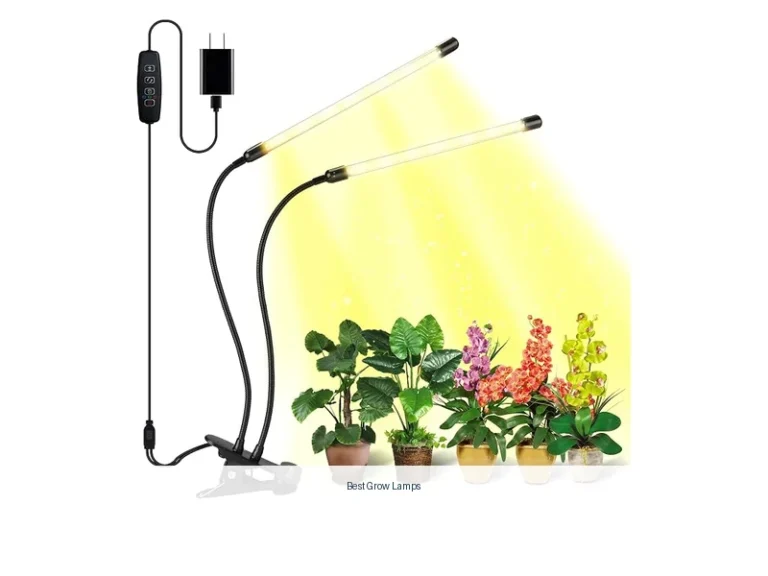
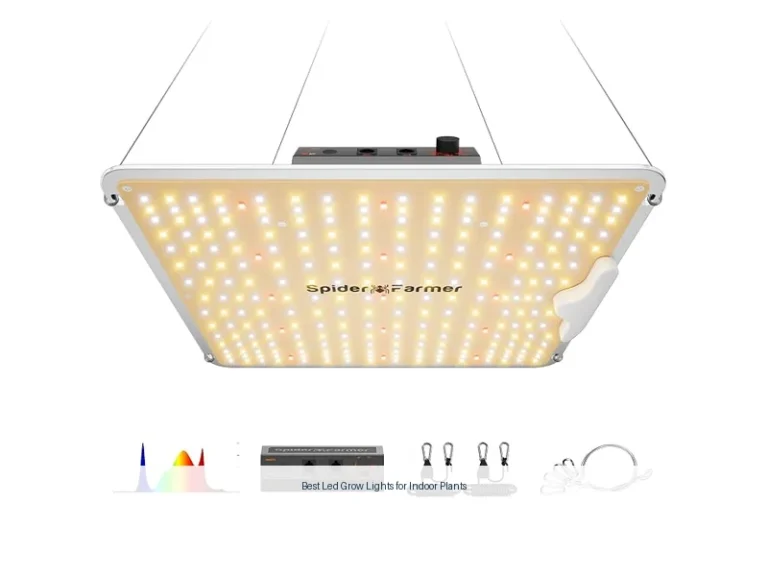
10 Best Grow Lights for Seedlings: Compared With Buying Guide
Choosing the best grow lights for seedlings is less about buying the brightest lamp and more about matching light intensity, coverage, height, controls, and installation style to your growing space. A good seed-starting light should keep young plants compact and sturdy without making daily care unnecessarily complicated.
LED Grow Lights is my first choice because its 70-watt output, full-spectrum mix, and four-level dimmer create a strong balance of coverage and control. The VIPARSPECTRA P700 produces 11,000 lumens for an area listed at 2 by 2 feet, uses 660nm red with 3000K and 5000K white light, and relies on a fanless aluminum heat-sink design.
My second choice is Hlite 16-Inch Linkable Full-Spectrum LED Grow Light. It is the option I would compare next when a buyer has slightly different priorities from my first pick.
My third choice is RWNTAO LED Grow Light Strips. It rounds out my top three with a useful alternative for buyers whose priorities differ from the first two choices.
The comparison below covers ten distinct formats, from hanging panels and linkable bars to tabletop stands and a complete seed-starting station. Each entry explains the practical strengths, limitations, ideal use case, and ownership details that matter when starting vegetables, herbs, flowers, and cuttings indoors.
.amz-product-card:hover{transform:translateY(-3px)!important;box-shadow:0 10px 26px rgba(20,70,110,.12)!important;border-color:#bdd7ea!important;}
Best Grow Lights for Seedlings
I selected these products for their direct relevance to seed starting, the usefulness of their listed light and control features, available customer-feedback evidence when supplied, and variety across shelves, countertops, grow tents, and larger growing areas. The ranking also considers how easily a beginner can position, schedule, and expand each light without assuming hands-on testing.
| # | Image | Product | Price on Amazon |
|---|---|---|---|
| 1 |  |
LED Grow Lights | Check Price |
| 2 |  |
Hlite 16-Inch Linkable Full-Spectrum LED Grow Light | Check Price |
| 3 |  |
RWNTAO LED Grow Light Strips | Check Price |
| 4 |  |
SDOVUERC 60-Watt Full-Spectrum Adjustable Grow Light Stand | Check Price |
| 5 |  |
FOXGARDEN Adjustable Full-Spectrum LED Grow Light Stand | Check Price |
| 6 |  |
wolezek 2-Foot T5 Full-Spectrum Seed-Starting Grow Light Kit | Check Price |
| 7 |  |
bseah Full-Spectrum Dimmable Plant Grow Lamp | Check Price |
| 8 |  |
Barrina T5 1-Foot 5000K Full-Spectrum Grow Light | Check Price |
| 9 |  |
Epic Gardening Standard Full-Spectrum Seed-Starting LED | Check Price |
| 10 |  |
4FT 5000K Full Spectrum Daylight White 6 Packs 252W 6 | Check Price |
LED Grow Lights
The VIPARSPECTRA P700 is the most powerful and adaptable option in this group for a dedicated seed-starting area or a small grow tent. Its listed 11,000-lumen output is intended for a 2-by-2-foot vegetative area, so it can provide more even coverage than a narrow desk lamp when several trays need light at once.
Its spectrum combines 660nm red with 3000K and 5000K white diodes. That mix is useful for growers who want one fixture to support seedlings and later vegetative growth rather than purchasing a separate lamp after germination. The four-level dimmer is especially helpful because newly emerged seedlings generally need a gentler starting setting than established plants.
At 70 watts, the unit is presented as delivering performance comparable to a much higher-wattage HPS/MH setup while using less electricity. The fanless construction avoids fan noise, and the large aluminum heat sinks are intended to manage heat. Still, the panel-style design needs a suitable hanging point, and its concentrated coverage may be excessive for a single small tray unless dimmed or raised.
Pros
- Strong 11,000-lumen output for a small growing area
- Four brightness settings support changing seedling needs
- Full-spectrum combination suits seedlings and vegetative plants
- Fanless aluminum heat dissipation avoids mechanical fan noise
Cons
- Requires hanging or another secure overhead mounting method
- May be more light than one small tray needs
- Coverage is better suited to a defined area than scattered houseplants
My Opinion
This is the strongest all-around pick when the priority is usable coverage and room to grow. Pair it with a timer outlet if automatic scheduling is important, and begin with the dimmer set conservatively so tender seedlings are not exposed to unnecessary intensity.
Hlite 16-Inch Linkable Full-Spectrum LED Grow Light
The Hlite four-pack takes a modular approach that works particularly well above shelves, propagation racks, or several narrow seed trays. Each 16-inch bar uses 20 watts and can be hung or mounted, so the lights can be arranged in a row rather than forcing every plant under one central fixture.
Linkability is the main advantage here. Up to six units can be connected, allowing a beginner to start with the included four lights and add coverage as the growing station expands. That is more practical than buying one large lamp when the available space consists of separate shelves or several short trays. The plug-and-play design also keeps installation straightforward.
The full-spectrum output is intended to support plants from seedling through flowering. Included screws, hooks, chains, zip ties, and brackets provide several mounting choices, although the buyer still needs to plan cord routing and ensure that suspended bars are level above the plants. There is an on/off switch, but the supplied information does not identify an integrated timer, so automatic daily scheduling may require a separate timer.
Pros
- Four 16-inch bars provide flexible shelf coverage
- Up to six lights can be linked together
- Supports seedlings, vegetative growth, and flowering
- Includes several mounting and hanging accessories
Cons
- No built-in timer is listed
- Multiple bars require more cord organization
- Each 20-watt unit is better suited to shelves than broad floor areas
My Opinion
Choose Hlite when expandability matters more than having one high-output panel. It is a sensible alternative for a shelf garden, especially if you already use a plug-in timer or do not mind switching the lights manually.
RWNTAO LED Grow Light Strips
RWNTAO’s compact strip system is aimed at plant shelves and small indoor growing spaces where a traditional hanging panel would be awkward. The package uses two sets of three heads, with 8.6-inch light strips and a total layout intended to spread light across several small pots or a narrow tray.
Its controls make it unusually flexible for a small fixture. Ten dimming levels allow gradual adjustments as seedlings emerge and grow, while three switch modes let the user run one side, the other side, or both sides. The cycle-memory timer can turn the lights on and off automatically for 3, 9, or 12 hours each day, which is useful for maintaining a routine during workdays or short trips.
Installation is another strong point. Magnets, double-sided tape, screws, and ties accommodate metal shelving, smooth surfaces, or more permanent mounting. The aluminum construction is described as corrosion-resistant and suited to heat management. However, short strips are not a replacement for a broad, high-output fixture over a deep tray, and buyers should check that the included 71-inch power cord reaches the outlet from the planned shelf position.
Pros
- Six-head format suits compact shelves and small containers
- Ten brightness levels provide fine adjustment
- 3/9/12-hour cycle-memory timer reduces daily maintenance
- Four mounting methods support different shelf materials
Cons
- Short strips provide limited depth of coverage
- May require careful positioning for evenly lit trays
- Not the best fit for a large or deep seed-starting rack
My Opinion
This is a convenient choice for apartment growers and small propagation shelves. Its timer and mounting flexibility are valuable, but use it where the light can stay close and centered over the plants rather than trying to illuminate a wide area from one side.
SDOVUERC 60-Watt Full-Spectrum Adjustable Grow Light Stand
The SDOVUERC stand is built for buyers who want a self-supporting light rather than a ceiling hook, shelf bracket, or grow-tent suspension point. Its telescoping rod adjusts from 11.02 to 21.65 inches, giving the light room to rise as seedlings gain height.
A 60-watt UL-certified adapter powers a spectrum combining 6000K cool white, 3000K warm white, and 660nm deep red LEDs. For seed starting, the cool-white portion gives the setup a daylight-like appearance, while the broader spectrum is intended to remain useful through later growth stages. Ten dimming levels make it easier to reduce intensity for newly sprouted plants or increase it as the canopy develops.
The large control disk provides 4-, 8-, and 12-hour timer choices. Its oversized base is meant to improve stability, but this is still a tabletop or floor stand that occupies physical space. Measure the growing surface before buying, particularly if trays will sit beside other plants. The aluminum alloy frame should help with heat dissipation, though the lamp will still need open airflow around the fixture.
Pros
- Height adjusts from 11.02 to 21.65 inches
- Ten dimming levels provide detailed intensity control
- Built-in 4/8/12-hour timer simplifies scheduling
- Self-supporting design avoids overhead mounting
Cons
- Stand takes up more room than a slim strip
- Timer choices are less flexible than some daily schedules require
- Best suited to one localized growing station
My Opinion
SDOVUERC is a strong fit for a countertop or floor setup where stability and adjustable height are more important than a minimal footprint. Its broad dimming range makes it approachable for beginners who want to change light levels without moving the entire stand.
FOXGARDEN Adjustable Full-Spectrum LED Grow Light Stand
FOXGARDEN offers another freestanding solution, with a height range from 11.02 to 21.65 inches and a stable metal base intended to prevent tipping. The reflector-equipped light board is designed to direct more brightness toward the plants, which can be helpful when the lamp sits above a compact tray rather than being suspended in a larger tent.
The 108-LED arrangement combines 60 cold-white, 32 warm-white, and 16 red LEDs. That blend is positioned for seedlings, vegetative plants, and flowering, so the stand can remain useful after the first round of starts. Six brightness levels range from 10% to 100%, giving less fine control than the ten-level options elsewhere in this list but still offering a meaningful adjustment range.
Automatic 4-, 8-, and 12-hour settings reduce the need to remember daily switching. The sponge pad beneath the metal base is a thoughtful desktop detail because it can help protect the surface, while the listed 12-month warranty and 90-day return guarantee add ownership support. As with any stand, however, its coverage is tied to the height and position of one light board, so several shelves may require additional units.
Pros
- Adjustable height accommodates changing plant sizes
- Reflector helps direct light toward the growing area
- Six settings range from 10% to full brightness
- Includes timer choices and a 12-month warranty
Cons
- One stand is intended for a relatively compact area
- Only three timer durations are listed
- Six brightness levels offer less precision than ten-level systems
My Opinion
This stand is a polished option for a visible indoor garden, office, or countertop. It makes the most sense for buyers who value a neat, stable presentation and want one adjustable light for seeds, cuttings, and small potted plants.
wolezek 2-Foot T5 Full-Spectrum Seed-Starting Grow Light Kit
Wolezek’s 2-foot kit is shaped around traditional tray growing. A lightweight PVC stand supports the lamp on a tabletop or floor, while the height-adjustable chain lets the grower bring the light closer to short seedlings or raise it as the plants develop.
The 32-watt fixture uses 144 LED chips, including 6000K white, 3000K white, and 660nm red diodes. A reflective cover is intended to increase brightness by 30%, helping direct more of the available output toward the plants instead of allowing light to spill into the room. The two-tube format is a natural match for seed trays and rows of small pots.
Assembly is deliberately simple: the listed parts require no screws or screwdriver, and setup can be completed in about five minutes. That is useful for a first-time grower who wants a complete stand rather than a separate lamp, hooks, and mounting hardware. The PVC frame is lightweight and easy to reposition, although buyers should avoid treating it like a heavy-duty metal rack. The kit also lacks a listed automatic timer, so a separate timer may be needed for consistent light cycles.
Pros
- Complete stand and light kit for tabletop or floor use
- Height changes through an adjustable hanging chain
- 144 LEDs and reflective cover support tray illumination
- Simple assembly without screws or a screwdriver
Cons
- No integrated timer is listed
- Lightweight PVC may be less robust than metal construction
- Two-foot length limits coverage to a defined area
My Opinion
Wolezek is a practical starter kit for anyone who wants a dedicated seed tray station with minimal assembly. Add an external timer and keep the chain adjusted so the light remains close enough to discourage weak, stretched stems.
bseah Full-Spectrum Dimmable Plant Grow Lamp
The bseah lamp is a compact, flexible choice for one indoor plant area, a few pots, or a small propagation setup. Its metal gooseneck and non-slip mat let the user aim the light without installing hardware, which is helpful when plants move between rooms or when a permanent shelf system is not available.
Three switch modes and ten dimming levels allow the light to be adjusted for germination, growth, flowering, and fruit-bearing stages. The yellow-and-white full-spectrum combination is intended to support photosynthesis and development while presenting a more comfortable indoor appearance than a strongly colored red-blue lamp.
The 3/9/12-hour automatic cycle timer remembers the selected schedule as long as the lamp remains connected to continuous power. That condition matters: unplugging the unit or using a switched outlet may interrupt the routine. A USB connector adds flexibility for powered indoor setups, but buyers should confirm that their adapter or USB power source can support the lamp reliably. Its listed 50,000-hour lifespan is a stated product specification, not a guarantee of identical performance in every environment.
Pros
- Flexible gooseneck makes positioning simple
- Ten brightness levels and three switch modes
- Automatic 3/9/12-hour cycle timer
- USB connector suits many indoor power arrangements
Cons
- Best for small areas rather than broad seed trays
- Timer requires continuous power to preserve the cycle
- USB power setup depends on a suitable adapter or port
My Opinion
bseah is a convenient pick for a single shelf, houseplant cluster, or small batch of seedlings. Its gooseneck makes daily positioning easy, but it is not the choice I would make for a multi-tray growing rack that needs uniform overhead coverage.
Barrina T5 1-Foot 5000K Full-Spectrum Grow Light
The Barrina T5 four-pack is aimed at narrow shelves and under-shelf installations where several short fixtures can distribute light more evenly than one long bar. Each 1-foot unit uses 20 watts across 96 LEDs in total for the set, and the 5000K white output is intended to resemble daylight for seedling, vegetative, and flowering use.
Separate on/off switches on the fixtures allow the grower to run individual bars or the whole group according to the plants’ needs. That can save energy when only one shelf is occupied, although it also means more switches to manage. The lights can be connected in a series of up to 16, giving the system considerable expansion potential for a long rack.
Installation materials include clips, double-sided tape, and cable ties. The lights are described as non-magnetic, so buyers should not plan on attaching them to a metal surface by magnet alone. The included cords and connectors help create a tidy row, but check the condition of plaster, paint, or shelf surfaces before using adhesive. The product information also cautions against uncured plaster and dusty, greasy, or rough surfaces.
Pros
- Four compact bars suit narrow shelving
- Each fixture can be controlled separately
- Up to 16 lights can be linked in a series
- Includes clips, tape, ties, and connecting cords
Cons
- Not magnetic despite being suitable for many shelf setups
- Adhesive mounting requires a clean, suitable surface
- Short 1-foot bars may require several units for broad trays
My Opinion
Barrina’s 1-foot T5 set is a smart modular choice for a narrow rack or cabinet. It works best when the buyer plans the cord path and mounting surface first, then positions multiple bars directly above the rows instead of relying on one fixture at a distance.
Epic Gardening Standard Full-Spectrum Seed-Starting LED
The Epic Gardening standard unit is more than a light bar: it combines a low-profile growing station, integrated watertight bottom tray, adjustable height, and built-in scheduling. The tray can hold up to twelve 6-cell trays or eight 4-cell trays, giving it a clear advantage for organized seed starting and spill control.
Its 40-watt full-spectrum LED is intended to provide consistent indoor light from germination through later growth. Height adjusts from 6.8 to 19 inches, which is particularly useful during the early stages when seedlings need the light positioned close and then require more clearance. The 8-, 12-, and 16-hour timer settings also offer a wider schedule range than many simple plug-in lamps.
The compact design occupies about two square feet, making it suitable for a countertop, utility area, or small indoor garden. The integrated tray helps contain watering mess, but the fixed station format is less flexible than a separate hanging light that can be moved to another rack. With a listed 25,000-hour operating life and lower power use than traditional fluorescent bulbs, it is built for repeated seasonal use, although the complete station requires more dedicated space than a single strip.
Pros
- Integrated watertight tray keeps watering organized
- Holds multiple small seedling trays
- Height adjusts from 6.8 to 19 inches
- 8/12/16-hour timer supports varied light schedules
Cons
- Station format is less portable than a standalone bar
- Requires about two square feet of dedicated space
- Designed around the included tray dimensions
My Opinion
This is one of the easiest choices for a beginner who wants a complete, tidy seed-starting station rather than a collection of separate parts. It is especially appealing when spill control and tray organization matter as much as the lamp itself.
4FT 5000K Full Spectrum Daylight White 6 Packs 252W 6
The 4-foot Barrina T8 set is the largest coverage option here and is intended for long shelves, greenhouses, grow tents, hydroponic rooms, or a substantial seedling rack. Six 42-watt strips provide a total listed draw of 252 watts, with 1,152 LEDs and 5000K daylight-white output.
A V-shaped reflector is intended to increase efficiency by 17% to 20% and direct more light toward the growing surface. The aluminum shell assists heat dissipation, an important consideration when several long fixtures run together. The set can link up to six strips, which helps reduce the number of outlet connections in a planned installation.
Included power cords, connectors, clips, tape, and cable ties make the kit suitable for a structured rack build. However, the product has a specific compatibility note: the newer generation works with Barrina GM Series cords, and connecting new and older products requires the correct male-female connector cables. That detail should be checked before mixing existing Barrina equipment. Six long fixtures also demand careful spacing and secure mounting, particularly over a high shelf or greenhouse bench.
Pros
- Six 4-foot fixtures cover long growing shelves
- High LED count and reflector support strong area coverage
- Aluminum housing helps with heat dissipation
- Supplied hardware supports linked installation
Cons
- 252-watt total draw is substantial for a small setup
- Requires careful mounting and cord planning
- Generation and connector compatibility need verification
My Opinion
This is the right scale for a serious rack or greenhouse bench, not a single countertop tray. It offers excellent expansion potential, but buyers should measure the full installation and confirm connector compatibility before ordering additional or replacement parts.
How I Selected These Best Grow Lights for Seedlings
The selection prioritizes the needs that affect young plants most directly: usable coverage, adjustable height or mounting, light intensity control, daily scheduling, and a spectrum intended for indoor plant growth. I also included different form factors because a renter with one shelf needs a very different solution from someone building a four-foot propagation rack.
Product information was compared for stated wattage, LED arrangement, timer options, dimming ranges, mounting hardware, heat-management construction, and compatibility notes. Customer-feedback evidence was considered where the supplied data included it, but no product was treated as personally tested. A high rating or large feedback count can add confidence, yet it does not remove the need to match the fixture to the tray size and growing distance.
The most useful ranking distinction is coverage style. A powerful hanging panel can be excellent over a defined 2-by-2-foot area, while short linkable bars may be better for several separate shelves.
Controls matter almost as much as output for beginners. A dimmer, adjustable height, and dependable timer make it easier to adapt the light as seedlings change instead of forcing one setting throughout the entire cycle.
How to Choose the Best Grow Lights for Seedlings
The right light should fit the number of trays, the available mounting location, and the amount of daily attention you can provide. Start with the growing footprint, then compare output and controls; buying by wattage alone can lead to a fixture that is either too weak at the plant canopy or unnecessarily large for the space.
- Match the light’s intended coverage to the actual tray or shelf area.
- Prefer dimming or adjustable height when seedlings will remain under the lamp for several weeks.
- Use a timer or cycle-memory feature to keep the daily schedule consistent.
- Check mounting hardware, cord length, and surface compatibility before ordering.
- Plan for heat, airflow, watering, and future plant height rather than only today’s setup.
Coverage and Light Placement
Seedlings need light distributed across the tray, not just a bright spot in the center. Long bars work well over narrow rows, while a panel or multi-head system can cover a broader arrangement. The closer the fixture is to the plants, the more important even placement becomes; a lamp positioned too far away may create stretched stems even if its listed wattage sounds impressive.
Wattage, Brightness, and Dimming
Wattage describes electrical consumption, not a complete measure of plant-usable light. Look at wattage together with the stated coverage, LED count, dimming range, and mounting distance. A dimmer is valuable because germinating seedlings and established plants do not necessarily need the same intensity. Start lower when plants first emerge, then increase gradually while watching for weak growth or signs of excessive exposure.
Timer Choices
Consistent light and dark periods are easier to maintain with an automatic timer. Built-in options in this group range from 3/9/12-hour cycles to 8/12/16-hour settings. Check whether the timer remembers its cycle after unplugging and whether the fixture requires continuous power. If a light lacks an integrated timer, a compatible external timer can provide automation, but the plug, adapter, and outlet should remain dry and safely accessible.
Mounting and Adjustability
Adjustable stands are convenient for a countertop, while hanging panels and linkable strips make better use of shelves and grow tents. Height matters because seedlings grow quickly and the lamp may need to move upward without changing the entire arrangement. Adhesive mounting should be reserved for clean, smooth, dry surfaces that can support the fixture. For suspended lights, use secure hooks or chains rather than relying on temporary tape.
Light Spectrum and Appearance
Full-spectrum products in this list use combinations of cool white, warm white, and red LEDs. White light is easier to live with in a room because it gives plants a more natural appearance, while red diodes are included in several models for broader growth-stage support. Spectrum labels are useful, but they should not overshadow coverage, distance, and scheduling, which strongly affect real-world results.
How to Set Up Seedling Grow Lights
Set up the growing area before sowing so the seedlings receive consistent light as soon as they emerge. Place trays on a stable, level surface, confirm that water cannot reach the power connection, and position the lamp so its brightest area covers the full tray rather than only the center cells.
- Measure the tray, shelf, or stand area and center the fixture over it.
- Secure hanging bars, stands, or clips before connecting power.
- Begin with a moderate brightness or a conservative height for newly emerged seedlings.
- Set the timer for a repeatable daily schedule and confirm that it switches correctly.
- Check the seedlings every day for uneven growth, excessive stretching, or heat stress.
Using Adjustable Height Correctly
Keep the light close enough to provide useful intensity without allowing leaves or plastic trays to touch a warm fixture. As the plants grow, raise a stand or lengthen a chain in small steps. Moving the lamp too far away all at once can leave new growth thin and elongated, while keeping it too close can increase heat or light stress.
Watering Around Electrical Equipment
Water trays away from power strips, adapters, and connectors whenever possible. Integrated trays can reduce spills, but they do not make an electrical setup waterproof. Allow leaves and surfaces to dry as appropriate, keep cords from forming low loops that direct water toward an outlet, and unplug equipment before moving a fixture or cleaning around it.
How to Make Seedling Grow Lights Last Longer
Most ownership problems come from heat, moisture, poor mounting, or damaged connectors rather than from ordinary daily operation. A few simple habits can protect both the fixture and the plants.
- Keep ventilation openings and aluminum heat-sink surfaces free of dust.
- Do not cover a powered light with fabric, plastic, or growing material.
- Support long bars and linked fixtures so connectors are not carrying their weight.
- Inspect cables, adapters, and mounting tape before each growing season.
- Follow generation-specific connector instructions when expanding a Barrina system.
- Store removable lights in a dry location after disconnecting and cleaning them.
Common Mistakes to Avoid
New growers often focus on brightness and overlook distance, coverage, and scheduling. These errors can produce weak seedlings even when the lamp itself is suitable.
- Using one small strip over a wide tray: place enough fixtures to cover the edges, not just the center.
- Leaving the light too high: raise or lower it gradually as the canopy changes.
- Running an unplanned schedule: use a timer or write down a consistent manual routine.
- Assuming every connector is interchangeable: verify product generation and cable compatibility first.
- Mounting tape on dusty or rough surfaces: use clips, brackets, screws, or a stable stand instead.
- Ignoring heat and airflow: keep fixtures unobstructed and monitor the growing area.
Do not judge a light only by its advertised wattage or lumen number. A slightly less powerful fixture positioned evenly and at the correct height can be more useful than a brighter lamp placed too far away or aimed at only part of the tray.
FAQ About Grow Lights for Seedlings
How many hours should a seedling grow light run?
The correct schedule depends on the plant, fixture, and growing conditions, but consistency matters more than constantly changing the timer. The products here offer several preset choices, including 3, 4, 8, 9, 12, and 16-hour settings. Use the option appropriate for the plant and provide a regular dark period rather than leaving the light on continuously.
Are full-spectrum LED lights suitable for starting vegetable seeds?
Yes. The full-spectrum LED products listed here are intended to support seedling growth, and several also include cool-white, warm-white, or 660nm red diodes for continued vegetative development. The lamp still needs to be positioned close enough and spread across the entire tray for seedlings to grow evenly.
Should a seedling light be dimmable?
Dimming is useful but not essential. It lets beginners start with a gentler setting for newly emerged plants and increase brightness later without changing fixtures. If a light is not dimmable, adjustable height can provide another way to manage intensity.
Are strip lights or stand lights better for seedlings?
Strip lights are usually better for shelves, rows, and expandable racks, while stand lights are convenient for one countertop station. A stand avoids overhead installation, but strips can provide more even coverage when several are placed along a shelf. The better choice depends on the tray dimensions and mounting location.
Do seedlings need a timer with their grow light?
A timer is not mandatory, but it makes a consistent schedule much easier. Built-in timers are convenient, while a separate plug-in timer can automate lights that only have a manual on/off switch. Confirm that the product’s timer preserves its cycle when power is interrupted.
Final Thoughts
The best grow lights for seedlings depend on the space you need to illuminate. Choose the VIPARSPECTRA P700 LED Grow Light for strong adjustable coverage, the Hlite 16-Inch Linkable LED Grow Lights for an expandable shelf system, or the RWNTAO LED Grow Light Strips for compact shelves with convenient dimming and timer controls.

I’m Maya L. Greenwood, a lifelong plant lover who believes anyone can grow something beautiful with the right guidance. After years of testing soil mixes, pruning methods, irrigation tricks, and pest-safe solutions, I started EasyGardenTips.com to turn hard-won lessons into step-by-step advice. From seed starting and container gardens to composting and seasonal checklists, my goal is to make gardening simple, sustainable, and fun.