3 Best LED Grow Lights for Indoor Vegetables at Home
Growing vegetables indoors requires more than a lamp that simply looks bright. The best LED grow lights for indoor vegetables need enough usable intensity for healthy compact growth, good coverage across the canopy, adjustable output, and a spectrum suitable for everything from seedlings and leafy greens to flowering vegetables.
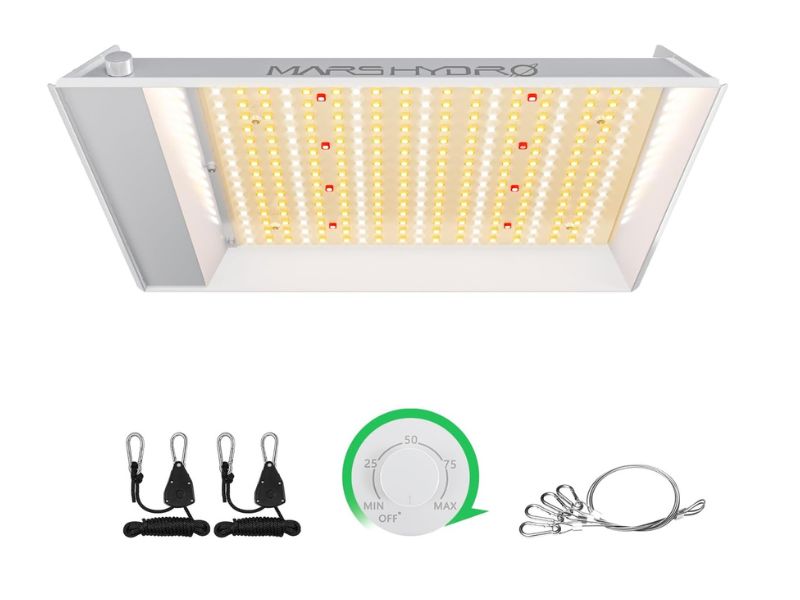
My primary recommendation is the MARS HYDRO TS600. I would choose it for a compact mixed vegetable garden because the current 2026 version is a 100W dimmable full-spectrum fixture with an updated diode layout, approximately 190–194 µmol/s PPF, around 2.0 µmol/J PPE, and a reflector design intended for compact 2×2-class growing.
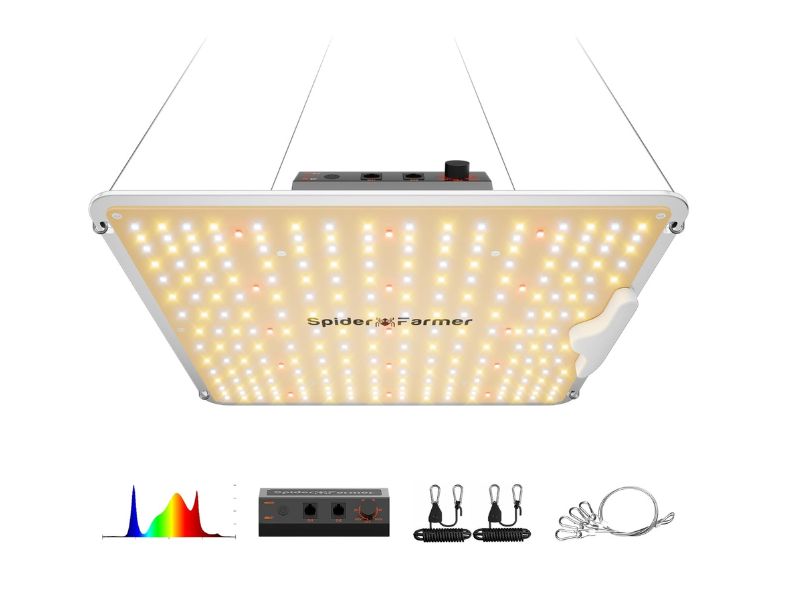
I would choose the Spider Farmer SF1000 when efficiency and broader intensity control matter more. Its current listing specifies 100W actual input, 2.5 µmol/J system PPE, new-generation high-efficiency diodes, full-spectrum output, and dimming, with positioning for compact 2×2/3×3 indoor growing.
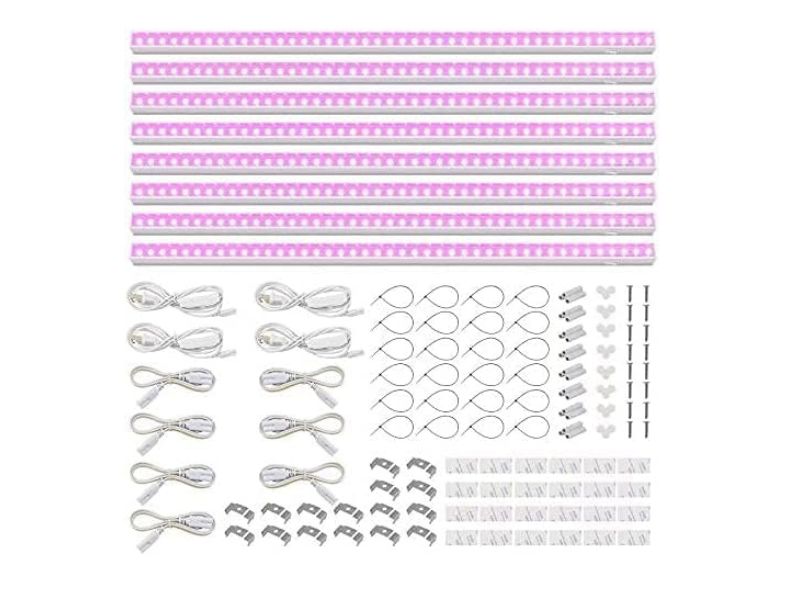
For lettuce, herbs, seedlings, microgreens, and vegetables grown along shelving, I would choose the Barrina T5 4FT 8-Pack. Eight 4-foot, 20W bars provide 160W total available power, and the long linear design makes it much easier to distribute moderate light across rows than one concentrated center fixture.
3 Best LED Grow Lights for Indoor Vegetables
1. MARS HYDRO TS600 100W LED Grow Light
Key Features
- 100W actual input
- Dimmable 2026 configuration
- Approximately 190–194 µmol/s PPF
- Approximately 2.0 µmol/J PPE
- Full-spectrum output
- Updated diode layout
- Reflective hood design
- Fanless construction
- Compact 2×2-class positioning
The MARS HYDRO TS600 is my primary recommendation because 100W is a very practical starting point for an indoor vegetable garden that is larger than a seedling shelf but much smaller than a commercial grow room.
The current 2026 model adds 0–100% dimming, uses 312 LEDs, draws 100W, and combines an updated diode arrangement with a reflective hood intended to improve coverage and uniformity. The listing specifies approximately 190 µmol/s PPF in its feature section, while the model-comparison table lists about 194 µmol/s, so I would treat it as roughly a 190–194 µmol/s fixture rather than pretending one number is exact across every product-page section.
That output class works particularly well for:
- Lettuce
- Kale
- Spinach
- Basil
- Parsley
- Cilantro
- Pepper seedlings
- Compact mature peppers
- Tomato seedlings
- One or two compact fruiting plants
The dimmer is especially useful because vegetable light requirements change dramatically through the crop cycle.
A newly emerged tomato seedling does not need the same intensity as a mature pepper plant carrying flowers.
Instead of buying separate fixtures for each stage, you can start the TS600 at reduced output and increase it as the canopy develops.
That helps manage both electricity and heat.
The full-spectrum design also makes the TS600 more useful for a mixed vegetable setup than a narrowly specialized lamp.
University of Minnesota Extension notes that blue or mixed-spectrum light works well for seed starting and leafy greens, while white or balanced light is suitable for most plants through multiple stages of growth.
That makes a broad-spectrum fixture a sensible choice when one indoor garden may contain lettuce this month and peppers or tomatoes later.
The reflector design is another reason the TS600 works in small spaces.
A compact board-style fixture can lose useful light beyond the intended canopy.
The TS600’s current design uses a 120-degree reflector intended to direct more of that light toward the growing area.
For indoor vegetables, that matters because usable canopy coverage is more important than simply making the room brighter.
If your plants occupy only a 2×2 footprint, light hitting the wall does nothing for photosynthesis.
I also like the fanless architecture.
A vegetable setup may already include:
- Circulation fans
- Hydroponic pumps
- Air pumps
- Exhaust fans
Removing another small cooling fan keeps the setup quieter.
However, a fanless light still produces heat.
A 100W electrical load eventually contributes roughly 100W worth of energy to the surrounding environment, so airflow and temperature management still matter.
The biggest limitation is canopy size.
A TS600 makes sense over a compact vegetable garden.
It does not make sense as the sole fixture for a large room full of mature tomatoes.
As vegetable plants increase in height and width, the useful illuminated footprint becomes the limiting factor.
What I Like
- Practical 100W power class
- Adjustable output
- Full-spectrum lighting
- Reflector-assisted coverage
- Useful for seedlings through compact mature vegetables
- Fanless
- Easy fit for small indoor gardens
What I Do Not Like
- Too small for broad mature vegetable canopies
- Lower published PPE than SF1000
- Large tomato plants can outgrow its useful footprint
- Board-style geometry is less distributed than long bars
The TS600 is my choice for a compact, general-purpose indoor vegetable garden where one light needs to handle seedlings, leafy greens, herbs, and one or two larger plants without excessive wattage.
2. Spider Farmer SF1000 100W LED Grow Light
Key Features
- 100W actual power
- 2.5 µmol/J system PPE
- New-generation high-efficiency diodes
- Full-spectrum output
- Dimmable
- Fanless operation
- Compact 2×2/3×3-oriented coverage
- Suitable for seed starting, vegetables, and mature growth
The Spider Farmer SF1000 is the model I would choose when I want a compact 100W fixture but place greater emphasis on system efficiency.
Its current U.S. Amazon listing specifies 100W actual input and 2.5 µmol/J system PPE, along with upgraded diodes, increased diode count, full-spectrum output, and dimming.
PPE is useful because wattage alone does not tell you how much photosynthetically active light a fixture produces.
Two grow lights can both draw 100W while converting that electrical energy into photons with different efficiency.
At the system level, the SF1000’s published 2.5 µmol/J is notably higher than the approximately 2.0 µmol/J figure shown for the current TS600.
That makes SF1000 particularly interesting for growers who run lights for many hours every day.
I would use it for:
- Pepper plants
- Dwarf tomatoes
- Herbs
- Lettuce
- Kale
- Chard
- Seedlings
- Compact hydroponic vegetables
The dimmer is one of its most valuable controls.
University of Minnesota currently recommends 16–18 hours of light per day for seedlings, while hydroponic lettuce and herbs generally receive around 12–14 total hours per day under its indoor-lighting guidance.
Because different crops and stages need different daily light totals, intensity adjustment makes one fixture much more versatile.
For example, you can run lower output during early seedling development and gradually increase it when peppers or tomatoes begin forming a larger canopy.
The SF1000 is also better suited to a mixed vegetable garden than a fixed-output lamp because leafy crops and fruiting crops have different practical demands.
Lettuce usually benefits from moderate, even intensity.
Tomatoes and peppers generally need more useful light as they mature and begin flowering.
A dimmable fixture lets you adapt instead of compromising everything around one fixed output.
The full-spectrum configuration supports that flexibility.
University of Minnesota notes that balanced white light is suitable for most plant stages, so there is no requirement to swap between separate “vegetative” and “flowering” bulbs for ordinary indoor vegetable growing.
Placement remains important.
A 100W fixture only works effectively when the active canopy stays within its useful footprint.
If you put one large tomato directly beneath the light and four peppers far outside the edges, total wattage becomes irrelevant because those outer plants simply receive less photon density.
Keep plants relatively even in height and place the light overhead.
The fanless design is also convenient for indoor rooms.
There is no fixture fan adding noise.
The passive design still requires good room ventilation, particularly when the fixture runs alongside pumps, humidifiers, and other equipment.
What I Like
- Excellent 2.5 µmol/J system PPE
- 100W actual power
- Dimming
- Full-spectrum output
- Good choice for mixed vegetables
- Strong option for compact hydroponics
- Fanless construction
What I Do Not Like
- More light than a tiny herb pot needs
- Mature vining vegetables can outgrow the footprint
- Requires hanging space
- One fixture may not cover long rectangular shelves efficiently
The SF1000 is the model I would choose for a compact vegetable garden where efficiency, dimming, and enough intensity for peppers or other higher-light crops are priorities.
3. Barrina T5 4FT Grow Lights 8-Pack
Key Features
- Eight 4-foot LED grow-light bars
- 20W per bar
- 160W total available power
- Full-spectrum plant lighting
- Separate on/off operation
- Plug-and-play design
- Flexible mounting
- Excellent linear coverage
- Well suited to shelves and rows
The Barrina T5 system takes a completely different approach.
Instead of one compact 100W fixture, it gives you eight 20W linear bars, totaling 160W if every fixture operates at once.
That makes it particularly useful for vegetables that are grown in rows.
I would consider it for:
- Lettuce
- Spinach
- Kale seedlings
- Herbs
- Microgreens
- Onion seedlings
- Brassica seedlings
- Multi-level propagation racks
- Long hydroponic channels
The biggest advantage is geometry.
A four-foot shelf is long and narrow.
A compact square grow light placed in the center naturally creates stronger light in the middle and weaker coverage toward both ends.
A four-foot bar follows the actual shape of the canopy.
This helps maintain more even illumination along an entire row.
That makes Barrina particularly appealing for leafy vegetables, because lettuce and herbs are often grown:
- In trays
- In rows
- In NFT channels
- Across multi-level racks
The eight-bar package also gives you flexibility.
You do not need all eight fixtures over one shelf.
You might use:
Two bars per shelf across four levels
or:
Four bars over each of two deeper shelves.
The correct arrangement depends on crop demand and shelf depth.
This modularity can be more useful than electronic dimming for a permanent rack.
If one shelf needs more light, add another bar.
If another shelf contains low-light seedlings, operate fewer bars.
University of Minnesota’s 2026 seed-starting guidance specifically recommends 5000K LED or fluorescent lighting, keeping grow lights close to seedlings to prevent stretching.
Although the selected Barrina version uses its own full-spectrum pink configuration rather than a plain 5000K white output, the broader principle still applies: seedlings need consistent usable overhead illumination, not a distant decorative lamp.
Insufficient light is easy to spot.
University of Minnesota notes that low light can cause pale foliage and long, thin, leggy stems, while its seedling troubleshooting guidance similarly identifies stretching as a typical response to insufficient lighting.
Long bars make it easier to prevent one end of a seedling tray from becoming much darker than the other.
The main limitation is fruiting vegetables.
Barrina bars can certainly support vegetable growth, but a rack-oriented 20W-per-bar system is not automatically the best way to illuminate a large mature tomato plant.
A compact pepper or dwarf tomato setup may work with several bars, but for higher-intensity mature canopies I prefer a purpose-built panel such as TS600 or SF1000.
What I Like
- Excellent shelf-wide coverage
- Eight modular bars
- 160W total available capacity
- Easy to split between multiple shelves
- Strong choice for seedlings and leafy vegetables
- Flexible mounting
- Simple controls
What I Do Not Like
- No continuous electronic dimmer
- Requires more mounting and cable organization
- Four-foot format is awkward for tiny setups
- Less convenient for one large fruiting plant
The Barrina T5 system is the product I would choose for lettuce, herbs, seedlings, microgreens, and indoor vegetables arranged along racks or long hydroponic rows.
Indoor Vegetable Grow Light Comparison
| Product | Actual Power | Format | Dimming | Coverage Style | Best Use |
| MARS HYDRO TS600 | 100W | Compact reflector panel | Yes | Compact square | Mixed vegetables |
| Spider Farmer SF1000 | 100W | Compact panel | Yes | Compact square | Peppers, herbs, hydroponics |
| Barrina T5 4FT 8-Pack | 160W total | Eight linear bars | By bar count | Long/linear | Leafy greens, seedlings, shelves |
TS600 offers the strongest all-around entry point, SF1000 emphasizes efficient photon delivery, and Barrina provides the most flexible linear coverage.
How to Choose the Best LED Grow Lights for Indoor Vegetables
Decide What Vegetables You Actually Want to Grow
“Indoor vegetables” covers very different plants.
Leafy vegetables such as:
- Lettuce
- Kale
- Spinach
generally require less intense lighting than mature fruiting vegetables such as:
- Tomatoes
- Peppers
- Cucumbers
A shelf system that works beautifully for lettuce may struggle with a large flowering tomato canopy.
Match the fixture to the crop.
Best Grow Light for Indoor Lettuce
I would choose Barrina T5 when lettuce grows along a shelf or hydroponic channel.
The linear format helps maintain even illumination from one end of the crop to the other.
University of Minnesota lists approximately 12–14 daily light hours for hydroponic lettuce and herbs as a general indoor guideline.
Best Grow Light for Indoor Herbs
Barrina works very well for a long herb shelf.
For several pots grouped into a compact area, TS600 or SF1000 gives you more intensity control.
Basil and other relatively high-light herbs may benefit from stronger output than very shade-tolerant foliage plants.
Best Grow Light for Indoor Peppers
I would choose Spider Farmer SF1000.
Its 100W input and 2.5 µmol/J system PPE give it enough headroom for a compact mature pepper canopy while still allowing output to be reduced during early growth.
Best Grow Light for Indoor Tomatoes
For a dwarf or compact tomato plant, either SF1000 or TS600 can work within the fixture’s useful footprint.
A large indeterminate tomato can quickly outgrow both.
In that case, move to a larger fixture rather than expecting one 100W panel to illuminate an increasingly wide and tall canopy.
Best Grow Light for Vegetable Seedlings
All three products can support seedlings, but Barrina is especially practical for multiple trays.
University of Minnesota recommends 16–18 hours of daily light for seedlings, while Penn State gives approximately 14–16 hours in its vegetable seed-starting guidance.
The exact schedule should be adjusted according to fixture intensity and crop response.
5000K and White Light Work Well for Seedlings
University of Minnesota’s current 2026 seed-starting guidance recommends 5000K LED or fluorescent lights and advises keeping the lights close enough to prevent stretching.
That does not mean exactly 5000K is mandatory.
It means daylight-like white light is a practical choice for vegetable propagation.
Intensity and placement still matter more than choosing one exact Kelvin number.
Full Spectrum Is Useful for Mixed Vegetables
A broad white or mixed spectrum lets one fixture remain useful from seedling growth through later vegetative development and flowering.
University of Minnesota specifically notes that white or balanced lighting is suitable for most plants at any stage of growth.
That is why TS600 and SF1000 make good mixed-crop fixtures.
PPFD Matters More Than Visible Brightness
A grow light can look extremely bright to your eyes and still deliver mediocre usable intensity at the leaves.
PPFD measures photosynthetic photon density reaching a particular point on the canopy.
That makes it far more useful than judging a fixture by room brightness alone.
Measure or examine PPFD across:
- Center
- Edges
- Corners
rather than relying on one peak number.
PPF Measures Total Fixture Output
PPF describes the total photosynthetically active photons emitted each second.
The current TS600 listing publishes roughly 190–194 µmol/s PPF.
PPF is useful for comparing total fixture output, but it does not tell you where those photons land.
That is why fixture geometry still matters.
PPE Helps Compare Efficiency
PPE measures photons produced per joule of electrical energy.
SF1000 currently publishes 2.5 µmol/J system PPE, while TS600 publishes approximately 2.0 µmol/J.
When other factors are comparable, greater system PPE means more useful photon output from the same amount of electricity.
Dimming Is Valuable for Vegetables
Vegetable plants can change rapidly.
A newly transplanted pepper may occupy only a small portion of the canopy.
Several weeks later, its leaves may intercept most of the available light.
Dimming allows output to track that development.
It can reduce:
- Unnecessary electricity use
- Excess heat
- Light stress on young plants
TS600 and SF1000 both provide adjustable output in their current configurations.
Watch for Leggy Seedlings
Long, thin, stretched stems are a classic sign that seedlings may not be receiving enough usable light.
University of Minnesota specifically identifies low light as a cause of leggy, stretched growth.
Possible fixes include:
- Moving the light appropriately closer
- Increasing output
- Adding more fixtures
- Improving coverage
Too Much Light Can Also Cause Problems
More intensity is not always better.
University of Minnesota notes that excessive light can result in scorched or bleached foliage.
If top leaves become pale, bleached, or visibly stressed, reduce intensity or increase fixture distance gradually.
Keep Vegetable Lights Overhead
Overhead positioning usually gives a more even canopy.
Strong side lighting encourages stems and leaves to orient toward the light source.
This becomes particularly important with:
- Tomatoes
- Peppers
- Basil
- Lettuce
where balanced plant structure helps make better use of the available footprint.
Do Not Ignore Airflow
Indoor vegetable gardens benefit from gentle air circulation.
Penn State and University of Minnesota seedling guidance both emphasize avoiding overly wet conditions, while UMN troubleshooting also notes that improved ventilation can help reduce problems associated with persistently wet growing environments.
Airflow does not replace proper watering, but it helps prevent stagnant conditions around dense foliage.
Light Does Not Replace Good Watering
A strong LED cannot compensate for waterlogged roots.
Penn State warns against overwatering seedlings because it can contribute to root problems, while UMN identifies overly wet conditions as a factor in seedling disease issues such as damping off.
As light increases and plants grow faster, monitor water demand rather than automatically following a fixed watering schedule.
Indoor Fruiting Vegetables May Need Pollination Help
Tomatoes and peppers grown indoors cannot always rely on outdoor insects or wind.
Penn State’s indoor hydroponic vegetable guidance notes that indoor flowering crops may require manual pollination when natural pollinators are absent.
Gentle vibration, airflow, or appropriate hand pollination can help fruit set depending on the crop.
Hydroponics Does Not Require a Special Spectrum
A hydroponic tomato and a soil-grown tomato still use photons for photosynthesis in the same fundamental way.
Hydroponic growing changes root-zone management, not the basic requirement for usable light.
Choose LEDs according to:
- Crop
- Canopy size
- Intensity
- Coverage
rather than looking for a special “hydroponic-only” spectrum.
Electricity Use of a 100W Grow Light
At 16 hours daily:
0.1 kW × 16 = 1.6 kWh/day
Over 30 days:
48 kWh/month
Both TS600 and SF1000 are 100W-class fixtures.
Actual use may fall when the fixtures are dimmed.
Electricity Use of the Barrina 8-Pack
All eight 20W bars together use:
160W
At 16 hours:
0.16 × 16 = 2.56 kWh/day
Over 30 days:
76.8 kWh/month
You can reduce consumption by operating fewer bars when the full package is unnecessary.
Common Indoor Vegetable Grow-Light Mistakes
Buying by Wattage Alone
Compare efficiency, coverage, and canopy-level light.
Using One Small Light Over Too Many Plants
Match the illuminated footprint to mature canopy size.
Keeping Seedling Lights Too Far Away
Insufficient intensity encourages stretching.
Running Full Power From Germination
Use dimming when available.
Treating Leafy Greens Like Mature Tomatoes
Different crops need different intensity and space.
Ignoring the Dark Period
Do not automatically run LEDs 24 hours per day.
Ignoring Airflow and Watering
Strong light cannot fix poor root-zone conditions.
Forgetting Pollination
Indoor tomatoes and peppers may need help producing fruit.
Frequently Asked Questions
What are the best LED grow lights for indoor vegetables?
MARS HYDRO TS600, Spider Farmer SF1000, and Barrina T5 are my three choices.
TS600 works well for a compact mixed vegetable garden, SF1000 emphasizes efficiency and intensity control, while Barrina is better for long shelves and leafy crops.
What is my primary recommendation?
MARS HYDRO TS600 is my primary recommendation for most compact indoor vegetable gardens.
Its current 100W dimmable design works well across seedlings, herbs, leafy greens, and compact mature vegetables.
What is the best grow light for indoor peppers?
Spider Farmer SF1000 is my preferred option for a compact mature pepper canopy.
It combines 100W actual input with 2.5 µmol/J system PPE and dimming.
What is the best grow light for indoor lettuce?
Barrina T5 is particularly practical for lettuce grown in rows or shelves.
Its long linear bars help spread light evenly across rectangular growing areas.
What is the best grow light for vegetable seedlings?
Barrina works especially well for trays, while TS600 and SF1000 offer more intensity headroom.
University of Minnesota recommends approximately 16–18 hours of daily light for seedlings.
Is 100W enough for indoor vegetables?
Yes, for a compact canopy when the fixture is efficient and positioned appropriately.
Both TS600 and SF1000 are 100W-class grow lights intended for relatively small growing spaces.
Is 100W enough for tomatoes?
It can be enough for compact or dwarf tomatoes within a small well-lit canopy.
Large indeterminate tomato plants usually need a larger illuminated footprint as they mature.
Is 100W enough for peppers?
Yes, an efficient 100W fixture can work well for a compact pepper setup.
Use dimming during early growth and increase intensity as the plant fills the canopy.
What color LED is best for vegetables?
Broad white or balanced-spectrum lighting is the most versatile choice for mixed vegetables.
University of Minnesota identifies white or balanced lighting as suitable for most plants throughout their growth stages.
Is 5000K good for vegetable seedlings?
Yes, 5000K is a practical daylight-like color temperature for seed starting.
University of Minnesota’s 2026 guidance specifically recommends 5000K LED or fluorescent lights for seed starting.
How many hours should vegetable seedlings get?
About 16–18 daily hours is a useful starting range under artificial lighting.
That is University of Minnesota’s current general guidance for seedlings.
How many hours should indoor lettuce get?
About 12–14 hours per day is a useful general starting point for hydroponic lettuce.
Fixture intensity still matters, so runtime should not be considered separately from usable canopy light.
Can grow lights stay on 24 hours for vegetables?
I would not use continuous lighting as the default for indoor vegetables.
Use an appropriate photoperiod and provide a regular dark period instead.
Why are my vegetable seedlings leggy?
Insufficient usable light is one of the most common causes of stretched seedlings.
Moving the fixture appropriately closer or increasing useful output can help.
Can grow lights burn vegetable plants?
Yes, excessive intensity can bleach or scorch foliage.
Reduce output or increase fixture distance when upper leaves show persistent light-stress symptoms.
Do indoor tomatoes need pollination?
Indoor tomatoes may need help moving pollen when insects and natural airflow are absent.
Controlled indoor growing may therefore require manual or mechanically assisted pollination.
Are LED grow lights good for hydroponic vegetables?
Yes, LED grow lights work well for hydroponic vegetables when coverage and intensity are appropriate.
Hydroponic systems still need proper water, nutrients, oxygenation, and root-zone conditions alongside adequate lighting.
Is SF1000 better than TS600?
SF1000 publishes higher system PPE, while TS600 offers a very practical compact reflector design.
SF1000 currently lists 2.5 µmol/J system PPE versus approximately 2.0 µmol/J for TS600.
Are Barrina lights good for indoor vegetables?
Yes, especially for seedlings, herbs, lettuce, microgreens, and other shelf-grown crops.
The selected package provides eight 20W four-foot bars that can be distributed across several growing levels.
Which LED grow light should I buy for indoor vegetables?
Choose TS600 for mixed crops, SF1000 for efficiency, or Barrina for shelves and rows.
The best choice depends primarily on mature canopy shape rather than the number of plants alone.
Conclusion
The best LED grow lights for indoor vegetables should provide enough usable intensity for healthy compact growth while matching the size and shape of the actual canopy. I would prioritize PPFD distribution, system efficiency, dimming, fixture geometry, photoperiod, and crop type rather than simply purchasing the highest-wattage lamp.
The MARS HYDRO TS600 remains my primary recommendation for a compact mixed vegetable garden. Its 100W actual input, dimming, full-spectrum output, updated diode layout, and reflector-assisted coverage make it practical for seedlings, leafy greens, herbs, peppers, and smaller fruiting plants.
The Spider Farmer SF1000 is my preferred alternative when efficiency matters more. Its 100W power class and 2.5 µmol/J system PPE make it particularly attractive for peppers, herbs, compact hydroponic gardens, and growers who expect long daily operating periods.
The Barrina T5 4FT 8-Pack is the better solution for shelves. Eight linear 20W bars provide 160W of total available lighting and are particularly well suited to lettuce, herbs, microgreens, seedlings, and long hydroponic rows.
For a compact mixed vegetable garden, I would choose MARS HYDRO TS600. For efficiency and compact fruiting crops, I would choose Spider Farmer SF1000. For long racks and leafy vegetables, I would choose Barrina T5.

I’m Maya L. Greenwood, a lifelong plant lover who believes anyone can grow something beautiful with the right guidance. After years of testing soil mixes, pruning methods, irrigation tricks, and pest-safe solutions, I started EasyGardenTips.com to turn hard-won lessons into step-by-step advice. From seed starting and container gardens to composting and seasonal checklists, my goal is to make gardening simple, sustainable, and fun.